

P0019 on 2020-2022 Subaru Legacy: Crank/Cam Correlation Causes and Fixes
On a 2020-2022 Subaru Legacy, code P0019 is frequently caused by a software issue requiring an ECM update from a dealer, as noted in TSB #09-120-24R. Before replacing parts, check your oil level and contact a dealer with your VIN to see if the software update applies. If a mechanical part has failed, the most common is the driver's side exhaust Oil Control Valve (OCV).
- First, call a Subaru dealer with your VIN to see if your Legacy needs a free or low-cost ECM software update per TSB #09-120-24R.
- If no software update is available, your next step is to check the engine oil level and condition. An oil change is a cheap and effective potential fix.
- If the code persists, the most likely failed part is the driver's side (Bank 2) exhaust Oil Control Valve (OCV).
- Do not replace expensive timing components unless all other, more common causes have been ruled out by proper diagnosis.
What's Unique About the 2020-2022 Subaru LEGACY
For this generation of Subaru Legacy, the P0019 code has a significant known cause that isn't a mechanical failure. Subaru issued Technical Service Bulletins (TSBs), including #09-120-24 and the revised #09-120-24R, stating that the ECM's software logic was overly sensitive and could falsely trigger this code along with others (P0016, P0017, P0018, P0087). In many cases, the correct and only fix is a simple software reprogram performed by a Subaru dealer, not the replacement of expensive hardware. This makes checking for TSB applicability with your VIN a critical first diagnostic step.
Diagnostic Flowchart
Tap your situation to follow the diagnostic path that matches what you're seeing on this vehicle.
Symptoms You May Notice
- Check Engine Light is on
- Rough or unstable idle
- Poor acceleration and reduced engine power
- Decreased fuel economy
- Engine may hesitate or stall
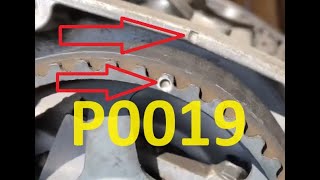
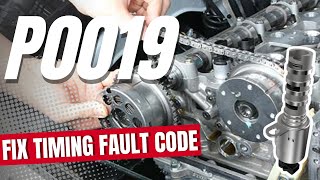
- EyeSight driver-assist system may be disabled 🎬 Watch: A quick overview of P0019 causes and common fixes.
- Replacing the camshaft or crankshaft position sensors without proper testing. The sensors often correctly report a problem; they are not the problem itself.
- Replacing timing chain components before verifying if the ECM software update TSB #09-120-24R has been performed, which is a much more common and cheaper fix for this specific vehicle.
- Assuming a major mechanical failure before performing a simple oil and filter change with OEM-specified products.
Most Likely Causes
- Outdated Engine Control Module (ECM) Software 🔴 High Probability → Shop Engine Control Module (ECM) Subaru has officially acknowledged this issue via TSBs #09-120-24 and #09-120-24R, indicating the original software logic was too sensitive and could falsely set P0019 and related codes.
How to confirm: Contact a Subaru dealership with your vehicle's VIN. They can verify if your car is covered by the TSB and requires the software update. This should be the first step before any parts are replaced.
Typical fix: A Subaru dealer reprograms the ECM with the updated software files. This is typically a one-hour labor charge. Some owners report success by telling the service writer they received a notice about a required update.
Est. part cost: $0 - Low or Dirty Engine Oil 🟡 Medium Probability The Active Valve Control System (AVCS), Subaru's term for VVT, uses oil pressure to adjust cam timing. Low, old, sludgy, or incorrect viscosity oil directly impairs its function by either providing insufficient pressure or clogging the small passages in the Oil Control Valves (OCVs).
How to confirm: Check the engine oil dipstick for level and clarity. If the oil is below the 'low' mark, dark black, or appears thick, this is a likely contributor. Ensure the correct 0W-20 synthetic oil is being used.
Typical fix: Perform an engine oil and filter change using the manufacturer-specified oil and a quality OEM filter. A non-OEM filter was blamed for this issue in at least one forum discussion. Clear codes and drive to see if it returns.
Est. part cost: $40-$80 - Faulty Oil Control Valve (OCV) / VVT Solenoid 🟡 Medium Probability The OCV for the Bank 2 exhaust camshaft can become clogged with debris from engine oil or fail electronically, preventing correct oil flow to the cam phaser. These solenoids are a known common failure point on Subarus.
How to confirm: A mechanic can command the solenoid with a scan tool to check its response. A common DIY method is to swap the suspect exhaust OCV with the intake OCV on the same side (if they are identical parts) and see if the code changes to P0018 (Bank 2, Sensor A). If it does, the OCV is bad. The Bank 2 OCVs are on the driver's side of the engine.
Typical fix: Replace the Bank 2 (driver's side) exhaust OCV. It's also wise to inspect and clean the small filter screen associated with the valve, if accessible. The OEM part number is often 10921AA231 for both FA/FB engines.
Est. part cost: $90-$150 - Failing Camshaft Position Sensor ⚪ Low Probability → Shop Engine Camshaft Position Sensor
How to confirm: The sensor's signal can be tested with an oscilloscope for a clean square wave pattern. Swapping it with a known-good sensor (e.g., from the other bank if identical) is another way to confirm failure. This is less likely to be the cause than the OCV or software.
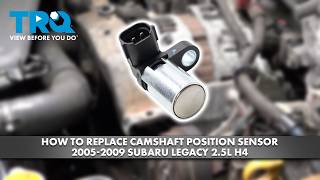
Typical fix: Replace the Bank 2 exhaust camshaft position sensor. It is located on the lower front corner of the driver's side of the engine.
Est. part cost: $50-$100
Rare But Worth Checking
- Stretched Timing Chain or Failed Tensioner: → Shop Engine Timing Chain While less common on newer vehicles, significant mechanical wear or a faulty tensioner can cause the physical timing to be off. This is a major repair and should only be considered after all other possibilities (software, oil, OCVs) have been exhausted.
- Damaged Camshaft Phaser/Sprocket: → Shop Engine Camshaft The hydraulic actuator (AVCS sprocket) on the camshaft itself can get stuck or fail, preventing timing adjustments. This is an expensive, labor-intensive repair.
Diagnosis Steps
- Read the code with an OBD-II scanner to confirm P0019 is present.
- CRITICAL: Contact a Subaru dealer with your VIN to check for open recalls or TSBs, specifically mentioning TSB #09-120-24R for an ECM reprogram. This is the most likely fix.
- If no TSB applies or has already been performed, inspect the engine oil level and condition. If low, dirty, or overdue for a change, perform an oil and filter change using 0W-20 synthetic oil and an OEM filter. Clear the code and drive to see if it returns.
- Inspect the wiring and connector for the Bank 2 (driver's side) exhaust camshaft position sensor and the oil control valve (OCV) for any damage or corrosion.
- Test the Bank 2 exhaust OCV. This can be done by swapping it with the intake OCV on the same bank (if they are identical parts, like 10921AA231) to see if the code follows and changes to P0018. If the code changes, the OCV is faulty.
- If the OCV is good, test the camshaft position sensor itself, preferably with an oscilloscope to verify its signal or by swapping with a known-good sensor.
- If all electronic components and software are confirmed to be good, the issue is likely mechanical. A professional should use a Subaru Select Monitor (SSM) or advanced scan tool to check live data for cam angle deviation before inspecting the timing chain, tensioners, and camshaft phasers.
Parts You'll Likely Need
- Oil Control Valve (VVT Solenoid)
(OEM #10921AA231)— This solenoid controls oil flow to the cam phaser and is a common failure point due to clogging or electronic malfunction. It is used for both intake and exhaust positions on many FA/FB engines, making it useful for diagnostic swapping.
Trusted brands: Subaru (OEM), Denso, Hitachi
OEM price range: $90-$135
Aftermarket price range: $70-$110 - Engine Oil and Filter — The variable valve timing system is dependent on clean oil at the proper level and viscosity (0W-20). An oil change is a crucial and inexpensive first step in troubleshooting.
Trusted brands: Idemitsu (OEM supplier), Mobil 1, Pennzoil
OEM price range: $60-$90
Aftermarket price range: $40-$70 - Camshaft Position Sensor — Though less common than an OCV failure, the sensor itself can fail and send incorrect data to the ECM. It's often replaced unnecessarily.
Trusted brands: Subaru (OEM), Bosch, NTK
OEM price range: $80-$120
Aftermarket price range: $40-$70
Related Codes That Often Appear With This One
- P0018 — This is the correlation code for the intake camshaft on the same bank (Bank 2). Seeing both P0018 and P0019 together strongly points to an issue affecting the entire driver's side, such as a clogged oil passage, a timing chain issue on that side, or the ECM software fault which addresses both codes.
- P0016 / P0017 — These are the equivalent timing correlation codes for Bank 1 (passenger side). If codes for both banks appear simultaneously, it suggests a widespread problem like severe oil contamination/starvation, a stretched primary timing chain, or the ECM software fault. TSB #09-120-24R covers all four correlation codes.
Technical Service Bulletins (TSBs) & Recalls
- 09-120-24R: Announces new ECM reprogramming files to remedy DTCs P0016, P0017, P0018, P0019, and P0087 due to overly sensitive diagnostic logic. Applies to 2020-22 Legacy/Outback 2.5L, among other models.
- 09-120-24: Original bulletin announcing the availability of ECM reprogramming files for P0019.
- 09-98-22: A similar TSB for the 2019-22 Subaru Ascent, which uses the same 2.4L FA24F engine, also for P0019 and other codes, confirming a pattern of software fixes for this issue across platforms.
Platform-Specific Known Issues
- An ECM software update is a primary fix for this code on this vehicle, as documented in Subaru TSB #09-120-24R. This TSB addresses overly sensitive diagnostic logic.
- Owners on forums frequently report that dealers will suggest expensive mechanical repairs before mentioning the software update TSB. It is critical for the owner to be proactive and ask about the TSB specifically.
Mechanic-Grade Diagnostic Values
- Oil Control Valve (OCV) / VVT Solenoid Resistance — expected: 6.9 - 7.9 Ohms at 68°F (20°C). Failure: A reading of OL (open circuit) or significantly outside the specified range indicates a faulty solenoid coil.
- Camshaft Position Sensor Signal Voltage (3-wire Hall effect) — expected: A square wave toggling between approximately 0V and 5V as the engine is cranked.. Failure: A flat line at 0V or 5V, or an erratic/noisy signal, indicates a failed sensor. This is best viewed with an oscilloscope.
- AVCS Advance Angle (Live Data) — expected: The 'Actual' advance angle should closely track the 'Desired' or 'Target' angle commanded by the ECM across different RPMs. The difference should be within a few degrees.. Failure: A large, persistent deviation between the actual and desired angles, or an actual angle that is stuck at 0 or full advance, points to a mechanical or hydraulic issue (stuck OCV, clogged passage, faulty phaser).
- Engine Oil Pressure — expected: Greater than 10 PSI at hot idle; greater than 30 PSI at 3000 RPM (warm engine).. Failure: Pressure below these minimums indicates a systemic oiling problem (e.g., worn pump, internal leak) that will starve the AVCS system and cause correlation codes.
Scan Tool Commands That Help
- Subaru Select Monitor (SSM) or advanced aftermarket (Autel, Launch, Thinkdiag): Active Test: Oil Control Valve Duty Cycle — With the engine at idle, a technician can command the Bank 2 exhaust OCV to activate. A functioning valve and clear oil passages should cause a noticeable change in engine idle (stumble or stall). No change points to a faulty OCV, wiring, or oil passage clog.
- Subaru Select Monitor (SSM) or advanced aftermarket (Autel, Launch, Thinkdiag): Special Function: VVT System Learning Value Clear / Reset — This is critical after replacing an OCV, phaser, or timing components. The ECM stores adaptive values for the VVT system in non-volatile memory. If these are not cleared, the ECM may use old, incorrect data, causing the code to return even with new parts. This procedure forces the ECM to relearn the system's baseline.
- Subaru Select Monitor (SSM) or advanced aftermarket (Autel, Launch, Thinkdiag): Test Mode Change — This function, used in conjunction with a fuse installed in a specific 'test' slot in the under-hood fuse box, is part of the procedure to clear persistent VVT learned values. Activating 'Test Mode' via the scan tool allows the 'Clear Fault Memory' command to fully reset the adaptive data.
Wiring & Ground Locations
- Main Engine Grounds — Typically found on the top of the intake manifold, bolted directly to the manifold surface. Another key ground runs from the negative battery terminal to the chassis on the driver's side strut tower.. The ECM and its sensors (including cam/crank sensors) rely on clean ground connections for accurate voltage readings. A corroded or loose engine ground can create a floating ground, causing voltage offsets that lead to sensor correlation errors like P0019.
- OCV Connector (Bank 2 Exhaust) — On the front of the driver's side (Bank 2) cylinder head. It is a two-wire connector leading to the lower of the two solenoids.. This is the direct electrical connection to the component most likely to be commanded to fix the timing deviation. Damage to this connector or its wiring (from heat, oil, or chafing) will prevent the ECM's signal from reaching the OCV.
Real Owner Repair Stories
- User on subaruoutback.org forum (2020 Subaru Outback XT (same 2.4L FA24F engine)) — Check Engine Light, EyeSight disabled, codes P0018 and P0019 present.
❌ Tried (didn't work) Initial dealer diagnosis did not mention the TSB.
✅ What actually fixed it The owner found TSB #09-120-24 online, returned to the dealer, and insisted they look it up. The dealer then performed the ECM reprogram as specified in the bulletin, which permanently resolved the codes. - User on Reddit r/AskMechanics (2020 Subaru Ascent (same 2.4L FA24F engine)) — Check Engine Light with code P0019.
❌ Tried (didn't work) Owner checked oil level, which was full and clean.
✅ What actually fixed it Took the vehicle to a Subaru dealer. The dealer immediately identified the issue as being related to the software TSB. They reprogrammed the ECM, which fixed the problem. The repair cost was equivalent to one hour of shop labor.
OEM Part Supersession History
10921AA230→10921AA231— Minor internal revisions and improvements by the manufacturer.
Heads up: The parts are generally cross-compatible. Ordering the newest part number (10921AA231 or a subsequent revision like 10921AA23B) is recommended.
Helpful Videos

We Have This Part in Stock


The information in this article is provided for general reference and educational purposes only. Vehicle specifications, procedures, and part compatibility can vary by production date, trim level, and region. Always consult your vehicle's factory service manual and verify part numbers before purchasing or performing repairs. Safety-critical components such as airbags, seat belts, and braking systems should be installed by a qualified professional.
- Subaru LEGACY:
- 🧭 Diagnostic Flowchart
- 🎬 Helpful Videos
- 🛍️ Shop This Part
- What's Unique About the 2020-2022 Subaru LEGACY
- Symptoms You May Notice
- Most Likely Causes
- Rare But Worth Checking
- Diagnosis Steps
- Parts You'll Likely Need
- Related Codes That Often Appear With This One
- Technical Service Bulletins (TSBs) & Recalls
- Platform-Specific Known Issues
- Mechanic-Grade Diagnostic Values
- Scan Tool Commands That Help
- Wiring & Ground Locations
- Real Owner Repair Stories
- OEM Part Supersession History
- 🎟️ Get 5% Off