

P0021 on 2009-2017 Audi Q5 2.0T: Causes and Fixes for Over-Advanced Intake Camshaft Timing
On the 2009-2017 Audi Q5 2.0T, P0021 is most often caused by low/dirty engine oil or a failing camshaft adjuster solenoid (VVT solenoid). If an oil change doesn't fix it, the solenoid is the next likely culprit. A persistent code, especially with a startup rattle, points to a more serious timing chain issue.
- Always check your engine oil level and condition first. Low or dirty oil is a primary cause of P0021.
- The most likely failed part is the camshaft adjuster solenoid (VVT solenoid), which is a relatively inexpensive and accessible part to replace.
- A rattling noise from the engine on startup is a critical symptom that points to a failing timing chain tensioner. This should be addressed immediately to prevent catastrophic engine damage.
- For a definitive diagnosis of timing chain health, use a VAG-specific scan tool (like VCDS) to check the phase deviation value in Measuring Block 093.
- This code should not be ignored, as it can be a precursor to the EA888 engine's most notorious and destructive timing chain failures.
What's Unique About the 2009-2017 Audi Q5
The EA888 engine is known for specific issues that directly cause this code. Earlier models (approx. 2009-2012) are particularly susceptible to a failing timing chain tensioner, which can lead to catastrophic engine failure if ignored. Additionally, Audi has issued Technical Service Bulletins (TSBs) acknowledging that the camshaft adjuster solenoid's filter screen can break apart, leading to timing faults. Therefore, while P0021 can be a simple fix on many cars, on this platform it requires a careful diagnosis to rule out the more severe, known timing system weaknesses.
Symptoms You May Notice
- Check Engine Light is on
- Rough or unstable idle
- Hesitation or loss of power during acceleration
- Reduced fuel economy
- Engine stalling at stops
- Rattling or buzzing noise from the engine, especially for a few seconds on a cold start
- Intermittent EPC (Electronic Power Control) light may illuminate
- Replacing the camshaft position sensor when the actual fault lies with the VVT solenoid or oil pressure.
- Replacing only the VVT solenoid when a startup rattle is present, ignoring the underlying timing chain/tensioner issue.
Most Likely Causes
- Low or Dirty Engine Oil 🔴 High Probability The VVT system is entirely dependent on clean oil at the correct pressure to function. The EA888 engine can be sensitive to oil level and quality, and many are known for excessive oil consumption, making low oil levels a frequent issue.
How to confirm: Check the engine oil level on the dipstick and note its color and condition. If the oil is low, dark, or sludgy, or if it has been more than 5,000-7,000 miles since the last change, this is a likely cause.
Typical fix: Perform an oil and filter change using a high-quality synthetic oil that meets VW 502 00 specification.
Est. part cost: $60-$120 - Faulty Camshaft Adjuster Solenoid (VVT Solenoid) 🔴 High Probability → Shop Engine Camshaft This is a very common failure point. Audi issued TSB 2041097 because the small filter screen on the solenoid can break, causing a blockage or malfunction.
How to confirm: Swap the intake and exhaust camshaft adjuster solenoids (if they are identical parts) and see if the trouble code changes to one related to the exhaust camshaft. Alternatively, test the solenoid's resistance with a multimeter; a healthy reading is typically between 5.0 and 8.0 ohms at 68°F (20°C).
Typical fix: Replace the faulty camshaft adjuster solenoid. It is located on the upper timing chain cover, held in by three bolts.
Est. part cost: $50-$150 - Stretched Timing Chain or Failed Tensioner 🟡 Medium Probability → Shop Engine Timing Chain Early EA888 engines (approx. 2009-2012) used a timing chain tensioner design that is prone to failure, leading to chain slack. This is a well-documented, critical issue that led to a class-action lawsuit.
How to confirm: Use a diagnostic tool like VCDS or OBDeleven to read the value in Measuring Block 093 ('Camshaft adaptation intake bank 1 phase position'). A phase deviation value more negative than -5 degrees is a strong indicator of significant chain stretch. A physical inspection through the small port on the lower timing cover can also reveal the extension of the tensioner.
Typical fix: This is a major repair that involves replacing the timing chain, tensioner, and all related guides and rails. It is recommended for a professional.
Est. part cost: $400-$800
Rare But Worth Checking
- Failed Camshaft Bearing Bridge: → Shop Engine Camshaft The camshaft bearing bridge (or bracket) contains a small oil screen that can disintegrate over time. Debris from this screen can travel through oil passages and clog the new VVT solenoid or the camshaft phaser, causing the code to return even after replacing parts. If replacing the solenoid doesn't work, this bridge should be inspected.
- Failed Camshaft Adjuster (Phaser): → Shop Engine Camshaft The mechanical gear on the end of the camshaft can fail internally. Audi TSB 2049153 addresses this as the next step if a new solenoid does not resolve the P0021 code after performing the checks in TSB 2041097. This is a complex and expensive repair.
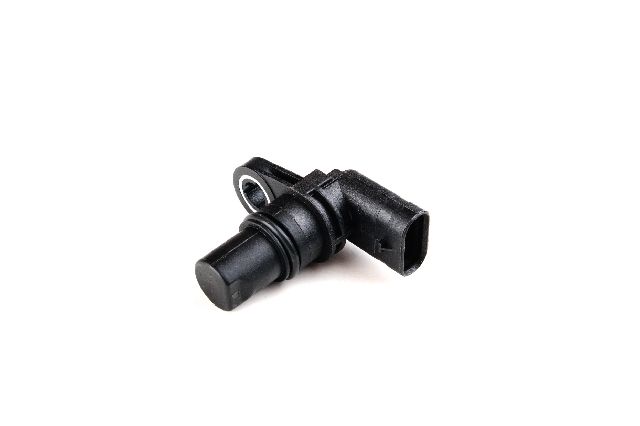
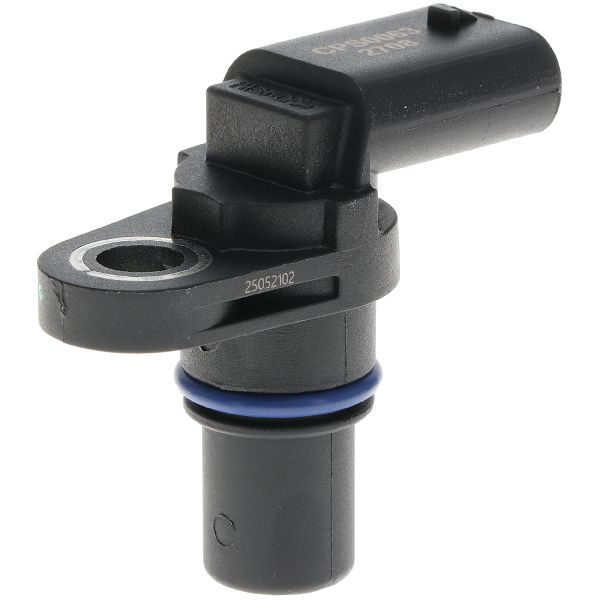
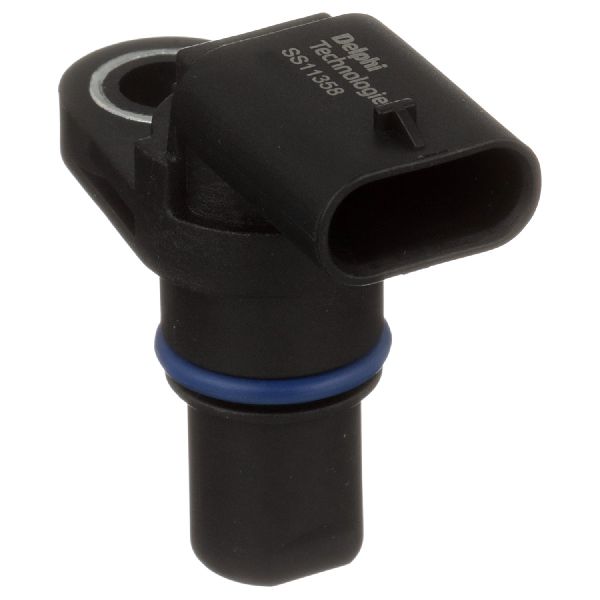
- Faulty Camshaft Position Sensor: → Shop Engine Camshaft Position Sensor While less common than a solenoid failure, the sensor that reads the camshaft's position can fail, sending incorrect data to the ECM. This is a relatively simple part to replace for diagnosis.
Diagnosis Steps
- Check Engine Oil: Verify the oil level is full and the oil is clean. If low or dirty, perform an oil and filter change with VW 502 00 spec oil, clear the code, and see if it returns. This is critical on a platform known for oil consumption.
- Scan for Codes: Use an OBD-II scanner to confirm P0021 and look for any other related codes that could provide more diagnostic clues.
- Inspect VVT Solenoid: Locate the camshaft adjuster solenoid on the upper timing cover. Inspect its wiring and connector for damage or oil contamination.
- Test the Solenoid: The most effective test is to swap the intake and exhaust solenoids (if they are the same part number). Clear the codes and drive. If the code changes to an exhaust-related fault, the solenoid is bad. If not, test the solenoid's resistance with a multimeter; it should be between 5.0 and 8.0 ohms.
- Check Timing Chain Stretch: Use a VAG-specific scan tool (like VCDS) to check 'Phase Position Bank 1' in Measuring Block 093. A reading more negative than -5 degrees is a strong indicator of a stretched timing chain requiring replacement.
- Inspect Camshaft Bearing Bridge: If the solenoid is good but the problem persists, remove and inspect the camshaft bearing bridge for a broken or missing oil screen. Debris can clog oil passages.
- Consider Mechanical Phaser: If all other components check out, the issue may be the mechanical camshaft adjuster (phaser) itself, as noted in TSB 2049153. This is an advanced, professional-level diagnosis.
Parts You'll Likely Need
- Camshaft Adjuster Magnet (VVT Solenoid)
(OEM #06H109257C (supersedes 06H109257B, 06J109257B))— This is the most common electrical/mechanical failure point for this code, often due to clogging or a broken internal filter screen as per Audi TSB 2041097.
Trusted brands: Audi Genuine, INA, Pierburg
OEM price range: $100-$180
Aftermarket price range: $50-$120 - Timing Chain Kit (Chain, Tensioner, Guides) — A known major failure point on the EA888 engine, especially pre-2013 models. A failed tensioner leads to a stretched chain, causing this code and risking catastrophic engine damage.
Trusted brands: Iwis, INA, FCP Euro Kit
OEM price range: $500-$800
Aftermarket price range: $300-$600
Related Codes That Often Appear With This One
- P0011 — This is the equivalent code for Bank 1. Seeing both P0011 and P0021 on a V6/V8 engine points to a global oil pressure or sludge issue. On an I4, seeing both could indicate a severe problem, but P0021 is the primary code for the intake cam on this vehicle.
- P0016 — This is a Crankshaft/Camshaft Correlation code. If you see P0016 with P0021, it strongly suggests a mechanical timing issue, such as a stretched or jumped timing chain, as the two shafts are no longer synchronized.
- P0341 — This code points to a fault in the camshaft position sensor circuit. It can appear alongside P0021 if the sensor itself is failing or if the timing deviation is so severe that the sensor's readings are considered out of range.
Technical Service Bulletins (TSBs) & Recalls
- TSB 2041097 / 01 16 71: Addresses MIL on for P0011/P0021 due to a loosened filter element on the camshaft adjustment valve.
- TSB 2049153 / 01 17 44: Follow-up procedure if P0011/P0021 persists after TSB 2041097, pointing to replacement of the mechanical camshaft adjuster (phaser).
Platform-Specific Known Issues
- Timing Chain Tensioner Failure: Engines made before roughly 2013 have an older tensioner design that is prone to failing without warning. This can cause the timing chain to jump, leading to bent valves and catastrophic engine failure. A rattling noise on startup is a critical warning sign.
- Piston Ring Oil Consumption: First-generation EA888 engines (approx. 2009-2012) are also known for excessive oil consumption due to piston ring issues. Chronically low oil levels from this issue can starve the VVT system and trigger timing codes like P0021.
Mechanic-Grade Diagnostic Values
- Camshaft Adjuster Solenoid (N205) Resistance — expected: 5.0 to 8.0 Ohms at approx. 20°C (68°F). Some sources cite up to 13 Ω.. Failure: A reading of 0 ohms (short circuit), infinite resistance (open circuit), or a value significantly outside the specified range.
- Camshaft Position Sensor (G40) Voltage Supply — expected: At least 11.5 volts between Pin 1 (power) and Pin 3 (ground) of the sensor connector with ignition on.. Failure: No voltage or significantly low voltage, indicating a wiring or ECM power supply issue.
- VCDS Measuring Block 093 - Phase Position Bank 1 — expected: 0° to -4° for a healthy timing chain.. Failure: A value more negative than -5° indicates significant chain stretch. Values approaching -8° are considered critical and require immediate service.
- VCDS Advanced Measuring Values - Camshaft Adjustment Duty Cycle — expected: A relatively low duty cycle percentage at idle for a new or healthy chain.. Failure: A high duty cycle percentage needed to achieve the target cam phase indicates the system is working hard to compensate for slack (stretch), even if the phase position is still within spec.
Scan Tool Commands That Help
- VCDS (VAG-COM): Engine -> Advanced Measuring Values -> Search for 'Camshaft adjustment' — This is the primary function for diagnosing P0021. It allows real-time monitoring of specified vs. actual camshaft positions and the 'inlet phase' value (from the older Measuring Block 093) to determine the degree of timing chain stretch.
- VCDS (VAG-COM) or OBDeleven: Output Tests (Basic Settings) — Some engine control modules may support a bidirectional test to actuate the N205 solenoid. This can help determine if the solenoid is mechanically stuck by commanding it on and off and listening for a click or observing a change in engine idle.
Wiring & Ground Locations
- Engine to Chassis Ground Strap — Typically located on the left side of the engine compartment, connecting the engine block or transmission to the chassis frame rail near the strut tower (Ground point 12).. A poor engine ground can cause erratic behavior in sensors and actuators, including the camshaft position sensor and adjuster solenoid, leading to intermittent and hard-to-diagnose timing faults.
- Camshaft Position Sensor (G40) Connector — On the upper timing chain cover, near the intake camshaft.. The connector pins are gold-plated. Using non-gold-plated terminals during a wiring repair can lead to high resistance and faulty signals over time. Pin 1 is 5V supply, Pin 2 is signal, Pin 3 is ground.
- Camshaft Adjuster Solenoid (N205) Connector — On the front of the upper timing chain cover, held by three T30 bolts.. This connector is prone to oil contamination from a leaking solenoid. Oil can wick into the harness, causing poor connection and solenoid malfunction.
Real Owner Repair Stories
- AudiWorld Forum User (Audi (model not specified, but engine behavior is consistent with EA888)) — Check Engine Light with code P0021. No other noticeable performance issues.
❌ Tried (didn't work) Visual inspection of sensors and connections., Swapping the intake and exhaust VVT solenoids.
✅ What actually fixed it The dealer replaced the mechanical camshaft adjuster (phaser) on Bank 2, which resolved the code. - AudiWorld Forum User (2012 Audi Q5 2.0T (CAEB Engine) at 112k miles) — Engine failure (details not specified, but required full replacement).
❌ Tried (didn't work) N/A - went straight for engine replacement.
✅ What actually fixed it Swapped the problematic CAEB engine with a lower-mileage CPMB engine from a 2016 A4. The swap required changing the intake manifold, accessory mount (for power steering pump), and the crank sensor connector, but was ultimately successful with the factory ECU and wiring harness. - NHTSA ODI #10262201 (Audi S4) — An owner reported that after coasting into a garage, codes were read as misfires on cylinders 4, 5, 6, and 7 along with "P0021 CAM TIMING ADJUST BANK 2 NOT REACHED."
OEM Part Supersession History
06H109257A / 06H109257B→06H109257C— The original camshaft adjuster solenoids were prone to internal failure and the filter screen breaking off, leading to timing faults. The 'C' revision is considered more robust.Timing Chain Tensioner (Early design, e.g., 06H109467T)→Updated Tensioner (e.g., 06K109467K)— The original tensioner design could lose hydraulic pressure and fail, allowing the timing chain to jump. The updated design has a stronger ratchet mechanism to prevent this.
Heads up: When replacing the tensioner, it is critical to use the latest revision. Using an old-stock original design part re-introduces the risk of catastrophic failure.
Model Year Variations Within This Range
- 2009-2012: These models are equipped with the EA888 Gen 1/2 engine (often code CAEB), which is highly susceptible to the failing timing chain tensioner and excessive oil consumption due to piston ring design. P0021 on these years requires an immediate check of timing chain stretch (Block 093).
- 2013-2017: These models typically have the revised EA888 Gen 2 engine (e.g., CPMB), which includes the updated timing chain tensioner from the factory, making catastrophic failure less likely, though not impossible. While still prone to VVT solenoid failure, a P0021 code is less likely to be a precursor to immediate engine failure.
- Engine Swap Consideration: When swapping an older CAEB engine for a newer CPMB, several parts must be transferred or changed: the intake manifold, the accessory bracket (if the donor car was non-hydraulic steering), and the crankshaft position sensor due to a different connector.
Diagnostic Flowchart
Other Known Issues on This Vehicle
Issues unrelated to this code that are worth knowing about as an owner of this generation:
- Excessive Oil Consumption 🔴 High — Very common, especially in 2009-2014 models. Can start as early as 50,000 miles. Led to a class-action lawsuit. (Ref: A TSB was issued for dealers to replace the crankcase pressure regulating valve and front crankshaft seal, but the root cause is often faulty piston rings.)
- Timing Chain Tensioner Failure 🔴 High → Shop Engine Timing Chain — Most prevalent in pre-2013 EA888 Gen 1/2 engines. Failure can be sudden and cause catastrophic engine damage. (Ref: A class-action lawsuit resulted in an updated tensioner design. Most vehicles should have been updated, but it's a critical check on used models.)
- PCV Valve Failure 🟠 Medium — Common failure item across all years. The internal diaphragm can tear, causing a large vacuum leak.
- Water Pump Failure 🟠 Medium — The plastic housing can become brittle and crack, leading to coolant leaks. Often fails between 60,000-100,000 miles. (Ref: Recall 19N3/19N4 was issued for the electric coolant pump on certain 2013-2017 models due to a fire risk.)
- Carbon Buildup on Intake Valves 🟠 Medium — Inherent to direct-injection engines like the EA888. Typically requires cleaning every 60,000-80,000 miles to restore performance and prevent misfires.
Used vs. New Parts: Buying Guide for This Vehicle
When a used part is the smart pick: Used parts are generally not recommended for the core components related to this fault due to the high failure rates and wear-and-tear nature of the problems. A used engine cover or sensor connectors could be viable options if undamaged.
Donor-vehicle mileage cap: roughly under 50000 miles for the part to have meaningful remaining life.
What to inspect on the donor part:
- For any electronic part, check for non-brittle plastic and intact connector locking tabs.
- Ask for the donor vehicle's VIN to check its service history for oil change intervals.
- Avoid parts from engines that show signs of heavy oil sludge or coolant/oil mixing.
OEM-only on this vehicle (don't cheap out):
- Timing Chain Tensioner: Never use an aftermarket or used tensioner. The risk of catastrophic engine failure is too high. Only use the latest OEM revision (e.g., 06K109467K).
- Camshaft Adjuster (Phaser): This is a precision mechanical part. Aftermarket versions have a poor reputation for reliability and can fail quickly. Stick to OEM.
- Camshaft Bearing Bridge: Due to the integrated, non-serviceable screen, a used part carries the same risk of screen failure as the original. Only a new OEM part guarantees integrity.
Aftermarket brands forum-validated for this vehicle:
- Camshaft Adjuster Solenoid (VVT): Pierburg and INA are original equipment suppliers to Audi, and their parts are often identical to the genuine part without the dealer markup.
- Timing Chain Kit: Iwis (chain) and INA (guides/tensioners) are reputable OEM suppliers. Kits from trusted vendors like FCP Euro often bundle these high-quality components.
Brands owners have reported issues with on this vehicle:
- Unbranded or 'white-box' VVT solenoids and timing components from online marketplaces. These often have high failure rates, incorrect resistance values, or are made with substandard materials that cannot withstand the engine's heat and pressure cycles.
Real Owner Stories
Aggregated from forums and TSBs cited above. Mileages and costs reflect what owners reported in those sources.
2014 Audi S8
Symptoms: Owner and mechanic discussed P0021 fault and the potential for a failed camshaft adjustment valve.
What fixed it: Diagnostic discussion focused on TSB 2041097 and the diagnostic step of swapping solenoids to see if the fault follows the part.
Source hint: AudiWorld Forums: 2014 S8 - New owner with a big problem (P0021 discussion)
2010 Audi Q5 2.0T — ~50000 miles
Symptoms: Excessive oil consumption and eventually timing-related codes.
What fixed it: The root cause was identified as faulty piston rings, though a TSB suggested replacing the crankcase pressure regulating valve and front crankshaft seal as an initial attempt.
Source hint: known_issues: Excessive Oil Consumption
Related OBD-II Codes
Frequently Asked Questions
My 2011 Audi Q5 has a rattling noise on cold start and a P0021 code. Is this dangerous?
Does TSB 2041097 apply to my Audi Q5 regarding the P0021 code?
What should I do if replacing the solenoid per TSB 2041097 didn't fix my P0021 code?
Can low oil levels cause P0021 on my 2.0L Audi Q5?
What is the 'Measuring Block 093' test for the Audi Q5?
Is there a specific oil I should use to prevent VVT issues like P0021?
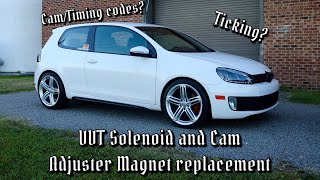
Helpful Videos
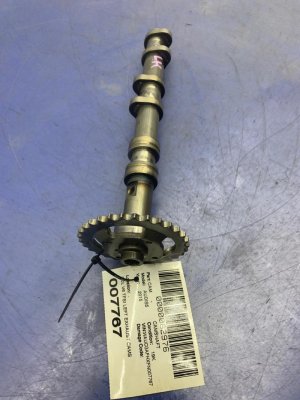
Used OEM Parts in Stock
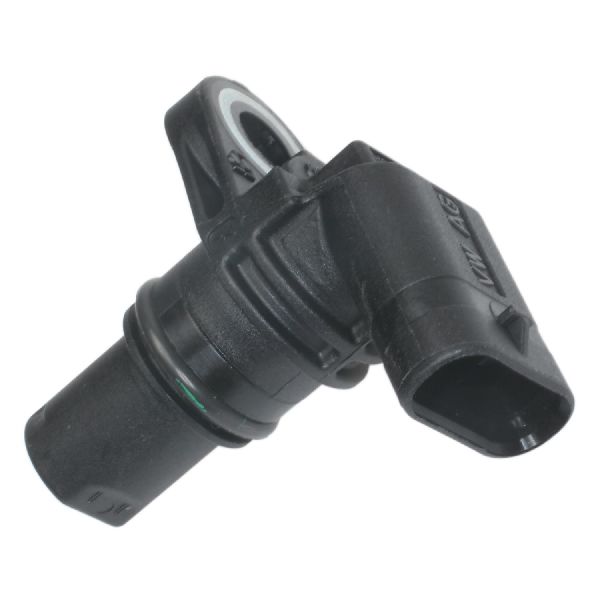
New Aftermarket Parts Available


The information in this article is provided for general reference and educational purposes only. Vehicle specifications, procedures, and part compatibility can vary by production date, trim level, and region. Always consult your vehicle's factory service manual and verify part numbers before purchasing or performing repairs. Safety-critical components such as airbags, seat belts, and braking systems should be installed by a qualified professional.
- Audi Q5:
- 🧭 Diagnostic Flowchart
- 🎬 Helpful Videos
- 🛍️ Shop This Part
- What's Unique About the 2009-2017 Audi Q5
- Symptoms You May Notice
- Most Likely Causes
- Rare But Worth Checking
- Diagnosis Steps
- Parts You'll Likely Need
- Related Codes That Often Appear With This One
- Technical Service Bulletins (TSBs) & Recalls
- Platform-Specific Known Issues
- Mechanic-Grade Diagnostic Values
- Scan Tool Commands That Help
- Wiring & Ground Locations
- Real Owner Repair Stories
- OEM Part Supersession History
- Model Year Variations Within This Range
- Other Known Issues on This Vehicle
- Used vs. New Parts: Buying Guide for This Vehicle
- Real Owner Stories
- 2014 Audi S8
- 2010 Audi Q5 2.0T — ~50000 miles
- Related OBD-II Codes
- Frequently Asked Questions
- 🎟️ Get 5% Off