

P0021 on 2011-2024 Dodge Durango 3.6L: Causes and Fixes for Camshaft Over-Advanced Timing
On the 3.6L Pentastar, code P0021 is most often caused by low or dirty engine oil, or a failing Variable Valve Timing (VVT) solenoid on the driver's side of the engine. Always check your oil first. If the oil is fine, replacing the Bank 2 intake VVT solenoid is the next likely fix, costing between $30 and $100 for the part. This issue can also be an early warning of a cracked oil filter housing or rocker arm failure, both common Pentastar problems.
- Always check your engine oil level and condition first. This is the easiest and most common fix.
- P0021 refers to Bank 2, which is the driver's side of the 3.6L V6 engine.
- The most likely failed part is the intake VVT solenoid on the driver's side valve cover.
- A simple diagnostic test is to swap the driver's side and passenger side intake VVT solenoids to see if the code follows and changes to P0011.
- Use the correct oil viscosity (usually 5W-20) during oil changes to prevent VVT system problems.
What's Unique About the 2011-2024 Dodge Durango
The 3.6L Pentastar V6 is known for being sensitive to oil quality and level, making oil-related issues the primary cause of VVT codes like P0021. Early (2011-2013) versions of this engine had a known issue with the left cylinder head (Bank 2), which could lead to various engine problems, though it typically presented as misfires (P0302, P0304, P0306) under TSB 09-002-14 REV. B. Additionally, the plastic oil filter/cooler housing on these engines is a common failure point that can crack and cause significant oil leaks, leading to the low oil pressure that triggers this code. A ticking noise accompanying this code often points to another known Pentastar issue: failing rocker arm bearings, which can send debris into the oil system, clogging the VVT solenoids and destroying the camshaft.
Generation note: The 2011-2024 Dodge Durango is a single generation (WD), but the 3.6L Pentastar engine was significantly updated in 2016. This update included a new two-stage variable valve lift (VVL) system, which may affect which VVT solenoid part number you need. Always verify the part with your vehicle's specific year.
Symptoms You May Notice
- Check Engine Light is on
- Rough or unstable idle
- Engine hesitates or stalls during acceleration
- Reduced fuel economy
- Loss of engine power
- Rattling noise from the engine on startup
- Hard starting
- Replacing the camshaft position sensor when the actual problem is a faulty VVT solenoid or dirty oil.
- Replacing the cam phaser or timing chain before thoroughly diagnosing the VVT solenoids and checking oil pressure.
- Not checking for a cracked oil filter housing, which is a frequent source of the low oil pressure that causes this code.
Most Likely Causes
- Low, Dirty, or Incorrect Viscosity Engine Oil 🔴 High Probability The Pentastar's VVT system is hydraulically operated and extremely sensitive to oil pressure and cleanliness. Sludge or the wrong oil type (e.g., using 10W-30 instead of the specified 5W-20) can easily clog the small passages in the VVT solenoids and trigger the code.
How to confirm: Check the oil dipstick. The oil level should be between the 'add' and 'full' marks. Inspect the oil's color and consistency; it should be brown or black, not milky or gritty. Verify the oil viscosity (e.g., 5W-20 or 0W-20 for later models) against the manufacturer's recommendation on the oil cap or in the owner's manual.
Typical fix: Change the engine oil and filter using the correct viscosity full synthetic oil specified for your vehicle. This is the most common and successful first step.
Est. part cost: $40-$100 - Faulty Bank 2 Intake VVT Solenoid (Oil Control Valve) 🔴 High Probability This solenoid controls the oil flow to the cam phaser. It can become clogged with debris from dirty oil or fail electronically over time, causing it to stick in one position. Debris from failing rocker arms is also a known cause of solenoid clogging on this engine.
How to confirm: A common diagnostic trick is to swap the Bank 2 (driver's side) intake VVT solenoid with the Bank 1 (passenger side) intake solenoid. Clear the codes and drive the vehicle. If the code changes to P0011 (Bank 1), the solenoid is confirmed to be faulty. You can also test the solenoid's resistance with a multimeter; a typical reading is between 7.0 and 8.0 ohms.
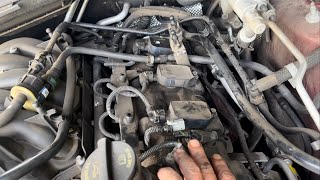
Typical fix: Replace the Bank 2 intake VVT solenoid. It is located on the top of the driver's side valve cover and is typically held in by a single bolt. It is recommended 🎬 Watch: Step-by-step guide to replacing the VVT solenoid. to clean the port before installing the new solenoid.
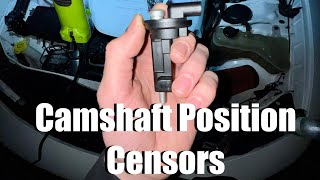
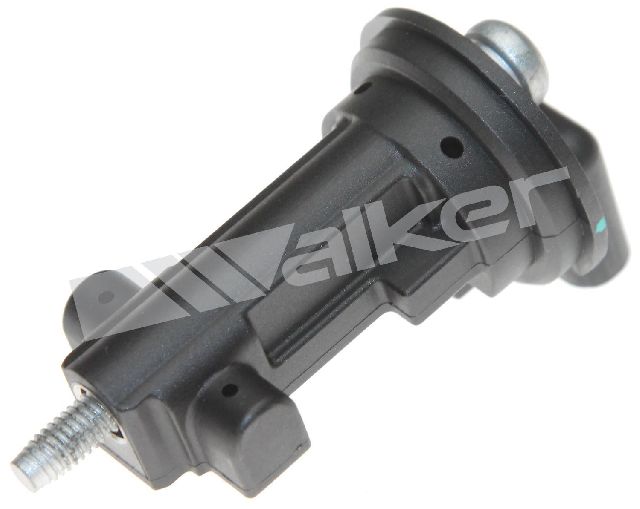
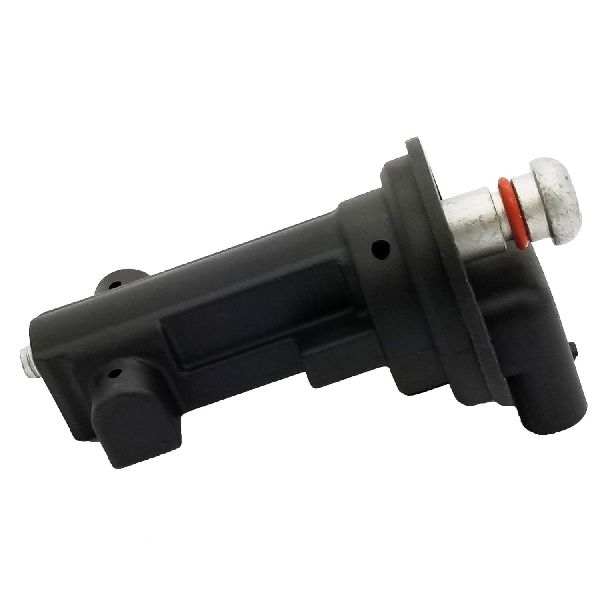
Est. part cost: $30-$100 - Faulty Bank 2 Camshaft Position Sensor 🟡 Medium Probability → Shop Engine Camshaft Position Sensor The sensor that reads the camshaft's position can fail, sending incorrect data to the PCM. Oil contamination from a leaking valve cover gasket or a cracked oil filter housing can also damage the sensor or its connector.
How to confirm: Swap the Bank 2 intake camshaft position sensor with the one from Bank 1. If the code changes to P0011 (or a Bank 1 sensor code like P0365), the sensor is the culprit. Inspect the sensor and its connector for oil contamination or damage.
Typical fix: Replace the Bank 2 intake camshaft position sensor.
Est. part cost: $25-$70
Rare But Worth Checking
- Failing Camshaft Phaser: → Shop Engine Camshaft The mechanical phaser itself can get stuck in the advanced position due to internal wear, a failed locking pin, or oil pressure issues. This is a more complex and expensive repair, often requiring professional diagnosis.
- Stretched Timing Chain or Failed Tensioner: → Shop Engine Timing Chain On higher mileage engines, a stretched timing chain can cause the physical camshaft timing to be out of sync with the crankshaft, triggering this code. This often presents with a rattling noise on startup.
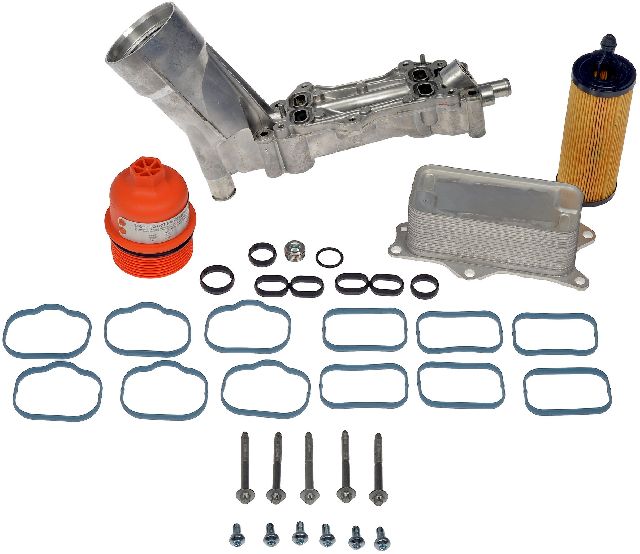
- Cracked Oil Filter Housing / Cooler Assembly: → Shop Engine Oil Filter Adapter A known weak point on the 3.6L Pentastar, the plastic oil filter housing can crack and leak oil into the engine valley. A significant leak can lead to low oil pressure, which in turn causes VVT system faults like P0021. This failure may also set a P0520 code.
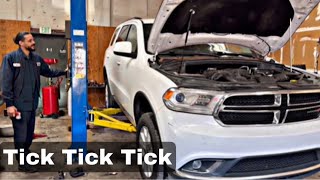
- Failed Rocker Arms / Worn Camshaft Lobes: → Shop Engine Camshaft A very common issue known as the 'Pentastar Tick'. The needle bearings in the rocker arms fail, causing a ticking noise and sending metal debris into the oil system. This debris can clog the VVT solenoid, causing P0021, and eventually score the camshaft lobes. 🎬 See how to diagnose that ticking noise and camshaft wear.
Diagnosis Steps
- Check Engine Oil: Verify the oil level is correct and the oil is clean. If low or dirty, perform an oil and filter change with the manufacturer-specified oil type (typically 5W-20 or 5W-30). This is the #1 fix. Clear the code and see if it returns.
- Scan for Other Codes: Use an OBD-II scanner to check for any other codes that could point to related issues, like misfires (P030x), oil pressure (P0520), or other timing codes (P0011).
- Inspect Wiring: Visually inspect the wiring harness and connector for the Bank 2 (driver's side) intake VVT solenoid and camshaft position sensor. Look for signs of oil contamination, corrosion, or damage. Oil dripping from the oil filter housing is a common source of contamination.
- Swap VVT Solenoids: Swap the intake VVT solenoid from Bank 2 with the intake solenoid from Bank 1 (passenger side). They are identical. Clear the codes and test drive. If the code returns as P0011, the solenoid is faulty and needs to be replaced.
- Test Solenoid (Optional): If you have a multimeter, you can test the resistance of the suspect solenoid. A reading outside the typical 7.0-8.0 ohm range indicates a bad solenoid. You can also apply 12V directly to the removed solenoid to see if the internal plunger actuates with a click.
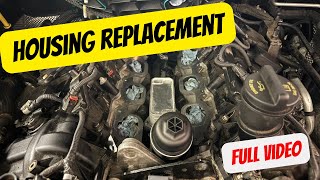
- Advanced Diagnostics: If the code persists, inspect for a cracked oil filter housing by looking for pooled oil in the engine valley. 🎬 Watch: How to replace a leaking oil filter housing assembly. If a ticking noise is present, suspect rocker arm/camshaft failure. If neither is found, the issue may be a faulty camshaft position sensor, a stuck cam phaser, or a timing chain issue, which may require professional diagnosis.
Parts You'll Likely Need
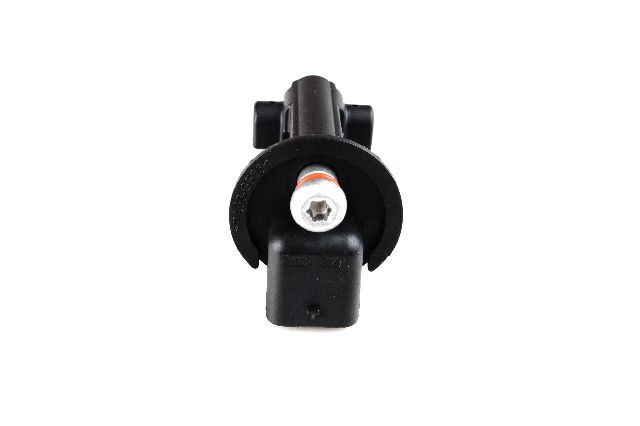
- Intake Variable Valve Timing (VVT) Solenoid (Bank 2)
(OEM #5184101AG)— This is the most common part to fail after ruling out oil issues. It gets clogged or fails electronically, preventing proper control of the camshaft timing.
Trusted brands: Mopar, Dorman, Standard Motor Products
OEM price range: $60-$120
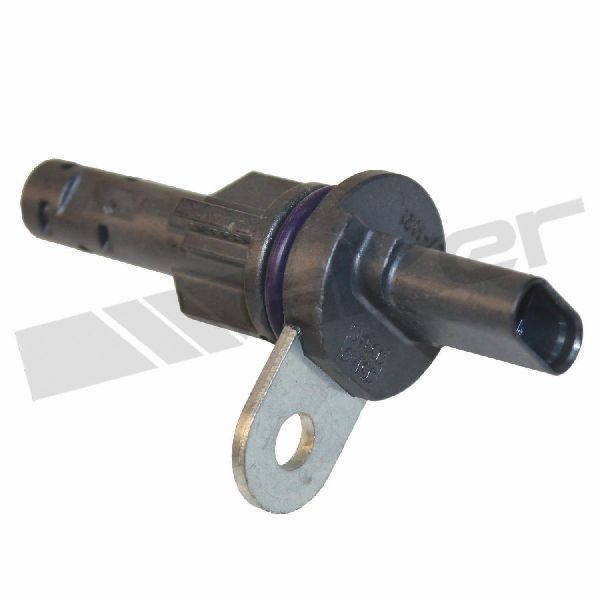
Aftermarket price range: $30-$80 - Camshaft Position Sensor (Bank 2)
(OEM #5149141AF)— If the VVT solenoid is not the cause, the sensor providing the position information to the PCM is the next most likely culprit.
Trusted brands: Mopar, Bosch, NGK/NTK
OEM price range: $40-$80
Aftermarket price range: $25-$50 - Engine Oil Filter and Cooler Housing Assembly
(OEM #68105583AF (or later revisions))— This entire plastic assembly is a notorious failure point on the 3.6L Pentastar. It cracks from heat cycles and causes oil leaks that lead to low oil pressure, triggering VVT codes.
Trusted brands: Mopar, Dorman (Aluminum), GWA Auto Parts
OEM price range: $150-$250
Aftermarket price range: $80-$180
Related Codes That Often Appear With This One
- P0011 — This is the equivalent code for Bank 1. If you swap a faulty Bank 2 solenoid to Bank 1 for diagnosis, P0021 will be replaced by P0011. If both appear together, it points to a systemic oil issue.
- P0302, P0304, P0306 — These are misfire codes for the cylinders on Bank 2. Incorrect camshaft timing can lead to poor combustion and cause misfires on the affected bank.
- P0520 — This is an Engine Oil Pressure Sensor circuit code. It often appears with P0021 when the root cause is a leaking oil filter housing assembly, which contains the sensor.
- P0390 — This is a circuit code for the Bank 2 exhaust camshaft position sensor. A leaking oil filter housing can drip oil onto the sensor's wiring harness, causing this code to appear alongside VVT performance codes.
Technical Service Bulletins (TSBs) & Recalls
- TSB 09-002-14 REV. B: Addresses MIL illumination for misfire codes P0300, P0302, P0304, or P0306 on 2011-2013 models due to a potential left cylinder head defect. This is a critical TSB for any Bank 2 engine codes on these early models.
- TSB 09-002-17: While not for P0021 directly, this bulletin for 2016 models involves replacing intake camshafts due to slow response codes (P000A/P000C) and misfires, indicating known VVT/camshaft issues in that timeframe.
Platform-Specific Known Issues
- Early (2011-2013) 3.6L Pentastar engines were subject to a warranty extension (X56) for left-side (Bank 2) cylinder head failure, which could cause ticking, misfires (P0302, P0304, P0306), and other codes. The fix required a cylinder leak-down test and potential cylinder head replacement per TSB 09-002-14 REV. B.
- The plastic oil filter and cooler housing assembly is a known failure point that can leak oil and cause low oil pressure, leading to VVT-related codes like P0021. Look for oil pooled in the engine valley as a primary symptom.
- Rocker arm bearing failure, causing a 'Pentastar Tick', is a widespread issue. This can lead to camshaft lobe damage and send metal debris into the oil, clogging VVT solenoids and oil passages.
Mechanic-Grade Diagnostic Values
- VVT Solenoid (Oil Control Valve) Resistance — expected: 7.0 to 8.0 Ohms. Failure: An open circuit (OL), short circuit (near 0 Ohms), or a reading outside the specified range. A reading below 5.0 Ohms is a definitive failure.
- Camshaft Position Sensor Signal Voltage (Hall-Effect Test) — expected: Switches between ~5V and 0V when a magnet passes by the sensor tip.. Failure: Voltage does not switch or stays fixed at 0V or 5V, indicating a failed sensor.
- Scan Tool: Desired vs. Actual Camshaft Position Angle — expected: Actual angle should closely track the Desired angle, within ~2 degrees at steady RPM.. Failure: Actual angle is fixed, erratic, or consistently deviates from the desired angle by more than a few degrees.
- Engine Oil Pressure (Warm, at Idle) — expected: Approximately 30 PSI or higher.. Failure: Pressure significantly below 30 PSI indicates an oil pressure issue (e.g., cracked filter housing, worn pump) that is starving the VVT system.
Hidden / Shadow Codes Worth Checking
- P000A, P000C, P0017, P0019: These are 'slow response' and 'correlation' codes for the camshafts. TSB 09-009-16 indicates that seeing these codes, especially on a 2016 model, points towards replacing both intake VVT solenoids. (see via Standard OBD-II scanner. They are not hidden, but their collective presence is a strong indicator defined by a TSB.)
Scan Tool Commands That Help
- wiTECH, Autel, or other professional scanner: VVT Solenoid Actuation / Active Test — Use this after checking oil and swapping solenoids fails to find the issue. It directly commands the solenoid to actuate, allowing you to watch live data for the camshaft's 'Actual' position. If the solenoid is commanded but the cam doesn't move, it confirms a stuck solenoid, a clogged oil passage, or a failed phaser.
- wiTECH (Dealer-level tool): Variable Oil Pump Solenoid Actuation — For 2016+ models with the dual-stage oil pump. This command forces the pump into its high-pressure mode. It's used in advanced diagnostics to confirm the oil pump can supply sufficient pressure, helping to rule out a pump issue as the cause of VVT codes.
Wiring & Ground Locations
- Bank 2 Camshaft Position Sensor Connector — On the driver's side valve cover, towards the rear (transmission side) of the engine.. This is the primary sensor providing Bank 2 camshaft data to the PCM. The 3.6L uses a single 4-wire sensor per bank that reads both intake and exhaust cams. Wires 1 & 2 are for the intake cam. Damage or oil contamination here can cause incorrect signals.
- Bank 2 VVT Solenoid Connector — On top of the driver's side valve cover, towards the front of the engine.. This connector provides power and the control signal to the solenoid. A poor connection or oil contamination can prevent the solenoid from operating correctly, leading to the P0021 code.
- PCM Connector C2 — This is one of the main connectors at the Powertrain Control Module (PCM).. The control circuit for the Bank 2 VVT solenoid terminates here. A diagnostic step for high resistance in the circuit involves checking continuity between the solenoid connector and this PCM connector.
Real Owner Repair Stories
- Reddit user, r/MechanicAdvice (2014 Dodge Durango Limited 3.6L) — Initial ticking noise. After repair, smoke from engine and multiple new check engine codes.
❌ Tried (didn't work) The user replaced all 12 rocker arms and lifters on the right side (Bank 1) to fix a ticking noise.
✅ What actually fixed it The user reported a host of new codes after the repair, including P0010, P0113, P0123, and P0222. This pattern strongly indicates a forgotten electrical connector. Several sensors on that bank were reporting circuit high/low faults, which happens when a main harness connector is left unplugged during reassembly. The fix was to locate and properly reconnect the main engine harness on that bank. - Jeep Wrangler Forums user discussion (Jeep with 3.6L Pentastar engine) — Loud valvetrain clatter or 'Pentastar Tick'.
❌ Tried (didn't work) Simply replacing a failed rocker arm without addressing the root cause.
✅ What actually fixed it The consensus from experienced users is that the root cause is often not the rocker arm itself, but the hydraulic lifter (lash adjuster) it pivots on. The theory is the lifter gets sticky or fails, creating a gap. This gap causes the rocker arm to slap against the cam lobe, eventually destroying the rocker's needle bearings and the cam lobe surface. The proper fix is to replace not just the failed rocker(s), but also the associated hydraulic lifters.
"I Checked Everything" — The Actual Cause
- A common scenario for persistent timing codes like P0021 on the 3.6L Pentastar, even after verifying wiring and solenoids, is a mechanical failure within the camshaft phaser itself. All electrical tests will pass, and a smoke test for vacuum leaks would be irrelevant. The code returns because the internal locking pin in the phaser has failed or the phaser vanes are worn, causing a physical timing deviation that the PCM flags as a fault. The key symptom that is often missed is a brief rattle upon engine startup.
OEM Part Supersession History
68105583A(A through F)→68105583AG, then 68596317AB— The original plastic oil filter housing was prone to cracking from heat cycles, causing major oil leaks. The part has been revised multiple times by Mopar to improve durability.
Heads up: While revisions are generally backward-compatible, the key information is that aftermarket full-aluminum housings (e.g., from Dorman or other brands) are considered a superior, permanent fix compared to any version of the OEM plastic part.5184101AG→5184101AH— Internal improvements to the VVT solenoid for reliability.
Model Year Variations Within This Range
- 2011-2015: This is the first generation of the 3.6L Pentastar. It features a 10.2:1 compression ratio and a standard Variable Valve Timing (VVT) system.
- 2016-2024: This is the upgraded Pentastar (codename PUG). It features a new two-stage Variable Valve Lift (VVL) system in addition to VVT, a higher 11.3:1 compression ratio, cooled EGR, and a recalibrated VVT system with a wider 70-degree range of authority. These changes mean some valvetrain parts and PCM software are not interchangeable with earlier models. TSB 09-009-16 was issued specifically for 2016 models to address VVT solenoid issues.
Diagnostic Flowchart
Other Known Issues on This Vehicle
Issues unrelated to this code that are worth knowing about as an owner of this generation:
- Cracked Oil Filter / Cooler Housing Assembly 🔴 High → Shop Engine Oil Filter Adapter — Extremely common, typically between 60,000-120,000 miles. The plastic housing becomes brittle and cracks, causing major oil and/or coolant leaks in the engine valley.
- Rocker Arm / Lifter Failure ('Pentastar Tick') 🔴 High — Common across all years, but especially noted in earlier models. Caused by premature wear of rocker arm needle bearings, leading to a distinct ticking noise, misfires, and potential camshaft damage.
- Left Cylinder Head Defect (2011-2013) 🔴 High — Affected a significant number of early Pentastar engines, causing misfires on Bank 2 (cylinders 2, 4, 6). (Ref: TSB 09-002-14 REV. B / Warranty Extension X56)
- Totally Integrated Power Module (TIPM) Failure 🔴 High — Common on 2011-2013 models. Can cause a wide range of bizarre electrical issues, including no-start conditions, fuel pump problems, and random activation of accessories.
- Water Pump Failure 🟠 Medium — A common failure item, often occurring before 100,000 miles, leading to coolant leaks from a weep hole and potential overheating.
Used vs. New Parts: Buying Guide for This Vehicle
When a used part is the smart pick: For this specific repair, buying used parts is generally not recommended due to the high failure rate of the key components. The only exception might be a low-mileage valve cover or engine harness connectors if damaged during repair.
Donor-vehicle mileage cap: roughly under 60000 miles for the part to have meaningful remaining life.
What to inspect on the donor part:
- For any used part, check for signs of oil sludge, which indicates poor maintenance.
- If considering a used oil filter housing, meticulously inspect for hairline cracks, especially around sensor ports and mounting bolts.
- Avoid any parts from an engine that shows signs of overheating (discolored plastic, melted components).
OEM-only on this vehicle (don't cheap out):
- VVT Solenoids
- Camshaft Position Sensors
- Rocker Arms and Lifters
Aftermarket brands forum-validated for this vehicle:
- Dorman (specifically for their upgraded aluminum oil filter housing, part #926-876 or #926-959)
Brands owners have reported issues with on this vehicle:
- Unbranded or 'no-name' electronic parts like VVT solenoids and camshaft sensors from online marketplaces. Forum consensus strongly suggests these parts have a very high rate of premature failure on Chrysler vehicles.
Real Owner Stories
Aggregated from forums and TSBs cited above. Mileages and costs reflect what owners reported in those sources.
2011-2013 Dodge Durango 3.6L Pentastar V6
Symptoms: Ticking noise from the engine and misfire codes (P0302, P0304, P0306) along with Bank 2 timing issues.
What fixed it: Cylinder leak-down test and replacement of the left-side (Bank 2) cylinder head per TSB 09-002-14 REV. B.
Source hint: TSB 09-002-14 REV. B / vehicle_specific_issues
2011-2023 Dodge Charger 3.6L V6
Symptoms: Check engine light for timing codes; owner followed standard diagnostic path.
What fixed it: Oil change and VVT solenoid swap confirmed a faulty solenoid.
Source hint: challengertalk.com forum citation
3.6L Pentastar V6 (Platform Mate)
Symptoms: P0011 and P0021 codes appearing simultaneously.
What fixed it: Replacement of a cracked oil filter housing which was causing oil pressure issues.
Source hint: challengertalk.com forum citation
Jeep Grand Cherokee 3.6L V6 (Platform Mate)
Symptoms: P0021 code appeared; owner used the swap technique to identify the component.
What fixed it: Swapping solenoids between Bank 1 and Bank 2 confirmed the fault, followed by replacing the bad solenoid.
Source hint: jeepgarage.org forum citation
Related OBD-II Codes
Frequently Asked Questions
My 2012 Durango has a ticking noise and a P0021 code; is there a specific warranty for this?
Can I swap parts between banks on my 3.6L Pentastar to diagnose P0021?
What is the most common 'first step' fix for a P0021 on a Dodge Durango?
I see oil pooling in the engine valley of my 3.6L Durango; could this cause P0021?
What resistance should I look for when testing the VVT solenoid on my 3.6L V6?
Does TSB 09-002-17 apply to my P0021 code?
Helpful Videos
We Have This Part in Stock


The information in this article is provided for general reference and educational purposes only. Vehicle specifications, procedures, and part compatibility can vary by production date, trim level, and region. Always consult your vehicle's factory service manual and verify part numbers before purchasing or performing repairs. Safety-critical components such as airbags, seat belts, and braking systems should be installed by a qualified professional.
- Dodge Durango:
- 🧭 Diagnostic Flowchart
- 🎬 Helpful Videos
- 🛍️ Shop This Part
- What's Unique About the 2011-2024 Dodge Durango
- Symptoms You May Notice
- Most Likely Causes
- Rare But Worth Checking
- Diagnosis Steps
- Parts You'll Likely Need
- Related Codes That Often Appear With This One
- Technical Service Bulletins (TSBs) & Recalls
- Platform-Specific Known Issues
- Mechanic-Grade Diagnostic Values
- Hidden / Shadow Codes Worth Checking
- Scan Tool Commands That Help
- Wiring & Ground Locations
- Real Owner Repair Stories
- "I Checked Everything" — The Actual Cause
- OEM Part Supersession History
- Model Year Variations Within This Range
- Other Known Issues on This Vehicle
- Used vs. New Parts: Buying Guide for This Vehicle
- Real Owner Stories
- 2011-2013 Dodge Durango 3.6L Pentastar V6
- 2011-2023 Dodge Charger 3.6L V6
- 3.6L Pentastar V6 (Platform Mate)
- Jeep Grand Cherokee 3.6L V6 (Platform Mate)
- Related OBD-II Codes
- Frequently Asked Questions
- 🎟️ Get 5% Off