

P0021 on 2015-2019 Lincoln MKC: Exhaust Cam Timing Causes and Fixes
On a 2015-2019 Lincoln MKC, code P0021 almost always points to a faulty Exhaust VCT (Variable Camshaft Timing) solenoid, often due to dirty or low oil. Replacing the exhaust VCT solenoid is the most common repair. It's a DIY-friendly job, with the part costing around $30-$90.
- P0021 on your Lincoln MKC refers to the **Exhaust** camshaft timing, not 'Bank 2'.
- The most likely cause is a faulty exhaust VCT solenoid, often due to dirty engine oil.
- Start your diagnosis by checking the engine oil level and condition. An oil change is a low-cost first step.
- Replacing the exhaust VCT solenoid is a DIY-friendly job that resolves the issue in most cases.
- Always use the manufacturer-specified oil and filter to prevent a recurrence of the problem.
What's Unique About the 2015-2019 Lincoln MKC
The main confusion with P0021 on the MKC is the 'Bank 2' reference. Inline-4 engines like the 2.0L and 2.3L EcoBoost only have one cylinder bank (Bank 1). Ford's diagnostic strategy uses 'Bank 1' codes (like P0011) for the intake camshaft and 'Bank 2' codes (like P0021) for the exhaust camshaft on the same bank. The problem is almost always linked to the VCT solenoids getting stuck due to oil contamination, a known issue addressed by multiple manufacturer technical service bulletins.
Diagnostic Flowchart
Tap your situation to follow the diagnostic path that matches what you're seeing on this vehicle.
Symptoms You May Notice
- Check Engine Light is on
- Rough or unstable idle
- Engine hesitation or stumbling on acceleration
- Reduced engine power
- Poor fuel economy
- Engine may stall at low speeds or when stopping
- Rattling or knocking noise from the engine, especially at idle or on startup
- Replacing the camshaft position sensor when the actual fault is the VCT solenoid. The sensor is accurately reporting the timing problem; it is not the cause of it.
- Replacing the intake VCT solenoid (for code P0011) when the code is P0021, which points to the exhaust solenoid on these engines.
- Assuming a major timing chain failure before thoroughly diagnosing the much more common and simpler VCT solenoid and oil condition issues.
Most Likely Causes
- Faulty Exhaust VCT Solenoid 🔴 High Probability → Shop Engine Variable Valve Timing (VVT) Solenoid Manufacturer TSBs #SSM 50067 and #SSM 47170 state that small debris in the oil can cause the VCT solenoid to stick, which is a very common failure mode on this platform. The fine mesh screens on the solenoid get clogged, restricting oil flow or causing the internal plunger to jam.
How to confirm: Unplug the solenoid and check its resistance with a multimeter (typically 5-15 ohms). You can also remove it and apply 12V to its pins; a healthy solenoid will produce a sharp, audible 'click' as the plunger moves. A lack of clicking or a sluggish response indicates it's stuck.
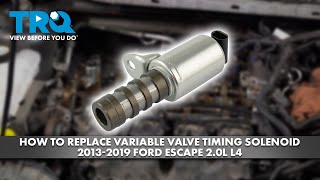
Typical fix: Replace the exhaust VCT solenoid. 🎬 Watch: This step-by-step guide shows you how to replace the solenoid. It is highly recommended to also change the engine oil and filter at the same time to prevent contamination of the new part.
Est. part cost: $30-$90 - Low, Dirty, or Incorrect Viscosity Engine Oil 🔴 High Probability The VCT system is entirely dependent on clean oil at the correct pressure to function. The 2.0L and 2.3L EcoBoost engines can be sensitive to oil condition. Delayed oil changes lead to sludge and debris that clog the fine mesh screens on the VCT solenoids, causing them to stick.
How to confirm: Check the oil level on the dipstick and inspect the oil's condition and service history. If it is dark, thick, below the minimum level, or the service interval is overdue, it is the most likely starting point for the issue.
Typical fix: Perform an engine oil and filter change using the manufacturer-specified oil viscosity (SAE 5W-30 Synthetic Blend, such as Motorcraft). In many cases, this alone can free a sticking solenoid and resolve the code.
Est. part cost: $50-$100 - Worn Timing Chain or Failed Tensioner ⚪ Low Probability → Shop Engine Timing Chain While less common than solenoid failure, especially at lower mileages, timing chains can stretch over time (typically over 100,000 miles). This causes a constant timing deviation that the VCT system cannot compensate for, triggering the code.
How to confirm: This requires significant disassembly to physically inspect the chain for slack and check timing marks. A persistent rattling noise at startup that quiets down after a few seconds is a classic symptom of a failing hydraulic tensioner losing its prime.
Typical fix: Replace the timing chain, guides, and tensioners. This is a labor-intensive job best left to experienced technicians.
Est. part cost: $200-$500
Rare But Worth Checking
- Failed Camshaft Phaser: → Shop Engine Camshaft The phaser (or VVT sprocket) is the mechanical gear that the solenoid directs oil to. It can fail mechanically, getting stuck in an advanced position. This usually produces a more pronounced knocking or ticking sound from the top of the engine.
- Faulty Camshaft Position Sensor: → Shop Engine Camshaft Position Sensor It's possible for the sensor itself to send an incorrect reading, but this is rare. A failing sensor would typically trigger other specific sensor circuit codes (like P0345 or P0349) in addition to or instead of P0021. It's a commonly misdiagnosed part for this code.
- Wiring Harness Issue: Damage to the wiring or connector for the VCT solenoid can cause an open or short circuit, preventing the PCM from controlling it. A visual inspection for frayed wires, oil contamination in the connector, or loose pins is a necessary diagnostic step.
Diagnosis Steps
- Check Engine Oil: Before any other step, verify the oil level is correct and the oil is clean. If it's low, dirty, or past its service life, perform an oil and filter change with the correct SAE 5W-30 oil. Clear the codes and drive to see if the issue is resolved. This simple step fixes the problem in a surprising number of cases.
- Scan Tool Live Data: Use an OBD-II scanner with live data. Monitor PIDs for the exhaust camshaft:
VCT_EXH_ADV(actual angle) andVCT_EXH_CMD(commanded angle). At idle, they should be close to 0. While driving, they should track each other. A large, persistent difference between the actual and commanded values confirms a control problem. - Inspect VCT Solenoid Wiring: Visually inspect the electrical connector and wiring going to the exhaust VCT solenoid (the rearmost solenoid on the valve cover). Check for brittleness, fraying, or oil saturation in the connector.
- Test the VCT Solenoid: Unplug and remove the exhaust VCT solenoid (one 8mm or 10mm bolt). Check resistance across its two pins with a multimeter; it should be between 5-15 ohms. Briefly apply 12V power and ground to the pins; a healthy solenoid will make an audible 'click'. If it's silent or sluggish, it's bad. You can also try cleaning it with brake cleaner while actuating it, but replacement 🎬 See how to clean and test your solenoid for a cheap fix. is the most reliable fix.
- Swap Solenoids: The intake and exhaust VCT solenoids are identical parts. Swap their positions. Clear the codes and drive the vehicle. If the trouble code changes to P0011 (Intake Cam Over-Advanced), you have definitively confirmed the solenoid you moved is the faulty part.
- Check Mechanical Timing: If the solenoid and wiring are good, the issue may be mechanical. This is more complex and may require a professional. It involves checking for a stretched timing chain, a failed tensioner, or a stuck camshaft phaser.
Parts You'll Likely Need
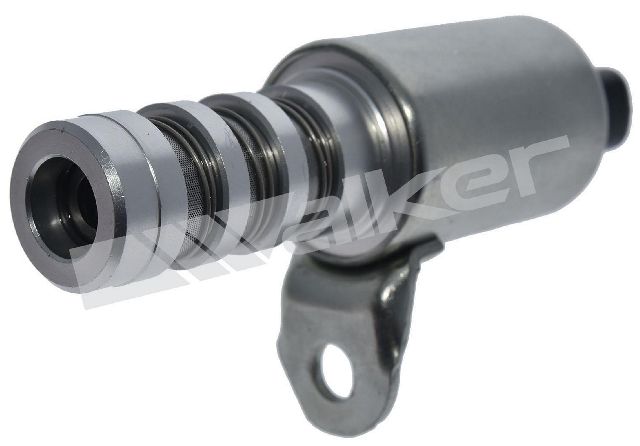
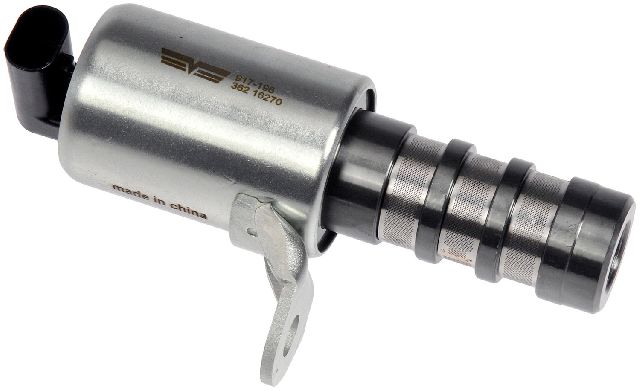
- Engine Variable Valve Timing (VVT) Solenoid (Exhaust)
(OEM #CJ5Z-6M280-A)— This is the most common failure point for code P0021. It gets stuck due to debris in the oil, preventing it from correctly controlling the exhaust camshaft timing. The intake and exhaust solenoids are the same part number.
Trusted brands: Motorcraft, Dorman (p/n 917-196), Standard Motor Products (SMP)
OEM price range: $40-$90
Aftermarket price range: $30-$60 - Engine Oil and Filter — Clean oil of the correct viscosity is critical for VCT system operation. This should always be changed when replacing a VCT solenoid to prevent immediate contamination of the new part and to resolve issues caused by degraded oil.
Trusted brands: Motorcraft Synthetic Blend SAE 5W-30, Motorcraft FL-910S (Filter)
OEM price range: $60-$100
Aftermarket price range: $40-$70
Related Codes That Often Appear With This One
- P0011 — If both P0011 (Intake Cam Over-Advanced) and P0021 appear together, it strongly suggests a systemic issue like very low/dirty oil or low oil pressure affecting both VCT solenoids. It could also point to a base timing issue, like a jumped timing chain.
- P0022 — P0022 is 'Exhaust Cam Timing Over-Retarded'. Seeing it intermittently with P0021 could indicate an erratic VCT solenoid that is sticking in both directions or a wiring issue causing inconsistent control and readings.
Technical Service Bulletins (TSBs) & Recalls
- SSM 50067: Notes that DTCs including P0021 may be caused by a sticking VCT solenoid due to debris. Suggests using a scan tool to cycle the solenoid before replacement.
- SSM 47170: An earlier bulletin with the same information as SSM 50067, highlighting the same VCT solenoid issue.
- SSM 54366: Points technicians to a specific diagnostic test (Pinpoint Test HK) in the workshop manual for VCT-related codes like P0021.
Platform-Specific Known Issues
- Per TSB #SSM 50067, Ford and Lincoln vehicles with these engines may exhibit P0021 due to small debris causing the VCT solenoid to stick. The bulletin advises against immediate component replacement before performing proper diagnosis, starting with the VCT system. It specifically mentions a diagnostic step (Pinpoint Test HK12) to cycle the solenoid 10 times with a scan tool to try and clear debris.
- TSB #SSM 47170 is an earlier version of the same bulletin, reinforcing that sticking VCT solenoids are a known and recurring issue on this platform.
- Some owners on forums have noted that an oil change alone was sufficient to fix the code, suggesting the solenoid was merely sticking due to dirty oil and not permanently failed.
- There is a known issue with some 2.0L EcoBoost engines concerning coolant intrusion into the cylinders, which can lead to major engine failure. While not directly related to P0021, it is a significant issue for this platform to be aware of.
Mechanic-Grade Diagnostic Values
- Engine oil pressure at hot idle — expected: Minimum 15 PSI. Failure: Pressure dropping below 15 PSI at hot idle can cause VCT system malfunctions. Some technicians report issues if pressure is consistently below 25 PSI.
- VCT Solenoid (OCV) Resistance — expected: Approximately 6.9 - 7.9 Ohms at 68°F (20°C). Failure: A reading significantly outside this range, or an open circuit (infinite resistance), indicates a failed solenoid coil.
- Scan Tool PID: VCT_EXH_DIF (VCT Exhaust Differential Angle) — expected: Close to 0 degrees at idle and during steady-state driving.. Failure: A persistent non-zero value indicates a discrepancy between the commanded and actual cam position. A deviation greater than 20 degrees can trigger the fault code.
- VCT Solenoid Connector Voltage (Pin 1, VPWR) — expected: Battery voltage with key on, engine off.. Failure: No voltage indicates an open in the power supply circuit from the PCM power relay/fuse.
Hidden / Shadow Codes Worth Checking
- Mode $06 Data: Mode $06 provides access to the results of the PCM's non-continuous self-tests. For the VCT system, it can show the raw test values for camshaft position deviation from the last time the monitor ran. This allows a technician to see if the system is marginal or close to failing, even if the Check Engine Light is not yet on. (see via A scan tool that supports Mode $06 data, such as FORScan or professional-grade scanners. The specific Test ID (TID) and Component ID (CID) for VCT must be referenced from service information for the specific year/engine.)
Scan Tool Commands That Help
- Ford IDS, FORScan: VCT Solenoid On/Off State or Cycle Test (part of Pinpoint Test HK12) — This bidirectional command is a critical diagnostic step recommended in TSBs. It manually cycles the VCT solenoid 10 times to attempt to dislodge debris causing it to stick. If the engine idle becomes rough or stalls when the solenoid is commanded on while running, it confirms the solenoid and oil passages are capable of functioning.
Wiring & Ground Locations
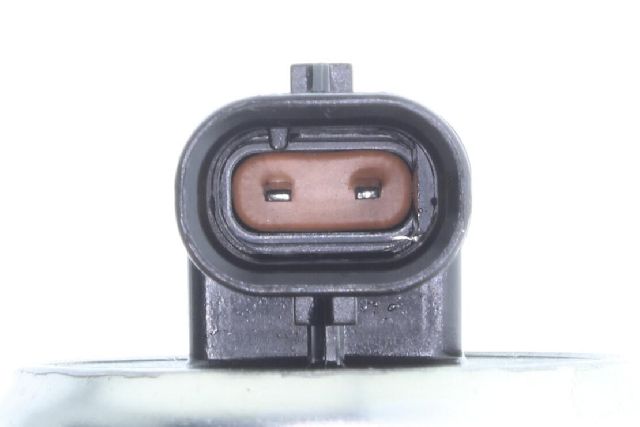
- Exhaust VCT Solenoid Connector — On the top of the valve cover, typically the rearmost of the two solenoids.. This 2-pin connector is a common point of failure. Pin 1 is the power supply from the PCM relay, and Pin 2 is the ground-side control wire from the PCM. Damaged wires or oil contamination in the connector can cause an open or short, preventing proper solenoid operation and triggering P0021.
- PCM (Powertrain Control Module) — On some related Ford platforms, the PCM is located in the engine bay, accessible after removing the cabin air filter assembly.. Knowing the PCM location is necessary for performing a continuity test on the VCT solenoid wiring harness between the solenoid connector and the PCM connector to rule out a wiring break.
- Battery Junction Box / Under-hood Fuse Box — In the engine compartment.. The power supply for the VCT solenoid originates from the PCM power relay and is protected by a fuse in this box. A loss of power here would affect other components as well, but it is a necessary check for a no-voltage condition at the solenoid.
Real Owner Repair Stories
- Lincoln vs Cadillac Forums user 'rgorke' (2004 Lincoln LS V8 (different engine, but directly relevant VCT diagnostic principle)) — Initially P0022 (Over-Retarded), then after taping a wire, P0021 (Over-Advanced) with a very rough run condition.
❌ Tried (didn't work) Initial code clearing.
✅ What actually fixed it The root cause was identified as a damaged wire at the VCT solenoid connector. The split wire casing was causing an intermittent connection. Taping it changed the symptom from a retard code to an advance code, confirming the fault was in the wiring, not the solenoid or phaser itself. The final fix is to repair or replace the connector pigtail.
"I Checked Everything" — The Actual Cause
- A common diagnostic error is to only test the VCT solenoid's electrical coil with a multimeter. A solenoid can show correct resistance (e.g., 5-15 ohms) and pass this test, but still be faulty. The actual failure is often mechanical, where the internal plunger is stuck due to debris or varnish. The definitive test is to remove the solenoid and apply 12V power; a lack of a sharp, audible 'click' proves the solenoid is mechanically jammed despite having a good coil.
OEM Part Supersession History
CJ5Z-6M280-A→CJ5Z-6M280-A— This part number appears to be stable and has not been superseded by a new number according to search results. It fits a wide variety of Ford and Lincoln vehicles with 2.0L, 2.3L, and 2.5L engines.
Helpful Videos
![How to Fix P0021 Engine Code in 4 Minutes [2 DIY Methods / Only $6.43]](https://img.youtube.com/vi/T8aepJyvnbg/mqdefault.jpg)
We Have This Part in Stock


The information in this article is provided for general reference and educational purposes only. Vehicle specifications, procedures, and part compatibility can vary by production date, trim level, and region. Always consult your vehicle's factory service manual and verify part numbers before purchasing or performing repairs. Safety-critical components such as airbags, seat belts, and braking systems should be installed by a qualified professional.
- Lincoln MKC:
- 🧭 Diagnostic Flowchart
- 🎬 Helpful Videos
- 🛍️ Shop This Part
- What's Unique About the 2015-2019 Lincoln MKC
- Symptoms You May Notice
- Most Likely Causes
- Rare But Worth Checking
- Diagnosis Steps
- Parts You'll Likely Need
- Related Codes That Often Appear With This One
- Technical Service Bulletins (TSBs) & Recalls
- Platform-Specific Known Issues
- Mechanic-Grade Diagnostic Values
- Hidden / Shadow Codes Worth Checking
- Scan Tool Commands That Help
- Wiring & Ground Locations
- Real Owner Repair Stories
- "I Checked Everything" — The Actual Cause
- OEM Part Supersession History
- 🎟️ Get 5% Off