

P0022 on 2007-2014 Ford Expedition 5.4L: 'A' Camshaft Position Timing Over-Retarded (Bank 2) Causes and Fixes
On a 5.4L 3V Triton, P0022 is most often caused by low/dirty engine oil or a faulty Variable Camshaft Timing (VCT) solenoid on the driver's side (Bank 2). Start with an oil change using 5W-20 oil and a Motorcraft filter. If that doesn't work, the VCT solenoid is the next likely culprit, costing about $40-$85 for the part. Be aware this code can also be an early warning for a much larger and more expensive timing system failure involving the cam phasers and timing chains.
- P0022 on a 5.4L Triton almost always points to a mechanical/hydraulic issue in the VCT system, not a bad sensor.
- Always start diagnosis with an oil and filter change using Motorcraft 5W-20 oil and an FL-820S filter.
- The driver's side (Bank 2) VCT solenoid is the next most likely and affordable part to replace.
- A rattling or diesel-like engine noise is a strong sign of failed cam phasers and/or timing chain components, requiring an expensive repair.
- Ignoring this code can lead to severe engine damage.
What's Unique About the 2007-2014 Ford Expedition
The Ford 5.4L 3V Triton engine is infamous for its complex and failure-prone VCT system. Unlike many other engines where this code might point to a simple sensor failure, on the Triton, it's almost always a symptom of a hydraulic issue within the engine's timing system. The system is extremely sensitive to oil pressure and cleanliness, and design weaknesses in components like the timing chain tensioners (with their failure-prone seals) and cam phasers make it susceptible to sludge, low oil pressure, and mechanical failure. This means that what starts as a P0022 code can be an early warning of a much larger timing system problem that could cost thousands to repair.
Symptoms You May Notice
- Check Engine Light is on
- Rough, unstable idle
- Engine stalling, especially when warm and coming to a stop
- Noticeable loss of engine power and sluggish acceleration
- Hard starting
- A distinct rattling, ticking, or diesel-like sound from the engine, particularly from the driver's side when the engine is warm.
- Replacing the camshaft position sensor. The P0022 code is almost always a mechanical or hydraulic problem within the VCT system, not an electrical failure of the sensor itself. Replacing the sensor will not fix the underlying issue.
Most Likely Causes
- Low, Dirty, or Incorrect Viscosity Engine Oil 🔴 High Probability The 5.4L 3V's VCT system is entirely dependent on clean oil at the correct pressure. Sludge from extended oil change intervals or using the wrong oil (anything other than 5W-20) can clog the small passages in the VCT solenoids and cam phasers. Some owners have even reported issues from using aftermarket oil filters with poorly designed anti-drainback valves.
How to confirm: Check the oil level on the dipstick and inspect its condition. If it's low, dark, or thick, it needs to be changed. This is the first and most important diagnostic step.
Typical fix: Change the engine oil and filter. Use a quality full synthetic 5W-20 oil and a genuine Motorcraft FL-820S oil filter. Aftermarket filters have been linked to VCT issues due to improper anti-drainback valve performance. Some mechanics recommend an engine flush before the oil change to help clear sludge.
Est. part cost: $50-$100 - Failing VCT Solenoid (Bank 2) 🔴 High Probability → Shop Engine Variable Valve Timing (VVT) Solenoid The VCT solenoids have fine mesh screens that get clogged with engine sludge and debris, or the solenoid itself can fail electronically. This prevents it from accurately directing oil flow to the cam phaser. Manufacturer service bulletins SSM 47170 and SSM 50067 note that small debris can cause the VCT solenoid to stick, triggering P0022.
How to confirm: After an oil change, this is the next logical step. A good diagnostic test is to swap the Bank 2 (driver's side) solenoid with the Bank 1 (passenger's side) solenoid. Clear the codes and drive. If the code changes to P0012 (the Bank 1 equivalent), you have confirmed the solenoid is bad.
Typical fix: Replace the Bank 2 VCT solenoid. It is highly recommended to replace both solenoids at the same time using genuine Motorcraft parts (OEM Part # 8L3Z-6M280-B). The repair requires removing the valve cover on the driver's side. 🎬 Watch: How to remove the VCT solenoid on a 5.4L engine.
Est. part cost: $40-$85 - Failing Cam Phaser (Bank 2) 🟡 Medium Probability → Shop Engine Timing Gear The internal locking pin or vanes inside the cam phaser can wear out or break, causing it to get stuck in the retarded position or rattle loudly. This is the source of the common 'Triton tick' at hot idle. Ford even issued a TSB (06-19-8) acknowledging VCT-related noises.
How to confirm: Diagnosis often requires a scan tool that can monitor the commanded vs. actual cam angle for Bank 2. A persistent rattling noise from the top of the engine when warm is a strong indicator. This is often diagnosed after replacing the VCT solenoids does not solve the issue.
Typical fix: Replace the Bank 2 cam phaser. This is a more involved job than the solenoid and requires special tools to hold the timing chain. 🎬 See this updated, faster procedure for replacing Ford cam phasers. Many owners opt to replace all timing components at the same time.
Est. part cost: $200-$250 for one phaser - Worn Timing Components (Tensioners, Guides, Chain) ⚪ Low Probability The original plastic timing chain tensioners have seals that are known to blow out, causing a major loss of oil pressure. This causes the timing chain to go slack, which then breaks the plastic chain guides. Broken guide pieces fall into the oil pan and can clog the oil pump pickup tube, starving the entire engine of oil and causing P0012 and P0022 simultaneously.
How to confirm: Listen for a loud chain rattle, especially on startup. Check engine oil pressure with a mechanical gauge; Ford specifies a minimum of 15-25 PSI at hot idle. Finding chunks of black plastic in the oil pan during an oil change is definitive proof of broken guides.
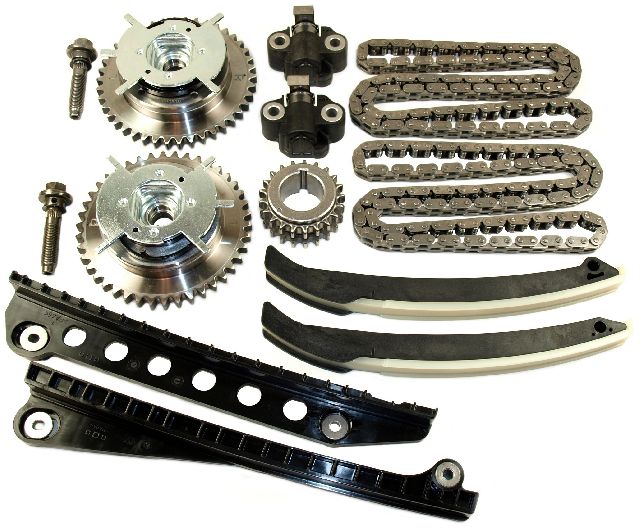
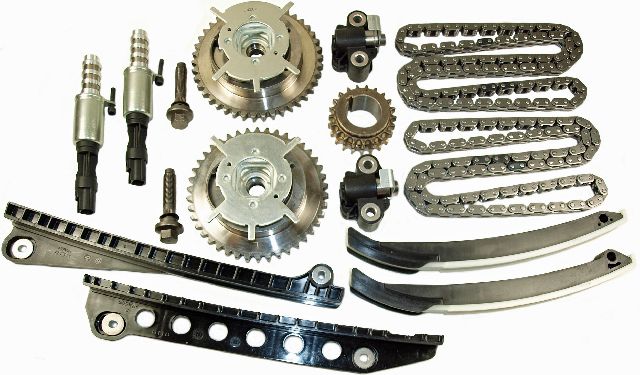
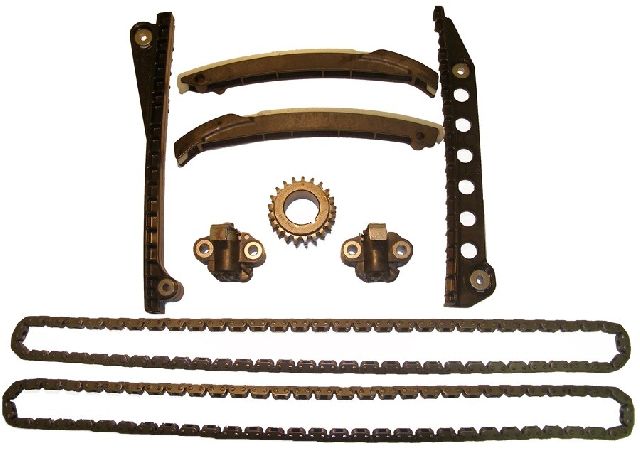
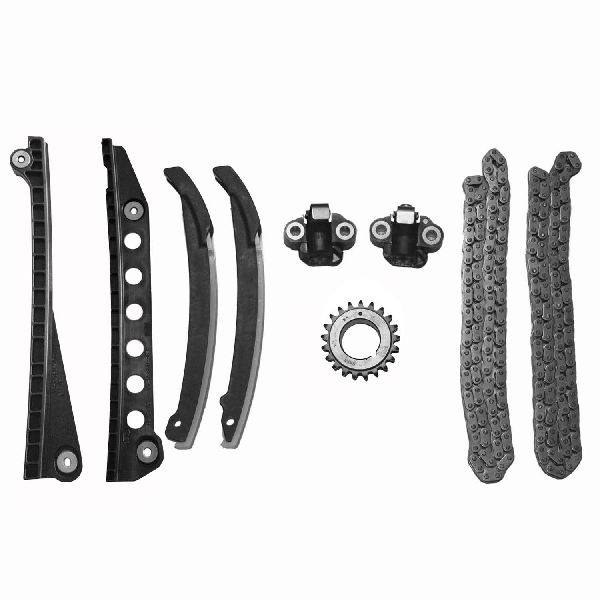
Typical fix: A complete timing job is required. This includes replacing the timing chains, cam phasers, tensioners, guides, and often the oil pump with an upgraded high-volume version. 🎬 Watch: Full timing chain and cam phaser replacement walkthrough. This is a very labor-intensive and expensive repair.
Est. part cost: $500-$1600 for a complete kit
Rare But Worth Checking
- Wiring Harness Issue: The wiring or connector for the Bank 2 VCT solenoid can become damaged or corroded, causing an intermittent signal. This should be checked before replacing more expensive components. Bulletin #SSM 54366 suggests referring to Pinpoint test HK in the PC/ED manual for diagnosing these timing codes.
Diagnosis Steps
- Check Engine Oil: Verify the oil level is full and the oil is clean. If it's low, dirty, or not 5W-20, perform an oil and filter change using Motorcraft parts. Clear the code and see if it returns.
- Scan for Other Codes: Check for related codes like P0012, P0345, or P0021 to understand the scope of the problem.
- Test the VCT Solenoid: The easiest way to test the solenoid is to swap it with the one on Bank 1 (passenger side). If the code follows the solenoid and changes to P0012, the solenoid is faulty and needs replacement.
- Listen for Noises: With the engine warm, listen for a distinct ticking or rattling from the driver's side valve cover area. This noise points towards a failing cam phaser or slack timing chain. Ford TSB 06-19-8 describes this noise.
- Check Oil Pressure: If possible, connect a mechanical oil pressure gauge. You should see at least 15-25 PSI at hot idle. Pressure below this indicates a serious internal problem like failed tensioner seals or a clogged oil pump pickup tube.
- Inspect Internal Components: If other steps fail, the final diagnosis involves removing the valve cover to inspect the cam phaser and the timing cover to inspect the chains, guides, and tensioners for wear or damage. Finding plastic pieces in the oil pan is a sure sign of guide failure.
Parts You'll Likely Need
- VCT Control Solenoid
(OEM #8L3Z-6M280-B)— This is the most common part to fail after oil-related issues. It gets clogged with sludge, causing it to stick.
Trusted brands: Motorcraft
OEM price range: $40-$85
Aftermarket price range: $20-$50 - Full Timing Chain Kit — Required if diagnosis points to failed phasers, tensioners, or guides. A complete kit is recommended to prevent near-future failures of other components. Includes phasers, chains, guides, tensioners, and gaskets.
Trusted brands: Motorcraft, Melling (for upgraded oil pump)
OEM price range: $700-$1600
Aftermarket price range: $400-$900
Related Codes That Often Appear With This One
- P0012 — This is the identical 'over-retarded' code for Bank 1 (passenger side). Seeing both P0012 and P0022 together strongly suggests a systemic oil pressure problem affecting both banks, such as low/dirty oil or failing timing chain tensioners.
- P0345 — This code indicates a circuit malfunction for the Bank 2 camshaft position sensor. The erratic movement of a failing cam phaser or slack timing chain can cause the PCM to interpret the signal as a sensor fault, even though the sensor is working correctly.
- P0021 — This code is for 'Camshaft Position Timing - Over-Advanced (Bank 2)'. Seeing it with P0022 indicates a severe problem with the VCT system on Bank 2, often a VCT solenoid that is sticking intermittently or a failing phaser.
Technical Service Bulletins (TSBs) & Recalls
- TSB 06-19-8: Addresses ticking, knocking, or rattling noises from the VCT system at hot idle, which can be a precursor or symptom related to P0022. It helps differentiate normal injector noise from problematic cam phaser knock.
- TSB 21574: Notes that a light tick/rattle from the VCT system between 800-1200 RPM on light acceleration can be a normal characteristic and advises against attempting repairs for this specific noise.
- SSM 47170: States that P0022 may be due to small debris causing the VCT solenoid to stick and recommends checking for debris before component replacement.
- SSM 54366: Directs technicians to Pinpoint test HK in the Powertrain Control and Emissions Diagnosis manual when diagnosing P0022 and related timing codes.
Platform-Specific Known Issues
- Owner Experience: Solenoid Fix: On an F-150 forum, a user with a P0022 code, rough idle, and hard starting replaced the driver's side VCT solenoid (part 8L3Z-6M280-B). While the hard start was resolved, the rough idle and check engine light remained, indicating a deeper issue, likely with the phaser or other timing components.
- Owner Experience: Full Timing Job Doesn't Fix It: A user on the Ford Truck Enthusiasts forum performed a complete timing job but still had issues, highlighting that even a comprehensive repair can fail if the root cause isn't correctly identified, such as a clogged oil passage or an issue with the VCT housing itself, which are often overlooked.
Mechanic-Grade Diagnostic Values
- VCT Solenoid Internal Resistance — expected: 5.0 to 15.0 Ohms. A more precise factory specification is 6.9 - 7.9 Ohms at 68°F (20°C).. Failure: A reading of 0 Ohms (short), infinity (open circuit), or significantly outside the expected range.
- VCT Solenoid Connector Voltage (Key On, Engine Off) — expected: Approximately 12V (Battery Voltage) on the power supply wire.. Failure: No voltage or significantly low voltage points to a problem in the wiring harness or a blown fuse.
- Mechanical Oil Pressure at Hot Idle — expected: Ford's absolute minimum is 15 PSI, but a healthy engine should show 25 PSI or higher.. Failure: Pressure below 25 PSI suggests internal wear (e.g., tensioner seals) starving the VCT system.
- Scan Tool PID: VCTADVERR2 (Bank 2 Cam Error) — expected: Should hover close to 0 degrees at a stable, hot idle.. Failure: A consistent error of more than +/- 5 degrees for several seconds will trigger the P0022 code. This PID represents the difference between the PCM's commanded cam angle and the actual measured angle.
Hidden / Shadow Codes Worth Checking
- Mode 6, TID $53: This Test ID within Mode 6 monitors the VCT system's performance. It can show raw data and pass/fail results for cam timing accuracy before a persistent DTC like P0022 is set, making it useful for diagnosing intermittent issues. (see via Advanced scan tool with Mode 6 capability (like FORScan or professional-grade scanners) or a mobile app like Torque Pro with custom PIDs configured.)
Scan Tool Commands That Help
- Ford IDS (or equivalent like FORScan): VCT Solenoid Output State Control / Active Command — This bidirectional control allows a technician to manually command the Bank 2 VCT solenoid on and off while the engine is idling. If the engine stumbles or runs rough, the solenoid is mechanically working and oil is flowing. If there's no change in idle, it confirms a stuck solenoid, a clogged oil passage, or a seized cam phaser.
Wiring & Ground Locations
- Bank 2 VCT Solenoid Connector — On the front of the driver's side valve cover.. This connector provides power and the control signal to the solenoid. The pins should be checked for battery voltage (Key On, Engine Off) and for a proper ground signal from the PCM. Oil contamination inside the connector can also disrupt the signal.
- G104 / G105 — Main engine grounds, typically located on the cylinder heads or engine block near the firewall. For the 5.4L, G104 is often cited at the rear of the right (passenger) cylinder head, and G105 at the top right side of the engine.. A poor main engine ground can cause erratic behavior in the PCM and its controlled components, including the VCT solenoids. While not a primary cause, verifying these grounds are clean and tight is a crucial step in diagnosing any electronic engine control issue.
Real Owner Repair Stories
- Ford F150 Forum (2005 Ford Expedition 5.4L 3V) — P0022 code immediately after installing a brand new 5.4L 3V engine. Engine ran fine until it warmed up.
❌ Tried (didn't work) The user confirmed the timing was set correctly and all new Motorcraft timing components and VCT solenoids were used. The code persisted.
✅ What actually fixed it The user suspected a wiring harness issue. After getting a P0345 (cam sensor circuit) code, they untaped the entire sensor harness, inspected each wire, found no visible damage, re-taped it, and reinstalled. The final resolution was not posted, but the diagnosis shifted from mechanical parts (which were all new) to the electrical harness as the likely culprit. - Ford Truck Enthusiasts Forum (2005 Ford Expedition 5.4L) — P0022 and P0345 codes.
❌ Tried (didn't work) The owner tested the VCT solenoid with a power supply and confirmed it actuated correctly. It was not gunked up. The user was hesitant to replace the cam phasers because they had read many stories where a full timing job did not fix the issue.
✅ What actually fixed it The thread discussion pointed out that many failed timing jobs are due to misdiagnosis. The root cause is often not the phaser itself but the loss of oil pressure from failed tensioner seals or a clogged oil pump pickup tube from broken plastic guide pieces. The ultimate fix is a *complete* timing job that also addresses the oil pressure delivery system, not just swapping phasers. - NHTSA ODI #11279320 — An owner reported that their engine developed a P0022 code along with a ticking noise. Despite replacing the VVT solenoids, the problem persisted, which the owner noted was linked to known cam phaser problems in these engines.
- NHTSA ODI #11564296 — An owner reported that even after replacing the camshafts on both sides and the solenoids, the P0022 and P0021 codes remained. The engine lacked power on the driver's side and continued to throw timing codes.
OEM Part Supersession History
3L3Z-6M280-EA, 8L3Z-6M280-A→8L3Z-6M280-B— The solenoid design was updated to improve durability and resistance to clogging from oil contaminants. The newer design is considered more robust.
Heads up: The parts are physically interchangeable, but it is highly recommended to use the latest 'B' revision and replace them in pairs to ensure balanced VCT system performance.
Diagnostic Flowchart
Other Known Issues on This Vehicle
Issues unrelated to this code that are worth knowing about as an owner of this generation:
- Spark Plug Breakage During Removal 🔴 High — Extremely common on higher-mileage engines when changing original-design spark plugs. The long, two-piece plug design allows carbon to build up on the lower electrode shield, causing it to seize in the cylinder head.
- Fuel Pump Driver Module (FPDM) Corrosion and Failure 🔴 High — Very common, especially in regions with road salt. The aluminum module is mounted directly to the steel frame near the spare tire, causing galvanic corrosion that destroys the module's housing and electronics, leading to a crank-no-start or stalling condition.
- Exhaust Manifold Leaks 🟠 Medium — Commonly occurs as the vehicle ages. The passenger side manifold is particularly prone to developing cracks or warping, causing a ticking noise that is most noticeable on a cold start and may quiet down as the engine warms.
- Tailgate Corrosion 🟡 Low — A frequent cosmetic issue where paint bubbles and peels around the liftgate applique and edges due to corrosion.
Used vs. New Parts: Buying Guide for This Vehicle
When a used part is the smart pick: For this specific repair on a 5.4L 3V Triton, using used parts for any core timing component (phasers, solenoids, chains, tensioners, guides, oil pump) is strongly discouraged. The failure rate of these parts is exceptionally high, and a used part has no reliable remaining life. A used valve cover or wiring connector could be a viable option if physically damaged.
What to inspect on the donor part:
- If sourcing a non-timing component like a valve cover, check the donor engine for signs of severe sludge buildup by looking into the oil fill hole. Heavy sludge indicates poor maintenance and suggests all parts from that engine should be avoided.
OEM-only on this vehicle (don't cheap out):
- VCT Solenoids: Aftermarket solenoids are widely reported on forums to have high failure rates, sometimes failing within weeks or months. Always use genuine Motorcraft (8L3Z-6M280-B).
- Cam Phasers: This is the most critical component to buy OEM. Aftermarket phasers, particularly from brands like Dorman, are notorious for failing quickly, causing the 'phaser tick' to return and requiring the entire expensive job to be redone.
Aftermarket brands forum-validated for this vehicle:
- Melling: The Melling M340HV (high volume) oil pump is a widely recommended upgrade during a full timing job. It provides about 20% more oil volume, which helps compensate for internal engine wear and ensures adequate pressure reaches the VCT system.
Brands owners have reported issues with on this vehicle:
- Dorman (for Cam Phasers and VCT Solenoids): While Dorman makes a wide range of parts, their 5.4L 3V timing components have a poor reputation among mechanics and forum users for premature failure.
Real Owner Stories
Aggregated from forums and TSBs cited above. Mileages and costs reflect what owners reported in those sources.
2005 Ford Expedition 5.4L 3-Valve
Symptoms: P0022 code present.
What fixed it: The owner caused both P0012 and P0022 codes simultaneously, which is often linked to oil flow or timing issues.
Source hint: ExpeditionForum.com thread titled 'I caused a P0012 and P0022 code errors.'
Ford F-150 5.4L 3V
Symptoms: P0022 code, rough idle, and hard starting.
What fixed it: Replaced the driver's side VCT solenoid (part 8L3Z-6M280-B). This resolved the hard starting, but the rough idle and check engine light remained, suggesting further issues with the phaser or timing components.
Source hint: F-150 forum user report cited in 'Owner Experience: Solenoid Fix'
Ford F-150 5.4L 3V
Symptoms: P0012 and P0022 codes persisting even after a complete timing job.
What fixed it: The repair failed to resolve the issue, highlighting that root causes like clogged oil passages or VCT housing issues can be overlooked even during comprehensive timing service.
Source hint: Ford Truck Enthusiasts forum thread 'p0012-p0022-complete-timing-job-done-what-now'
Related OBD-II Codes
Frequently Asked Questions
Does Ford TSB 06-19-8 apply to the rattling noise I hear from my 5.4L 3V engine at hot idle?
I hear a light rattle between 800-1200 RPM on my Expedition; should I replace the phasers?
What specific oil filter should I use to avoid VCT issues on my 5.4L Triton?
Can I test the VCT solenoid myself before buying a new one?
What is the correct oil viscosity for the 2007-2014 Ford Expedition 5.4L 3V?
Is there a specific part number for the VCT solenoid replacement?
Helpful Videos
We Have This Part in Stock


The information in this article is provided for general reference and educational purposes only. Vehicle specifications, procedures, and part compatibility can vary by production date, trim level, and region. Always consult your vehicle's factory service manual and verify part numbers before purchasing or performing repairs. Safety-critical components such as airbags, seat belts, and braking systems should be installed by a qualified professional.
- Ford Expedition:
- 🧭 Diagnostic Flowchart
- 🎬 Helpful Videos
- 🛍️ Shop This Part
- What's Unique About the 2007-2014 Ford Expedition
- Symptoms You May Notice
- Most Likely Causes
- Rare But Worth Checking
- Diagnosis Steps
- Parts You'll Likely Need
- Related Codes That Often Appear With This One
- Technical Service Bulletins (TSBs) & Recalls
- Platform-Specific Known Issues
- Mechanic-Grade Diagnostic Values
- Hidden / Shadow Codes Worth Checking
- Scan Tool Commands That Help
- Wiring & Ground Locations
- Real Owner Repair Stories
- OEM Part Supersession History
- Other Known Issues on This Vehicle
- Used vs. New Parts: Buying Guide for This Vehicle
- Real Owner Stories
- 2005 Ford Expedition 5.4L 3-Valve
- Ford F-150 5.4L 3V
- Ford F-150 5.4L 3V
- Related OBD-II Codes
- Frequently Asked Questions
- 🎟️ Get 5% Off