

P0022 on 2000-2006 Lincoln LS 3.9L V8: Causes for Over-Retarded Camshaft Timing
On a 2000-2006 Lincoln LS 3.9L, P0022 is most often caused by a failing secondary timing chain tensioner, especially on 2000-2002 models. This is a known weak point due to its original plastic construction. Other causes include a bad VCT solenoid or low/dirty oil. A distinct rattling or chain-slapping noise from the driver's side of the engine strongly suggests a tensioner failure.
- P0022 on a 3.9L Lincoln LS is a serious code that often points to a failing timing chain tensioner.
- A rattling noise from the engine is a critical symptom; do not ignore it. It almost certainly confirms a mechanical timing issue.
- Always check the engine oil level and condition first, as low or dirty oil is a common cause of VCT system faults.
- The 2000-2002 models are especially prone to tensioner failure due to original plastic parts. Upgrading to metal-body tensioners is the correct fix.
- Repair is labor-intensive, as even replacing the VCT solenoid requires removing the valve cover.
What's Unique About the 2000-2006 Lincoln LS
The 3.9L AJ-V8 engine, a variant of the Jaguar AJ27/AJ28 V8, has a well-documented history of premature timing component failure. Early models (2000-2002) were equipped with first-generation plastic secondary timing chain tensioners that become brittle and crack or break, causing the timing chain to lose tension. This is a primary cause of P0022 on this platform, often accompanied by a distinct engine rattle or chain slap noise. Unlike many other vehicles, the VCT solenoids are located under the valve covers, making their inspection or replacement a more involved job that requires gasket replacement.
Generation note: While the Lincoln LS is a single generation, the 3.9L V8 was updated mid-cycle. Models from 2000-2002 use the AJ30 variant, which is highly susceptible to failure of the original plastic secondary timing chain tensioners. The 2003-2006 models received the updated AJ35 engine, which included improved, metal-bodied tensioners from the factory, making this specific failure less common, though still possible due to age and mileage.
Symptoms You May Notice
- Rough, unstable idle
- Engine stalling, especially when coming to a stop
- Noticeable loss of power and poor acceleration
- Rattling, knocking, or chain-slapping noise from the front of the engine, particularly from the driver's side valve cover area, which may sound like marbles in a can.
- Decreased fuel economy
- Check Engine Light illuminated
- Engine may seem to run better at higher RPMs but poorly at idle
- Replacing the Camshaft Position Sensor: The sensor is reporting the timing issue correctly; it is almost never the cause of the problem itself. A code like P0345 would point to the sensor circuit.
- Assuming it's only the VCT solenoid without checking for timing chain noise: On this engine, a rattling noise is a critical clue that points towards the more serious tensioner issue. Ignoring it can lead to replacing the solenoid without fixing the root cause, only to have the code return.
Most Likely Causes
- Failed Secondary Timing Chain Tensioner (Bank 2) 🔴 High Probability → Shop Engine Timing Chain Models from 2000-2002 used first-generation tensioners with full plastic bodies that crack and fail over time. The plastic pieces can break off, causing the chain to lose tension and jump a tooth.
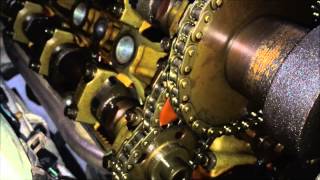
How to confirm: Listen for a rattling/marbling noise from the driver's side valve cover, especially on startup or around 2,000 RPM. The definitive check is to remove the driver's side valve cover and visually inspect the tensioner for cracks, broken orange/brown plastic pieces, or excessive slack in the chain. A healthy chain should have very little play.
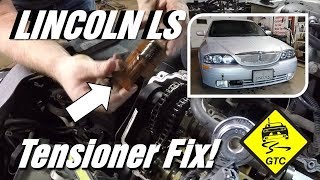
Typical fix: Replace the secondary timing chain tensioner with the updated metal-body version (Jaguar part C2A1512 or equivalent). It is highly recommended to replace both Bank 1 and Bank 2 tensioners, guides, and chains at the same time.
Est. part cost: $60-$120 for a pair of upgraded aftermarket tensioners - Failed VCT Solenoid (Bank 2) 🟡 Medium Probability → Shop Engine Variable Valve Timing (VVT) Solenoid The solenoid can get stuck due to sludge or small debris from infrequent oil changes. On this engine, it's located under the valve cover, exposing it to significant heat and potential oil breakdown.
How to confirm: After removing the driver's side valve cover, the solenoid can be unbolted and removed. It can be tested by applying 9-12V to its terminals to see if the internal plunger actuates with an audible click. A common diagnostic trick is to swap the Bank 2 and Bank 1 solenoids; if the code changes to P0012, the solenoid is confirmed faulty. Since access is difficult, replacement is common once the valve cover is off.
Typical fix: Replace the Bank 2 VCT solenoid and the valve cover gaskets. It is wise to replace both solenoids while the covers are off.
Est. part cost: $100-$150 for an OEM Motorcraft solenoid, $50-$90 for aftermarket. - Low or Dirty Engine Oil 🟡 Medium Probability The VCT system is entirely dependent on clean oil at the correct pressure to function. The Jaguar-derived V8 is known to be sensitive to oil condition. Sludge and debris can clog the small passages in the VCT solenoids and phasers, preventing proper operation.
How to confirm: Check the oil level on the dipstick and inspect its condition. If it is low, dark, or sludgy, this is a likely contributor. Low oil pressure at hot idle can also be a symptom of a larger problem like worn tensioners or oil pump issues.
Typical fix: Perform an engine oil and filter change using the manufacturer-specified 5W-20 oil. Some owners report success with an engine flush product prior to the oil change to help clear sludge.
Est. part cost: $40-$80
Rare But Worth Checking
- Stretched Primary or Secondary Timing Chain: → Shop Engine Timing Chain While tensioner failure is more common, the chains themselves can stretch over high mileage (100k+ miles), causing timing deviation that the tensioners cannot compensate for. This necessitates a full timing job.
- Failed Camshaft Phaser (VCT Actuator): → Shop Engine Camshaft The actuator on the end of the camshaft can fail mechanically or become clogged with debris, getting stuck in one position. This is less common than solenoid or tensioner failure but is a possible cause if other components check out.
- Clogged Oil Passages: Severe engine sludge can block the small oil passages leading to the VCT phaser, starving it of the oil pressure needed to advance the cam timing. This can sometimes happen even after a full timing job if the engine block is not thoroughly cleaned.
- Damaged VCT Solenoid Wiring or Connector: → Shop Engine Variable Valve Timing (VVT) Solenoid The wiring to the VCT solenoid, located under the hot valve cover, can become brittle and crack, causing an intermittent short or open circuit. One owner on Lincolnvscadillac.com found a split wire casing on the connector was the root cause.
Diagnosis Steps
- Verify engine oil level and condition. If low or dirty, perform an oil and filter change with 5W-20 oil, clear the code, and drive to see if it returns. This is the cheapest and easiest first step.
- Start the engine from cold and listen carefully for any rattling, chain slap, or whining sounds from the front of the engine, especially near the driver's side valve cover. Any noise strongly indicates a mechanical timing component issue (tensioner).
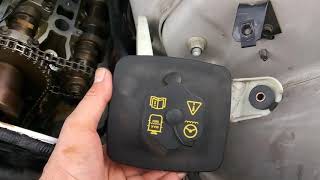
- If no noise is present, the next likely cause is the VCT solenoid. This requires removing the driver's side valve cover for access.
- Once the valve cover is off, inspect the VCT solenoid wiring for brittleness or damage. If okay, remove the solenoid. Test it by applying 9-12V to the pins and listening for a click. Consider swapping it with the Bank 1 solenoid to see if the code follows.
- While the valve cover is off, ALWAYS inspect the secondary timing chain tensioner. Look for cracks in the plastic housing (especially on 2000-2002 models) or broken pieces in the cylinder head. Push on the chain guide to check for tension.
- If the tensioner is broken or the chain is loose, it must be replaced. This is the most likely root cause. It is highly recommended to replace the tensioners, guides, and chains for both banks. 🎬 See: How to remove and replace broken timing guides
- If the solenoid and tensioner appear fine, the issue may be a stuck camshaft phaser or a stretched timing chain, which requires more extensive engine disassembly and special timing tools.
Parts You'll Likely Need
- Secondary Timing Chain Tensioner (Upgraded Metal Body)
(OEM #C2A1512 (Jaguar Part Number for Metal Tensioner))— The original plastic tensioners are a primary failure point on 2000-2002 models, directly causing timing to jump and trigger P0022. The 3rd generation metal-bodied design is the permanent fix.
Trusted brands: Jaguar (OEM), Cloyes, INA
OEM price range: $80-$150 (per side)
Aftermarket price range: $30-$60 (per side) - Variable Camshaft Timing (VCT) Solenoid
(OEM #1X4Z6M280AA (Motorcraft))— Can stick due
Related Codes That Often Appear With This One
- P0012 — This is the same 'Over-Retarded' code for Bank 1 (passenger side). Seeing both P0012 and P0022 together strongly suggests a global issue like extremely low/dirty oil, low oil pressure, or failure of both banks' timing tensioners.
- P0345, P0349 — These are codes for the camshaft position sensor circuit on Bank 2. If a timing chain jumps a tooth, the erratic signal can sometimes trigger a sensor circuit fault code in addition to the timing correlation code.
- P0172 / P0175 — These are 'System Too Rich' codes for Bank 1 and Bank 2. Incorrect camshaft timing can lead to poor combustion and cause the engine to run rich, triggering these codes alongside the timing fault.
Platform-Specific Known Issues
- The 2000-2002 3.9L AJ-V8 engines are known for brittle plastic secondary timing chain tensioners that are prone to cracking and failure, leading to timing codes and engine rattle.
- The VCT solenoids are located under the valve covers, making a relatively simple job on other cars much more labor-intensive on the Lincoln LS.
Mechanic-Grade Diagnostic Values
- VCT Solenoid Coil Resistance — expected: 6.9 to 7.9 Ohms at 68°F (20°C). Failure: A reading significantly outside this range (e.g., 26 Ohms as seen in one case) or an open/short circuit indicates a failed solenoid coil.
- Engine Oil Pressure (Hot Idle) — expected: Minimum 25 PSI. Failure: Pressure below 25 PSI at hot idle suggests a problem that will starve the VCT system of pressure, such as worn tensioner seals, a failing oil pump, or excessive bearing clearance. This must be checked before replacing VCT components.
- VCT Solenoid Actuation Test — expected: An audible 'click' or 'clack' when 9-12V is momentarily applied to the solenoid's pins.. Failure: No sound indicates the solenoid's internal plunger is seized or the coil is dead.
- VCT Solenoid Power Connector (Key On, Engine Off) — expected: Approximately 12V (Battery Voltage). Failure: Low or no voltage indicates a wiring problem between the PCM and the solenoid, not a faulty solenoid itself.
Hidden / Shadow Codes Worth Checking
- Mode 6, Test ID $81: This is a non-continuous monitor test ID within the Ford diagnostic system that specifically checks the Bank 2 variable camshaft timing position for response and accuracy. (see via Requires a professional-grade OBD-II scanner or software like FORScan that can access Mode 6 data. A failing value here can confirm a P0022 fault even if the Check Engine Light is intermittent.)
Scan Tool Commands That Help
- Ford IDS (Integrated Diagnostic System) or FORScan: VCT Solenoid Bidirectional Control (VCT#_CMD PID) — This allows a technician to command the Bank 2 VCT solenoid to a specific duty cycle while monitoring the camshaft position sensor (VCT#_POS PID) and error (VCT#_ERR PID). If the solenoid is commanded on but the cam angle doesn't change, it confirms a failure in the solenoid, phaser, or oil flow.
- Ford IDS (Integrated Diagnostic System): Datalogger Histogram Mode for VCT Error — When test driving, this function graphically displays the VCT error over time. It is extremely useful for capturing intermittent faults that don't happen at idle, helping to determine if the timing error occurs under specific load or RPM conditions.
Wiring & Ground Locations
- G101 — For 2005 models, located on the right rear of the engine compartment. For 2000-2002 models, a similar key ground is often found near the right-side shock tower/radiator support.. This is a primary ground point for the Powertrain Control Module (PCM). A corroded or loose connection here can cause erratic behavior from the PCM, including incorrect sensor readings and faulty command signals to actuators like the VCT solenoid.
- PCM Power Relay — Located in the auxiliary junction box (underhood, right front of engine compartment).. This relay supplies power to the PCM. An intermittent failure of this relay can cause the PCM to lose power, leading to stalling and multiple, often confusing, diagnostic codes, including timing faults.
- VCT Solenoid Connector Pins — Under the Bank 2 (driver's side) valve cover, connected to the VCT solenoid.. When testing, one pin should have 12V+ with key-on, and the other is the ground control wire from the PCM. Technicians must test for voltage at this connector before condemning the solenoid, as a break in the harness under the valve cover is a possible, though rare, cause.
Real Owner Repair Stories
- JaguarForums user 'sicarumba' (Jaguar with AJ-V8 (mechanically similar VVT system)) — Check Engine Light with codes P0077-00 (Intake valve control - circuit high) and P0026-77 (Intake valve control solenoid - circuit range/performance).
❌ Tried (didn't work) Initial diagnosis pointed to a solenoid issue, but confirmation was needed before replacing the part.
✅ What actually fixed it The user tested the resistance of the solenoids on both banks. The faulty bank's solenoid showed 26 ohms, while the good bank showed ~7 ohms. Furthermore, applying 9V from a battery produced a healthy 'clack' on the good solenoid but no noise on the bad one. This confirmed the solenoid was electrically failed internally. Replacing the VVT solenoid and associated gaskets resolved the codes.
OEM Part Supersession History
Plastic-bodied secondary tensioners (various PNs)→C2A1512 (Jaguar Part Number for 3rd Gen Metal-Bodied Tensioner)— The original plastic tensioner bodies were prone to cracking and catastrophic failure.
Heads up: The metal-bodied tensioner is a direct, required upgrade for all 2000-2002 models and a recommended preventative replacement for 2003+ models when performing any timing service.
Model Year Variations Within This Range
- 2000-2002: These models use the AJ30 engine variant, which did NOT have variable valve timing on the intake cams from the factory. However, the underlying timing chain and tensioner architecture is the source of the infamous rattle and failure. A P0022 code on these models is highly unusual and may point to a PCM or wiring issue, as the hardware to over-retard the timing via VCT is not present. The primary issue is tensioner failure causing chain slack.
- 2003-2006: These models use the updated AJ35 engine, which introduced intake VVT and electronic throttle control, increasing horsepower to 280. They came from the factory with improved metal-bodied tensioners, making P0022 more likely to be caused by a VCT solenoid or phaser issue rather than a primary tensioner failure, although tensioner wear can still occur at high mileage.
Diagnostic Flowchart
Other Known Issues on This Vehicle
Issues unrelated to this code that are worth knowing about as an owner of this generation:
- Failing Dual Climate Control Valve (DCCV) 🟠 Medium — Extremely common. The valve fails internally, causing one side of the cabin to blow hot air while the other blows cold, or both blow hot regardless of A/C setting.
- Hydraulic Radiator Fan Pump/Solenoid Failure (2000-2002 models) 🔴 High — Common on early V8 models. The hydraulic pump that runs the cooling fan can leak or the control solenoid can fail, leading to the fan not spinning at the correct speed and causing engine overheating, especially in traffic.
- Leaking Valve Cover Gaskets 🟠 Medium → Shop Engine Valve Cover — Very common. The gaskets and especially the spark plug tube seals degrade, allowing oil to leak into the spark plug wells, which can cause misfires and damage to the ignition coils.
- Cracked Coolant Degas Bottle (Reservoir) 🔴 High — Common failure item. The plastic reservoir develops hairline cracks, especially around the hose nipples, preventing the cooling system from holding pressure and leading to overheating.
- Window Regulator Failure 🟡 Low — Extremely common across all years. The plastic clips that hold the window glass to the regulator break, causing the window to fall into the door.
Used vs. New Parts: Buying Guide for This Vehicle
When a used part is the smart pick: For this specific repair, using used parts is generally not recommended. The primary failure components (tensioners, VCT solenoids) are high-wear or sensitive electronic parts. The only exception might be a major engine component like a cylinder head from a verified low-mileage donor, but even then, all wear items like gaskets, seals, and timing components should be replaced with new ones.
Donor-vehicle mileage cap: roughly under 80000 miles for the part to have meaningful remaining life.
What to inspect on the donor part:
- Verify the donor vehicle was a 2003-2006 model to get the updated AJ35 engine components.
- If possible, remove the valve cover to inspect for oil sludge, which indicates poor maintenance and likely VCT system problems.
- Check for evidence of front-end collision, which could have damaged the front timing cover or accessories.
OEM-only on this vehicle (don't cheap out):
- VCT Solenoids: While aftermarket is available, OEM Motorcraft or Jaguar parts are highly recommended for longevity and correct electronic response. The labor to access them is too high to risk a premature failure of a cheaper part.
- Camshaft Phasers: Aftermarket phasers for Ford/Jaguar V8s have a poor reputation. Stick to OEM if a phaser replacement is necessary.
Aftermarket brands forum-validated for this vehicle:
- Cloyes: A well-regarded brand for timing chain kits, including the upgraded tensioners, chains, and guides.
- INA: Often an OEM supplier for European brands, INA also produces high-quality timing components for this engine.
Brands owners have reported issues with on this vehicle:
- No-name/white-box eBay kits: Timing components are critical to engine health. The risk of using unbranded, low-quality parts which can lead to catastrophic engine failure is too high.
Real Owner Stories
Aggregated from forums and TSBs cited above. Mileages and costs reflect what owners reported in those sources.
2002 Lincoln LS 3.9L V8
Symptoms: Owner experienced P0022 and P0021 codes simultaneously, indicating timing issues on both banks.
What fixed it: The issue was traced to a wiring fault at the VCT connector.
Source hint: https://www.lincolnvscadillac.com/forum/threads/p0022-then-p0021.114751/
2000-2002 Lincoln LS 3.9L V8
Symptoms: Classic chain slap and rattle noise coming from the front of the engine.
What fixed it: Replacement of the secondary timing chain tensioners due to failure of the plastic housing.
Source hint: https://www.lincolnvscadillac.com/forum/threads/bad-timing-chain-tensioner.113943/
2000-2002 Lincoln LS 3.9L V8
Symptoms: P0012 and P0022 codes appearing along with a rich fuel condition (P0175).
What fixed it: The owner identified multiple related issues involving the timing being 'rich and retarded' due to VCT system malfunctions.
Source hint: https://www.lincolnvscadillac.com/forum/threads/rich-and-retarded.113970/
2002 Lincoln LS 3.9L V8
Symptoms: Rattling noise and timing codes caused by broken orange/brown plastic pieces found inside the cylinder head.
What fixed it: Replacement of the secondary tensioners and guides with upgraded versions.
Source hint: https://www.youtube.com/watch?v=0p0Z5h3b9II
Related OBD-II Codes
Frequently Asked Questions
I have a 2002 Lincoln LS and hear a 'marbles in a can' sound from the driver's side. Is this related to P0022?
Which specific replacement part should I use for the timing chain tensioners on my 2000-2002 Lincoln LS?
Can I just swap the VCT solenoids to diagnose a P0022 on this engine?
Why is the VCT solenoid repair so expensive on the Lincoln LS compared to other cars?
Will a simple oil change fix my P0022 code?
Are the 2003-2006 Lincoln LS models less prone to the tensioner failures mentioned in P0022 diagnostics?
Helpful Videos
We Have This Part in Stock


The information in this article is provided for general reference and educational purposes only. Vehicle specifications, procedures, and part compatibility can vary by production date, trim level, and region. Always consult your vehicle's factory service manual and verify part numbers before purchasing or performing repairs. Safety-critical components such as airbags, seat belts, and braking systems should be installed by a qualified professional.
- Lincoln LS:
- 🧭 Diagnostic Flowchart
- 🎬 Helpful Videos
- 🛍️ Shop This Part
- What's Unique About the 2000-2006 Lincoln LS
- Symptoms You May Notice
- Most Likely Causes
- Rare But Worth Checking
- Diagnosis Steps
- Parts You'll Likely Need
- Related Codes That Often Appear With This One
- Platform-Specific Known Issues
- Mechanic-Grade Diagnostic Values
- Hidden / Shadow Codes Worth Checking
- Scan Tool Commands That Help
- Wiring & Ground Locations
- Real Owner Repair Stories
- OEM Part Supersession History
- Model Year Variations Within This Range
- Other Known Issues on This Vehicle
- Used vs. New Parts: Buying Guide for This Vehicle
- Real Owner Stories
- 2002 Lincoln LS 3.9L V8
- 2000-2002 Lincoln LS 3.9L V8
- 2000-2002 Lincoln LS 3.9L V8
- 2002 Lincoln LS 3.9L V8
- Related OBD-II Codes
- Frequently Asked Questions
- 🎟️ Get 5% Off