

P0022 on 2008-2013 Toyota Highlander 3.5L V6: Causes and Fixes for Over-Retarded Cam Timing
On your Highlander, P0022 is most often caused by low or dirty engine oil, or a failing Bank 2 (front) intake oil control valve (OCV/VVT solenoid). Always check your oil level and condition first. If the oil is fine, the OCV is the next likely culprit, costing around $40-$90 for an aftermarket part or $90-$150 for an OEM part. This is a two-trip detection code, meaning the fault must be detected in two consecutive driving cycles to illuminate the Check Engine Light.
- Start with the simplest fix: check your engine oil level and quality. An oil change is the cheapest and most common solution.
- P0022 refers to Bank 2, which is the cylinder bank at the front of the engine bay, near the radiator.
- The most likely failed part is the Bank 2 intake Oil Control Valve (OCV). Swapping it with the Bank 1 OCV is a free and effective way to diagnose the problem.
- Before replacing the OCV, check the small filter screen underneath it for clogs.
- Inspect the VVT-i oil line at the back of the engine to ensure it's the updated all-metal version to prevent potential oil leaks.
What's Unique About the 2008-2013 Toyota Highlander
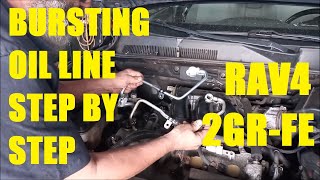
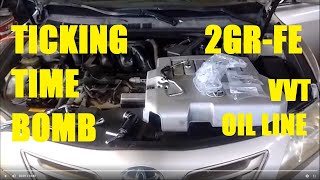
The Toyota 2GR-FE engine is generally very reliable, but its VVT-i system is sensitive to oil quality and level. Many of the issues that trigger a P0022 code are directly related to oil flow. Notably, some earlier 2GR-FE engines (approx. 2005-2010) were subject to a service campaign for a VVT-i oil supply hose that could leak or rupture, leading to low oil levels and potentially this code. While the Highlander wasn't explicitly named in the initial LSC phases, the engine is the same as those in affected models like the Camry, RAV4, and Sienna, and owners report the issue on Highlanders as well. It is critical to check if the rubber hose has been updated to the all-metal line.
Symptoms You May Notice
- Check Engine Light is on
- Rough or unstable idle, sometimes causing the car to shake.
- Engine hesitation or stumbling during acceleration
- Reduced engine power
- Decreased fuel economy
- Engine may be hard to start.
- Stalling when coming to a stop.
- Abnormal ticking or rattling noise from the engine area, especially on cold starts.
- Replacing the camshaft position sensor. While a sensor can fail, it is more likely to throw a sensor-specific circuit code (like P0345). The P0022 code indicates a mechanical timing issue or oil flow problem, not usually an electrical sensor failure.
Most Likely Causes
- Low or Dirty Engine Oil 🔴 High Probability The VVT-i system is hydraulic and requires a specific oil pressure and volume to function. Sludge from infrequent oil changes or low oil levels directly impacts its ability to adjust cam timing, and is a primary cause of this code.
How to confirm: Check the engine oil dipstick for level and clarity. If the oil is below the 'add' mark or appears very dark, thick, or sludgy, this is the likely cause.
Typical fix: Perform an engine oil and filter change using the manufacturer-specified oil (typically SAE 0W-20 or 5W-20). Clear the code and drive to see if it returns.
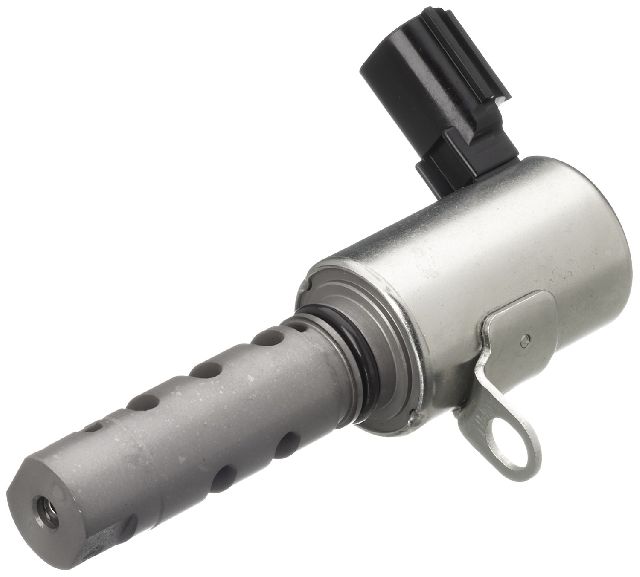
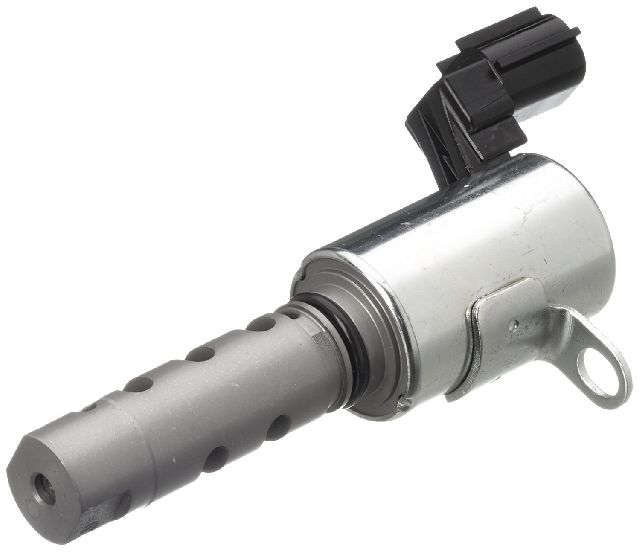
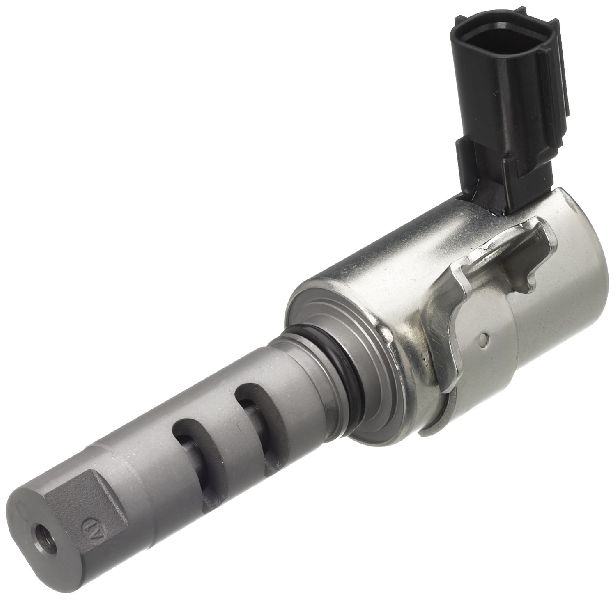
Est. part cost: $40-$80 - Faulty Bank 2 Intake Oil Control Valve (OCV) / VVT Solenoid 🔴 High Probability → Shop Engine Variable Valve Timing (VVT) Solenoid The OCV is an electronic solenoid that can become clogged with sludge or fail electrically over time, preventing it from properly directing oil to the cam phaser. TSB EG004-08 was issued for the 2006-2008 RAV4 with the same engine for this issue, indicating it's a known failure point.
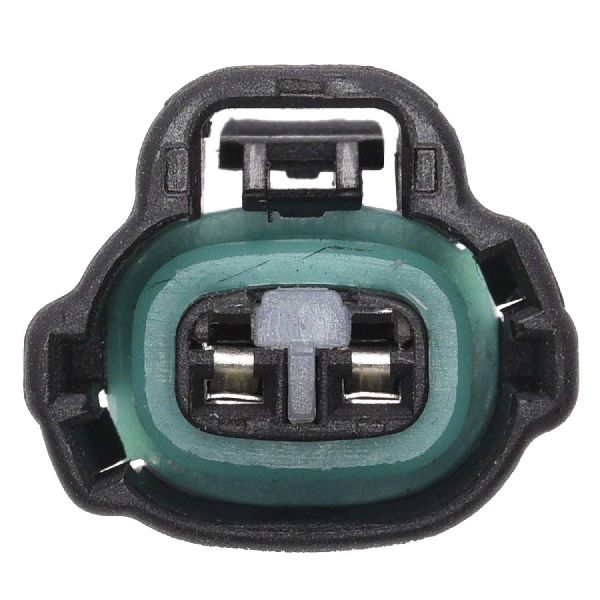
How to confirm: The Bank 2 intake OCV is located on the front valve cover (closer to the radiator). You can test its resistance with a multimeter (should be 6.9-7.9 Ohms at 68°F/20°C). A common diagnostic trick is to swap it with the Bank 1 intake OCV (on the rear valve cover) and see if the code changes to P0012 (Bank 1 Over-Retarded). If it does, the OCV is bad.
Typical fix: Replace the Bank 2 intake Oil Control Valve. It is recommended to use an OEM part from Denso or Aisin for longevity.
Est. part cost: $40-$150 - Clogged Oil Control Valve (OCV) Filter 🟡 Medium Probability → Shop Engine Variable Valve Timing (VVT) Solenoid There is a small, thimble-shaped filter screen located in the cylinder head, below the OCV. This screen can become clogged with debris or sludge, starving the OCV of oil pressure and mimicking a failed OCV.
How to confirm: Remove the OCV and then unbolt and extract the filter screen from the cylinder head. Visually inspect it for sludge or debris.
Typical fix: Clean the filter thoroughly with brake cleaner or replace it if it's damaged or cannot be cleaned. They are inexpensive.
Est. part cost: $5-$15
Rare But Worth Checking
- Failing VVT-i Camshaft Gear (Phaser): → Shop Engine Camshaft This is a more serious mechanical issue. The phaser is located on the end of the camshaft and can get stuck in the retarded position due to internal wear, sludge, or failure of its locking pin. This often produces a rattling sound on startup (the 'death rattle') and is a much more labor-intensive and expensive repair. Toyota issued TSB T-SB-0094-09 for this issue on other 2GR-FE models.
- Stretched Timing Chain or Worn Guides: → Shop Engine Timing Chain While not common on well-maintained 2GR-FE engines, very high mileage (over 150,000 miles) or severe neglect can lead to a stretched timing chain, which will cause the camshafts to be out of sync with the crankshaft.
- Faulty ECM (Engine Control Module): In very rare cases, the engine computer itself can malfunction and incorrectly report a timing issue. This should only be considered after all other mechanical and electrical possibilities have been exhausted.
Diagnosis Steps
- Verify the engine oil level and condition. If low, top it off. If dirty, perform a full oil and filter change, clear the code, and test drive. This is the most common and cheapest fix.
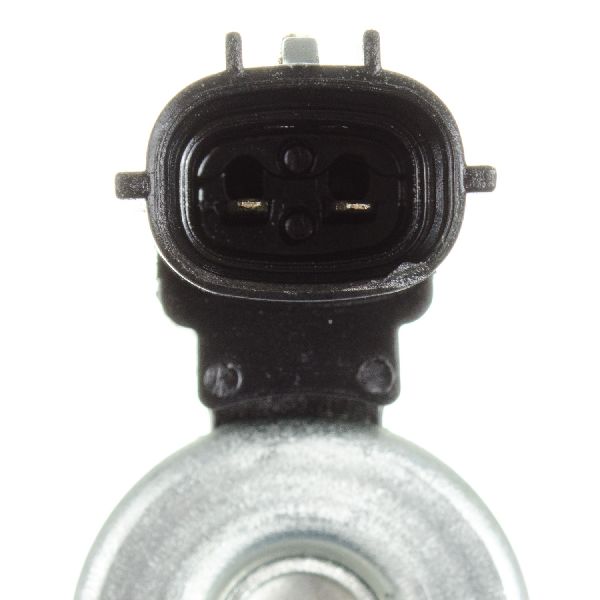
- Locate the Bank 2 (front) intake oil control valve (OCV). Inspect the electrical connector and wiring for any damage.
- Swap the Bank 2 intake OCV with the Bank 1 (rear) intake OCV. Clear the codes and drive the vehicle. If the code changes to P0012, the OCV you moved to Bank 1 is faulty and needs to be replaced. This is a definitive test.
- If the code remains P0022 after the swap, the OCV is likely not the issue. Remove the Bank 2 OCV again. Locate and remove the small OCV filter screen below it. Inspect for clogging and clean or replace it.
- If the filter is clean and the OCV tests good, use a scan tool to command the OCV on and off to check for a response in cam timing. No change could indicate a clogged oil passage or a stuck cam phaser.
- If the issue persists, the problem may be with the VVT-i camshaft gear (phaser) or the timing chain itself. This requires more advanced mechanical diagnosis, including checking timing marks, and is best left to a professional.
Parts You'll Likely Need
- Engine Oil Control Valve (VVT Solenoid)
(OEM #15340-0P020 (replaces 15340-31020))— This solenoid is the most common part to fail or clog, directly causing the over-retarded timing condition on Bank 2.
Trusted brands: Denso (OEM), Aisin, Dorman
OEM price range: $90-$150
Aftermarket price range: $40-$90 - OCV Filter / VVT Valve Filter
(OEM #15678-46020)— This small filter protects the OCV and can get clogged with sludge, restricting oil flow and causing the same symptoms as a bad OCV. It's inexpensive and wise to replace when servicing the OCV.
Trusted brands: Toyota (OEM)
OEM price range: $5-$15
Aftermarket price range: $5-$10
Related Codes That Often Appear With This One
- P0012 — Intake Camshaft Position Timing Over-Retarded (Bank 1). If seen with P0022, it could point to a systemic issue like very low/dirty oil or a problem with the timing chain affecting both banks.
- P0021 — Intake 'A' Camshaft Position - Timing Over-Advanced (Bank 2). Seeing an over-advanced code along with an over-retarded code on the same bank is unusual but could point to an erratic OCV or a failing cam phaser.
Technical Service Bulletins (TSBs) & Recalls
- Limited Service Campaign (LSC) 90K - While not a formal TSB for the P0022 code itself, this campaign addressed a faulty VVT-i oil line on the 2GR-FE engine that could cause catastrophic oil loss, a primary trigger for VVT codes.
- T-SB-0094-09 - Addresses a ticking/clicking noise from the cylinder head area and VVT-i related DTCs (P0014, P0015, P0024, P0025, etc.) on 2GR-FE engines, pointing to inspection and potential replacement of the VVT-i gear actuator (cam phaser).
- EG004-08 - Issued for 2006-2008 RAV4s with the 2GR-FE engine, this TSB addresses M.I.L. 'ON' with VVT-i DTCs by replacing the faulty Oil Control Valve (OCV) with an updated part.
- T-SB-0201-11 Rev1 - Addresses an engine oil cooler pipe leak on 2GR-FE engines equipped with a towing package, which could also lead to low oil levels and VVT codes.
Platform-Specific Known Issues
- The 2GR-FE engine, particularly in 2005-2010 models, was equipped with a VVT-i oil supply line for Bank 1 (rear) that contained a rubber section. This hose is known to degrade, leak, and in some cases rupture, causing catastrophic oil loss and engine failure. A significant oil leak can cause low oil pressure, leading to various VVT-related codes, including P0022. Toyota issued Limited Service Campaign (LSC) 90K and other notices to replace this with an all-metal line (Part No. 15772-31030). It is critical for any owner of a 2008-2010 Highlander to inspect the VVT-i oil line on the rear of the engine to see if it has been updated to the all-metal version.
Mechanic-Grade Diagnostic Values
- Bank 2 Intake Oil Control Valve (OCV) Resistance — expected: 6.9 - 7.9 Ohms at 68°F (20°C). Failure: A reading outside this range, or an open/short circuit (no reading), indicates a faulty OCV.
- Mode $06, VVT Monitor Bank 2 Test Value — expected: A passing value will be a time in seconds well below the failure threshold (e.g., < 9.5 seconds).. Failure: A test value approaching or exceeding the maximum limit indicates a slow VVT system response, which can be a precursor to the P0022 code being set.
Scan Tool Commands That Help
- Toyota Techstream: Active Test: 'Control the VVT System (Bank 2)' — This bidirectional command allows a technician to manually command the Bank 2 intake OCV to operate. While monitoring live data for 'Intake VVT Change Angle Bank 2', the technician can verify if the OCV is responding to commands and if the cam phaser is physically moving. If the command is sent but the angle does not change, it points to a stuck OCV, clogged oil passage, or a failed cam phaser.
Wiring & Ground Locations
- Ground Point 'EA' — On the 2GR-FE, this primary engine ground is located on the left side (driver's side) of the cylinder head, near the mounting bracket for the intake manifold.. A loose or corroded main engine ground can cause a host of electrical issues, including erratic sensor readings. While not a direct cause of P0022, verifying this ground is clean and tight is a crucial step in diagnosing any engine control problem.
- Ground Point 'EB' — Located on the front of the engine block, near the Bank 2 (front) cylinder head.. This ground is physically closer to the Bank 2 OCV and camshaft position sensor. Poor connection here could potentially affect the operation or readings of these components, contributing to VVT-related fault codes.
- ECM Connector (e.g., D4 on a 2009 model) — The Engine Control Module (ECM) is located in the engine bay, typically behind the right side of the dash area.. Technicians may need to probe the pins leading to the Bank 2 OCV at the ECM connector to test for continuity and voltage, ruling out a wiring harness issue between the computer and the solenoid.
Real Owner Repair Stories
- Reddit user in r/ToyotaHighlander (2009, 2010, and 2012 Highlanders with 3.5L 2GR-FE V6) — Occasional VVTI gear noise (rattle) on a cold start, particularly after a short trip and then sitting overnight.
❌ Tried (didn't work) The user notes this is a recurring issue that isn't a complete failure but a known quirk.
✅ What actually fixed it This is not a story of a permanent fix, but a management strategy. The user reports that ensuring the engine is run up to full operating temperature before shutdown seems to prevent the issue. The problem is described as incorrect oil delivery on short trips, leading to the rattle on the next cold start. This implies that oil sludge or slow oil pressure build-up is the root cause, aligning with the common causes of P0022. - Owner of a Toyota vehicle (NHTSA ODI #10579431) — Reported that the check engine light came on with codes P0012 and P0022 simultaneously. Upon inspection at a Toyota shop, both VVT systems were activated and checked for operation, and were found to be working fine at the time of the diagnostic.
OEM Part Supersession History
15340-31020→15340-0P020— Part update/revision by Toyota. The newer part is the current replacement for the original.
Heads up: The parts are interchangeable, with the newer -0P020 part being the recommended replacement.
Model Year Variations Within This Range
- 2008-2010: These earlier years of the second-generation Highlander are more likely to have the original rubber VVT-i oil line for Bank 1 if the Limited Service Campaign was not performed. A failure of this line leads to massive oil loss, which can trigger codes for both banks, including P0022. Models from 2011-2013 were typically built with the updated all-metal line from the factory.
- 2008-2010 vs 2011-2013: For the 2011 model year, the Highlander received a facelift. While the 2GR-FE engine remained the primary V6, some minor running changes to electronics or ECU software may exist. However, the fundamental causes and fixes for P0022 remain consistent across the entire 2008-2013 range.
Diagnostic Flowchart
Other Known Issues on This Vehicle
Issues unrelated to this code that are worth knowing about as an owner of this generation:
- VVT-i Oil Line Rupture 🔴 High — Common on 2005-2010 models that have not had the rubber hose updated to the all-metal part. Failure can be sudden and cause catastrophic engine oil loss. (Ref: LSC 90K)
- Water Pump Failure 🟠 Medium — A relatively common failure item, particularly on earlier models (pre-2010). Can leak coolant or fail internally, leading to overheating.
- Intermediate Steering Shaft Noise 🟡 Low — A very common issue where the steering column makes a creaking or knocking sound when turning the wheel at low speeds or when stationary. It is often considered an annoyance rather than a critical safety issue.
- VVT-i Cam Gear Rattle ('Death Rattle') 🟠 Medium — Some engines develop a brief rattle from the cam gears on cold startup due to a failing locking pin. If it becomes persistent, it requires expensive replacement of the cam phasers. (Ref: T-SB-0094-09)
- Oil Cooler Pipe Leak (Towing Package) 🟠 Medium — On models equipped with the factory tow package, the oil cooler lines can develop leaks, leading to loss of oil. (Ref: T-SB-0201-11 Rev1)
Used vs. New Parts: Buying Guide for This Vehicle
When a used part is the smart pick: A used OEM Oil Control Valve (VVT Solenoid) from a low-mileage, reputable junkyard can be a cost-effective option. Since it's an external, easily accessible part, its condition can be visually inspected. This is preferable to a new, unbranded aftermarket part of unknown quality.
Donor-vehicle mileage cap: roughly under 80000 miles for the part to have meaningful remaining life.
What to inspect on the donor part:
- Ask for the donor vehicle's mileage. Avoid parts from high-mileage engines.
- Inspect the electrical connector for corrosion or damage.
- Check the small filter screens on the solenoid body. They should be clean and free of metallic debris or heavy sludge.
- If possible, test the resistance with a multimeter before purchase; it should be between 6.9 and 7.9 ohms.
OEM-only on this vehicle (don't cheap out):
- VVT Camshaft Gear (Phaser): This is a critical timing component. Aftermarket versions have a poor reputation for reliability and can fail prematurely, causing catastrophic engine damage. The labor to replace it is extensive, making it a job you only want to do once with a quality OEM part.
- Timing Chain and Tensioners: Similar to the phaser, these are core engine components where OEM quality is paramount for longevity.
Aftermarket brands forum-validated for this vehicle:
- Denso (often the Original Equipment Manufacturer for Toyota)
- Aisin (another high-quality OEM supplier for Toyota)
- NTK/NGK (known for quality sensors and electrical components)
Brands owners have reported issues with on this vehicle:
- Unnamed/white-box brands from online marketplaces. Users on forums frequently report that cheap, no-name VVT solenoids either don't work out of the box or fail within a few months, causing the code to return.
Real Owner Stories
Aggregated from forums and TSBs cited above. Mileages and costs reflect what owners reported in those sources.
2006-2008 Toyota RAV4 3.5L 2GR-FE
Symptoms: M.I.L. 'ON' with VVT-i DTCs present.
What fixed it: Replacement of the faulty Oil Control Valve (OCV) with an updated part as specified in the technical service bulletin.
Source hint: EG004-08
2008-2010 Toyota Highlander 3.5L 2GR-FE
Symptoms: Catastrophic oil loss and engine failure symptoms due to a ruptured rubber section in the VVT-i oil supply line.
What fixed it: Replacement of the rubber/metal hybrid line with an all-metal oil line (Part No. 15772-31030).
Source hint: Limited Service Campaign (LSC) 90K
Related OBD-II Codes
Frequently Asked Questions
Does the VVT-i oil line issue mentioned in LSC 90K apply to my 2008-2010 Highlander?
My Highlander is making a clicking noise from the cylinder head along with the P0022 code. Is there a specific TSB for this?
Can I test if the Bank 2 Oil Control Valve is actually bad before buying a new one?
Is there a specific Oil Control Valve brand recommended for the 3.5L V6?
Could a leaking oil cooler pipe cause my P0022 code?
What is the 'thimble-shaped' part mentioned in the diagnosis steps?
Helpful Videos
![How to Fix TOYOTA P0022 Engine Code in 4 Minutes [1 DIY Method / Only $19.45]](https://img.youtube.com/vi/vmX7wLfp7r8/mqdefault.jpg)
![How to Fix P0022 Engine Code in 4 Minutes [2 DIY Methods / Only $6.53]](https://img.youtube.com/vi/BO7HzbeFxqo/mqdefault.jpg)
We Have This Part in Stock


The information in this article is provided for general reference and educational purposes only. Vehicle specifications, procedures, and part compatibility can vary by production date, trim level, and region. Always consult your vehicle's factory service manual and verify part numbers before purchasing or performing repairs. Safety-critical components such as airbags, seat belts, and braking systems should be installed by a qualified professional.
- Toyota Highlander:
- 🧭 Diagnostic Flowchart
- 🎬 Helpful Videos
- 🛍️ Shop This Part
- What's Unique About the 2008-2013 Toyota Highlander
- Symptoms You May Notice
- Most Likely Causes
- Rare But Worth Checking
- Diagnosis Steps
- Parts You'll Likely Need
- Related Codes That Often Appear With This One
- Technical Service Bulletins (TSBs) & Recalls
- Platform-Specific Known Issues
- Mechanic-Grade Diagnostic Values
- Scan Tool Commands That Help
- Wiring & Ground Locations
- Real Owner Repair Stories
- OEM Part Supersession History
- Model Year Variations Within This Range
- Other Known Issues on This Vehicle
- Used vs. New Parts: Buying Guide for This Vehicle
- Real Owner Stories
- 2006-2008 Toyota RAV4 3.5L 2GR-FE
- 2008-2010 Toyota Highlander 3.5L 2GR-FE
- Related OBD-II Codes
- Frequently Asked Questions
- 🎟️ Get 5% Off