

P0024 on 2008-2013 Toyota Highlander 3.5L V6: Causes and Fixes for Over-Advanced Timing
On a 2008-2013 Highlander with the 3.5L V6, code P0024 is almost always caused by a faulty Bank 2 exhaust Oil Control Valve (OCV) or low/dirty engine oil. Bank 2 is the front bank, near the radiator, making the OCV accessible. Expect to pay ~$60-$120 for an aftermarket OCV, with DIY difficulty rated at 2/5. Before replacing parts, always check the oil level and condition first.
- First, check your oil. Low or dirty oil is a common cause and the easiest fix.
- The most likely failed part is the Bank 2 (front, by radiator) exhaust Oil Control Valve (OCV).
- A simple diagnostic is to swap the front and rear exhaust OCVs to see if the code follows the part (changes to P0014).
- Do NOT replace the camshaft position sensor unless a specific sensor code is present.
- If you have a 2008-2009 model, inspect the rear VVT-i oil line for leaks and ensure it has been updated to the all-metal version.
What's Unique About the 2008-2013 Toyota Highlander
The 2GR-FE engine is generally very reliable, but its VVT system is highly sensitive to oil level and quality. For this P0024 code, the issue is almost always a simple-to-replace Oil Control Valve (OCV) on the easily accessible front bank of the engine. Early models in this generation (specifically 2008) were also part of a service campaign for a rubber VVT oil line that could rupture, causing sudden, catastrophic oil loss. While that failure causes more severe issues than just a P0024 code, it highlights the critical importance of the oiling system on this specific engine.
Symptoms You May Notice
- Check Engine Light is on
- Rough or unstable idle
- Poor acceleration or hesitation
- Reduced fuel economy
- Engine stalling in some cases
- Engine may make a ticking or rattling sound, especially on cold starts
- Replacing the camshaft position sensor. A P0024 code indicates a mechanical timing performance issue, not an electrical sensor failure. Do not replace the camshaft position sensor unless you have a separate code specifically for that sensor (e.g., P0345).
Most Likely Causes
- Faulty Bank 2 Exhaust Oil Control Valve (VVT Solenoid) 🔴 High Probability → Shop Engine Variable Valve Timing (VVT) Solenoid These solenoids can get clogged with oil sludge over time or fail electrically, causing them to stick in one position. It's a very common failure item on high-mileage Toyota engines, especially if oil changes are neglected.
How to confirm: Swap the Bank 2 (front) exhaust OCV with the Bank 1 (rear) exhaust OCV. Clear the codes and drive. If the code changes to P0014 (the Bank 1 equivalent), the OCV is faulty. You can also test its resistance with a multimeter; it should be between 6.9 and 7.9 Ohms at 68°F (20°C). Also, inspect the small filter screen in the cylinder head below the OCV for sludge.
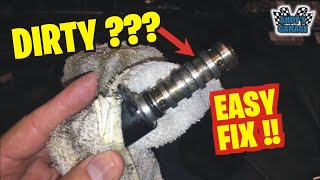
Typical fix: Replace the Bank 2 exhaust Oil Control Valve. 🎬 Watch: How to diagnose and replace your VVT solenoids It is recommended to use an OEM or Denso part for longevity.
Est. part cost: $60-$120 - Low or Dirty Engine Oil 🟡 Medium Probability The VVT system is operated by oil pressure. If the oil is low, old, or sludgy, it cannot operate the VVT components correctly, leading to timing errors. Many owners on forums report that simply changing the oil and filter resolves the code.
How to confirm: Check the engine oil level on the dipstick and inspect its condition. If the level is low or the oil is dark, sludgy, or past its change interval, this is a likely contributor.
Typical fix: Perform an oil and filter change using the correct viscosity oil (typically 5W-30 or 0W-20, check your owner's manual). Clear the codes and drive to see if the issue is resolved.
Est. part cost: $40-$80
Rare But Worth Checking
- Stretched Timing Chain: → Shop Engine Timing Chain While less common, a stretched timing chain can cause the physical camshaft timing to be out of sync with the crankshaft, triggering this code. This is usually seen on very high-mileage engines (150,000+ miles) and may be accompanied by rattling noises on startup.
- Failed VVT Actuator (Cam Phaser): The VVT actuator is the gear on the end of the camshaft that actually performs the timing adjustment. It can fail internally, getting stuck in an advanced position. This is a much more involved and expensive repair than an OCV. A TSB (T-SB-0094-09 Rev2) from Toyota mentions this as a possibility for ticking noises and VVT codes (including P0024) on 2005-2009 models.
- Clogged OCV Filter Screen: Each bank has a small, thimble-sized filter screen for the VVT oil passages located in the cylinder head, often underneath the OCV itself. These can become clogged with sludge, starving the OCV and phaser of oil pressure. They can be removed and cleaned with brake cleaner 🎬 See this guide on cleaning your oil control valves or replaced.
Diagnosis Steps
- Check Engine Oil: Verify the oil level is full and the oil is clean. If low, top it off. If dirty or overdue for a change, perform an oil and filter change first, clear the code, and see if it returns. This simple step solves the problem surprisingly often.
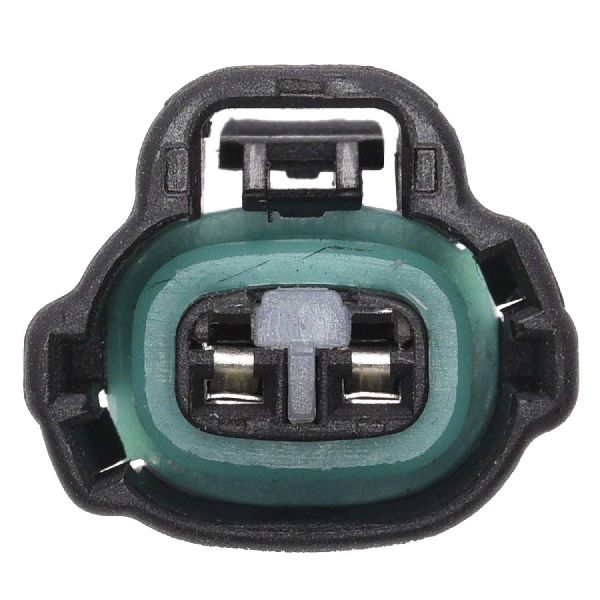
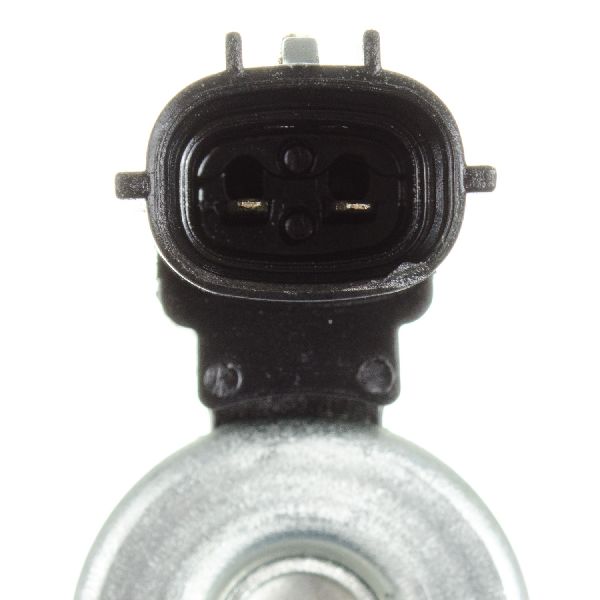
- Inspect OCV Connector: Ensure the electrical connector for the Bank 2 (front) exhaust Oil Control Valve is secure and free of corrosion or oil contamination.
- Test the OCV: The most definitive DIY test is to swap the Bank 2 (front) exhaust OCV with the Bank 1 (rear) exhaust OCV. They are the same part. Clear the codes and drive. If the code returns as P0014, you have confirmed the OCV is the problem. This is a widely recommended diagnostic step on owner forums.
- Clean/Inspect OCV Filter: When you remove the OCV, inspect the small filter screen located in the port below it. Use a pick or small screw to gently pull it out. Clean it thoroughly with brake cleaner or replace it if it's damaged or heavily sludged.
- Active Test (if available): Using an advanced scan tool like Toyota Techstream, command the Bank 2 exhaust OCV to activate and observe the change in camshaft angle. If it doesn't respond correctly, the OCV or its circuit is faulty.
- Inspect Timing Components: If all else fails, the issue may be mechanical with the timing chain or VVT actuator (cam phaser). This is a more complex diagnosis and repair, often best left to a professional. Listen for startup rattles which may indicate a failing phaser.
Parts You'll Likely Need
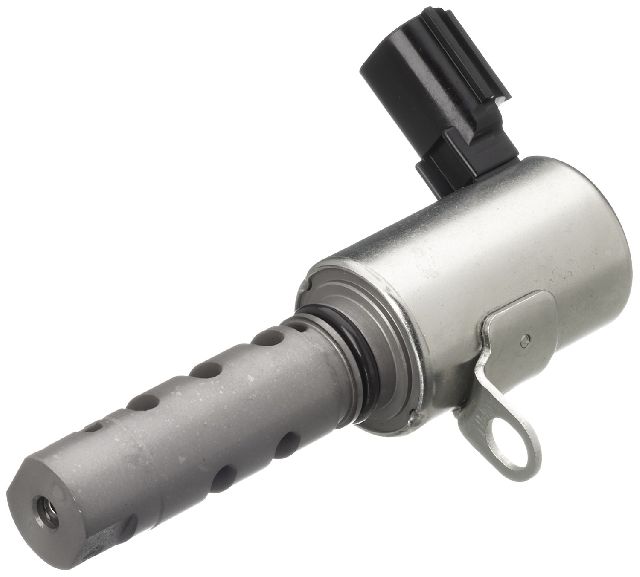
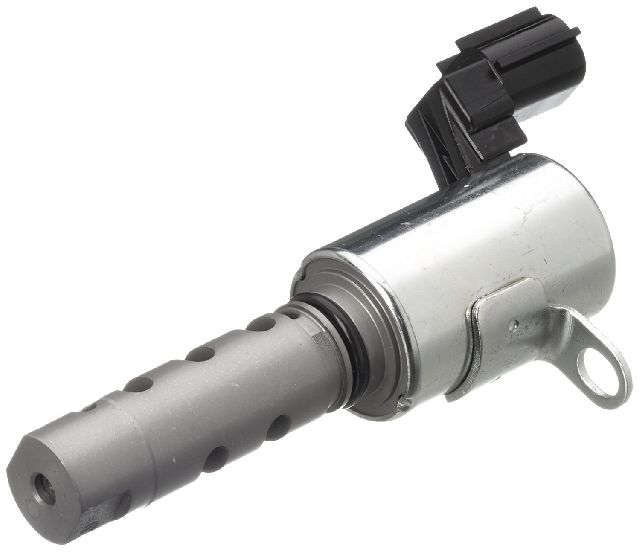
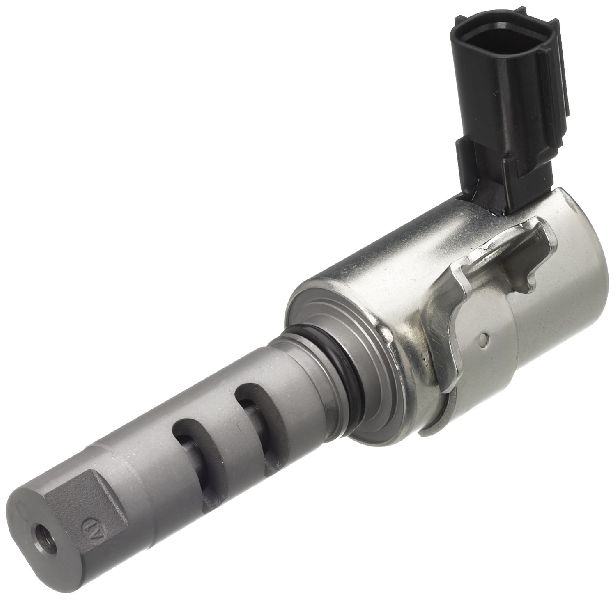
- Engine Variable Valve Timing (VVT) Solenoid / Oil Control Valve (Bank 2 Exhaust)
(OEM #15330-0P020)— This solenoid is the most common failure point for P0024. It gets stuck or clogged, preventing proper control of the camshaft timing. Bank 2 is the front bank, making this part relatively easy to access and replace. The original part number may have been 15330-31020, which was superseded by 15330-0P020.
Trusted brands: Denso (OEM supplier), Aisin, Dorman, Walker
OEM price range: $120-$160
Aftermarket price range: $60-$120
Related Codes That Often Appear With This One
- P0014 (Exhaust Camshaft Position Timing Over-Advanced Bank 1)
- P0015 (Exhaust Camshaft Position Timing Over-Retarded Bank 1)
- P0025 (Exhaust Camshaft Position Timing Over-Retarded Bank 2)
Technical Service Bulletins (TSBs) & Recalls
- Limited Service Campaign (LSC 90K): Addressed the rubber VVT-i oil supply line on some 2007-2010 V6 models, which could degrade and leak, causing sudden oil loss. The campaign involved replacing the rubber/metal line with an all-metal line. The campaign extension ran until December 31, 2021.
- T-SB-0094-09 Rev2: Pertains to a ticking noise and VVT codes (including P0014, P0015, P0024, P0025) on 2005-2009 models. It points to a potential issue with the VVT gear assembly (phaser) itself, but explicitly states to inspect OCVs and other components first, as this is a less common cause.
Platform-Specific Known Issues
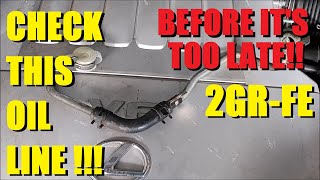
- On early 2GR-FE engines (approx. 2008-2009), a rubber VVT-i oil supply line for Bank 1 (rear bank) was known to rupture, causing rapid and catastrophic oil loss. While this failure is on Bank 1, a sudden loss of oil pressure can trigger timing codes for both banks and destroy the engine. It is critical to inspect this line and ensure it has been updated to the all-metal version (Toyota Part # 15772-31030). 🎬 Watch: How to replace the critical VVT-i oil line This was covered under Limited Service Campaign (LSC) 90K.
Mechanic-Grade Diagnostic Values
- Oil Control Valve (VVT Solenoid) Coil Resistance — expected: 6.9 to 7.9 Ohms at 68°F (20°C). Failure: No reading (open circuit) or a reading outside the specified range.
- ECM Voltage to OCV (Bank 2 Exhaust) — expected: Pulse generation (duty cycle varies with engine operation). Failure: No voltage or constant voltage with the engine running.
- Live Data - Bank 2 Exhaust Camshaft Timing Angle — expected: Angle should change in response to engine RPM and load. Should closely match the 'Target Cam Angle' PID.. Failure: The actual angle is stuck at a high value (over-advanced) and does not correlate with the target angle.
Scan Tool Commands That Help
- Toyota Techstream: Active Test: "Control the VVT System (Bank 2)" or "Control the VVT OCV (Bank2 EX)" — This bidirectional command allows the technician to manually activate the Bank 2 exhaust OCV solenoid. It's used to verify if the solenoid clicks, if the command changes engine idle, and if the camshaft angle PID responds on the live data screen. This directly tests the solenoid's mechanical and electrical function without having to remove it.
Wiring & Ground Locations
- ECM Connector B30, Pins 50 & 49 — At the Engine Control Module (ECM), which is typically located in the engine bay.. Pin 50 (OE2+) and Pin 49 (OE2-) are the specific terminals on the ECM that control the Bank 2 Exhaust Oil Control Valve. Technicians can back-probe these pins to check for the pulse signal from the ECM, confirming the ECM is commanding the valve and that the wiring between the ECM and the valve is intact.
- Bank 2 Exhaust OCV Connector — On the front cylinder head (Bank 2), near the radiator, attached to the exhaust VVT solenoid.. This is the primary connection point to test for voltage arriving at the solenoid or to measure the solenoid's resistance directly. It's a 2-pin connector. Checking for oil contamination, corrosion, or a loose connection here is a critical first step in electrical diagnosis.
Real Owner Repair Stories
- YouTube channel 'Merry Frankster' (Toyota with 2GR-FE 3.5L V6 (e.g., RAV4, Camry, Sienna, Highlander)) — VVT 'death rattle' on cold starts, often associated with VVT-related codes like P0024.
❌ Tried (didn't work) Owner was facing an expensive repair quoted by the dealer, involving replacement of VVT gears and camshafts per T-SB-0094-09.
✅ What actually fixed it The problem was resolved by cleaning the small, thimble-sized VVT oil filter (OCV filter) located under the solenoid and replacing the hardened valve cover O-rings that seal the oil passages. The clogged filter and leaking O-rings were reducing oil pressure to the VVT gear, causing the rattle and timing errors. - NHTSA ODI #10326139 (Cross-model reference for 2GR-FE engine) — An owner reported that a dealer found the oil level 1 quart low and leaking from the VVTI line. A technician using a scan tool found codes P0024 and P0012 for VVTI timing malfunctions. The repair required replacing both VVTI cams, cam housings, cam gears, intake gaskets, and the oil pump.
OEM Part Supersession History
15330-31020→15330-0P020— Part number consolidation and potential minor revisions by Toyota over the years.
Heads up: The parts are interchangeable. All four OCVs (Intake/Exhaust for Bank 1/2) are physically identical and have the same part number for this engine, making swaps for diagnosis easy.
Model Year Variations Within This Range
- 2008-2009 (approx.): Early production 2GR-FE engines were fitted with a VVT-i oil supply line for Bank 1 (rear) that contained a rubber section. This line was prone to rupturing, causing catastrophic oil loss. Later models and service replacements use an all-metal line (PN 15772-31030). While not on Bank 2, a sudden loss of oil pressure from this failure can trigger codes for both banks.
Diagnostic Flowchart
Other Known Issues on This Vehicle
Issues unrelated to this code that are worth knowing about as an owner of this generation:
- VVT-i Oil Line Rupture 🔴 High — Common on early 2GR-FE engines (2008-2009 Highlander) before the part was updated to an all-metal design. Can cause catastrophic engine failure from rapid oil loss. (Ref: LSC 90K)
- Timing Cover Oil Leak 🟠 Medium — A known issue on 2008-2010 models where the timing cover sealant can fail, causing a persistent oil leak. It is a labor-intensive repair.
- Melting / Sticky Dashboard 🟡 Low — Common in vehicles exposed to high heat and sun. The dashboard material degrades, becoming sticky and creating a dangerous glare on the windshield. Toyota had a warranty enhancement program for this. (Ref: Warranty Enhancement Program ZLD)
- Power Steering Line Leak 🟠 Medium — The high-pressure power steering hose is known to leak, particularly at the crimped connections between the rubber and metal sections. Can be difficult to access for replacement.
- Water Pump Failure 🟠 Medium — The water pump can develop leaks, typically noticeable by pink coolant residue around the pump area on the passenger side of the engine.
Used vs. New Parts: Buying Guide for This Vehicle
When a used part is the smart pick: A used Oil Control Valve (OCV) from a low-mileage donor vehicle is a reasonable choice. Since it's an external bolt-on part, it's easy to inspect and replace if it doesn't work. It can be a cost-effective way to diagnose the issue if you suspect the OCV but aren't 100% sure.
Donor-vehicle mileage cap: roughly under 80000 miles for the part to have meaningful remaining life.
What to inspect on the donor part:
- Ask for the VIN of the donor car to verify mileage and check for reported accidents.
- Inspect the electrical connector for cracks or damage.
- Look at the small filter screens on the valve; they should be clean and free of metallic debris or heavy sludge.
- Ensure the plunger inside moves freely if you can manually actuate it (though this is difficult without power).
OEM-only on this vehicle (don't cheap out):
- VVT Actuator (Cam Phaser): This is a critical timing component requiring significant labor to replace. The risk of a used part failing prematurely is too high. Always use a new OEM (Toyota/Denso) part.
- Timing Chain: This is a wear item. Never install a used timing chain.
Aftermarket brands forum-validated for this vehicle:
- Denso (This is the Original Equipment Manufacturer for Toyota)
- Aisin (Another Toyota OEM supplier, known for high quality)
Brands owners have reported issues with on this vehicle:
- Unbranded or generic 'white box' solenoids from online marketplaces have a high failure rate according to forum discussions. While Dorman is a common brand, some professional mechanics express a preference for Denso or Aisin for longevity on Toyota VVT components.
Real Owner Stories
Aggregated from forums and TSBs cited above. Mileages and costs reflect what owners reported in those sources.
2009 Toyota Highlander 3.5L V6 — ~150000 miles
Symptoms: Had a P0024 code and replaced VVT solenoid, check engine still on.
What fixed it: Checking oil level/condition and cleaning or replacing the OCVs as the first priority.
Source hint: Reddit r/MechanicAdvice thread 'Had a P0024 code and replaced VVT solenoid, check engine still on'
2008 Toyota Highlander 3.5L V6
Symptoms: VVT-i oil line ruptured, causing rapid and catastrophic oil loss.
What fixed it: Replacing the rubber VVT-i oil supply line with the updated all-metal version (Toyota Part # 15772-31030).
Source hint: Toyotanation.com thread '2GR-FEV6 LSC 90K (recall) oil line fails-Dealer won't cover damages - WARNING'
Related OBD-II Codes
Frequently Asked Questions
Does the Limited Service Campaign (LSC 90K) for the VVT-i oil line apply to my 2008-2013 Highlander?
I have a ticking noise along with my P0024 code; does T-SB-0094-09 Rev2 apply to me?
Can I swap parts between banks to diagnose the P0024 code on my 3.5L V6?
What is the correct resistance for the VVT solenoid on a 2008 Highlander?
Is there a specific filter I should check when dealing with VVT codes on this engine?
Could my P0024 code be related to the 'sticky dashboard' recall?
Helpful Videos
We Have This Part in Stock


The information in this article is provided for general reference and educational purposes only. Vehicle specifications, procedures, and part compatibility can vary by production date, trim level, and region. Always consult your vehicle's factory service manual and verify part numbers before purchasing or performing repairs. Safety-critical components such as airbags, seat belts, and braking systems should be installed by a qualified professional.
- Toyota Highlander:
- 🧭 Diagnostic Flowchart
- 🎬 Helpful Videos
- 🛍️ Shop This Part
- What's Unique About the 2008-2013 Toyota Highlander
- Symptoms You May Notice
- Most Likely Causes
- Rare But Worth Checking
- Diagnosis Steps
- Parts You'll Likely Need
- Related Codes That Often Appear With This One
- Technical Service Bulletins (TSBs) & Recalls
- Platform-Specific Known Issues
- Mechanic-Grade Diagnostic Values
- Scan Tool Commands That Help
- Wiring & Ground Locations
- Real Owner Repair Stories
- OEM Part Supersession History
- Model Year Variations Within This Range
- Other Known Issues on This Vehicle
- Used vs. New Parts: Buying Guide for This Vehicle
- Real Owner Stories
- 2009 Toyota Highlander 3.5L V6 — ~150000 miles
- 2008 Toyota Highlander 3.5L V6
- Related OBD-II Codes
- Frequently Asked Questions
- 🎟️ Get 5% Off