

P0025 on 2015-2019 Lincoln MKC: Causes and Fixes for Exhaust Cam Timing
On a 2015-2019 Lincoln MKC, P0025 is most often caused by low or dirty engine oil, or a faulty exhaust VCT solenoid. Start by checking your oil. If the oil is fine, the likely fix is replacing the exhaust VCT solenoid, which costs about $40-$60 for the part. Before replacing, a technician may attempt to cycle the solenoid with a scan tool to clear debris as suggested by a Ford TSB.
- First, check your engine oil. Low, dirty, or incorrect viscosity oil is a primary cause of P0025.
- The most likely failed part is the exhaust VCT solenoid, which is relatively inexpensive and accessible to replace.
- Before replacing the solenoid, ask a technician about performing the diagnostic step in TSB SSM 50067, which involves cycling the solenoid with a scan tool to clear debris.
- Always use the OEM-specified viscosity full synthetic engine oil to prevent VCT system problems.
- This code refers to the exhaust camshaft, even though it says 'Bank 2' on an engine with only one bank.
- Do not immediately assume a major timing chain issue; diagnose the simpler, more common causes (oil, solenoid) first.
What's Unique About the 2015-2019 Lincoln MKC
The Lincoln MKC's 2.0L and 2.3L EcoBoost engines rely heavily on a precise Variable Camshaft Timing (VCT) system for performance and efficiency. These engines are known to be sensitive to oil quality and maintenance. Ford/Lincoln has issued Technical Service Bulletin (TSB) #SSM 50067 acknowledging that this code can be triggered by small debris causing the VCT solenoid to stick. The TSB specifically advises technicians to try electronically cycling the solenoid with a diagnostic tool to clear the debris before resorting to component replacement.
Diagnostic Flowchart
Tap your situation to follow the diagnostic path that matches what you're seeing on this vehicle.
Symptoms You May Notice
- Check Engine Light is on
- Rough or unstable idle
- Reduced engine power and poor acceleration
- Engine may hesitate or stall
- Decreased fuel economy
- Engine may make knocking or ticking noises
- Engine may be hard to start 🎬 Watch: A breakdown of P0025 causes and common fixes.
- Replacing the camshaft position sensor first. The sensor is usually just reporting the problem accurately; it is not the cause.
- Replacing the cam phaser before confirming the VCT solenoid is working, that oil pressure is adequate, and that the solenoid wiring is intact.
Most Likely Causes
- Low or Dirty Engine Oil 🔴 High Probability The EcoBoost VCT system is hydraulic and extremely sensitive to oil pressure and cleanliness. Old, incorrect viscosity, or low-level oil prevents the VCT phasers from operating correctly, and sludge can obstruct the solenoid screens.
How to confirm: Check the oil level on the dipstick and examine its color and consistency. If it's low, dark, or sludgy, this is a likely cause. Ensure the oil meets Ford's specific viscosity requirements for this engine.
Typical fix: Perform an oil and filter change using the correct OEM-specified full synthetic oil (e.g., Motorcraft) and a quality filter.
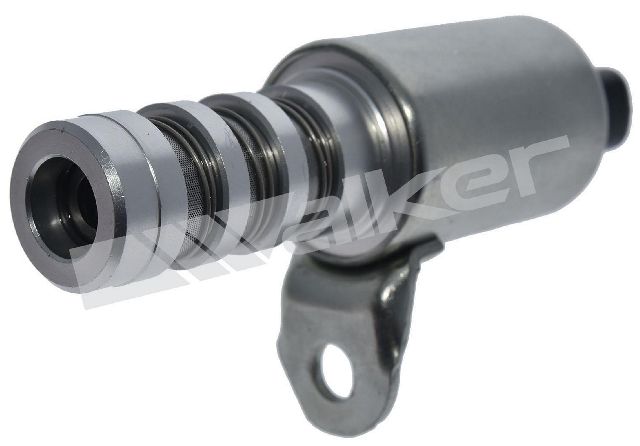
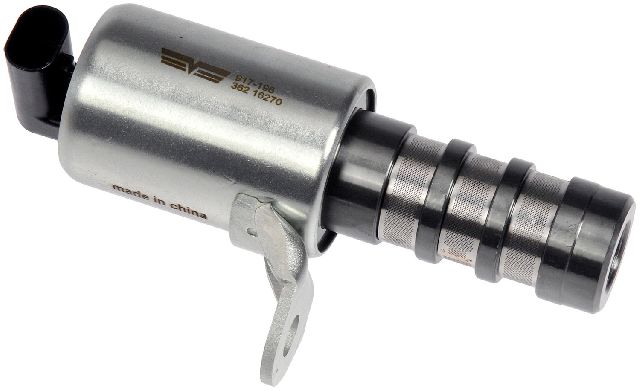
Est. part cost: $50-$90 - Faulty Exhaust VCT Solenoid (Oil Control Valve) 🔴 High Probability → Shop Engine Variable Valve Timing (VVT) Solenoid As noted in Lincoln TSB #SSM 50067, these solenoids can stick due to small debris in the oil, preventing them from correctly regulating oil flow to the cam phaser. This is the most common component failure for this code.
How to confirm: Use a scan tool to monitor commanded vs. actual cam position. Before replacement, follow the TSB procedure (Pinpoint Test HK12) to cycle the solenoid 10 times with the scan tool to try and clear it. You can also test the solenoid's resistance with a multimeter (expect 6.9-7.9 Ohms) or swap it with the intake solenoid to see if the code changes to P0015. 🎬 See how to tell if your VVT solenoid is bad.
Typical fix: Replace the exhaust VCT solenoid for the affected bank. The Motorcraft OEM part number is likely CJ5Z-6M280-A. It's often recommended to replace both intake and exhaust solenoids at the same time.
Est. part cost: $40-$80 - Worn Timing Components (Cam Phaser, Timing Chain) ⚪ Low Probability While less common than oil or solenoid issues, higher mileage vehicles or those with poor maintenance history can suffer from stretched timing chains or failing cam phasers, which can get stuck or fail to respond to oil pressure changes correctly.
How to confirm: This is an involved diagnosis. If oil and solenoids are confirmed good, a mechanic will need to inspect the physical timing components, which requires significant engine disassembly.
Typical fix: Replace the timing chain, guides, tensioners, and cam phasers. This is a significant and expensive repair.
Est. part cost: $400-$1000+
Rare But Worth Checking
- Clogged Oil Passages: If the engine has a history of infrequent oil changes, sludge can build up and restrict the small oil passages that feed the VCT system, even after an oil change.
- Faulty Camshaft Position Sensor: → Shop Engine Camshaft Position Sensor It's rare for the sensor to fail in a way that causes this specific timing code without also setting a sensor-specific code (like P0340-range codes). However, it can happen. Always diagnose other VCT DTCs first.
- Wiring/Connector Issues: Damage, corrosion, or a poor connection at the VCT solenoid connector can cause a loss of signal, preventing the solenoid from actuating correctly.
Diagnosis Steps
- Verify the code with a quality OBD-II scanner.
- Check the engine oil level and condition. Ensure it is the correct manufacturer-specified viscosity. If low or dirty, perform an oil and filter change, clear the code, and re-test.
- Use a scan tool with live data (like FORScan) to monitor the commanded vs. actual position of the exhaust camshaft (PIDs: VCT_EXH_CMD, VCT_EXH_ACT, VCT_EXH_ERR). The error PID should be close to 0 degrees at hot idle.
- Inspect the wiring and connector for the exhaust VCT solenoid for any damage, corrosion, or loose pins.
- As per TSB SSM 50067, use a capable scan tool to perform pinpoint test HK12, which cycles the VCT solenoid 10 times to attempt to clear internal debris. Clear codes and re-test.
- If the code returns, test the VCT solenoid. Check its resistance with a multimeter; the expected range is 6.9 - 7.9 Ohms at 68°F/20°C. A more effective test is to apply 12V directly to the solenoid (off the vehicle) to hear if it clicks.
- If the solenoid is suspect, replace it. It is accessible on the top of the valve cover. 🎬 Watch this walkthrough for replacing the solenoid on 2.0L engines. The likely OEM part is Motorcraft CJ5Z-6M280-A.
- If the code persists with a new solenoid and clean oil, the next step is to test engine oil pressure to ensure it's within spec for VCT operation.
- If oil pressure is good, the final step is to suspect a mechanical issue with the cam phaser or timing chain, which requires further disassembly and inspection.
Parts You'll Likely Need
- Exhaust Variable Valve Timing (VVT) Solenoid
(OEM #CJ5Z-6M280-A)— This is the most common point of failure for this code on this vehicle, often sticking due to oil debris as noted in TSB SSM 50067. The base part number 6M280 is also listed as the causal part in the TSB.
Trusted brands: Motorcraft, Standard Motor Products (SMP), Dorman
OEM price range: $60-$100
Aftermarket price range: $40-$70 - Engine Oil and Filter — The VCT system is dependent on clean oil of the correct viscosity. This should always be the first step in addressing any VCT-related code.
Trusted brands: Motorcraft, Mobil 1, Valvoline
OEM price range: $60-$90
Aftermarket price range: $50-$70
Related Codes That Often Appear With This One
- P0015 — 'B' Camshaft Position - Timing Over-Retarded (Bank 1). On an I4 engine, this code is not typically seen with P0025 as there is only one bank. If seen, it indicates a major PCM or wiring issue.
- P0024 — 'B' Camshaft Position - Timing Over-Advanced (Bank 2). This would indicate the opposite problem (too far advanced) but points to the same system components (VCT solenoid, phaser, oiling system).
- P0300, P0302, P0304 — Random or specific cylinder misfire codes can occur alongside P0025 because incorrect cam timing disrupts the engine's combustion cycle, leading to misfires.
Technical Service Bulletins (TSBs) & Recalls
- SSM 50067: VCT solenoid may stick due to debris, causing various timing codes including P0025. Recommends cycling the solenoid with a scan tool before replacement.
- SSM 54366: Updated diagnostic procedures in the workshop manual for VCT codes including P0025.
Platform-Specific Known Issues
- TSB #SSM 50067: Notes that DTCs including P0025 may be caused by small debris causing the VCT solenoid to stick. It advises against immediate component replacement, instead recommending technicians first use a scan tool to cycle the solenoid 10 times (Pinpoint Test HK12) to attempt to clear the debris.
- TSB #SSM 54366: Mentions an update to the official workshop manual's diagnostic procedure (Pinpoint test HK) for a group of VCT codes including P0025.
Mechanic-Grade Diagnostic Values
- VCT Solenoid Electrical Resistance — expected: 6.9 - 7.9 Ohms at 68°F (20°C). Failure: A reading outside this range, or an open circuit (infinite resistance), indicates a faulty solenoid coil.
- VCT Solenoid Connector Voltage — expected: >10.5 Volts on the power supply pin with Key On, Engine Off.. Failure: No voltage indicates a problem in the power supply circuit, not the solenoid itself.
- VCT Live Data PIDs at Hot Idle (using FORScan/IDS) — expected: VCT_EXH_ERR or VCT_DIF should be approximately 0°. VCT_EXH should be 0°, VCT_INT should be ~20°.. Failure: A large, fluctuating error value (e.g., swinging +/- 10° or more) indicates the phaser is not achieving the commanded position, pointing to a solenoid, oil pressure, or phaser issue.
Scan Tool Commands That Help
- Ford IDS, FORScan, or other capable scan tool: VCT Solenoid On/Off Command (or Duty Cycle Control) — As per TSB SSM 50067, this command should be used to cycle the solenoid 10 times to attempt to dislodge small debris causing it to stick. This is a diagnostic step to perform before replacing the solenoid.
- FORScan, Torque Pro: Live Data Graphing of VCT PIDs — This is crucial for advanced diagnosis. Graphing commanded position (e.g., VCT_EXH_CMD), actual position (VCT_EXH_ACT), and the error between them (VCT_EXH_ERR) while driving can reveal if the solenoid is slow to respond or not responding at all, helping to differentiate between a solenoid and a mechanical phaser issue.
Wiring & Ground Locations
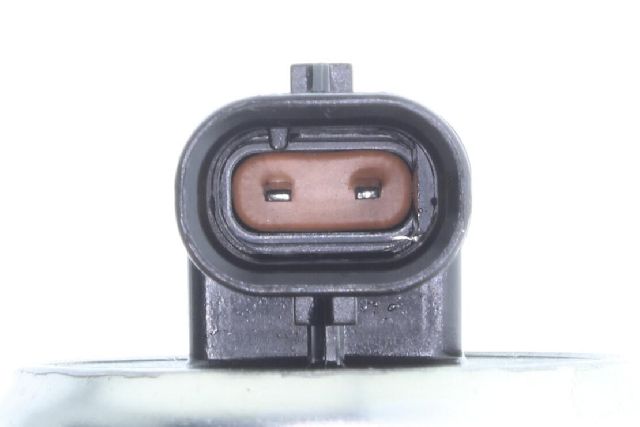
- VCT Solenoid Connector — Plugged into the top of the VCT solenoid, which is located on the valve cover.. This 2-wire connector provides power and control. One wire is a 12V+ power feed (Key On), and the other is a ground signal that is pulse-width modulated (PWM) by the PCM to control the solenoid's position. A bad connection here directly causes the failure.
- Powertrain Control Module (PCM) — Typically located in the engine bay, often near the firewall, in close proximity to the main engine harness connector.. The PCM is the source of the control signal for the VCT solenoid. A fault in the PCM driver or the wiring between the PCM and the solenoid can mimic a failed solenoid.
Real Owner Repair Stories
- Ford F150 Forum (2017 Ford F-150 3.5L EcoBoost (different engine but identical VCT system principle)) — Check Engine Light with codes P0021 and P0025 immediately after a cam phaser replacement job.
❌ Tried (didn't work) Swapping the new VCT solenoids with the original ones.
✅ What actually fixed it The electrical connectors for the VCT solenoids on two different camshafts had been accidentally swapped during reassembly. Reversing the connectors to their correct positions resolved the codes. - Ford F150 Forum user discussion (Ford F-150 with EcoBoost engine) — P0022 (Bank 2 Intake Over-Retarded), rough idle, and occasional stalling only when the engine is very hot after a long drive.
❌ Tried (didn't work) Initial visual inspection.
✅ What actually fixed it Diagnosis using FORScan software revealed the VCT_INT_DIF2 (Bank 2 Intake Cam Position Error) PID was swinging wildly by over 40 degrees when the fault occurred, while other cams were stable. This pointed directly to a failing Bank 2 intake solenoid that couldn't control oil flow under hot, low-viscosity oil conditions. The recommended fix was to replace the Bank 2 solenoids.
Model Year Variations Within This Range
- 2016: TSB 16-0017 was issued for some 2016 MKC vehicles with 2.0L/2.3L GTDI engines with very low mileage (under 2,000 miles) exhibiting VCT codes (P0011, P0015, P0016, P0017). The procedure calls for replacing the VCT solenoid(s). This suggests a potential for premature failure of the solenoids on early-life 2016 models.
Helpful Videos

We Have This Part in Stock


The information in this article is provided for general reference and educational purposes only. Vehicle specifications, procedures, and part compatibility can vary by production date, trim level, and region. Always consult your vehicle's factory service manual and verify part numbers before purchasing or performing repairs. Safety-critical components such as airbags, seat belts, and braking systems should be installed by a qualified professional.
- Lincoln MKC:
- 🧭 Diagnostic Flowchart
- 🎬 Helpful Videos
- 🛍️ Shop This Part
- What's Unique About the 2015-2019 Lincoln MKC
- Symptoms You May Notice
- Most Likely Causes
- Rare But Worth Checking
- Diagnosis Steps
- Parts You'll Likely Need
- Related Codes That Often Appear With This One
- Technical Service Bulletins (TSBs) & Recalls
- Platform-Specific Known Issues
- Mechanic-Grade Diagnostic Values
- Scan Tool Commands That Help
- Wiring & Ground Locations
- Real Owner Repair Stories
- Model Year Variations Within This Range
- 🎟️ Get 5% Off