

P0037 on 2014-2019 Kia Soul: Causes and Fixes for O2 Sensor Heater Fault
P0037 on a 2014-2019 Kia Soul almost always indicates a failed heater element inside the downstream oxygen sensor (Bank 1, Sensor 2). The most common fix is to replace the sensor itself, which is a DIY-friendly job with the part costing between $50 and $120. Before replacing, check the 'SENSOR 1' fuse in the engine bay fuse box.
- P0037 specifically points to the heater circuit in the *downstream* oxygen sensor (Sensor 2), located after the catalytic converter.
- The most common cause is a burned-out heater element inside the sensor itself, making sensor replacement the most likely fix.
- Before buying a new sensor, always perform a quick visual inspection of the wiring for melting or damage and check the related fuse (often 'SENSOR 1' in the engine bay fuse box).
- This is a DIY-friendly repair. The main challenges are accessing the connector inside the passenger footwell and potentially dealing with a rusted-in sensor, which may require penetrating oil and a special O2 sensor socket.
- Ignoring this code will not harm your engine but will prevent you from passing an emissions inspection.
What's Unique About the 2014-2019 Kia Soul
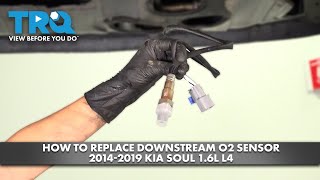
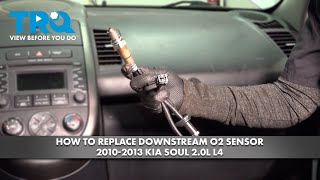
The P0037 code is a very common and straightforward issue on the second-generation Kia Soul. There are no unusual platform-specific defects that cause this code; it is typically the result of the oxygen sensor's internal heater simply wearing out after years of service. The repair is consistent across both the 1.6L and 2.0L engines 🎬 Watch: Diagnostic and replacement tips for Kia O2 sensors offered in this generation and its platform mates like the Hyundai Elantra and Kia Forte.
Symptoms You May Notice
- Check Engine Light (Malfunction Indicator Lamp) is on.
- Vehicle will fail an emissions test.
- Slightly decreased fuel economy (often not noticeable by the driver).
- In some rare cases, a rough idle may be noticed.
- Replacing the upstream (Bank 1, Sensor 1) oxygen sensor. The code P0037 specifically refers to Sensor 2, which is located after the catalytic converter.
Most Likely Causes
- Failed Downstream Oxygen Sensor 🔴 High Probability → Shop Oxygen Sensor The internal heater element within the sensor is a common failure point due to age and countless heat cycles. This is the most frequent cause for P0037 on this platform.
How to confirm: Disconnect the sensor and measure the resistance between the two heater circuit wires (often the two wires of the same color) with a multimeter. An infinite resistance reading (open circuit) or a reading far outside the manufacturer's spec confirms the heater has failed.
Typical fix: Replace the Bank 1, Sensor 2 oxygen sensor.
Est. part cost: $50 - $120 - Damaged Wiring or Connector 🟡 Medium Probability The wiring is routed near the hot exhaust system and under the vehicle, making it susceptible to melting, chafing, or corrosion over time. Damage from road debris is also possible.
How to confirm: Visually inspect the wiring harness and connector leading to the downstream O2 sensor for any signs of melting, breaks, or corrosion in the pins. Check for secure connection.
Typical fix: Repair the damaged section of the wire or replace the connector pigtail.
Est. part cost: $10 - $30 - Blown Fuse ⚪ Low Probability
How to confirm: Locate the fuse for the O2 sensor heater circuit in the engine compartment fuse box. It is often a 10A or 15A fuse labeled 'SENSOR 1' or similar. Check for continuity.
Typical fix: Replace the blown fuse. If it blows again, there is a short circuit in the wiring or the sensor itself that must be found and repaired.
Est. part cost: $1 - $5
Rare But Worth Checking
- Faulty Engine Control Module (ECM): → Shop Engine Control Module (ECM) This is extremely rare. The ECM's internal driver for the heater circuit can fail, but this should only be considered after all other possibilities (sensor, wiring, fuse) have been definitively ruled out.
Diagnosis Steps
- Retrieve the P0037 code using an OBD-II scanner.
- Visually inspect the downstream oxygen sensor's wiring harness and connector for any obvious damage, such as melting on the exhaust pipe or frayed wires.
- Locate and check the fuse associated with the oxygen sensor heater circuit, typically in the engine compartment fuse box and labeled 'SENSOR 1' (10A or 15A). Replace if blown.
- If the wiring and fuse are intact, disconnect the oxygen sensor electrical connector.
- Using a multimeter set to Ohms, measure the resistance between the two heater pins on the sensor side of the connector (usually the two same-colored wires). A reading of infinite resistance (OL) indicates a failed heater element, and the sensor needs replacement. Consult a service manual for the exact resistance specification, but a good heater is typically in the range of 5-20 Ohms.
- If resistance is within specification, check for 12V power at the vehicle-side harness connector with the key on, engine off.
- If power is missing, trace the circuit back to the fuse box to find the open or short. If power is present, check the ground/control side of the circuit for continuity back to the ECM.
- If the sensor's heater has correct resistance and the wiring provides proper power and ground, the issue may be an intermittent connection or, in very rare cases, a faulty ECM.
Parts You'll Likely Need
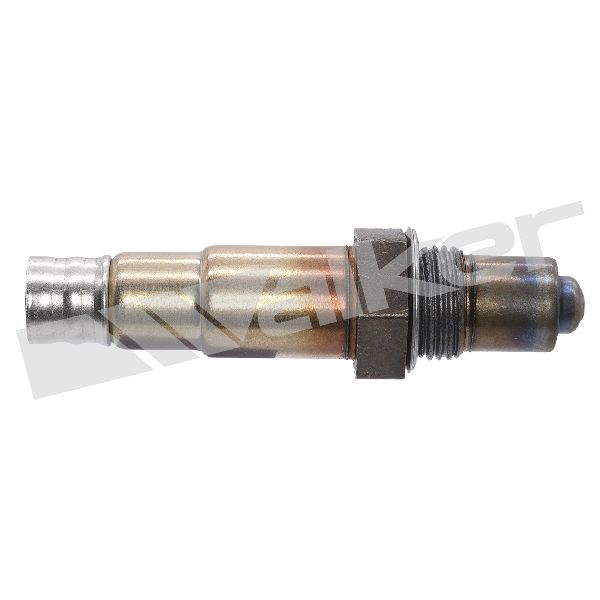
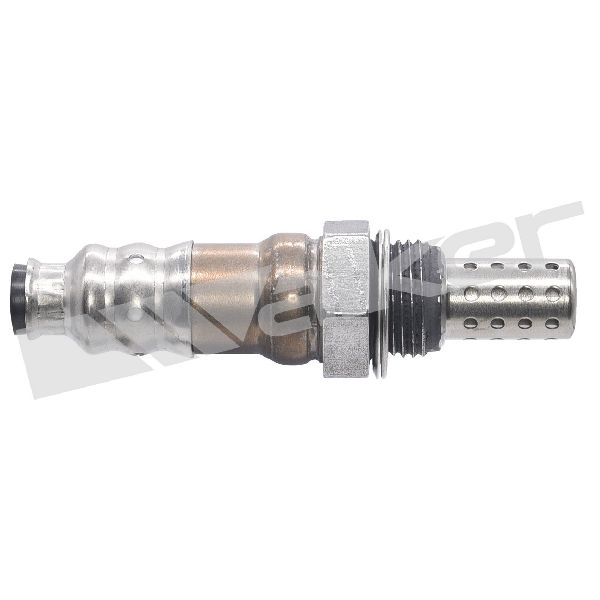
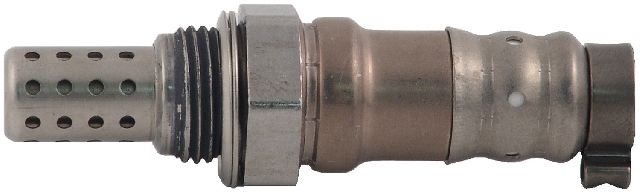
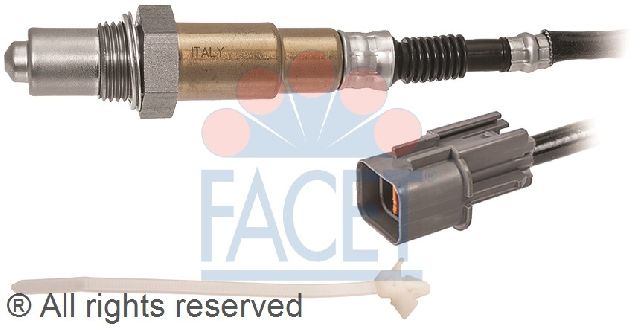
- Downstream Oxygen Sensor (Bank 1, Sensor 2)
(OEM #39210-2E200)— The internal heater element burning out is the most frequent cause of P0037. Always verify the part number with your vehicle's VIN before purchasing.
Trusted brands: Denso, Bosch, NGK/NTK, Walker
OEM price range: $110-$160
Aftermarket price range: $50-$120
Platform-Specific Known Issues
- Seized O2 Sensor: → Shop Oxygen Sensor Due to its location in the exhaust stream, the downstream O2 sensor is highly prone to rusting and seizing in the exhaust pipe. Removal often requires significant force, a liberal application of penetrating oil (like PB Blaster) allowed to soak, and a specialized O2 sensor socket with a long breaker bar. Some owners have had to resort to heating the exhaust bung with a torch to break it free.
Mechanic-Grade Diagnostic Values
- Downstream O2 Sensor Heater Element Resistance — expected: Approximately 9.0 Ω at 68-70°F (20-21°C). A general acceptable range is often cited as 4-10 Ω.. Failure: A reading of infinite resistance (OL), near-zero ohms (short circuit), or a value significantly outside the expected range (e.g., 11.1 Ω or 14 Ω) indicates a failed heater element.
- Voltage at Heater Circuit Supply Pin (Harness Side) — expected: Battery voltage (approximately 11-13.5 Volts) with Key On, Engine Off (KOEO).. Failure: 0V or significantly low voltage points to a problem with the fuse, relay, or the power supply wire.
Scan Tool Commands That Help
- Kia GDS (Global Diagnostic System): DTC Analysis & Live Data (Sensors) — Used to view live data for the heater circuit duty cycle, follow guided diagnostic procedures from the manufacturer, and confirm voltage signals as seen by the ECM. This is most useful when basic multimeter tests are inconclusive or an intermittent fault is suspected.
Wiring & Ground Locations
- Downstream O2 Sensor Connector (2.0L Engine) — Inside the cabin, under the front passenger's seat carpet. The wire harness passes through a rubber grommet in the floor pan.. Knowing the connector is inside the vehicle is critical for DIY replacement on 2.0L models, as it requires removing interior trim to access, unlike the 1.6L model.
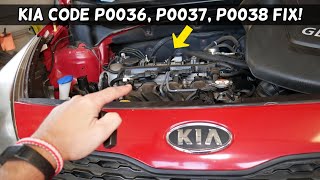
- Downstream O2 Sensor Connector (1.6L Engine) — In the engine bay, typically on a bracket at the back of the engine, below the upstream sensor's connector.. Access from the top of the engine makes diagnosis and replacement easier on the 1.6L models compared to the 2.0L.
- Heater Circuit Power and Ground Pins — At the sensor connector, the two heater wires are typically the same color (often both white).. Correctly identifying these two pins is essential for performing resistance and voltage tests with a multimeter to confirm the fault.
Real Owner Repair Stories
- Car Talk Community user 'Stinky1' (2014 Kia Soul, 126,xxx miles) — Check Engine Light with code P0141 (Heater Circuit Malfunction - functionally the same diagnosis as P0037).
✅ What actually fixed it The user tested the resistance of the downstream O2 sensor's heater circuit (across the two white wires) and got a reading of 11.1 ohms. The specified value was approximately 9.0 ohms. This deviation, although not an open circuit, was enough to confirm the sensor was out of spec and faulty. Replacing the sensor was the confirmed fix.
Model Year Variations Within This Range
- 2014-2019: The electrical connector for the downstream O2 sensor is in a different location depending on the engine. On 1.6L models, it is typically in the engine bay for easy access. On 2.0L models, the connector is often routed inside the cabin, under the passenger-side carpet, requiring interior trim removal for access.
Diagnostic Flowchart
Other Known Issues on This Vehicle
Issues unrelated to this code that are worth knowing about as an owner of this generation:
- Engine Failure / Excessive Oil Consumption (1.6L Gamma & 2.0L Nu) 🔴 High — Widespread issue across multiple model years, often appearing between 70,000 and 120,000 miles. Led to recalls and class-action lawsuits. (Ref: Multiple recalls (e.g., SC200, SC209) and campaigns (e.g., PI2107) were issued to install Knock Sensor Detection System (KSDS) software and inspect/replace engines due to piston ring and connecting rod bearing failures.)
- Degrading Flexible Steering Coupler 🟠 Medium — Extremely common. Owners typically notice a clicking or clunking noise from the steering column when turning, which worsens over time. (Ref: Kia issued TSB CHA-074 and extended the warranty for this part (56315-2K000-FFF) on earlier models, and the issue persists in this generation.)
- High Risk of Catalytic Converter Theft 🟠 Medium — The Kia Soul is frequently listed as one of the most targeted vehicles for catalytic converter theft nationwide due to its accessibility and the value of the metals.
- Steering Gear Pinion Separation 🔴 High — Less common than other issues but extremely dangerous, affecting certain 2014-2016 models. Can result in a complete loss of steering. (Ref: NHTSA #15V736000 / Kia Recall SC125 & SC155.)
Used vs. New Parts: Buying Guide for This Vehicle
When a used part is the smart pick: Never. Oxygen sensors are wear-and-tear items with a finite lifespan, similar to spark plugs or brake pads. A used sensor from a junkyard has unknown remaining life and may fail shortly after installation, forcing you to do the job twice. The cost savings are not worth the risk and labor involved.
What to inspect on the donor part:
- Not applicable, as purchasing a used oxygen sensor is strongly discouraged.
OEM-only on this vehicle (don't cheap out):
- While not strictly OEM-only, it is critical to use a sensor from a reputable OE-supplier.
Aftermarket brands forum-validated for this vehicle:
- Bosch
- Denso
- NGK/NTK
Brands owners have reported issues with on this vehicle:
- Unbranded, no-name sensors from online marketplaces. These often have incorrect internal resistance values, leading to persistent check engine lights, or they fail very quickly.
Real Owner Stories
Aggregated from forums and TSBs cited above. Mileages and costs reflect what owners reported in those sources.
2016 Kia Soul 2.0L — 85000 miles
Symptoms: Persistent P0036 code (related to P0037, for the same sensor's heater circuit).
What fixed it: Replaced the sensor with a Denso aftermarket sensor (part #234-4561) after verifying the fuse was good but finding infinite resistance on the sensor heater circuit.
Source hint: kiacarforums.com thread titled 'P0036 on 2016 Soul'
2017 Kia Soul 2.0L
Symptoms: After replacing the downstream O2 sensor, the car would not shift properly and would not go over 20 mph. It would stay in 1st gear, and after shifting to 2nd, it would not want to move. Codes P0036 and P0137 were present.
What fixed it: The owner did not report a final fix; the problem persisted after sensor replacement.
Source hint: r/AskAMechanic
2016 Kia Soul
Symptoms: Check engine light for P0037; difficulty removing the old sensor due to rust.
What fixed it: Replacing the downstream O2 sensor using a specialized O2 sensor socket.
Source hint: kiasoulforums.com thread titled 'p0037-ho2s-heater-control-circuit-low-bank-1-sensor-2'
Related OBD-II Codes
Frequently Asked Questions
Where is the fuse for the O2 sensor heater circuit located on my Kia Soul?
I'm having trouble removing the downstream sensor on my Soul; is this common?
Is there a specific aftermarket sensor recommended for the 2.0L Kia Soul?
Where does the downstream O2 sensor wiring enter the cabin on a 2015 Soul?
Could my P0037 code be related to the widespread engine failure issues on the 2.0L Nu engine?
Does the Kia Forte share this same P0037 issue?
Helpful Videos
We Have This Part in Stock


The information in this article is provided for general reference and educational purposes only. Vehicle specifications, procedures, and part compatibility can vary by production date, trim level, and region. Always consult your vehicle's factory service manual and verify part numbers before purchasing or performing repairs. Safety-critical components such as airbags, seat belts, and braking systems should be installed by a qualified professional.
- Kia Soul:
- 🧭 Diagnostic Flowchart
- 🎬 Helpful Videos
- 🛍️ Shop This Part
- What's Unique About the 2014-2019 Kia Soul
- Symptoms You May Notice
- Most Likely Causes
- Rare But Worth Checking
- Diagnosis Steps
- Parts You'll Likely Need
- Platform-Specific Known Issues
- Mechanic-Grade Diagnostic Values
- Scan Tool Commands That Help
- Wiring & Ground Locations
- Real Owner Repair Stories
- Model Year Variations Within This Range
- Other Known Issues on This Vehicle
- Used vs. New Parts: Buying Guide for This Vehicle
- Real Owner Stories
- 2016 Kia Soul 2.0L — 85000 miles
- 2017 Kia Soul 2.0L
- 2016 Kia Soul
- Related OBD-II Codes
- Frequently Asked Questions
- 🎟️ Get 5% Off