

P0037 on 2004-2011 Mazda RX-8: Rear O2 Sensor Heater Circuit Causes and Fixes
This code almost always means the rear oxygen sensor, located in the catalytic converter, has failed. Expect to pay $100-$150 for an aftermarket sensor and $250+ for an OEM part. It's a straightforward DIY replacement for most owners.
- P0037 on an RX-8 means the heater in your rear oxygen sensor has almost certainly failed.
- The most likely fix is to replace the rear oxygen sensor, which is located in the catalytic converter.
- Before buying a new sensor, check the 15A 'ENGINE' fuse and visually inspect the wiring for any obvious damage from heat or road debris.
- Use a quality OEM (Mazda) or OE-equivalent (Denso) sensor to avoid potential electrical issues. Part numbers differ for Series 1 (04-08) and Series 2 (09-11) cars.
- This is a DIY-friendly repair that requires basic hand tools and a 22mm (or 7/8") oxygen sensor socket.
- Your car is safe to drive, but you will not pass an emissions inspection until this code is resolved.
What's Unique About the 2004-2011 Mazda RX-8
The Mazda RX-8 uses a Renesis rotary engine, which has a single exhaust path, so 'Bank 1' is the only bank. 'Sensor 2' is the downstream (rear) sensor located in the catalytic converter, used to monitor its efficiency. Due to the high exhaust gas temperatures (EGTs) characteristic of rotary engines, the rear oxygen sensor and its wiring are highly susceptible to heat-related failures. The sensor itself is a very common failure item on these cars.
Generation note: The 2004-2011 range covers both the Series 1 (2004-2008) and Series 2 (2009-2011) RX-8. The function of the rear O2 sensor is the same, but the part numbers are different between the two series. Always verify the part number for your specific vehicle year and transmission type. The Series 2 (2009+) introduced a new 6-speed manual and 6-speed automatic transmission, which coincided with changes to the wiring harness and sensor parts.
Symptoms You May Notice
- Check Engine Light is on.
- Failing an emissions test.
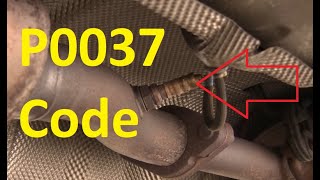
- The code P0037 appears immediately 🎬 Watch this video to see a successful P0037 repair walkthrough. as 'pending' upon startup after being cleared.
- Replacing the front oxygen sensor (Sensor 1) instead of the rear one (Sensor 2).
- Replacing the catalytic converter when the issue is only with the sensor's heater circuit.
- Assuming a cheap, universal oxygen sensor will work correctly. Many owners report that only OEM or high-quality OE-equivalent brands (like Denso) work without causing other issues.
Most Likely Causes
- Failed Rear Oxygen Sensor 🔴 High Probability → Shop Oxygen Sensor The internal heater element of the sensor burns out from countless heat cycles, which is a very common failure mode. The high exhaust heat of the Renesis engine accelerates this wear.
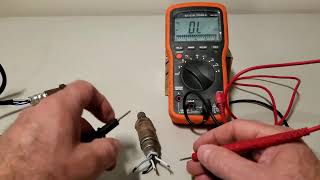
How to confirm: Disconnect the sensor and use a multimeter to measure the resistance between the two heater circuit pins (usually the two same-colored wires, often black). A reading of infinite resistance (open circuit) confirms the heater has failed. 🎬 See how to test the heater element with a multimeter. A good OEM-style (Denso/NTK) sensor will have a low resistance, typically between 5-7 ohms.
Typical fix: Replace the rear oxygen sensor. The sensor is threaded into the catalytic converter and can be accessed from under the car. 🎬 Watch: Step-by-step guide to replacing the RX-8 rear oxygen sensor.
Est. part cost: $100-$250 - Damaged Wiring or Connector 🟡 Medium Probability The wiring harness for the rear O2 sensor is located under the car and can be damaged by road debris or contact with the hot exhaust pipe. The connector is mounted to a bracket on the transmission tunnel and can suffer from corrosion or pulled wires.
How to confirm: Visually inspect the entire length of the sensor's wiring and the vehicle-side harness connector for any signs of melting, chafing, corrosion, or physical breaks. Forum users have reported road debris severing the wires completely.
Typical fix: Repair the damaged section of the wiring harness or clean/replace the connector.
Est. part cost: $5-$50 - Blown Fuse ⚪ Low Probability
How to confirm: Check the fuse box in the engine compartment. The fuse for the O2 sensor heater circuit is typically the 15A fuse in the slot labeled 'ENGINE'.
Typical fix: Replace the blown fuse. If the fuse blows again immediately, it indicates a short circuit in the wiring or, more insidiously, an internally shorted replacement sensor that must be diagnosed and repaired.
Est. part cost: $1-$5
Rare But Worth Checking
- Faulty Powertrain Control Module (PCM): → Shop Engine Control Module (ECM) This is extremely rare. The PCM should only be considered after all other possibilities, including the sensor, wiring, and fuses, have been thoroughly tested and ruled out. A user on Reddit suspected a faulty PCM but later realized they had purchased the wrong type of sensor.
Diagnosis Steps
- Verify the code P0037 is present using an OBD-II scanner.
- Visually inspect the rear oxygen sensor, which is located in the catalytic converter. Check for physical damage to the sensor or its wiring from road debris.
- Follow the sensor's wire to the connector on the side of the transmission tunnel. Inspect the wiring and connector for any signs of melting, corrosion, or damage.
- Check the 15A 'ENGINE' fuse in the under-hood fuse box.
- If the wiring and fuse are good, disconnect the sensor. Use a multimeter to measure the resistance of the heater circuit on the sensor side (between the two black wires). A reading of infinite ohms (OL) means the heater element is broken and the sensor must be replaced. A good sensor should read between 5-15 ohms, with Denso/NTK sensors typically reading between 5-7 ohms.
- If the sensor's heater circuit has proper resistance, check for power and ground at the vehicle's harness connector with the key on, engine off. You should have battery voltage (around 12V) on one pin and a good ground on another.
- If power, ground, and the sensor itself all test good, the issue may be in the signal wire to the PCM or, very rarely, the PCM itself.
Parts You'll Likely Need
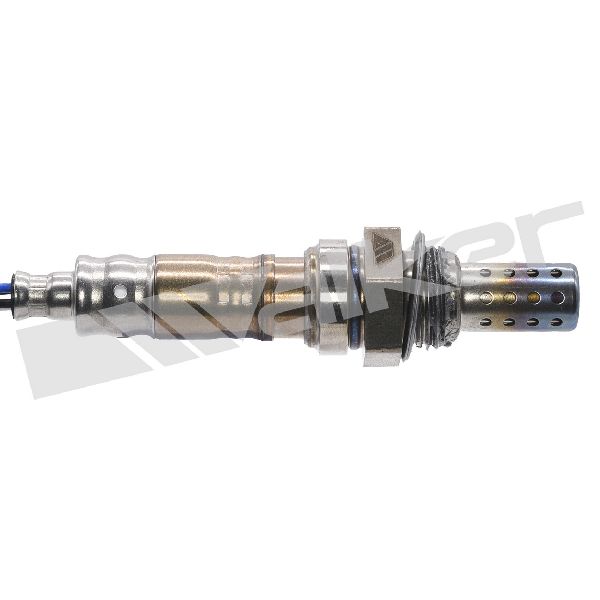
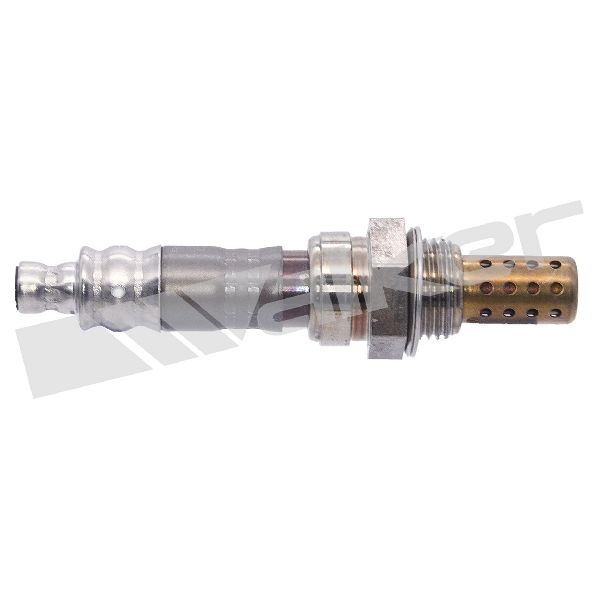
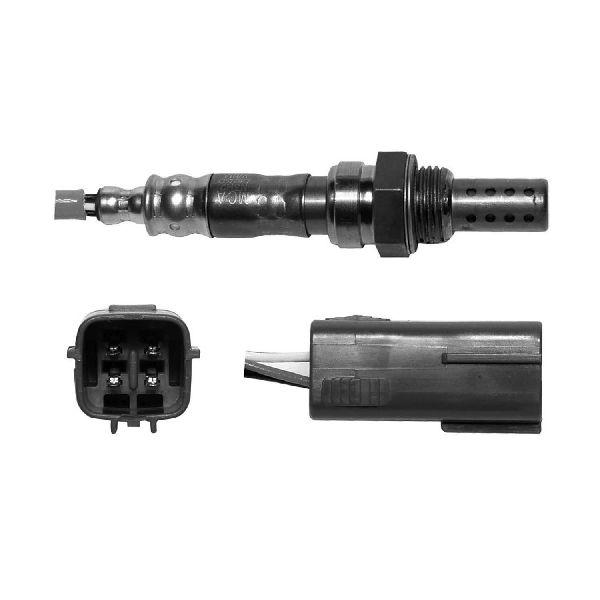
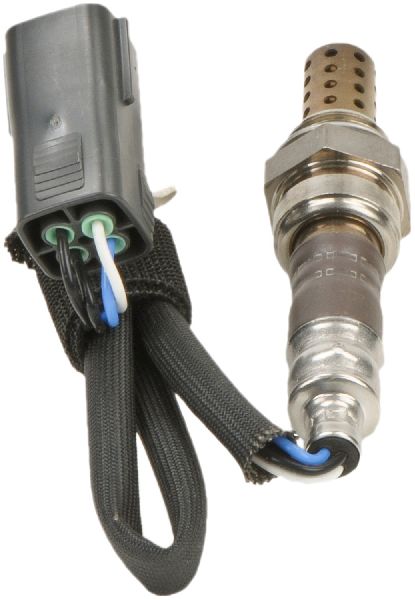
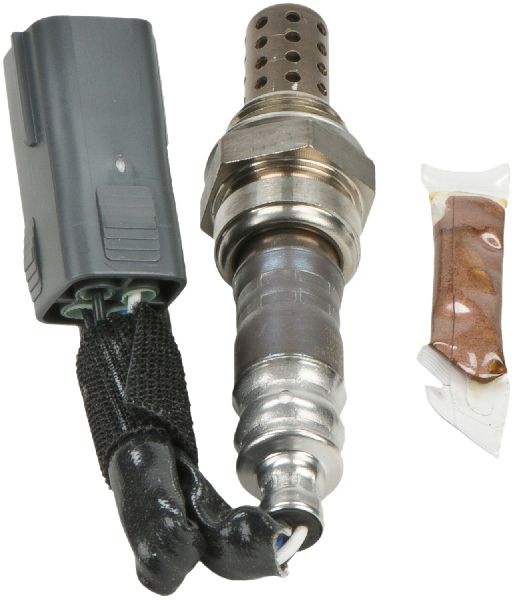
- Rear Oxygen Sensor (Bank 1, Sensor 2)
(OEM #S1 (04-08 MT): N3H3-18-861B, S1 (04-08 AT): N3H2-18-861C, S2 (09-11 MT): N3R1-18-861)— This is the most common failure point for code P0037. The internal heater element fails, creating an open circuit detected by the PCM. Denso is the original equipment manufacturer.
Trusted brands: Denso (OEM), NGK/NTK, Bosch
OEM price range: $210-$250
Aftermarket price range: $110-$160
Technical Service Bulletins (TSBs) & Recalls
- No specific Technical Service Bulletins (TSBs) for P0037 on the RX-8 are widely documented. The issue is treated as a standard component failure. General TSBs for other models sometimes mention checking for wiring harness damage, which is also a valid step for the RX-8.
Platform-Specific Known Issues
- Many owners on forums strongly recommend using only OEM or Denso-branded sensors. There are multiple documented cases where cheap, unbranded aftermarket sensors either fail quickly or cause new, different trouble codes, leading to more diagnostic headaches. One owner on RX-8 Owners Club UK reported two separate instances where cheap sensors shorted internally, blew the 'Engine' fuse, and caused misfires.
- The sensor can become seized in the catalytic converter bung due to heat and corrosion, requiring significant force, penetrating oil, and a proper O2 sensor socket to remove. In extreme cases, owners have had to cut the sensor and use a deep socket with an impact gun.
Mechanic-Grade Diagnostic Values
- Rear O2 Sensor Heater Element Resistance — expected: 5-15 Ohms (Typically 5-7 Ohms for Denso/OEM). Failure: Infinite resistance (Open Loop / OL) indicates a burned-out heater element.
- Voltage at Harness Connector (Heater Power Pin) — expected: ~12V (Battery Voltage) with Key On, Engine Off. Failure: 0V or significantly low voltage indicates a problem with the power supply or fuse.
Hidden / Shadow Codes Worth Checking
- Mode $06: While not a hidden code, Mode $06 provides access to the raw results of the PCM's self-tests before a full-blown DTC is set. A technician can view the test results for the O2 sensor heater monitor (e.g., TID $21) to see if it is passing, failing, or running close to the limit. This can help diagnose intermittent issues or confirm a repair's effectiveness without waiting for the check engine light to return. (see via A professional-grade OBD-II scan tool with Mode $06 capability.)
Wiring & Ground Locations
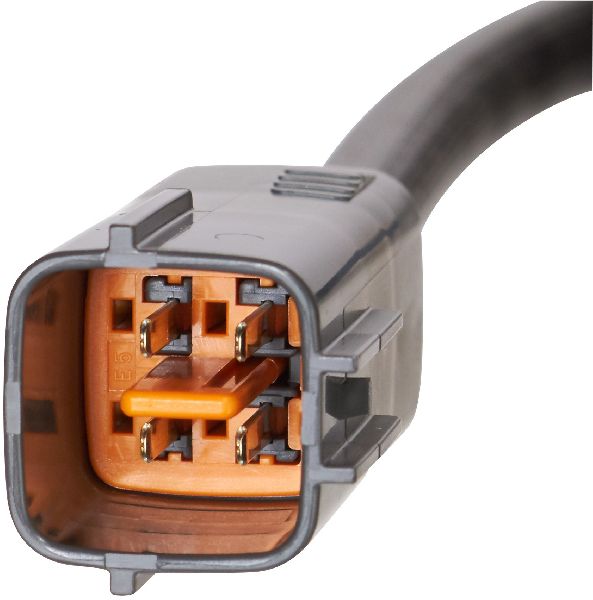
- Rear HO2S Connector — Mounted to a bracket on the side of the transmission tunnel, accessible from under the vehicle.. This is the primary point of failure for wiring issues due to its exposed location. It can suffer from corrosion, pulled pins, or damage from road debris.
- PCM Pin 2A — At the Powertrain Control Module (PCM) main connector.. This is the specific pin for the Rear O2 Sensor Heater Ground (PGND) control circuit. A continuity test from this pin to the sensor harness can verify the integrity of the control wire.
- PCM Pin 2Q — At the Powertrain Control Module (PCM) main connector.. This is the specific pin for the Rear O2 Sensor signal voltage (AV). While not directly related to the heater circuit, damage to the harness could affect this pin as well.
- G19 / G20 — G19 is located on the right rear of the engine; G20 is at the rear of the engine (for 2004 models).. These are main engine ground points. A corroded or loose connection at these locations can create a voltage drop across the entire engine harness, potentially causing the PCM to incorrectly flag a low voltage condition on the O2 heater circuit.
- Lower Intake Manifold Ground — A primary engine-to-chassis ground strap is often located on the lower intake manifold.. This is a critical ground path. If compromised, it can lead to various difficult-to-diagnose electrical issues, including O2 sensor heater codes.
Real Owner Repair Stories
- RX-8 Owners Club UK, senior member 'warpc0il' (Mazda RX-8 (year not specified)) — P0037 code, followed by strange misfires and, in one case, a 'dead engine' scenario.
❌ Tried (didn't work) Replacing the rear O2 sensor with a cheap, unbranded aftermarket part from a local motor factor or eBay.
✅ What actually fixed it The cheap aftermarket sensors were found to be shorting internally, which dragged down system voltage and eventually blew the main 'Engine' fuse. The fix was to replace the faulty aftermarket sensor with a quality part and replace the blown fuse. - RX8Club.com user 'jtanner' (Mazda RX-8 (year not specified)) — P0037 code appeared after the car hit a large piece of tire tread on the highway.
❌ Tried (didn't work) Clearing the code (it returned immediately).
✅ What actually fixed it A visual inspection revealed the wiring harness for the rear O2 sensor had been completely severed by the road debris. Repairing the damaged wires resolved the code.
OEM Part Supersession History
N3H3-18-861A, N3H3-18-861B→N3H3-18-861B-9U— Standard part revision and supply chain update. The -9U suffix is a common Mazda identifier for a revised or remanufactured service part that is the correct replacement.
Heads up: This applies to the Series 1 (2004-2008) Manual Transmission rear sensor. Using the wrong part for AT vs MT or S1 vs S2 will cause issues.
Model Year Variations Within This Range
- 2009-2011 (Series 2): The Series 2 RX-8 introduced a new 6-speed automatic (SJ6A-EL) and a revised 6-speed manual (P66M-D). These changes were accompanied by different wiring harnesses and PCM logic, necessitating different oxygen sensor part numbers (e.g., N3R1-18-861 for MT) compared to the Series 1.
Diagnostic Flowchart
Used vs. New Parts: Buying Guide for This Vehicle
When a used part is the smart pick: For this specific repair, a used part is generally not recommended. The oxygen sensor is a wear item with a finite lifespan, and the labor to access and replace it is significant enough that installing a used part with unknown history is a poor value proposition. A used wiring harness pigtail for a repair is acceptable if the wires and connector are in good condition.
Donor-vehicle mileage cap: roughly under 50000 miles for the part to have meaningful remaining life.
What to inspect on the donor part:
- For a wiring pigtail, ensure the connector lock tab is intact and not brittle.
- Check for any signs of melting or heat damage on the connector body.
- Verify the wires are flexible and the insulation is not cracked or hardened.
OEM-only on this vehicle (don't cheap out):
- Oxygen Sensor
Aftermarket brands forum-validated for this vehicle:
- Denso (Original Equipment Manufacturer)
- NGK/NTK
Brands owners have reported issues with on this vehicle:
- Unbranded, 'white-box' sensors from online marketplaces like eBay or AutoDoc have been reported by RX-8 owners to fail prematurely or be internally shorted right out of the box, causing further diagnostic issues and blown fuses.
Real Owner Stories
Aggregated from forums and TSBs cited above. Mileages and costs reflect what owners reported in those sources.
Mazda RX-8 — 115000 miles
Symptoms: Check engine light with code P0037.
What fixed it: Replaced the rear O2 sensor located in the middle of the catalytic converter.
Source hint: RX8Club.com thread titled 'Cel Error P0037 - RX8Club.com'
Mazda RX-8
Symptoms: Check Engine Light on with error P0037 after hitting something in the road.
What fixed it: The owner found the O2 sensor wire had been physically snapped by the road debris. The fix was to replace the sensor and its integrated wiring.
Source hint: RX8Club.com thread titled 'OBD Error P0037 - RX8Club.com'
Mazda RX-8
Symptoms: Check Engine Light with code P0037 appeared after installing an aftermarket Magnaflow cat/midpipe.
What fixed it: After confirming the original sensor and a used replacement had failed heater circuits (no resistance), the owner installed a new universal O2 sensor, which resolved the code.
Source hint: RX8Club.com thread titled 'P0037 o2 Sensor Heater voltage low'
Mazda RX-8
Symptoms: A cheap aftermarket O2 sensor shorted internally, which blew the main 'Engine' fuse and caused misfires and other driveability issues.
What fixed it: The implied fix is to replace the faulty aftermarket sensor with a quality OEM or Denso unit and replace the blown 15A 'Engine' fuse.
Source hint: RX-8 Owners Club UK thread titled 'Code P0037 Best Fix'
Related OBD-II Codes
Frequently Asked Questions
Where is the sensor for code P0037 located on my Mazda RX-8?
Does it matter what brand of oxygen sensor I use to fix P0037 on my RX-8?
I cleared the P0037 code, but it came back immediately as a 'pending' code. Is this normal?
My rear O2 sensor is seized in the catalytic converter. What's the best way to remove it?
I hit road debris and now have a P0037 code. What should I check first?
What fuse is associated with the P0037 code on the RX-8?
Are there any official Mazda TSBs for fixing P0037 on the RX-8?
Helpful Videos
We Have This Part in Stock

The information in this article is provided for general reference and educational purposes only. Vehicle specifications, procedures, and part compatibility can vary by production date, trim level, and region. Always consult your vehicle's factory service manual and verify part numbers before purchasing or performing repairs. Safety-critical components such as airbags, seat belts, and braking systems should be installed by a qualified professional.
- Mazda RX-8:
- 🧭 Diagnostic Flowchart
- 🎬 Helpful Videos
- 🛍️ Shop This Part
- What's Unique About the 2004-2011 Mazda RX-8
- Symptoms You May Notice
- Most Likely Causes
- Rare But Worth Checking
- Diagnosis Steps
- Parts You'll Likely Need
- Technical Service Bulletins (TSBs) & Recalls
- Platform-Specific Known Issues
- Mechanic-Grade Diagnostic Values
- Hidden / Shadow Codes Worth Checking
- Wiring & Ground Locations
- Real Owner Repair Stories
- OEM Part Supersession History
- Model Year Variations Within This Range
- Used vs. New Parts: Buying Guide for This Vehicle
- Real Owner Stories
- Mazda RX-8 — 115000 miles
- Mazda RX-8
- Mazda RX-8
- Mazda RX-8
- Related OBD-II Codes
- Frequently Asked Questions
- 🎟️ Get 5% Off