

P0068 on 2008-2016 Audi A4 2.0L TFSI: Causes and Fixes for MAP/MAF Throttle Position Correlation
On a 2008-2016 Audi A4 2.0T, code P0068 is most often caused by a vacuum leak from a failed PCV valve (oil separator). A dirty throttle body is the second most likely cause. Start by checking for a loose oil cap, then inspect the PCV valve for extreme suction before replacing any sensors. This is a very common and well-documented issue for this engine.
- Do not immediately buy new sensors. The P0068 code on this Audi is most often a 'mechanical' problem like a vacuum leak or a dirty part, not a failed sensor.
- The PCV valve is the #1 suspect. Check for excessive suction at the oil cap with the engine running; this is a near-certain sign of a failed PCV.
- Always check the simple things first: ensure your oil cap is tight.
- If you clean the throttle body, you must perform a Throttle Body Alignment (TBA) with a proper scan tool afterward.
- If you can't find a leak visually, a smoke test is the most reliable diagnostic method to find the source of unmetered air.
What's Unique About the 2008-2016 Audi A4
The 2.0L TFSI engine in the B8 generation A4 is notoriously prone to PCV (Positive Crankcase Ventilation) valve failures. The rubber diaphragm inside the PCV assembly frequently tears, creating a significant unmetered vacuum leak. This unmetered air entering the engine is the most common trigger for the P0068 correlation fault on this specific platform, often making the PCV system the first place to investigate, even before suspecting the sensors mentioned in the code's name.
Generation note: The 2008-2016 model years cover the Audi A4 B8 generation, which includes a facelift for the 2013 model year (often called the B8.5). The 2.0L TFSI engine (EA888 Gen 2) and its related components that cause code P0068 are fundamentally the same across this entire range, so the causes and fixes are consistent. The issue is also shared with many other VW/Audi products using the same engine.
Symptoms You May Notice
- Check Engine Light (MIL) and possibly EPC light are on
- Rough, unstable, or surging idle
- Hesitation or stumbling during acceleration
- Reduced engine power and no turbo boost, entering 'limp mode'
- Increased fuel consumption
- A loud whistling or squealing noise from the engine bay, especially at idle (a classic sign of a failed PCV valve diaphragm)
- Engine stalling when coming to a stop
- Replacing the MAP or MAF sensor without first checking for vacuum leaks. A vacuum leak from the PCV valve is the most common cause, and replacing sensors will not fix it.
- Cleaning the throttle body but failing to perform the required Throttle Body Alignment (TBA) with a proper scan tool, leading to a persistent code or rough idle.
Most Likely Causes
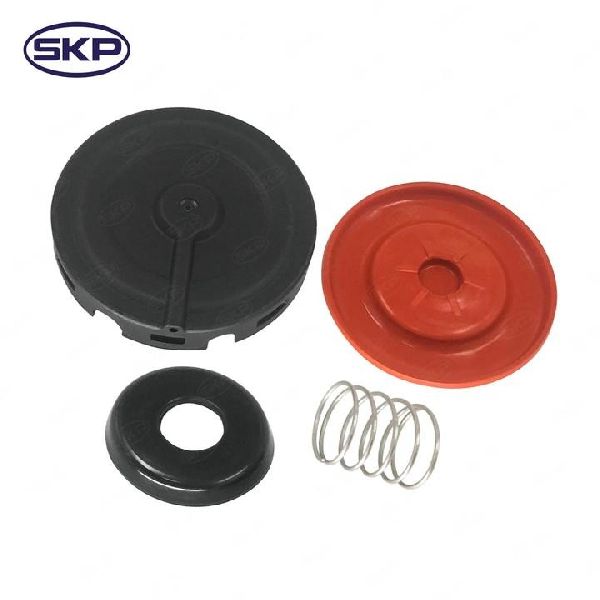
- Failed PCV Valve / Oil Separator 🔴 High Probability → Shop PCV Valve The diaphragm inside the factory PCV valve is a known weak point on the 2.0T TFSI engine and is prone to tearing over time, creating a large vacuum leak. This is the most frequent cause of P0068 on this engine.
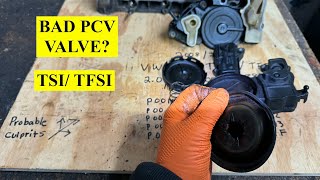
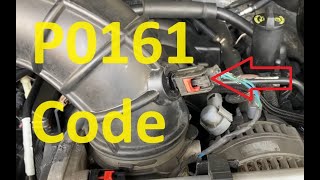
How to confirm: With the engine running, try to remove the oil filler cap. If there is very strong suction holding the cap down, making it difficult to remove, the PCV valve has failed. The engine idle will likely worsen or stall when the cap is removed. You may also hear a loud hissing or squealing sound from the PCV unit itself. 🎬 Watch: How to identify and fix a failed PCV diaphragm.
Typical fix: Replace the entire PCV valve assembly (oil separator). It is located on top of the valve cover. Always use the latest OEM revision available to ensure a longer-lasting repair.
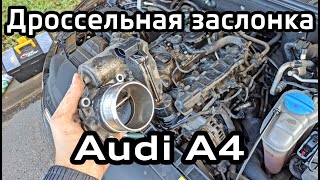
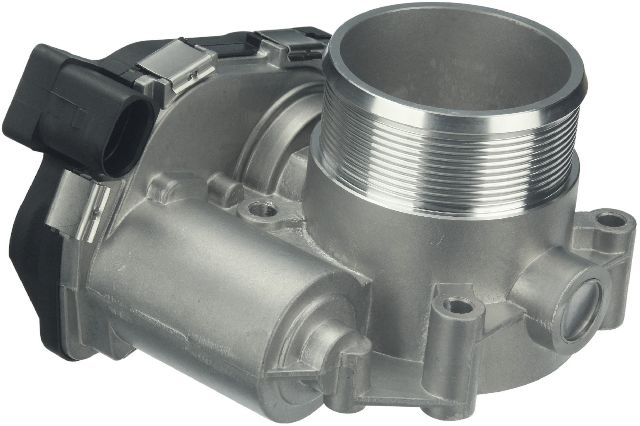
Est. part cost: $120-$200 - Dirty Throttle Body 🟡 Medium Probability → Shop Fuel Injection Throttle Body Direct injection engines like the 2.0T TFSI are susceptible to carbon and oil buildup in the intake tract, including the throttle body. This buildup can restrict the throttle plate's movement or disrupt airflow at idle, causing a correlation error.
How to confirm: Remove the intake hose connected to the throttle body and visually inspect the throttle plate and bore for a thick layer of black carbon/oil residue.
Typical fix: Clean the throttle body thoroughly with a dedicated throttle body cleaner and a soft cloth or brush. After cleaning and reinstallation, a Throttle Body Alignment (TBA) MUST be performed using a diagnostic tool like VCDS (Ross-Tech) to reset the learned values. Skipping the TBA can cause the code to return or result in a poor idle.
Est. part cost: $10-$20 for cleaner - Other Vacuum Leaks 🟡 Medium Probability Beyond the PCV valve, plastic and rubber hoses in the engine bay can become brittle and crack with age and heat cycles. A failed PCV can also cause excessive crankcase pressure, leading to oil leaks at seals like the rear main seal.
How to confirm: Perform a smoke test by introducing smoke into the intake system and watching for where it escapes. Common leak points include intake manifold gaskets, cracked vacuum lines, and the rear main seal (check for oil drips at the transmission bell housing). A loose or poorly sealed oil filler cap can also cause this code.
Typical fix: Replace the cracked hose, leaking gasket, or faulty seal that was identified during the smoke test. Ensure the oil cap is tight.
Est. part cost: $20-$150 depending on the part - Faulty MAP (Boost Pressure) Sensor ⚪ Low Probability → Shop Manifold Absolute Pressure Sensor
How to confirm: Use a scan tool to monitor the MAP sensor's live data. The reading should be stable at idle and change logically with engine RPM and load. If the readings are erratic, stuck, or do not make sense, the sensor is likely faulty.
Typical fix: Replace the MAP sensor. It is located on the intake manifold.
Est. part cost: $40-$80
Rare But Worth Checking
- Faulty Mass Air Flow (MAF) Sensor: → Shop Fuel Injection Air Flow Meter While a possible cause listed in the generic code definition, the 2.0T TFSI in this chassis relies more heavily on the MAP sensor. A MAF failure is less frequently the culprit for P0068 on this specific engine compared to vacuum leaks and throttle body issues.
- Clogged Air Filter or 'Snow Screen': A severely clogged air filter or the pre-filter 'snow screen' in the airbox can restrict airflow enough to cause a correlation error. One forum user measured a 20% airflow improvement after cleaning this screen. This should be checked as part of routine maintenance.
Diagnosis Steps
- Scan for all stored fault codes. Note if P2279 or P0507 are present, as this strongly suggests a vacuum leak.
- Inspect the engine oil filler cap to ensure it is tight and the seal is intact. A loose cap is a known cause.
- With the engine running at idle, listen for a loud whistling or hissing noise. Carefully attempt to remove the oil cap; if extreme suction holds it on, the PCV valve has almost certainly failed.
- If the PCV seems okay, perform a smoke test on the intake system to find any hidden vacuum leaks. This is the most effective way to confirm or rule out leaks. Check for smoke from the rear main seal area.
- Remove the intake boot from the throttle body and inspect it for heavy carbon buildup. Also, inspect the air filter and the 'snow screen' pre-filter in the airbox.
- If the throttle body is dirty, clean it thoroughly. After reinstallation, you MUST perform a Throttle Body Alignment (TBA) using a VAG-COM (VCDS) or equivalent professional scan tool.
- Using a scan tool, observe live data for the MAP, MAF, and Throttle Position sensors to see if any of the readings are erratic or illogical. Compare them to known-good values if possible.
- If all vacuum leaks and throttle body issues have been ruled out and a sensor's readings are still suspect, replace the sensor. The MAP sensor is a more likely failure point than the MAF on this platform.
Parts You'll Likely Need
- PCV Valve / Oil Separator Assembly
(OEM #06H103495AC (or latest revision like AK, AN))— This is the most common failure point on the 2.0T TFSI engine that leads to the vacuum leaks that trigger code P0068. It is critical to purchase the latest available OEM revision to prevent premature failure.
Trusted brands: Audi (OEM), Vaico, INA
OEM price range: $150-$200
Aftermarket price range: $40-$120 - MAP Sensor (Boost Pressure Sensor)
(OEM #0261230266 (Bosch))— Can fail and send incorrect pressure readings to the ECM, causing the correlation fault. It's a potential fix if vacuum leaks and throttle body issues are ruled out.
Trusted brands: Bosch (OEM supplier), Hella
OEM price range: $60-$100
Aftermarket price range: $30-$60 - Throttle Body Gasket
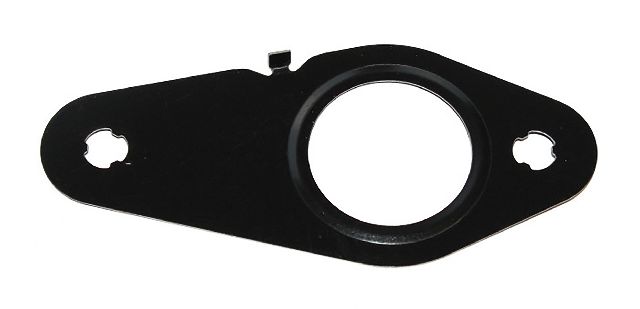
(OEM #06F133073D)— Should be replaced whenever the throttle body is removed for cleaning to prevent introducing a new vacuum leak.
Trusted brands: Victor Reinz, Elring
OEM price range: $15-$25
Aftermarket price range: $5-$15
Related Codes That Often Appear With This One
- P2279 — This code directly indicates an 'Intake Air System Leak', which is the root cause of the correlation fault reported by P0068. Seeing them together strongly points to a vacuum leak. 🎬 Watch: Finding and fixing a common P2279 intake air leak.
- P0507 — This code means 'Idle Control System RPM Higher than Expected', which is a direct symptom of extra, unmetered air entering the engine from a vacuum leak, forcing the idle speed up.
- P307A — This code for 'Air Intake System: Flow too Low' can be triggered by a dirty throttle body or a clogged air filter/snow screen, which are also potential causes for P0068.
Technical Service Bulletins (TSBs) & Recalls
- Audi TSB 01 23 62 2070915/1: Notes that DTCs P0068, P2279, and P0507 can be caused by an incorrectly installed or loose engine oil filler cap, which creates a vacuum leak.
Platform-Specific Known Issues
- The 2.0T TFSI engine from this era has a well-documented issue with the PCV valve diaphragm failing. This causes a variety of lean codes and air leak codes, with P0068 being one of the common results.
Mechanic-Grade Diagnostic Values
- MAP Sensor Voltage (Key On, Engine Off) — expected: 2.0V to 3.0V. Failure: Voltage significantly outside this range, or not steady.
- MAP Sensor Voltage (Engine at Idle) — expected: 1.0V to 1.5V (for non-turbo, higher for turbo like 2.0-2.5V, but idle should be low boost). Failure: Voltage stuck high or low, not responding to throttle changes.
- VCDS - Throttle Valve Angle at Idle (After Adaptation) — expected: Around 2-3°. Failure: Angle is significantly higher (e.g., over 10%) at idle, indicating a blockage or calibration issue.
Scan Tool Commands That Help
- VCDS (VAG-COM): Basic Settings - Group 060 — This function performs the mandatory Throttle Body Alignment (TBA) after cleaning or replacing the throttle body. The process allows the ECU to relearn the closed, open, and partial positions of the throttle plate. Failure to perform this will likely cause the P0068 code to return or result in an unstable idle.
- VCDS (VAG-COM): Measuring Value Blocks (MVB) - Group 003 — Use this to view the live throttle valve position angle. Before adaptation, a dirty throttle body might show a high idle angle (e.g., 15%). After cleaning and successful adaptation, this should drop to around 2-3 degrees at idle.
Wiring & Ground Locations
- G18 / G26 — G18 is on the left rear of the engine; G26 is on the left side of the engine compartment.. These are primary engine ground points. A corroded or loose connection at these locations can cause erratic behavior and incorrect readings from any engine sensor, including the MAP, MAF, and throttle position sensors, leading to a correlation fault.
- G44 — Located behind the driver's side kick panel.. This ground point serves multiple modules, including the Body Control Module (BCM) and instrument cluster. While not a direct engine ground, poor grounding here can cause a cascade of electrical issues that could potentially manifest as sensor correlation problems or other confusing faults.
Real Owner Repair Stories
- AudiWorld Forums User (Audi A4 3.2L (similar architecture)) — P0068 code and bad idle at stops.
❌ Tried (didn't work) Cleaning the throttle body
✅ What actually fixed it The user found that cleaning the 'snow screen' pre-filter inside the airbox made a significant difference. They measured a 20% improvement in airflow after cleaning the screen, which resolved the code. - YouTube user Speedline Garage (2009 Audi A4 (B8)) — Leaking rear main seal, bucking engine, random multiple misfires, and lean condition codes.
✅ What actually fixed it The root cause was a massive vacuum leak through a failed rear main seal, which was likely caused by excessive crankcase pressure from a faulty PCV system. The unmetered air being sucked in through the seal was causing the correlation and misfire codes. The temporary 'hack' to confirm this was to disconnect the PCV intake hose and vent it to the atmosphere, which stopped the vacuum from pulling air through the bad seal and resolved the running issues, confirming the seal was the source of the unmetered air.
"I Checked Everything" — The Actual Cause
- A failed rear main seal can cause a massive vacuum leak that triggers P0068. This is often missed because a smoke test is typically performed on the intake manifold and vacuum lines, not the engine block itself. The leak occurs when high crankcase vacuum (often from a faulty PCV) sucks unmetered air past the crankshaft seal.
OEM Part Supersession History
06H103495A, E, J, AC→06H103495AH, AJ, AK, AN (and later)— The diaphragms in the original PCV valve assemblies were highly prone to tearing. Multiple revisions were released to improve diaphragm material, durability, and to alter crankcase pressure settings to help combat oil consumption issues.
Heads up: Some software updates related to oil consumption campaigns require a specific PCV version (e.g., a 'white cap' version with ~100 mbar pressure vs the original 'black cap' with ~20 mbar). It is critical to use the latest revision compatible with your specific engine code and software version.
Model Year Variations Within This Range
- 2008-2012 (B8) vs 2013-2016 (B8.5): While the core EA888 Gen 2 engine is similar, the B8.5 facelift introduced some changes. The PCV valve part numbers were revised throughout the entire 2008-2016 span, with later years receiving more durable versions from the factory. Additionally, B8.5 models received an electric power steering system and cosmetic updates, but the root causes of P0068 (PCV, throttle body) remain consistent across both versions.
Diagnostic Flowchart
Other Known Issues on This Vehicle
Issues unrelated to this code that are worth knowing about as an owner of this generation:
- Excessive Oil Consumption 🔴 High — Very common, especially on 2009-2011 models with the CAEB engine code. Many owners report adding 1 quart of oil every 500-1,000 miles. The root cause is a flawed piston ring design. (Ref: Multiple TSBs were issued, and a class-action lawsuit led to an extended warranty program for piston/ring replacement. This is a well-documented issue.)
- Timing Chain Tensioner Failure 🔴 High — Common on pre-2013 models with the original tensioner design. Failure can occur with little warning, often between 80,000 and 150,000 km. The first sign is often a brief rattle on a cold start. (Ref: Audi released an updated tensioner (part # 06K109467K). Failure of the original tensioner can cause the chain to jump, leading to catastrophic engine damage (bent valves).)
- Water Pump Failure 🟠 Medium — Common across the B8 platform. The plastic housing of the water pump assembly is prone to cracking or leaking. Failure can occur as early as 25,000 miles, but is more typical around 60,000-80,000 miles. (Ref: No specific recall, but it's a widely recognized failure. Symptoms include coolant leaks (pink residue) and engine overheating warnings.)
- Carbon Buildup on Intake Valves 🟠 Medium — An inherent issue with all direct-injection (GDI/TFSI) engines. Significant buildup is common by 60,000-100,000 miles, causing misfires, rough idle, and reduced performance. (Ref: No recall, as it's considered a maintenance item. The only effective cleaning method is manual removal via walnut blasting.)
Used vs. New Parts: Buying Guide for This Vehicle
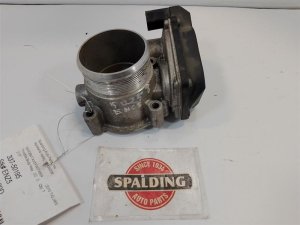
When a used part is the smart pick: For this repair, using used parts is generally not recommended. The primary causes are wear-and-tear items. A used throttle body could be an option if it's from a very low-mileage vehicle, but it carries the risk of having the same internal electronic or carbon buildup issues.
Donor-vehicle mileage cap: roughly under 50000 miles for the part to have meaningful remaining life.
What to inspect on the donor part:
- For a throttle body, inspect the connector for damage and the throttle bore for deep scratches.
- Ask for the donor vehicle's VIN to verify low mileage.
- Ensure there is no visible damage to sensor housings or connectors.
OEM-only on this vehicle (don't cheap out):
- PCV Valve / Oil Separator: This part has a very high failure rate and aftermarket versions are notoriously unreliable. Given the multiple OEM revisions, it is critical to buy the latest genuine OEM part to ensure durability and correct crankcase pressure.
Aftermarket brands forum-validated for this vehicle:
- Bosch (for MAP sensor, as they are often the OEM supplier)
- Pierburg (for Diverter Valve, if a boost leak is suspected)
Brands owners have reported issues with on this vehicle:
- Unnamed/white-box aftermarket PCV valve assemblies. Forum consensus is strong that these fail quickly and do not regulate pressure correctly, leading to repeat failures or other engine issues.
Real Owner Stories
Aggregated from forums and TSBs cited above. Mileages and costs reflect what owners reported in those sources.
2008-2012 Audi A6 (C6) 2.0T TFSI
Symptoms: The owner experienced a P0068 code related to a throttle body issue.
What fixed it: Cleaned the throttle body and performed a Throttle Body Alignment with VAG-COM (VCDS). They also cleaned the 'snow screen' in the airbox.
Source hint: AudiWorld Forums: 'THROTTLE BODY ISSUE, CODE P0068, FIXED'
2014 Audi A4 2.0T TFSI
Symptoms: EPC light came on with no engine power and no turbo boost (limp mode).
What fixed it: Diagnosis pointed towards the MAP sensor and wastegate issues common on the MAP-only B8.5 models.
Source hint: AudiWorld Forums: 'FI: Audi A4 2.0t fsi 2014 no engine power and code p0068'
Related OBD-II Codes
Frequently Asked Questions
Can a loose oil filler cap really cause a P0068 code on my Audi A4?
I cleaned my throttle body but the P0068 code returned. What did I miss?
How can I tell if my PCV valve is the cause of the P0068 code?
Is there a specific part I should use when replacing the PCV valve?
Could a dirty air filter or airbox component cause this correlation code?
My 2014 A4 doesn't seem to have a MAF sensor; could it still throw a P0068?
Helpful Videos
Used OEM Parts in Stock
New Aftermarket Parts Available


The information in this article is provided for general reference and educational purposes only. Vehicle specifications, procedures, and part compatibility can vary by production date, trim level, and region. Always consult your vehicle's factory service manual and verify part numbers before purchasing or performing repairs. Safety-critical components such as airbags, seat belts, and braking systems should be installed by a qualified professional.
- Audi A4:
- 🧭 Diagnostic Flowchart
- 🎬 Helpful Videos
- 🛍️ Shop This Part
- What's Unique About the 2008-2016 Audi A4
- Symptoms You May Notice
- Most Likely Causes
- Rare But Worth Checking
- Diagnosis Steps
- Parts You'll Likely Need
- Related Codes That Often Appear With This One
- Technical Service Bulletins (TSBs) & Recalls
- Platform-Specific Known Issues
- Mechanic-Grade Diagnostic Values
- Scan Tool Commands That Help
- Wiring & Ground Locations
- Real Owner Repair Stories
- "I Checked Everything" — The Actual Cause
- OEM Part Supersession History
- Model Year Variations Within This Range
- Other Known Issues on This Vehicle
- Used vs. New Parts: Buying Guide for This Vehicle
- Real Owner Stories
- 2008-2012 Audi A6 (C6) 2.0T TFSI
- 2014 Audi A4 2.0T TFSI
- Related OBD-II Codes
- Frequently Asked Questions
- 🎟️ Get 5% Off