

P0068 on 2004-2024 Ford F-150: MAP/MAF & Throttle Position Correlation Causes and Fixes
On a Ford F-150, code P0068 is most often caused by a dirty Mass Airflow (MAF) sensor, a dirty or failing electronic throttle body, or a vacuum/intake air leak. Cleaning the MAF sensor and throttle body is a common and inexpensive first step that often resolves the issue. On EcoBoost models, a failing throttle body or boost leak is a very common culprit.
- Start with the simplest fixes: ensure your gas cap and oil filler cap are tight.
- The most common DIY fix is cleaning the Mass Airflow (MAF) sensor and the electronic throttle body. This costs very little and often solves the problem.
- If cleaning doesn't work, suspect an air leak. On V8s, check PCV and EVAP hoses. On EcoBoosts, check the large charge pipes for loose clamps or cracks.
- A sudden, severe loss of power that puts the truck in 'limp mode' often points to a failed electronic throttle body, a known issue on many F-150s.
- Don't replace sensors blindly. A smoke test to find leaks or using a scan tool to watch live sensor data can save you from buying parts you don't need.
What's Unique About the 2004-2024 Ford F-150
The Ford F-150's wide range of engines from 2004-2024 dictates the most likely cause of P0068. On naturally aspirated V8s like the 5.4L Triton and 5.0L Coyote, this code often points to traditional vacuum leaks from aged PCV hoses or a cracked plastic intake manifold, a known issue on the 5.4L. For the turbocharged EcoBoost engines (3.5L, 2.7L), the issue is frequently a failing electronic throttle body, which is a well-documented problem that can cause a sudden, dangerous loss of power under load, or a leak in the pressurized intake piping (a 'boost leak') between the turbo and the throttle body.
Generation note: This guide covers the 11th (2004-2008), 12th (2009-2014), 13th (2015-2020), and 14th (2021-2024) generations of the Ford F-150. Key causes differ between naturally aspirated engines (5.4L, 5.0L) and turbocharged EcoBoost engines, and these differences are noted in the causes section.
Symptoms You May Notice
- Check Engine Light is on
- Rough or unstable idle
- Poor engine performance and hesitation on acceleration
- Sudden loss of power or entering 'limp mode' (wrench light may appear), especially under load or going uphill
- Reduced fuel economy
- Engine stalling, especially when coming to a stop
- Engine feels like it is choking or has a 'dead spot' when pressing the gas pedal
- Replacing the MAF or MAP sensor without checking for vacuum leaks or cleaning the throttle body first. Unmetered air from a leak or airflow disruption from a dirty throttle body are very common causes, and replacing sensors won't fix them.
Most Likely Causes
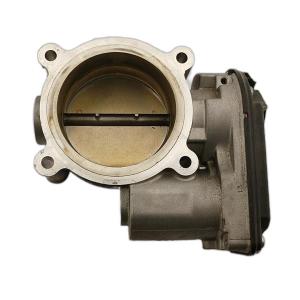
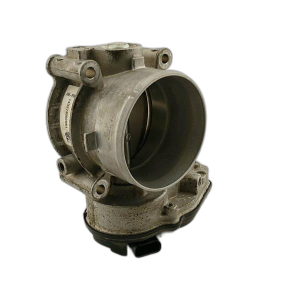
- Dirty or Failing Electronic Throttle Body (ETB) 🔴 High Probability → Shop Fuel Injection Throttle Body Carbon and oil from the PCV system can build up on the throttle plate and bore, restricting movement and causing airflow to not match the throttle position. Electronic failure of the throttle body is also a well-documented issue, especially on EcoBoost models, often causing sudden power loss under load.
How to confirm: Remove the air intake tube connected to the throttle body and visually inspect for a thick, black ring of carbon buildup ('coke') around the throttle plate and bore. For electronic failure, diagnosis may require observing live data for TPS voltage that is erratic or doesn't respond smoothly as the pedal is pressed, or the issue may only appear intermittently under specific load conditions, often accompanied by codes like P2111 or P2112.
Typical fix: Clean the throttle body bore and plate with dedicated throttle body cleaner and a rag. Do not spray directly into the unit while it's connected. For electronic failures, the entire throttle body assembly must be replaced. After cleaning or replacement, a throttle relearn procedure is required.
Est. part cost: $10-$20 (cleaner), $150-$350 (throttle body) - Vacuum or Intake Air Leak 🟡 Medium Probability Plastic and rubber hoses become brittle with age and heat cycles. Common leak points include the PCV valve hoses, intake manifold gaskets, and EVAP purge valve hoses. On 5.4L 3V engines, the plastic intake manifold itself can crack. On EcoBoost engines, leaks in the charge pipes between the turbo and throttle body are also common.
How to confirm: A smoke test is the most effective method. This involves feeding low-pressure smoke into the intake system and watching for where it escapes. You can also carefully spray short bursts of carb cleaner or unlit propane around suspected leak areas with the engine running; a change in idle RPM indicates a leak.
Typical fix: Replace the cracked hose, failed gasket, or tighten the loose clamp that is causing the leak. If the intake manifold is cracked, it must be replaced.
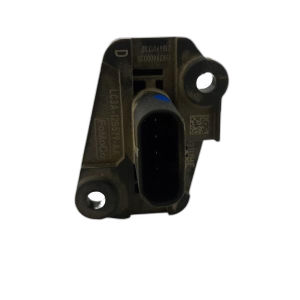
Est. part cost: $20-$500 depending on the location and complexity of the failed part (e.g., a new intake manifold is more expensive). - Dirty or Contaminated Mass Airflow (MAF) Sensor 🟡 Medium Probability → Shop Fuel Injection Air Flow Meter The MAF sensor sits in the primary airflow path and can become contaminated with dirt, debris, and oil vapor over time, causing inaccurate readings. Oiled aftermarket air filters are a frequent cause of contamination.
How to confirm: Unplug the MAF sensor electrical connector while the engine is idling. If the idle smooths out and runs better, the MAF sensor is likely faulty or dirty. Alternatively, use a scan tool to monitor the MAF reading in grams/second at idle; erratic or out-of-spec readings indicate a problem.
Typical fix: Clean the sensor's delicate wires using only dedicated MAF sensor cleaner spray. 🎬 Watch ChrisFix demonstrate how to clean the MAF sensor. Do not touch the sensor wires. Allow it to dry completely before reinstalling. If cleaning doesn't work, replace the sensor.
Est. part cost: $10-$20 (cleaner), $70-$150 (sensor) - Faulty Manifold Absolute Pressure (MAP) Sensor ⚪ Low Probability → Shop Manifold Absolute Pressure Sensor While sensors can fail, the MAP sensor is generally less likely to be the culprit than the MAF or throttle body on an F-150 for this specific code.
How to confirm: Use a scan tool to monitor MAP sensor voltage or pressure readings. With the key on and engine off, it should read atmospheric pressure (approx. 4.5-5 volts on newer models). At idle, it should show a strong vacuum (low pressure reading, approx. 1-1.5 volts). Compare these readings to specifications to confirm failure. Older models may use a frequency-based sensor.
Typical fix: Replace the MAP sensor. They are typically easy to access and secured by one or two bolts.
Est. part cost: $40-$100
Rare But Worth Checking
- Loose or Faulty Oil Filler Cap: An improperly tightened or missing oil filler cap creates a significant unmetered air leak into the crankcase, which is connected to the intake via the PCV system. This can be enough to throw off the PCM's calculations and trigger a P0068 code. An Audi TSB confirms this can cause P0068, P2279, and P0507, confirming the diagnostic principle. Always check this simple item first.
- Damaged Sensor Wiring: Rodents can chew wires, or they can become frayed or corroded over time, especially at the connector. A 'wiggle test' on the harness for the MAF, MAP, and throttle body while monitoring live data can sometimes reveal an intermittent connection.
- Cracked Plastic Intake Manifold: → Shop Engine Intake Manifold On some models, particularly the 2004-2008 F-150 with the 5.4L 3V Triton engine, the plastic intake manifold can develop cracks, creating a large vacuum leak that is difficult to pinpoint without a smoke test.
- High Altitude Operation: While documented on other Ford models like the Mustang, TSB Bulletin #TSB 18-2370 notes that vehicles with EcoBoost engines operating at altitudes of 3500 feet (1067 meters) or higher may exhibit an illuminated MIL with only DTC P0068 stored.
Diagnosis Steps
- Read all stored fault codes with an OBD-II scanner. Note any other codes that appear alongside P0068.
- Perform a thorough visual inspection of the entire air intake system, from the air filter box to the throttle body and intake manifold. Look for disconnected hoses, cracked tubes, or loose clamps.
- Check that the engine oil filler cap and dipstick are properly seated and tight.
- Remove the air intake tube from the throttle body and inspect the throttle plate and bore for heavy carbon buildup.
- Locate the MAF sensor and inspect its wiring. If it appears dirty, clean it using only dedicated MAF sensor cleaner and let it fully dry.
- If the above steps don't reveal the issue, perform a smoke test to definitively check for vacuum or intake air leaks, paying close attention to the intake manifold gaskets and PCV hoses.
- Using a scan tool, monitor the live data PIDs for MAF (g/s), MAP (Volts/kPa), and Throttle Position (%). Observe their behavior at idle and while slowly revving the engine. For the TPS, you should see a smooth voltage climb from about 0.5V to near 4.5V. For the MAP, you should see ~4.5-5V with key-on-engine-off, dropping to ~1-1.5V at idle.
- If a specific sensor is suspected, test its wiring for proper voltage, ground, and signal integrity before replacing the part.
- If the throttle body was cleaned or replaced, perform a throttle relearn procedure. A common method is to disconnect the battery for at least 15 minutes, reconnect it, turn the key to 'ON' (without starting) for a minute, then start the engine and let it idle for 10-15 minutes to reach operating temperature before driving.
Parts You'll Likely Need
- Electronic Throttle Body
(OEM #Motorcraft TB-1 (for 2011-16 3.5L EcoBoost))— A common failure point, either from heavy carbon buildup or electronic failure, causing a direct correlation fault, especially on EcoBoost models.
Trusted brands: Motorcraft, Hitachi, Bosch - Mass Airflow (MAF) Sensor Cleaner — Often, the MAF sensor is just dirty, not failed. Cleaning it is a cheap and effective first step.
Trusted brands: CRC, WD-40 Specialist - Intake Manifold Gaskets — These gaskets can fail with age, causing vacuum leaks that trigger the code.
Trusted brands: Fel-Pro, Mahle, Motorcraft - Mass Airflow (MAF) Sensor
(OEM #Motorcraft AFLS-165 (for some 5.0L V8s))— If cleaning the sensor doesn't resolve the issue, the sensor itself may have failed.
Trusted brands: Motorcraft, Hitachi, Denso
Related Codes That Often Appear With This One
- P0103 — This code indicates MAF Circuit High Input, pointing directly to a problem with the MAF sensor or its wiring that could cause the P0068 correlation fault.
- P2195 / P2197 — These codes indicate the engine is stuck lean on Bank 1 and Bank 2, respectively. A large vacuum leak that triggers P0068 will also introduce excess, unmetered air, causing a lean condition.
- P2111 / P2112 — These codes indicate the throttle actuator control system is stuck open or stuck closed. They often appear with P0068 when the root cause is a failing electronic throttle body assembly.
- P2279 — This code means 'Intake Air System Leak', which is a direct cause of the sensor correlation issue described by P0068.
Technical Service Bulletins (TSBs) & Recalls
- Ford TSB 16-0139: While not specifically for P0068, this bulletin addresses intermittent electronic throttle body issues causing limp mode and codes like P2111/P2112 on various Ford engines, including the 3.5L EcoBoost. This is a primary cause of P0068 symptoms.
- TSB Bulletin #TSB 18-2370: This bulletin notes that EcoBoost engines operating in altitudes of 3500 feet (1067 meters) and higher may exhibit an illuminated MIL with only DTC P0068 stored in the powertrain control module.
Platform-Specific Known Issues
- On 3.5L EcoBoost engines, a sudden loss of power (limp mode) accompanied by the 'wrench' light and code P0068 often points to an electronic failure of the throttle body, which is a known issue.
- On 5.4L 3V and 4.6L 2V/3V engines, a common and hard-to-find vacuum leak can come from a deteriorated EVAP purge valve hose where it connects near the throttle body.
Mechanic-Grade Diagnostic Values
- Throttle Position Sensor (TPS) Voltage — expected: Approx. 0.5V at closed throttle, smoothly rising to ~4.5V at wide-open throttle.. Failure: Voltage is erratic, has dead spots, or does not correspond to pedal movement.
- MAP Sensor Voltage (Newer Models) — expected: Key On, Engine Off (KOEO): ~4.5-5.0V (reflecting atmospheric pressure). At Idle: ~1.0-1.5V (reflecting strong vacuum).. Failure: Voltage is stuck, does not change with engine load, or is out of range.
- MAP Sensor Frequency (Older Models, pre-~1996) — expected: KOEO: ~152 Hz. With 10 in. Hg of vacuum applied: ~127 Hz.. Failure: Frequency does not change when vacuum is applied or is wildly out of specification.
- Mass Airflow (MAF) Sensor Reading (5.0L V8) — expected: 5.0 to 5.5 grams per second (g/s) at a stable, warm idle.. Failure: Readings are significantly lower or higher than the expected range at idle, or readings are erratic.
Hidden / Shadow Codes Worth Checking
- Code 22, 72, or 128 (Pre-OBDII): These are older, non-standard trouble codes indicating MAP sensor faults: 'MAP Sensor Out of Range' (22), 'Insufficient MAP Change During Dynamic Response Test' (72), or 'MAP Sensor Vacuum Hose Damaged or Disconnected' (128). (see via Requires an older OBDI code reader or performing the Key On Engine Off (KOEO) self-test procedure for pre-1996 vehicles.)
Scan Tool Commands That Help
- Ford IDS or compatible professional scanner: Idle Learn / Throttle Body Adaptation / KAM Reset — This function should be used after cleaning or replacing the electronic throttle body. It forces the PCM to erase its learned adaptive values for idle and throttle position and relearn the new baseline, preventing high idle, stalling, or erratic throttle response.
- Manual Procedure (No Scan Tool): Throttle Body Relearn / KAM Reset — After disconnecting the battery, or cleaning/replacing the throttle body. 1. Disconnect the negative battery terminal for at least 15 minutes. Some mechanics touch the disconnected cables together to fully drain the PCM's capacitors. 2. Reconnect the battery. 3. Turn the key to the 'ON' position (engine off) for one minute. 4. Start the engine and let it idle for 10-15 minutes to reach full operating temperature. 5. Drive the vehicle for at least 10 miles with a mix of conditions to allow the PCM to relearn shift points and fuel trims.
Wiring & Ground Locations
- G104 — On 2004 models, located on the right side of the engine compartment. On older models (~1995), it's on the rear of the left-hand fender apron. Location varies by generation.. This is a primary engine compartment ground. A poor connection here can cause erratic voltage for multiple engine sensors, including the MAF, MAP, and TPS, leading to correlation faults.
- G108 — On 2004 models, located on the left front of the engine compartment.. Similar to G104, this is another critical engine bay ground point. Verifying it is clean and tight is a key step in diagnosing electrical causes of P0068.
- PCM Grounds — On later models (e.g., 2018), there are one or two dedicated PCM grounds located on the firewall.. These grounds are directly for the Powertrain Control Module. A fault here can cause the PCM itself to misinterpret otherwise valid sensor signals, leading to false correlation codes.
Real Owner Repair Stories
- MasterJacks on YouTube (2016 Ford F-150 3.5L EcoBoost) — Sudden loss of all throttle response while driving on a bumpy gravel road. Dash displayed 'See Manual', 'Service AdvanceTrac', and 'Hill Start Assist Not Available'. Code P2112 (Throttle Actuator Control System - Stuck Closed) was stored.
❌ Tried (didn't work) The owner was able to temporarily restore function by stopping, turning the vehicle off, and banging on the throttle body housing before restarting.
✅ What actually fixed it The entire electronic throttle body assembly was replaced. The owner noted the old part didn't look particularly dirty, suggesting an internal electronic or motor failure was the root cause. After replacement and clearing the code, the problem was resolved. - Scatterdadd on YouTube (Ford F-150 EcoBoost (model year appears to be 2015-2020)) — Vehicle would suddenly go into limp mode with no throttle response, especially when getting into the throttle. The owner had a previous 2016 F-150 that did the same thing.
❌ Tried (didn't work) The owner mentioned that some people just clean the throttle body, but he opted for replacement due to the critical nature of the failure.
✅ What actually fixed it Replacing the electronic throttle body with a new unit and gasket resolved the issue. After clearing the codes, the truck ran correctly. - NHTSA ODI #11559506 — An owner reported having to pull over to a shoulder after experiencing a loss of power; upon checking with a code reader, the P0068 code was stored.
"I Checked Everything" — The Actual Cause
- A common scenario, especially on EcoBoost F-150s, is that a smoke test will come back clean, showing no vacuum or intake leaks. Technicians may then replace the MAP or MAF sensors without success. The actual cause is an internal failure of the electronic throttle body assembly. This is commonly missed because a smoke test is designed to find unmetered air entering the system from the outside; it cannot diagnose a faulty throttle plate motor, a failing position sensor within the assembly, or bad internal electronics that cause the throttle plate's actual position to not match what the PCM has commanded.
OEM Part Supersession History
Varies Greatly→Varies Greatly— Ford frequently updates part numbers for critical components like electronic throttle bodies and sensors to reflect design improvements, software compatibility changes, or supplier changes.
Heads up: Using an incorrect or outdated part number, even if it physically fits, can lead to persistent codes or drivability issues. Always verify the correct, most current part number with a vehicle's VIN through a dealership parts department before ordering.
Model Year Variations Within This Range
- Approx. 2004-2010 (Especially 5.4L 3V Triton): These models are highly prone to vacuum leaks from cracked plastic intake manifolds and aged PCV hoses. The P0068 code is very frequently caused by a physical air leak rather than an electronic part failure.
- Approx. 2011-2024 (Especially EcoBoost Engines): These models are well-documented to suffer from electronic failure of the throttle body assembly, causing a sudden loss of power (limp mode). While leaks can still occur, the throttle body itself is a primary suspect for P0068 and related codes like P2111/P2112.
- Approx. pre-1996: Early trucks in this range use a Manifold Absolute Pressure (MAP) sensor that outputs a variable frequency signal (measured in Hz), not an analog voltage. Diagnosing this sensor requires a multimeter with a frequency setting, a different procedure than for modern voltage-based sensors.
Diagnostic Flowchart
Used vs. New Parts: Buying Guide for This Vehicle
When a used part is the smart pick: For this repair, used parts are generally only recommended for non-electronic, structural components like the plastic air filter housing or the main intake air tube. A used intake manifold can be considered if thoroughly inspected for cracks.
Donor-vehicle mileage cap: roughly under 100000 miles for the part to have meaningful remaining life.
What to inspect on the donor part:
- For an intake manifold: Check for hairline cracks, especially around bolt holes and the plastic seams. Avoid any with signs of overheating or warping.
- For a throttle body: Inspect the bore for deep scoring. Check for excessive black buildup, which may indicate poor maintenance on the donor vehicle. Avoid if possible due to high electronic failure rates.
- For any wiring harness/connector: Ensure there are no brittle wires, cracked plastic, or corroded pins.
OEM-only on this vehicle (don't cheap out):
- Electronic Throttle Body (ETB)
- Mass Airflow (MAF) Sensor
- Manifold Absolute Pressure (MAP) Sensor
Aftermarket brands forum-validated for this vehicle:
- Motorcraft (OEM)
- Bosch
- Delphi
Brands owners have reported issues with on this vehicle:
- Unnamed or 'white-box' electronic sensors from online marketplaces are frequently cited in forums as being poorly calibrated or having a high early failure rate, often causing the code to return.
Real Owner Stories
Aggregated from forums and TSBs cited above. Mileages and costs reflect what owners reported in those sources.
2017 Ford F-150 with 3.5L EcoBoost
Symptoms: Sudden power loss and 'wrench' light appearing, specifically while driving uphill under load.
What fixed it: Forum users identified this as a classic symptom of a failing electronic throttle body, which requires replacement.
Source hint: f150forum.com: '17 3.5 EB "wrench" while pulling long grade
2006 Ford F-150 with 5.4L V8
Symptoms: General performance issues and a fault code.
What fixed it: The owner discovered and replaced the plastic intake manifold, which had a horizontal crack causing a large unmetered air leak.
Source hint: f150forum.com: Cracked intake manifold need opinions
Ford F-150 with 5.4L 3V engine
Symptoms: A hard-to-find vacuum leak causing rough idle and poor performance.
What fixed it: Replacing a deteriorated EVAP purge valve hose where it connects near the throttle body.
Source hint: Vehicle-specific issues section regarding 5.4L/4.6L engines
Ford F-150 (model unspecified)
Symptoms: Intermittent stalling and P0068 code after unsuccessfully replacing the MAF sensor and checking for vacuum leaks.
What fixed it: The final solution that resolved the code was replacing the entire electronic throttle body assembly.
Source hint: ford-trucks.com: Smart Guys needed; p0068
Ford F-150 (model unspecified)
Symptoms: Sudden loss of power requiring the driver to pull to a shoulder.
What fixed it: The owner confirmed the presence of code P0068 using a code reader after the incident.
Source hint: NHTSA ODI #11559506
Related OBD-II Codes
Frequently Asked Questions
My 3.5L EcoBoost F-150 suddenly went into 'limp mode' with a wrench light. Is this the common throttle body problem?
Should I clean my F-150's throttle body or just replace it to fix P0068?
What's the most reliable way to find a vacuum leak on my F-150?
I have an aftermarket oiled air filter. Could that be causing my P0068 code?
After I clean or replace the throttle body on my F-150, what's next?
My truck is a 5.4L V8. Are there any specific places I should check for vacuum leaks?
Helpful Videos
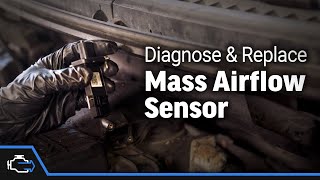
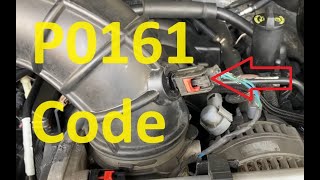
We Have This Part in Stock
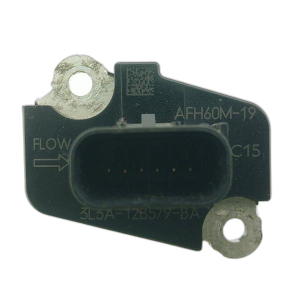

The information in this article is provided for general reference and educational purposes only. Vehicle specifications, procedures, and part compatibility can vary by production date, trim level, and region. Always consult your vehicle's factory service manual and verify part numbers before purchasing or performing repairs. Safety-critical components such as airbags, seat belts, and braking systems should be installed by a qualified professional.
- Ford F-150:
- 🧭 Diagnostic Flowchart
- 🎬 Helpful Videos
- 🛍️ Shop This Part
- What's Unique About the 2004-2024 Ford F-150
- Symptoms You May Notice
- Most Likely Causes
- Rare But Worth Checking
- Diagnosis Steps
- Parts You'll Likely Need
- Related Codes That Often Appear With This One
- Technical Service Bulletins (TSBs) & Recalls
- Platform-Specific Known Issues
- Mechanic-Grade Diagnostic Values
- Hidden / Shadow Codes Worth Checking
- Scan Tool Commands That Help
- Wiring & Ground Locations
- Real Owner Repair Stories
- "I Checked Everything" — The Actual Cause
- OEM Part Supersession History
- Model Year Variations Within This Range
- Used vs. New Parts: Buying Guide for This Vehicle
- Real Owner Stories
- 2017 Ford F-150 with 3.5L EcoBoost
- 2006 Ford F-150 with 5.4L V8
- Ford F-150 with 5.4L 3V engine
- Ford F-150 (model unspecified)
- Ford F-150 (model unspecified)
- Related OBD-II Codes
- Frequently Asked Questions
- 🎟️ Get 5% Off