

P0068 on 2010-2019 Ford Taurus 3.5L EcoBoost: MAP/Throttle Correlation Causes and Fixes
For the 2010-2019 Ford Taurus with the 3.5L EcoBoost, code P0068 is most often caused by a dirty or faulty electronic throttle body or a bad Manifold Absolute Pressure (MAP) sensor. Cleaning the throttle body is a good first step, but replacement is common. A vacuum leak is another possible, though less frequent, cause.
- P0068 on your Taurus means the engine computer sees a mismatch between the throttle's position and the air pressure in the intake manifold.
- The most likely cause is a dirty or electronically failed throttle body, a known issue on the 3.5L EcoBoost engine.
- A faulty MAP sensor is the second most likely cause.
- Start your diagnosis by inspecting and cleaning the throttle body, which is a low-cost first step.
- If you replace the throttle body or MAP sensor, it's recommended to perform a Keep Alive Memory (KAM) reset to allow the computer to relearn the new component's parameters.
What's Unique About the 2010-2019 Ford Taurus
The 3.5L EcoBoost engine is a twin-turbocharged, direct-injection platform. This design makes it susceptible to two specific issues that can lead to code P0068. First, the electronic throttle body is a known weak point and can fail electronically or become clogged with oily carbon buildup from the PCV system, causing it to stick or report incorrect positions. Second, while less common for this specific code, direct injection can lead to carbon buildup on intake valves, which can disrupt airflow and contribute to sensor correlation issues over time.
Symptoms You May Notice
- Check Engine Light is on
- Rough or unstable idle.
- Hesitation or lack of power during acceleration.
- Engine stalling, especially when coming to a stop.
- Reduced fuel economy.
- Sudden entry into 'limp mode' with a wrench light on the dash.
- A feeling that the engine is 'choking' or has a dead spot when pressing the gas pedal.
- Replacing the MAP sensor when the actual problem is a dirty throttle body.
- Replacing the accelerator pedal position (APP) sensor, which is a separate component from the throttle position sensor (TPS) located on the throttle body.
- Replacing the Turbocharger Boost Pressure sensor (sometimes also called a MAP sensor) on the charge pipe instead of the primary MAP sensor on the intake manifold.
Most Likely Causes
- Dirty or Failing Electronic Throttle Body (ETB) 🔴 High Probability → Shop Fuel Injection Throttle Body The electronic components of the throttle body are a known failure point on this engine platform, sometimes addressed by TSB 16-0139. 🎬 Watch: Understanding Ford electronic throttle body failure symptoms. Also, oil vapor from the PCV system can bake onto the throttle plate as a greasy, black sludge ('coke'), causing it to stick and disrupt airflow readings.
How to confirm: Visually inspect the inside of the throttle body for a thick ring of black carbon or oily residue. With a scan tool, monitor the throttle position sensor (TPS) voltage as you slowly press the accelerator pedal (with the engine off, key on); the reading should be smooth with no jumps or dropouts, typically moving from ~0.5V to ~4.5V.
Typical fix: Start by cleaning the throttle body and plate thoroughly with a dedicated throttle body cleaner and a soft cloth. Do not move the plate 🎬 See this walkthrough on cleaning your Taurus throttle body. manually if possible. If cleaning doesn't resolve the issue or if the sensor has failed electronically, the entire throttle body assembly must be replaced as the TPS is integrated.
Est. part cost: $120-$300 - Faulty Manifold Absolute Pressure (MAP) Sensor 🟡 Medium Probability → Shop Manifold Absolute Pressure Sensor The 3.5L EcoBoost uses multiple pressure sensors. The primary MAP sensor on the intake manifold can become contaminated with oil or simply fail electronically over time, sending incorrect pressure data to the PCM. Environmental factors can also play a role; for instance, manufacturer TSB Bulletin #TSB 18-2370 notes that vehicles operating in altitudes of 3500 feet and higher may exhibit an illuminated MIL with only DTC P0068 stored.
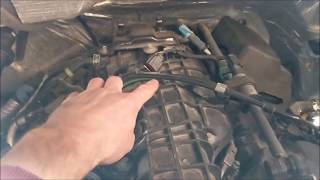
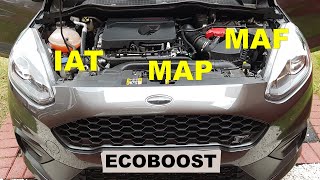
How to confirm: Use a scan tool to monitor the MAP sensor reading with the key on, engine off. It should read close to the current barometric pressure. With the engine running at idle, it should show a strong vacuum (low pressure, around 1V on a multimeter). Compare its readings to the other pressure sensors on the intake piping for plausibility. The sensor is located on top of the intake manifold and is easy to access after removing the engine cover.
Typical fix: Replace the MAP sensor located on the top of the intake manifold. It is typically held in by a single T20 Torx bolt and has one electrical connector. 🎬 Watch: How to replace the MAP sensor on a 3.5L EcoBoost.
Est. part cost: $40-$100 - Vacuum Leak ⚪ Low Probability Plastic and rubber vacuum lines, PCV hoses, and intake manifold gaskets can become brittle and crack over time due to heat cycles in the engine bay, allowing unmetered air to enter the intake manifold.
How to confirm: Visually inspect all vacuum hoses connected to the intake manifold for cracks or loose connections. A common method to find a leak is to perform a smoke test by injecting smoke into the intake system and watching for where it escapes. Alternatively, with the engine running, you can carefully spray carb cleaner near suspected leak points; a change in engine RPM indicates a leak.
Typical fix: Replace the cracked hose or faulty gasket that is causing the leak.
Est. part cost: $10-$50
Rare But Worth Checking
- Wiring Harness Issue: A damaged wire or corroded connector for the throttle body or MAP sensor can cause intermittent signal loss, triggering the code. Carefully inspect the wiring harnesses leading to both components.
- Clogged Air Filter: A severely restricted engine air filter can starve the engine of air, creating a discrepancy between what the MAP sensor reads and what the PCM expects for a given throttle angle.
Diagnosis Steps
- Check for any other stored trouble codes that could provide more clues, especially P2111, P2112, or P0299.
- Using a scan tool, view the live data for the Throttle Position Sensor (TPS) and the Manifold Absolute Pressure (MAP) sensor.
- With the key on and engine off, the MAP sensor should read close to barometric pressure. The TPS percentage should be low but not zero.
- Slowly depress the accelerator pedal and watch the TPS reading. It should increase smoothly without any glitches or dropouts.
- Visually inspect the air intake system, including all hoses and the air filter, for any obvious damage, loose connections, or restrictions.
- Remove the intake tube from the throttle body and inspect the throttle plate and bore for heavy carbon and oil buildup ('coke').
- If the throttle body is dirty, clean it thoroughly with throttle body cleaner and a soft cloth. Do not spray directly on the electronics.
- If the throttle body is clean and the TPS signal is erratic, the throttle body assembly likely needs replacement.
- If the TPS signal is smooth but the MAP sensor readings are illogical (e.g., not changing with engine load), test the MAP sensor's wiring for power, ground, and signal integrity before replacing the sensor.
- If a vacuum leak is suspected, perform a smoke test or carefully use carb cleaner around the intake manifold gaskets and vacuum hoses to pinpoint the source.
- After any repair, clear the codes and perform a throttle relearn procedure. This can often be done by disconnecting the battery for 15-20 minutes or using a specific function on a capable scan tool.
Parts You'll Likely Need
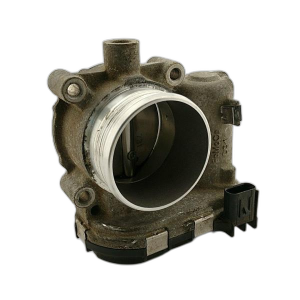
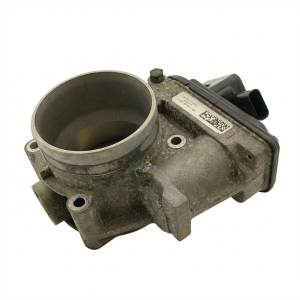
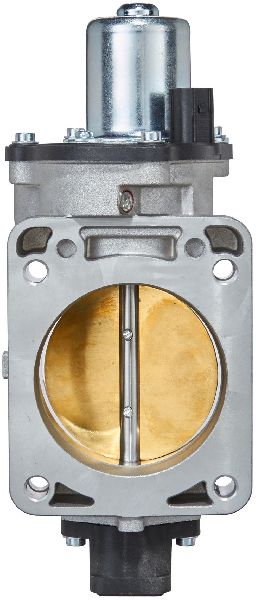
- Electronic Throttle Body Assembly
(OEM #BL3Z-9E926-B)— This is the most common failure. The integrated electronic sensor fails or the throttle plate gets stuck due to carbon buildup, causing the correlation fault. This part number is widely cited for the 3.5L EcoBoost platform.
Trusted brands: Motorcraft, Hitachi, Bosch, Cardone (Remanufactured)
OEM price range: $180-$250
Aftermarket price range: $120-$200 - Manifold Absolute Pressure (MAP) Sensor
(OEM #AA5Z-9F479-E)— This sensor provides the primary pressure reading to the PCM from the intake manifold itself. If it fails or provides inaccurate data, it will directly conflict with the throttle position data. This part number is specific to the sensor on the intake manifold.
Trusted brands: Motorcraft, Bosch, Delphi, Walker
OEM price range: $60-$90
Aftermarket price range: $40-$70
Related Codes That Often Appear With This One
- P2111 / P2112 — These codes indicate 'Throttle Actuator Control System - Stuck Open' or 'Stuck Closed'. They frequently appear with P0068 when the root cause is a failing electronic throttle body, as noted in TSB 16-0139.
- P0299 — This code indicates a turbocharger 'Underboost Condition'. This can be set along with P0068 if the PCM limits boost pressure as a protective measure ('limp mode') due to the sensor correlation fault.
Technical Service Bulletins (TSBs) & Recalls
- TSB 16-0139: Applies to 2015-2016 Taurus, Flex, MKS, and other Fords with various engines including the 3.5L. It addresses an intermittent loss of power and wrench light with DTCs P2111, P2112, and/or P2119, which are directly related to a failing electronic throttle body—a primary cause of P0068.
- TSB Bulletin #TSB 18-2370: While specifically detailing the 2.3L EcoBoost, this bulletin notes that engines operating in high altitudes (above 3500 feet) may trigger P0068, requiring specific service procedures to correct the PCM's response to these conditions.
Platform-Specific Known Issues
- There is a known issue with electronic throttle body failure on the 3.5L EcoBoost engine, which can cause sudden power loss ('limp mode') and set codes P0068, P2111, and P2112. Ford addressed this in TSB 16-0139 for the 2015-2016 Taurus and other models, recommending throttle body replacement.
Mechanic-Grade Diagnostic Values
- Scan Tool MAP/BARO/TCBP Plausibility Check (KOEO) — expected: All three pressure sensor PIDs (MAP, BARO, TCBP) should read within 1.5 psi (10.35 kPa) of each other.. Failure: If the MAP sensor reading is significantly different from the other two, it is the primary suspect.
- Throttle Position Sensor (TPS) Voltage Sweep — expected: A smooth, linear voltage increase from approximately 0.5V (throttle closed) to 4.5V (throttle wide open).. Failure: Any sudden jumps, drops, or glitches in the voltage reading as the pedal is slowly depressed indicates a failing sensor.
- MAP Sensor Signal Voltage (Key On, Engine Off) — expected: Approximately 2.0V to 3.0V, corresponding to atmospheric pressure.. Failure: A reading significantly outside this range, or stuck near 0V or 5V, points to a sensor or wiring fault.
- MAP Sensor Signal Voltage (Engine at Idle) — expected: Voltage should drop to between 1.0V and 2.5V, indicating manifold vacuum.. Failure: Voltage remains high (near the KOEO reading) or does not change with engine RPM, indicating the sensor is not reading vacuum.
- MAP Sensor Ground Circuit Resistance — expected: Less than 0.5 Ohms between the sensor's ground pin and a known good chassis ground.. Failure: High resistance indicates a poor ground connection, which can skew sensor readings.
Scan Tool Commands That Help
- Manual Procedure or Scan Tool: Throttle Body Relearn / Reset — This is mandatory after cleaning or replacing the electronic throttle body. The PCM needs to relearn the closed, open, and idle positions. Failure to do so can cause a persistent P0068, erratic idle, or poor throttle response. Common manual methods include disconnecting the battery for 15+ minutes, or a specific key-on, pedal-press sequence (key on, slowly press pedal to floor and release 3 times, then start engine).
Wiring & Ground Locations
- G104 / G105 — These are the main engine grounds. On the 3.5L platform, G104 is often found at the rear of the right (passenger side) cylinder head, and G105 is on the left (driver side) of the engine block or head. Some diagrams for related platforms show G104 on the fender apron behind the battery.. A loose or corroded main engine ground can cause a floating ground condition, leading to incorrect and erratic voltage readings for multiple sensors, including the MAP and TPS. This can trigger a P0068 code even if the sensors and their individual wiring are perfectly fine.
- MAP Sensor Connector — On top of the plastic intake manifold.. This 3 or 4-pin connector provides the 5V reference, ground, and signal return to the PCM. A common pinout is Pin A (Ground), Pin B (Signal), Pin C (5V Supply). Verifying these voltages at the connector is a key diagnostic step to differentiate between a bad sensor and a wiring problem.
Real Owner Repair Stories
- LS1Tech Forum Discussion (2005 Cadillac CTS-V (different vehicle, but same code and component principles)) — Persistent P0068 code that would return immediately after a hot restart.
❌ Tried (didn't work) Cleaning the MAF sensor., Replacing only the MAP sensor., Replacing only the MAF sensor with a cheap aftermarket unit.
✅ What actually fixed it Replacing BOTH the MAP sensor with a new one AND the cheap aftermarket MAF sensor with a quality AC Delco (remanufactured) unit finally resolved the code. - Reddit r/subaru (Subaru (unspecified model)) — Car stalled, Check Engine Light on with code P0068.
❌ Tried (didn't work) Cleaning the MAF sensor.
✅ What actually fixed it A visual inspection revealed the small vacuum hose leading from the intake manifold to the MAP sensor had simply disconnected and was hanging loose. Reconnecting the hose and clearing the code fixed the issue. - NHTSA ODI #11559506 (Ford F-150) — An owner reported a dangerous situation where they had to pull to a shoulder after the vehicle triggered code P0068. The report emphasizes that this is a widely documented issue among owners of this powertrain platform.
OEM Part Supersession History
BL3Z-9E926-A→BL3Z-9E926-B— Standard part revision for the electronic throttle body assembly.AA5Z-9F479-A→AA5Z-9F479-E— Standard part revision for the intake manifold MAP sensor. This part also supersedes older numbers like 2R3Z-9F479-AA.
Model Year Variations Within This Range
- 2013-2019: The Taurus received a significant facelift for the 2013 model year. While the 3.5L EcoBoost V6 horsepower remained the same at 365 hp, the optional Performance Package for the SHO model was improved with better brakes and a revised Power Takeoff Unit (PTU) for the AWD system. The standard, non-turbo 3.5L V6 received a power increase from 263 hp to 288 hp.
- 2010-2012 vs 2013-2019: There is a potential difference in the crank trigger wheel between the early (pre-facelift) and late (post-facelift) 3.5L EcoBoost engines. When swapping engines between these ranges, the original trigger wheel must be used to ensure compatibility with the vehicle's PCM.
Diagnostic Flowchart
Other Known Issues on This Vehicle
Issues unrelated to this code that are worth knowing about as an owner of this generation:
- Internal Water Pump Failure 🔴 High — Commonly occurs between 80,000 and 130,000 miles. Failure is critical because the pump is driven by the timing chain. If the bearing fails, it can leak coolant directly into the engine oil, leading to catastrophic engine damage.
- Power Transfer Unit (PTU) Overheating/Failure 🔴 High — Affects all-wheel-drive (AWD) models. The PTU fluid can overheat due to proximity to the exhaust, breaking down and turning to sludge. This leads to bearing failure and loss of AWD. Failures can occur as early as 30,000-40,000 miles, but are more common around 80,000-100,000 miles. (Ref: The Performance Package (PP) models included a PTU cooler to mitigate this.)
- Timing Chain Stretch 🟠 Medium — Primarily affects first-generation 3.5L EcoBoost engines (pre-2017). The primary timing chain can wear and 'stretch' over time, causing rattling noises on startup and eventually leading to timing correlation codes like P0016. Onset is often after 100,000 miles and can be accelerated by infrequent oil changes.
- Carbon Buildup on Intake Valves 🟠 Medium — As a direct-injection engine, fuel does not spray over the intake valves to clean them. Over time, oil vapor from the PCV system can bake onto the valves, causing rough cold starts, stumbling, and reduced performance. This typically becomes noticeable after 60,000-80,000 miles.
Used vs. New Parts: Buying Guide for This Vehicle
When a used part is the smart pick: A used OEM electronic throttle body from a reputable salvage yard can be a cost-effective alternative to a new unit, as they are a high-cost item. MAP sensors are relatively inexpensive, so buying new is generally recommended.
Donor-vehicle mileage cap: roughly under 70000 miles for the part to have meaningful remaining life.
What to inspect on the donor part:
- For a throttle body, check the throttle bore and plate for deep scoring or damage beyond normal carbon buildup.
- Ensure the electrical connector and pins are free of corrosion or physical damage.
- Verify the donor vehicle's mileage and check for any signs of front-end collision damage.
OEM-only on this vehicle (don't cheap out):
- Electronic sensors like the MAP sensor and Throttle Body Assembly. While not strictly 'OEM-only', using genuine Motorcraft or a major OEM supplier (like Bosch) is strongly advised. Cheap, unbranded aftermarket sensors are a common source of persistent, hard-to-diagnose correlation faults.
Aftermarket brands forum-validated for this vehicle:
- Motorcraft (OEM)
- Bosch
- Delphi
Brands owners have reported issues with on this vehicle:
- Unbranded, low-cost sensors often found on online marketplaces. These frequently have poor quality control and may be out of specification even when new, causing repeat failures.
Real Owner Stories
Aggregated from forums and TSBs cited above. Mileages and costs reflect what owners reported in those sources.
2015-2016 Ford Taurus 3.5L
Symptoms: Intermittent loss of power and a wrench light appearing on the dashboard.
What fixed it: Replacement of the electronic throttle body as recommended by TSB 16-0139.
Source hint: TSB 16-0139
2011-2016 Ford F-150 3.5L EcoBoost
Symptoms: Code P0068 triggered by issues with the throttle body or MAP sensor.
What fixed it: Replacing the throttle body or MAP sensor.
Source hint: Ford Truck Enthusiasts Forums thread titled 'Smart Guys needed; p0068'
Ford F-150 Owner Complaint
Symptoms: Sudden loss of power requiring the driver to pull to the shoulder; code P0068 was confirmed with a code reader.
What fixed it: The owner noted this is a common issue that "needs to be taken care of" across the platform.
Source hint: NHTSA ODI #11559506
Related OBD-II Codes
Frequently Asked Questions
Does TSB 16-0139 apply to my 2016 Ford Taurus with the 3.5L EcoBoost?
Can I just clean the throttle body on my Taurus to fix P0068, or do I have to replace it?
Where is the MAP sensor located on the 3.5L EcoBoost engine?
Why does my Taurus go into 'limp mode' when this code triggers?
Is it safe to manually move the throttle plate while cleaning it?
Could a vacuum leak be causing P0068 on my high-mileage Taurus?
Helpful Videos
Used OEM Parts in Stock
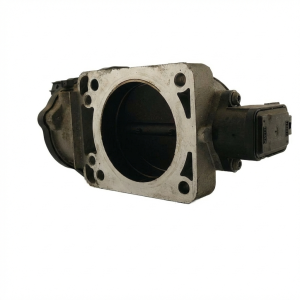
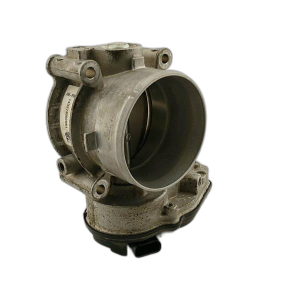
New Aftermarket Parts Available


The information in this article is provided for general reference and educational purposes only. Vehicle specifications, procedures, and part compatibility can vary by production date, trim level, and region. Always consult your vehicle's factory service manual and verify part numbers before purchasing or performing repairs. Safety-critical components such as airbags, seat belts, and braking systems should be installed by a qualified professional.
- Ford Taurus:
- 🧭 Diagnostic Flowchart
- 🎬 Helpful Videos
- 🛍️ Shop This Part
- What's Unique About the 2010-2019 Ford Taurus
- Symptoms You May Notice
- Most Likely Causes
- Rare But Worth Checking
- Diagnosis Steps
- Parts You'll Likely Need
- Related Codes That Often Appear With This One
- Technical Service Bulletins (TSBs) & Recalls
- Platform-Specific Known Issues
- Mechanic-Grade Diagnostic Values
- Scan Tool Commands That Help
- Wiring & Ground Locations
- Real Owner Repair Stories
- OEM Part Supersession History
- Model Year Variations Within This Range
- Other Known Issues on This Vehicle
- Used vs. New Parts: Buying Guide for This Vehicle
- Real Owner Stories
- 2015-2016 Ford Taurus 3.5L
- 2011-2016 Ford F-150 3.5L EcoBoost
- Ford F-150 Owner Complaint
- Related OBD-II Codes
- Frequently Asked Questions
- 🎟️ Get 5% Off