

P0073 on 2015-2020 Ford F-150: Ambient Air Temperature Sensor Causes and Fixes
For 2018-2020 F-150s, this code is almost always caused by a missing sensor in a replaced passenger mirror. For 2015-2017 models, it's a failed sensor in the grille or wiring damage. The fix is replacing the sensor, which costs $25-$60 for the part.
- First, confirm your F-150's model year. The fix depends entirely on whether the sensor should be in the grille (2015-2017) or the passenger mirror (2018-2020).
- If you have a 2018+ F-150 and recently replaced the passenger mirror, the new mirror is likely missing the temperature sensor. This is the most common cause.
- This code will disable your A/C compressor. Fixing the sensor issue should restore normal A/C operation, though a 'relearn' drive may be required.
- The fix is usually straightforward: replacing a small sensor or ensuring you have the correct mirror assembly. It does not indicate a major engine problem.
What's Unique About the 2015-2020 Ford F-150

The key issue for the 2015-2020 F-150 is that Ford moved the sensor's location mid-generation. On 2015-2017 trucks, the sensor is behind the grille. For the 2018 model year refresh, Ford relocated the sensor to the bottom of the passenger-side mirror assembly. This change is the single biggest source of confusion and misdiagnosis, as owners of 2018+ trucks often replace a damaged mirror with a cheaper aftermarket version that lacks the sensor or is pinned incorrectly, immediately triggering the P0073 code.
Generation note: This range covers the thirteenth generation F-150, but a significant change occurred in 2018. For this specific code, the location of the Ambient Air Temperature (AAT) sensor is different: 2015-2017 models have it in the front grille, while 2018-2020 models have it in the passenger-side mirror. This detail is critical for proper diagnosis.
Symptoms You May Notice

- Check Engine Light is illuminated.
- Outside temperature display on the dashboard or infotainment screen is incorrect, blank, or shows a default reading (like -40°F).
- Automatic climate control system does not regulate cabin temperature properly.
- Air conditioning (A/C) does not blow cold air because the system has disabled the compressor. 🎬 Watch: Understanding the causes and fixes for the P0073 code.
- Replacing the A/C pressure switch or other climate control components before checking for the P0073 code. The disabled A/C is a symptom, not the root cause.
- On 2018+ models, mistakenly looking for the sensor in the front grille, not realizing the actual AAT sensor is in the passenger mirror.
- On 2018+ models that have had an aftermarket mirror installed, some owners find the original two-wire connector for the grille-mounted sensor is still present but unused behind the grille, sometimes with a dummy plug in it. This can cause confusion.
Most Likely Causes

- Incorrect or Aftermarket Passenger Mirror Installed (2018-2020 models) 🔴 High Probability Many aftermarket or base model mirrors for 2018+ trucks are sold without the integrated AAT sensor, or are wired with an incompatible pinout. Installing one of these on a truck that requires the sensor leaves the circuit open, causing the P0073 code.
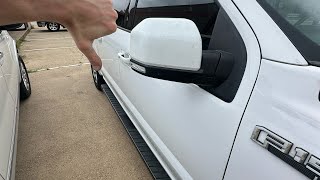
How to confirm: Visually inspect the bottom of the passenger-side mirror housing. You should see a small, black, nipple-like probe. If it is missing, and the mirror has been recently replaced, this is almost certainly the cause. You can also compare the connector pins; a genuine mirror with the sensor will have more pins than a cheap aftermarket one.
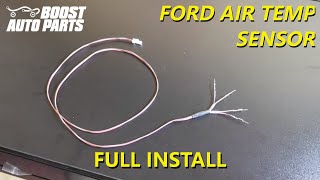
Typical fix: Replace the passenger mirror with a correct OEM or quality aftermarket version that explicitly includes the ambient air temperature sensor. Alternatively, companies like Boost Auto Parts sell a dedicated harness and sensor to add to the existing mirror or truck wiring.
Est. part cost: $150-$400 for a full mirror assembly, or $40-$60 for an add-on harness kit. 🎬 See how to install a sensor harness on 2018+ trucks.
- Failed Ambient Air Temperature Sensor 🟡 Medium Probability → Shop Ambient Air Temperature Sensor The sensor is exposed to the elements (water, road salt, debris), whether in the grille or the mirror, which can lead to internal failure over time. Manufacturer bulletin #TSB 25-2545 notes that some Ford vehicles may require replacement of the AAT sensor when DTCs P0071, P0072, and/or P0073 are present in the PCM.
How to confirm: After locating the sensor, disconnect it. Use a multimeter to test for resistance across the sensor's pins. An open circuit (infinite resistance) confirms the sensor has failed. 🎬 Watch: How to test and fix the ambient air sensor. Resistance should vary with temperature; a typical sensor might be around 10,000 ohms at 77°F (25°C) and increase as it gets colder.
Typical fix: Replace the sensor. For 2015-2017 models, this is a simple part swap in the grille. For 2018+ models, the sensor (Part HC3Z-12A647-A) is serviced separately from the mirror but requires some disassembly of the mirror housing to replace.
Est. part cost: $25-$60 - Damaged Wiring or Connector ⚪ Low Probability On 2015-2017 models, wiring near the grille can be damaged in a minor front-end collision. On 2018+ models, the wiring can be damaged within the door harness or at the mirror connector during mirror replacement or other door repairs. A poor connection at the main mirror plug is a common culprit after a mirror swap.
How to confirm: Visually inspect the wiring harness leading to the sensor for any cuts, chafing, or corrosion. Check the connector pins for damage or a loose connection. Use a multimeter to check for 5V reference voltage at the harness connector with the key on. If not, there is a wiring issue between the PCM and the sensor.
Typical fix: Repair the damaged section of wire or clean/replace the connector. Ensure the mirror connector is fully seated.
Est. part cost: $5-$20 for wiring repair supplies.
Rare But Worth Checking
- Faulty Powertrain Control Module (PCM): → Shop Engine Control Module (ECM) This is extremely rare. The PCM should only be considered if you have definitively ruled out the sensor, wiring, and connectors as the cause of the problem.
Diagnosis Steps
- Identify the Model Year: Determine if your F-150 is a 2015-2017 or a 2018-2020 model, as this dictates the sensor's location.
- Locate and Inspect the Sensor: For 2015-2017, look behind the front grille near the hood latch. For 2018-2020, inspect the bottom of the passenger-side mirror for a small probe.
- Check for Missing Sensor (2018+): If the truck is a 2018+ model and the probe is missing, especially if the mirror was recently replaced, you have likely found the problem. The fix is to install the correct mirror or sensor.
- Inspect Wiring: Check the connector and wiring going to the sensor for obvious damage, corrosion, or breaks. For 2018+ models, ensure the main mirror connector inside the door is fully seated.
- Test the Circuit: Disconnect the sensor. With the ignition on, use a multimeter to verify you have a reference voltage (typically ~5V) on one of the pins in the harness connector. If not, there is a wiring issue between the PCM and the sensor. Manufacturer bulletin #SSM 51491 suggests performing pinpoint tests in the Workshop Manual (Section 413) when P0073 is stored in the PCM.
- Test the Sensor: If voltage is present at the harness, test the sensor itself. Use a multimeter set to Ohms to measure the resistance across the sensor's two pins. If it reads as an open loop (infinite resistance), the sensor is bad and must be replaced.
- Replace or Retrofit: Replace the failed sensor. For 2018+ models with the wrong mirror, you can either replace the entire mirror assembly, or use an add-on kit from a company like Boost Auto Parts. A DIY workaround also exists: some owners have successfully wired a new sensor into the unused AAT sensor connector that may still be present behind the grille from the previous generation's wiring harness.
- Clear Codes and Verify Repair: After the repair, clear the trouble code with a scan tool. The temperature reading and A/C function should return to normal immediately. Drive the vehicle to confirm the fix.
Parts You'll Likely Need

- Ambient Air Temperature Sensor (in Passenger Mirror)
(OEM #HC3Z-12A647-A)— For 2018-2020 F-150 and 2017-2022 Super Duty models, this sensor fails or is missing from incorrect aftermarket mirror assemblies.
Trusted brands: Motorcraft
OEM price range: $30-$60
Aftermarket price range: $20-$40 - Ambient Air Temperature Sensor (in Grille)
(OEM #AU5Z-12A647-B)— This is the correct sensor for 2015-2017 F-150 models and is the most likely part to fail for this code on those years. It also fits a wide range of other Ford vehicles.
Trusted brands: Motorcraft (DY-1160)
OEM price range: $25-$50
Aftermarket price range: $15-$30 - Passenger Side Mirror Assembly (with AAT Sensor) — On 2018-2020 models, if the mirror was replaced with a version that lacks the sensor, replacing the entire assembly with the correct part is the most direct fix.
Trusted brands: Ford OEM
OEM price range: $300-$600+
Aftermarket price range: $150-$400 - AAT Sensor Add-on/Retrofit Harness — For 2018+ trucks with aftermarket mirrors lacking the sensor, this kit allows you to add the sensor to the mirror harness, resolving the P0073 code without replacing the entire mirror.
Trusted brands: Boost Auto Parts, Boosted GreyGoose Designs
OEM price range: N/A
Aftermarket price range: $40-$60
Technical Service Bulletins (TSBs) & Recalls
- GSB G0000178: AAT sensor relocated from the front grill/fascia area to the right exterior mirror on 2018 F-150s built after Feb/Mar 2018.
- Bulletin #SSM 51491: Notes that some Ford vehicles may exhibit an illuminated MIL with DTC P0073 for the ambient air temperature sensor stored in the PCM.
- Bulletin #SSM 50742: Documents that certain Ford trucks may exhibit an illuminated MIL with DTC P0073 for the ambient air temperature sensor stored in the PCM.
- Bulletin #SSM 54522: Reports that some Ford vehicles may exhibit an illuminated MIL with DTC P0073 stored in the PCM and/or B1B38 stored in the BCM, alongside no ambient air temperature display.
Platform-Specific Known Issues
- A General Service Bulletin (GSB G0000178) was issued by Ford acknowledging the relocation of the AAT sensor from the grille to the mirror for the 2018 model year.
- On 2018+ trucks, the wiring harness behind the grille may still contain the unused connector for the older-style AAT sensor, sometimes with a dummy plug installed. This can be used as a location to wire in a new sensor as a workaround if the mirror is not easily replaceable.
Mechanic-Grade Diagnostic Values
- AAT Sensor Resistance — expected: Resistance is temperature-dependent. A sample chart shows: 9,795 Ω at -40°C (-40°F), 9,022 Ω at -30°C (-22°F). Resistance decreases as temperature rises.. Failure: An infinite resistance reading (Open Loop) indicates a failed sensor.
- AAT Sensor Circuit Voltage (at connector, key on) — expected: Approximately 4.6-5.0 volts on the reference wire.. Failure: A reading significantly below 4.5V or 0V indicates a wiring issue from the PCM. A reading above 4.5V on the signal return wire confirms the 'Circuit High' condition.
- FORScan Live Data PID — expected: The PID for Ambient Air Temperature should display a plausible outdoor temperature.. Failure: A reading stuck at a default low value (e.g., -40°F) confirms the PCM is seeing an open circuit.
Scan Tool Commands That Help
- FORScan: IPC Module Configuration: 'Outside Air Temperature' — This can be used to enable or disable the temperature display on the instrument panel cluster (IPC). While not a direct fix for P0073, it's useful for confirming if the cluster is configured to receive the data.
- FORScan / High-End Scanners: Read Live Data PID for Ambient Air Temperature — To monitor the temperature value the PCM is receiving in real-time. This helps confirm if the sensor is completely dead (stuck at -40°F) or providing an erratic signal.
Wiring & Ground Locations
- AAT Sensor Wires (2015-2017 Grille Location) — Connector behind the front grille, near the hood latch.. The two wires are Green/Blue (AAT Signal) and Yellow/Violet (Signal Return). These are found at the PCM connector C175B, pins 51 and 18 respectively. Damage to these wires will cause the code.
- AAT Sensor Wires (2018-2020 Mirror Location) — At the 22-pin passenger door mirror connector (C652).. The AAT sensor wires are located at Pin 2 (typically Blue/Green, 5V reference) and Pin 6 (Signal Return) of the mirror harness connector. Aftermarket mirrors may have these pins empty or wired incorrectly.
- G108 / G109 (Ground Locations) — Located on the lower front corners of the engine compartment, on the body structure near the headlights.. These are primary ground points for the front-end lighting and sensor harnesses. While not a direct cause, a corroded ground here can introduce electrical noise and issues with various sensors in the area, including the AAT circuit on 2015-2017 models.
- Body-to-Frame Ground Strap — Underneath the passenger side of the cab, going from the body to the frame.. On 2017-2020 F-150s, this ground is known to corrode and fail, causing a host of bizarre electrical issues and communication codes. While not a primary cause for a simple P0073, it should be inspected if other electrical gremlins are present.
Documented NHTSA Reports
- NHTSA ODI #11219480 describes a situation where an owner reported getting a P0073 engine code warning light while driving, occurring alongside other electrical fault indicators.
Real Owner Repair Stories
- YouTube channel 'Z Spec' (2018 Ford F-150 Lariat) — Check Engine Light with code P0073 and no outside temperature display on the dashboard.
❌ Tried (didn't work) The owner had replaced the passenger mirror with a 'shitty Chinese mirror' that was not pinned correctly., The technician attempted to de-pin and re-pin the main 22-pin mirror connector but found the terminals too small to work with, even with a professional pin toolset.
✅ What actually fixed it The technician located the unused, capped AAT sensor connector from the previous generation's design behind the front grille. He wired a new AAT sensor to this old connector and zip-tied it in place, completely bypassing the incorrectly wired mirror. This resolved the code and restored the temperature display. - f150forum.com user (2018+ F-150) — P0073 and A/C blowing hot after installing aftermarket tow mirrors.
❌ Tried (didn't work) The user installed aftermarket mirrors but did not have the original mirrors to salvage the sensor from.
✅ What actually fixed it The recommended fix was to purchase an aftermarket sensor and wire it in. Another user confirmed that a harness kit from Boost Auto Parts, which includes a sensor and pins to insert into the main mirror connector, is a direct solution for this problem.
OEM Part Supersession History
AU5T-12A647-AC→AU5Z-12A647-B (also sold as DY-1160)— Standard part number consolidation and revision.
Heads up: This part is only for 2015-2017 models with the grille-mounted sensor.HC3T-12A647-AA→HC3Z-12A647-A (also sold as DY-1371)— Standard part number consolidation and revision.
Heads up: This part is for 2018-2020 models with the mirror-mounted sensor. It is often noted as being 'Included with mirror assembly' but is serviced as a separate part.
Model Year Variations Within This Range
- 2018-2020: The AAT sensor was relocated from the grille to the passenger-side mirror. The wiring harness behind the grille often retains the old, now-unused AAT connector, which is capped with a dummy plug. This old connector can be used as a workaround fix.
Diagnostic Flowchart
Other Known Issues on This Vehicle
Issues unrelated to this code that are worth knowing about as an owner of this generation:
- 10R80 Transmission Harsh/Delayed Shifting 🟠 Medium — Widespread on 2017-2020 models equipped with the 10-speed automatic. Can occur at various mileages. (Ref: TSB 23-2123, TSB 24-2046. Previous TSBs include 21-2315 and 22-2139. The fix often involves a PCM/TCM reflash, and in some cases, a main control valve body overhaul or complete transmission replacement.)
- Frozen Door Latches 🔴 High — Common in cold climates on 2015-2018 models. Can prevent doors from opening or, more dangerously, from latching closed. (Ref: Customer Satisfaction Program 18N03 extends warranty for this issue. It followed original recall 17S33. The fix involves adding seals and lubricating or replacing latch components.)
- Integrated Wheel End (IWE) System Failure 🟠 Medium — Common across the generation. Owners report a grinding or humming noise from the front wheels, especially during light acceleration, as the 4WD hubs partially engage due to vacuum loss. (Ref: No single recall, but a well-documented issue. The most common initial fix is replacing a cheap, one-way vacuum check valve, though the issue can also be the solenoid, vacuum lines, or the IWE actuators themselves.)
- 3.5L EcoBoost Oil Pan Leak 🟡 Low — Affects 2018-2020 models with the 3.5L EcoBoost engine, which use a plastic oil pan that is prone to leaking over time. (Ref: TSB 19-2233 addresses this issue, with the fix being the replacement of the oil pan and sealant.)
- Panoramic Sunroof Rattle/Leaks 🟡 Low — A frequent complaint from owners of trucks equipped with the optional panoramic sunroof. Issues range from rattling noises to water leaks requiring drain tube cleaning or seal replacement.
Used vs. New Parts: Buying Guide for This Vehicle
When a used part is the smart pick: For a 2018-2020 model, buying a complete used OEM passenger mirror assembly from a junkyard is a very smart choice. It is often cheaper than a new aftermarket mirror and guarantees the presence and correct wiring of the AAT sensor, avoiding the P0073 code issue entirely.
Donor-vehicle mileage cap: roughly under 100000 miles for the part to have meaningful remaining life.
What to inspect on the donor part:
- Verify the donor vehicle is the same model year range (2018-2020).
- Confirm the mirror has the same features as yours (e.g., BLIS, spotlight, power-fold).
- Physically inspect the bottom of the used mirror for the small, black, nipple-like AAT sensor probe.
- Check the mirror glass for delamination and the housing for cracks or deep scratches.
OEM-only on this vehicle (don't cheap out):
- For 2018-2020 models, the complete Passenger Mirror Assembly is best sourced as OEM (new or used) to guarantee AAT sensor compatibility. Many aftermarket assemblies cause this specific P0073 code.
Aftermarket brands forum-validated for this vehicle:
- Boost Auto Parts (for add-on harnesses and complete mirror assemblies)
- Boosted GreyGoose Designs (for add-on harnesses)
Brands owners have reported issues with on this vehicle:
- Unbranded, low-cost mirror assemblies from online marketplaces are frequently cited as lacking the AAT sensor or having incorrect wiring, directly causing the P0073 code.
Real Owner Stories
Aggregated from forums and TSBs cited above. Mileages and costs reflect what owners reported in those sources.
2019 F-150 XL
Symptoms: Owner got a P0073 code after installing stock, non-signal mirrors and could not find the sensor in the usual grille location.
What fixed it: The problem was identified as the replacement mirrors lacking the required integrated sensor. The fix is to install a correct mirror assembly that includes the sensor.
Source hint: f150forum.com thread titled 'P0073 code but can't find the sensor'
2018 F-150
Symptoms: Immediately after installing cheap aftermarket tow mirrors, the owner got a P0073 code and the A/C started blowing hot air.
What fixed it: The community confirmed the aftermarket mirrors lacked the sensor. The owner was advised to either transfer the sensor from the old mirror or purchase a compatible mirror/add-on kit.
Source hint: f150forum.com thread titled 'P0073 code after Tow Mirror Install - AC blowing Hot air'
2018 F-150 XLT
Symptoms: The P0073 code was triggered after installing aftermarket towing mirrors.
What fixed it: The recommended fix was to either swap the original AAT sensor from the old mirrors into the new ones or to find fully compatible aftermarket options, such as those from Boost Auto.
Source hint: ford-trucks.com thread titled '2018 Ford F-150 XLT aftermarket towing mirrors. P0073'
2018 F-150
Symptoms: A customer's truck had a P0073 code caused by a cheap aftermarket mirror with an incorrectly pinned connector.
What fixed it: A mechanic performed a workaround by locating the unused AAT sensor connector behind the grille (from the pre-2018 wiring harness) and wiring a new, separate sensor to that location.
Source hint: youtube.com video titled '2018 F-150 Ambient Temp Sensor fix/passenger mirror issue, P0073'
Related OBD-II Codes
Frequently Asked Questions
I have a 2019 F-150 and got code P0073. Where is the ambient air temperature sensor? I can't find it behind the grille.
My 2018 F-150's A/C is blowing hot air right after I installed new tow mirrors, and the check engine light is on. Are these related?
The passenger mirror on my 2020 F-150 was replaced and now I have a P0073 code. How can I confirm the new mirror is the problem?
I installed a cheap aftermarket mirror on my 2018 F-150 and got the P0073 code. Do I have to buy an expensive OEM mirror to fix it?
Is there an official TSB from Ford for the P0073 code on my F-150?
My 2016 F-150 has a P0073 code. Does the mirror issue apply to my truck?
Helpful Videos
We Have This Part in Stock


The information in this article is provided for general reference and educational purposes only. Vehicle specifications, procedures, and part compatibility can vary by production date, trim level, and region. Always consult your vehicle's factory service manual and verify part numbers before purchasing or performing repairs. Safety-critical components such as airbags, seat belts, and braking systems should be installed by a qualified professional.
- Ford F-150:
- 🧭 Diagnostic Flowchart
- 🎬 Helpful Videos
- 🛍️ Shop This Part
- What's Unique About the 2015-2020 Ford F-150
- Symptoms You May Notice
- Most Likely Causes
- Rare But Worth Checking
- Diagnosis Steps
- Parts You'll Likely Need
- Technical Service Bulletins (TSBs) & Recalls
- Platform-Specific Known Issues
- Mechanic-Grade Diagnostic Values
- Scan Tool Commands That Help
- Wiring & Ground Locations
- Documented NHTSA Reports
- Real Owner Repair Stories
- OEM Part Supersession History
- Model Year Variations Within This Range
- Other Known Issues on This Vehicle
- Used vs. New Parts: Buying Guide for This Vehicle
- Real Owner Stories
- 2019 F-150 XL
- 2018 F-150
- 2018 F-150 XLT
- 2018 F-150
- Related OBD-II Codes
- Frequently Asked Questions
- 🎟️ Get 5% Off