

P0087 on 2011-2018 Audi A6 3.0L TDI: Causes and Fixes for Low Fuel Rail Pressure
P0087 on the Audi A6 3.0L TDI means the fuel rail pressure is too low. The most common causes are a clogged fuel filter, a failing fuel pressure regulator, or a failing high-pressure fuel pump (HPFP). Start by replacing the fuel filter, as it's the cheapest and easiest fix, and inspect the old filter for metal shavings, which indicate HPFP failure.
- P0087 on your A6 TDI means fuel pressure is too low, most often noticed as a sudden loss of power (limp mode) during acceleration.
- Always start diagnosis by replacing the fuel filter, especially if its age is unknown. This is the cheapest and a very common cause.
- The next most likely culprits are the fuel pressure regulator on the rail or the high-pressure fuel pump (HPFP) itself.
- Before replacing the expensive HPFP, a mechanic must check for metal shavings in the fuel system. If metal is present, a much more extensive and costly repair of the entire fuel system is required.
- Due to the extremely high pressures and complexity, this is not a recommended DIY repair for most home mechanics.
What's Unique About the 2011-2018 Audi A6
The 3.0L TDI engine uses a sophisticated high-pressure common rail fuel system. While robust, its key components like the high-pressure fuel pump (HPFP) and fuel pressure regulator are common points of failure that lead to a P0087 code. Unlike simpler fuel systems, diagnosis requires checking both low-pressure supply and high-pressure system performance, often with specialized tools. A catastrophic failure of the Bosch CP4 HPFP is a known and feared issue on these platforms, which can send metal debris (swarf) throughout the entire fuel system, necessitating a very expensive and comprehensive repair of the pump, injectors, rails, lines, and fuel tank.
Symptoms You May Notice
- Flashing glow plug light on the dashboard.
- Check Engine Light (MIL) illuminated.
- Vehicle enters 'limp mode' with drastic power reduction, especially under acceleration.
- Hesitation or stumbling during acceleration.
- Difficulty starting or engine stalling, especially when the engine is warm.
- Rough or lumpy idle.
- Audible ticking or whining noise from the engine bay, potentially from the HPFP or a leaking injector.
- Excessive black or white smoke from the exhaust.
- Replacing the High-Pressure Fuel Pump (HPFP) without confirming it's the root cause. Always diagnose the fuel filter, regulator, and sensors first to avoid an extremely expensive and unnecessary repair.
- Replacing fuel injectors without performing a leak-off test. This can be a costly guess if the issue is actually the HPFP or regulator.
Most Likely Causes
- Clogged Fuel Filter 🔴 High Probability → Shop Fuel Filter Diesel fuel filters have a strict replacement interval (typically every 20,000 miles) and are designed to catch contaminants. Neglecting this service can quickly restrict fuel flow, starving the HPFP. Poor quality fuel can also accelerate clogging.
How to confirm: Start with the simplest fix. If the filter hasn't been replaced in over 20,000 miles, it's suspect. When replacing, pour the contents of the old filter into a clean container and inspect for fine metallic particles (silver or reddish dust), which is a definitive sign of HPFP failure.
Typical fix: Replace the fuel filter. This is a critical first step in diagnosis.
Est. part cost: $30-$70 - Failing Fuel Pressure Regulator (N276) 🟡 Medium Probability → Shop Fuel Injection Pressure Regulator This solenoid valve, located on the high-pressure rail, actively controls rail pressure. It is a known failure point that can wear out or fail electronically, causing pressure deviations and triggering P0087, sometimes accompanied by P0088 (Pressure Too High).
How to confirm: Monitor requested vs. actual rail pressure with a diagnostic tool like VCDS. 🎬 Watch: How to test your fuel rail pressure with VCDS A faulty regulator may cause erratic pressure readings, a consistent inability to meet targets under load, or pressure spikes. A mechanic can test the component directly, but replacement is often the next logical step after the fuel filter.
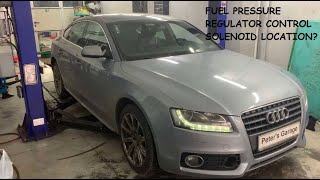
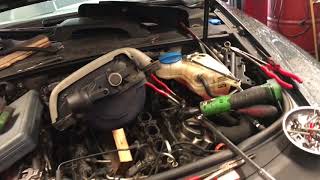
Typical fix: Replace the fuel pressure regulator valve located on the fuel rail. An adaptation with a diagnostic 🎬 Watch: Locate the fuel pressure regulator control solenoid on your Audi tool is required after replacement.
Est. part cost: $150-$300 - Failing High-Pressure Fuel Pump (HPFP) 🟡 Medium Probability → Shop Fuel Pump The Bosch CP4 HPFP used in many TDI engines is notoriously susceptible to internal wear and catastrophic failure, especially with poor fuel quality, water contamination, or fuel starvation from a clogged filter. This failure sends metal shavings (swarf) throughout the entire fuel system.
How to confirm: A technician will first rule out all other causes. The most definitive check is to inspect the fuel filter housing and the fuel metering valve (N290) on the HPFP for metal shavings. Finding any metal particles confirms HPFP failure. 🎬 See how to diagnose if your CP4 fuel pump is failing A VCDS log showing actual pressure consistently failing to meet specified pressure under load is also a strong indicator.
Typical fix: If metal is found, the entire fuel system must be replaced: HPFP, all injectors, fuel rails, all high and low-pressure lines, and the fuel tank must be removed and cleaned. This is a very expensive repair, often cited as costing $4,000-$10,000. If no metal is found, only the HPFP might be replaced.
Est. part cost: $800-$1,500 for the pump alone; $4,000-$8,000+ for a full system replacement. - Leaking Fuel Injector(s) ⚪ Low Probability → Shop Fuel Injector An injector can fail internally, causing it to leak fuel excessively back into the return line instead of into the cylinder. This acts as a pressure leak from the high-pressure rail. Leaking copper injector seat washers can also cause combustion gases to damage the injector, leading to failure.
How to confirm: Perform a leak-off test to measure the amount of fuel returned by each injector at idle and under load. An injector returning significantly more fuel than the others is faulty. Swapping a suspected bad injector to a different cylinder and seeing if the corresponding misfire code follows is another diagnostic method.
Typical fix: Replace the faulty fuel injector and its associated seals and hold-down bolt. The new injector must be coded to the ECM using a tool like VCDS.
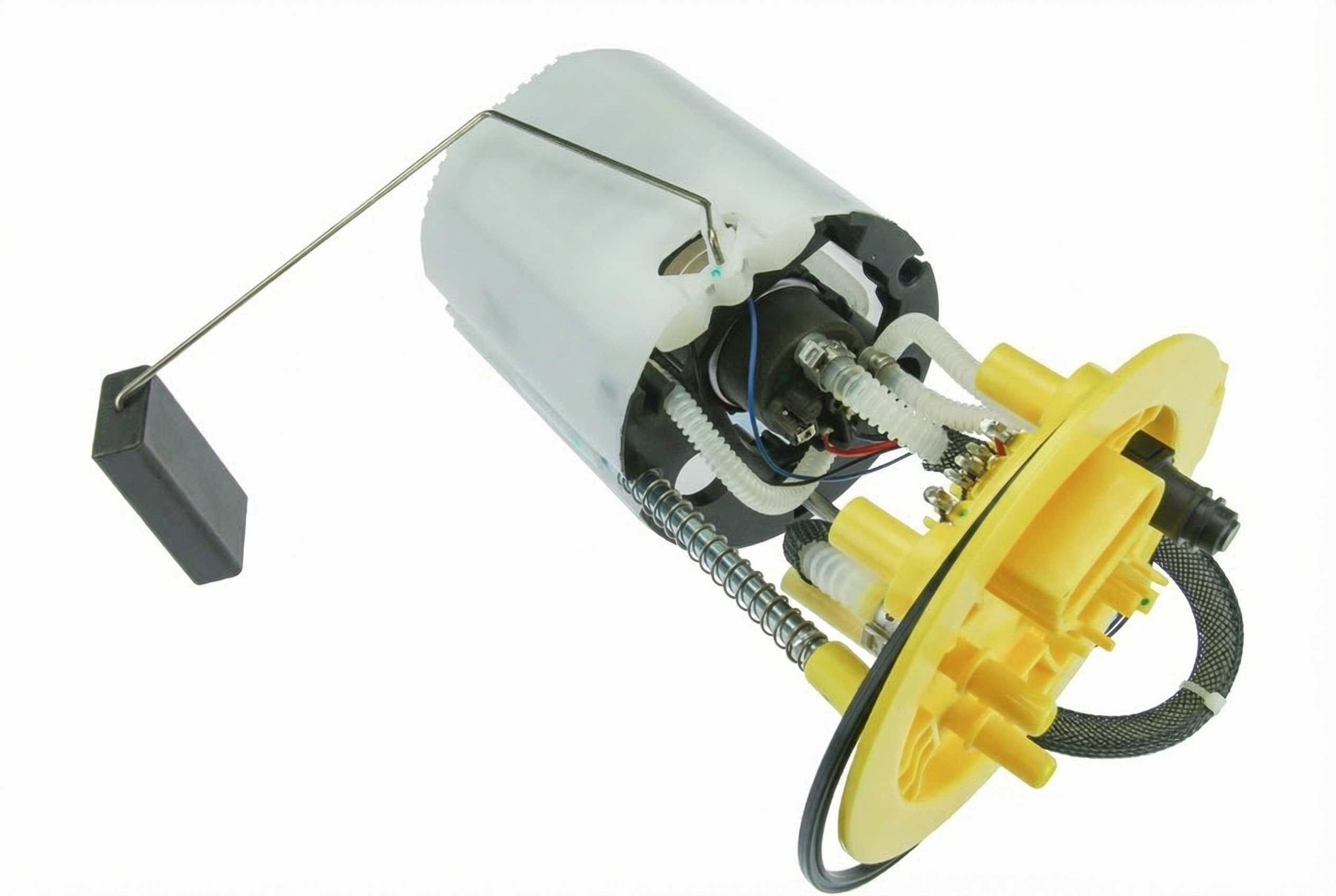
Est. part cost: $300-$600 per injector - Failing In-Tank Low-Pressure Fuel Pump (LPFP) ⚪ Low Probability → Shop Fuel Pump The HPFP must be supplied with a steady volume of low-pressure fuel from the tank. If the in-tank pump is weak or failing, it can starve the HPFP, leading to low rail pressure under demand, especially during acceleration.
How to confirm: Test the low-pressure fuel system pressure and flow rate at the inlet of the HPFP. It should meet manufacturer specifications (e.g., around 4-5 bar and a specific volume per second). This test should be performed while trying to replicate the fault.
Typical fix: Replace the in-tank fuel pump assembly.
Est. part cost: $250-$450
Rare But Worth Checking
- Faulty Fuel Pressure Sensor (G247): → Shop Fuel Pressure Sensor While possible, it's more common for the sensor to fail in a way that causes other codes (like P0191 - Implausible Signal) or no-start issues. It can, however, send incorrect low-pressure readings to the ECM, triggering P0087.
- Contaminated Fuel: Water or gasoline in the diesel fuel can damage high-pressure components, reduce lubricity leading to HPFP wear, and cause pressure issues. An Audi TSB specifically mentions checking for contaminated fuel as a diagnostic step for P0087.
- Engine Control Module (ECU) Issue: → Shop Engine Control Module (ECM) In very rare cases, particularly if the vehicle has an aftermarket tune, the ECU software or hardware can be the source of the problem. One owner on a forum replaced nearly the entire fuel system before suspecting a software issue.
Diagnosis Steps
- Check the vehicle's service history. When was the fuel filter last replaced? If it's been over 20,000 miles or is unknown, replace it. Carefully inspect the old filter and housing for metal particles.
- Connect a diagnostic tool (like VCDS) to a live data stream. Monitor 'Fuel Rail Pressure (specified)' and 'Fuel Rail Pressure (actual)'.
- Safely test drive the vehicle and try to replicate the fault condition (usually heavy acceleration or a warm start). Observe if the 'actual' pressure significantly drops below the 'specified' pressure, triggering limp mode. A deviation of 500 bar has been noted by owners.
- If the filter is new and free of debris, test the low-pressure fuel system. Verify that the in-tank lift pump is providing adequate pressure (4-5 bar) and volume to the HPFP, especially under load.
- If the low-pressure side is healthy, inspect the high-pressure side. Check the fuel pressure regulator (N276) for proper operation via diagnostic software. Consider replacing it as a next step if data is inconclusive.
- As a more involved step, a mechanic may remove the fuel metering
Parts You'll Likely Need
- Fuel Filter
(OEM #4G0127401)— This is the most common and cheapest starting point. A clogged filter restricts fuel flow to the high-pressure pump. Inspection of the old filter is a key diagnostic step.
Trusted brands: Bosch, Mann-Filter, Mahle, Genuine Audi/VW
OEM price range: $50-$70
Aftermarket price range: $30-$50 - Fuel Pressure Regulator
(OEM #059130764E)— A common failure point on the high-pressure rail that directly controls rail pressure. Can fail electronically or mechanically, causing pressure deviations.
Trusted brands: Bosch, Genuine Audi/VW
OEM price range: $200-$300
Aftermarket price range: $150-$250 - High-Pressure Fuel Pump (HPFP)
(OEM #059130755CD)— The infamous Bosch CP4 pump is a major weak point. It can fail internally, either becoming weak or catastrophically disintegrating and contaminating the entire fuel system.
Trusted brands: Bosch (OEM), Genuine Audi/VW
OEM price range: $800-$1500
Aftermarket price range: N/A (OEM is strongly recommended)
Related Codes That Often Appear With This One
- P0088 — Fuel Rail/System Pressure - Too High. This can sometimes appear alongside P0087 if the fuel pressure regulator is failing erratically, causing both over-pressure and under-pressure events as it struggles to maintain the target.
- P0269 — Cylinder 3 Injector Contribution/Balance Fault. A failing injector can cause both a P0087 (due to pressure loss) and a specific injector fault code, helping to pinpoint the cause.
- P0191 — Fuel Rail Pressure Sensor 'A' Circuit Range/Performance. This code often points directly to a faulty fuel pressure sensor (G247), which can be a cause of an incorrect P0087 reading.
Technical Service Bulletins (TSBs) & Recalls
- TSB 01 13 96 2023360/4 - Mentions P0087 and P0088 can be caused by contaminated fuel and instructs technicians to check for metal shavings in the fuel filter housing.
- TSB 23 15 34 2040752/3 - Provides a procedure for checking for metallic particles in the high-pressure fuel pump and outlines the extensive repairs needed if they are found.
Platform-Specific Known Issues
- Catastrophic failure of the Bosch CP4 high-pressure fuel pump is a known issue across many vehicles that use it, including this Audi. The failure introduces metal shavings into the entire fuel system, requiring the replacement of the pump, injectors, rails, lines, and a full tank cleaning, leading to repair bills that can exceed $8,000.
Mechanic-Grade Diagnostic Values
- Low-Pressure Fuel Pump (LPFP) Pressure — expected: 4.0 - 5.0 bar (58 - 72 PSI) at the HPFP inlet.. Failure: Pressure drops significantly below 4.0 bar under load.
- Low-Pressure Fuel Pump (LPFP) Flow Rate — expected: Approximately 1000ml in 15 seconds.. Failure: Significantly lower volume indicates a weak pump or restriction.
- Fuel Pressure Regulator (N276) Resistance — expected: 1.5 - 11.0 Ohms across the terminals.. Failure: A reading of 0 Ohms (short circuit) or infinite/open circuit indicates a failed solenoid.
- Fuel Pressure Sensor (G247) Reference Voltage — expected: ~5.0 Volts between pins 1 and 3 with key on, engine off.. Failure: No voltage or incorrect voltage points to a wiring or ECU issue.
- Fuel Pressure Sensor (G247) Signal Voltage — expected: 1.5 - 1.8 Volts with key on, engine off.. Failure: Voltage outside this range suggests a faulty sensor.
- VCDS High-Pressure Fuel Rail Deviation Under Load — expected: Actual pressure should closely mirror specified pressure.. Failure: A consistent drop of over 200 bar, with some owners seeing 500+ bar deviations before limp mode is triggered, indicates a severe fuel delivery issue.
Hidden / Shadow Codes Worth Checking
- TPI 2020693: This is an Audi Technical Product Information document specifically related to diagnosing fault code P0087. It contains dealer-level diagnostic guidance. (see via This is not a code but a service document number. A dealer technician or someone with access to the erWin Audi service portal would look this up.)
- P1065: Fuel Pressure Regulation - Control Difference. This code often appears with P0087/P0088 and points towards a problem with the system's ability to control pressure, often implicating the N276 regulator or G247 sensor. (see via Standard OBD-II or VCDS scan tool.)
Scan Tool Commands That Help
- VCDS (VAG-COM): Advanced Measuring Values - Fuel High Pressure (Actual vs. Specified) — This is the primary method for diagnosing P0087. Log these values during a test drive while trying to replicate the fault (e.g., heavy acceleration). A large, sustained deviation between actual and specified pressure confirms the problem.
- VCDS (VAG-COM): Heat Soak Pressure Test — Used to test for leaking injectors. With the engine fully warmed up, log the fuel rail pressure, then shut the engine off (ignition on). The pressure should rise and hold steady (e.g., double from idle pressure) due to heat expansion. If the pressure fails to rise or drops off, it indicates a leak, most commonly a faulty injector.
- VCDS (VAG-COM): Injector Adaptation — After replacing a fuel injector, the new injector's calibration code (printed on the injector body) must be programmed into the Engine Control Module for proper fuel trimming and engine operation.
Wiring & Ground Locations
- Engine Control Unit (J623) — Located in the plenum chamber (under the plastic cowl below the windshield), underneath the windshield washer fluid reservoir.. The ECU controls all fuel pressure sensors and actuators. Water ingress in this area can damage the ECU or its connectors, leading to various fuel system faults.
- Main Engine Ground Point — There is a primary ground connection point on the right side of the engine compartment, near the alternator.. A loose or corroded main engine ground can cause erratic behavior from sensors and actuators, including the fuel pressure sensor and regulators, leading to intermittent and hard-to-diagnose faults.
- G247 / Injector Harness Connector — A black 14-pin connector located at the rear, left-hand side of the engine bundles the wiring for injectors 1-5 and the G247 fuel pressure sensor. Pins 11, 12, and 13 are for the G247.. This connector is a critical point to check for corrosion or damage if you suspect a faulty G247 sensor or have related injector codes, as a bad connection here can mimic a failed sensor.
Real Owner Repair Stories
- Audi-Sport.net forum user (Audi A4 3.0 TDI (CCWA engine)) — Flashing glow plug light, EML on, stalling on warm start, P0087 code.
❌ Tried (didn't work) Using premium diesel fuel, Replacing the fuel filter, Replacing the rail pressure sensor (G247), Replacing the pressure control valve (N276)
✅ What actually fixed it The final solution was replacing the High-Pressure Fuel Pump (HPFP). The low-pressure pump was confirmed to be supplying a steady 4.5 BAR before the HPFP was replaced. - YouTube channel 'sandy anderson' (2014 VW Touareg 3.0 V6 TDI (same engine family)) — P0087 code, low pressure, hydrolocking, hard starting, limp mode under load.
❌ Tried (didn't work) Initial diagnosis was difficult as the issue was intermittent.
✅ What actually fixed it A single faulty fuel injector (cylinder #3) was the cause. The injector hold-down bolt was also found to be loose. The injector was pressure tested and found to be opening at 140 bar instead of the required 200+ bar, causing a system-wide pressure loss. Replacing the injector and coding it to the ECU resolved the P0087 code. - YouTube channel 'The DIY Workshop' (VAG TDI with Common Rail) — P0087, P0088, P1065 codes, sporadic glow plug light, limp mode. VCDS showed a 100 bar difference between specified and actual pressure.
❌ Tried (didn't work) Diagnosing individual components.
✅ What actually fixed it Replaced the entire fuel rail assembly, which included both the pressure sensor (G247) and the regulator (N276). The user found a used assembly for less than the cost of one new sensor and suspected the G247 sensor was the ultimate culprit.
OEM Part Supersession History
059130755AL / BC / BE→059130755BT / CG / CN (and others)— Internal revisions and improvements by Bosch to the CP4 pump design over the vehicle's production run.
Heads up: While many pumps are physically interchangeable, it is critical to use the correct part number for the specific engine code (e.g., CDUC, CRTD) and model year. Using an incorrect revision can lead to performance issues. Always verify with VIN.059130758→059130758J, 059130758K— Revisions to the G247 fuel pressure sensor for improved accuracy and reliability.
Heads up: The pressure sensors for different engine power outputs (e.g., 1800 bar vs 2000 bar systems) are not interchangeable. Using the wrong sensor will result in incorrect pressure readings, poor performance, and fault codes like P0191.
Model Year Variations Within This Range
- 2011-2015 (Pre-Facelift): The 3.0L TDI was available in different power outputs, such as a 204hp version and a 245hp version. These are not just software tunes; they have mechanical differences, including different turbos and different maximum fuel rail pressures (1800 bar vs 2000 bar). The fuel system components, particularly the G247 sensor, may not be interchangeable between them.
- 2016-2018 (Post-Facelift): The facelift models introduced updated engine versions, such as the CRTD engine code (272hp). These are part of the 'Evo' generation of the EA897 engine family and have further refinements to the fuel and emissions systems compared to the earlier CDUC-family engines.
Diagnostic Flowchart
Other Known Issues on This Vehicle
Issues unrelated to this code that are worth knowing about as an owner of this generation:
- Timing Chain Tensioner Wear 🔴 High — Becomes common after 100,000-150,000 miles. Characterized by a rattling noise on cold starts that lasts for a few seconds. Failure to address can lead to the chain jumping teeth, causing catastrophic engine damage. (Ref: Updated tensioner parts are available from Audi.)
- EGR Cooler and Valve Issues 🟠 Medium — The EGR cooler can develop leaks, causing coolant loss. The valve can also get clogged with carbon, leading to performance issues and fault codes. More common on vehicles used for frequent short trips.
- Oil Leaks (Upper Oil Pan, Timing Cover) 🟠 Medium — As the engine ages (typically over 100,000 miles), seals and gaskets can degrade. Common leak points include the upper oil pan gasket and the timing chain covers, which can be labor-intensive to repair.
- Water Pump Failure 🟠 Medium — The water pump is considered a wear item and can fail prematurely, sometimes as early as 50,000-60,000 miles, leading to coolant leaks and potential overheating.
- Intake Manifold Flap Motor Failure 🟡 Low — The swirl flap motors or linkages can fail due to carbon buildup or wear, causing fault codes and minor performance issues. Repair kits are available.
Used vs. New Parts: Buying Guide for This Vehicle
When a used part is the smart pick: A complete, used fuel rail assembly including the G247 sensor and N276 regulator can be a cost-effective repair if sourced from a low-mileage, reputable donor vehicle. Used fuel injectors can also be an option, but ONLY if they have been professionally cleaned and bench-tested to confirm correct opening pressure and leak-off rates.
Donor-vehicle mileage cap: roughly under 70000 miles for the part to have meaningful remaining life.
What to inspect on the donor part:
- Verify the donor vehicle's VIN to ensure part compatibility, especially for sensors and the HPFP.
- Ask for video of the donor car running at idle, if possible.
- For a fuel rail, ensure connectors are not cracked and threads are not damaged.
- NEVER buy a used HPFP from a vehicle where the reason for scrapping is unknown or related to engine failure.
OEM-only on this vehicle (don't cheap out):
- High-Pressure Fuel Pump (HPFP): Due to the high risk of catastrophic failure sending metal debris through the system, a used HPFP is strongly discouraged. A new or professionally remanufactured pump from Bosch (the OEM supplier) is the only reliable option.
- Fuel Injector Seals: Always use new, high-quality copper washers and o-rings when replacing or reinstalling injectors. Re-using old seals is a primary cause of leaks.
Aftermarket brands forum-validated for this vehicle:
- Bosch: As the original equipment manufacturer for the entire fuel system, Bosch parts are the benchmark for quality and reliability.
Brands owners have reported issues with on this vehicle:
- Unbranded, no-name HPFPs or injectors from online marketplaces. The precision required for these components is extremely high, and low-quality copies are likely to fail prematurely, potentially causing catastrophic engine damage.
Real Owner Stories
Aggregated from forums and TSBs cited above. Mileages and costs reflect what owners reported in those sources.
2013 Audi Q7 3.0L TDI (Platform Mate)
Symptoms: Actual fuel rail pressure failing to meet specified pressure targets in VCDS logs.
What fixed it: The discussion emphasized the importance of the 20k-mile fuel filter change and checking injectors and regulators.
Source hint: Ross-Tech forum thread 37770
Audi A6 C7 3.0 BiTDI
Symptoms: Low fuel rail pressure (P0087) occurring specifically under heavy loads/kickdown.
What fixed it: The owner replaced the HPFP twice and injectors twice, highlighting that in extreme cases, the code can persist even after major component replacement.
Source hint: MHH Auto thread 'Audi A6 C7 3.0 BiTDI P0087 Low Fuel Rail Pressure Under Heavy Loads'
3.0L TDI (CCWA engine code)
Symptoms: P0087 low fuel pressure DTC appearing specifically during warm starts.
What fixed it: The owner worked through the fuel filter and suspected the low-pressure lift pump (LPFP).
Source hint: audi-sport.net thread '3.0tdi ccwa low fuel pressure dtc p0087'
Related OBD-II Codes
Frequently Asked Questions
What does TSB 01 13 96 2023360/4 say about my Audi A6 3.0L TDI and code P0087?
Is there a specific procedure for checking the Bosch CP4 pump for failure on this vehicle?
How often should I change the fuel filter on my 3.0L TDI to prevent P0087?
Can a faulty N276 regulator cause P0087 on the Audi A6?
What is the estimated cost if my HPFP has failed and sent metal through the system?
Why does my A6 TDI enter 'limp mode' during heavy acceleration?
Helpful Videos
Used OEM Parts in Stock
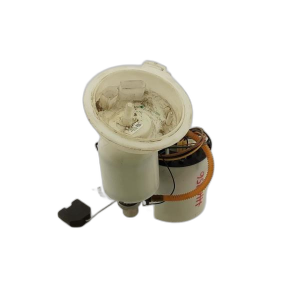
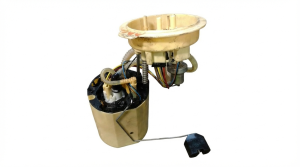
New Aftermarket Parts Available
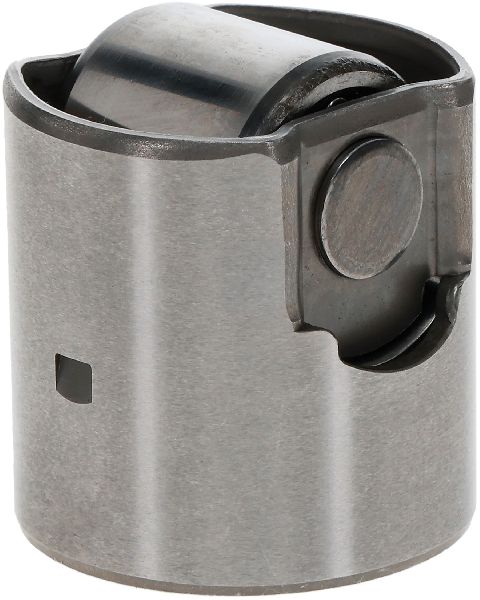


The information in this article is provided for general reference and educational purposes only. Vehicle specifications, procedures, and part compatibility can vary by production date, trim level, and region. Always consult your vehicle's factory service manual and verify part numbers before purchasing or performing repairs. Safety-critical components such as airbags, seat belts, and braking systems should be installed by a qualified professional.
- Audi A6:
- 🧭 Diagnostic Flowchart
- 🎬 Helpful Videos
- 🛍️ Shop This Part
- What's Unique About the 2011-2018 Audi A6
- Symptoms You May Notice
- Most Likely Causes
- Rare But Worth Checking
- Diagnosis Steps
- Parts You'll Likely Need
- Related Codes That Often Appear With This One
- Technical Service Bulletins (TSBs) & Recalls
- Platform-Specific Known Issues
- Mechanic-Grade Diagnostic Values
- Hidden / Shadow Codes Worth Checking
- Scan Tool Commands That Help
- Wiring & Ground Locations
- Real Owner Repair Stories
- OEM Part Supersession History
- Model Year Variations Within This Range
- Other Known Issues on This Vehicle
- Used vs. New Parts: Buying Guide for This Vehicle
- Real Owner Stories
- 2013 Audi Q7 3.0L TDI (Platform Mate)
- Audi A6 C7 3.0 BiTDI
- 3.0L TDI (CCWA engine code)
- Related OBD-II Codes
- Frequently Asked Questions
- 🎟️ Get 5% Off