

P0087 on 2018-2020 GMC Sierra 1500: Low Fuel Pressure Causes & Fixes
P0087 on a 2018-2020 Sierra 1500 indicates low fuel pressure, most often caused by a failing high-pressure fuel pump (HPFP) or the in-tank low-pressure fuel pump. A specific GM TSB points to the in-tank pump failing in cold weather. Expect to pay $250-$700 for a new HPFP and $200-$500 for an in-tank pump, plus labor.
- P0087 on your 2018-2020 Sierra means the engine's fuel pressure is dangerously low, and you should not drive the vehicle.
- The most likely causes are a failing high-pressure fuel pump (HPFP) or the in-tank low-pressure fuel pump.
- A GM TSB (#18NA103) specifically identifies the in-tank pump as a failure point in cold weather (below 20°F) for 2019 models.
- Diagnosis is critical. A technician must determine if the low-pressure or high-pressure side of the fuel system is failing to avoid replacing incorrect parts.
- When diagnosing, always check the engine oil for a fuel smell, as this is a clear sign of a failing HPFP.
What's Unique About the 2018-2020 Gmc SIERRA 1500
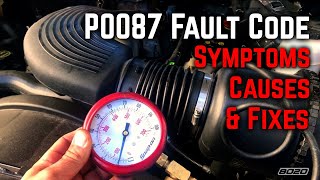
The 2018-2020 Sierra 1500 spans two distinct generations (K2XX and T1XX), both of which use gasoline direct injection (GDI) that is sensitive to fuel pressure. A key issue, identified in GM Technical Service Bulletin #18-NA-103 for the 2019 model, is the failure of the in-tank fuel pump in cold temperatures (below 20°F), leading directly to a P0087 code. 🎬 Watch: A quick breakdown of the P0087 code and common fixes. Beyond this specific bulletin, the high-pressure fuel pump (HPFP) is a common wear item on these modern GM trucks, making it a top suspect for this code.
Diagnostic Flowchart
Tap your situation to follow the diagnostic path that matches what you're seeing on this vehicle.
Generation note: The 2018 model year is the K2XX platform. The 2019 model year introduced the new T1XX platform, but a 2019 'Limited' model was a carryover of the K2XX platform. The 2020 model is a T1XX. While the fuel systems are similar in principle (GDI), part numbers and specific procedures may differ between generations. The high-pressure pump on the K2XX (2018) is often located in the engine valley under the intake manifold, while on the T1XX (2019-2020) it may be in a different location depending on the engine.
Symptoms You May Notice
- Check Engine Light is on
- Engine stalls, sometimes while driving
- Loss of power and poor acceleration
- Hard starting or no-start condition
- Rough idle or engine speed fluctuation
- Engine hesitation or sputtering
- Reduced Power message on the driver information center
- Loud whining noise from the in-tank fuel pump, especially in cold weather.
- Replacing the fuel pressure sensor when the high-pressure or low-pressure fuel pump is the actual cause of the low pressure.
- Replacing only the low-pressure pump when the high-pressure pump has failed, or vice-versa. Proper diagnosis is key to avoid replacing the wrong pump.
- Replacing the fuel rail when the issue is actually the HPFP, as documented in owner forums.
Most Likely Causes
- Failing High-Pressure Fuel Pump (HPFP) 🔴 High Probability → Shop Fuel Pump The mechanically-driven HPFP is a known wear item on GM's direct injection engines. It is a common failure point that directly causes low rail pressure. Forum discussions confirm this is often the final fix after other parts are tried.
How to confirm: Use a scan tool to monitor desired vs. actual fuel rail pressure. If actual pressure drops significantly under load while low-pressure supply is steady, the HPFP is suspect. Also, check the engine oil for a strong smell of gasoline, which indicates a failed internal seal on the pump leaking fuel into the crankcase.
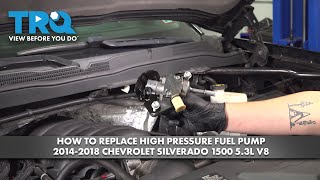
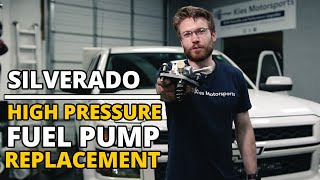
Typical fix: Replace the high-pressure fuel pump. This pump is located on the engine and is driven by the camshaft. On some V8s, this requires removing the intake manifold. 🎬 See this step-by-step walkthrough for replacing the high-pressure pump.
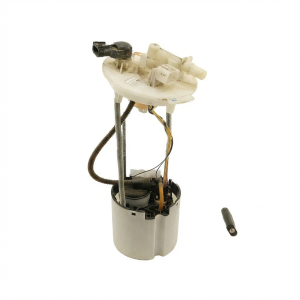
Est. part cost: $250-$700 - Failing In-Tank Low-Pressure Fuel Pump 🔴 High Probability → Shop Fuel Pump GM TSB #18-NA-103 specifically calls out the in-tank fuel pump failing on 2019 models at temperatures below 20°F, causing P0087 and other codes. This indicates a potential design or manufacturing weakness under specific conditions.
How to confirm: Test the low-pressure fuel system pressure at the engine. If the pressure is below specification (typically 50-70 PSI), the in-tank pump is likely at fault. A scan tool may also show low readings for the low-pressure fuel sensor.
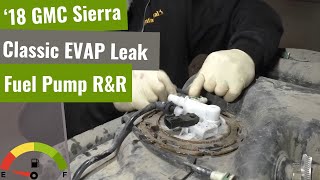
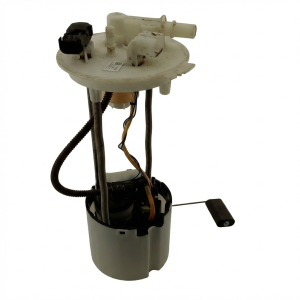
Typical fix: Replace the in-tank fuel pump module. This requires dropping the fuel tank.
Est. part cost: $200-$500 - Clogged Fuel Filter ⚪ Low Probability → Shop Fuel Filter The fuel filter is integrated into the in-tank fuel pump module and is considered non-serviceable. While fuel contamination can clog it, this is uncommon and would necessitate replacing the entire pump module anyway.
How to confirm: This is confirmed by default when a failed in-tank pump is diagnosed. A low reading during a low-side fuel pressure test points to a problem in the tank, which could be the pump or its integrated filter.
Typical fix: Replace the entire in-tank fuel pump module.
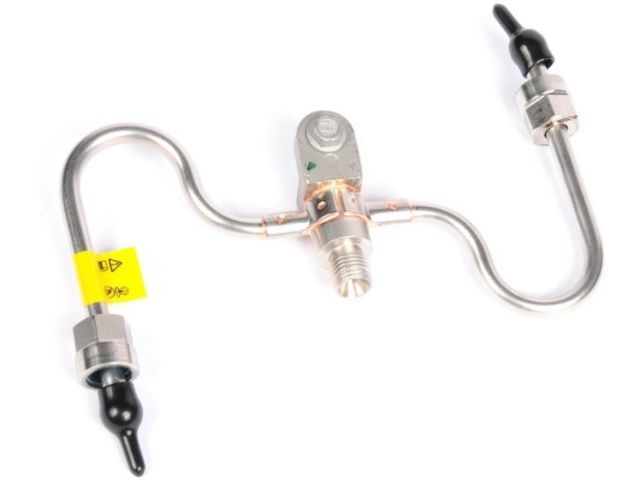
Est. part cost: $200-$500 (for the entire module) - Failed Fuel Rail Pressure Sensor ⚪ Low Probability → Shop Fuel Pressure Sensor While not as common as pump failure, sensors can fail and send inaccurate readings to the ECM, causing it to set a P0087 code incorrectly. TSB #20-NA-197 also notes the connector can corrode.
How to confirm: Compare the scan tool's pressure reading to a reading from a mechanical gauge. If there is a significant discrepancy, the sensor is likely faulty. Inspect the connector for corrosion or damage.
Typical fix: Replace the fuel rail pressure sensor and/or its connector pigtail.
Est. part cost: $50-$150
Rare But Worth Checking
- Fuel System Contamination: Mentioned in TSB #PIP5151F, contaminated fuel (with water, debris, or other fluids) can clog filters and damage pumps, leading to low pressure. If found, the entire fuel system may need to be cleaned, and warranty coverage may be denied.
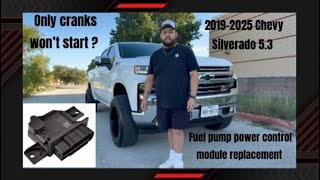
- Fuel Pump Control Module (FPCM) Failure: → Shop Fuel Pump The FPCM, also known as the Fuel Pump Driver Module, controls the voltage to the in-tank pump. On GM trucks, it's often located on a crossmember above the spare tire, making it highly susceptible to corrosion and water damage. 🎬 Watch: How to replace the fuel pump power control module. A failing module can reduce pump output and cause low fuel pressure, mimicking a bad in-tank pump.
- Corroded Fuel Pressure Sensor Connector: → Shop Fuel Pressure Sensor TSB #20-NA-197 (for 2017-2021 trucks) notes that corrosion at the sensor connector can cause erratic readings and trigger fuel pressure codes like P0087. The fix involves applying dielectric grease or replacing the connector itself.
- Worn Camshaft Lobe: → Shop Engine Camshaft The HPFP is driven by a special lobe on the camshaft. If this lobe becomes worn, it cannot properly actuate the pump, leading to low pressure even with a new HPFP. The lobe should be inspected any time the HPFP is replaced.
Diagnosis Steps
- Connect a professional OBD-II scan tool capable of reading live manufacturer-specific data.
- Check for any other stored diagnostic trouble codes. Pay close attention to codes listed in the 'Often Seen With' section.
- Observe live data for 'Desired Fuel Rail Pressure' and 'Actual Fuel Rail Pressure'. Note any large discrepancies, especially under acceleration.
- Observe live data for the low-pressure fuel system. If the low-side pressure drops below the specified 50-70 PSI range, the problem is likely with the in-tank pump, FPCM, or a clogged filter sock.
- If low-side pressure is stable and within spec, but the high-pressure side cannot meet the desired pressure, the issue is likely with the high-pressure fuel pump (HPFP).
- Perform a visual inspection of all fuel lines and the fuel rail for any signs of leaks.
- Remove the engine oil dipstick and oil cap. Check for a strong smell of gasoline, which would strongly indicate a failed HPFP leaking fuel into the crankcase.
- Inspect the fuel for any signs of contamination (water, debris, etc.) as noted in TSB #PIP5151F.
- Inspect the Fuel Pump Control Module (FPCM) and its connector, located above the spare tire, for signs of corrosion or physical damage.
Parts You'll Likely Need
- High-Pressure Fuel Pump (HPFP)
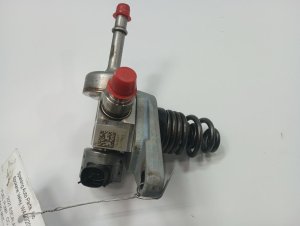
(OEM #12692704 (ACDelco HPM1018))— This is a primary failure point on GM direct injection engines and is the most common cause of P0087 when the low-pressure system is functioning correctly.
Trusted brands: ACDelco, Bosch
OEM price range: $400-$700
Aftermarket price range: $250-$500 - In-Tank Fuel Pump Module
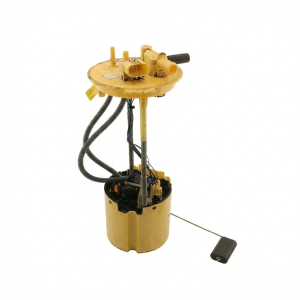
(OEM #84777099 (ACDelco M10235))— This pump supplies fuel to the HPFP. Its failure is a direct cause of low pressure and is specifically cited in TSB #18-NA-103 for cold weather issues.
Trusted brands: ACDelco, Delphi
OEM price range: $300-$500
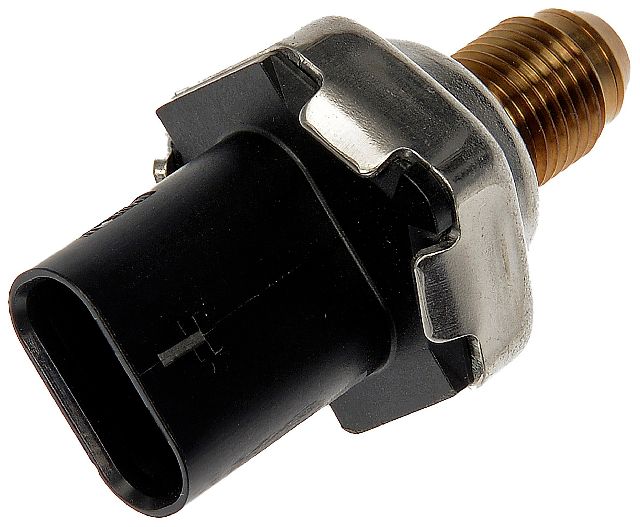
Aftermarket price range: $200-$400 - Fuel Rail Pressure Sensor
(OEM #12708493)— Though less common than pump failures, this sensor can provide false low readings, triggering the code. Corrosion on the connector is also a known issue.
Trusted brands: ACDelco, Bosch
OEM price range: $25-$50
Aftermarket price range: $20-$40
Related Codes That Often Appear With This One
- P2635 — This code for 'Fuel Pump 'A' Low Flow/Performance' directly relates to the in-tank pump and is cited alongside P0087 in TSB #18-NA-103, especially in cold weather.
- P0191 — This code indicates a 'Fuel Rail Pressure Sensor Circuit Range/Performance' issue. It often appears with P0087 because the sensor's readings are illogical when the actual pressure is too low, as noted in TSB #PIP5151F.
- P0088 — This code for 'Fuel Rail/System Pressure - Too High' can appear with P0087 if a failing component (like a pressure regulator or sensor) is causing erratic and wild swings in fuel pressure. TSB #PIP5151F also lists this as a possibility.
- P228B — This code for 'Fuel Pressure Regulator 2 Control Circuit Range/Performance' is mentioned in TSB #18-NA-103 and in owner forums, often appearing with P0087 when the system has trouble controlling pressure, particularly in cold weather.
Technical Service Bulletins (TSBs) & Recalls
- 18NA103: Addresses in-tank fuel pump failure in cold temperatures, causing start/stall, loss of power, and setting code P0087.
- PIP5151F: Notes that fuel system contamination can cause P0087 along with hard start, no start, and rough running conditions on similar GM trucks.
- PIP4949E: Provides diagnostic information for hard start or no start conditions associated with DTC P0087 on similar GM trucks.
Platform-Specific Known Issues
- Owner Experience: Cold Weather Failure and Repair Saga: An owner on a Reddit forum reported a persistent P0087 and P228B issue that only occurred in temperatures below 30°F. The dealership first replaced the fuel rail, but the codes returned on the next cold day. After further diagnosis and escalation with GM, the high-pressure fuel pump was replaced, which ultimately resolved the cold-start stalling and trouble codes.
- Professional Insight: Misdiagnosis of Fuel Rail: In a forum discussion, a Chevrolet diesel technician noted that during a cold snap, many trucks came into the shop with similar fuel pressure codes. The technician's experience was that replacing the fuel rail was not the correct fix, and the actual culprit was the high-pressure injection pump. This corroborates owner experiences where a fuel rail replacement did not solve the problem.
Mechanic-Grade Diagnostic Values
- Low-Pressure Fuel System (In-Tank Pump) — expected: 55-62 PSI at idle for the 5.3L V8.. Failure: Pressure consistently below 55 PSI indicates a weak in-tank pump, failing FPCM, or restriction.
- High-Pressure Fuel System (HPFP) — expected: Approx. 4,000-6,000 PSI at idle; 23,000-26,000 PSI at Wide Open Throttle (WOT).. Failure: If actual pressure at WOT is more than 2,000 PSI below desired pressure, the HPFP is likely failing.
- Fuel Rail Pressure Sensor (Engine Off) — expected: Should drop to near 0 PSI when the engine is cold and has sat for a while.. Failure: A sensor that still reads 30-40 PSI with the engine off and cold is likely faulty.
- High-Pressure Fuel System (Cranking) — expected: Should build to 300-400 PSI while cranking.. Failure: Failure to build pressure during cranking points to an issue with the HPFP or its drive mechanism.
Scan Tool Commands That Help
- GDS2: Fuel System Depressurize — To test the fuel rail pressure sensor. When commanded at idle, the engine should stall and pressure should read zero. If the reading hangs at a non-zero value (e.g., 30-40 PSI), the sensor is likely bad.
- GDS2: Fuel Pump Driver Control Module Configuration — This function is required after replacing the FPCM on 2019-2020 models. Early GDS2 software was missing this function, but it was added in a later update.
- GDS2: Camshaft Position Actuator Solenoid Valve — If a stuck cam phaser is suspected of causing a no-start or low pressure on startup, cycling this solenoid 4-5 times may unstick it.
Wiring & Ground Locations
- Fuel Pump Control Module (FPCM) — Commonly found on the driver's side frame rail, often on a crossmember above the spare tire.. Its exposed location makes it highly vulnerable to corrosion from road salt and water, which can cause it to fail and stop providing correct voltage to the in-tank fuel pump, directly causing low pressure.
- G110 / G114 — Frame grounds on 2019-2020 T1XX models.. GM issued a notice (PIE0548) about potential loose connections at these specific grounds, which can cause a wide range of electrical issues, including problems with fuel system control modules.
- PCM Main Ground — Suspected to be a 10mm bolt on the engine block, with the wire coming from the main engine harness.. If this primary ground for the Powertrain Control Module becomes frayed or corroded, the PCM can get inconsistent power, leading to incorrect calculations and commands for the fuel system.
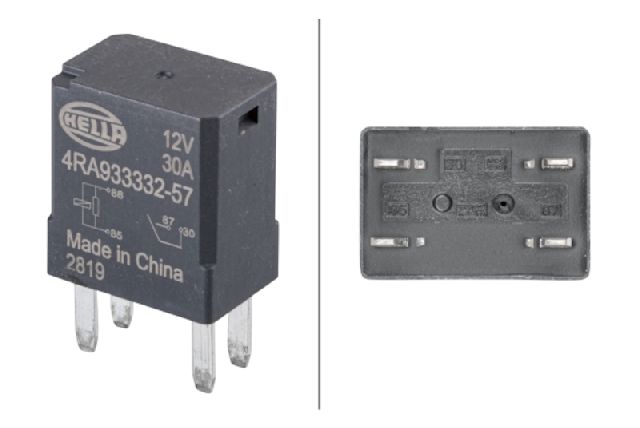
- Fuse 18 / Relay 59 — In the under-hood fuse box (for 2018 K2XX models).. These are the primary fuse and relay for the fuel pump. A failure here will cut all power to the low-pressure pump.
Real Owner Repair Stories
- Compilation of forum reports on silveradosierra.com and gm-trucks.com (2019 GMC Sierra 1500 5.3L) — Intermittent stalling, loss of power, and P0087 code. Problem was worse in wet weather or after a car wash.
❌ Tried (didn't work) Replaced in-tank low-pressure fuel pump, Replaced fuel rail pressure sensor
✅ What actually fixed it The Fuel Pump Control Module (FPCM), located on the frame rail above the spare tire, was heavily corroded. Replacing the FPCM and cleaning the connector resolved all symptoms. The module's exposure to the elements was the root cause.
"I Checked Everything" — The Actual Cause
- A smoke test is not a relevant diagnostic procedure for P0087, as this code relates to a high-pressure liquid fuel system, not air/vacuum leaks. The equivalent scenario is when fuel pressure tests pass at idle in the service bay, but the code sets on the road. This often happens when a component, like the in-tank pump or FPCM, is failing thermally or under load—conditions not easily replicated at idle. The issue is dynamic, not a static leak.
When the Usual Fixes Don't Work
- While the high-pressure and low-pressure fuel pumps are the most common culprits, a significant number of owners have fixed a P0087 code only after discovering a corroded Fuel Pump Control Module (FPCM). Because the FPCM directly controls the in-tank pump, its failure perfectly mimics a bad pump. Technicians who do not physically inspect the FPCM (located above the spare tire) may misdiagnose the issue as a failed in-tank pump, leading to unnecessary repairs.
OEM Part Supersession History
13579380→13516496— Updated design or manufacturer for the fuel tank pressure sensor, which is part of the low-pressure system.
Model Year Variations Within This Range
- 2018 (K2XX) vs 2019-2020 (T1XX): The 5.3L V8 engine was updated from the L83 to the L84. The L84 uses a more complex Dynamic Fuel Management (DFM) system and has different fuel pump connectors and no vacuum pump, which can alter diagnostic procedures.
- 2019-2020 (T1XX): Early production models may require a GDS2 software update to enable the 'Fuel Pump Driver Control Module Configuration' function, which is necessary after replacing the FPCM.
- 2019-2020 (T1XX): These models are subject to potential loose frame grounds at locations G110 and G114, as noted in GM notice PIE0548, which can cause various electrical faults impacting the fuel system.
Helpful Videos

Used OEM Parts in Stock

New Aftermarket Parts Available


The information in this article is provided for general reference and educational purposes only. Vehicle specifications, procedures, and part compatibility can vary by production date, trim level, and region. Always consult your vehicle's factory service manual and verify part numbers before purchasing or performing repairs. Safety-critical components such as airbags, seat belts, and braking systems should be installed by a qualified professional.
- Gmc SIERRA 1500:
- 🧭 Diagnostic Flowchart
- 🎬 Helpful Videos
- 🛍️ Shop This Part
- What's Unique About the 2018-2020 Gmc SIERRA 1500
- Symptoms You May Notice
- Most Likely Causes
- Rare But Worth Checking
- Diagnosis Steps
- Parts You'll Likely Need
- Related Codes That Often Appear With This One
- Technical Service Bulletins (TSBs) & Recalls
- Platform-Specific Known Issues
- Mechanic-Grade Diagnostic Values
- Scan Tool Commands That Help
- Wiring & Ground Locations
- Real Owner Repair Stories
- "I Checked Everything" — The Actual Cause
- When the Usual Fixes Don't Work
- OEM Part Supersession History
- Model Year Variations Within This Range
- 🎟️ Get 5% Off