

P0087 on 2018-2020 Lexus LC HYBRID: Low Fuel Rail Pressure Causes & Fixes
On a 2018-2020 Lexus LC Hybrid, code P0087 indicates dangerously low fuel pressure, most often caused by a failing low-pressure fuel pump (LPFP) located in the fuel tank. This specific component was subject to a widespread safety recall (Lexus #20LA01 / NHTSA #20V-682). If the recall has been performed, the next most likely cause is the engine-mounted high-pressure fuel pump (HPFP).
- P0087 on your LC Hybrid is a serious code indicating low fuel pressure that makes the car unsafe to drive.
- The most likely cause is a faulty low-pressure (in-tank) fuel pump, which was subject to a safety recall (20LA01). Check with a Lexus dealer to see if your vehicle is covered.
- This code is also addressed by a Technical Service Bulletin (LSB000523), often appearing with lean codes P0171/P0174.
- Do not attempt a DIY repair. The high-pressure fuel system is dangerous to work on and requires professional diagnosis with specialized tools.
- Diagnosis must differentiate between a low-pressure supply issue and a high-pressure pump failure to avoid replacing the wrong, expensive parts.
What's Unique About the 2018-2020 Lexus LC HYBRID
The Lexus LC Hybrid's 8GR-FXS engine uses a sophisticated D-4S fuel system, which combines both direct and port injection. This requires two fuel pumps: a low-pressure pump in the fuel tank and a high-pressure fuel pump (HPFP) driven by the engine. Code P0087 specifically points to a lack of pressure in the high-pressure circuit. Diagnosis must determine if the HPFP itself has failed or if it's being starved of fuel by a weak low-pressure pump, which is a known failure point covered by a recall.
Diagnostic Flowchart
Tap your situation to follow the diagnostic path that matches what you're seeing on this vehicle.
Symptoms You May Notice
- Significant loss of engine power, especially under acceleration
- Engine hesitation, stumbling, or jerking above a certain RPM (e.g., 2,500 RPM).
- Engine cuts out or stalls completely, reverting to battery power, especially when applying more than light throttle.
- Rough or unstable idle
- Check Engine Light is on 🎬 Watch: A breakdown of common P0087 causes and fixes.
- Difficulty starting the engine or extended cranking time
- Warning messages displayed on the instrument panel.
- Replacing the high-pressure fuel pump (HPFP) when the in-tank low-pressure pump was the actual cause of fuel starvation. This is especially common if the recall status is not checked first.
- Replacing the fuel rail pressure sensor without first verifying the actual fuel pressure with a mechanical gauge and confirming the low-pressure system is healthy.
Most Likely Causes
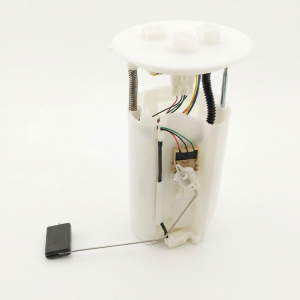
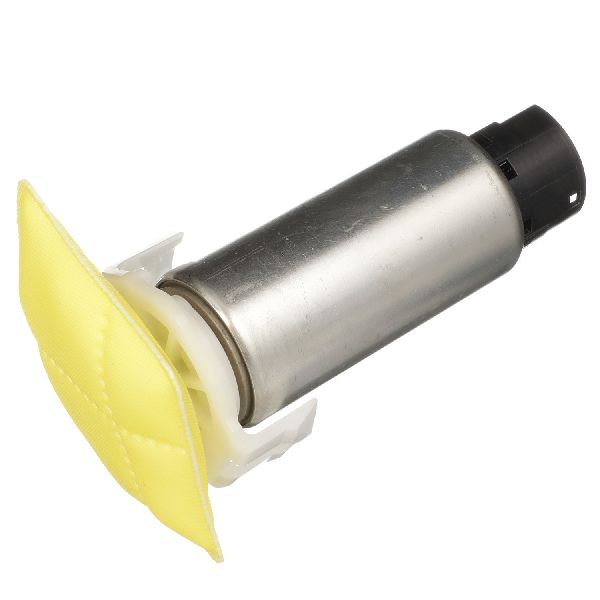
- Failing Low-Pressure Fuel Pump (In-Tank) 🔴 High Probability → Shop Fuel Pump A massive safety recall (Lexus #20LA01, NHTSA #20V-682) was issued for a faulty Denso low-pressure fuel pump on 2018-2020 LC500h models. The pump's impeller can absorb fuel, deform, and stop operating, causing the engine to stall. This is the most common and well-documented cause for P0087 on this vehicle.
How to confirm: A technician will check the fuel pressure from the in-tank pump to ensure it meets specifications before it reaches the high-pressure pump. A pressure of around 2 bar (approx. 29 PSI) was noted as a minimum in one forum discussion. The first step for any owner is to check the vehicle's VIN for recall completion status.
Typical fix: Replacement of the in-tank fuel pump assembly with an improved part, performed by a Lexus dealer. 🎬 Watch: How technicians test and replace these fuel pumps. This is covered free of charge under the recall.
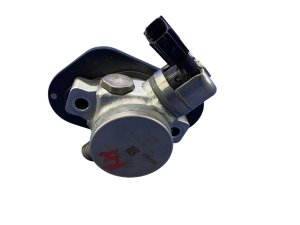
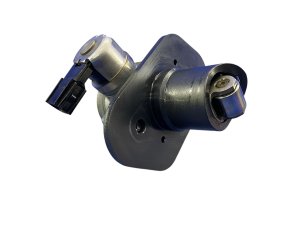
Est. part cost: $300-$450 - Failing High-Pressure Fuel Pump (HPFP) 🟡 Medium Probability → Shop Fuel Pump The HPFP is a mechanical pump that generates extreme pressures. While robust, it can fail from wear and tear, especially if it has been starved of fuel by a weak LPFP. Once the LPFP is confirmed good, the HPFP is the next logical suspect.
How to confirm: After confirming the low-pressure pump is working correctly, a technician will use a scan tool (like Toyota Techstream) to monitor 'Desired' vs. 'Actual' high-side fuel pressure. If the actual pressure fails to build or hold under load, the HPFP is likely faulty.
Typical fix: Replacement of the engine-mounted high-pressure fuel pump.
Est. part cost: $250-$500 - Clogged Fuel Filter ⚪ Low Probability → Shop Fuel Filter The fuel filter is integrated into the in-tank low-pressure fuel pump assembly. While it can clog, it is uncommon on newer vehicles unless there has been significant fuel contamination. It is almost always replaced with the LPFP assembly during the recall service.
How to confirm: Diagnosed by a low-pressure fuel system test. If pressure is low, the entire pump/filter assembly is the likely cause and is replaced as a unit.
Typical fix: The fuel filter is replaced along with the low-pressure fuel pump assembly.
Est. part cost: $300-$450 (for the full assembly) - Faulty Fuel Rail Pressure Sensor ⚪ Low Probability → Shop Fuel Pressure Sensor
How to confirm: A technician can compare the sensor's live data reading on a scan tool with a reading from a mechanical pressure gauge. If the readings differ significantly, or if the reading is erratic or fixed, the sensor is bad. Unplugging the sensor may allow the engine to start in a default mode, which can be a quick diagnostic clue.
Typical fix: Replacement of the fuel rail pressure sensor.
Est. part cost: $50-$150
Rare But Worth Checking
- Leaking Fuel Injector: → Shop Fuel Injector A direct fuel injector stuck open can cause a significant drop in rail pressure, but this would typically be accompanied by misfire codes (P0300-P0306) for a specific cylinder and a strong smell of raw fuel.
- Damaged wiring: Frayed or corroded wiring to either the fuel pumps, the fuel pump control module, or the pressure sensor can cause incorrect operation or readings, leading to the P0087 code.
- Worn HPFP Cam Lobe/Follower: The high-pressure fuel pump is driven by a lobe on the camshaft. In rare cases, wear on this lobe or the pump's follower can prevent the pump from achieving full stroke, reducing its output. This was seen in another Lexus model with P0087, where a missing gasket on the HPFP led to the cam lobe destroying the follower.
Diagnosis Steps
- Verify the code with a professional OBD-II scanner.
- Check for any related TSBs or recalls. For this vehicle, immediately check the VIN for the status of recall 20LA01 concerning the low-pressure fuel pump.
- If the recall is open, proceed to a Lexus dealer for the free repair.
- If the recall has been completed, connect a scan tool (like Toyota Techstream) to monitor live data for Desired vs. Actual Fuel Rail Pressure under various load conditions (idle, revving, driving).
- Perform a fuel pressure test on the low-pressure side to ensure the in-tank pump is delivering adequate volume and pressure to the HPFP. A failure here indicates the recall repair may have failed or was not the root cause.
- If low-side pressure is good, the focus shifts to the high-pressure system. Inspect the HPFP for any visible leaks.
- Test the fuel rail pressure sensor's accuracy by comparing its output to a known-good mechanical gauge if possible, or by observing its voltage for erratic behavior.
- If the sensor is accurate and the low-pressure supply is good, but high-pressure remains consistently below the desired value, the high-pressure fuel pump (HPFP) is the primary suspect.
Parts You'll Likely Need
- Low-Pressure Fuel Pump Assembly
(OEM #23220-38030 (supersedes 23220-38020, 23220-38021). The recall kit may have a different number.)— This is the subject of a major recall (20LA01) for this exact vehicle and a primary cause of engine stalling due to fuel starvation. It's the most likely culprit and the first thing to check.
Trusted brands: Denso (OEM)
OEM price range: $350-$500
Aftermarket price range: $200-$350 - High-Pressure Fuel Pump
(OEM #23101-31110)— If the low-pressure pump is working correctly (i.e., the recall was performed and the part is good), the engine-mounted high-pressure pump is the next most likely component to fail and cause P0087.
Trusted brands: Denso (OEM), Bosch
OEM price range: $300-$500
Aftermarket price range: $200-$400 - Fuel Rail Pressure Sensor
(OEM #89458-30010 (or 89458-53020, check VIN))— While less common than a pump failure, a faulty sensor can send incorrect low-pressure readings to the ECM, triggering the code.
Trusted brands: Denso (OEM)
OEM price range: $100-$180
Aftermarket price range: $40-$90
Related Codes That Often Appear With This One
- P0171 — System Too Lean (Bank 1) - Low fuel pressure prevents the correct amount of fuel from being injected, leading to an excess of air in the exhaust. This is explicitly mentioned in TSB LSB000523 as a related code.
- P0174 — System Too Lean (Bank 2) - Same reason as P0171, but for the second bank of cylinders on the V6 engine. This is also mentioned in TSB LSB000523.
- P0300-P0306 — Random or specific cylinder misfire codes can occur because the lean fuel condition prevents proper combustion.
Technical Service Bulletins (TSBs) & Recalls
- LSB000523: Addresses a Check Engine Light with DTC P0087 (Fuel Rail / System Pressure – Too Low) and potentially P0171/P0174 (System Too Lean).
Platform-Specific Known Issues
- Recall 20LA01 / NHTSA 20V-682: Lexus recalled these vehicles for a faulty Denso low-pressure fuel pump that could fail and cause the engine to stall while driving. The impeller was found to be susceptible to drying and cracking or deforming from fuel absorption, causing it to stop spinning. Any diagnosis of P0087 must begin by checking if this recall has been performed.
- TSB LSB000523: This Technical Service Bulletin was issued for a MIL ON condition with P0087, often accompanied by lean codes P0171 and/or P0174. It confirms this is a known issue and directs technicians to follow a specific diagnostic procedure, which typically starts with verifying low-pressure fuel supply before condemning the more expensive high-pressure components.
Mechanic-Grade Diagnostic Values
- Low-Pressure Fuel Pump Resistance — expected: 0.2 - 3.0 Ohms at 68°F (20°C) between terminals 4 and 5 of the pump connector.. Failure: A reading outside this range, or at the very top end of the spec (e.g., 2.9-3.0 Ohms), may indicate an impending failure.
- High-Pressure Fuel System Pressure (Live Data) — expected: Approximately 4,061 to 5,801 psi (28,000 to 40,000 kPa) at idle. Rises to approximately 4,351 to 8,700 psi (30,000 to 60,000 kPa) at 3,000 RPM with no load.. Failure: Actual pressure reading is significantly lower than the target pressure commanded by the ECM, or pressure does not increase with RPM.
- Fuel Rail Pressure Sensor Voltage — expected: Typically 0.5V at low pressure and rises towards 4.5V at maximum pressure.. Failure: Voltage is stuck at a constant low value regardless of engine load, or does not correlate with pressure readings from a mechanical gauge.
Scan Tool Commands That Help
- Toyota Techstream: Active Test: Control the Fuel Pump / Speed — This allows a technician to command the low-pressure fuel pump to run independently of the engine. It is used to verify the pump's electrical operation and to check if it can build and hold pressure when monitored with a mechanical gauge, isolating the pump from control module issues.
- Toyota Techstream: Active Test: Control the Target Fuel Pressure — This function allows the technician to command an increase or decrease in the high-pressure fuel target. Observing if the actual pressure follows the commanded changes helps diagnose the responsiveness and health of the high-pressure fuel pump and its control solenoid.
- Toyota Techstream: Utility: Reset Memory — After replacing a fuel pump or sensor, this function should be used to clear the ECM's long-term fuel trim adaptations. This forces the computer to relearn fuel delivery strategies with the new components, preventing issues caused by old learned values.
- Toyota Techstream: ECU Reprogramming / Calibration Check — On some Lexus models, an ECM software update was issued to prevent erroneous P0087 codes. This function is used to check if the vehicle has the latest calibration and to apply the update if available.
Wiring & Ground Locations
- Fuel Pump Control Module — On many modern Lexus vehicles, the fuel pump control module (or driver) is located in the rear of the vehicle, often under the rear seat or near the fuel tank itself, to be close to the low-pressure pump it controls.. The control module sends a Pulse Width Modulated (PWM) signal to the low-pressure pump to regulate its speed and output. A failure in this module, its wiring, or its ground connection can prevent the low-pressure pump from supplying adequate fuel to the high-pressure pump, directly causing a P0087 code.
Real Owner Repair Stories
- ClubLexus Forum User (2008 Lexus IS F (different model, but same code and similar D-4S system)) — Car jerking when accelerating above ~2,500 RPM, P0087 code triggered. Idled fine.
❌ Tried (didn't work) Initial suspicion was the low-pressure fuel pump or a clogged filter.
✅ What actually fixed it The passenger side high-pressure fuel pump (HPFP) had been previously installed without its gasket. This caused the camshaft lobe to wear down the pump's follower, preventing it from actuating properly and generating pressure. Replacing the damaged HPFP and follower resolved the issue. - ClubLexus Forum User (Lexus IS250 (different model, same code)) — P0087 code, engine in failsafe mode, would not exceed 60km/h. Engine sounded like it was starving for fuel.
❌ Tried (didn't work) Replacing the in-tank fuel filter., Replacing the fuel rail pressure sensor twice.
✅ What actually fixed it The issue was resolved by replacing the high-pressure fuel pump (HPFP) located on the engine.
When the Usual Fixes Don't Work
- While the low-pressure fuel pump recall is the most common cause, forum discussions include instances where P0087 occurred even after the recall was performed. In these cases, the diagnosis correctly shifted to the high-pressure fuel pump or, in one documented instance, to a damaged HPFP cam follower due to a previous incorrect installation, proving it is critical to diagnose the entire system rather than stopping at the most common failure point.
Helpful Videos

Used OEM Parts in Stock
New Aftermarket Parts Available


The information in this article is provided for general reference and educational purposes only. Vehicle specifications, procedures, and part compatibility can vary by production date, trim level, and region. Always consult your vehicle's factory service manual and verify part numbers before purchasing or performing repairs. Safety-critical components such as airbags, seat belts, and braking systems should be installed by a qualified professional.
- Lexus LC HYBRID:
- 🧭 Diagnostic Flowchart
- 🎬 Helpful Videos
- 🛍️ Shop This Part
- What's Unique About the 2018-2020 Lexus LC HYBRID
- Symptoms You May Notice
- Most Likely Causes
- Rare But Worth Checking
- Diagnosis Steps
- Parts You'll Likely Need
- Related Codes That Often Appear With This One
- Technical Service Bulletins (TSBs) & Recalls
- Platform-Specific Known Issues
- Mechanic-Grade Diagnostic Values
- Scan Tool Commands That Help
- Wiring & Ground Locations
- Real Owner Repair Stories
- When the Usual Fixes Don't Work
- 🎟️ Get 5% Off