

P0087 on 2015-2018 Nissan Murano: Fuel Rail Pressure Too Low Causes and Fixes
On a 2015-2018 Murano, P0087 means fuel pressure is too low. Before replacing parts, check for TSBs; a known ECM software glitch can falsely trigger this code and is fixed with a dealer reprogram. If the software is fine, the issue is likely a failing high-pressure or in-tank low-pressure fuel pump.
- Always check for TSBs first for a 2015-2018 Murano with a P0087 code. A simple ECM reprogram at the dealer may be the only fix needed.
- This code indicates low fuel pressure, which can cause serious drivability issues like stalling and poor acceleration.
- If not a software issue, the most likely mechanical culprits are the high-pressure fuel pump or the in-tank low-pressure fuel pump.
- Do not replace any parts until you have performed a proper diagnosis, including checking fuel pressures with gauges and a scan tool.
- The code may appear with P0101, P0448, or P2008, which further points towards the known ECM software glitch.
What's Unique About the 2015-2018 Nissan MURANO
For this specific generation of Nissan Murano, the P0087 code has a significant history of being caused by a software problem, not a mechanical failure. Nissan issued multiple Technical Service Bulletins (TSBs) acknowledging that "calibration errors" in the Engine Control Module (ECM) could improperly store a P0087 code. TSB NTB19-045b is particularly relevant, stating the ECM reprogram is not a fix for a mechanical DTC, but an update to how the permanent DTC is stored and erased after a repair is made. This makes it crucial to rule out the need for an ECM reprogram before or after spending money on parts like fuel pumps or sensors.
Diagnostic Flowchart
Tap your situation to follow the diagnostic path that matches what you're seeing on this vehicle.
Symptoms You May Notice
- Check Engine Light is on
- Reduced engine power and poor acceleration
- Engine hesitation or stumbling, especially under load or when accelerating.
- Rough idle
- Difficulty starting the engine, or extended cranking time.
- Engine stalling.
- Increased fuel consumption.
- Replacing the high-pressure or low-pressure fuel pump when the actual root cause is the ECM software glitch described in Nissan TSBs NTB19-045b and P9328_P9343_P934. This leads to unnecessary expense and does not fix the problem.
- Replacing fuel pumps without first verifying low-pressure fuel delivery and confirming the fuel rail pressure sensor is reading accurately.
Most Likely Causes
- Incorrect ECM Software/Calibration 🔴 High Probability Nissan has issued multiple TSBs (NTB19-045b, P9328_P9343_P934, NTB19-045) for the 2015-2018 Murano stating that ECM calibration errors can improperly store a P0087 code. The TSB specifies this issue applies to vehicles registered outside of California.
How to confirm: A Nissan dealership or a qualified shop with access to Nissan's technical database can check your vehicle's ECM part number and software version against the applicable TSBs. The TSB applies if the stored DTC matches and the ECM part number is listed in the bulletin.
Typical fix: Reprogramming the Engine Control Module (ECM) with updated software. This must be done by a dealership or a properly equipped independent shop using a CONSULT-III plus tool. The TSB explicitly states to perform normal diagnostics and repairs for the code *first*, then perform the reprogram.
Est. part cost: $0 - Failing High-Pressure Fuel Pump (HPFP) 🟡 Medium Probability → Shop Fuel Pump The VQ35DE engine in this generation uses direct injection, which relies on a mechanical high-pressure pump driven by the camshaft. These pumps operate under extreme pressure and can wear out over time. The internal components or the solenoid controlling the pump can fail.
How to confirm: Use an advanced OBD-II scan tool to monitor live data for 'Desired Fuel Rail Pressure' vs. 'Actual Fuel Rail Pressure'. If the actual pressure consistently fails to meet the desired pressure, especially under load, the HPFP is a likely culprit. Also, check the engine oil for the smell of gasoline, which can indicate a leaking HPFP seal.
Typical fix: Replacement of the high-pressure fuel pump.
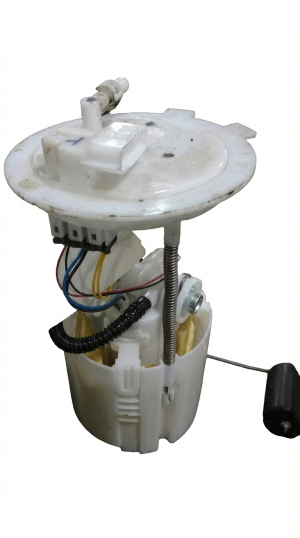
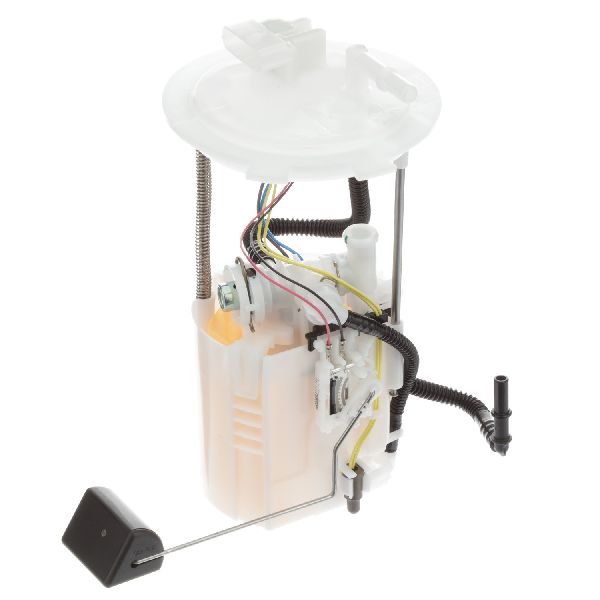
Est. part cost: $300-$600 - Failing Low-Pressure (In-Tank) Fuel Pump 🟡 Medium Probability → Shop Fuel Pump The in-tank pump is responsible for feeding the HPFP. If its pressure or volume is weak, the HPFP will be starved and cannot generate the required high pressure, triggering P0087. These pumps can wear out, typically after 100,000 miles.
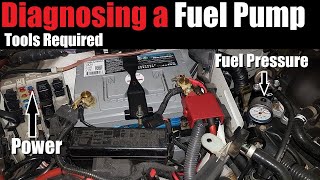
How to confirm: Test the fuel pressure from the in-tank pump at the feed line to the high-pressure pump. The pressure should meet the manufacturer's specification (typically 50-70 PSI at idle). An audible whine from the fuel tank area 🎬 Watch: How to diagnose if your fuel pump is bad can also indicate a failing pump.
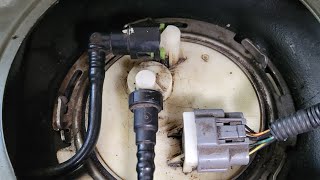
Typical fix: Replacement of the in-tank fuel pump module. This is accessed from under the rear seat. 🎬 See this easy DIY guide for replacing the fuel pump
Est. part cost: $150-$350 - Faulty Fuel Rail Pressure Sensor ⚪ Low Probability → Shop Fuel Pressure Sensor The sensor provides the pressure reading to the ECM. If it fails and sends an inaccurately low signal, the ECM will set P0087 even if the pressure is actually normal.
How to confirm: Compare the live data reading from the sensor on a scan tool to a reading from a mechanical pressure gauge connected to the fuel rail. If the readings differ significantly, the sensor is likely faulty.
Typical fix: Replacement of the fuel rail pressure sensor.
Est. part cost: $100-$250 - Clogged Fuel Filter ⚪ Low Probability → Shop Fuel Filter The fuel filter is typically part of the in-tank fuel pump assembly and is not a separate, routinely serviced item. While it can clog with debris, it's less common than outright pump failure.
How to confirm: A clogged filter will manifest as low pressure from the in-tank pump. Diagnosis is confirmed during the low-pressure fuel pump test. If pressure is low, the pump/filter assembly is the likely cause.
Typical fix: The filter is integrated into the fuel pump module, so the entire assembly is replaced.
Est. part cost: $150-$350
Rare But Worth Checking
- Leaking Fuel Injector: → Shop Fuel Injector A fuel injector stuck open can cause a drop in rail pressure. This would typically be accompanied by other symptoms like a rich running condition, fuel smell, and possibly misfire codes for a specific cylinder.
- Damaged Fuel Lines: → Shop Fuel Line A kinked, restricted, or leaking fuel line between the tank and the high-pressure pump can starve the system of fuel. A physical inspection of the lines is necessary.
- Worn Camshaft Lobe: → Shop Engine Camshaft The high-pressure fuel pump is mechanically driven by a lobe on the camshaft. If this lobe becomes excessively worn, it can no longer drive the pump effectively, leading to low pressure. This is a rare and significant mechanical failure.
Diagnosis Steps
- Check for Technical Service Bulletins (TSBs). This is the most critical first step. A dealer or qualified shop can check if NTB19-045b or another related TSB applies to your vehicle's VIN and ECM part number.
- Connect an OBD-II scanner and check for any other accompanying codes. Note the freeze frame data to understand the engine conditions when the code was set. Codes like P0101, P0448, or P2008 strongly suggest the TSB is relevant.
- Using the scanner's live data function, monitor 'Desired Fuel Rail Pressure' and 'Actual Fuel Rail Pressure'.
- At idle, the pressures should be relatively close. Rev the engine and briefly hold it at a higher RPM (e.g., 2500 RPM) to see if the actual pressure can keep up with the desired pressure. 🎬 Watch: A breakdown of common P0087 causes and fixes A significant lag or drop points to a mechanical fuel delivery issue.
- Test the low-pressure fuel system. Connect a fuel pressure gauge to the low-pressure line that feeds the HPFP. Check if the pressure meets OEM specifications (typically 50-70 PSI). If it's low, the in-tank pump or its integrated filter is the likely issue.
- If low-pressure is adequate but high-pressure is not, inspect the high-pressure fuel pump (HPFP), its electrical connector, and the camshaft lobe that drives it (if accessible). Check engine oil for fuel contamination.
- If both pumps seem to function but the scanner reading is low, test the fuel rail pressure sensor and its wiring. Compare the sensor's reading on the scan tool to a mechanical gauge.
- If a mechanical fault was found and repaired (e.g., a new fuel pump was installed), and the code persists, the ECM reprogram specified in TSB NTB19-045b is likely required to update how the permanent DTC is managed.
Parts You'll Likely Need
- High-Pressure Fuel Pump
(OEM #16630-4RA0A (Note: Part number may vary, verify with VIN. This number is associated with Nissan direct injection engines but may not be specific to Murano VQ35DE).)— This pump is a common failure point in direct injection systems that can directly cause low pressure in the fuel rail.
Trusted brands: Hitachi, Bosch, Nissan Genuine
OEM price range: $450-$700
Aftermarket price range: $300-$600 - In-Tank Fuel Pump Assembly
Related Codes That Often Appear With This One
- P0101 — Mass Air Flow (MAF) Sensor Performance. This code is specifically mentioned in TSBs NTB19-045b and P9328_P9343_P934 as potentially being set alongside P0087 due to the same ECM calibration error.
- P0448 — EVAP System Vent Control Circuit Shorted. Also mentioned in TSBs NTB19-045b and P9328_P9343_P934 as being related to the ECM software issue.
- P2008 — Intake Manifold Runner Control Circuit Open. Also listed in TSBs NTB19-045b and P9328_P9343_P934 as part of the group of codes caused by the ECM glitch.
- P0300-P0306 — Cylinder Misfire Codes. Insufficient fuel pressure can lead to a lean condition, causing misfires in one or more cylinders.
Technical Service Bulletins (TSBs) & Recalls
- NTB19-045b: MIL ON WITH DTC P0087, P0101, P0448, OR P2008, VEHICLES REGISTERED OUTSIDE OF CALIFORNIA. This is the primary TSB, indicating an ECM reprogram is needed to update how permanent DTCs are stored and erased after a repair.
- NTB19-065: 2017-2019 PATHFINDER; MIL ON WITH DTC P0087 STORED. This TSB is for the platform-mate Pathfinder and addresses P0087 when the fuel level is low, fixed with an ECM reprogram.
- P9328_P9343_P934: Mentions reprogramming the ECM for P0087 due to calibration errors.
- NTB19-045 / NTB19-045a: Earlier versions of the primary TSB, superseded by NTB19-045b.
Platform-Specific Known Issues
- ECM Software Glitch: The most significant vehicle-specific issue is the ECM software problem detailed in TSB NTB19-045b. Unlike many other vehicles where P0087 is almost always a mechanical pump or sensor failure, on the 2015-2018 Murano it is very frequently related to a software calibration error that requires a dealer reprogram after the initial fault is diagnosed and fixed.
Mechanic-Grade Diagnostic Values
- Low-Pressure Fuel System Pressure (In-tank pump) — expected: Approximately 51 PSI with the key on, engine off (KOEO). General specifications suggest a range of 45-58 PSI.. Failure: Pressure significantly below 50 PSI suggests a weak in-tank pump or a clogged fuel filter sock.
- Fuel System Leak-Down Test — expected: After shutting the engine off, the fuel rail pressure should hold and not drop below 30 PSI within a 30-minute period.. Failure: A rapid drop in pressure points to a leaking fuel injector or a faulty check valve within the fuel pump assembly.
Scan Tool Commands That Help
- Advanced OBD-II Scanner (e.g., Nissan CONSULT, Autel, iCarsoft CR Ultra): Fuel Pump Driver Circuit Bidirectional Test — Use this command to test the integrity of the fuel pump control circuit within the ECM. If the hardware (pump, wiring) checks out but the pump doesn't activate correctly, commanding the circuit directly can determine if the fault is in the ECM itself. A 'failed' response often indicates an internal module fault.
Wiring & Ground Locations
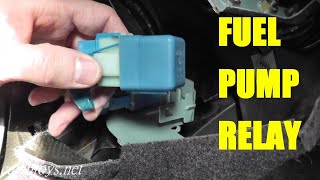
- Fuel Pump Fuse — Located in the Intelligent Power Distribution Module (IPDM), which is one of the fuse boxes in the engine compartment, next to the battery. It is typically a 15-amp fuse on the bottom left of this module.. This fuse supplies power to the in-tank fuel pump. A blown fuse will result in a no-start condition and can trigger P0087. A fuse that blows repeatedly indicates an electrical short or a failing pump drawing too much current.
- Cabin Fuse Box — Located inside the cabin, under the dashboard on the driver's side, near the kick panel.. While the primary pump fuse is in the engine bay, related circuits or relays may be located here. It's a secondary location to check for any related electrical issues.
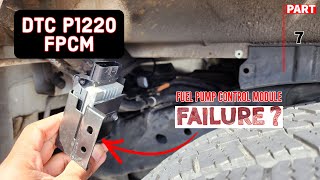
- Fuel Pump Control Module (FPCM) / Driver Module — Nissan Muranos in this generation are equipped with a Fuel Pump Driver Module. While its exact location can vary, these modules are typically found bolted to the vehicle's frame rail near the rear, under the rear seat, or inside a fender well to be close to the fuel tank.. The FPCM regulates the voltage sent to the in-tank fuel pump based on commands from the ECM. A failure of this module can prevent the pump from running at the correct speed, leading to low fuel pressure.
When the Usual Fixes Don't Work
- Contrary to some information in Pass 2, the 2015-2018 Murano's VQ35DE engine is port-injected and does not have a high-pressure fuel pump (HPFP). Therefore, diagnosis of P0087 should focus entirely on the low-pressure side of the fuel system: the in-tank fuel pump, the fuel filter, the fuel pump driver module, the fuel pressure sensor, and associated wiring, as well as the potential for an ECM software glitch as noted in the TSBs.
Model Year Variations Within This Range
- 2015-2018: The standard powertrain, a 3.5L VQ35DE V6 with a CVT, remained consistent through this pre-facelift period of the Z52 generation. Diagnostic procedures for code P0087 should be identical across these model years for non-hybrid models. A short-lived hybrid model was also produced, which would have a different fuel and powertrain system.
Helpful Videos

Used OEM Parts in Stock
New Aftermarket Parts Available



The information in this article is provided for general reference and educational purposes only. Vehicle specifications, procedures, and part compatibility can vary by production date, trim level, and region. Always consult your vehicle's factory service manual and verify part numbers before purchasing or performing repairs. Safety-critical components such as airbags, seat belts, and braking systems should be installed by a qualified professional.
- Nissan MURANO:
- 🧭 Diagnostic Flowchart
- 🎬 Helpful Videos
- 🛍️ Shop This Part
- What's Unique About the 2015-2018 Nissan MURANO
- Symptoms You May Notice
- Most Likely Causes
- Rare But Worth Checking
- Diagnosis Steps
- Parts You'll Likely Need
- Related Codes That Often Appear With This One
- Technical Service Bulletins (TSBs) & Recalls
- Platform-Specific Known Issues
- Mechanic-Grade Diagnostic Values
- Scan Tool Commands That Help
- Wiring & Ground Locations
- When the Usual Fixes Don't Work
- Model Year Variations Within This Range
- 🎟️ Get 5% Off