

P0087 on 2015-2019 Nissan Pathfinder: Low Fuel Rail Pressure Causes & Fixes
On a 2017-2019 Pathfinder, P0087 often points to two main issues: an ECM software glitch requiring a dealer reprogram per TSB NTB19-065, or a failing high-pressure fuel pump. The software issue is especially common when the fuel tank is below 1/4 full. Always check for TSBs before replacing expensive parts.
- For 2017-2019 models, your first step should be to ask a Nissan dealer about TSB NTB19-065, as a simple software update may fix the problem.
- Do not replace the expensive high-pressure fuel pump without confirming it has failed through proper diagnosis.
- Symptoms include engine hesitation, stalling, and reduced power, which can be a safety concern.
- The code indicates the fuel pressure is too low, not necessarily which part is causing it. Diagnosis is key.
- This issue is specific to the direct-injected 3.5L V6 (VQ35DD) engine used from 2017 onwards, though TSBs also cover earlier years in the range.
What's Unique About the 2017-2019 Nissan PATHFINDER (R52 Facelift)

For the 2017-2019 Pathfinder specifically, Nissan has issued Technical Service Bulletin NTB19-065 acknowledging that the P0087 code can be triggered incorrectly due to an ECM software error. A key indicator of this issue is that the code often appears when the fuel level is at or below 1/4 of a tank. In these cases, the fix is not a mechanical part replacement but a simple ECM reprogram performed by a Nissan dealer. This makes it crucial to check for applicable TSBs before assuming a costly hardware failure like the high-pressure fuel pump.
Diagnostic Flowchart

Tap your situation to follow the diagnostic path that matches what you're seeing on this vehicle.
Symptoms You May Notice

- Check Engine Light (MIL) is on
- Engine hesitation or stumbling on acceleration
- Reduced engine power or 'limp mode'
- Engine stalling, sometimes when coming to a stop or after an auto start/stop event
- Difficulty starting the engine or long crank times
- Rough or uneven idle
- Increased fuel consumption
- Replacing the high-pressure fuel pump when the actual issue is a software glitch on a 2017-2019 model that requires an ECM reprogram per TSB NTB19-065.
- Replacing the in-tank fuel pump without first verifying its pressure output is low.
- Replacing fuel pumps when the issue is a faulty fuel rail pressure sensor providing incorrect data to the ECM.
Most Likely Causes

- ECM Software Requires Update 🔴 High Probability Nissan issued TSB NTB19-065 specifically for 2017-2019 Pathfinders where the ECM can incorrectly store DTC P0087. The bulletin explicitly notes this is most likely to occur when the fuel level is at or below 1/4 tank. Other TSBs (NTB19-045a, P9328) also mention an ECM reprogram to update how permanent DTCs are stored.
How to confirm: A Nissan dealer can check your vehicle's ECM part number against the TSB to see if the update is needed. This should be the first step in diagnosis for 2017-2019 models, especially if the code appeared with low fuel.
Typical fix: Reprogram the Engine Control Module (ECM) with updated software.
Est. part cost: $0 (if under warranty) or ~$150-$250 (dealer labor) - Failing High-Pressure Fuel Pump (HPFP) 🔴 High Probability → Shop Fuel Pump The HPFP is a mechanical pump driven by the engine's camshaft that is responsible for creating the high pressure needed for direct injection. As a mechanical part under high stress, it can wear out over time, leading to an inability to generate the commanded pressure.
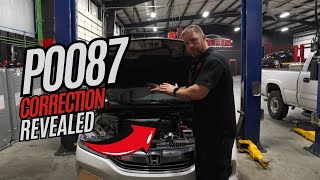
How to confirm: Use a scan tool to monitor live fuel rail pressure. Compare the desired pressure value with the actual pressure value, especially under load (acceleration). If the actual pressure is consistently and significantly lower than desired, and the low-pressure side is confirmed to be healthy, the HPFP is the likely culprit. A failing HPFP can sometimes leak fuel into the crankcase, so checking the engine oil for a fuel smell 🎬 See how one mechanic diagnosed and fixed the P0087 fault is also a valid diagnostic step.
Typical fix: Replace the high-pressure fuel pump.
Est. part cost: $300-$600 - Faulty Fuel Rail Pressure Sensor 🟡 Medium Probability → Shop Fuel Pressure Sensor
How to confirm: Monitor the fuel rail pressure reading on a scan tool. If the reading is erratic, stuck at a low value regardless of engine RPM, or doesn't match a reading from a mechanical gauge, the sensor may be faulty. You can also test the sensor's voltage output against specifications.
Typical fix: Replace the fuel rail pressure sensor.
Est. part cost: $100-$200 - Failing In-Tank Low-Pressure Fuel Pump ⚪ Low Probability → Shop Fuel Pump
How to confirm: The HPFP cannot function correctly if it is not being fed enough fuel from the tank. A fuel pressure gauge can be used to test the output pressure of the low-pressure pump (typically 50-70 PSI at idle) before it reaches the HPFP. If this pressure is low, the in-tank pump or its filter is failing.
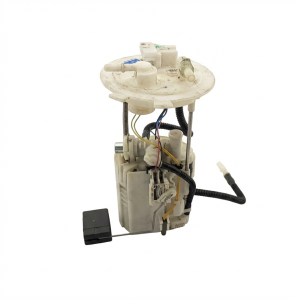
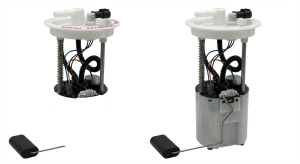
Typical fix: Replace the in-tank fuel pump assembly.
Est. part cost: $200-$400
Rare But Worth Checking
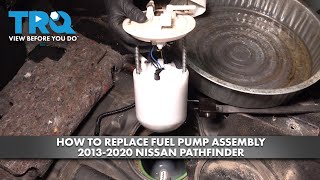
- Clogged Fuel Filter: → Shop Fuel Filter The fuel filter is integrated into the in-tank fuel pump module and is not typically serviced separately. If it's clogged, the entire module usually needs replacement. 🎬 Watch: Step-by-step guide to replacing the in-tank fuel pump assembly
- Damaged Wiring or Connectors: Check the wiring to the fuel rail pressure sensor and both fuel pumps for any signs of damage, corrosion, or loose connections. A mechanic on a forum noted a case where poorly installed aftermarket electronics caused related issues.
- Worn Camshaft Lobe: → Shop Engine Camshaft The high-pressure fuel pump is driven by a dedicated lobe on the camshaft. In high-mileage vehicles or those with poor maintenance, this lobe can wear down, preventing the pump from achieving its full stroke and generating sufficient pressure. This is a more complex and expensive repair.
Diagnosis Steps
- Check for Technical Service Bulletins (TSBs). For 2017-2019 models, TSB NTB19-065 is highly relevant. If the code appeared with a low fuel level, an ECM reprogram is the most likely fix.
- Connect an OBD-II scanner and check for any other stored codes, such as P0090 or misfire codes.
- Use the scanner's live data function to monitor 'Fuel Rail Pressure' and 'Desired Fuel Rail Pressure'.
- At idle and during a test drive (under load), observe if the actual pressure consistently fails to meet the desired pressure.
- Test the pressure of the in-tank (low-pressure) pump using a mechanical gauge to ensure it's supplying adequate pressure (typically 58 PSI) to the HPFP.
- If low-pressure is good but high-pressure is low, the HPFP is the primary suspect. Inspect the pump and its connector.
- Check the engine oil for any smell of gasoline. A strong fuel smell can indicate a failed seal inside the HPFP, which requires immediate replacement of the pump and an oil change.
- If fuel pressure readings on the scan tool are erratic or seem illogical (e.g., jumping wildly), inspect the fuel rail pressure sensor and its wiring for damage or corrosion. Test the sensor's voltage with a multimeter.
- If all mechanical and sensor checks pass, the issue likely lies within the ECM or its software, reinforcing the importance of checking for TSBs first.
Parts You'll Likely Need
- High-Pressure Fuel Pump
(OEM #16630-6KA0A)— This is the most common mechanical failure causing P0087 after software issues are ruled out. It is responsible for generating the high pressure required for direct injection. Fitment is confirmed for 2017+ Pathfinder with the VQ35DD engine.
Trusted brands: Nissan OEM, Hitachi
OEM price range: $450-$600
Aftermarket price range: $300-$450 - Fuel Rail Pressure Sensor
(OEM #16638-5CA0A)— This sensor provides the pressure reading to the ECM. A faulty sensor can send incorrect low-pressure signals, triggering the code even if the pressure is fine. This part number fits 2017+ Pathfinders with the VQ35DD engine.
Trusted brands: Bosch, Nissan OEM
OEM price range: $150-$220
Aftermarket price range: $70-$120
Related Codes That Often Appear With This One
- P0090 — This code relates to the Fuel Pressure Regulator Control Circuit. Owner complaints and forum discussions cite this code appearing alongside P0087, suggesting a related electrical or control issue with the fuel system.
- P0101, P0448, P2008 — Nissan TSBs NTB19-045a and NTB19-045b group P0087 with these other codes, indicating a potential ECM software issue that affects how multiple permanent DTCs are stored and cleared.
- P0300-P0306 — Misfire codes (P0300 for random, P0301-P0306 for specific cylinders) are common companions to P0087. Insufficient fuel pressure leads to a lean condition, which causes the engine to misfire.
Technical Service Bulletins (TSBs) & Recalls
- NTB19-065: 2017-2019 PATHFINDER; MIL ON WITH DTC P0087 STORED
- NTB19-045a: MIL ON WITH DTC P0087, P0101, P0448, OR P2008
- NTB19-045b: MIL ON WITH DTC P0087, P0101, P0448, OR P2008, VEHICLES REGISTERED OUTSIDE OF CALIFORNIA
- P9328_P9343_P934: VOLUNTARY EMISSIONS SERVICE CAMPAIGN 2015-18 NISSAN P-DTC
Platform-Specific Known Issues
- TSB NTB19-065: Specifically for 2017-2019 Pathfinders, this bulletin addresses the MIL being ON with DTC P0087 stored. The key condition mentioned is that this often occurs when the fuel level is at or below 1/4 tank. The prescribed action is to reprogram the ECM, not replace parts.
- TSB NTB19-045a/b & P9328: These bulletins cover a wider range of Nissan vehicles, including the Pathfinder. They state that after a repair for P0087 is performed, the ECM may need to be reprogrammed to update how the permanent DTC is stored and erased, preventing it from reappearing incorrectly.
Mechanic-Grade Diagnostic Values
- Low-Pressure Fuel Pump Pressure — expected: Approx. 4 bar / 58 PSI. Failure: Pressure significantly below 58 PSI indicates a failing in-tank pump or clogged filter.
- Fuel Rail Pressure Sensor Signal Voltage (KOEO) — expected: Approx. 0.5 V. Failure: Voltage stuck high (e.g., 5V) or at 0V with the connector plugged in suggests a faulty sensor or wiring issue.
- Fuel Rail Pressure Sensor Reference Voltage — expected: 5.0 V. Failure: No voltage or low voltage indicates a problem with the ECM or the wiring from the ECM.
- Fuel Rail Pressure Sensor Ground Circuit Voltage — expected: Below 500mV (0.5V), ideally close to 0V. Failure: Voltage significantly above 0V indicates a poor ground connection, which can skew sensor readings.
Scan Tool Commands That Help
- Nissan CONSULT-III plus: Post-Reprogramming Relearn Procedures — After performing the ECM reprogram as specified in TSB NTB19-065, the service manual requires performing the 'Throttle Valve Closed Position', 'Idle Air Volume Learn (IAVL)', and 'Accelerator Closed Position' learn procedures to ensure proper engine operation.
Wiring & Ground Locations
- Engine Ground Strap (Braided) — Typically a short, braided strap running from the passenger-side cylinder head or exhaust heat shield to the firewall.. This is a primary ground path for the engine block. A corroded or broken strap can create an unstable ground reference for various sensors, including the fuel rail pressure sensor, leading to incorrect readings and triggering false codes. It is a common failure point that can be easily overlooked.
OEM Part Supersession History
16630-6KA0A→16630-6KA0B, then 16630-6KA1B— Iterative design improvements or change in manufacturer for the high-pressure fuel pump.
Model Year Variations Within This Range
- 2017-2019 only: The 2017 model year marked a significant mid-cycle refresh for the Pathfinder, which included replacing the port-injected VQ35DE engine with the direct-injected VQ35DD engine. This new engine introduced the high-pressure fuel system (HPFP, high-pressure rail) that is monitored for code P0087. The 2015-2016 models with the VQ35DE engine do not have this system and would not log P0087 for this specific type of failure.
Helpful Videos

Used OEM Parts in Stock
New Aftermarket Parts Available


The information in this article is provided for general reference and educational purposes only. Vehicle specifications, procedures, and part compatibility can vary by production date, trim level, and region. Always consult your vehicle's factory service manual and verify part numbers before purchasing or performing repairs. Safety-critical components such as airbags, seat belts, and braking systems should be installed by a qualified professional.
- Nissan PATHFINDER:
- 🧭 Diagnostic Flowchart
- 🎬 Helpful Videos
- 🛍️ Shop This Part
- What's Unique About the 2017-2019 Nissan PATHFINDER (R52 Facelift)
- Symptoms You May Notice
- Most Likely Causes
- Rare But Worth Checking
- Diagnosis Steps
- Parts You'll Likely Need
- Related Codes That Often Appear With This One
- Technical Service Bulletins (TSBs) & Recalls
- Platform-Specific Known Issues
- Mechanic-Grade Diagnostic Values
- Scan Tool Commands That Help
- Wiring & Ground Locations
- OEM Part Supersession History
- Model Year Variations Within This Range
- 🎟️ Get 5% Off