

P0087 on 2017-2023 VW Jetta: Fuel Pressure Too Low Causes and Fixes
On a 2017-2023 VW Jetta, code P0087 is most often caused by a failing High-Pressure Fuel Pump (HPFP) or a worn-out HPFP cam follower. Before replacing the pump (a common part number is 04E127026N), it is critical to inspect the inexpensive cam follower, as its failure can destroy a new pump and potentially the camshaft. A full HPFP replacement can cost between $250 and $600 for the part alone.
- P0087 on a Jetta means the high-pressure fuel system is failing to provide enough pressure.
- The most likely cause is a failed High-Pressure Fuel Pump (HPFP), but you MUST inspect the cam follower first.
- A worn-out cam follower is a cheap part that can cause expensive damage to the HPFP and camshaft if ignored.
- Before replacing expensive pumps, always check for fuel leaks and consider replacing the inexpensive fuel filter.
- This code indicates a serious issue that can leave you stranded; it should be addressed promptly.
What's Unique About the 2017-2023 Volkswagen JETTA

For modern VW direct-injection engines like the EA211 family found in the Jetta, the fuel system has two pumps: a low-pressure pump in the tank and a high-pressure pump (HPFP) on the engine. Code P0087 almost always points to an issue in this high-pressure circuit. A unique and critical point of failure on these engines is the cam follower, a small metal cap that sits between the camshaft and the HPFP. This part is designed to wear out over time, and if it fails completely by being worn through, it can cause severe damage to both the HPFP and the engine's camshaft, making its inspection a crucial first step in diagnosis.
Diagnostic Flowchart

Tap your situation to follow the diagnostic path that matches what you're seeing on this vehicle.
Generation note: This year range covers two Jetta generations: the A6 (2017-2018) and the A7 (2019-2023). While both generations use similar direct-injection fuel systems based on the EA211 engine architecture (e.g., 1.4T, 1.8T in the A6 vs. an updated 1.4T/1.5T in the A7), specific part numbers for fuel pumps and sensors will vary. A notable recall (24Gi) for loose fuel rail bolts applies specifically to 2016-2018 Jettas with the 1.4T engine. Always verify parts by VIN.
Symptoms You May Notice
- Significant loss of engine power, especially during acceleration.
- Engine hesitation or sputtering under load.
- Rough idle.
- Engine stalling unexpectedly, sometimes refusing to restart for a short period.
- Difficulty starting the engine or extended cranking time.
- Check Engine Light is on.
- Blinking glow plug light (on TDI models, though less common in this year range for Jetta).
- Decreased fuel economy.
- Replacing the HPFP without checking or replacing the cam follower. A worn follower can quickly destroy a brand-new pump.
- Replacing fuel injectors when the issue is fuel supply (pump or filter).
- Condemning the HPFP without first testing the low-pressure fuel pump and checking the fuel filter.
- Replacing the LPFP when the issue is the fuel pump control module.
Most Likely Causes

- Failing High-Pressure Fuel Pump (HPFP) 🔴 High Probability → Shop Fuel Pump The HPFP is a complex mechanical part that operates under intense pressure and is a known failure point on many modern direct-injection engines. The internal plunger can break or the diaphragm can fail.
How to confirm: Use a diagnostic scan tool to monitor specified vs. actual fuel rail pressure under various conditions (idle, revving, driving). If actual pressure consistently fails to meet specified pressure and the low-pressure system is confirmed to be working, the HPFP is the likely culprit. A quick check for fuel in the engine oil can also indicate a leaking HPFP seal.
Typical fix: Replace the High-Pressure Fuel Pump. It is critical to also replace the cam follower at the same time.
Est. part cost: $250-$600 - Worn or Damaged HPFP Cam Follower 🔴 High Probability → Shop Fuel Pump The cam follower is a sacrificial component designed to wear down. Lack of regular oil changes with VW-spec oil can accelerate wear. Failure is very common on VW/Audi TSI engines and can be catastrophic.
How to confirm: Remove the HPFP from the engine. The cam follower sits in the pump's mounting bore. Visually inspect it for a hole, deep scoring, or shattering. Also inspect the camshaft lobe for scoring or damage. A completely destroyed follower is an obvious sign.
Typical fix: Replace the cam follower. If the follower has failed catastrophically, you must also replace the HPFP and inspect the camshaft for damage, which may also require replacement.
Est. part cost: $20-$50 - Failing Low-Pressure Fuel Pump (LPFP) or Control Module 🟡 Medium Probability → Shop Fuel Pump The in-tank fuel pump can weaken over time, failing to supply the HPFP with adequate fuel volume. In some cases, the fuel pump control module is the point of failure, not the pump itself.
How to confirm: Connect a fuel pressure gauge to the low-pressure line to test the pressure from the in-tank pump. It should meet the manufacturer's specification (typically around 60-90 PSI). A whining noise from the rear seat area is also a common symptom. A scan tool can be used to command the pump on for testing.
Typical fix: Replace the in-tank low-pressure fuel pump assembly or the fuel pump control module.
Est. part cost: $150-$350 - Clogged Fuel Filter 🟡 Medium Probability → Shop Fuel Filter The fuel filter is a standard maintenance item. If neglected, it can become clogged and restrict fuel flow, starving the fuel pumps. This is one of the most common causes of P0087 across all makes.
How to confirm: This is often diagnosed through a process of elimination. If a low-pressure fuel test shows low pressure, the filter is a prime suspect before condemning the pump. It's often replaced as a low-cost first step.
Typical fix: Replace the fuel filter.
Est. part cost: $20-$60 - Faulty Fuel Rail Pressure Sensor (G247/G410) ⚪ Low Probability → Shop Fuel Pressure Sensor
How to confirm: With the engine running, compare the fuel rail pressure reading on a scan tool to the reading from a known good mechanical gauge. If the scan tool shows an illogical value (e.g., 0 PSI when the engine is running, or a value that doesn't change with RPM), the sensor is likely faulty. Ross-Tech notes that an improved sensor was released under TSB 2027458.
Typical fix: Replace the fuel rail pressure sensor.
Est. part cost: $50-$150
Rare But Worth Checking
- Leaking Fuel Injector: → Shop Fuel Injector An injector stuck open can cause a drop in rail pressure. This would typically be accompanied by other symptoms like a rich running condition, fuel smell in the oil, and misfire codes for a specific cylinder.
- Loose Fuel Rail Bolts: A recall (24Gi, NHTSA 20V-648) was issued for 2016-2018 Jettas with the 1.4T engine for fuel rail bolts that could loosen, causing a fuel leak and a drop in pressure. This would usually be accompanied by a strong fuel smell in the engine bay.
- Worn Camshaft Lobe: → Shop Engine Camshaft If the HPFP cam follower wears completely through, it will damage the camshaft lobe that drives the pump. In this case, even a new pump and follower won't build pressure. This is a major engine repair requiring camshaft replacement.
Diagnosis Steps
- Check for other stored DTCs that could provide more clues (e.g., misfire codes, other fuel system codes like P2293, P053F).
- Visually inspect the engine bay for any signs of a fuel leak, paying close attention to the fuel rail and HPFP. For 2017-2018 1.4T models, verify if recall 24Gi has been performed.
- Check the engine oil for the smell of gasoline, which would indicate a leaking HPFP seal.
- If it hasn't been done recently, replace the fuel filter as a low-cost first step.
- Connect a scan tool and monitor the requested vs. actual fuel rail pressure. Also monitor low-pressure fuel system data if available. A large, consistent discrepancy points to a mechanical issue.
- Test the low-pressure fuel pump's output pressure using a mechanical gauge to ensure it's supplying adequate fuel to the HPFP (should be ~60-90 PSI).
- If low-pressure is good but high-pressure is low, carefully relieve fuel system pressure. Remove the HPFP.
- Critically inspect the cam follower for wear, holes, or damage. Also inspect the tip of the HPFP plunger and the camshaft lobe it rides on.
- If the cam follower is damaged, replace it along with the HPFP. If the camshaft lobe is damaged, a more extensive engine repair is required.
- If the follower and pump appear physically undamaged, further electrical testing of the HPFP's control solenoid (N276) and the fuel rail pressure sensor (G247) may be necessary.
Parts You'll Likely Need
- High-Pressure Fuel Pump (HPFP)
Related Codes That Often Appear With This One
- P053F — Stands for 'Cold Start Fuel Pressure Performance'. It often appears with P0087 because a weak fuel system struggles most to build the required high pressure during a cold start.
- P0300-P0304 — These are misfire codes. Insufficient fuel pressure can lead to a lean condition, causing the engine to misfire on one or more cylinders.
- P0148 — Stands for 'Fuel Delivery Error'. This is a more general code that indicates a problem in the fuel delivery system and is often logged alongside the more specific P0087.
- P2293 — Stands for 'Fuel Pressure Regulator 2 Performance'. This code is very specific to the high-pressure side and often points directly to a mechanical failure of the HPFP or cam follower.
Technical Service Bulletins (TSBs) & Recalls
- VIN4APIN20230315: Mentions P0087 grouped with P1020, P053F, and/or P0148.
- VIN4APIN20211013: Mentions P0087 grouped with P0149 and P053F.
- VIN4APIN20211116: Mentions P0087 grouped with P0149 and P053F.
- Ross-Tech Wiki TSB 2027458/01-11-19: Recommends an improved Fuel Pressure Sensor (G410) for 2.0T engines.
- Ross-Tech Wiki TSB 2015153/15-11-03: Points to a worn intake camshaft as a potential cause on some VW engines.
- NHTSA TSB 01-10-11 (TPI 2023624): For TDI engines, addresses issues related to contaminated fuel.
Platform-Specific Known Issues
- Intermittent Stalling: A user on the Ross-Tech forums with a 1.4TSI Golf reported intermittent stalling where the car would die and not restart for several minutes, eventually tracing the P0087 code to a corroded pin on the fuel pressure regulator connector.
- Cam Follower Failure is Primary Suspect: → Shop Engine Valve Tappet Across multiple forums and repair videos, the first recommendation for a TSI engine with P0087 is to immediately inspect the cam follower before replacing any other parts. A video by 'NoNonsenseKnowHow' shows a complete follower failure on a 2.0T engine that led to camshaft damage, a repair that costs thousands.
- Fuel Pump Control Module Failure: → Shop Fuel Pump In a Reddit thread, an owner of a modern VW with P0087 replaced both the low and high-pressure pumps to no avail. The problem was ultimately solved by replacing the fuel pump control module, highlighting it as a potential point of failure that can mimic a bad pump.
Mechanic-Grade Diagnostic Values
- High-pressure fuel rail at idle — expected: Approx. 50 bar (725 PSI). Failure: Pressure is significantly below specified value or drops out completely.
- High-pressure fuel rail under load (revving) — expected: Rises towards 90-120 bar (1300-1740 PSI) or higher, with a system maximum of 200 bar.. Failure: Actual pressure fails to rise with specified pressure, or suddenly collapses.
- Low-pressure fuel system (in-tank pump) at idle — expected: 4.0 - 5.0 bar (58 - 72 PSI). Failure: Pressure is below 4.0 bar, indicating a weak in-tank pump or clogged filter.
- Fuel Rail Pressure Sensor (G247) plausibility check — expected: Scan tool reading should be within 5 bar (72 PSI) of a mechanical pressure gauge reading.. Failure: A deviation greater than 5 bar suggests the sensor is faulty and providing incorrect data to the ECU.
Hidden / Shadow Codes Worth Checking
- 16471: This is the VAG-specific fault code that corresponds to the generic OBD-II code P0087. (see via VW-specific diagnostic tools like VCDS or ODIS will display this code alongside P0087.)
Scan Tool Commands That Help
- VCDS (VAG-COM) or ODIS: Transfer Fuel Pump (FP) test / Basic Settings Group 035 — After replacing the fuel filter or low-pressure fuel pump, this command runs the in-tank pump to prime the system and purge air from the lines before starting the engine.
- VCDS (VAG-COM) or ODIS: Adaptation: IDE00433 - Reset learned values — After replacing a major fuel system component like the HPFP or fuel pressure regulator (N276), resetting the ECU's learned fuel trim and pressure adaptations may be necessary to ensure the new part operates correctly.
Wiring & Ground Locations
- Fuel Pump Control Module (J538) — Typically located under the rear passenger seat, mounted on the access cover for the in-tank fuel pump assembly.. This module controls the voltage to the low-pressure fuel pump. A failure from overheating or corrosion can starve the high-pressure pump of fuel, causing P0087. Its location makes it susceptible to damage or heat buildup, and it can be a point of failure before the pump itself.
Real Owner Repair Stories
- MK5 Golf GTI forum thread (2005 VW Golf GTI (similar FSI engine architecture)) — Car would start, run, but then die, especially when revved. Loss of power.
❌ Tried (didn't work) The user was considering replacing the HPFP but wanted to diagnose further.
✅ What actually fixed it The diagnosis, not the final fix, is the key takeaway. Using VCDS, the owner monitored Measuring Block 140 (Fuel Rail Pressure). They observed that specified and actual pressures matched perfectly from 50 bar at idle up to 90 bar when revved, but then the actual pressure suddenly dropped to 2 bar, killing the engine. This confirmed the sensor was reading correctly and pointed to a mechanical failure of the HPFP itself, rather than a sensor or control issue. - CADDY2K.com forum thread (2011 VW Caddy 1.6 TDI (Common Rail Diesel)) — No start condition with fuel pressure fault codes.
❌ Tried (didn't work) Replaced High-Pressure Fuel Pump (HPFP), Replaced Fuel Pressure Sender (G247), Replaced Fuel Pressure Regulating Valve (N276), Replaced fuel filter and housing, Replaced all fuel lines in the engine bay
✅ What actually fixed it The original poster did not find a fix after replacing nearly the entire fuel system. Another user suggested the problem could be faulty injector seals, which would prevent the system from holding pressure, a diagnosis that would be missed by just replacing pumps and sensors.
"I Checked Everything" — The Actual Cause
- A common scenario for P0087 is not a leak detectable by a smoke test, but internal contamination. If the High-Pressure Fuel Pump (HPFP) fails mechanically, it can shed metallic particles into the entire fuel system. A technician might replace the HPFP and cam follower, clearing the code, only for it to return. The root cause is the metal debris that has traveled to the fuel rail, injectors, and even back to the tank via the return lines. This contamination can damage the new pump or clog injectors, causing the low-pressure code to reappear. The proper, but expensive, fix requires flushing the fuel tank, cleaning or replacing all fuel lines, and replacing the fuel rail, injectors, and filter along with the HPFP.
OEM Part Supersession History
04E127025, 04E127025A, 04E127025B→04E127026N, 04E127026S, 04E127026K, etc.— Revisions to improve reliability or address known failure modes.
Heads up: While many parts in the 04E127xxxx series are related to the EA211 HPFP, it is critical to verify the exact part number by VIN. Different suffixes can indicate changes for specific engine codes or emissions standards. Using the wrong revision may result in improper fitment or performance.
Model Year Variations Within This Range
- 2017-2021: These years primarily use the 1.4L TSI EA211 engine (e.g., CZTA code). The fuel system components are specific to this iteration.
- 2022-2023: Later model years transitioned to the 1.5L TSI EA211 EVO engine (e.g., DGXA code). While the fundamental direct-injection design is the same, the HPFP, injectors, and sensors may have different part numbers due to engine updates like the Miller combustion cycle. Always confirm parts by VIN.
Used OEM Parts in Stock
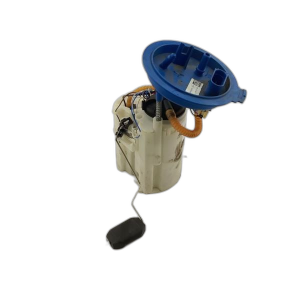
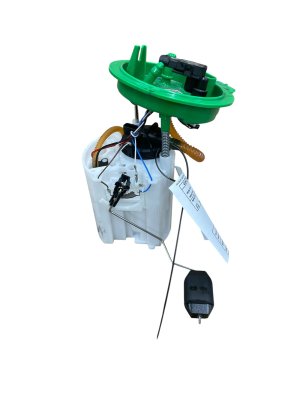
New Aftermarket Parts Available

The information in this article is provided for general reference and educational purposes only. Vehicle specifications, procedures, and part compatibility can vary by production date, trim level, and region. Always consult your vehicle's factory service manual and verify part numbers before purchasing or performing repairs. Safety-critical components such as airbags, seat belts, and braking systems should be installed by a qualified professional.
- Volkswagen JETTA:
- 🧭 Diagnostic Flowchart
- 🛍️ Shop This Part
- What's Unique About the 2017-2023 Volkswagen JETTA
- Symptoms You May Notice
- Most Likely Causes
- Rare But Worth Checking
- Diagnosis Steps
- Parts You'll Likely Need
- Related Codes That Often Appear With This One
- Technical Service Bulletins (TSBs) & Recalls
- Platform-Specific Known Issues
- Mechanic-Grade Diagnostic Values
- Hidden / Shadow Codes Worth Checking
- Scan Tool Commands That Help
- Wiring & Ground Locations
- Real Owner Repair Stories
- "I Checked Everything" — The Actual Cause
- OEM Part Supersession History
- Model Year Variations Within This Range
- 🎟️ Get 5% Off