

P0088 on 2010-2014 GMC Sierra Denali: Fuel Rail Pressure Too High Causes & Fixes
P0088 on a GMC Sierra Denali indicates the fuel rail pressure is too high. This is most often caused by a failing high-pressure fuel pump (HPFP) or a faulty fuel rail pressure sensor. Expect a repair cost of $500-$1500, as replacing the HPFP is labor-intensive and requires replacing the one-time-use fuel line.
- P0088 means your fuel pressure is dangerously high. Do not ignore this code.
- The first diagnostic step is to determine if the pressure is ACTUALLY high or if it's a sensor error. This will save you from replacing expensive parts unnecessarily.
- Check your engine oil. A strong smell of gas is a clear sign that the high-pressure fuel pump has failed and is leaking into the engine.
- If you recently had engine work done, double-check that the two fuel rail pressure sensor connectors are not swapped, as this is a known issue.
- This is not a beginner-friendly DIY repair due to the extreme pressures and fire risk. Professional service is strongly recommended.
What's Unique About the 2010-2014 Gmc SIERRA DENALI
The 2010-2014 Sierra Denali uses a gasoline direct injection (GDI) fuel system, which operates at extremely high pressures compared to traditional port injection. This system relies on a camshaft-driven high-pressure fuel pump (HPFP) in addition to the standard in-tank pump. This complexity introduces unique failure points, such as HPFP mechanical failure or sensor errors, that are the primary sources of a P0088 code on this specific truck. A notable issue, cited in a GM Technical Service Bulletin, is the possibility of swapped electrical connectors for the fuel rail pressure sensors after a previous repair, which can trigger this specific code. [Bulletin #PIP5119]
Diagnostic Flowchart
Tap your situation to follow the diagnostic path that matches what you're seeing on this vehicle.
Generation note: This range covers two generations. The 2010-2013 models are part of the GMT900 platform. The 2014 model year marks the beginning of the K2XX platform, which introduced the new EcoTec3 V8 engines (5.3L L83 and 6.2L L86). While the engine architecture changed, both use a high-pressure direct injection system, and the causes for P0088 are largely consistent across these years.
Symptoms You May Notice
- Check Engine Light is on
- Engine in 'Reduced Power' or 'Limp Mode'
- Hard starting or no-start conditions [Bulletin #PIP4949E, #PIP5151B]
- Rough idle or engine surging [Bulletin #PIP5151B]
- Reduced engine power and poor acceleration
- Black smoke from the exhaust
- Noticeable fuel smell from the engine bay or in the engine oil
- Replacing the in-tank (low-pressure) fuel pump. The P0088 code relates to the high-pressure side of the GDI system, so the low-pressure pump is rarely the cause, unless an aftermarket one is set too high.
- Replacing fuel injectors. While high pressure can affect injectors, they are not typically the root cause of the P0088 code itself.
Most Likely Causes
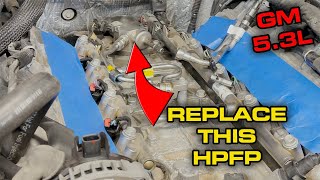
- Failing High-Pressure Fuel Pump (HPFP) 🔴 High Probability → Shop Fuel Pump The HPFP is a mechanical pump driven by a dedicated lobe on the camshaft. Internal wear or, more commonly, a seal failure can cause it to either produce excessive pressure or leak fuel directly into the crankcase, diluting the engine oil.
How to confirm: After ruling out a sensor issue, check the engine oil dipstick. If the oil level is high and smells strongly of gasoline, the HPFP internal seal has failed. This is a definitive sign. A scan tool may also show actual pressure far exceeding desired pressure.
Typical fix: Replace the high-pressure fuel pump, the associated high-pressure fuel line (which is one-time use), and the pump gasket. An immediate oil and filter change is mandatory if fuel contamination is present.
Est. part cost: $300-$550 - Faulty Fuel Rail Pressure (FRP) Sensor 🟡 Medium Probability → Shop Fuel Pressure Sensor The sensor can fail electronically, sending an incorrect, high-voltage signal to the ECM. The ECM interprets this as dangerously high pressure and sets code P0088, even if the actual pressure is normal.
How to confirm: Use a scan tool to view live data. With the Key On, Engine Off (KOEO), the pressure reading should be very low (<100 PSI). If it shows a very high reading, the sensor is likely bad or its wiring is shorted to voltage. Compare the scan tool reading to a mechanical gauge; if they don't match, the sensor is the problem.
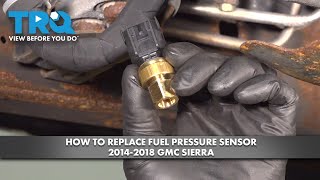
Typical fix: Replace the fuel rail pressure sensor. It is located on the fuel rail, often under the intake manifold.
Est. part cost: $40-$80 - Wiring Harness Issue ⚪ Low Probability The wiring to the FRP sensor or the HPFP control solenoid can become chafed, damaged, or shorted to voltage, causing a false high signal or causing the pump to command maximum pressure. Rodent damage is a known cause. A loose ground connection has also been reported by owners to cause intermittent pressure spikes.
How to confirm: Visually inspect the wiring harness leading to the FRP sensor and HPFP for any signs of damage, melting, or rodent activity. Perform a continuity and voltage test on the signal wire. Check for secure ground connections.
Typical fix: Repair or replace the damaged section of the wiring harness or the connector pigtail.
Est. part cost: $10-$100 - Swapped Fuel Rail Pressure Sensor Connectors ⚪ Low Probability → Shop Fuel Pressure Sensor This is a known issue specifically mentioned by GM in TSB #PIP5119. If any engine or fuel system work was recently performed, it's possible the connectors for the two fuel rail pressure sensors were inadvertently swapped, leading to irrational readings.
How to confirm: Visually inspect the wiring and connectors for the fuel rail pressure sensors to ensure they are correctly routed and connected per the service manual. This is a specific instruction in TSB #PIP5119.
Typical fix: Correctly connect the sensor wiring harnesses.
Est. part cost: $0
Rare But Worth Checking
- Fuel System Contamination: As noted in TSB #PIP5151B, contamination in the fuel system can cause issues. Debris can cause the internal regulator of the HPFP to stick, leading to high pressure. One owner found rusty metal bits in the fuel filter which coincided with a P0088 code.
- Faulty Engine Control Module (ECM): → Shop Engine Control Module (ECM) This is extremely rare, but a malfunctioning ECM could misinterpret sensor data or fail to properly command the fuel system. This should only be considered after all other possibilities have been exhaustively ruled out.
- Aftermarket Lift Pump or Tuning Issues: If the truck has an aftermarket lift pump supplying the HPFP, excessive feed pressure from the lift pump can cause the HPFP to over-pressurize the rail, especially during deceleration. This was documented in a detailed diagnostic video where adjusting the lift pump's output pressure resolved the P0088 code.
Diagnosis Steps
- Read all stored fault codes with an OBD-II scanner.
- Inspect the engine bay for any obvious signs of fuel leaks or wiring damage, paying close attention to the fuel rail pressure sensor connectors to ensure they are not swapped (per TSB #PIP5119).
- Use a scan tool to monitor live data for 'Fuel Rail Pressure'. With Key On, Engine Off (KOEO), the reading should be low (e.g., < 100 PSI). If it's high, suspect a faulty sensor or wiring short to power.
- Start the engine and observe the fuel pressure reading at idle (should be ~290-700 PSI) and while revving. Compare the 'Desired Fuel Rail Pressure' to the 'Actual Fuel Rail Pressure'. A large, persistent positive discrepancy points to a problem.
- If the sensor reading seems incorrect, test the sensor's circuit for proper voltage (typically a 5V reference), ground, and signal integrity. A signal wire shorted to the 5V reference will cause a maxed-out pressure reading.
- Crucial Step: If possible, connect a mechanical fuel pressure gauge rated for GDI systems to verify the actual pressure. If the gauge shows normal pressure while the scan tool shows high, the FRP sensor is bad. If the gauge confirms very high pressure, the problem is mechanical (pump) or control-related.
- If pressure is confirmed high, carefully remove the oil cap and dipstick. Check for a strong gasoline smell or an oil level that is overfull. If fuel is in the oil, the high-pressure fuel pump has failed and must be replaced immediately.
- If there is no fuel in the oil but pressure is high, the issue is likely a mechanical failure or internal regulation problem within the high-pressure fuel pump itself, or a wiring issue causing the pump to be commanded to full pressure.
Parts You'll Likely Need
- High-Pressure Fuel Pump
(OEM #12641847, 12677329 (Verify by VIN))— This is the most common mechanical failure leading to a true over-pressure condition or fuel-in-oil on these GDI engines.
Trusted brands: ACDelco (GM Genuine), Bosch, Delphi
OEM price range: $350-$550
Aftermarket price range: $250-$450 - Fuel Rail Pressure Sensor
(OEM #12673824 (replaces 12623130))— This sensor is the second most likely cause, failing electronically and sending a false high-pressure signal to the ECM.
Trusted brands: ACDelco (GM Genuine), Standard Motor Products, Bosch
OEM price range: $50-$90
Aftermarket price range: $40-$70
Related Codes That Often Appear With This One
- P0087 — This code for 'Fuel Rail Pressure Too Low' can appear with P0088 if the system pressure is erratic, swinging between high and low, often pointing to a failing HPFP or its internal regulator.
- P0191 — This code indicates a 'Fuel Rail Pressure Sensor Circuit Range/Performance' issue. It often appears with P0088 when the sensor's signal is irrational or stuck, reinforcing the possibility of a bad sensor or wiring problem.
- P128E — This is a manufacturer-specific code that is explicitly mentioned alongside P0088 in GM TSBs #PIP4949E and #PIP5119, indicating a related fuel system fault.
Technical Service Bulletins (TSBs) & Recalls
- PIP4949E: Addresses hard start/no start conditions and lists P0088 as a possible related DTC.
- PIP5151B: Mentions fuel system contamination as a cause for rough running and P0088.
- PIP5119: Specifically calls out the possibility of swapped fuel rail pressure sensor connectors after a repair, leading to P0088.
- 16-NA-102: While for Duramax, it links P0088 to inconclusive diagnostics that may lead to unnecessary injection pump replacement, a relevant pattern for GDI engines.
Platform-Specific Known Issues
- TSB #PIP5119 warns that P0088 can be set after an engine or fuel system repair if the Fuel Rail Pressure 1 and 2 connectors are swapped.
- TSB #PIP4949E and #PIP5151B link P0088 with hard start/no start conditions and suggest that fuel system contamination could be a contributing factor.
Mechanic-Grade Diagnostic Values
- High-Pressure Fuel Rail Pressure (Scan Tool) — expected: 290 PSI to 2,176 PSI during normal operation.. Failure: Reading is persistently and significantly higher than the 'Desired Fuel Rail Pressure' PID on the scan tool.
- High-Pressure Fuel Rail Pressure (Scan Tool, KOEO) — expected: Low pressure, typically 50-100 PSI.. Failure: A reading of 0 PSI indicates an open circuit or unplugged sensor. A reading of ~4,600 PSI indicates the sensor signal wire is shorted to the 5V reference.
- Low-Pressure Fuel System Pressure (Scan Tool) — expected: 43 to 45 PSI at idle.. Failure: While not a direct cause of P0088, pressure from an aftermarket lift pump set too high can cause the HPFP to over-pressurize the rail.
- Fuel Rail Pressure Sensor Voltage — expected: A 5V reference signal from the ECM.. Failure: If the signal wire is shorted to this 5V reference, the ECM will interpret it as maximum possible pressure.
Scan Tool Commands That Help
- GDS2 / Tech2 or equivalent professional scanner: Fuel Rail Pressure Test — To command the fuel pump to different pressures and observe if the actual pressure follows the command. This helps differentiate between a control problem and a mechanical pump/sensor failure.
- GDS2 / Tech2 or equivalent professional scanner: Live Data Graphing (Desired vs. Actual Fuel Rail Pressure) — This is the primary diagnostic screen for P0088. Graphing both values allows a technician to see the exact moment the actual pressure deviates significantly from the ECM's command, helping to pinpoint conditions that trigger the fault.
Wiring & Ground Locations
- G104 (GMT900) — On the front of the left cylinder head.. A poor engine ground can cause erratic sensor readings for components grounded to the engine block or heads, including the fuel pressure sensor circuit.
- G102 (GMT900) — On the lower left front of the engine block.. This is a primary engine ground. Corrosion or looseness here can affect the entire engine management system and contribute to false sensor readings.
- G107 (K2XX) — Located on the top left rear of the engine, near the firewall.. This is a key ground stud for the engine harness on the newer K2XX platform. Ensuring it is clean and tight is critical for stable sensor operation.
- G218 (K2XX) — Inside the cabin, under the driver's side dash near the A-pillar.. This ground point serves the Body Control Module (BCM) and Data Link Connector (DLC). While not a direct cause, a poor ground here can create communication issues that complicate diagnosis.
Real Owner Repair Stories
- Pine Hollow Auto Diagnostics (YouTube) (GM Duramax Truck (Diesel, but diagnostic principle applies to GDI)) — P0088 code setting specifically during deceleration or coasting downhill.
❌ Tried (didn't work) Initial diagnosis was complicated by other electrical issues.
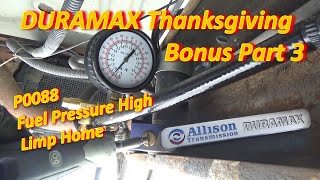
✅ What actually fixed it The truck was equipped with an aftermarket (PPE) lift pump. The lift pump's output pressure was set too high, which prevented the high-pressure pump (CP3 in this case) from regulating pressure downward correctly during deceleration. Adjusting the aftermarket lift pump's output pressure down resolved the P0088 code.
OEM Part Supersession History
12623130→12673824— Standard part revision and improvement by the manufacturer.
Heads up: The new part number (12673824) is the correct replacement for the original.12639694, 12633423, 12608371→12641847— Part consolidation and design updates for the high-pressure fuel pump.
Heads up: 12641847 is the later part number that replaces several previous versions. Always verify with VIN, but this is the common service replacement.
Model Year Variations Within This Range
- 2010-2013: These models are on the GMT900 platform. While they use a GDI system, the specific engine is not from the 'EcoTec3' family. Grounding points and some harness routing will follow GMT900 architecture (e.g., G102, G104).
- 2014: This model year marks the switch to the K2XX platform and the introduction of the new EcoTec3 V8 engines (5.3L L83, 6.2L L86). These engines feature different architecture, including updated fuel pumps, sensors, and different engine ground locations (e.g., G107).
Helpful Videos
We Have This Part in Stock



The information in this article is provided for general reference and educational purposes only. Vehicle specifications, procedures, and part compatibility can vary by production date, trim level, and region. Always consult your vehicle's factory service manual and verify part numbers before purchasing or performing repairs. Safety-critical components such as airbags, seat belts, and braking systems should be installed by a qualified professional.
- Gmc SIERRA DENALI:
- 🧭 Diagnostic Flowchart
- 🎬 Helpful Videos
- 🛍️ Shop This Part
- What's Unique About the 2010-2014 Gmc SIERRA DENALI
- Symptoms You May Notice
- Most Likely Causes
- Rare But Worth Checking
- Diagnosis Steps
- Parts You'll Likely Need
- Related Codes That Often Appear With This One
- Technical Service Bulletins (TSBs) & Recalls
- Platform-Specific Known Issues
- Mechanic-Grade Diagnostic Values
- Scan Tool Commands That Help
- Wiring & Ground Locations
- Real Owner Repair Stories
- OEM Part Supersession History
- Model Year Variations Within This Range
- 🎟️ Get 5% Off