

P0100 on 2017-2023 Honda Accord: MAF Circuit Malfunction Causes and Fixes
For a 2017-2023 Honda Accord, code P0100 typically points to a dirty or faulty Mass Airflow (MAF) sensor. Cleaning the sensor with a dedicated cleaner is a common first step and often resolves the issue. If cleaning doesn't work, or if the wiring is damaged, replacing the MAF sensor is the most likely fix. Using an OEM or high-quality aftermarket sensor is crucial for the turbocharged engines.
- P0100 on a 2017-2023 Accord indicates a problem with the Mass Airflow sensor circuit.
- The most common and easiest first step is to clean the MAF sensor with a dedicated cleaner spray.
- If cleaning doesn't work, the MAF sensor itself has likely failed and needs to be replaced.
- Always inspect the air filter and intake hose for damage or blockages, as these can also cause the code.
- While you can continue driving, doing so may lead to poor performance, bad fuel economy, and potential damage to other components over time.
What's Unique About the 2017-2023 Honda Accord
The 2017-2023 Honda Accord spans three different generations with different engines: the end of the 9th gen (2.4L NA), the full 10th gen (1.5T, 2.0T), and the start of the 11th gen (1.5T, Hybrid). While the P0100 code's meaning is consistent, the MAF sensor's location and part number will vary. The turbocharged 10th (L15B7, K20C4) and 11th generation engines can be particularly sensitive to air metering, making a clean and functional MAF sensor critical for smooth operation. Aftermarket oiled air filters are a known potential cause for contaminating the sensor if over-oiled.
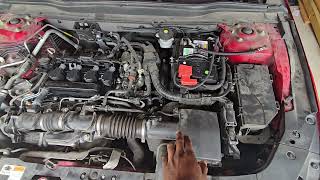
Generation note: The 2017-2023 range covers three Accord generations: the end of the 9th (2017), the entire 10th (2018-2022), and the beginning of the 11th (2023). The 9th generation used naturally aspirated 2.4L and 3.5L engines, while the 10th and 11th generations use primarily 1.5L and 2.0L turbocharged engines. The fundamental causes of P0100 are the same 🎬 Watch: A detailed breakdown of the P0100 code for this Accord., but the specific MAF sensor part and its location in the intake tract will differ. For the popular 10th and 11th gen turbo models, the MAF sensor is Honda part number 37980-5BA-A01. The 2017 9th gen models use a different sensor, such as 37980-RC0-M01 for the V6.
Symptoms You May Notice
- Check Engine Light is on.
- Rough or unstable idle
- Engine hesitation, surging, or stalling, especially during acceleration.
- Noticeable decrease in fuel economy
- Loss of engine power.
- Black smoke from the exhaust in some cases, indicating a rich fuel mixture.
- Hard starting
- Replacing oxygen sensors. While a bad MAF sensor can affect the air-fuel ratio and trigger other codes, P0100 specifically points to the MAF circuit, not the O2 sensors.
Most Likely Causes
- Dirty or Contaminated MAF Sensor 🔴 High Probability → Shop Fuel Injection Air Flow Meter Over time, oil vapor from the PCV system or fine dust that gets past the air filter can coat the sensor's delicate sensing element, insulating it and causing incorrect readings. This is a very common cause for P0100.
How to confirm: Visually inspect the small wires or film element inside the MAF sensor. If they appear dirty, oily, or coated with debris, they need cleaning.
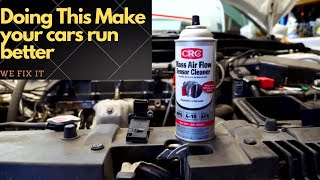
Typical fix: Remove the sensor and clean it carefully using only a dedicated Mass Airflow Sensor cleaner spray. Never touch the internal wires. 🎬 See how to safely clean your Accord's MAF sensor. Allow it to dry completely before reinstalling.
Est. part cost: $10-$15 for a can of MAF cleaner. - Faulty Mass Airflow (MAF) Sensor 🟡 Medium Probability → Shop Fuel Injection Air Flow Meter The internal electronics of the sensor can fail over time due to heat cycles and vibration, leading to a complete loss of signal or erratic readings that cleaning cannot fix.
How to confirm: If cleaning the sensor does not resolve the code and symptoms, and live data on a scan tool shows zero or unchanging g/s readings when revving the engine, the sensor has likely failed.
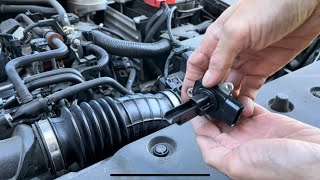
Typical fix: Replace the MAF sensor. It is strongly recommended to use an OEM (part # 37980-5BA-A01 for 1.5T/2.0T) or a reputable brand like Denso or Hitachi for Honda vehicles to ensure compatibility and accurate readings. 🎬 Follow this step-by-step guide to replace the sensor yourself.
Est. part cost: $75-$250 - Vacuum Leak ⚪ Low Probability A crack in the flexible intake air duct between the MAF sensor and the throttle body, or a loose clamp, allows unmetered air to enter the engine. The PCM injects fuel based on the lower airflow measured by the MAF, resulting in a lean condition and often triggering codes like P0171 alongside P0100.
How to confirm: Visually inspect all intake tubing for cracks or loose connections. Listen for a hissing sound at idle. A smoke test is the most effective way to find hidden leaks.
Typical fix: Replace the cracked intake hose or tighten the loose clamp.
Est. part cost: $50-$150 for a new intake duct. - Wiring or Connector Issue ⚪ Low Probability Damage to the wiring harness from chafing or heat, or corrosion in the MAF sensor's electrical connector, can cause an open or short in the circuit. The wires right at the connector are a common point of failure.
How to confirm: Inspect the connector for corrosion, bent pins, or water intrusion. Wiggle the connector and harness with the engine running to see if it affects the idle. Use a multimeter to check for 5V or 12V reference, good ground, and a changing signal voltage/frequency at the connector.
Typical fix: Clean the connector terminals or repair the damaged section of the wiring harness. Sometimes a new connector pigtail is required.
Est. part cost: $5-$100 depending on the extent of the repair.
Rare But Worth Checking
- Clogged Engine Air Filter: → Shop Air Cleaner Assembly A severely clogged air filter can restrict airflow so much that it causes the MAF sensor readings to be abnormally low, potentially triggering the code. Always check this first as it's simple maintenance.
- Aftermarket Cold Air Intake: Improperly installed or designed aftermarket intakes can cause turbulent airflow across the MAF sensor, leading to erratic readings. Oiled filters, if over-oiled, are a frequent source of sensor contamination.
- Faulty Powertrain Control Module (PCM): This is extremely rare. The PCM itself can fail, but all other potential causes, especially the sensor and its wiring, must be exhaustively ruled out before considering PCM replacement.
Diagnosis Steps
- Read the code with an OBD-II scanner and check for any other accompanying codes. Note freeze frame data if available.
- Inspect the engine air filter. A severely clogged filter can cause this issue and should be replaced if dirty.
- Perform a thorough visual inspection of the air intake system between the air filter housing and the throttle body. Look for any cracks, loose clamps, or disconnected hoses.
- Inspect the MAF sensor's electrical connector for damage, corrosion, or loose pins. Ensure it is securely connected. Wiggle the harness to check for intermittent connections.
- Carefully remove the MAF sensor and inspect its sensing elements. Look for dirt, debris, or oil contamination from the PCV system. If dirty, clean it using only dedicated MAF sensor cleaner spray. Allow it to dry completely before reinstalling.
- Clear the code and test drive the vehicle. If the code returns, proceed to the next step.
- Using a scan tool with live data capability, monitor the MAF sensor reading (in grams per second) at idle and while revving the engine. The reading should be a few g/s at idle (typically 2-4 g/s for a 1.5L/2.0L engine) and increase smoothly with RPM. If the reading is stuck at zero, is erratic, or does not increase, the sensor or its circuit is faulty.
- If the sensor signal is still problematic, test the wiring. Use a multimeter to check for the correct voltage (usually 5V or 12V reference), good ground, and signal continuity back to the PCM.
- If a vacuum leak is suspected, perform a smoke test to pressurize the intake system and identify the source of the leak.
- If the sensor and wiring are confirmed to be good, the issue may be a clogged catalytic converter or, in very rare cases, a faulty PCM.
Parts You'll Likely Need
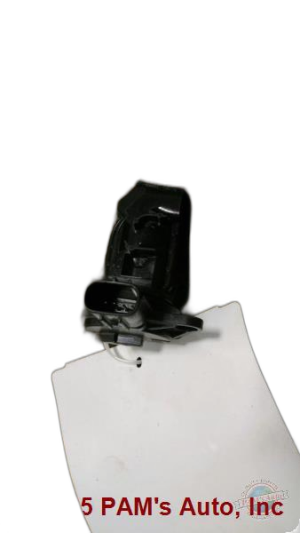
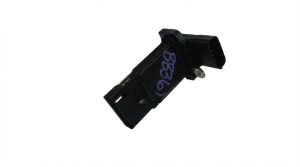
- Mass Airflow Sensor
(OEM #37980-5BA-A01)— This is the most common part to fail and cause a P0100 code, especially if cleaning does not resolve the issue. This part number fits the 1.5T and 2.0T engines in the 2018-2022 Accord and other Honda models.
Trusted brands: Honda (OEM), Denso, Hitachi
OEM price range: $180-$250
Aftermarket price range: $75-$150 - Mass Airflow Sensor Cleaner — Often, the sensor is just dirty. A can of specialized cleaner is an inexpensive first step that frequently fixes the problem.
Trusted brands: CRC, WD-40 Specialist
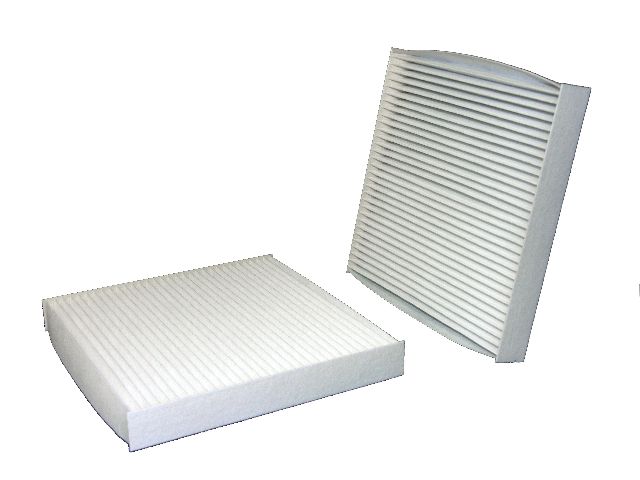
Aftermarket price range: $10-$15 - Engine Air Filter — A severely restricted air filter can impede airflow and contribute to this code. It's a basic maintenance item that should be checked and replaced if necessary.
Trusted brands: Honda (OEM), Denso, Wix
OEM price range: $25-$40
Aftermarket price range: $15-$30
Related Codes That Often Appear With This One
- P0171 — System Too Lean. This often occurs with P0100 if there's a vacuum leak after the MAF sensor, causing unmetered air to enter the engine.
- P0101 — MAF Circuit Range/Performance. This is a closely related code that indicates the sensor's output is not within the expected range for the current engine RPM and load, often pointing to a dirty or failing sensor.
- P0102 — MAF Circuit Low Input. This indicates the signal voltage from the sensor is below the expected threshold, often caused by a wiring issue, a major vacuum leak, or a failed sensor.
Platform-Specific Known Issues
- Sensitivity to Oiled Air Filters — The turbocharged engines in the 10th and 11th generation Accords are sensitive to airflow readings. Aftermarket 'oiled' air filters, if over-oiled, can contaminate the MAF sensor element, leading to P0100 or P0101 codes. Sticking to a high-quality dry paper filter is the safest option.
- Cracked Intake Boot — The flexible rubber intake boot located between the air filter box (where the MAF is) and the throttle body can develop cracks over time due to heat and age. These cracks allow unmetered air to enter the engine, which can trigger P0100 and is often accompanied by a P0171 (System Too Lean) code.
Mechanic-Grade Diagnostic Values
- MAF Sensor Live Data (g/s) at Idle — expected: 2-7 g/s, depending on engine size. A common rule of thumb is that the g/s value should be close to the engine displacement in liters (e.g., ~1.5 g/s for 1.5L, ~2.0 g/s for 2.0L).. Failure: A reading of 0 g/s, a stuck value that doesn't change, or a value significantly different from the engine's displacement at a stable idle.
- MAF Sensor Live Data (g/s) at 2500 RPM — expected: 15-25 g/s, depending on engine size. The reading should increase smoothly and linearly with RPM.. Failure: The g/s value rises slowly, erratically, or does not increase proportionally as the engine is revved.
- MAF Sensor Signal Voltage — expected: Approximately 5.0V reference voltage between terminal 2 and terminal 3 (ground) of the sensor connector with the key on.. Failure: Voltage significantly lower than 5.0V indicates a problem with the power supply or ground circuit.
- MAF Sensor Signal Wire to PCM Continuity — expected: Continuity (near 0 ohms) between terminal 1 of the MAF sensor connector and pin 61 of the PCM connector.. Failure: High resistance or an open circuit (OL) indicates a break in the signal wire.
Scan Tool Commands That Help
- Honda Diagnostic System (HDS) or equivalent professional scanner: Clear DTCs (Diagnostic Trouble Codes) — This function is used after a repair (like cleaning or replacing the MAF sensor) to reset the ECU and turn off the Check Engine Light. A test drive is then required to see if the P0100 code returns, confirming if the fix was successful.
Wiring & Ground Locations
- MAF Sensor Connector (10th/11th Gen) — On the air intake tube, immediately after the air filter housing.. This 5-pin connector is the single interface for the MAF sensor's power, ground, and signal wires. Corrosion or loose pins here are a direct cause of a P0100 circuit code.
- PCM Connector (Pin 61) — At the Powertrain Control Module (PCM), which is typically located in the engine bay.. Pin 61 is a reported connection point for the MAF signal wire. Testing continuity from the sensor connector to this pin can confirm if the signal wire is intact or broken.
- G101 (Example Engine Ground) — Typically found on the engine block or transmission housing. Exact location varies by engine.. A bad engine ground can cause floating or incorrect readings for multiple sensors, including the MAF. While P0100 is often sensor-specific, checking major ground points like G101 is a valid step if direct wiring checks don't reveal a fault.
Real Owner Repair Stories
- FRAUSTOS TIRES MECANICO on YouTube (2018 Honda Accord 1.5T) — Check Engine Light with codes P0100 and P006A. Live data showed the MAF sensor reading was not increasing when the engine was revved.
❌ Tried (didn't work) Initial diagnosis confirmed the sensor was not responding to airflow changes.
✅ What actually fixed it The MAF sensor was replaced with a new Delphi brand sensor. After replacement and clearing the codes, the live data showed the g/s reading correctly increasing with engine RPM, and the Check Engine Light was resolved.
Model Year Variations Within This Range
- 2017: The 2017 Accord is the final year of the 9th generation and uses different MAF sensors than later models. For example, the V6 engine uses part number 37980-RC0-M01.
- 2018-2023: The 10th and 11th generation Accords with 1.5T and 2.0T engines use MAF sensor part number 37980-5BA-A01.
Diagnostic Flowchart
Other Known Issues on This Vehicle
Issues unrelated to this code that are worth knowing about as an owner of this generation:
- Fuel Dilution in 1.5T Engine 🔴 High — More common in 2017-2018 models and in cold climates with short-trip driving patterns. Honda issued software updates to mitigate the issue. (Ref: Honda Service Bulletin 18-097)
- Sticky Steering at Highway Speeds 🔴 High — Affects 2022-2023 models primarily. A momentary increase in steering effort is felt, often after driving for a period of time. NHTSA launched an investigation. (Ref: Honda TSB 23-037 instructs dealers to replace the electronic power steering (EPS) gearbox.)
- Failing Low-Pressure Fuel Pump 🔴 High — Widespread across many 2018-2020 Honda/Acura models. The fuel pump impeller can deform and fail, causing the engine to stall while driving. (Ref: NHTSA Recall 20V-314 and subsequent expansions (KGC, KGD).)
- AC Condenser Leaks 🟠 Medium — Common on 2018-2022 models, leading to loss of AC cooling. Honda extended the warranty on this component for many affected vehicles. (Ref: Honda Service Bulletin 19-091)
- Body Control Module (BCM) Software Glitches 🟡 Low — On 2018-2020 models, a software error could cause various electronic components (wipers, turn signals, rearview camera) to malfunction intermittently. (Ref: NHTSA Recall 20V-771 (Honda recall number X95).)
- Premature Brake Wear and Vibration 🟠 Medium — Some owners of 10th generation Accords report warped rotors and faster-than-expected brake pad wear, causing pulsation during braking.
Used vs. New Parts: Buying Guide for This Vehicle
When a used part is the smart pick: A used OEM MAF sensor can be a cost-effective option only if it is sourced from a very low-mileage, verified donor vehicle. Given the sensitivity of this part, a new part is generally the safer choice.
Donor-vehicle mileage cap: roughly under 30000 miles for the part to have meaningful remaining life.
What to inspect on the donor part:
- Verify the part number on the sensor matches your original (e.g., 37980-5BA-A01 for 2018+ turbo models).
- Inspect the connector pins for any signs of corrosion or damage.
- Look at the sensing element if possible; avoid any part that looks physically dirty, oily, or damaged.
- Ask for the VIN of the donor car to check its history for accidents or flood damage.
OEM-only on this vehicle (don't cheap out):
- Mass Airflow Sensor
Aftermarket brands forum-validated for this vehicle:
- Denso (often the OEM supplier)
- Hitachi
- Delphi
Brands owners have reported issues with on this vehicle:
- Unnamed, no-brand sensors from online marketplaces are frequently reported to be defective out of the box or fail prematurely.
Real Owner Stories
Aggregated from forums and TSBs cited above. Mileages and costs reflect what owners reported in those sources.
2018 Honda Accord
Symptoms: Check Engine Light on with codes P0100 and P0171. The engine idle was rough and would hesitate.
What fixed it: A smoke test revealed a crack in the flexible rubber intake boot between the air filter box and the throttle body. Replacing the cracked intake boot resolved both codes.
Cost: $50-$150
Source hint: Vehicle-specific issue: Cracked Intake Boot
2019 Honda Accord 1.5T
Symptoms: The Check Engine Light came on shortly after installing an aftermarket oiled air filter. The car experienced a noticeable loss of power.
What fixed it: The MAF sensor was found to be contaminated with oil from the filter. The fix was to clean the MAF sensor with dedicated MAF cleaner spray and replace the oiled air filter with a standard dry paper filter.
Cost: $10-$15
Source hint: Vehicle-specific issue: Sensitivity to Oiled Air Filters
NHTSA Reported Air/Fuel Metering Failure
Symptoms: An owner reported that their vehicle displayed DTCs P0100, P0113, and P023D, which indicated severe air/fuel metering and boost pressure correlation failures.
What fixed it: According to NHTSA ODI #11705551, these codes were present in a vehicle with an unaddressed high-priority federal safety recall (NHTSA 23V-858).
Source hint: NHTSA ODI #11705551
Related OBD-II Codes
Frequently Asked Questions
I'm replacing the MAF sensor on my 2019 Accord 1.5T. Is there a specific part number I should use?
My Accord has a P0100 code and also a P0171 code. Are these related?
Could my aftermarket oiled air filter be causing the P0100 code on my Accord?
What's the first and most common fix for a P0100 code on a 2017-2023 Accord?
My Accord is hesitating and has a rough idle. Can a P0100 code cause this?
I cleaned my MAF sensor, but the code came back. What's the next step?
Helpful Videos
Used OEM Parts in Stock
New Aftermarket Parts Available


The information in this article is provided for general reference and educational purposes only. Vehicle specifications, procedures, and part compatibility can vary by production date, trim level, and region. Always consult your vehicle's factory service manual and verify part numbers before purchasing or performing repairs. Safety-critical components such as airbags, seat belts, and braking systems should be installed by a qualified professional.
- Honda Accord:
- 🧭 Diagnostic Flowchart
- 🎬 Helpful Videos
- 🛍️ Shop This Part
- What's Unique About the 2017-2023 Honda Accord
- Symptoms You May Notice
- Most Likely Causes
- Rare But Worth Checking
- Diagnosis Steps
- Parts You'll Likely Need
- Related Codes That Often Appear With This One
- Platform-Specific Known Issues
- Mechanic-Grade Diagnostic Values
- Scan Tool Commands That Help
- Wiring & Ground Locations
- Real Owner Repair Stories
- Model Year Variations Within This Range
- Other Known Issues on This Vehicle
- Used vs. New Parts: Buying Guide for This Vehicle
- Real Owner Stories
- 2018 Honda Accord
- 2019 Honda Accord 1.5T
- NHTSA Reported Air/Fuel Metering Failure
- Related OBD-II Codes
- Frequently Asked Questions
- 🎟️ Get 5% Off