

P0100 on 2017-2018 Jaguar XE: MAF Sensor Circuit Fault Causes and Fixes
For a 2017-2018 Jaguar XE, code P0100 usually points to a faulty Mass Air Flow (MAF) sensor or its wiring. A Jaguar Technical Service Bulletin (SSM73671) confirms this issue and also points to potential air leaks. Cleaning the sensor is a good first step, but replacement is often necessary, with an OEM part costing around $430-$525.
- P0100 on a 2017-2018 Jaguar XE is very likely due to a problem with the Mass Air Flow (MAF) sensor or its circuit.
- Jaguar issued a TSB (SSM73671) for this exact issue, pointing to an incorrect signal from the sensor OR an air leak from a poorly fitted intake elbow.
- Before replacing the sensor, try cleaning it with dedicated MAF sensor cleaner and inspect the intake system for air leaks.
- If replacement is needed, the OEM part number is T2H7707.
- This is a DIY-friendly repair for most home mechanics, with the sensor being easily accessible on the intake tract.
What's Unique About the 2017-2018 Jaguar XE
While P0100 is a generic code, Jaguar has acknowledged specific problems on this platform. The manufacturer issued TSB SSM73671 for the 2017 XE, which points to an incorrect signal *frequency* from the MAF sensor. [⭐ TSB SSM73671] More importantly, the same TSB also identifies a potential cause as an improperly fitted air intake elbow below the throttle body, leading to an unmetered air leak. This makes diagnosis more specific, requiring inspection of both the sensor and the integrity of the intake plumbing.
Diagnostic Flowchart
Tap your situation to follow the diagnostic path that matches what you're seeing on this vehicle.
Symptoms You May Notice
- Check Engine Light is on
- Rough or unstable idle
- Engine hesitation or stumbling during acceleration
- Reduced fuel economy
- Difficulty starting the engine
- Black smoke from the exhaust
- Restricted Performance message displayed on the instrument cluster
- Replacing oxygen (O2) sensors. A bad MAF sensor provides incorrect air data, leading to an improper fuel mixture. This can cause the O2 sensors to report unusual readings (like P0171/P0174), but they are often reacting to the problem, not the cause of it.
Most Likely Causes
- Faulty Mass Air Flow (MAF) Sensor 🔴 High Probability → Shop Fuel Injection Air Flow Meter A manufacturer TSB (SSM73671) specifically calls out an incorrect signal frequency from the MAF sensor, indicating a known component issue on this platform. [⭐ TSB SSM73671] These sensors are a known failure point on the JLR Ingenium engine family.
How to confirm: Use a scan tool to monitor live data from the MAF sensor (g/s). The reading should increase smoothly as you raise engine RPM. If the reading is erratic, stuck, or doesn't change, the sensor is likely bad. In some cases, unplugging the sensor will cause the engine to run better on a default map, which strongly suggests a faulty sensor.
Typical fix: Replace the MAF sensor. It is typically located on the air intake tube just after the air filter box. 🎬 Watch this step-by-step guide to replacing your MAF sensor.
Est. part cost: $80-$450 - Dirty or Contaminated MAF Sensor 🟡 Medium Probability → Shop Fuel Injection Air Flow Meter All MAF sensors are susceptible to contamination from dirt, debris, or oil (especially from over-oiled aftermarket air filters) which can insulate the sensing element.
How to confirm: Visually inspect the sensor's wire or film element. If it appears dirty, cleaning is a worthwhile first step.
Typical fix: Carefully remove the sensor and clean it using only dedicated MAF sensor cleaner spray. Do not touch the delicate internal components. Allow it to dry completely before reinstalling. 🎬 Watch: How to properly clean and reset your MAF sensor.
Est. part cost: $10-$15 for cleaner - Damaged Wiring or Loose Connector ⚪ Low Probability Engine vibrations can cause connector pins to lose tension over time, leading to intermittent signals. The TSB's mention of a 'circuit' fault also implicates the wiring. [⭐ TSB SSM73671]
How to confirm: Visually inspect the MAF sensor's electrical connector and wiring harness for any signs of corrosion, loose pins, or physical damage. Use a multimeter to check for proper voltage and ground at the connector.
Typical fix: Repair the damaged section of the wiring harness or clean/replace the connector.
Est. part cost: $5-$50 - Vacuum Leak (Improperly Fitted Intake Elbow) ⚪ Low Probability TSB SSM73671 specifically highlights that the air intake elbow below the throttle body may have been incorrectly fitted, causing an air leak. This is a known issue for the 2.0L Ingenium petrol engine.
How to confirm: Inspect all intake hoses and vacuum lines between the MAF sensor and the engine for cracks, splits, or loose connections. Pay special attention to the elbow under the throttle body. A smoke test is the most effective way to find hidden leaks. 🎬 See how to perform a smoke test for vacuum leaks.
Typical fix: Correctly refit the intake elbow or replace the leaking hose or gasket.
Est. part cost: $20-$100
Rare But Worth Checking
- Clogged Air Filter: → Shop Air Cleaner Assembly A severely clogged air filter can restrict airflow enough to cause the MAF sensor to report readings that the PCM considers out of range.
- Faulty Powertrain Control Module (PCM): This is extremely rare. The PCM should only be considered after all other possibilities, including the sensor and wiring, have been exhaustively tested and ruled out.
- Restricted Exhaust: A clogged catalytic converter or muffler can prevent air from flowing properly through the engine, which can indirectly cause the MAF sensor readings to be out of the expected range.
Diagnosis Steps
- Read all fault codes using an OBD-II scanner. Note if P0111, P0299, P2178, or any other codes are present.
- Visually inspect the entire air intake system for any obvious cracks, loose clamps, or disconnected hoses, paying close attention to the air intake elbow below the throttle body as per TSB SSM73671.
- Inspect the MAF sensor's electrical connector for a secure fit, corrosion, or damaged pins. Check for stable power and ground at the connector with a multimeter.
- Remove the MAF sensor and visually inspect its sensing element for dirt, oil, or debris.
- If dirty, clean the sensor with a dedicated MAF sensor cleaner. Let it air dry completely before reinstalling. Clear the codes and perform a test drive to see if the code returns.
- If the code persists, use a scan tool to monitor the MAF sensor's live data (measured in grams per second, g/s). At idle, it should be stable. As you increase engine RPM, the g/s value should rise smoothly and quickly. Compare this to a known good vehicle if possible.
- If the live data is erratic, unresponsive, or flat, and the wiring has been confirmed good, the MAF sensor is defective and should be replaced.
- If the sensor and wiring appear to be working, perform a smoke test to definitively check for vacuum leaks, especially around the intake manifold and vacuum hoses.
Parts You'll Likely Need
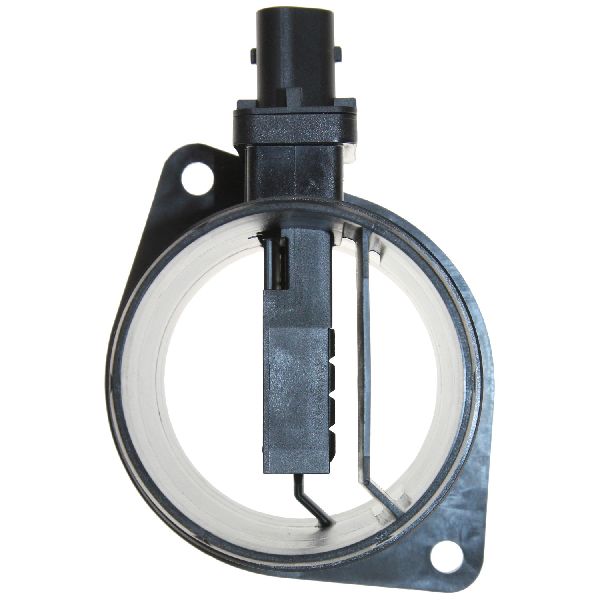
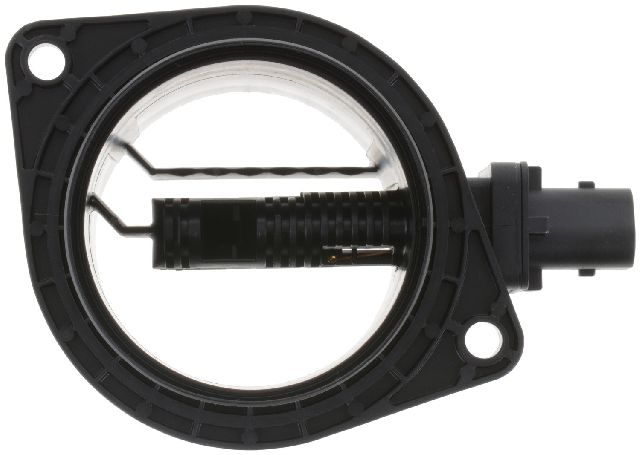
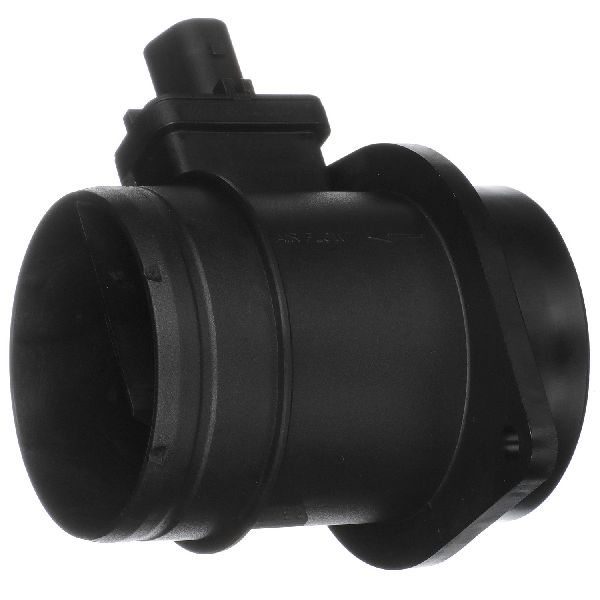
- Mass Air Flow Sensor
(OEM #T2H7707)— This is the most common failure part for code P0100, a fact supported by a manufacturer TSB for this vehicle. [⭐ TSB SSM73671] This part is used on both the 2.0L gas and diesel Ingenium engines.
Trusted brands: Jaguar (OEM), Bosch, Delphi, Duralast
OEM price range: $430-$525
Aftermarket price range: $80-$250
Related Codes That Often Appear With This One
- P0111 — The Intake Air Temperature (IAT) sensor is often integrated into the MAF sensor housing. The TSB for the Jaguar XE, SSM73671, explicitly mentions that P0100 may be logged along with P0111 ('Intake Air Temperature Sensor 1 Circuit Range/Performance'). [⭐ TSB SSM73671, 15]
- P0299 — TSB SSM73671 also lists P0299 ('Turbocharger/Supercharger 'A' Underboost Condition') as a code that can appear alongside P0100, likely due to an air leak in the intake system.
- P2178 — This code for 'System Too Rich Off Idle Bank 1' is another potential companion code mentioned in TSB SSM73671, resulting from the incorrect air/fuel mixture caused by the MAF issue or intake leak.
Technical Service Bulletins (TSBs) & Recalls
- SSM73671: Addresses the Malfunction Indicator Light (MIL) with DTC P0100-38 (Mass or Volume Air Flow Sensor "A" Circuit signal frequency incorrect) and/or other codes like P0111, P0299, and P2178. It suggests checking for an improperly fitted air intake elbow as a potential cause.
Platform-Specific Known Issues
- Technical Service Bulletin SSM73671 was issued for the 2017 model year concerning the Check Engine Light appearing with DTC P0100-38. The bulletin points to two primary causes: an incorrect signal frequency from the MAF sensor itself, or an air leak from an incorrectly fitted air intake elbow below the throttle body. [15, ⭐ TSB SSM73671]
Mechanic-Grade Diagnostic Values
- MAF Sensor Live Data (g/s) at idle (2.0L Engine) — expected: Approximately 2.0 - 4.0 g/s with a warm engine and no loads.. Failure: Readings are stuck, erratic, or significantly outside this range. A reading that is low may indicate a vacuum leak downstream of the sensor.
- MAF Sensor Live Data (g/s) at idle (3.0L V6 Engine) — expected: Approximately 3.0 - 6.0 g/s with a warm engine and no loads.. Failure: Readings are stuck, erratic, or significantly outside this range. The reading should increase smoothly and rapidly with RPM.
- MAF Sensor Signal Voltage at idle — expected: Approximately 0.8V - 1.3V.. Failure: Voltage is stuck, does not rise with RPM, or is outside the expected range.
- MAF Sensor Signal Voltage at 2500 RPM — expected: Approximately 1.4V - 1.9V.. Failure: Voltage does not rise smoothly from idle or is significantly lower/higher than expected.
- MAF Sensor Power Supply at Connector — expected: 12V (Battery Voltage) at Pin 1 with key on.. Failure: No voltage or low voltage indicates a problem with the power supply circuit, not the sensor itself.
- Engine Ground Point Voltage Drop — expected: Well under 0.5V (500mV).. Failure: A reading higher than 0.5V while cranking the engine indicates a poor ground connection, which can cause sensor circuit faults.
Hidden / Shadow Codes Worth Checking
- P0100-38: Mass or Volume Air Flow Sensor 'A' Circuit signal frequency incorrect. This is a manufacturer-specific code indicating the nature of the fault is with the frequency of the signal, not necessarily the voltage level. [1, ⭐ TSB SSM73671] (see via A professional scan tool capable of reading Jaguar-specific diagnostic trouble codes (like Jaguar SDD) is required to see the sub-code.)
Scan Tool Commands That Help
- Jaguar SDD or equivalent professional scanner (e.g., iCarsoft for JLR): Reset Adaptations / Reset Fuel Trims — This function should be used after replacing the MAF sensor. It clears the long-term fuel trim values that the ECU 'learned' while compensating for the old, faulty sensor. Failing to do this can cause the engine to run poorly even with a new part.
Wiring & Ground Locations
- MAF Sensor Connector Pin 1 — The electrical connector on the MAF sensor housing, located in the air intake tube after the air filter box.. Pin 1 should have 12V (battery voltage) when the ignition is on. Verifying this is a critical first step to rule out a power supply issue before condemning the sensor.
- Engine Ground Strap — Typically a braided strap connecting the engine block to the vehicle's chassis/frame. On many Jaguars, a key ground is located on the lower right side of the car, near the starter or transmission.. A poor engine ground can cause a variety of electrical issues, including incorrect sensor readings. A voltage drop test on ground points is essential to confirm the integrity of the sensor's reference ground.
Helpful Videos

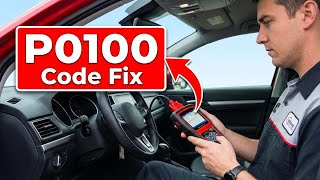
Used OEM Parts in Stock
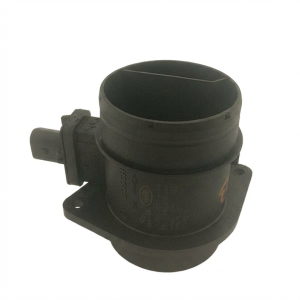
New Aftermarket Parts Available



The information in this article is provided for general reference and educational purposes only. Vehicle specifications, procedures, and part compatibility can vary by production date, trim level, and region. Always consult your vehicle's factory service manual and verify part numbers before purchasing or performing repairs. Safety-critical components such as airbags, seat belts, and braking systems should be installed by a qualified professional.
- Jaguar XE:
- 🧭 Diagnostic Flowchart
- 🎬 Helpful Videos
- 🛍️ Shop This Part
- What's Unique About the 2017-2018 Jaguar XE
- Symptoms You May Notice
- Most Likely Causes
- Rare But Worth Checking
- Diagnosis Steps
- Parts You'll Likely Need
- Related Codes That Often Appear With This One
- Technical Service Bulletins (TSBs) & Recalls
- Platform-Specific Known Issues
- Mechanic-Grade Diagnostic Values
- Hidden / Shadow Codes Worth Checking
- Scan Tool Commands That Help
- Wiring & Ground Locations
- 🎟️ Get 5% Off