

P0101 on 2019-2020 Nissan Altima: MAF Sensor Range/Performance Causes and Fixes
On a 2019-2020 Nissan Altima, code P0101 is frequently caused by an Engine Control Module (ECM) software error that requires a dealer reprogram, as noted in Nissan TSB NTB20-056a. If cleaning the MAF sensor doesn't work, the next step is to check for this software update before replacing the sensor, especially if there are no drivability issues.
- For a 2019-2020 Altima, P0101 is very often a software bug in the ECM, not a bad part.
- If the Check Engine Light is on for P0101 but the car drives perfectly fine, suspect the software issue described in TSB NTB20-056a.
- Before spending hundreds on a new MAF sensor, try cleaning the original sensor with dedicated cleaner ($10 fix).
- If cleaning doesn't work, the next step should be to ask a dealer about the ECM reprogram, not to immediately replace the sensor.
- Always check the simple things first: ensure the engine air filter is clean and the intake hose has no cracks.
What's Unique About the 2019-2020 Nissan ALTIMA

For the sixth-generation Altima (2019+), a P0101 code has a very high chance of being a software issue, not a hardware failure, particularly on the 2.5L PR25DD engine. Nissan issued Technical Service Bulletin NTB20-056a specifically for 2019-2020 Altimas where this code appears without any actual drivability problems. This bulletin advises technicians to reprogram the ECM with updated software. This makes it crucial to avoid immediately replacing the MAF sensor, as the true fix is often a software update performed by a Nissan dealer.
Diagnostic Flowchart
Tap your situation to follow the diagnostic path that matches what you're seeing on this vehicle.
Symptoms You May Notice
- Check Engine Light (MIL) is on
- Reduced engine power or "limp mode"
- Poor fuel economy
- Engine hesitation or stalling
- Rough idle
- Message on dash: “Malfunction Power reduced. Service now”
- Slippery road and collision sensor warning lights may appear simultaneously with the Check Engine Light
- Replacing the MAF sensor without first checking for the ECM software update. Given the specific TSBs for this model, the software should be checked first, especially if there are no drivability symptoms.
Most Likely Causes

- ECM Software Requires Update 🔴 High Probability Nissan has officially acknowledged a software calibration issue via TSBs NTB20-056a and P9328_P9343_P934. The ECM may improperly store the P0101 code, especially when no drivability issues are present.
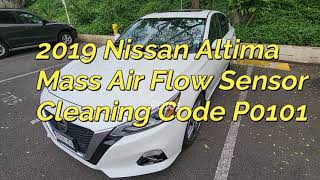
How to confirm: A Nissan dealer or a qualified shop with Nissan's CONSULT diagnostic tool can check the current ECM part number. If it matches 🎬 Watch: How to identify and locate the MAF sensor a number in Table 1 of TSB NTB20-056a (e.g., 6CA7C, 6CB6B for 2019 models or 6CF0A, 9HE0B for 2020 models), the update is needed.
Typical fix: Reprogramming the Engine Control Module (ECM) with the latest software version.
Est. part cost: $0 (if under warranty), $150-$350 (dealer labor for reprogram) - Dirty or Contaminated Mass Air Flow (MAF) Sensor 🟡 Medium Probability → Shop Fuel Injection Air Flow Meter The MAF sensor's delicate sensing element can become contaminated by dirt, oil from aftermarket filters, or moisture, skewing its readings. This is a common issue on most modern vehicles.
How to confirm: Visually inspect the sensor elements inside the MAF housing after removal. If they appear dirty, cleaning is the first step. The sensor is located on the airbox and held by two Phillips screws.
Typical fix: Remove the sensor and clean it carefully with a dedicated MAF sensor cleaner spray. Do not touch the internal elements. Allow it to dry completely before reinstalling.
Est. part cost: $8-$15 for cleaner spray - Severely Clogged Engine Air Filter ⚪ Low Probability → Shop Air Cleaner Assembly A neglected air filter can become so restrictive that it starves the engine of air, causing the MAF sensor readings to be lower than expected for a given RPM, triggering the code.
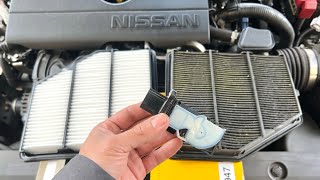
How to confirm: Inspect the engine air filter. 🎬 See this walkthrough for checking the filter and sensor If it is visibly clogged with dirt and debris, it needs to be replaced.
Typical fix: Replace the engine air filter.
Est. part cost: $20-$40 - Failed Mass Air Flow (MAF) Sensor ⚪ Low Probability → Shop Fuel Injection Air Flow Meter
How to confirm: If cleaning the sensor and updating the ECM software does not resolve the code, the sensor itself may have failed. This is often diagnosed by monitoring live sensor data for erratic readings or swapping with a known-good OEM part.
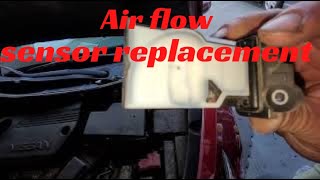
Typical fix: Replace the MAF sensor. Using a quality OEM (Hitachi) or reputable aftermarket brand is 🎬 Watch: Step-by-step guide to replacing a faulty MAF sensor strongly recommended. Some owners report that non-OEM sensors fail to resolve the issue.
Est. part cost: $180-$400
Rare But Worth Checking
- Vacuum Leak: A crack in the air intake boot between the MAF sensor and the throttle body can allow unmetered air to enter the engine, causing the MAF reading to be lower than the actual airflow. This is less common on newer vehicles but still possible.
- Low or Weak Battery: Modern Nissan vehicles are known to be sensitive to voltage drops. A weak or failing battery can cause various electronic modules to malfunction during startup, sometimes triggering spurious error codes like P0101 along with other warnings.
Diagnosis Steps

- Read the code with an OBD-II scanner to confirm P0101 is present.
- Check for any other stored codes. Note if unrelated system lights (ABS, collision warning) are also on, as this can point to a broader electrical issue.
- Note the driving conditions. Are there any symptoms like poor idle, hesitation, or stalling? If not, an ECM reprogram is highly likely per TSB NTB20-056a.
- Inspect the engine air filter. Replace if it is dirty or clogged.
- Inspect the air intake system between the air filter housing and the throttle body for any cracks, loose clamps, or disconnections.
- Carefully remove the MAF sensor, which is located on the air filter housing and secured by two Phillips screws. Inspect the sensing elements for any dirt or contamination.
- If dirty, clean the MAF sensor using only dedicated MAF sensor cleaner. Spray the elements generously and allow it to air dry completely before reinstalling.
- Clear the code and test drive the vehicle. If the code returns and no physical faults were found, contact a Nissan dealer or qualified repair shop to check if the ECM reprogram from TSB NTB20-056a has been performed. Provide them with your VIN.
- If the software is up to date and the code persists, the MAF sensor itself has likely failed and should be replaced with an OEM or high-quality aftermarket part.
Parts You'll Likely Need
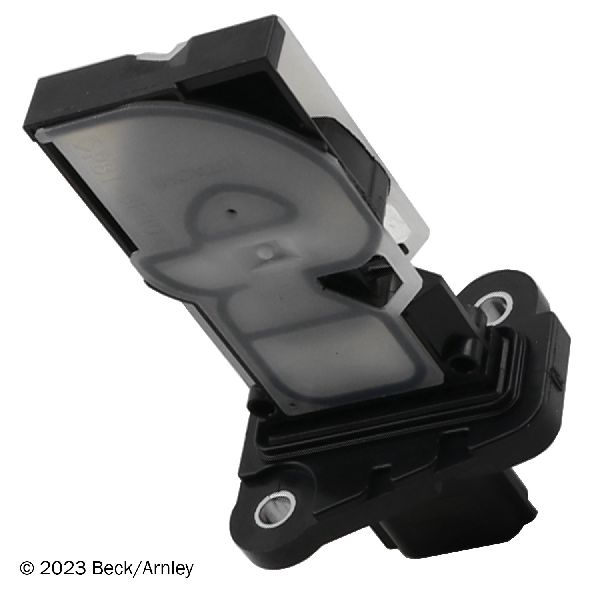
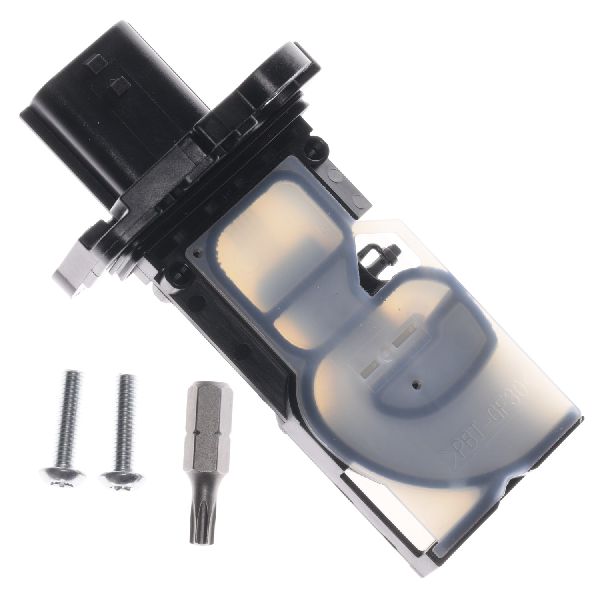
- Mass Air Flow Sensor
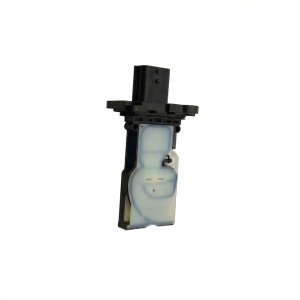
(OEM #22680-6CA0B)— This is the primary hardware component related to the code. It may fail or require cleaning. The OEM part is made by Hitachi. This part number supersedes 22680-5NA0A.
Trusted brands: Hitachi (OEM), Delphi, Denso, Walker Products
OEM price range: $270-$390
Aftermarket price range: $80-$200 - Mass Air Flow Sensor Cleaner — Often, the sensor is just dirty and cleaning it is a cost-effective first step before replacement.
Trusted brands: CRC, Liqui Moly, Berryman
Aftermarket price range: $8-$15
Related Codes That Often Appear With This One
- P0087 — TSB NTB19-045b and P9328_P9343_P934 list P0101 and P0087 (Fuel Rail/System Pressure - Too Low) together as codes that may be improperly stored due to ECM calibration errors.
- P0448 — Also listed in TSBs NTB19-045b and P9328_P9343_P934 as a code potentially triggered by the same ECM software issue.
- P2008 — Also listed in TSBs NTB19-045b and P9328_P9343_P934 as a code potentially triggered by the same ECM software issue.
Technical Service Bulletins (TSBs) & Recalls

- NTB20-056a: MIL ON WITH P0101 STORED - Specifies reprogramming the ECM if P0101 is present without drivability concerns on 2019-2020 Altimas with the PR25DD engine. It lists specific ECM part numbers to check.
- NTB20-056: The original version of the above TSB for 2020 models.
- NTB19-045b: MIL ON WITH DTC P0087, P0101, P0448, OR P2008 - Mentions an ECM reprogram to update how permanent DTCs are stored after a repair is made. This is not a fix for the code's cause, but for the logic of storing it.
- P9328_P9343_P934: Voluntary Service Campaign to reprogram the ECM for improperly stored permanent DTCs, including P0101, on certain California vehicles.
Platform-Specific Known Issues
- A primary issue for the 2019-2020 Altima with the 2.5L PR25DD engine is an ECM calibration error causing P0101 to be stored without any actual hardware fault. Nissan TSB NTB20-056a provides a software update to correct this.
- TSB P9328_P9343_P934 also mentions ECM reprogramming for improperly stored P0101 codes on certain California-emissions vehicles.
- An owner complaint (NHTSA ODI #11640985) noted that after getting a P0101 code fixed, a separate "Malfunction Power reduced" message continued to appear intermittently, suggesting the P0101 code can sometimes be a symptom of a more complex underlying issue.
- Owner Experience: ECM Reprogram as the Fix: A 2020 Altima owner reported on CarComplaints.com that the 'Engine Malfunction Power reduced Service now' message appeared with code P0101. The Nissan dealership's solution was to reprogram the ECM, stating the 'ECM program is behind cause p0101 code to stay'. The repair cost approximately $340 as the extended warranty did not cover software recalibration.
Mechanic-Grade Diagnostic Values
- MAF Sensor Signal Voltage at Idle (Scan Tool) — expected: 0.6 V - 0.9 V. Failure: Voltage is stuck, erratic, or significantly outside this range when the engine is fully warmed up with no load.
- MAF Sensor Signal Voltage at 2,000 RPM (Scan Tool) — expected: 1.5 V - 2.5 V. Failure: Voltage does not increase smoothly with RPM or is outside the expected range.
- MAF Sensor Air Flow Rate at Idle (Scan Tool) — expected: 2.0 - 7.0 grams/second (g/s). Failure: Readings are significantly lower (suggesting a vacuum leak or bad sensor) or higher than expected for the engine size.
- MAF Sensor Air Flow Rate at 2,500 RPM (Scan Tool) — expected: 15 - 25 grams/second (g/s). Failure: The g/s reading does not rise in a steady, linear fashion as engine RPM increases.
Scan Tool Commands That Help
- Nissan CONSULT or Manual Procedure: Idle Air Volume Learning — This procedure is critical after cleaning or replacing the throttle body, replacing the MAF sensor, or replacing/reprogramming the ECM. It synchronizes the ECM with the throttle's idle position. Failure to perform this can cause an unstable idle and may prevent the P0101 code from clearing.
- Nissan CONSULT or Manual Procedure: Throttle Valve Closed Position Learning — This should be performed before the Idle Air Volume Learning procedure. It teaches the ECM the fully closed position of the throttle plate.
- Nissan CONSULT: Self-Learning Control Reset — After replacing the MAF sensor or reprogramming the ECM, this function clears the long-term fuel trim adjustments that the ECM learned with the old/faulty sensor, allowing it to adapt to the new component faster.
Real Owner Repair Stories
- r/Nissan on Reddit (2019 Nissan Altima, 45,000 miles) — Car revs on its own at idle until it stalls, brake warning light comes on, sometimes all dash lights illuminate. P0101 code is set.
❌ Tried (didn't work) Replacing the MAF sensor with an OEM part., Replacing the PCV valve., Performing an induction cleaning service.
✅ What actually fixed it The suggested fix, confirmed by another user with a similar issue, was to have the ECM reprogrammed by a diagnostic shop or dealer after the MAF sensor was replaced. - r/Nissan on Reddit (Nissan vehicle (model not specified)) — P0101 code present.
❌ Tried (didn't work) Cleaning the MAF sensor., Checking for intake leaks.
✅ What actually fixed it Replacing the 3-year-old battery. The user noted that a weak battery can cause the MAF sensor to not communicate properly, triggering the code. - r/AskMechanics on Reddit (2020 Nissan Altima S 2.5L, 80,000 miles) — A permanent P0101 code that will not clear, even though the main check engine light is off.
❌ Tried (didn't work) Replacing the MAF sensor with an original part twice., Performing various drive cycles.
✅ What actually fixed it The owner identified a rip in the top air filter cover, creating a small gap where the airbox should seal. The unresolved issue is unmetered air entering the system after the MAF sensor due to the damaged housing, which requires replacing the air filter housing.
When the Usual Fixes Don't Work
- Multiple owner reports indicate that simply replacing the MAF sensor, even with a high-quality OEM Hitachi part, may not be a permanent fix. In one case, the P0101 code returned after 5 months, suggesting an underlying issue. In another, the code did not resolve at all until the ECM was reprogrammed, highlighting that for this platform, the software calibration is often a critical part of the repair, not just the hardware.
OEM Part Supersession History
22680-5NA0A→22680-6CA0B— Part revision or supplier change. This is a common practice for improving reliability or sourcing.
Heads up: The new part number (22680-6CA0B) is the correct replacement for the original. Using old stock of 22680-5NA0A may not be advisable.
Helpful Videos

Used OEM Parts in Stock
New Aftermarket Parts Available


The information in this article is provided for general reference and educational purposes only. Vehicle specifications, procedures, and part compatibility can vary by production date, trim level, and region. Always consult your vehicle's factory service manual and verify part numbers before purchasing or performing repairs. Safety-critical components such as airbags, seat belts, and braking systems should be installed by a qualified professional.
- Nissan ALTIMA:
- 🧭 Diagnostic Flowchart
- 🎬 Helpful Videos
- 🛍️ Shop This Part
- What's Unique About the 2019-2020 Nissan ALTIMA
- Symptoms You May Notice
- Most Likely Causes
- Rare But Worth Checking
- Diagnosis Steps
- Parts You'll Likely Need
- Related Codes That Often Appear With This One
- Technical Service Bulletins (TSBs) & Recalls
- Platform-Specific Known Issues
- Mechanic-Grade Diagnostic Values
- Scan Tool Commands That Help
- Real Owner Repair Stories
- When the Usual Fixes Don't Work
- OEM Part Supersession History
- 🎟️ Get 5% Off