

P0101 on 2015-2018 Nissan Murano: MAF Sensor vs. ECM Software Fixes
On a 2015-2018 Murano, P0101 often points to a dirty MAF sensor, a cracked air intake hose, or a dirty throttle body. However, a known ECM software issue can also trigger this code, requiring a dealer reprogram as per Nissan TSBs. Always check for TSBs before replacing parts, as the software fix is a primary and well-documented cause for this specific vehicle and its platform mates.
- For the 2015-2018 Murano, P0101 can be caused by a software glitch. Always check for TSBs before buying parts.
- The most common physical causes are a dirty MAF sensor, a cracked air intake hose, or a dirty throttle body.
- Try cleaning the MAF sensor with dedicated cleaner as a first, low-cost diagnostic step.
- Thoroughly inspect the rubber air intake hose for cracks, as this is a very common failure point that mimics a bad sensor.
- If you clean the throttle body, you may need a professional to perform an 'Idle Air Volume Relearn' procedure.
What's Unique About the 2015-2018 Nissan MURANO

For this specific generation of Nissan Murano and its platform mates like the Pathfinder and QX60, the P0101 code is not always a straightforward sensor failure. Nissan issued several Technical Service Bulletins (TSBs) indicating that "calibration errors" in the Engine Control Module (ECM) could improperly store a P0101 code, often along with P0087, P0448, or P2008. In these cases, the official fix is not to replace the sensor but to first repair any underlying issue (like a dirty throttle body) and then reprogram the ECM with updated software that changes how permanent DTCs are stored and cleared after a repair is made.
Diagnostic Flowchart

Tap your situation to follow the diagnostic path that matches what you're seeing on this vehicle.
Symptoms You May Notice
- Check Engine Light is on
- Rough or unstable idle
- Hesitation or jerking during acceleration
- Engine stalling, especially after starting or when coming to a stop
- Reduced engine power and sluggish performance
- Poor fuel economy
- Black smoke from the exhaust
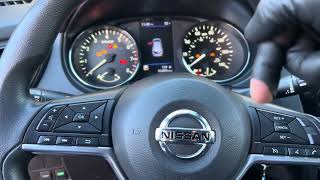
- In some cases, other warning lights like the collision sensor or slippery road light may come on simultaneously.
- Replacing the MAF sensor immediately without first checking for TSBs, cleaning the sensor, inspecting for intake leaks, or cleaning the throttle body.
Most Likely Causes

- ECM Software Calibration Error 🔴 High Probability Nissan issued multiple TSBs (NTB19-045b, P9328_P9343_P934) for 2015-2018 Muranos due to ECM calibration errors that improperly store DTC P0101. The TSB clarifies the reprogram updates how the permanent DTC is stored and erased after the root cause is fixed.
How to confirm: A Nissan dealership or a shop with a CONSULT-III plus scan tool can check the current ECM part number against the list in the TSBs to see if an update is required.
Typical fix: Reprogramming the Engine Control Module (ECM) with updated software. This is often done after another repair (like cleaning the throttle body) is performed.
Est. part cost: $0 - Dirty Mass Air Flow (MAF) Sensor 🔴 High Probability → Shop Fuel Injection Air Flow Meter Oil from aftermarket air filters or fine dust and debris can contaminate the sensor's delicate wire, causing inaccurate readings. This is a very common first step in diagnosis.
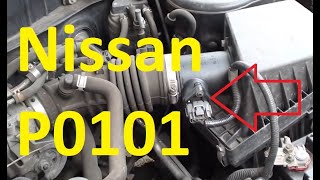
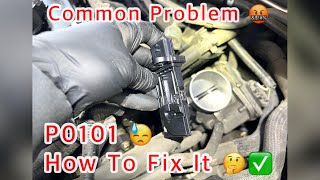
How to confirm: Visually inspect the sensor element for dirt or film. The sensor is located on the air intake tube right after the air filter box and is held by two screws.
Typical fix: Carefully remove the sensor and clean it with a dedicated Mass Air Flow sensor cleaner spray. Do not use brake or carb cleaner, as they can damage the sensor.
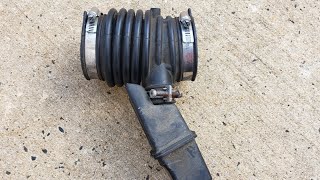
Est. part cost: $10-$15 - Cracked or Loose Air Intake Hose 🟡 Medium Probability → Shop Engine Air Intake Resonator The flexible rubber intake boot between the MAF sensor and the throttle body can develop cracks in its ribbed sections from age and engine movement, allowing unmetered air to enter the engine.
How to confirm: Visually inspect the entire intake hose for cracks, especially in the accordion-like folds. A smoke test is the most definitive way to identify leaks.
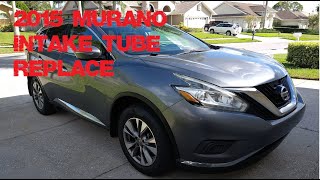
Typical fix: Replace the cracked air intake hose. The OEM part number is 16576-1AA1A. 🎬 See this walkthrough for replacing a cracked Murano intake tube.
Est. part cost: $40-$100 - Dirty Throttle Body 🟡 Medium Probability → Shop Fuel Injection Throttle Body Carbon buildup can cause the throttle plate to stick slightly, disrupting airflow at idle and low speeds, which can trigger a P0101 code. This is a very common issue on Nissan vehicles.
How to confirm: Remove the intake boot from the throttle body and inspect for a thick black ring of carbon around the throttle plate and bore.
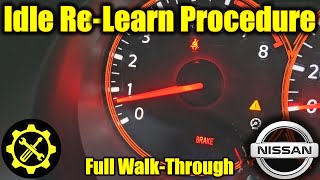
Typical fix: Clean the throttle body and plate with throttle body cleaner. An 'Idle Air Volume Relearn' procedure is required after cleaning. This involves a complex sequence of timed key turns and pedal presses, and must be done after the engine is at operating temperature with no electrical load. 🎬 Watch: Step-by-step guide for the Nissan idle air volume relearn.
Est. part cost: $10-$15 - Dirty or Improperly Installed Air Filter ⚪ Low Probability → Shop Air Cleaner Assembly A severely clogged filter can restrict airflow, and a poorly fitting aftermarket filter can let debris bypass and contaminate the MAF sensor.
How to confirm: Inspect the air filter. It should be relatively clean and seated correctly in the airbox.
Typical fix: Replace the engine air filter.
Est. part cost: $20-$50
Rare But Worth Checking
- Faulty MAF Sensor: → Shop Fuel Injection Air Flow Meter While a dirty sensor is common, complete failure is less so. It should only be replaced after all other causes (especially software, leaks, and cleaning) have been ruled out.
- Vacuum Leak: A leak in any vacuum line or gasket after the MAF sensor can allow unmetered air into the engine, potentially causing a P0101 code.
- Failing or Weak Battery: In some reported cases, an old or failing battery can provide inconsistent voltage to vehicle modules, causing the MAF sensor to send improper signals and trigger a P0101 code. If the battery is over 3-4 years old, it's worth testing.
Diagnosis Steps
- Check for Technical Service Bulletins (TSBs) related to P0101 for your vehicle's VIN. This is the most important first step for this specific vehicle.
- Scan the ECM for any other stored trouble codes. Codes like P0087, P0448, and P2008 strongly suggest the TSB-related software issue.
- Inspect the engine air filter to ensure it is clean and properly installed.
- Carefully inspect the air intake hose (the flexible boot) between the air filter box and the throttle body for any cracks, rips, or loose connections, especially in the ribbed sections.
- Remove and inspect the MAF sensor. If it appears dirty, clean it with dedicated MAF sensor cleaner and allow it to dry completely before reinstalling.
- Inspect the throttle body for carbon buildup. If dirty, clean it carefully. Be prepared that an Idle Air Volume Relearn procedure will be necessary afterward.
- If a TSB applies, the underlying issue (e.g., dirty throttle body) must be repaired first, then the vehicle needs an ECM reprogram to update the fault logic.
- If no TSBs apply and all other steps have failed, the MAF sensor itself may be faulty and require replacement.
Parts You'll Likely Need
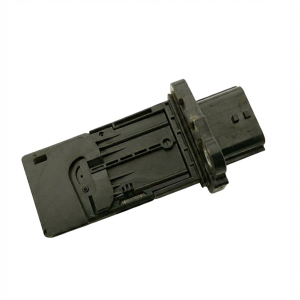
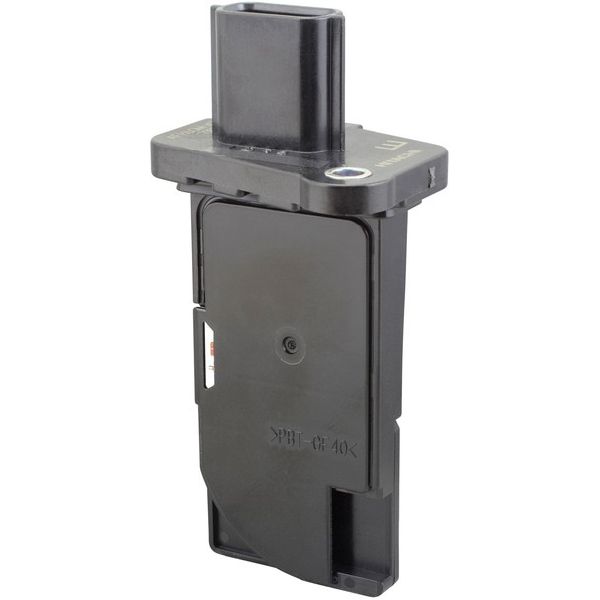
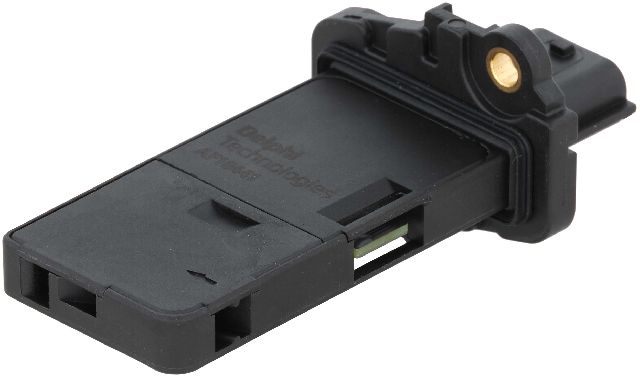
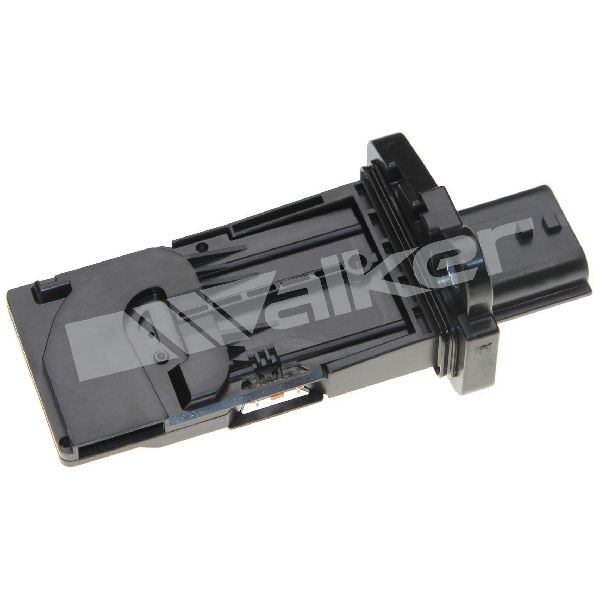
- Mass Air Flow (MAF) Sensor
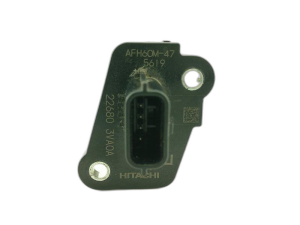
(OEM #22680-BV80B)— This is the sensor that is often replaced, though it may only need cleaning or the root cause may be elsewhere. Hitachi is the OEM manufacturer.
Trusted brands: Hitachi, Nissan Genuine, Delphi
OEM price range: $180-$250
Aftermarket price range: $70-$150 - Engine Air Intake Hose
(OEM #16576-1AA1A)— The rubber hose is a common failure point, developing cracks that cause unmetered air leaks and trigger the P0101 code.
Trusted brands: Nissan OE, Dorman, Gates
OEM price range: $70-$120
Aftermarket price range: $40-$80 - MAF Sensor Cleaner — Often, simply cleaning the sensor is enough to fix the problem, making this a cost-effective first step.
Trusted brands: CRC, WD-40 Specialist
OEM price range: $10-$15
Aftermarket price range: $10-$15
Related Codes That Often Appear With This One
- P0087 — Mentioned in Nissan TSB NTB19-045b as a code that can appear alongside P0101 due to the same ECM calibration error.
- P0448 — Mentioned in Nissan TSB NTB19-045b as a code that can appear alongside P0101 due to the same ECM calibration error.
- P2008 — Mentioned in Nissan TSB NTB19-045b as a code that can appear alongside P0101 due to the same ECM calibration error.
Technical Service Bulletins (TSBs) & Recalls

- NTB19-045b: MIL ON WITH DTC P0087, P0101, P0448, OR P2008, VEHICLES REGISTERED OUTSIDE OF CALIFORNIA
- P9328_P9343_P934: MIL ON WITH P-DTC P0448, P0101, P2008, OR P0087
- NTB19-045: MIL ON WITH DTC P0087, P0101, P0448, OR P2008
- NTB19-045a: MIL ON WITH DTC P0087, P0101, P0448, OR P2008
- NTB20-018: 2017-2019 PATHFINDER; MIL ON
Platform-Specific Known Issues
- ECM Software Reprogram TSBs: Nissan has issued multiple Technical Service Bulletins (TSBs) for the 2015-2018 Murano, including NTB19-045b. These bulletins state that due to an ECM calibration error, a P0101 code (along with others like P0087, P0448, or P2008) may be improperly stored. The prescribed fix is to first repair the underlying cause (if any) and then reprogram the ECM to update the logic for how permanent DTCs are handled.
Mechanic-Grade Diagnostic Values
- MAF Sensor Signal Voltage at Idle — expected: 0.6 - 0.9 V. Failure: Values that are erratic, inconsistent, or outside this range.
- MAF Sensor Signal Voltage at 2,000 RPM — expected: 1.5 - 2.5 V. Failure: Readings that do not increase smoothly with RPM or fall outside this range.
- MAF Sensor Supply Voltage (Key On, Engine Off) — expected: 14 V (Nominal). Failure: Voltage outside the 9-17V range can indicate wiring or power supply issues.
Hidden / Shadow Codes Worth Checking
- Permanent DTC (P-DTC): A P-DTC is a trouble code stored in a separate, non-volatile memory that cannot be cleared with a standard OBD-II scanner's 'Clear Codes' function. The ECM itself must verify that the fault has been corrected by completing a specific, multi-step drive cycle before it will erase the code. The Nissan TSBs for P0101 specifically involve reprogramming the ECM to change the logic for how this P-DTC is stored and erased. (see via Visible with most standard OBD-II scanners, but it will be listed as 'permanent' and will not clear on command.)
Scan Tool Commands That Help
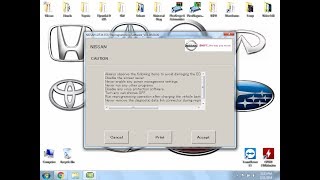
- Nissan CONSULT-III plus: ECM Reprogramming — Used to apply the software update specified in TSBs like NTB19-045b after the root cause of the P0101 (e.g., dirty throttle body, intake leak) has been repaired. This updates the logic for storing and clearing the permanent DTC.
- Nissan CONSULT-III plus or compatible professional scanner: Idle Air Volume Learn (IAVL) — This function is required after cleaning or replacing the electronic throttle body to reset the base idle. The scanner automates the complex relearn procedure.
- Nissan CONSULT-III plus: Self Learning Cont. — This function resets the engine control unit's adaptive learning values to zero. It is often performed before starting the Idle Air Volume Learn procedure to ensure a clean baseline.
Wiring & Ground Locations
- MAF Sensor Connector — On the air intake tube, immediately following the air filter box.. The connector and its wiring are a potential point of failure. Inspect for corrosion, bent pins, or damaged wires, as any issue here can mimic a failed sensor.
Real Owner Repair Stories
- YouTube video by Falcon's Garage (2012 Nissan Sentra (similar VQ engine platform issue)) — Check Engine Light with code P0101, Mass Air Flow Sensor out of range.
❌ Tried (didn't work) The owner had previously tried a temporary fix by taping the cracked hose, which worked for several months before failing again.
✅ What actually fixed it The root cause was a large hole in the rubber air intake boot located between the MAF sensor and the throttle body. Replacing the boot and clearing the codes resolved the issue permanently.
When the Usual Fixes Don't Work
- While the TSBs point to an ECM software issue as a primary cause, many owners have found that the code was triggered by a physical fault that the software is sensitive to. The most common underlying fault found by owners is a cracked air intake boot, which causes an unmetered air leak. The TSB itself states that the underlying DTC must be diagnosed and repaired *before* the reprogram is applied, confirming the software update is a logic change, not a fix for a physical part.
OEM Part Supersession History
22680-BV80B→22680-5RB0A— Part number update/revision by Nissan.
Heads up: The parts are interchangeable for this application.
Helpful Videos
Used OEM Parts in Stock
New Aftermarket Parts Available




The information in this article is provided for general reference and educational purposes only. Vehicle specifications, procedures, and part compatibility can vary by production date, trim level, and region. Always consult your vehicle's factory service manual and verify part numbers before purchasing or performing repairs. Safety-critical components such as airbags, seat belts, and braking systems should be installed by a qualified professional.
- Nissan MURANO:
- 🧭 Diagnostic Flowchart
- 🎬 Helpful Videos
- 🛍️ Shop This Part
- What's Unique About the 2015-2018 Nissan MURANO
- Symptoms You May Notice
- Most Likely Causes
- Rare But Worth Checking
- Diagnosis Steps
- Parts You'll Likely Need
- Related Codes That Often Appear With This One
- Technical Service Bulletins (TSBs) & Recalls
- Platform-Specific Known Issues
- Mechanic-Grade Diagnostic Values
- Hidden / Shadow Codes Worth Checking
- Scan Tool Commands That Help
- Wiring & Ground Locations
- Real Owner Repair Stories
- When the Usual Fixes Don't Work
- OEM Part Supersession History
- 🎟️ Get 5% Off