

P0101 on 2003-2011 Saab 9-3 2.0L Turbo: MAF Sensor Causes and Fixes
On a 2003-2011 Saab 9-3 2.0L Turbo, code P0101 is most often caused by a dirty Mass Air Flow (MAF) sensor or a vacuum leak in the intake system. Cleaning the sensor or finding and fixing the air leak usually resolves the issue. A replacement OEM Bosch sensor costs around $150.
- Before buying any parts, first inspect all intake and vacuum hoses for leaks, as this is a very common and cheap fix.
- Your second step should be to clean the MAF sensor with a dedicated cleaner spray.
- If you must replace the MAF sensor, it is strongly recommended to use an OEM Bosch part (part number 12788131 or Bosch 0 280 218 086) to avoid further issues.
- Avoid using over-oiled aftermarket air filters, as they are a known cause of MAF sensor contamination on this engine.
What's Unique About the 2003-2011 Saab 9-3
The Saab 9-3's Trionic 8 (T8) engine management system is highly sophisticated and relies heavily on a model-based calculation of air mass, using the MAF sensor as a primary but not sole input. It is exceptionally sensitive to any unmetered air entering the engine after the MAF sensor—often from cracked vacuum lines, PCV hoses, or intake gaskets—which can easily trigger a P0101 code because the measured air mass does not match the calculated air mass. Additionally, these engines are known to be sensitive to the brand of MAF sensor used; owners and specialists strongly recommend using the original equipment Bosch sensor, as cheaper aftermarket versions can cause persistent performance issues and codes even when new.
Symptoms You May Notice
- Check Engine Light is on
- Reduced engine power or 'limp home mode'.
- Hesitation or sluggish acceleration.
- Rough or erratic idle.
- Engine stalling, especially when coming to a stop.
- Poor fuel economy.
- Black exhaust smoke in some cases.
- Cruise control may be disabled.
- Replacing the MAF sensor without first checking for vacuum leaks. A vacuum leak is a very common cause for P0101 on this platform and is cheaper to fix than replacing a sensor that may not be bad.
Most Likely Causes
- Dirty Mass Air Flow (MAF) Sensor 🔴 High Probability → Shop Fuel Injection Air Flow Meter Oil vapors from the crankcase ventilation (PCV) system or excess oil from aftermarket oiled air filters (e.g., K&N) can contaminate the sensor's delicate hot wire over time, insulating it and causing inaccurate readings.
How to confirm: Remove the sensor (held by two T20 Torx screws) and visually inspect the internal wire/film element for dirt or an oily film. The sensor is located on the air filter housing. Even if it looks clean, contamination may not be visible.
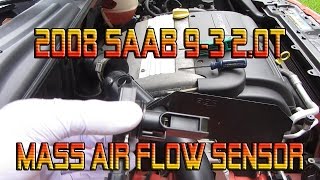
Typical fix: Clean the sensor using only dedicated MAF sensor cleaner spray. 🎬 Watch: A step-by-step guide to cleaning your MAF sensor. Do not touch the internal wires. Let it dry completely before reinstalling. If cleaning doesn't work, the sensor must be replaced.
Est. part cost: $10-$15 for cleaner spray - Vacuum Leak 🔴 High Probability The numerous rubber and plastic vacuum lines become brittle and crack with age and heat exposure. A leak allows unmetered air into the engine, causing the MAF reading to be lower than the actual air entering the cylinders.
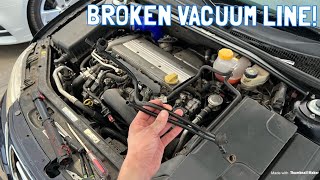
How to confirm: Visually inspect all vacuum hoses for cracks or disconnections, especially the lines for the PCV system and the brake booster check valve. 🎬 See how to quickly identify and replace failed vacuum lines. A smoke test is the most effective way to find hard-to-see leaks in the intake manifold and associated hoses.
Typical fix: Replace the cracked or broken vacuum hose(s) or gaskets. A common failure point is the check valve in the vacuum line going to the brake booster.
Est. part cost: $10-$75 for hoses/valves - Cracked or Loose Intake Air Duct 🟡 Medium Probability → Shop Engine Air Intake Duct The large flexible duct between the MAF sensor and the throttle body can develop cracks, especially in the accordion-like folds, or the hose clamps can become loose, allowing unmetered air to bypass the sensor.
How to confirm: With the engine running, carefully listen for hissing sounds around the intake duct. Visually inspect the duct for cracks and ensure clamps are tight. Flexing the duct while the engine is running can sometimes reveal hidden leaks.
Typical fix: Tighten loose clamps or replace the cracked intake duct. The OEM part number is often 12788129.
Est. part cost: $50-$150 - Faulty Mass Air Flow (MAF) Sensor 🟡 Medium Probability → Shop Fuel Injection Air Flow Meter While often just dirty, the sensor's internal electronics can fail with age, leading to incorrect readings even when clean. The sensitive calibration required by the Trionic ECU makes it intolerant of even minor sensor degradation.
How to confirm: After confirming no vacuum leaks and cleaning the sensor, if the code returns, the sensor itself is likely faulty. A scan tool can monitor live MAF data (g/s) to see if it responds logically and smoothly to engine RPM changes.
Typical fix: Replace the MAF sensor. It is highly recommended to use an OEM Bosch sensor.
Est. part cost: $125-$180
Rare But Worth Checking
- Clogged Air Filter: → Shop Air Cleaner Assembly A severely clogged air filter can restrict airflow enough to cause the MAF readings to be out of the expected range. Always check the air filter first as it's a simple and inexpensive maintenance item.
- Damaged MAF Sensor Wiring or Connector: → Shop Fuel Injection Air Flow Meter The wiring harness or connector for the MAF sensor can become damaged, corroded, or have poor pin tension, leading to an intermittent or lost signal. Wiggle the connector and harness with the engine running to see if it affects the idle.
- Leaking Intake Manifold Gasket: → Shop Engine Intake Manifold Though less common than vacuum hoses, the intake manifold gasket itself can fail, creating a significant vacuum leak. This may be accompanied by a rough idle, hissing sounds, and sometimes coolant loss if the gasket also seals coolant passages.
- Clogged Catalytic Converter: A restricted exhaust, such as a clogged catalytic converter, can cause excessive backpressure. This prevents air from flowing through the engine as expected, which can lead to the MAF sensor readings being lower than what the ECU calculates, potentially triggering P0101.
Diagnosis Steps
- Read all fault codes with an OBD-II scanner. Note any other codes that may be present, such as P1101 or P0171.
- Inspect the engine air filter. Replace it if it is dirty or clogged.
- Carefully inspect the entire air intake system between the MAF sensor and the engine for any cracks, loose clamps, or disconnected hoses. Pay special attention to the flexible intake boot.
- Inspect all accessible vacuum lines connected to the intake manifold and throttle body for cracks or breaks. A very common failure is the check valve and associated hoses for the brake booster and PCV system.
- Locate the MAF sensor on the air filter housing. Disconnect it and remove the two T20 Torx screws.
- Visually inspect the sensor's internal elements. If they appear dirty, clean them using only dedicated MAF sensor cleaner spray. Let it dry completely before reinstalling.
- Inspect the MAF sensor's electrical connector and wiring for any signs of damage, corrosion, or loose pins. Wiggle the harness while the engine is running to check for intermittent faults.
- After reassembly, clear the fault codes with a scanner and perform a test drive to see if the code returns.
- If the code persists, the most reliable way to find a hidden vacuum leak is to perform a smoke test on the intake system.
- If no vacuum leaks are found and cleaning the sensor did not work, the MAF sensor itself is likely faulty and should be replaced with a high-quality OEM part.
Parts You'll Likely Need
- Mass Air Flow (MAF) Sensor
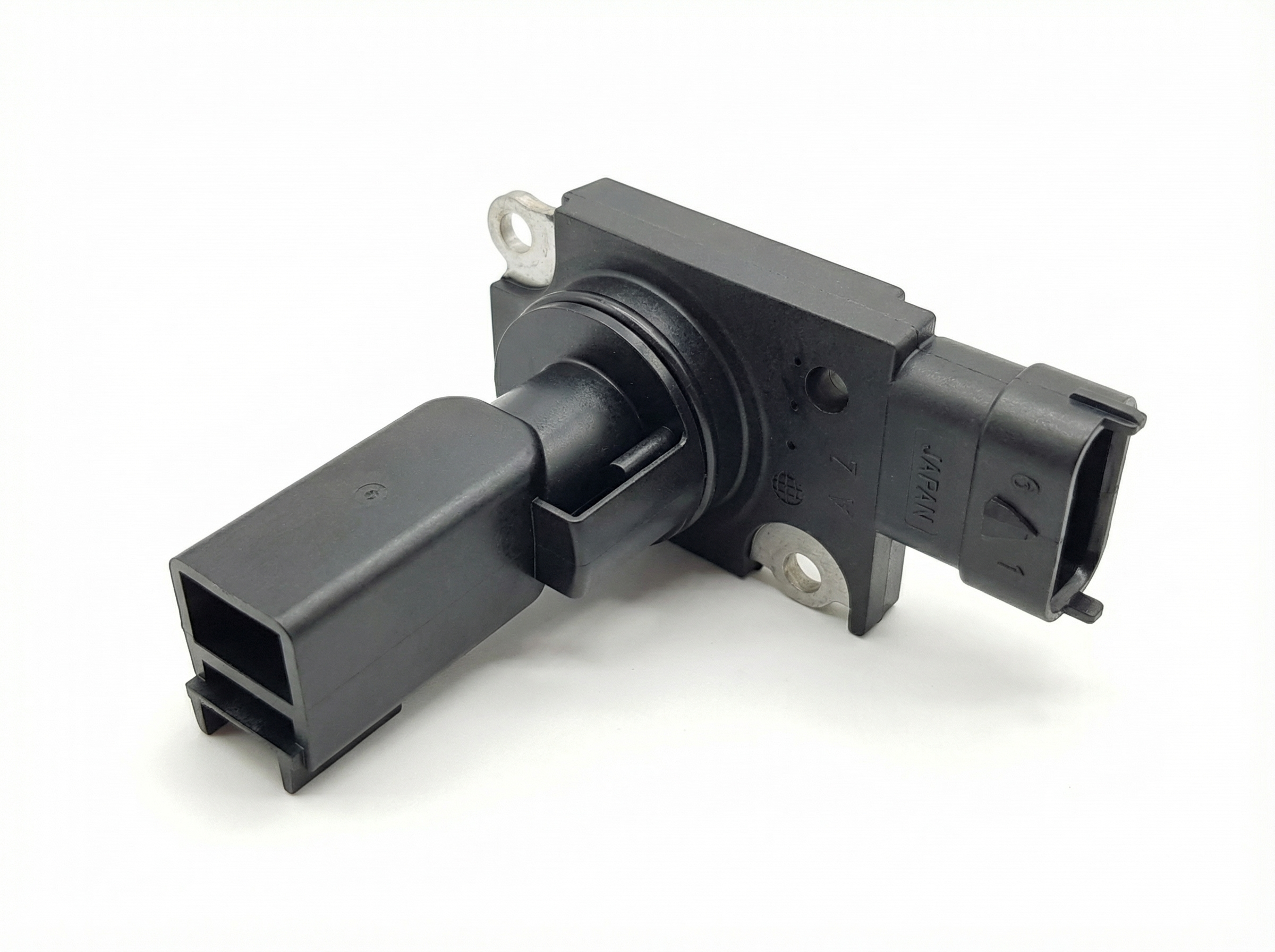
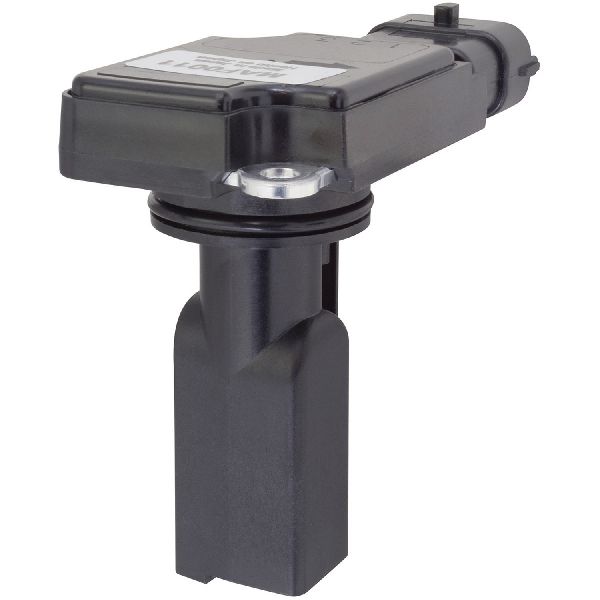
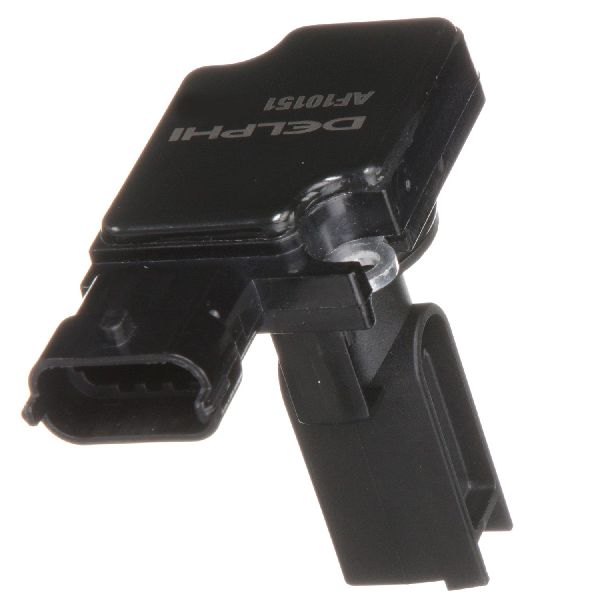
(OEM #Saab: 12788131, Bosch: 0280218086)— This sensor is the primary component responsible for the code. It either fails electronically or becomes too contaminated to clean effectively.
Trusted brands: Bosch
OEM price range: $150-$180
Aftermarket price range: $50-$120 - MAF Sensor Cleaner — Often, the sensor is just dirty and cleaning it is a cost-effective first step that can resolve the issue.
Trusted brands: CRC, Liqui Moly
OEM price range: $10-$15
Aftermarket price range: $10-$15 - Vacuum Hoses/Lines
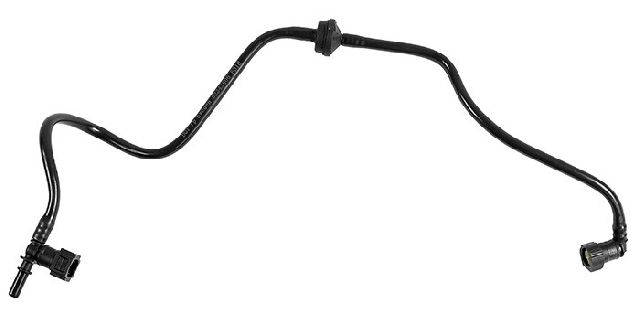
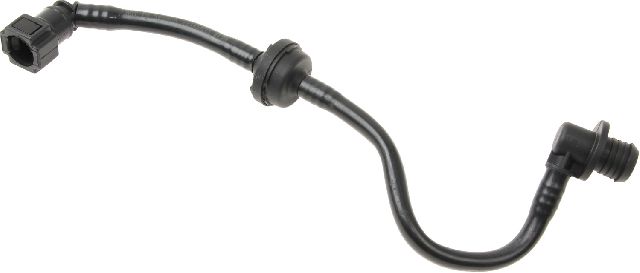
(OEM #e.g., Brake booster vacuum hose assembly: 12787700)— Brittle, cracked vacuum lines are a frequent cause of unmetered air leaks that trigger P0101 on these cars. The brake booster line with its integrated check valve is a particularly common culprit.
Trusted brands: Saab Genuine, Proparts
Related Codes That Often Appear With This One
- P1101 — P1101 is a manufacturer-specific code that is often set along with P0101. It indicates that the MAF sensor reading is out of the self-adaptation range, which is essentially the same root problem detected by P0101.
- P0100, P0102, P0103 — These are all related to the MAF sensor circuit, indicating general malfunctions, low input, or high input, respectively. They point to a problem with the sensor or its wiring.
- P0171, P0172 — These codes indicate the system is running too lean (P0171) or too rich (P0172). A vacuum leak causing P0101 will often lead to a P0171 (lean) code, as unmetered air is entering the engine. A faulty MAF sensor over-reporting air can lead to a P0172 (rich) code.
Technical Service Bulletins (TSBs) & Recalls
- No specific Technical Service Bulletins (TSBs) have been issued by Saab or GM for the P0101 code on the 2003-2011 9-3. The issue is typically addressed through standard diagnostic procedures for vacuum leaks or MAF sensor faults.
Platform-Specific Known Issues
- Contamination from over-oiled aftermarket air filters (e.g., K&N) is a known trigger for P0101 on Saabs, as the oil aerosolizes and coats the MAF sensor element.
- The use of non-OEM (Bosch) MAF sensors is widely reported by owners to cause persistent running issues and fault codes, even if the part is new. The Trionic ECU's calibration is very specific to the Bosch sensor's flow characteristics.
- The small plastic check valves in the vacuum lines, particularly for the PCV system and brake booster, become brittle and can break, causing a sudden and significant vacuum leak.
Mechanic-Grade Diagnostic Values
- MAF Sensor Signal Voltage at Idle — expected: 0.60 - 0.80 Volts DC. Failure: Voltage is fixed, does not change with RPM, or is outside the expected range.
- MAF Sensor Signal Voltage (Key On, Engine Off) — expected: ~0 Volts DC. Failure: Significant voltage reading with the engine off may indicate a wiring short.
- MAF Sensor Power Supply Voltage (Key On, Engine Off) — expected: 10-13 Volts (Battery Voltage). Failure: No voltage indicates a problem with the power supply wire, fuse, or relay.
- Trionic 8 Fault Criteria for P0101 — expected: Measured air mass should be within a specific percentage of the ECU's calculated air mass.. Failure: Code sets if measured air mass is 12% lower than calculated while multiplicative adaptation is >17%, or if measured air is 30% higher or lower than calculated.
Scan Tool Commands That Help
- Saab Tech 2: Read engine data list (Air mass) — To monitor the live g/s reading from the MAF sensor. This allows a technician to see if the sensor's output corresponds logically and smoothly to changes in engine RPM and load, which is crucial for diagnosing intermittent or performance-related faults that don't present as a hard failure.
Wiring & Ground Locations
- G2 — On the side of the left-hand structure strut by the connector bracket.. This is a primary battery ground point. Poor connection here can cause unstable voltage and erratic behavior in various electronic modules and sensors, including the ECU and MAF sensor.
- G7 — On the engine control module's (Trionic T8) top right attachment lug.. This is the direct ground for the Engine Control Module. A corroded or loose G7 ground is a critical failure point that can cause a wide range of engine management codes, including P0101, due to incorrect sensor readings and ECU operation.
- G25 — Directly to the gearbox or left-hand engine mounting (varies by year).. This is a main engine/transmission ground strap. A faulty connection here can lead to the engine block having a poor ground reference, affecting all sensors that ground through the engine, potentially including the MAF sensor's reference.
- MAF Sensor Connector — On the MAF sensor itself, located on the air filter housing.. The wiring harness and connector pins can become corroded, damaged, or develop poor tension, leading to intermittent or complete loss of the MAF signal to the ECU. The wiring diagram shows this is where power, ground, and signal lines for the sensor converge.
Real Owner Repair Stories
- Reddit user in r/saab (2005 Saab 9-3 2.0t) — P0101 code, limp mode, high idle at 1100 RPM.
❌ Tried (didn't work) Cleaning the MAF sensor., Cleaning the throttle body (this lowered idle but did not fix the code).
✅ What actually fixed it The check valve in the vacuum hose for the brake booster had broken apart. Replacing this vacuum line assembly resolved the P0101 code.
"I Checked Everything" — The Actual Cause
- A cracked intercooler. The plastic end tanks on the stock intercooler are a known failure point. A crack may only open and leak under boost pressure, so it might not be found during a low-pressure smoke test with the engine off. This leak allows a large volume of metered air to escape before reaching the engine, causing a mismatch between the MAF reading and the actual air entering the cylinders, triggering P0101. Symptoms include a significant loss of power and a hissing sound under acceleration.
OEM Part Supersession History
12788131→12788131 (current)— This is the established OEM part number for the MAF sensor for this application.
Heads up: While the part number has remained stable, it is cross-referenced by multiple manufacturers including Bosch (0280218086) and Hitachi (MAF0011). It is critical to use a high-quality OE or OEM equivalent, as the Trionic 8 system is very sensitive to sensor calibration.
Model Year Variations Within This Range
- 2007: For the 2007 model year, the Saab 9-3 received a significant interior update, moving away from the original design to a more GM-standardized dashboard and controls. The manual transmission for the 2.0T was also upgraded from a 5-speed to a 6-speed. While the B207 2.0L Turbo engine itself remained, these changes mark a mid-cycle refresh.
- 2006: In the US market for 2006, the high-output 2.0T engine (210 hp) became the standard base engine, and the Aero model switched exclusively to the 2.8L V6 Turbo. This differs from other markets where the Aero could still be had with the 2.0T. This can be a point of confusion when sourcing parts or information.
Diagnostic Flowchart
Real Owner Stories
Aggregated from forums and TSBs cited above. Mileages and costs reflect what owners reported in those sources.
Saab 9-3
Symptoms: P0101 error code accompanied by horrible RPM plateaus.
What fixed it: Cleaned the MAF and throttle body, but ultimately found and replaced a broken check valve on a vacuum hose below the oil dipstick.
Source hint: Reddit (r/saab) thread titled 'P0101 error code resolved...now getting horrible RPM plateaus'
Saab 9-3
Symptoms: Vehicle went into Limp Home Mode with a P0101 code triggered by an aftermarket K&N filter.
What fixed it: Removed the sensor using a T20 Torx bit, cleaned it with MAF cleaner, and cleared the code.
Source hint: YouTube (Auto Autopsy) video titled 'Saab 9-3 P0101 Code Solved! (Limp Home Mode)'
Saab 9-3
Symptoms: P0101 code indicating a different amount of air reaches the engine than was measured by the sensor.
What fixed it: Diagnosed and repaired a vacuum leak located after the MAF sensor, rather than replacing the sensor itself.
Source hint: SaabTuning.pl article on P0101
Related OBD-II Codes
Frequently Asked Questions
Are there any Technical Service Bulletins (TSBs) from Saab or GM for the P0101 code on my 2003-2011 9-3?
Can I use an aftermarket MAF sensor to fix the P0101 code on my 2.0L Turbo?
I have a K&N air filter on my Saab 9-3. Could this cause the P0101 code?
What is the OEM part number for the intake air duct on the Saab 9-3 2.0L Turbo?
Where are the most common vacuum leaks located on the 2003-2011 Saab 9-3 that trigger P0101?
What tools do I need to remove the MAF sensor on my Saab 9-3 for cleaning?
Helpful Videos

Used OEM Parts in Stock
New Aftermarket Parts Available



The information in this article is provided for general reference and educational purposes only. Vehicle specifications, procedures, and part compatibility can vary by production date, trim level, and region. Always consult your vehicle's factory service manual and verify part numbers before purchasing or performing repairs. Safety-critical components such as airbags, seat belts, and braking systems should be installed by a qualified professional.
- Saab 9-3:
- 🧭 Diagnostic Flowchart
- 🎬 Helpful Videos
- 🛍️ Shop This Part
- What's Unique About the 2003-2011 Saab 9-3
- Symptoms You May Notice
- Most Likely Causes
- Rare But Worth Checking
- Diagnosis Steps
- Parts You'll Likely Need
- Related Codes That Often Appear With This One
- Technical Service Bulletins (TSBs) & Recalls
- Platform-Specific Known Issues
- Mechanic-Grade Diagnostic Values
- Scan Tool Commands That Help
- Wiring & Ground Locations
- Real Owner Repair Stories
- "I Checked Everything" — The Actual Cause
- OEM Part Supersession History
- Model Year Variations Within This Range
- Real Owner Stories
- Saab 9-3
- Saab 9-3
- Saab 9-3
- Related OBD-II Codes
- Frequently Asked Questions
- 🎟️ Get 5% Off