

P0101 on 2009-2017 Volvo XC60 3.2L: MAF Sensor, PCV Leaks, and Fixes
On the Volvo XC60 3.2L, code P0101 is most often caused by a failed PCV oil trap diaphragm creating a massive vacuum leak. Listen for a whistling noise at idle and check for strong suction at the oil cap. Replacing the PCV assembly or diaphragm is the most likely fix. Before replacing any parts, also check that the main air intake hose is securely attached to the throttle body.
- For a P0101 code on a Volvo XC60 3.2L, suspect a vacuum leak before a bad MAF sensor.
- The most common cause is a torn diaphragm in the PCV oil trap assembly, identifiable by a whistling noise and strong suction at the oil cap.
- Always inspect the full air intake path for loose clamps or cracked hoses, as this is another frequent cause of unmetered air.
- Cleaning the MAF sensor with a dedicated cleaner is a valid diagnostic step, but it is less likely to be the root cause on this specific engine compared to PCV issues.
- Replacing the PCV oil trap is a common DIY job and is considered preventative maintenance around 100,000 miles.
What's Unique About the 2009-2017 Volvo XC60
While P0101 is a generic code, the Volvo 3.2L inline-six (SI6) engine has a very common and specific failure point that triggers it: the PCV oil trap assembly. The rubber diaphragm inside this unit is known to tear with age and heat cycles, creating a significant unmetered vacuum leak that the MAF sensor cannot account for. This issue is so prevalent that many owners and shops consider the PCV oil trap a routine maintenance item to be replaced every 80,000-100,000 miles to prevent this and other related engine problems.
Symptoms You May Notice
- Check Engine Light illuminated
- Hesitation, stumbling, or lack of power during acceleration
- Rough or surging idle
- Engine stalling, sometimes after hitting a bump if an intake hose is loose
- Loud whistling or howling sound from the engine at idle (often disappears when the oil dipstick is pulled, relieving the vacuum)
- Poor fuel economy
- Black smoke from the exhaust
- Strong vacuum at the oil filler cap, making it difficult to remove with the engine running
- Replacing the MAF sensor without first checking for vacuum leaks. On this engine, a vacuum leak from the PCV system is a more probable cause than a failed sensor. Many owners replace the MAF only to have the code return, because the root cause was the PCV diaphragm.
Most Likely Causes
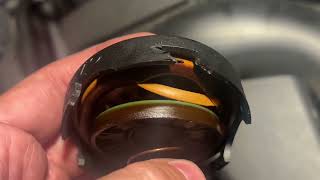
- Failed PCV Oil Trap Diaphragm 🔴 High Probability The rubber diaphragm inside the PCV oil trap assembly on the 3.2L SI6 engine is a known weak point that degrades over time, eventually tearing and creating a large vacuum leak. This is the most common cause of P0101 on this engine.
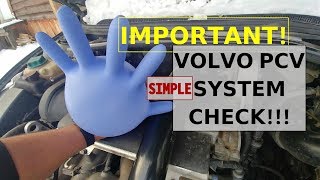
How to confirm: With the engine running, listen for a distinct whistling or howling noise. Carefully try to remove the oil filler cap; if a strong vacuum sucks it back on, or if a rubber glove placed over the opening is sucked tightly inward, the diaphragm has failed. Pulling the oil dipstick slightly may make the whistle stop, confirming excess crankcase vacuum.
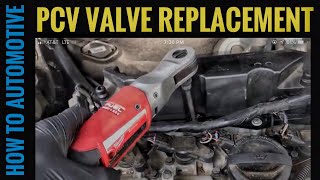
Typical fix: Replace the entire PCV oil trap assembly 🎬 See this walkthrough on replacing the 3.2L PCV assembly. (Volvo PN 31319643) for the most reliable repair. A cheaper, more involved fix is to replace just the internal diaphragm and cap (often using Land Rover kit LR023777).
Est. part cost: $20-$40 (diaphragm only), $150-$250 (full assembly) - Loose or Cracked Air Intake Hose 🟡 Medium Probability → Shop Engine Air Intake Resonator The large flexible rubber hose between the MAF sensor and the throttle body can become brittle with age or the clamps can loosen. In some cases, hitting a large bump can dislodge the hose from the throttle body, creating a massive air leak.
How to confirm: Visually inspect the entire intake duct for cracks, tears, or loose connections, paying close attention to the connection at the throttle body. With the engine running, you can sometimes hear a hissing sound near the leak. A smoke test is the most definitive way to find a leak.
Typical fix: Tighten the hose clamps or replace the cracked air intake hose.
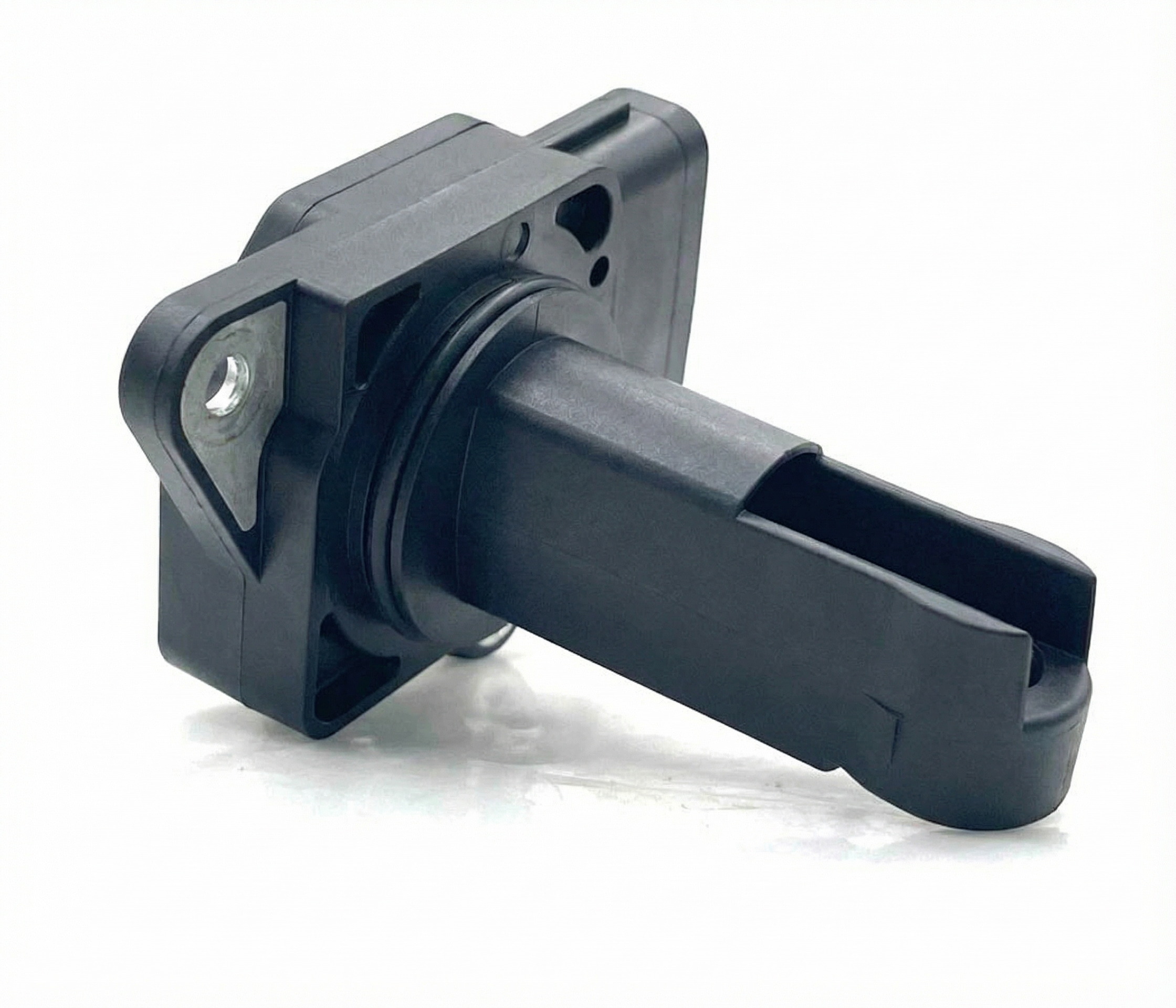
Est. part cost: $50-$100 - Dirty or Faulty Mass Air Flow (MAF) Sensor 🟡 Medium Probability → Shop Fuel Injection Air Flow Meter
How to confirm: Remove the sensor and visually inspect the internal wires for dirt or contamination. Cleaning with a dedicated MAF sensor cleaner may resolve the issue. If cleaning does not work and no vacuum leaks are present, the sensor is likely faulty.
Typical fix: First, attempt to clean the sensor with a product specifically designed for MAF sensors. Do not touch the sensor elements. If the code returns, replace the MAF sensor. 🎬 Watch: Step-by-step guide to replacing the MAF sensor. Using a high-quality OEM brand like Bosch is highly recommended, as cheap aftermarket sensors are known to be unreliable.
Est. part cost: $10 (cleaner), $160-$300 (new sensor) - Clogged Engine Air Filter ⚪ Low Probability → Shop Air Cleaner Assembly
How to confirm: Remove and visually inspect the engine air filter. If it is visibly dirty, dark, and clogged with debris, it is restricting airflow.
Typical fix: Replace the engine air filter.
Est. part cost: $20-$50
Rare But Worth Checking
- Restricted Exhaust System: A clogged catalytic converter can create backpressure that affects airflow readings. This is usually accompanied by other symptoms like a sulfur smell or a more significant loss of power.
- Loose Alternator Decoupler Pulley: On at least one occasion, an owner found the 13mm bolt on the alternator's decoupler pulley had loosened, causing it to spin freely. This led to charging system issues and erratic electrical behavior that could potentially affect sensor readings.
Diagnosis Steps
- Read the trouble codes with an OBD-II scanner. Note P0101 and any other codes present, such as P0171.
- With the engine running at idle, listen for a loud whistling or howling noise, which strongly indicates a failed PCV diaphragm.
- Perform the 'glove test': place a rubber glove over the oil filler opening. If it gets sucked in forcefully, the PCV oil trap has failed and must be replaced. As an alternative test, slightly pull out the oil dipstick; if the whistling noise stops, this confirms excess crankcase vacuum from a failed PCV.
- If no PCV failure is evident, thoroughly inspect the air intake hose between the air filter box and the throttle body for any cracks, tears, or loose clamps. Ensure it is firmly seated on the throttle body.
- Remove and inspect the engine air filter. Replace it if it is dirty and clogged.
- Carefully remove the MAF sensor and clean it using only dedicated MAF sensor cleaner. Do not touch the sensor elements. Allow it to dry completely before reinstalling.
- Clear the codes and perform a test drive. If the code returns, the next step is a smoke test to find hard-to-see vacuum leaks.
- If no vacuum leaks are found after a smoke test, and cleaning the MAF sensor did not work, the sensor itself has likely failed and should be replaced with a quality OEM part.
Parts You'll Likely Need
- PCV Oil Trap Assembly
(OEM #31319643)— This is the most common failure point on the Volvo 3.2L engine that leads to a P0101 code due to the internal diaphragm tearing. Replacing the whole unit is the recommended fix.
Trusted brands: Genuine Volvo, Pro Parts Sweden, URO Parts
OEM price range: $200-$260
Aftermarket price range: $120-$180 - PCV Diaphragm Repair Kit
(OEM #LR023777)— A cost-effective alternative to replacing the entire oil trap assembly if only the diaphragm is torn. This is a Land Rover part number that is compatible with the Volvo 3.2L engine's PCV assembly.
Trusted brands: Dorman, URO Parts, Various aftermarket (e.g., Mr-Key)
OEM price range: N/A (as a Volvo part)
Aftermarket price range: $20-$40 - Mass Air Flow (MAF) Sensor
(OEM #Bosch: 0280218088, Volvo: 30751293)— If vacuum leaks are ruled out and cleaning the sensor doesn't work, the sensor itself is the next likely culprit. Bosch is the OEM supplier.
Trusted brands: Bosch (Recommended OEM), Denso, Genuine Volvo
OEM price range: $250-$350
Aftermarket price range: $150-$250
Related Codes That Often Appear With This One
- P0171 — System Too Lean (Bank 1). This code is often triggered alongside P0101 because a vacuum leak (the most common cause) allows unmetered air into the engine, creating a lean air/fuel mixture.
- P0172 — System Too Rich (Bank 1). Less commonly, the ECM may over-correct for a perceived vacuum leak by adding too much fuel, leading to a rich condition.
Platform-Specific Known Issues
- The PCV oil trap diaphragm on the SI6 engine is a well-documented weak point, with a service life often cited as 80,000-100,000 miles before failure is likely.
- Owner experiences on forums like Swedespeed and Matthews Volvo Site repeatedly confirm the 'whistling and glove test' diagnosis for P0101 before any other parts are replaced.
Mechanic-Grade Diagnostic Values
- Mass Air Flow Rate at Idle — expected: Approximately 3.5 g/s. Failure: A reading significantly higher or lower than 3.5 g/s at a stable idle can indicate a vacuum leak (if high) or a failing sensor (if low/erratic).
- Short Term Fuel Trim (Bank 1) — expected: Close to 0% (+/- 5%). Failure: A high positive value (e.g., +23.44% as seen in one log) indicates the ECM is adding a large amount of fuel to compensate for unmetered air from a vacuum leak.
Scan Tool Commands That Help
- VIDA (Volvo's diagnostic software) or compatible high-end scanner: Resetting adaptation of fuel and air mixture — After replacing the MAF sensor, PCV assembly, or cleaning the throttle body, it is recommended to reset the long-term fuel trims. This forces the ECM to immediately relearn air/fuel parameters with the new components, which can prevent the code from returning during the relearning phase.
Wiring & Ground Locations
- Engine Compartment Ground Strap — There is a primary ground strap connecting the engine to the vehicle's body/chassis.. A corroded or loose engine ground strap can cause erratic electrical behavior and incorrect readings from various sensors, including the MAF sensor. While not a primary cause, it's a foundational check for any electrical-related trouble code.
- MAF Sensor Connector — The electrical connector plugs directly into the MAF sensor, which is located on the air filter box lid.. Corrosion or damage to the pins or wires at this connector will directly interrupt the signal from the MAF sensor to the ECM, causing a P0101 code. The connector has a push-tab for release.
Real Owner Repair Stories
- YouTube channel 'Fun with Cars' (Volvo XC60 (year not specified, but within the 2009-2017 generation)) — Engine stalled out after hitting a big bump in the road, P0101 code present, hesitation on acceleration.
❌ Tried (didn't work) Initially suspected and checked battery cable connections.
✅ What actually fixed it The large air intake hose had been pulled completely off the throttle body by the impact of hitting the bump, creating a massive unmetered air leak. Reattaching the hose and tightening the clamp resolved all symptoms and the code did not return. - Reddit user in r/Volvo (Volvo (model not specified, but discussion was about P0101)) — P0101 code present.
❌ Tried (didn't work) Initial diagnosis focused on vacuum leaks.
✅ What actually fixed it The issue was not a vacuum leak (too much air) but a fuel delivery problem (not enough fuel). A failing fuel pump was the root cause. The ECM flagged the discrepancy between the measured air and the resulting lean condition as a MAF performance issue.
OEM Part Supersession History
31319642→31319643— This is a common supersession for the PCV oil trap assembly. The newer part number likely represents a revision or change in supplier.
Heads up: The parts are interchangeable. Note that the assembly is shared with Land Rover and may have Land Rover markings.8683701→9492266— Supersession for a body/engine electrical ground strap.
Heads up: The parts are interchangeable.
Model Year Variations Within This Range
- 2011-2017: Starting around the 2011 model year, the 3.2L engine (revised to B6324S4/S5) received internal updates to reduce friction, including a Diamond-like Carbon (DLC) coating on valvetrain components. The READ (Rear End Accessory Drive) was also updated with more robust ball bearings. While these changes don't directly alter the P0101 diagnosis, they mark a mid-cycle improvement in overall engine reliability.
Diagnostic Flowchart
Other Known Issues on This Vehicle
Issues unrelated to this code that are worth knowing about as an owner of this generation:
- Alternator and/or Decoupler Pulley Failure 🔴 High — Common after 100,000 miles. Can present as a 'Charging System Failure' message, dimming lights, or a dead battery. Sometimes the alternator itself is fine, but the decoupler pulley bolt comes loose, causing it to spin freely without turning the alternator.
- Brake Vacuum Pump Oil Leak 🟠 Medium — Very common on higher mileage (80,000+ miles) SI6 engines. The seals in the pump degrade, causing oil to leak onto the top of the transmission bellhousing, which can be misdiagnosed as a rear main seal leak. (Ref: Reseal kits (e.g., Volvo PN 31401556) are available as a cost-effective fix compared to replacing the entire pump.)
- Upper Engine Mount (Torque Rod) Failure 🟡 Low — The rubber in the upper torque rod mount cracks and separates, typically over 100,000 miles. This leads to increased engine vibration in the cabin, especially at idle or when shifting.
- Sunroof Drain Clogs and Water Leaks 🟠 Medium — Common across many Volvo models. The sunroof drain tubes can become clogged with debris, causing water to back up and leak into the A-pillars, footwells, or onto the sunroof switch/motor assembly, potentially causing electrical issues.
Used vs. New Parts: Buying Guide for This Vehicle
When a used part is the smart pick: For this repair, using a used part is generally not recommended for the primary culprits. The PCV diaphragm and MAF sensor are wear items and their remaining lifespan is unknown when sourced from a junkyard.
Donor-vehicle mileage cap: roughly under 60000 miles for the part to have meaningful remaining life.
What to inspect on the donor part:
- If considering a used MAF sensor, visually inspect the sensing elements for any signs of contamination, physical damage, or previous cleaning attempts.
- For a used PCV assembly, check for brittleness in the plastic and ensure the cap is not cracked. However, the internal diaphragm's condition cannot be verified visually.
OEM-only on this vehicle (don't cheap out):
- Mass Air Flow (MAF) Sensor: Volvo ECUs are notoriously sensitive to MAF sensor signals. Aftermarket sensors, even from reputable brands, are frequently reported on forums to be poorly calibrated, causing persistent P0101 or other performance issues. Using a Genuine Volvo or OEM Bosch sensor is strongly advised.
Aftermarket brands forum-validated for this vehicle:
- PCV Oil Trap Assembly: Pro Parts Sweden (PPS) is a well-regarded aftermarket supplier for Volvo parts and offers a direct replacement (PN 31319643).
- PCV Diaphragm Kit: Dorman and URO Parts offer the diaphragm repair kit, which is a viable, lower-cost alternative to the full assembly if you are comfortable with the more involved repair.
Brands owners have reported issues with on this vehicle:
- Unnamed/white-box MAF sensors from online marketplaces. These are a very common source of repeat failures and wasted diagnostic time.
Real Owner Stories
Aggregated from forums and TSBs cited above. Mileages and costs reflect what owners reported in those sources.
2010 Volvo XC60 3.2L I6 — ~100000 miles
Symptoms: Whistling and vacuum pull at the oil cap; symptoms confirmed as a common maintenance item for this engine architecture.
What fixed it: Replacement of the PCV oil trap assembly.
Source hint: FCP Euro (YouTube)
2009-2017 Volvo XC60 3.2L I6
Symptoms: Unmetered air leaks from the PCV system causing a P0101 code.
What fixed it: Repairing the PCV system rather than replacing the MAF sensor.
Source hint: Reddit (r/Volvo)
2009-2017 Volvo XC60 3.2L I6
Symptoms: P0101 code present; owner initially suspected the MAF sensor but found the 'whistling and glove test' pointed elsewhere.
What fixed it: Replacing the PCV diaphragm using the Land Rover diaphragm kit (LR023777) as a cross-compatible fix.
Source hint: Matthews Volvo Site
2009-2017 Volvo XC60 3.2L I6
Symptoms: Engine stalling specifically after hitting a bump.
What fixed it: Re-securing the intake hose to the throttle body after it was dislodged.
Source hint: Article Context
Related OBD-II Codes
Frequently Asked Questions
Why is my XC60 making a loud whistling sound at idle that stops when I pull the dipstick?
I heard I can use a Land Rover part to fix my Volvo's P0101 code. Is that true?
My car stalled after I hit a large bump. Could this be related to the P0101 code?
What is the 'glove test' mentioned for diagnosing this Volvo engine?
Should I replace my MAF sensor immediately if I get a P0101 code?
Is there a specific mileage when these PCV issues usually start on the XC60?
Helpful Videos
We Have This Part in Stock

The information in this article is provided for general reference and educational purposes only. Vehicle specifications, procedures, and part compatibility can vary by production date, trim level, and region. Always consult your vehicle's factory service manual and verify part numbers before purchasing or performing repairs. Safety-critical components such as airbags, seat belts, and braking systems should be installed by a qualified professional.
- Volvo XC60:
- 🧭 Diagnostic Flowchart
- 🎬 Helpful Videos
- 🛍️ Shop This Part
- What's Unique About the 2009-2017 Volvo XC60
- Symptoms You May Notice
- Most Likely Causes
- Rare But Worth Checking
- Diagnosis Steps
- Parts You'll Likely Need
- Related Codes That Often Appear With This One
- Platform-Specific Known Issues
- Mechanic-Grade Diagnostic Values
- Scan Tool Commands That Help
- Wiring & Ground Locations
- Real Owner Repair Stories
- OEM Part Supersession History
- Model Year Variations Within This Range
- Other Known Issues on This Vehicle
- Used vs. New Parts: Buying Guide for This Vehicle
- Real Owner Stories
- 2010 Volvo XC60 3.2L I6 — ~100000 miles
- 2009-2017 Volvo XC60 3.2L I6
- 2009-2017 Volvo XC60 3.2L I6
- 2009-2017 Volvo XC60 3.2L I6
- Related OBD-II Codes
- Frequently Asked Questions
- 🎟️ Get 5% Off