

P0101 on 2007-2014 Volvo XC90 3.2L: MAF Sensor and Vacuum Leak Guide
P0101 on a Volvo XC90 3.2L most often points to a vacuum leak from a failed PCV system or a dirty/faulty Mass Airflow (MAF) sensor. The PCV diaphragm is a known weak point. Cleaning the MAF sensor is a cheap first step, but a smoke test is often required to find the true source of the unmetered air.
- On the 2007-2014 Volvo XC90 3.2L, P0101 is most frequently caused by a torn PCV diaphragm, not a bad MAF sensor.
- Check for a strong vacuum at the oil cap or a loud whistling sound from the engine before buying any parts.
- The cheapest first step is to clean the MAF sensor with dedicated cleaner ($15).
- If cleaning the MAF doesn't work, suspect the PCV system. You can replace just the diaphragm (Part #LR023777) for under $50.
- A smoke test is the best way to confirm a vacuum leak if the source isn't obvious.
What's Unique About the 2007-2014 Volvo XC90
On the Volvo 3.2L I6 engine (and its platform mates), the P0101 code is frequently a secondary code caused by a primary failure in the PCV (Positive Crankcase Ventilation) system, which is integrated into the oil filter housing assembly. The rubber diaphragm inside this assembly is known to tear with age, creating a massive unmetered vacuum leak. This leak allows a large volume of air into the engine *after* the MAF sensor, so the sensor cannot measure it. The engine's oxygen sensors detect the resulting lean condition, and the ECM sees a major discrepancy between the low MAF reading and the high RPM/fuel trim adjustments, leading it to incorrectly flag the MAF sensor's performance. While a dirty MAF is possible, owners should strongly suspect a PCV issue first, often identifiable by a loud whistling or howling noise at idle.
🎬 Watch: How to identify and test a failed PCV diaphragm.Symptoms You May Notice
- Check Engine Light is on
- Reduced engine power and poor acceleration ('limp mode')
- Rough, unstable, or oscillating idle
- Engine hesitation or stalling, especially when coming to a stop
- Poor fuel economy
- Loud whistling, howling, or squealing noise from the engine, especially at idle (the classic sign of a torn PCV diaphragm)
- Strong vacuum when trying to remove the oil filler cap or dipstick with the engine running
- Replacing the MAF sensor without first thoroughly checking for vacuum leaks. On this specific engine, a vacuum leak from the PCV system is a much more probable cause than a failed MAF sensor. Many owners replace the MAF only to have the code return.
Most Likely Causes
- Failed PCV System / Torn Diaphragm 🔴 High Probability The rubber diaphragm in the PCV oil trap assembly (part of the oil filter housing) becomes brittle with age and heat cycles, leading to tears. This is a very common failure point on the Volvo 3.2L I6 engine and its derivatives used in Land Rover vehicles.
How to confirm: With the engine running, listen for a loud whistling/howling sound from the top of the engine near the oil filter. Alternatively, carefully try to remove the oil filler cap or pull the dipstick slightly. If there is an extremely strong vacuum holding it down and removing it causes the whistling to stop and the engine to stumble, the PCV diaphragm has failed. A smoke test will confirm a large leak from the PCV assembly area.
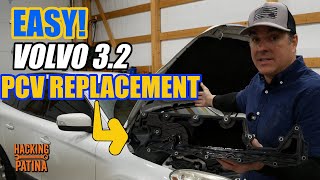
Typical fix: Replace the PCV oil trap assembly or, for a more affordable repair, just the diaphragm membrane and cap. 🎬 See this walkthrough for a simple PCV diaphragm replacement. The full assembly is Volvo part number 31319643 (verify by VIN). The more common and economical fix is replacing only the membrane, which is widely available under Land Rover part number LR023777.
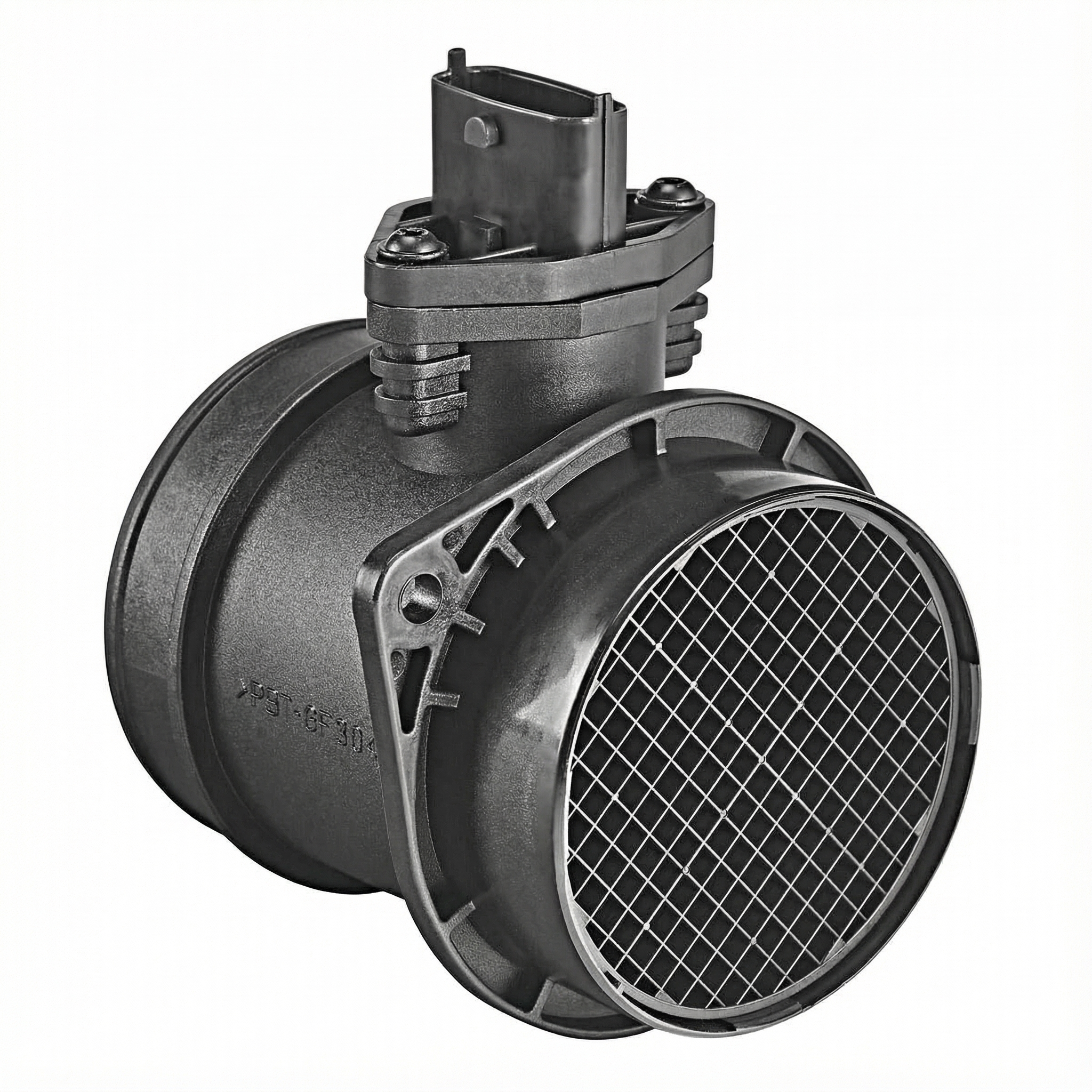
Est. part cost: $15-$40 (membrane kit), $180-$250 (full assembly) - Dirty Mass Airflow (MAF) Sensor 🟡 Medium Probability → Shop Fuel Injection Air Flow Meter Oil vapors from the PCV system and fine dust can coat the sensor's delicate hot wire over time, insulating it and causing inaccurate (typically low) airflow readings.
How to confirm: Remove the MAF sensor from the air intake tube (located right after the air filter box) and visually inspect the small wires inside. If they appear coated in dirt or grime, they need cleaning.
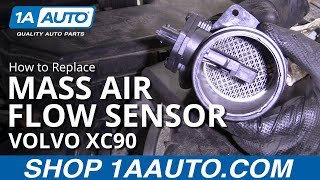
Typical fix: Carefully spray the sensor elements with a dedicated Mass Airflow Sensor cleaner. 🎬 Watch: How to clean the MAF sensor to fix P0101. Do NOT use brake cleaner or carb cleaner, and do not touch the elements. Allow it to dry completely for at least 30 minutes before reinstalling.
Est. part cost: $10-$15 (for a can of MAF cleaner) - Vacuum Leak (other than PCV) 🟡 Medium Probability Aging rubber and plastic hoses and gaskets can crack and create leaks. The large intake air hose between the MAF sensor and the throttle body is a common culprit.
How to confirm: A common source is a cracked or disconnected air intake hose between the MAF sensor and the throttle body, which can sometimes become dislodged from hitting a large bump. A professional smoke test is the most effective way to find other hidden leaks from intake manifold gaskets or smaller vacuum lines.
Typical fix: Replace the cracked hose or faulty gasket that is identified during the smoke test.
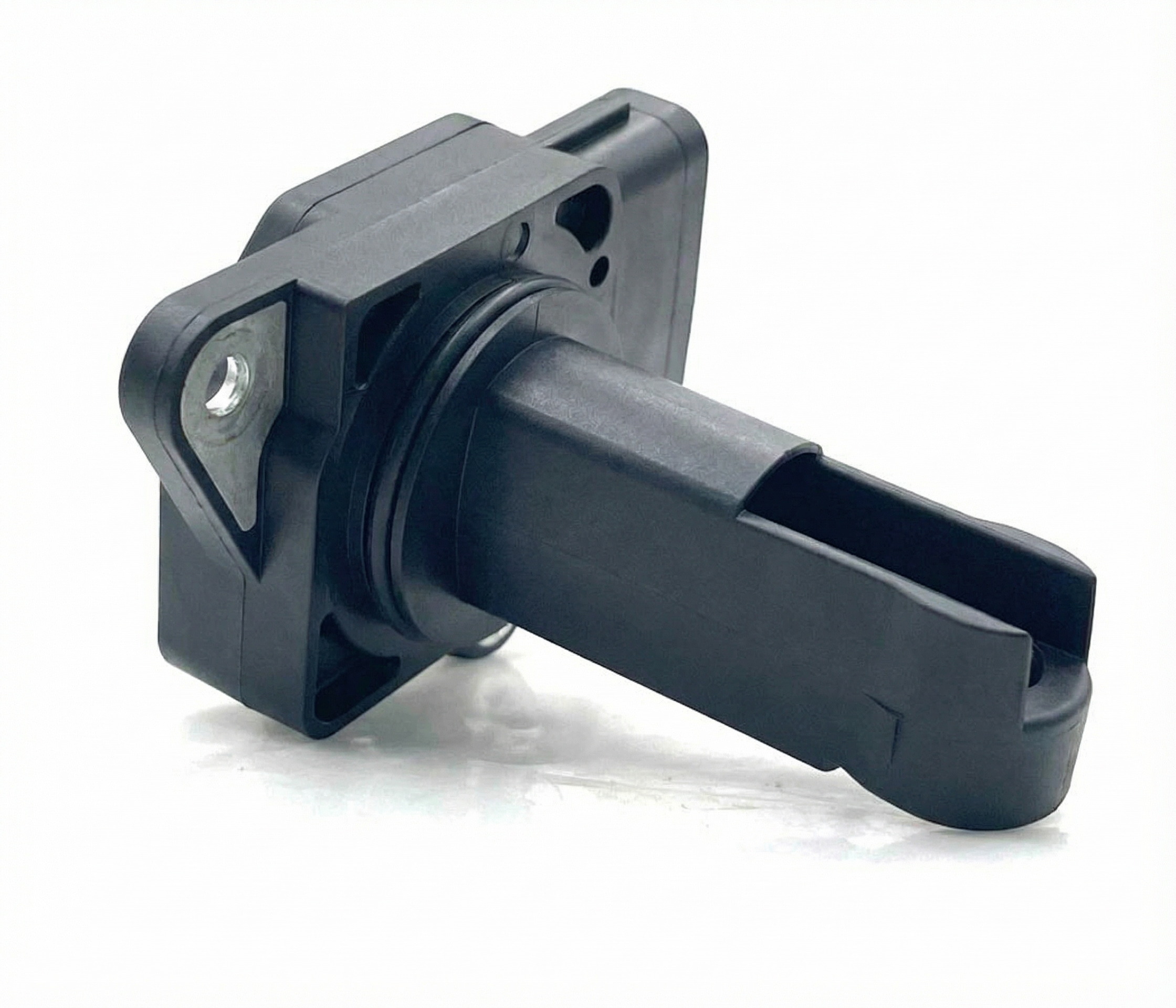
Est. part cost: $20-$200 (depending on the leaking part) - Faulty Mass Airflow (MAF) Sensor ⚪ Low Probability → Shop Fuel Injection Air Flow Meter
How to confirm: If cleaning the sensor and confirming there are no vacuum leaks does not resolve the code, the sensor itself may have failed electronically. This can be confirmed by monitoring live data on a scan tool to see if readings are erratic, non-responsive, or stuck. If the code returns quickly after cleaning and ruling out leaks, the sensor is suspect.
Typical fix: Replace the MAF sensor. The OEM sensor is made by Bosch. It is held in place by two T25 Torx screws.
Est. part cost: $150-$250 (OEM Bosch), $70-$150 (aftermarket)
Rare But Worth Checking
- Clogged Catalytic Converter: A restricted exhaust can cause excessive backpressure, throwing off the engine's airflow characteristics and fooling the ECM into setting a P0101 code. This is usually accompanied by a severe lack of power, especially at high RPM.
- Dirty Air Filter: → Shop Air Cleaner Assembly A severely clogged air filter can restrict airflow enough to cause the MAF sensor's readings to be lower than expected, potentially triggering the code. This is a basic maintenance item that should be checked first.
Diagnosis Steps
- Read Codes: Use an OBD-II scanner to confirm P0101 and check for other codes like P0171.
- Listen for Leaks: Start the engine and listen for a distinct, loud whistling or howling sound. If present, this strongly indicates a torn PCV diaphragm.
- Perform PCV Check: With the engine running, carefully try to remove the oil filler cap or pull the dipstick. If it is held on by strong vacuum or if removing it stops the whistling, the PCV system has failed and is the most likely culprit.
- Inspect Air Intake Duct: Check the large flexible hose between the air filter box/MAF sensor and the engine throttle body for any cracks, tears, or loose connections. Ensure clamps are tight.
- Clean the MAF Sensor: If no obvious PCV leak is found, the next step is to clean the MAF. Disconnect the battery. Remove the sensor (two T25 Torx screws) from the airbox lid. Spray the internal wires generously with dedicated MAF cleaner. Do not touch the wires. Let it air dry completely before reinstalling.
- Clear Codes and Test Drive: Reconnect everything, clear the codes, and drive the vehicle for at least 15-20 minutes under various conditions (idle, acceleration, cruise).
- Perform a Smoke Test: If the code returns, a smoke test is the most definitive way to find the source of the unmetered air. Introduce smoke into the intake system and look for leaks, paying close attention to the PCV oil trap assembly, intake manifold gaskets, and all vacuum hoses.
- Check Live Data: If no leaks are found, use a scan tool to monitor the MAF sensor's output in grams/second (g/s). At a stable, warm idle, the reading should be around 3.5-5.0 g/s. The reading should increase smoothly and instantly with throttle application, reaching 15-25 g/s or higher at 2500 RPM. If the signal is erratic, stuck, or does not respond, the sensor is likely faulty.
- Replace MAF Sensor: If all other steps fail to resolve the issue, replace the MAF sensor with a quality OEM or equivalent part.
Parts You'll Likely Need
- PCV Oil Trap Diaphragm Kit
(OEM #LR023777)— This is the most common failure point on the 3.2L engine leading to a vacuum leak that triggers P0101. Replacing just the diaphragm is a very cost-effective fix. This is a Land Rover part number that fits the Volvo engine perfectly.
Trusted brands: URO Parts, Dorman (917-147), Various aftermarket
OEM price range: $30-$50
Aftermarket price range: $15-$30 - Mass Airflow Sensor
(OEM #0280218088)— If cleaning the sensor doesn't work and no vacuum leaks are present, the sensor itself may have failed. The OEM part is made by Bosch.
Trusted brands: Bosch (OEM), Denso, Delphi
OEM price range: $150-$250
Aftermarket price range: $70-$150 - PCV Oil Trap Assembly
(OEM #31319643)— If the housing of the oil trap is cracked or the user prefers to replace the entire unit rather than just the diaphragm, this complete assembly is required.
Trusted brands: Volvo (OEM), APA/URO Parts
OEM price range: $200-$250
Aftermarket price range: $120-$180 - Mass Airflow Sensor Cleaner — Required for the first and most cost-effective diagnostic step: cleaning the MAF sensor elements.
Trusted brands: CRC Mass Air Flow Sensor Cleaner, WD-40 Specialist MAF Sensor Cleaner
Aftermarket price range: $10-$15
Related Codes That Often Appear With This One
- P0171 — System Too Lean (Bank 1). This code is often seen with P0101 because a vacuum leak allows unmetered air into the engine, creating a lean air/fuel mixture that the oxygen sensors detect. The ECM's attempt to correct this lean condition by adding more fuel, while the MAF reports low air volume, is what triggers the P0101.
Platform-Specific Known Issues
- The PCV system on the 3.2L I6 engine is integrated into the valve cover/oil trap assembly and is a known high-failure item. The diaphragm tears, creating a significant vacuum leak that often manifests as a P0101 code.
Mechanic-Grade Diagnostic Values
- Mass Airflow (MAF) Sensor Reading at Idle — expected: 2 to 7 g/s (grams per second) on a scan tool. For the 3.2L I6, a healthy reading is typically in the 3.5-5.0 g/s range at warm idle.. Failure: A reading that is stuck, erratic, or significantly outside the expected range. A torn PCV diaphragm will cause high fuel trims while the MAF reading remains illogically low for the engine speed.
- Mass Airflow (MAF) Sensor Reading at 2500 RPM — expected: 15 to 25 g/s, increasing smoothly with RPM.. Failure: A non-linear response, flat-lining, or jumpy readings as RPMs increase.
- MAF Sensor Signal Voltage at Idle — expected: Approximately 0.7-1.0 Volts DC when back-probing the signal wire.. Failure: Voltage that is stuck at 0V, 5V, or does not increase smoothly when the throttle is applied.
Hidden / Shadow Codes Worth Checking
- ECM-2110: Mass air flow (MAF) sensor - Flow too high / Flow too low. This is the Volvo-specific Diagnostic Trouble Code (DTC) that corresponds to the generic P0101 code. (see via Volvo's diagnostic software (VIDA) or a professional-grade scanner capable of reading manufacturer-specific codes.)
Scan Tool Commands That Help
- Volvo VIDA: Graphing MAF sensor data (g/s) vs. Engine RPM — This is the primary function used to diagnose a faulty MAF sensor. After confirming no vacuum leaks, a technician will use VIDA to monitor the live data stream. A healthy sensor shows a smooth, linear increase in airflow corresponding to RPM. A faulty sensor may show a flat line, erratic jumps, or readings that don't correlate with engine speed.
- Volvo VIDA: Resetting Engine Adaptations — After replacing the MAF sensor or fixing a major vacuum leak (like the PCV system), it is best practice to reset the engine's long-term and short-term fuel trim adaptations. This forces the ECM to relearn the air/fuel mixture parameters with the new/corrected components, leading to a faster return to normal operation.
Wiring & Ground Locations
- Main Engine Ground Strap — Runs from the chassis rail, located under the battery tray, to the gearbox/transmission housing.. A corroded or loose main ground strap is a known issue on this platform that can cause a wide range of erratic electrical faults, including incorrect sensor readings from the MAF and other engine sensors. This can lead to a P0101 code even if the sensor itself is good.
- MAF Sensor Connector — On the air filter housing lid, connecting to the MAF sensor. It is a 5-pin connector on this engine.. The connector pins can become corroded or the wiring can get damaged, leading to a loss of signal, power, or ground to the MAF sensor, directly causing a P0101 code. Wiggling the connector while monitoring live data can sometimes reveal a poor connection.
Real Owner Repair Stories
- YouTube channel 'Fun with Cars' (Volvo XC60 (similar platform and MAF system)) — Car stalled out after hitting a big bump in the road, P0101 code was present.
❌ Tried (didn't work) Initial check of battery and cables.
✅ What actually fixed it The large air intake hose had been knocked off the throttle body by the impact of the bump. This created a massive unmetered air leak after the MAF sensor. Reattaching the hose and tightening the clamp resolved the issue completely. - Reddit user comment (Unspecified Volvo with P0101) — P0101 code, emissions didn't match MAF reading.
❌ Tried (didn't work) Initial suspicion was a vacuum leak.
✅ What actually fixed it The issue was a failing fuel pump. The P0101 was set because there was not enough fuel being delivered for the amount of air the MAF was measuring, leading the ECU to believe the MAF reading was out of range.
"I Checked Everything" — The Actual Cause
- In some cases, a P0101 code can be triggered by a failing fuel pump. A smoke test will show no vacuum leaks, and cleaning or replacing the MAF will not fix the issue. The ECM flags the MAF performance because the air-fuel ratio is incorrect (too lean) due to low fuel pressure, but it incorrectly attributes the mismatch to an airflow reading problem rather than a fuel delivery problem.
OEM Part Supersession History
30757664, 30788442, 30788484→31319643— Standard part evolution and consolidation by Volvo.
Diagnostic Flowchart
Other Known Issues on This Vehicle
Issues unrelated to this code that are worth knowing about as an owner of this generation:
- Rear Differential Pinion Bearing Failure 🔴 High — Common on higher mileage (100k+ miles) first-generation XC90s. Presents as a whining or droning noise from the rear, especially on deceleration.
- Serpentine/Accessory Belt Tensioner and Idler Pulley Failure 🔴 High — The tensioner or idler pulley can fail, causing the belt to shred. In a worst-case scenario, the belt can get ingested by the crankshaft pulley, damaging the timing cover and potentially causing the timing chain to jump, leading to catastrophic engine damage. (Ref: While no specific TSB was found for the 3.2L, this is a widely documented failure mode for Volvo inline engines of this era.)
- Vacuum Pump Oil Leak 🟠 Medium — The seals on the brake vacuum pump, located on the end of the cylinder head, can harden and leak oil down the back of the engine. It's often misdiagnosed as a rear main seal leak.
- Central Electronic Module (CEM) Failure 🔴 High — More common on earlier 2003-2004 models but can still occur. A design flaw can lead to overheating, causing a wide range of bizarre electrical issues, instrument cluster failure, and no-start conditions.
Used vs. New Parts: Buying Guide for This Vehicle
When a used part is the smart pick: For this repair, using used parts is generally not recommended for the key components. However, a used air intake boot (the large hose between the airbox and throttle body) from a low-mileage donor vehicle can be a cost-effective replacement if yours is cracked, as it is a simple rubber/plastic part with no electronic or wear-prone mechanical components.
Donor-vehicle mileage cap: roughly under 80000 miles for the part to have meaningful remaining life.
What to inspect on the donor part:
- For an intake boot: Check thoroughly for any hairline cracks, especially in the accordion sections.
- Ensure the rubber is still pliable and not hard or brittle.
- Verify the donor vehicle shows no signs of a front-end collision that could have stressed the part.
OEM-only on this vehicle (don't cheap out):
- Mass Airflow (MAF) Sensor: Aftermarket MAF sensors are notoriously unreliable for European vehicles. They often have slightly different calibration curves that can cause persistent performance issues or trigger codes. Sticking with the OEM Bosch sensor is highly recommended.
- PCV Oil Trap Assembly/Diaphragm: While some aftermarket brands like Dorman or URO are functional, the cost savings are minimal compared to the OEM/Land Rover part, and the quality of the rubber diaphragm is critical. Given the labor to access it, using a known-good part is wise to avoid repeat repairs.
Aftermarket brands forum-validated for this vehicle:
- Bosch (for MAF Sensor - this is the Original Equipment Manufacturer)
- Land Rover (for PCV Diaphragm Kit, PN LR023777, which is OEM-equivalent for the Volvo 3.2L)
Brands owners have reported issues with on this vehicle:
- No-name, unbranded MAF sensors from online marketplaces. These are a very common source of unresolved P0101 codes after a replacement.
Real Owner Stories
Aggregated from forums and TSBs cited above. Mileages and costs reflect what owners reported in those sources.
Volvo XC90 3.2L I6
Symptoms: Classic P0101 code accompanied by a whistling symptom from the engine.
What fixed it: Diagnosis confirmed a failed PCV diaphragm.
Source hint: VolvoForums UK thread titled 'https://www.volvoforums.org.uk/showthread.php?t=281829'
Volvo XC90 3.2L I6
Symptoms: P0101 MAF error code; owner replaced the MAF sensor but the code returned.
What fixed it: The community suggested checking for vacuum leaks or cleaning the MAF connector rather than just replacing the sensor.
Source hint: VolvoXC.com thread titled 'p0101-maf-error-code.31357'
Volvo XC90 3.2L I6 — ~100000 miles
Symptoms: Loud whistling/howling sound from the top of the engine near the oil filter and a strong vacuum holding the oil cap down.
What fixed it: Replacement of the PCV diaphragm membrane using the Land Rover part kit.
Source hint: YouTube video by 'Fix It Angel' showing PCV diaphragm replacement
Related OBD-II Codes
Frequently Asked Questions
My XC90 3.2L is making a loud whistling noise at idle and has a P0101 code. Is the MAF sensor definitely bad?
Is there a cheaper way to fix the PCV issue on my 2007-2014 XC90 than replacing the whole oil filter housing?
How can I tell if the PCV diaphragm is the cause of my P0101 without special tools?
What should the MAF sensor readings look like on a scan tool for the 3.2L engine?
Can a loose intake hose cause the P0101 code on this Volvo?
What kind of cleaner should I use on the XC90 MAF sensor?
Helpful Videos
We Have This Part in Stock

The information in this article is provided for general reference and educational purposes only. Vehicle specifications, procedures, and part compatibility can vary by production date, trim level, and region. Always consult your vehicle's factory service manual and verify part numbers before purchasing or performing repairs. Safety-critical components such as airbags, seat belts, and braking systems should be installed by a qualified professional.
- Volvo XC90:
- 🧭 Diagnostic Flowchart
- 🎬 Helpful Videos
- 🛍️ Shop This Part
- What's Unique About the 2007-2014 Volvo XC90
- Symptoms You May Notice
- Most Likely Causes
- Rare But Worth Checking
- Diagnosis Steps
- Parts You'll Likely Need
- Related Codes That Often Appear With This One
- Platform-Specific Known Issues
- Mechanic-Grade Diagnostic Values
- Hidden / Shadow Codes Worth Checking
- Scan Tool Commands That Help
- Wiring & Ground Locations
- Real Owner Repair Stories
- "I Checked Everything" — The Actual Cause
- OEM Part Supersession History
- Other Known Issues on This Vehicle
- Used vs. New Parts: Buying Guide for This Vehicle
- Real Owner Stories
- Volvo XC90 3.2L I6
- Volvo XC90 3.2L I6
- Volvo XC90 3.2L I6 — ~100000 miles
- Related OBD-II Codes
- Frequently Asked Questions
- 🎟️ Get 5% Off