

P0102 on 2006-2013 Audi A3 2.0L TFSI: MAF Circuit Low Causes and Fixes
P0102 on a 2006-2013 Audi A3 2.0L TFSI most often indicates a dirty or failed Mass Airflow (MAF) sensor, a failed PCV valve, or a vacuum leak. Cleaning the sensor is a good first step. If that fails, a new Bosch OEM-quality sensor is the most common fix. A failed PCV valve is an extremely common cause of this code on the 2.0T engine and should be inspected early in the diagnostic process.
- P0102 on your A3 means the MAF sensor is reporting too little airflow to the engine's computer.
- Before buying any parts, first try cleaning the MAF sensor with dedicated cleaner and inspect the air filter.
- A very common cause for this code on the 2.0T engine is a vacuum leak. A professional smoke test is the best way to find it.
- If the sensor must be replaced, use a high-quality OEM brand like Bosch to avoid further issues.
- This is a DIY-friendly repair that can save you significant labor costs.
What's Unique About the 2006-2013 Audi A3
The 2.0L TFSI engine in the Audi A3 (8P generation) is known for its precise fuel injection system, which relies heavily on accurate MAF sensor readings. This generation spans two different engine designs: the earlier EA113 (timing belt, ~2006-2008.5, engine codes like BPY) and the later EA888 (timing chain, ~2008.5-2013, engine codes like CCTA). Both are particularly susceptible to vacuum leaks from a failed PCV (Positive Crankcase Ventilation) valve, which is a very common failure point. This failure creates a significant unmetered air leak, directly causing the MAF to report low airflow (P0102) while the oxygen sensors detect a lean condition (P0171). Owners often find that what appears to be a sensor issue is actually the PCV valve or another vacuum leak.
Symptoms You May Notice
- Check Engine Light is on
- Rough or unstable idle
- Engine hesitation or stumbling during acceleration
- Sluggish acceleration and reduced engine power
- Poor fuel economy
- Stalling, especially when coming to a stop
- Black smoke from the exhaust
- Whistling or 'honking' noise from the engine bay (indicates PCV failure)
- Replacing the MAF sensor without first checking for vacuum leaks, especially from the PCV valve. A smoke test is crucial on these engines as unmetered air is a very common cause of this code.
- Replacing oxygen sensors. While a bad air-fuel mixture can affect O2 sensor readings, they are not the root cause of a P0102 code.
Most Likely Causes
- Failed PCV Valve 🔴 High Probability The diaphragm inside the PCV valve is made of a soft material that is notorious for tearing or failing, especially on tuned engines. This creates a large internal vacuum leak. This is arguably the most common cause for a P0102, especially when paired with P0171.
How to confirm: With the engine running, try to remove the oil filler cap. If there is strong suction making it difficult to remove, the PCV valve has likely failed. You may also hear a hissing or whistling sound from the PCV valve itself. A smoke test will definitively show a leak from the PCV system.
Typical fix: Replace the PCV valve assembly. It is located on top of the valve cover. Aftermarket repair kits for just the diaphragm are available, but replacing the entire assembly is often recommended.
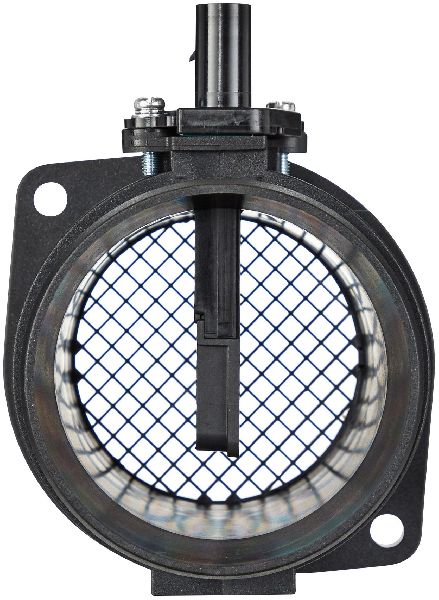
Est. part cost: $120-$180 for an OEM PCV assembly. - Dirty or Contaminated MAF Sensor 🔴 High Probability → Shop Fuel Injection Air Flow Meter Oil vapor from the PCV system or fine dust bypassing a worn air filter can coat the sensor's delicate hot wire, insulating it and causing it to read low airflow.
How to confirm: Visually inspect the MAF sensor wires (located inside the sensor housing) for a film of dirt or oil. The wires should be clean.
Typical fix: Remove the sensor and clean it carefully using only dedicated MAF sensor cleaner spray. Do not touch the wires. This is a good first step due to its low cost.
Est. part cost: $10-$15 for a can of MAF cleaner. - Failed MAF Sensor 🟡 Medium Probability → Shop Fuel Injection Air Flow Meter
How to confirm: If cleaning the sensor doesn't resolve the code, and wiring/vacuum leaks are ruled out, the sensor's internal electronics have likely failed. A diagnostic scanner (like VCDS) can monitor the MAF reading in grams/second; if it's stuck at a very low number (e.g., <1 g/s) or doesn't increase with RPM, the sensor is bad. Unplugging the MAF sensor may cause the engine to run better, which strongly points to a failed sensor.
Typical fix: Replace the MAF sensor. It is highly recommended to use an OEM or OEM-supplier part (Bosch) to ensure correct calibration. Aftermarket sensors are known to cause issues.
Est. part cost: $150-$250 - Vacuum Leak (other than PCV) 🟡 Medium Probability The 2.0T engine has numerous vacuum lines and gaskets (intake manifold, breather tubes, etc.) that can crack or fail with age and heat, allowing unmetered air to enter the engine after the MAF sensor.
How to confirm: Perform a smoke test on the intake system to visually identify where smoke is escaping. Listen for hissing sounds around the engine bay at idle. A P0171 (System Too Lean) code is often present alongside P0102 when a vacuum leak is the cause.
Typical fix: Identify and replace the cracked or broken vacuum hose, gasket, or faulty component.
Est. part cost: $20-$150 depending on the leaking component. - Clogged or Dirty Air Filter ⚪ Low Probability → Shop Air Cleaner Assembly
How to confirm: Remove and visually inspect the engine air filter. If it is black, filled with debris, or wet, it is restricting airflow.
Typical fix: Replace the engine air filter.
Est. part cost: $20-$40 - Wiring or Connector Issue ⚪ Low Probability
How to confirm: Inspect the MAF sensor connector for corrosion or loose pins. Check the wiring harness for any visible damage, breaks, or shorts. Use a multimeter to verify power (12V), ground, and signal voltage at the connector with the key on.
Typical fix: Clean the connector contacts or repair the damaged section of the wiring harness.
Est. part cost: $5-$100 depending on the extent of the repair.
Rare But Worth Checking
- Clogged Catalytic Converter: A severely clogged catalytic converter can create excessive backpressure, restricting airflow through the engine and potentially causing a low MAF reading. This is usually accompanied by a significant loss of power and possibly other codes like P0420.
- Faulty Engine Control Module (ECM): In very rare cases, the ECM itself can be the source of the problem, failing to correctly interpret the signal from a good MAF sensor. This should only be considered after all other possibilities have been exhausted.
Diagnosis Steps
- Read Codes & Check Freeze Frame: Use an OBD-II scanner to confirm P0102. Note any other codes, especially P0171, P0507, or P2279, as this strongly suggests a vacuum leak.
- Inspect PCV System: With the engine idling, listen for a whistle from the PCV valve. Carefully try to lift the oil filler cap; if strong vacuum holds it down, the PCV diaphragm has likely failed and needs replacement.
- Inspect Air Intake System: Check the entire air intake path from the air filter to the throttle body for any obvious cracks, loose clamps, or disconnected hoses.
- Clean the MAF Sensor: Disconnect the sensor, remove it, and spray the internal wires with dedicated MAF sensor cleaner. Let it dry completely before reinstalling. Clear codes and test drive.
- Perform Smoke Test: If the code returns, perform a smoke test. This is the most effective way to find vacuum leaks from sources like cracked hoses, intake manifold gaskets, or a failed PCV valve.
- Check MAF Sensor Data: Use a VCDS or similar scanner to monitor MAF readings (g/s) at idle (should be ~2-4 g/s) and during acceleration (should increase smoothly with RPM). If readings are stuck low or erratic, the sensor is likely faulty.
- Test MAF Sensor Wiring: If the sensor data is illogical, use a multimeter to check for 12V power, good ground, and a 5V reference signal at the MAF sensor connector with the key on, engine off.
- Replace the MAF Sensor: If all other steps fail, the MAF sensor itself has likely failed. Replace it with a genuine Bosch part.
Parts You'll Likely Need
- Mass Airflow (MAF) Sensor
(OEM #06F906461A (for EA113 engine, ~06-08.5) / 06J906461D (for EA888 engine, ~08.5-13))— This is a common failed component after cleaning and checking for vacuum leaks have been performed. Part number is engine-specific.
Trusted brands: Bosch
OEM price range: $180-$250
Aftermarket price range: $70-$150 - PCV Valve / Oil Separator
(OEM #06F129101P (or similar revisions))— Extremely common failure point on the 2.0T engine, causing a major vacuum leak that triggers P0102 and P0171.
Trusted brands: OEM VW/Audi, Vaico
OEM price range: $120-$180
Aftermarket price range: $40-$80 - MAF Sensor Cleaner — Often, the sensor is just dirty and cleaning it is the cheapest and easiest first step in diagnosis.
Related Codes That Often Appear With This One
- P0171 — This code for 'System Too Lean (Bank 1)' often appears with P0102 because a vacuum leak (most commonly the PCV valve) allows extra, unmeasured air into the engine. The MAF sensor reports low air (P0102), but the oxygen sensors detect the excess air in the exhaust, flagging a lean condition (P0171).
- P0507 — 'Idle Control System RPM Higher Than Expected' can be triggered by the same vacuum leak causing P0102, as the unmetered air causes the engine to idle at a higher speed than the ECM commands.
- P2279 — 'Intake Air System Leak' is a direct confirmation of the vacuum leak that is also causing the P0102 code.
Technical Service Bulletins (TSBs) & Recalls
- While no specific TSB for P0102 was found, Audi TSB 2025272/5 is noted for addressing issues with the PCV valve, which is a primary cause of P0102. This TSB deals with crankcase vacuum issues that can trigger MAF-related codes.
Platform-Specific Known Issues
- PCV Valve Diaphragm Failure: The diaphragm inside the PCV valve is a known weak point that frequently tears, causing a loud whistling or 'honking' noise and a significant vacuum leak. This is a primary cause of P0102 on this platform. One owner on a forum noted that after getting P0102 and P0171, the fix was a new PCV valve after they noticed a loud suction when removing the oil cap.
- Owner Experience: MAF vs. PCV: A common story on Audizine forums involves an owner first replacing the MAF sensor for P0102 with no success. After more research, they check the PCV valve and find it has failed. Replacing the PCV valve for ~$150 finally resolves the code. This highlights the importance of diagnosing the PCV system before buying an expensive MAF sensor.
Mechanic-Grade Diagnostic Values
- MAF Sensor Reading at Idle (VCDS Measuring Block 002) — expected: 2.0 - 4.0 g/s. Failure: A reading that is static (e.g., stuck at 0 or a fixed number) or does not increase smoothly when the engine is revved.
- Long Term Fuel Trim at Idle (VCDS Measuring Block 032, Field 1 - Additive) — expected: -5% to +5%. Failure: A high positive value (e.g., > +10%) indicates the ECU is adding significant fuel to compensate for unmetered air, strongly suggesting a vacuum leak.
- Long Term Fuel Trim Above Idle (VCDS Measuring Block 032, Field 2 - Multiplicative) — expected: -5% to +5%. Failure: A high positive value here can also indicate a vacuum leak or a MAF sensor that is under-reporting airflow at higher RPMs.
- MAF Sensor Connector Voltage (Key On, Engine Off) — expected: Pin 2: ~12V (Battery Voltage), Pin 3: <0.1V (Ground), Pin 4: ~5V (Signal Reference).. Failure: Missing voltage or high resistance on the ground pin points to a wiring or ECM issue, not a failed sensor.
Scan Tool Commands That Help
- VCDS (VAG-COM): View Measuring Value Blocks (MVB) — Essential for diagnosing P0102. Use Block 002 to view live MAF (G70) sensor readings in g/s. Use Block 032 to check short-term and long-term fuel trims. High positive fuel trims alongside P0102 almost always confirm an unmetered air leak.
Wiring & Ground Locations
- MAF Sensor Connector (G70) — On the air intake tube, between the air filter box and the turbo inlet pipe.. This connector is the primary interface for the sensor. Checking for 12V power, 5V reference, and a solid ground at its pins is a fundamental step in ruling out wiring issues before replacing the sensor.
- Main Engine-to-Chassis Ground Strap — Typically located on the driver's side of the engine bay, connecting the engine block or transmission to the chassis frame rail, near the subframe.. A corroded or loose main ground strap can cause erratic voltage and floating grounds for all engine sensors, including the MAF. This can lead to incorrect readings and codes like P0102 that are difficult to trace.
- Ignition Coil Grounding Points — On the valve cover, where the ignition coil harnesses are grounded.. While not directly related to the MAF circuit, poor grounds here can cause electrical noise and misfires, which can sometimes be misdiagnosed or occur concurrently with MAF issues.
Real Owner Repair Stories
- Multiple VW/Audi forum threads (2009 VW CC 2.0T (EA888 engine)) — Check engine light with P0171 (System Lean) and sometimes P119A. Rough idle.
❌ Tried (didn't work) Replacing MAF sensor, Replacing O2 sensors, Cleaning throttle body
✅ What actually fixed it A failed rear main seal was causing a massive unmetered air leak into the crankcase. A smoke test performed through the oil filler neck revealed smoke billowing out from between the engine and transmission. Replacing the rear main seal and the PCV valve (as the failed PCV often causes the seal to fail) resolved the lean codes. - AudiForums.com user report (2008 Audi A5 2.0T) — P0102 and poor engine performance.
❌ Tried (didn't work) Cleaning MAF sensor, Visual inspection of intake hoses
✅ What actually fixed it A smoke test revealed a hairline crack on the plastic intake manifold that was not visible to the naked eye. The crack would only open under certain temperature and vibration conditions, allowing unmetered air in. Replacing the intake manifold fixed the code. - YouTube user comment (2008 Infiniti G35 (example of a common issue)) — Persistent P0102 code for over a year.
❌ Tried (didn't work) Cleaning air filters, Replacing MAF sensor, Cleaning throttle body, Replacing intake hose
✅ What actually fixed it The user's comment illustrates a common frustration where all standard fixes fail, often pointing towards an underlying, difficult-to-find vacuum leak or a wiring issue that was not resolved. The final fix was not posted, but the story is a valuable lesson in diagnostic persistence. - YouTube DIY video (Audi A3 2.0T FSI) — Loud whining noise after installing a new air intake, followed by P0102.
❌ Tried (didn't work) Initially suspecting a bearing failure or intake leak.
✅ What actually fixed it The original diaphragm-style turbo diverter valve had failed, causing a boost leak. The installation of the new intake may have exacerbated the symptoms. Replacing the diverter valve with an updated piston-style unit resolved the issue.
"I Checked Everything" — The Actual Cause
- The most common scenario for this pattern on the 2.0T engine is a failed rear main seal. A standard smoke test pressurizes the intake tract from the throttle body, which will not reveal a leak in the crankcase. However, the failed PCV system puts the crankcase under intense vacuum at idle, causing unmetered air to be sucked in past the lips of the rear main seal. The proper way to test for this is to introduce smoke into the crankcase itself (via the oil filler or dipstick tube) and look for smoke exiting between the engine and transmission bellhousing.
- A cracked plastic intake manifold can pass a cold smoke test but leak air once the engine warms up and the plastic expands, or under the vibration of normal driving. This can be an extremely frustrating intermittent fault to diagnose.
OEM Part Supersession History
06F129101C, 06F129101F, 06F129101L, 06F129101N→06F129101P, 06F129101R— These are part numbers for the PCV valve on the EA113 engine. The earlier revisions used a diaphragm that was extremely prone to tearing. The later revisions (P and R) are more durable, but still considered a maintenance item.
Heads up: Always purchase the latest revision available (e.g., 'R'). While older revisions will fit, they are guaranteed to fail prematurely.
Model Year Variations Within This Range
- 2006-2008.5: These vehicles use the EA113 engine (e.g., BPY code), which has a timing belt and a specific MAF sensor (06F906461A). This engine is also known for wear on the high-pressure fuel pump's cam follower, which is a critical maintenance item.
- 2008.5-2013: These vehicles use the EA888 Gen 1 engine (e.g., CCTA code), which has a timing chain and a different MAF sensor (06J906461D). The PCV system design is different, though still a common failure point. The HPFP cam follower issue from the EA113 was resolved with a roller design.
Diagnostic Flowchart
Other Known Issues on This Vehicle
Issues unrelated to this code that are worth knowing about as an owner of this generation:
- HPFP Cam Follower Wear (EA113 Engine) 🔴 High — Very common on the 2006-2008.5 BPY engine. Should be inspected every 20,000-30,000 miles. Failure can cause catastrophic engine damage. (Ref: Past warranty extensions existed but are now expired.)
- Timing Chain Tensioner Failure (EA888 Engine) 🔴 High — Common on 2008.5-2012 CCTA/CBFA engines with the original tensioner design. Failure is sudden and causes catastrophic engine damage. An updated tensioner part is available and is a critical preventative repair. (Ref: A class-action lawsuit was settled, but recalls were not issued for all vehicles. TSBs exist for identification.)
- Excessive Oil Consumption 🟠 Medium — Affects both engines but is particularly notorious on the EA888 due to piston ring design. Owners may report consuming a quart of oil every 1,000-2,000 miles. (Ref: Class-action lawsuits have addressed this issue, but fixes are expensive out-of-warranty (piston replacement).)
- Diverter Valve (DV) Failure 🟠 Medium → Shop Turbocharger — The original diaphragm-style DV is prone to tearing, causing a loss of boost pressure. This is a common failure on tuned and even stock cars. (Ref: An updated piston-style DV is the common fix.)
- Intake Manifold Runner Flap Issues 🟡 Low → Shop Engine Intake Manifold — The plastic intake manifold's runner flaps can fail or get stuck, causing running issues and specific fault codes. The manifold often needs to be replaced.
Used vs. New Parts: Buying Guide for This Vehicle
When a used part is the smart pick: For this specific repair, using used parts is generally not recommended for the primary culprits. However, if a related hard part like the intake manifold is confirmed to be cracked, a used OEM manifold from a reputable salvage yard can be a cost-effective solution compared to a new one.
Donor-vehicle mileage cap: roughly under 80000 miles for the part to have meaningful remaining life.
What to inspect on the donor part:
- For an intake manifold, ensure there are no visible cracks, especially around the seams and mounting points.
- Verify the donor vehicle was not in a front-end collision that could have stressed plastic components.
- Check that all threaded inserts and vacuum line ports are intact and not stripped.
OEM-only on this vehicle (don't cheap out):
- Mass Airflow (MAF) Sensor: Aftermarket MAF sensors for German vehicles are notoriously unreliable. They often have incorrect calibration out of the box, leading to persistent or new drivability issues. Always use a Bosch (OEM supplier) or genuine VW/Audi part.
- PCV Valve / Oil Separator: Given the high failure rate and the critical function of this part, and the multiple revisions made to improve it, installing a used PCV valve is asking for a repeat failure. Always buy the latest revision new from an OEM or OEM supplier.
Aftermarket brands forum-validated for this vehicle:
- Bosch for the MAF sensor (as they are the original equipment manufacturer).
- Vaico is a reputable aftermarket supplier for the PCV valve if an OEM part is unavailable.
Brands owners have reported issues with on this vehicle:
- Unbranded, no-name MAF sensors from online marketplaces. These are a very common cause of misdiagnosis and repeat repairs.
Real Owner Stories
Aggregated from forums and TSBs cited above. Mileages and costs reflect what owners reported in those sources.
2006-2013 Audi A3 2.0T
Symptoms: Owner first replaced the MAF sensor for P0102 with no success. After further research, they noticed a loud suction when removing the oil cap.
What fixed it: Replacing the PCV valve assembly.
Cost: $120-$180
Source hint: vehicle_specific_issues: Owner Experience: MAF vs. PCV
2007 Audi A3 8P 2.0T
Symptoms: P0102 and P0171 codes appearing together; owner suspected either the MAF or a vacuum leak.
What fixed it: New PCV valve after noticing loud suction when removing the oil cap.
Source hint: https://www.audizine.com/forum/showthread.php/543416-A3-8P-P0102-and-P0171-MAF-or-Vacuum-Leak
Related OBD-II Codes
Frequently Asked Questions
Is there an Audi TSB that addresses the vacuum issues causing my P0102 code?
My A3 is making a loud whistling noise from the engine bay along with the P0102 code. What is likely wrong?
Should I buy an aftermarket MAF sensor for my 2006-2013 Audi A3?
How can I tell if my PCV valve is the reason for the P0102 code without special tools?
Can a dirty air filter cause a P0102 on my 2.0L TFSI?
Why did my mechanic suggest cleaning the MAF sensor before replacing it?
Helpful Videos
![How to Fix P0102 Engine Code in 2 Minutes [1 DIY Method / Only $9.61]](https://img.youtube.com/vi/njuKIQ8d83Y/mqdefault.jpg)

Used OEM Parts in Stock
New Aftermarket Parts Available

The information in this article is provided for general reference and educational purposes only. Vehicle specifications, procedures, and part compatibility can vary by production date, trim level, and region. Always consult your vehicle's factory service manual and verify part numbers before purchasing or performing repairs. Safety-critical components such as airbags, seat belts, and braking systems should be installed by a qualified professional.
- Audi A3:
- 🧭 Diagnostic Flowchart
- 🎬 Helpful Videos
- 🛍️ Shop This Part
- What's Unique About the 2006-2013 Audi A3
- Symptoms You May Notice
- Most Likely Causes
- Rare But Worth Checking
- Diagnosis Steps
- Parts You'll Likely Need
- Related Codes That Often Appear With This One
- Technical Service Bulletins (TSBs) & Recalls
- Platform-Specific Known Issues
- Mechanic-Grade Diagnostic Values
- Scan Tool Commands That Help
- Wiring & Ground Locations
- Real Owner Repair Stories
- "I Checked Everything" — The Actual Cause
- OEM Part Supersession History
- Model Year Variations Within This Range
- Other Known Issues on This Vehicle
- Used vs. New Parts: Buying Guide for This Vehicle
- Real Owner Stories
- 2006-2013 Audi A3 2.0T
- 2007 Audi A3 8P 2.0T
- Related OBD-II Codes
- Frequently Asked Questions
- 🎟️ Get 5% Off