

P0102 on 1999-2004 Porsche 911 (996): MAF Circuit Low Causes and Fixes
On a 1999-2004 Porsche 911, code P0102 almost always points to a dirty or failed Mass Airflow (MAF) sensor. Cleaning the sensor with a dedicated MAF cleaner is the first step. If that fails, replacement with a quality Bosch unit with the correct part number for your engine (3.4L vs 3.6L) is the most common fix. Vacuum leaks, especially from the Air-Oil Separator (AOS), are another frequent cause.
- P0102 on a 996-era 911 means the MAF sensor signal is too low.
- Your first and cheapest step is to clean the MAF sensor with a dedicated cleaner.
- If you must replace the sensor, use only a genuine Porsche or OEM Bosch part to avoid future problems.
- Before replacing the sensor, check for simple issues like a disconnected plug, a dirty air filter, or a vacuum leak.
- The repair is DIY-friendly, typically requiring only a T20 security Torx driver and MAF cleaner.
What's Unique About the 1999-2004 Porsche 911
The M96 engine in the 996-generation 911 is notoriously sensitive to MAF sensor readings. Owners report that these sensors can become contaminated easily, especially if an oiled aftermarket air filter is used or if the Air-Oil Separator (AOS) is failing and allowing oil vapor into the intake. While the cause is often a simple dirty sensor, the M96 is particular about the replacement part; using a genuine Porsche or OEM Bosch sensor is highly recommended by enthusiasts to avoid persistent issues. Aftermarket or incorrect part number sensors are a frequent source of repeat failures or even being dead-on-arrival.
Symptoms You May Notice
- Check Engine Light is on
- PSM/ABS lights may also illuminate, as the stability management system relies on accurate engine torque data which is compromised by a bad MAF signal.
- Rough or lumpy idle, sometimes 'hunting' between 650-900 RPM.
- Engine is hard to start and may stall, especially when coming to a stop or if the throttle is not held open.
- Hesitation or sluggish acceleration.
- Reduced engine power, sometimes referred to as 'limp mode'.
- Poor fuel economy.
- Black smoke from the exhaust, indicating a rich running condition.
- Replacing O2 sensors. A bad MAF causes incorrect fueling, which in turn can trigger lean condition codes (e.g., P1128, P1130). These O2 sensor codes are often a symptom of the MAF problem, not the root cause.
- Replacing the throttle body. In one documented case on 6SpeedOnline, a dealer incorrectly diagnosed a throttle body issue when the root cause was related to the MAF circuit.
Most Likely Causes
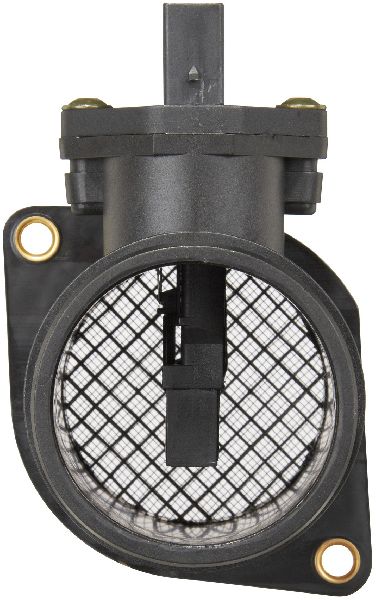
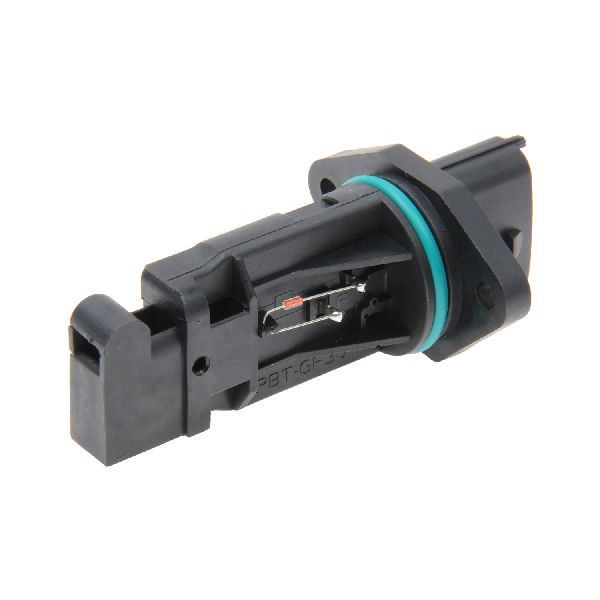
- Dirty or Contaminated MAF Sensor 🔴 High Probability → Shop Fuel Injection Air Flow Meter The hot-film design is sensitive to oil from aftermarket air filters (e.g., K&N) and oil vapor from a failing Air-Oil Separator (AOS), which can bake onto the sensor element.
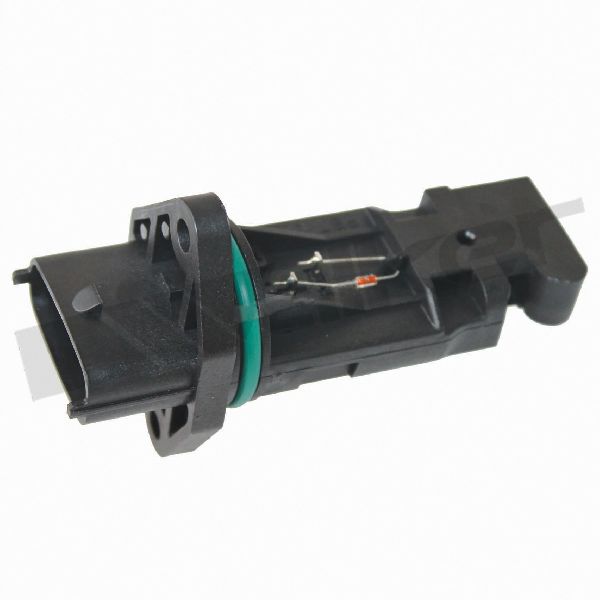
How to confirm: Remove the MAF sensor from the intake tube (it's held by two T20 security Torx screws) and visually inspect the small wires inside. If they appear dirty or coated, cleaning is warranted.
Typical fix: Clean the sensor element thoroughly using only dedicated Mass Airflow Sensor cleaner spray. Do not use brake or carb cleaner. Allow it to dry completely before reinstalling. This is often a temporary fix if the source of contamination (like a bad AOS) isn't addressed.
Est. part cost: $10-$20 for a can of MAF cleaner. - Failed MAF Sensor 🔴 High Probability → Shop Fuel Injection Air Flow Meter These sensors have a finite lifespan and can fail electronically even if they appear clean. The M96 is very sensitive, and non-Bosch parts are known to fail quickly.
How to confirm: If cleaning doesn't resolve the code, the next step is replacement. Using a diagnostic tool like Durametric, a P0102 fault is often accompanied by a signal voltage stuck at 1.0V regardless of RPM. A healthy sensor should show ~1.1V with key on/engine off, ~1.3-1.4V at hot idle, and increase with RPM. Airflow at hot idle should be around 15-22 kg/hr for a 3.6L Turbo, with naturally aspirated values being slightly lower. A reading of 11 kg/hr on a new sensor may indicate an issue.
Typical fix: Replace the MAF sensor with the correct OEM Bosch part for your engine. After replacement, it is recommended to clear the codes and reset the DME adaptations by disconnecting the battery for a short period.
Est. part cost: $250-$400 for an OEM Bosch sensor. - Vacuum Leak 🟡 Medium Probability The M96 engine has numerous plastic and rubber components that become brittle with age. A very common failure is the Air-Oil Separator (AOS), which can crack or its internal diaphragm can tear, creating a massive vacuum leak. A cracked oil filler tube is another known, but less obvious, source of unmetered air.
How to confirm: A smoke test is the most effective way to identify leaks. Pay close attention to the AOS, oil filler tube, intake boots, and vacuum lines. Symptoms of a bad AOS can also include large plumes of white/blue smoke from the exhaust on startup and a whistling or honking noise from the engine.
Typical fix: Replace the cracked or leaking component. If the AOS is the cause, it should be replaced along with its associated vent hoses. 🎬 See this walkthrough for replacing the Air-Oil Separator.
Est. part cost: $20-$250 depending on the leaking part (AOS is more expensive). - Wiring Harness Issue ⚪ Low Probability
How to confirm: Inspect the 5-pin MAF connector and wiring for damage, corrosion, or loose pins. With the key on, engine off, you should have ~12V at pin 2, 5V reference at pin 4, and ground at pin 3. Pin 5 is the signal wire back to the DME. One owner on Rennlist documented checking continuity on all wires from the DME plug to the MAF connector to rule out a wiring fault before replacing the sensor.
Typical fix: Repair the damaged section of the wiring harness or clean/replace the connector pigtail.
Est. part cost: $20-$100 for wiring repair supplies or a new pigtail.
Rare But Worth Checking
- Clogged Engine Air Filter: → Shop Air Cleaner Assembly A severely clogged air filter can restrict airflow enough to trigger a P0102 code. It's a simple and inexpensive item to check before moving to more complex diagnostics.
- Faulty DME (Engine Computer): This is extremely rare, but if a known-good MAF sensor has been installed and all wiring has been verified as intact, the DME itself could be the source of the problem.
- Shorted VarioCam Solenoid: In a rare case, a shorted VarioCam solenoid can disrupt the 12V power supply that is shared with the MAF sensor, causing a P0102 code even though the MAF itself is functional.
Diagnosis Steps
- Read codes with an OBD-II scanner to confirm P0102 is present. Note any other codes like P0112, P1128, or P1130.
- Visually inspect the MAF sensor connector to ensure it is plugged in securely.
- Inspect the engine air filter and replace if dirty. Avoid over-oiled aftermarket filters.
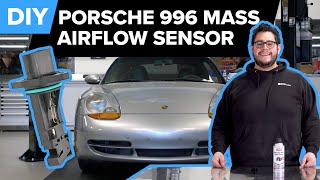
- Remove the MAF sensor (requires a T20 security Torx bit). 🎬 Watch: Step-by-step guide to replacing your MAF sensor.
- Thoroughly clean the sensor element with dedicated MAF sensor cleaner spray. Let it air dry completely. Do not touch the internal elements.
- Reinstall the sensor, clear the codes, and perform a drive cycle.
- If the code returns, monitor live data with a tool like Durametric. Check for a fixed low voltage (e.g., 1.0V) from the MAF signal pin. A healthy sensor should read ~1.1V with key on/engine off and ~1.3-1.4V at hot idle.
- If live data points to a bad sensor, check the wiring. With the key on, engine off, verify ~12V on pin 2, ~5V on pin 4, and ground on pin 3 of the harness connector.
- Perform a resistance check on the MAF's integrated IAT sensor between pins 1 and 3. It should read approximately 2.3 - 2.7 kOhms at 20°C (68°F).
- If wiring is confirmed good, perform a smoke test on the intake system to check for vacuum leaks, paying close attention to the Air-Oil Separator (AOS), oil filler tube, and all intake boots.
- If no vacuum leaks are found and wiring is good, replace the MAF sensor with a new OEM Bosch part. Ensure you have the correct part number for your engine displacement (3.4L vs 3.6L).
- After replacement, clear fault codes and reset DME adaptations (disconnecting the battery for 15-30 minutes is a common method).
- If the problem persists with a new, known-good OEM sensor, further diagnosis of the DME or related circuits (like the VarioCam solenoid power supply) may be required.
Parts You'll Likely Need
- Mass Air Flow (MAF) Sensor (3.6L)
(OEM #99660612400)— This is the most common point of failure for 2002-2004 996 models. The M96 engine is sensitive to this part, making a quality replacement crucial.
Trusted brands: Bosch (OEM P/N: 0280218009), Porsche (Genuine)
OEM price range: $600-$830
Aftermarket price range: $250-$400 (for OEM Bosch) - Mass Air Flow (MAF) Sensor (3.4L)
(OEM #99660612300)— This is the most common point of failure for 1999-2001 996 models. Using the wrong part number will cause persistent issues.
Trusted brands: Bosch (OEM P/N: 0280217007), Porsche (Genuine)
OEM price range: $500-$700
Aftermarket price range: $200-$350 (for OEM Bosch) - Mass Air Flow Sensor Cleaner — Often, the sensor is just dirty and cleaning it is the only fix required. This should always be the first step.
Trusted brands: CRC, Liqui Moly
Aftermarket price range: $10-$20
Related Codes That Often Appear With This One
- P0112 — The Intake Air Temperature (IAT) sensor is integrated into the MAF sensor housing. A failure of the unit or its wiring can cause both codes to appear simultaneously.
- P1128 / P1130 — These codes indicate 'Oxygen Sensing Adaptation, Idle Range, Bank 1 / Bank 2'. A failing MAF sensor that under-reports airflow will cause the DME to inject too little fuel, creating a lean condition that is detected by the O2 sensors.
Platform-Specific Known Issues
- Using oiled aftermarket air filters (like K&N) is a known cause of premature MAF sensor contamination and failure on the M96 engine.
- Owners on forums like Rennlist strongly advise against using cheap, non-OEM MAF sensors, as they often fail quickly or are dead on arrival.
- A failing Air-Oil Separator (AOS) is a very common issue on the M96 engine that can cause a vacuum leak and/or oil contamination of the intake and MAF, leading to a P0102 code.
Mechanic-Grade Diagnostic Values
- MAF Signal Voltage (Key On, Engine Off) — expected: ~1.0V - 1.1V. Failure: Voltage significantly higher (e.g., >1.19V) or lower, or stuck at a fixed value.
- MAF Signal Voltage (Engine at Hot Idle, ~700 RPM) — expected: ~1.3V - 1.4V. Failure: Voltage does not rise from the KOEO reading, or is stuck at a low value like 1.0V.
- MAF Airflow (Hot Idle, Naturally Aspirated) — expected: ~14-16 kg/hr. Failure: Significantly lower values (e.g., 11 kg/hr) even with a new sensor can indicate a vacuum leak or a faulty new part.
- MAF Airflow (Hot Idle, 996 Turbo) — expected: ~18-22 kg/hr, with minimal fluctuation (approx. 1 kg/hr). Failure: Large, constant fluctuations (e.g., +/- 3 kg/hr or more) can indicate a sensor issue.
- IAT Sensor Resistance (at MAF connector) — expected: 2.3 - 2.7 kOhms at 20°C (68°F) between pins 1 and 3.. Failure: Reading is far outside this range, indicating a failure of the integrated temperature sensor.
- MAF Harness Voltage (Pin 2 to Ground) — expected: ~12V (Battery Voltage). Failure: No or low voltage indicates a power supply issue to the sensor.
- MAF Harness Voltage (Pin 4 to Ground) — expected: 5V (Reference Voltage). Failure: No or low voltage indicates a problem with the DME's reference signal.
Scan Tool Commands That Help
- Durametric: Actual Values -> Mass Air Flow (HFM) or Hot Film MAF — This function allows real-time monitoring of the MAF sensor's output voltage (Pin 5) and calculated airflow in kg/hr. It is essential for diagnosing a failed or underperforming sensor by comparing live data to expected values at idle and under load.
- Durametric: Actual Values -> RKAT / FRA (Fuel Trims) — Monitoring short-term (RKAT) and long-term (FRA) fuel trims can help diagnose a vacuum leak. If the MAF is under-reporting air due to a leak, the DME will compensate by adding fuel, resulting in high positive fuel trim values.
- Generic OBD-II / Durametric: Clear Fault Codes / Reset Adaptations — After cleaning or replacing the MAF sensor, or fixing a vacuum leak, the stored fault codes must be cleared. Resetting adaptations (often done by disconnecting the battery for 15-30 minutes) forces the DME to re-learn the fuel maps with the new, correct sensor inputs.
Wiring & Ground Locations
- MAF Connector Ground (Pin 3) — Pin 3 on the 5-pin connector at the MAF sensor itself.. A poor ground at the sensor connector will cause incorrect voltage readings, directly leading to a P0102 or other MAF-related codes. This pin should have continuity to a known good chassis ground.
- Engine Harness Ground (Bank 2) — On the passenger side (Bank 2) cylinder head, often near where a cam timing tool would be installed.. This is a primary ground point for the engine wiring harness. Corrosion or a loose connection here can affect multiple sensors, including the MAF.
- Engine Harness Ground (Bank 1) — On the driver's side (Bank 1) cylinder head. On a 3.4L, this may be near the crank position sensor.. This ground point is critical for the ignition coils on cylinders 1-3 and other sensors on that bank. A fault here can cause widespread issues that could be misdiagnosed.
- DME Ground Point (GP9) — Located on the rear wall of the rear luggage compartment, near the DME control module itself.. This is the ground reference for the engine computer. A problem here could affect the DME's ability to correctly interpret the voltage signal from the MAF sensor.
Real Owner Repair Stories
- Rennlist user 'isalos' (2002 Porsche 996 3.6L) — Low MAF reading of 11 kg/hr at idle, no CEL.
❌ Tried (didn't work) Cleaning the original MAF sensor (reading dropped from 14.4 to 11 kg/hr)., Performing a comprehensive smoke test, which showed no vacuum leaks.
✅ What actually fixed it The issue was not fully resolved in the thread, but the final advice from a Porsche technician was that even new Bosch MAF sensors can be faulty out of the box, suggesting the next step was to try another new sensor, preferably a Genuine Porsche part, to rule out a bad replacement part. - Rennlist user '996ttalot' (Porsche 996 Turbo) — P0102 code, ABS/PSM lights coming on when stopping, rough idle.
❌ Tried (didn't work) Replacing the MAF with a new OEM Bosch part (P/N 996 606 124 00), which made the problem occur even faster than before.
✅ What actually fixed it The user re-installed their OLD MAF after cleaning it again, and the car ran perfectly for an extended period. The conclusion was that the brand new OEM Bosch MAF was defective right out of the box. The temporary fix of cleaning the old sensor worked for over 6 months and 1,100 miles at a time. - Rennlist user 'Healeyjet' (1999 Porsche 996 C2) — P0102 code, hard to start, will not idle without throttle input.
❌ Tried (didn't work) Cleaning MAF, IACV, and throttle body., Performing a comprehensive smoke test which found no vacuum leaks., Checking all wiring continuity and resistance from DME to MAF plug, which was all good.
✅ What actually fixed it A new Bosch MAF sensor solved the problem. The faulty MAF showed a signal voltage on Pin 5 that did not change with RPM, while the new sensor's voltage correctly increased with engine speed.
"I Checked Everything" — The Actual Cause
- In multiple documented cases, owners performed thorough smoke tests that revealed no vacuum leaks, yet the P0102 code and associated running issues persisted. The final fix in these instances was replacing the MAF sensor itself, which had failed electronically despite the absence of unmetered air leaks. This confirms the sensor can fail internally without any other system faults.
When the Usual Fixes Don't Work
- While cleaning the MAF is a common first step, it is often only a temporary solution. One owner on Rennlist reported that cleaning their MAF would resolve the P0102 code for up to 6 months and 1,100 miles, but the issue would inevitably return, pointing to the sensor's eventual electronic failure rather than just contamination. Another owner reported that cleaning their MAF actually made the idle airflow readings worse (dropping from 14.4 to 11 kg/hr), suggesting the cleaning process can sometimes damage an already weak sensor.
OEM Part Supersession History
996.606.123.00→N/A— This part is for the 3.4L M96 engine (1999-2001) with a cable-operated throttle.
Heads up: This part is not compatible with the later 3.6L engines. The Bosch equivalent is 0 280 217 007.996.606.124.00→N/A— This part is for the 3.6L M96 engine (2002-2004) with the E-Gas (drive-by-wire) throttle.
Heads up: This part is not compatible with the earlier 3.4L engines. The Bosch equivalent is 0 280 218 009.
Model Year Variations Within This Range
- 1999-2001: These models use the 3.4L M96 engine with a cable-actuated throttle and require MAF sensor part number 996.606.123.00 (Bosch 0280217007). The engine is sometimes described as feeling more 'peaky' with a distinct power band.
- 2002-2004: These facelift models use the larger 3.6L M96 engine with E-Gas (drive-by-wire) and VarioCam Plus. They require MAF sensor part number 996.606.124.00 (Bosch 0280218009). The engine generally provides more mid-range torque and a smoother power delivery.
Diagnostic Flowchart
Used vs. New Parts: Buying Guide for This Vehicle
When a used part is the smart pick: For this specific repair, buying a used MAF sensor is generally not recommended. The part is a sensitive electronic component with a finite lifespan that degrades with heat cycles and exposure to contaminants. The risk of getting a part that is already failing or near the end of its life is high, and the cost savings are often not worth the potential for continued diagnostic headaches.
Donor-vehicle mileage cap: roughly under 30000 miles for the part to have meaningful remaining life.
What to inspect on the donor part:
- Verify the Bosch and Porsche part numbers on the sensor housing match your vehicle's requirements exactly.
- Ask for the mileage of the donor car; lower is always better.
- Inspect the connector pins for any signs of corrosion or damage.
- Avoid any sensor that came from a car with a known engine failure or fire.
OEM-only on this vehicle (don't cheap out):
- Mass Air Flow (MAF) Sensor
Aftermarket brands forum-validated for this vehicle:
- Bosch (is the Original Equipment Manufacturer)
Brands owners have reported issues with on this vehicle:
- Unbranded or generic 'knock-off' MAF sensors from online marketplaces. Forum users consistently report that these parts are often dead-on-arrival or fail very quickly, causing the same P0102 code to return.
Real Owner Stories
Aggregated from forums and TSBs cited above. Mileages and costs reflect what owners reported in those sources.
Porsche 996
Symptoms: The engine was hard to start and would not idle.
What fixed it: After confirming wiring continuity from the DME to the MAF plug and performing a smoke test which found no leaks, the problem was resolved by replacing the sensor with a new Bosch MAF.
Source hint: Rennlist.com - Thread 'Fault Code P0102 - MAF Short Circuit/Open Circuit' (2024)
Porsche Boxster 986
Symptoms: The P0102 code returned immediately after installing a brand new MAF sensor.
What fixed it: The issue was resolved by resetting the DME/ECU adaptations after the new sensor was installed, which allowed the car to learn the new sensor's correct values.
Source hint: 986forum.com - Thread 'Po102 back agin after MAF replacement' (2013)
Related OBD-II Codes
Frequently Asked Questions
I used a K&N oiled air filter in my 911. Could that be causing the P0102 code?
Why are my PSM and ABS lights on at the same time as the Check Engine Light for P0102?
Is it safe to use a cheap, non-OEM MAF sensor to save money?
I replaced the MAF sensor, but the P0102 code came back. What did I do wrong?
Besides the MAF sensor itself, what's another common M96-specific part that can trigger a P0102?
How can I test my MAF sensor's health using a diagnostic tool like Durametric?
My car is hard to start and has a lot of white smoke from the exhaust. Is this related to P0102?
Helpful Videos

Used OEM Parts in Stock
New Aftermarket Parts Available



The information in this article is provided for general reference and educational purposes only. Vehicle specifications, procedures, and part compatibility can vary by production date, trim level, and region. Always consult your vehicle's factory service manual and verify part numbers before purchasing or performing repairs. Safety-critical components such as airbags, seat belts, and braking systems should be installed by a qualified professional.
- Porsche 911:
- 🧭 Diagnostic Flowchart
- 🎬 Helpful Videos
- 🛍️ Shop This Part
- What's Unique About the 1999-2004 Porsche 911
- Symptoms You May Notice
- Most Likely Causes
- Rare But Worth Checking
- Diagnosis Steps
- Parts You'll Likely Need
- Related Codes That Often Appear With This One
- Platform-Specific Known Issues
- Mechanic-Grade Diagnostic Values
- Scan Tool Commands That Help
- Wiring & Ground Locations
- Real Owner Repair Stories
- "I Checked Everything" — The Actual Cause
- When the Usual Fixes Don't Work
- OEM Part Supersession History
- Model Year Variations Within This Range
- Used vs. New Parts: Buying Guide for This Vehicle
- Real Owner Stories
- Porsche 996
- Porsche Boxster 986
- Related OBD-II Codes
- Frequently Asked Questions
- 🎟️ Get 5% Off