

P0106 on 2006-2013 Audi A3 3.2L VR6: MAP Sensor and Vacuum Leak Guide
On the Audi A3 3.2L VR6, code P0106 is most often caused by a vacuum leak, frequently from a torn PCV diaphragm on the valve cover, or a faulty MAP sensor. Expect to pay $20-$50 for a PCV repair kit or $40-$120 for a new MAP sensor. Cleaning the MAP sensor and throttle body should be attempted before replacement.
- For the Audi A3 3.2L VR6, P0106 is very often caused by a torn PCV diaphragm. Check this first before buying parts.
- A smoke test is the most reliable method to find hidden vacuum leaks in hoses or gaskets, which are the other primary cause.
- Do not replace the MAP sensor until you have definitively ruled out all possible vacuum leaks and checked the sensor's wiring.
- Symptoms like a rough idle, hissing noises, and poor acceleration strongly point towards a vacuum leak.
- This code indicates a moderate issue; while the car is drivable, fixing it promptly prevents poor performance, high fuel consumption, and potential damage to other components.
What's Unique About the 2006-2013 Audi A3
The 3.2L VR6 engine in the A3 (8P generation) has a well-documented weakness in its Positive Crankcase Ventilation (PCV) system. The rubber diaphragm inside the PCV valve, which is integrated into the valve cover, is prone to tearing. This creates a significant unmetered vacuum leak that directly causes the manifold pressure to be out of the expected range, making it a primary suspect for a P0106 code on this specific engine. While a bad MAP sensor is always possible, investigating the PCV system first can save time and money. A faulty PCV can also cause oil to contaminate the MAP sensor, leading to implausible readings.
Symptoms You May Notice
- Check Engine Light illuminated
- Rough, unstable, or surging idle
- Hesitation during acceleration or a noticeable loss of power
- Poor fuel economy
- Hissing sound from the engine bay, especially at idle, near the valve cover
- Engine stalling, particularly when coming to a stop
- Black smoke from the exhaust
- Difficulty removing the oil filler cap with the engine running due to strong vacuum
- Replacing the MAP sensor without first checking for vacuum leaks. A vacuum leak, especially from the PCV diaphragm, is the most common cause and will make a good MAP sensor report out-of-range values, leading to the code returning.
Most Likely Causes
- Torn PCV Valve Diaphragm 🔴 High Probability The rubber diaphragm in the 3.2L VR6's integrated valve cover/PCV assembly becomes brittle with age and heat cycles, leading to tears that create a large vacuum leak. This is a widely recognized failure point on this engine.
How to confirm: With the engine running, listen for a distinct hissing sound near the round PCV valve on top of the valve cover. Carefully try to remove the oil filler cap; if it is held on by a very strong vacuum, the diaphragm is almost certainly torn. You can also carefully place a finger over the small vent hole on the PCV cap; if you feel strong suction, the diaphragm is torn.
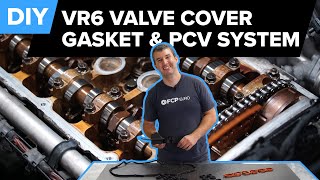
Typical fix: Replace the PCV diaphragm. Inexpensive repair kits are available that allow you to replace just the rubber diaphragm and cap without replacing the entire valve cover. The valve cover itself does not need to be removed. 🎬 Watch: Full walkthrough of the VR6 valve cover and PCV system.
Est. part cost: $20-$50 - Other Vacuum Leaks 🔴 High Probability Vacuum hoses, especially the one running to the brake booster, and intake gaskets become brittle and crack over time due to engine heat and vibration.
How to confirm: Perform a smoke test on the intake system. This involves feeding pressurized smoke into the intake and watching for where it escapes. A visual inspection may also reveal cracked or disconnected hoses. Spraying brake cleaner or a similar combustible fluid around suspected leak areas while the engine is running can also help; a change in engine RPM indicates a leak.
Typical fix: Replace the cracked hose(s) or leaking gasket(s).
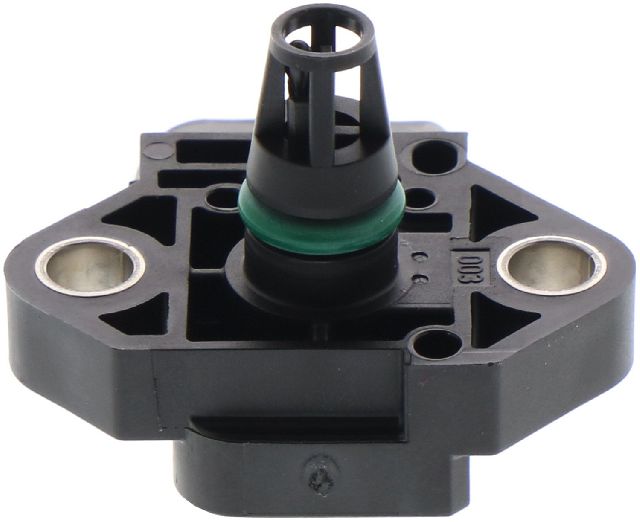
Est. part cost: $10-$100 - Faulty or Dirty Manifold Absolute Pressure (MAP) Sensor 🟡 Medium Probability → Shop Manifold Absolute Pressure Sensor The sensor can fail electronically over time or become contaminated with oil or carbon, especially if the PCV system has failed, leading to inaccurate readings.
How to confirm: After ruling out vacuum leaks, inspect and clean the sensor. It is located on the intake manifold. Remove it and clean it carefully with dedicated MAF/MAP sensor cleaner. If cleaning doesn't work, test the sensor. With a scan tool, check the MAP reading with the key on, engine off; it should match the local barometric pressure. With the engine running, the reading should change smoothly with throttle input.
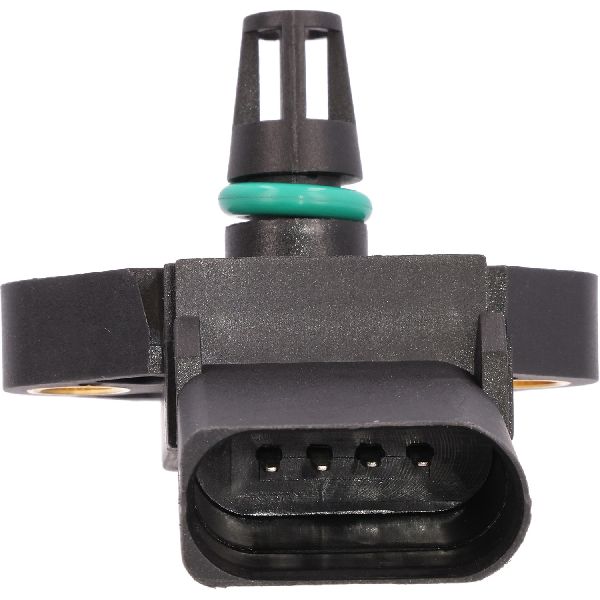
Typical fix: Clean the sensor first. If the problem persists, replace the MAP sensor. It is typically located on the intake manifold and secured with one or two screws.
Est. part cost: $40-$120 - Damaged Wiring or Connector ⚪ Low Probability
How to confirm: Visually inspect the wiring harness and connector for the MAP sensor. Look for frayed wires, corrosion in the connector pins, or a loose connection. Use a multimeter to check for the correct reference voltage (usually 5V) and a good ground at the connector.
Typical fix: Repair the damaged section of the wiring harness or clean/replace the connector.
Est. part cost: $5-$50
Rare But Worth Checking
- Dirty Throttle Body: → Shop Fuel Injection Throttle Body Significant carbon buildup can disrupt airflow enough to cause implausible MAP sensor readings. Cleaning the throttle body is a recommended step if vacuum leaks are not found.
- Faulty EVAP Purge Valve (N80): A stuck-open N80 valve can create a vacuum leak that may trigger a P0106 code. Some owners have reported fixing the code by replacing this valve.
- Faulty Engine Control Module (ECM): This is a very rare cause. On some VW/Audi platforms, the barometric pressure sensor is integrated into the ECM. A failure of this internal sensor can cause a P0106 code by creating a mismatch with the MAP sensor reading. This should only be considered after all other possibilities have been exhaustively ruled out.
Diagnosis Steps
- Read the fault codes with an OBD-II scanner to confirm P0106 and note any other codes present, such as lean codes (P0171, P0174).
- Perform a quick check of the PCV system. With the engine running at idle, try to remove the oil filler cap. If it is held on with strong vacuum force, the PCV diaphragm is torn and must be replaced.
- If the oil cap test is inconclusive, listen for an audible hissing sound from the engine bay, paying close attention to the round PCV valve on the valve cover and all vacuum hoses.
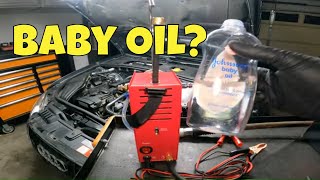
- If no obvious vacuum leaks are found, perform a smoke test on the intake system. This is the most definitive way to find hidden cracks in hoses 🎬 Watch: How to use a smoke tester to find leaks. (like the brake booster line) or leaking gaskets.
- If no vacuum leaks are present, remove and inspect the MAP sensor. It is often contaminated with oil due to a failing PCV system. Clean it thoroughly with a dedicated sensor cleaner. Also clean the throttle body while you have access.
- After cleaning, inspect the MAP sensor's electrical connector and wiring for any signs of damage, corrosion, or loose pins. Check for 5V reference and ground at the connector with a multimeter.
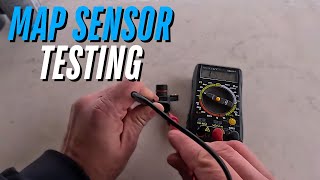
- Using a scan tool with live data, observe the MAP sensor reading with the Key On, Engine Off. It should be close to the barometric pressure for your altitude. Start the engine; the pressure reading should drop at idle and respond smoothly as you press the throttle. 🎬 See how to test a MAP sensor with a multimeter. An erratic or non-responsive reading suggests a failed sensor.
- If all vacuum and wiring checks pass, and the sensor has been cleaned but the problem persists, the MAP sensor is likely faulty and should be replaced.
Parts You'll Likely Need
- PCV Diaphragm Repair Kit
(OEM #022103765B (Associated PCV Hose Assembly))— This is the most frequent failure point on the 3.2L VR6 engine that leads to a vacuum leak large enough to set code P0106.
Trusted brands: URO Parts, Dorman, Vaico
OEM price range: $N/A (kit only)
Aftermarket price range: $20-$50 - Manifold Absolute Pressure (MAP) Sensor
(OEM #038906051C)— If vacuum leaks and wiring issues are ruled out, the sensor itself is the next logical component to fail. It can also become fouled with oil from a bad PCV valve.
Trusted brands: Bosch (OEM), Delphi, Standard Motor Products
OEM price range: $80-$150
Aftermarket price range: $40-$90 - Vacuum Hose — Aged rubber hoses, particularly the brake booster line, can crack and cause significant vacuum leaks that trigger P0106.
Related Codes That Often Appear With This One
- P0171 — System Too Lean (Bank 1) - A vacuum leak, a common cause of P0106, introduces unmetered air into the engine, creating a lean air-fuel mixture.
- P0174 — System Too Lean (Bank 2) - Same reason as P0171. The VR6 engine has two banks, and a significant vacuum leak will affect both.
- P0441 — EVAP Emission Control Sys Incorrect Flow - This can appear if the EVAP purge valve (N80) is faulty, which can also be a root cause for P0106.
Technical Service Bulletins (TSBs) & Recalls
- While not found for the 3.2L, Volkswagen issued a technical service bulletin (TSB 24-18-02) for the related 2.5L engine for the same P0106 code, pointing to a faulty PCV and contaminated MAP sensor, reinforcing the diagnosis pattern.
Platform-Specific Known Issues
- The PCV system on the CBRA/CBUA 3.2L VR6 engine is a known failure point. The diaphragm inside the valve cover tears, creating a significant vacuum leak that is a primary cause of code P0106 on this platform.
- A Reddit user with a 3.2L FSI engine reported an unresolved P0106 where the dealer replaced the computer, cleaned carbon, replaced the MAP sensor and wiring to no avail, highlighting the diagnostic difficulty if it's not a simple PCV or vacuum leak.
Mechanic-Grade Diagnostic Values
- MAP Sensor (G71) Connector Voltage - 5V Reference — expected: Approximately 5.0 Volts. Failure: Voltage is significantly lower than 5.0V or absent, indicating a wiring or ECM issue.
- MAP Sensor (G71) Connector Voltage - Signal Wire — expected: 0.5V - 1.5V with key on, engine off (at sea level).. Failure: Voltage is outside this range or does not change when applying vacuum with a hand pump.
- VCDS Live Data - MAP Sensor at Idle — expected: Approximately 300-400 mbar at normal idle (will vary with altitude).. Failure: Reading is close to ambient atmospheric pressure (e.g., 900-1010 mbar), indicating a massive vacuum leak or a dead sensor.
- VCDS Live Data - Fuel Trims (Block 032) — expected: Values should be close to 0%, ideally within +/- 5%.. Failure: Large positive values (e.g., > +10%) on both long-term fuel trims (Additive and Multiplicative) strongly suggest a vacuum leak.
Scan Tool Commands That Help
- VCDS (VAG-COM): Basic Settings - Group 060 (Throttle Body Adaptation) — After cleaning or replacing the throttle body. An unadapted throttle body can cause incorrect airflow calculations and contribute to MAP sensor correlation issues.
- VCDS (VAG-COM): Measuring Value Blocks (MVB) - Groups 003, 032, 113 — To monitor MAP sensor readings (Group 003 or 113), and long/short term fuel trims (Group 032) to diagnose vacuum leaks or sensor performance in real-time.
- VAS 5051 (Dealer Tool): Guided Fault Finding - Adapt Throttle Valve Control Module — Required after replacing the throttle valve control module (-J338-) to ensure it is properly calibrated to the ECM.
Wiring & Ground Locations
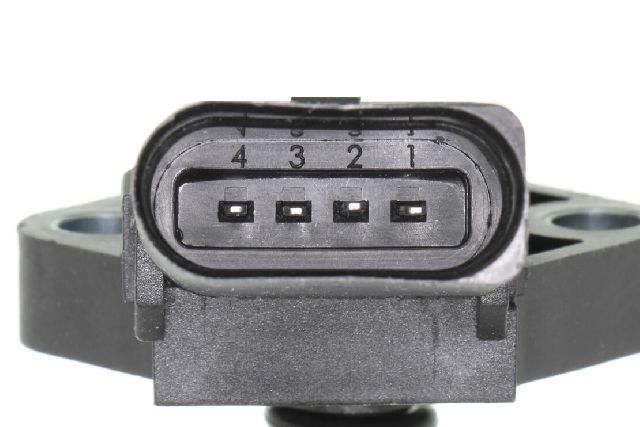
- MAP/IAT Sensor (G71/G42) Connector Pinout (4-Pin) — On the MAP sensor, located on the intake manifold.. Knowing the pinout is essential for testing power, ground, and signal voltage directly at the sensor. Pin 1: Ground, Pin 2: IAT Signal, Pin 3: 5V Power, Pin 4: MAP Signal.
- Ground Point 12 — On the left side of the engine compartment, near the battery/on the chassis frame rail.. This is a primary engine bay ground point. A corroded or loose connection here can cause erratic behavior from multiple engine sensors, including the MAP sensor.
- Ground Point 671 — On the front of the left longitudinal member (frame rail).. Another critical chassis ground in the engine bay. Poor grounding can introduce voltage fluctuations that lead to implausible sensor readings.
- Ground Point under Scuttle Panel — Located in the plenum chamber (under the plastic scuttle panel at the base of the windshield), near the ECU.. This ground is physically close to the ECU. A bad connection here can directly affect the ECU's reference ground and its interpretation of sensor signals.
Real Owner Repair Stories
- VWvortex & Audizine Forum Member Consensus (Audi A3 / VW R32 with 3.2L VR6 engine) — P0106 code, rough idle, hesitation, strong vacuum at oil cap.
❌ Tried (didn't work) Replacing the MAP sensor, Cleaning the throttle body, Searching for minor vacuum leaks on hoses
✅ What actually fixed it Replacing the torn PCV diaphragm located in the valve cover. Many owners report that after trying other fixes, this was the ultimate culprit. The fix is often done with an inexpensive aftermarket repair kit without removing the valve cover.
"I Checked Everything" — The Actual Cause
- In some cases, a smoke test may not reveal a torn PCV diaphragm if the tear only opens under strong vacuum when the engine is running. The definitive test remains checking for strong suction at the oil filler cap or the PCV breather hole while the engine is idling.
OEM Part Supersession History
038906051C→03G906051E, 03G906051F, 04E906051— Part revision and consolidation by the manufacturer.
Heads up: The 038906051C is a 3-Bar sensor. While a direct replacement, it's also used as a performance upgrade on some turbocharged models with specific software tunes. Ensure the replacement part has the same pressure rating for a stock vehicle.
Model Year Variations Within This Range
- 2006-2013: The CBRA and CBUA engine codes primarily differ based on their intended emissions market (CBUA often for California/ULEV states). For the purpose of diagnosing and repairing a P0106 code, the relevant components (MAP sensor, PCV system, vacuum lines) and procedures are identical.
Diagnostic Flowchart
Other Known Issues on This Vehicle
Issues unrelated to this code that are worth knowing about as an owner of this generation:
- Timing Chain Stretch / Guide Failure 🔴 High — Common on vehicles approaching or exceeding 100,000 miles. The primary issue is often the plastic tensioners and guides becoming brittle and failing, rather than the chain itself stretching. Startup rattle is a key symptom.
- DSG Mechatronic Unit Failure 🔴 High — Can occur at various mileages, often presenting as harsh/jerky shifting, delayed gear engagement, or a flashing 'PRNDS' indicator on the dash. It is a complex and expensive repair.
- DSG Clutch Pack Wear 🟠 Medium — Presents as a shudder or vibration at low speeds, especially in stop-and-go traffic. It's a wear item that is more common on higher mileage cars or those driven frequently in city conditions.
- Coil Pack Failure 🟡 Low — A relatively common and simple-to-fix issue that causes engine misfires, rough idle, and hesitation. Often fails one at a time.
Used vs. New Parts: Buying Guide for This Vehicle
When a used part is the smart pick: A used MAP sensor from a reputable salvage yard with a clear return policy can be a cost-effective option. It is an electronic component with a generally low failure rate unless contaminated by oil from a PCV failure.
Donor-vehicle mileage cap: roughly under 80000 miles for the part to have meaningful remaining life.
What to inspect on the donor part:
- Inspect the sensor's nozzle for any physical damage or heavy oil/carbon deposits.
- Ensure the electrical connector pins are straight, clean, and free of corrosion.
- Ask for the donor vehicle's mileage and check for signs of front-end collision, which could have damaged wiring.
OEM-only on this vehicle (don't cheap out):
- While not strictly OEM-only, it is highly recommended to use an OEM (Bosch) MAP sensor. Cheap, unbranded aftermarket sensors are known to have incorrect voltage scaling, which can cause persistent performance issues even if they don't set a code immediately.
Aftermarket brands forum-validated for this vehicle:
- Bosch (OEM supplier for the MAP sensor)
- RKX (For the PCV diaphragm repair kit, reported by users as a reliable and affordable solution)
Brands owners have reported issues with on this vehicle:
- URO Parts (Specifically for the PCV diaphragm and other rubber components; multiple forum users have reported premature failure, poor fitment, and low-quality materials)
Real Owner Stories
Aggregated from forums and TSBs cited above. Mileages and costs reflect what owners reported in those sources.
2008 Volkswagen R32 3.2L VR6
Symptoms: P0106 code along with an EPC light and stuttering.
What fixed it: Replacing a leaking PCV and a cracked brake booster assembly.
Source hint: GOLFMKV.com thread titled 'P0106 code!'
Audi A3 3.2L VR6
Symptoms: P0106 code persisting after fixing vacuum leaks; suspected discrepancy between the MAP sensor and the ECU's internal barometric sensor.
What fixed it: Replacing the MAP sensor after other fixes failed.
Source hint: Ross-Tech Forums thread titled 'P0106 - What Causes It?'
Audi A3 3.2L FSI
Symptoms: Unresolved P0106; dealer replaced the computer, cleaned carbon, and replaced the MAP sensor and wiring to no avail.
What fixed it: The owner eventually sold the car as the dealership could not solve the code.
Source hint: Reddit r/Audi thread titled '3.2L giving a P0106 code'
Related OBD-II Codes
Frequently Asked Questions
Does TSB 24-18-02 apply to my 3.2L VR6 Audi A3?
Do I need to replace the entire valve cover on my 3.2L VR6 to fix the PCV issue?
How can I tell if my A3's P0106 is caused by the PCV diaphragm without tools?
Where is the MAP sensor located on the CBRA/CBUA engine?
Can a vacuum leak at the brake booster cause P0106 on this car?
Helpful Videos
We Have This Part in Stock


The information in this article is provided for general reference and educational purposes only. Vehicle specifications, procedures, and part compatibility can vary by production date, trim level, and region. Always consult your vehicle's factory service manual and verify part numbers before purchasing or performing repairs. Safety-critical components such as airbags, seat belts, and braking systems should be installed by a qualified professional.
- Audi A3:
- 🧭 Diagnostic Flowchart
- 🎬 Helpful Videos
- 🛍️ Shop This Part
- What's Unique About the 2006-2013 Audi A3
- Symptoms You May Notice
- Most Likely Causes
- Rare But Worth Checking
- Diagnosis Steps
- Parts You'll Likely Need
- Related Codes That Often Appear With This One
- Technical Service Bulletins (TSBs) & Recalls
- Platform-Specific Known Issues
- Mechanic-Grade Diagnostic Values
- Scan Tool Commands That Help
- Wiring & Ground Locations
- Real Owner Repair Stories
- "I Checked Everything" — The Actual Cause
- OEM Part Supersession History
- Model Year Variations Within This Range
- Other Known Issues on This Vehicle
- Used vs. New Parts: Buying Guide for This Vehicle
- Real Owner Stories
- 2008 Volkswagen R32 3.2L VR6
- Audi A3 3.2L VR6
- Audi A3 3.2L FSI
- Related OBD-II Codes
- Frequently Asked Questions
- 🎟️ Get 5% Off