

P0106 on 2013-2018 Ram 2500 6.7L Cummins: MAP Sensor Causes and Fixes
On a 2013-2018 Ram 2500 with the 6.7L Cummins, code P0106 is most often caused by a soot-contaminated Manifold Absolute Pressure (MAP) sensor. The EGR system deposits soot directly onto the sensor, causing slow or incorrect readings. Cleaning the sensor with electronics cleaner is a common first step, but replacement is often necessary. An outdated engine computer software calibration can also trigger this code, especially in cold weather, though this is more formally documented for newer models
- P0106 on a 6.7L Cummins is most often a dirty MAP sensor. Try cleaning it before you buy a new one.
- If the Check Engine Light for P0106 only appears in very cold weather, ask a dealer about a possible software update before replacing parts.
- Always inspect the intake boots for cracks or loose clamps, as a boost leak can also cause this code.
- When checking or replacing the MAP sensor, it is located on the intake manifold and is typically held in by one or two small bolts, making it easy to access.
What's Unique About the 2013-2018 Ram 2500
On the 6.7L Cummins engine, the MAP sensor is notoriously prone to contamination from soot and oil mist from the EGR and crankcase ventilation systems. The sensor is positioned on the intake manifold right next to the EGR valve, where exhaust gases are reintroduced, causing a massive amount of soot to be thrown directly on it. This buildup can insulate the sensor, causing slow or inaccurate readings that trigger a P0106 code even if the sensor hasn't failed electronically. While official TSBs often point to software updates on newer models for this code in cold weather, the root cause on the 2013-2018 generation is very frequently this physical contamination of the sensor itself.
Symptoms You May Notice
- Check Engine Light is on
- Reduced engine power and sluggish acceleration
- Black smoke from the exhaust, especially under load
- Rough or unstable idle
- Decreased fuel economy
- Slower throttle response
- Replacing the MAP sensor without checking for intake leaks first. If a boost leak is the real problem, a new sensor will not fix the code.
- Replacing other sensors like the Mass Air Flow (MAF) sensor. The 6.7L Cummins uses a MAP sensor strategy, and this code points specifically to it.
- Replacing the MAP sensor when the actual fault is the Turbo Speed Sensor. The PCM can misinterpret a bad turbo speed signal as a MAP performance fault.
Most Likely Causes
- Contaminated or Faulty MAP Sensor 🔴 High Probability → Shop Manifold Absolute Pressure Sensor The 6.7L Cummins engine's EGR system design allows soot and oil vapor to collect on the MAP sensor, which is mounted directly on the intake manifold. This buildup physically obstructs the sensor port, causing incorrect pressure readings long before the sensor fails electronically.
How to confirm: Remove the sensor from the intake manifold (held by a single T15 Torx screw). A visual inspection will likely show a thick coating of black, greasy soot on the sensor's tip. With a scan tool, compare the MAP reading to the BARO reading with the key on, engine off. They should be nearly identical. A significant difference points to a bad sensor.
Typical fix: Remove the sensor and clean it carefully with dedicated MAP or electronics cleaner. Do not use brake cleaner. If cleaning doesn't resolve the issue, the sensor is electronically faulty and must be replaced. Many owners on forums report that cleaning is only a temporary fix and replacement is the ultimate solution.
Est. part cost: $40-$150 - Outdated PCM Software 🟡 Medium Probability Ram has released software updates for newer models to correct overly sensitive diagnostics that can falsely trigger a P0106 code, particularly in cold weather. Manufacturer Bulletin #18-059-20 specifically identifies P0106 as a "Manifold Absolute Pressure Sensor Performance" issue occurring in extreme cold ambient temperatures. While no specific TSB for the 2013-2018 range is widely cited for P0106, the pattern on the 6.7L platform suggests software sensitivity can be a factor, especially if the code appears intermittently in cold snaps.
How to confirm: Contact a Ram dealership with your vehicle's VIN to see if any PCM software updates (flashes) related to the engine or emissions system are available. This is especially relevant if the code only appears during cold weather.
Typical fix: A Ram dealership must perform a PCM software update. Diagnostic fees at dealers can range from $90 to over $250.
Est. part cost: $0-$250 - Intake Air (Boost) Leak ⚪ Low Probability The charge air cooler (CAC) boots and clamps on a turbocharged diesel engine are under high pressure and can develop cracks or loosen over time, causing a loss of boost pressure that the MAP sensor detects as a performance issue.
How to confirm: Visually inspect all intake piping and boots between the turbocharger and the intake manifold for cracks, loose clamps, or signs of oil mist (which indicates a leak). A smoke test is the most effective way to pinpoint the location of a leak.
Typical fix: Tighten loose clamps or replace the cracked or torn intake boot.
Est. part cost: $50-$250
Rare But Worth Checking
- Faulty Turbocharger Speed Sensor: → Shop Turbocharger A failing turbo speed sensor can send an irrational signal (e.g., zero RPM) to the PCM. The PCM sees this conflicting with high pressure from the MAP sensor and flags the MAP for a performance issue, setting P0106. Several owners have fixed P0106 by replacing the turbo speed sensor after a new MAP sensor had no effect.
- Wiring Harness Issue: The wiring to the MAP sensor can become damaged or corroded, causing an intermittent or lost signal. Check the connector and harness for chafing, breaks, or corrosion, especially where it might rub against other components.
- Clogged Air Filter: A severely restricted engine air filter can starve the engine of air, causing an abnormal pressure reading in the intake manifold. This is a simple check that should be part of routine maintenance.
- Restricted DPF/Exhaust: A clogged Diesel Particulate Filter (DPF) can create excessive backpressure, which may indirectly affect intake manifold pressure and trigger a P0106 code. This is usually accompanied by other DPF-related codes.
Diagnosis Steps
- Check for any Technical Service Bulletins (TSBs) or software updates for your vehicle's VIN, especially if the code appeared in cold weather.
- Using a scan tool, check for any other accompanying fault codes. Address codes for the turbo speed sensor (like P2580) or MAP circuit faults (P0107, P0108) first.
- With the Key On, Engine Off (KOEO), compare the MAP sensor reading to the Barometric Pressure (BARO) reading on your scan tool. They should be within a very small margin of each other (e.g., within 0.5 psi or 3.4 kPa). A large difference indicates a faulty MAP sensor.
- Visually inspect the MAP sensor wiring harness and connector for any signs of damage, corrosion, or loose connections.
- Remove the MAP sensor from the intake manifold. It is held by one T15 Torx screw. Inspect its tip for heavy soot or oil contamination.
- If the sensor is dirty, clean it with a dedicated MAP sensor or electronics cleaner. Do not use brake cleaner or scrape inside the sensor port. Reinstall, clear the code, and test drive to see if it returns.
- If the sensor is clean and the KOEO readings were off, or if cleaning did not fix the code, replace the MAP sensor. Be wary of cheap aftermarket sensors, as some owners report they cause more issues.
- Inspect the entire intake system from the turbo to the intake manifold for leaks. Pay close attention to the flexible boots and clamps. A smoke test is the most effective way to find small leaks.
- Check the engine air filter to ensure it is not clogged.
- If the code persists after replacing the MAP sensor, investigate the turbo speed sensor as a potential cause.
Parts You'll Likely Need
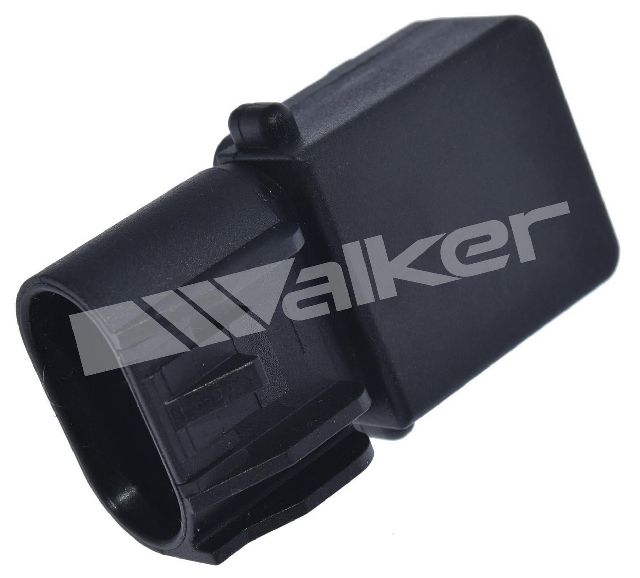
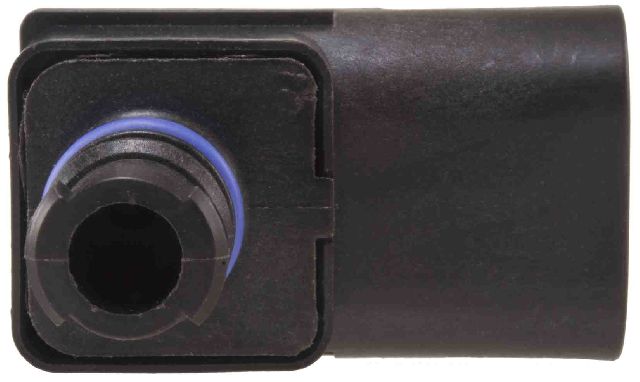
- Manifold Absolute Pressure (MAP) Sensor
(OEM #5698455 (Cummins), 2897333 (Cummins), 68282012AB (Mopar))— This is the most common point of failure for code P0106 on the 6.7L Cummins, typically due to soot contamination causing inaccurate readings.
Trusted brands: Mopar, Cummins (OEM), Bosch, Standard Motor Products (AS415), SKP
OEM price range: $100-$180
Aftermarket price range: $40-$90
Related Codes That Often Appear With This One
- P0107 — This code indicates 'MAP Sensor Circuit Low Voltage'. If seen with P0106, it strongly suggests a wiring problem or a completely failed sensor rather than just a performance issue.
- P0108 — This code indicates 'MAP Sensor Circuit High Voltage'. Like P0107, its presence points towards an electrical fault or sensor failure.
- P2580 — This code for 'Turbo Speed Sensor Circuit Low' can appear with P0106. A faulty turbo speed sensor can cause the PCM to log a P0106 as a secondary, misleading code.
- P2463 — This code means 'DPF Soot Accumulation'. If a restricted DPF is causing enough backpressure to affect intake readings, it may appear alongside P0106.
Technical Service Bulletins (TSBs) & Recalls
- While not for the exact year range, TSB #18-059-20 for 2019 Ram 2500 models and TSB #18-019-20 for 2019-2020 Ram 3500/4500/5500 models highlight a known issue on the 6.7L Cummins platform where P0106 can be set by sensitive software in cold weather, indicating a pattern of this issue for this engine. Manufacturer Bulletin #18-059-20 specifically notes that the P0106 performance code can be triggered in extreme cold ambient temperatures.
Platform-Specific Known Issues
- Cleaning vs. Replacement Debate: Many owners on forums like RamForum.com and Turbo Diesel Register recommend cleaning the MAP sensor as a routine maintenance item every other oil change. However, many also report that if the sensor is heavily caked, cleaning is often a temporary fix and the code returns, necessitating a full replacement.
Mechanic-Grade Diagnostic Values
- MAP Sensor 5V Reference Supply — expected: Approximately 5.0 Volts with key on, engine off, sensor disconnected.. Failure: Voltage significantly lower than 5.0V or 0V indicates a wiring or PCM issue.
- MAP Sensor Ground Circuit — expected: Less than 0.1 Volts (or good continuity to ground) with key on, engine off, sensor disconnected.. Failure: Higher voltage or no continuity indicates a bad ground connection.
- MAP Sensor Signal Voltage (KOEO) — expected: Should correspond to barometric pressure, typically 1.0V at sea level.. Failure: A reading that is stuck high (near 5V) or low (near 0V) or does not match the BARO reading on a scan tool points to a faulty sensor.
- Continuity of MAP Signal Circuit — expected: Less than 0.5 Ohms from the sensor connector to the PCM connector.. Failure: A reading of O.L. (Open Loop) or significantly higher resistance indicates a break or corrosion in the wire.
Scan Tool Commands That Help
- wiTECH (or equivalent professional scan tool): EGR Airflow Throttle Control Valve Test — A malfunctioning EGR throttle valve can affect intake pressure and potentially trigger a P0106. This bidirectional test commands the valve to cycle, allowing a technician to verify its mechanical operation. The valve should cycle closed immediately after the engine is shut down.
- wiTECH (or equivalent professional scan tool): Powertrain Verification Test - 6.7L — This is a standard procedure to be performed after a repair (like replacing a sensor or fixing a leak) to confirm that the fault has been resolved and the code does not return.
Wiring & Ground Locations
- MAP Sensor Connector — On the intake manifold, typically a dark gray connector.. This is the primary connection point for the sensor. Damage, corrosion, or a loose connection here will directly cause P0106, P0107, or P0108.
- MAP Sensor Signal Circuit (K37) — Wire running from the MAP sensor connector to the PCM C1 harness connector.. This specific wire carries the pressure signal to the computer. An open, short to ground, or short to voltage on this circuit will cause the code.
- 5-Volt Supply Circuit (F856) — Wire running from the PCM (Connector C2) to the MAP sensor connector.. This wire provides the reference voltage. If this voltage is unstable or missing, the sensor cannot provide an accurate signal.
Real Owner Repair Stories
- YouTube user Salvador Cuellar (Ram 6.7L Cummins (year not specified, but behavior is applicable)) — P0106 code, poor performance.
❌ Tried (didn't work) Replacing the MAP sensor.
✅ What actually fixed it The actual cause was a faulty turbo speed sensor. The PCM was receiving a zero RPM signal from the turbo sensor but high pressure from the MAP sensor. This conflict caused the PCM to flag the MAP sensor as the problem. Replacing the turbo speed sensor resolved the P0106 code. - RamForum.com user (2015 Ram 2500 Cummins) — P0106, loss of power, won't rev past 2000 RPM, multiple other codes for turbo speed and EGR.
❌ Tried (didn't work) Changing fuel filters., Cleaning the EGR valve., Replacing the MAP sensor with a cheap aftermarket part from Amazon (made things worse)., Replacing the MAP sensor with a supposed 'genuine' part from eBay (also made things worse)., Replacing the MAP sensor with an expensive OEM dealer part (still had problems).
✅ What actually fixed it The user's truck had aftermarket components (boost fooler, pressure harness, tuner) connected to the MAP sensor circuit. The story highlights the diagnostic chaos caused by cheap aftermarket sensors and the complexity added by modifications, though a final definitive fix was not posted in the thread excerpt. - General Diesel Engines forum user (2013 Ram 5500 6.7L Cummins) — Low power, P0106 (MAP fault), P2580 (turbo speed sensor fault).
❌ Tried (didn't work) Replacing the MAP sensor at customer request., Replacing the turbo speed sensor.
✅ What actually fixed it The issue remained unresolved in the post, but the technician noted that after replacing both sensors, the P0106 code would set after 2-3 minutes of driving and put the truck in limp mode. Maximum boost was only 18-19 psi. The technician suspected a faulty turbocharger was the root cause, as oil and crud were found in the turbo speed sensor cavity, but was hesitant due to the high cost of replacement.
OEM Part Supersession History
2897333, 2897333NX, 4921850→5698455 (Cummins)— Part has been updated by the manufacturer.
Heads up: The new part number 5698455 is the correct, current replacement for the entire 2007.5-2018 model year range.68002434AA, 68282012AA→68282012AB (Mopar)— Standard part number updates.
Model Year Variations Within This Range
- 2013-2018: On Cab & Chassis models, the MAP sensor (also called a TMAP sensor) is located on the intake manifold itself. On regular pickup models, it is located on the EGR Airflow Throttle Control Valve assembly. This can cause confusion when ordering parts or locating the sensor.
Diagnostic Flowchart
Real Owner Stories
Aggregated from forums and TSBs cited above. Mileages and costs reflect what owners reported in those sources.
2015 Ram 2500 Cummins
Symptoms: Check engine light with P0106 and other codes (turbo speed, EGR, air leak), would not rev past 2000 RPM.
What fixed it: Replacing the turbo speed sensor, which shares the same communication line to the ECM as the MAP sensor.
Cost: $161
Source hint: RamForum.com thread 'P0106 code with odd circumstances'
2013-2018 Ram 2500 6.7L Cummins
Symptoms: P0106 code triggered, leading to a debate on whether the MAP sensor or turbo speed sensor was at fault.
What fixed it: The original poster ultimately fixed the issue by installing a new MAP sensor.
Source hint: Turbo Diesel Register thread 'What is DTC P0106 telling me'
2013-2018 Ram 2500 6.7L Cummins
Symptoms: Thick coating of black, greasy soot on the MAP sensor tip causing performance issues.
What fixed it: Removing the sensor with a T15 Torx bit and cleaning it with dedicated MAP cleaner as a routine maintenance item.
Source hint: RamForum.com thread '6.7L MAP sensor cleaning' by user Hemi395
Related OBD-II Codes
Frequently Asked Questions
Does TSB 18-059-20 apply to my 2013-2018 Ram 2500?
Should I clean or replace the MAP sensor on my 6.7L Cummins?
What tool do I need to remove the MAP sensor on this engine?
Why does the MAP sensor get so dirty on the Ram 2500 diesel?
Can a bad turbo speed sensor cause a P0106 code on my Ram?
Helpful Videos

We Have This Part in Stock


The information in this article is provided for general reference and educational purposes only. Vehicle specifications, procedures, and part compatibility can vary by production date, trim level, and region. Always consult your vehicle's factory service manual and verify part numbers before purchasing or performing repairs. Safety-critical components such as airbags, seat belts, and braking systems should be installed by a qualified professional.
- Ram 2500:
- 🧭 Diagnostic Flowchart
- 🎬 Helpful Videos
- 🛍️ Shop This Part
- What's Unique About the 2013-2018 Ram 2500
- Symptoms You May Notice
- Most Likely Causes
- Rare But Worth Checking
- Diagnosis Steps
- Parts You'll Likely Need
- Related Codes That Often Appear With This One
- Technical Service Bulletins (TSBs) & Recalls
- Platform-Specific Known Issues
- Mechanic-Grade Diagnostic Values
- Scan Tool Commands That Help
- Wiring & Ground Locations
- Real Owner Repair Stories
- OEM Part Supersession History
- Model Year Variations Within This Range
- Real Owner Stories
- 2015 Ram 2500 Cummins
- 2013-2018 Ram 2500 6.7L Cummins
- 2013-2018 Ram 2500 6.7L Cummins
- Related OBD-II Codes
- Frequently Asked Questions
- 🎟️ Get 5% Off