

P0107 on 2012-2018 Audi A6 3.0L TFSI: Manifold Pressure Sensor Low Input Causes and Fixes
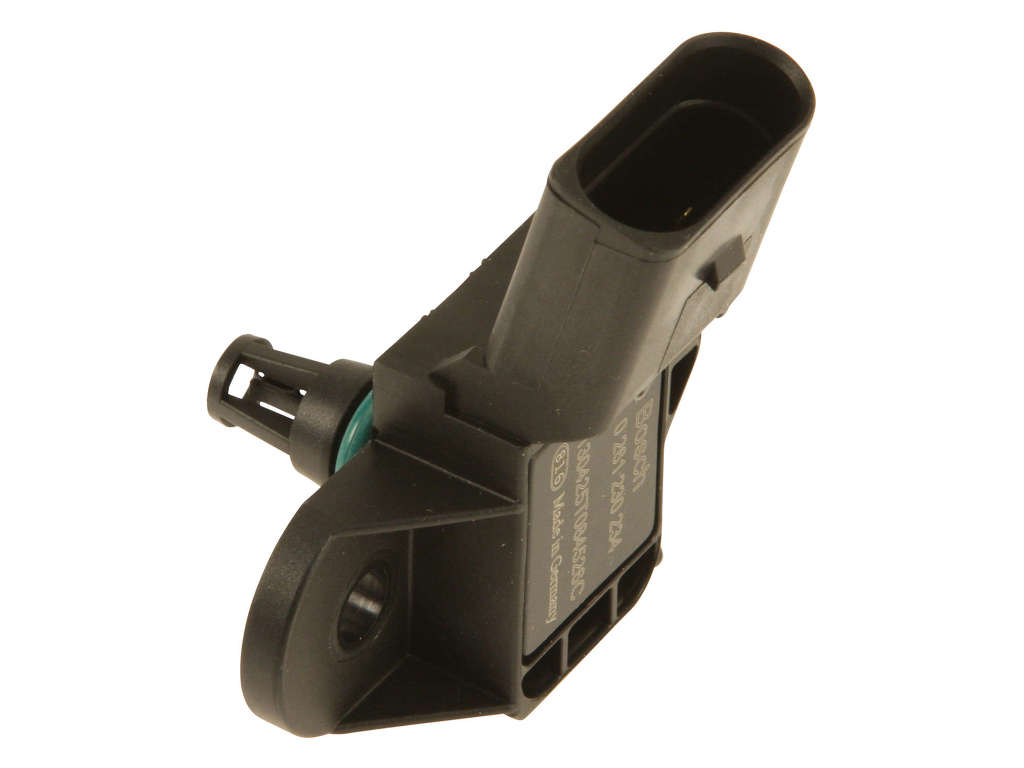
Code P0107 on the Audi A6 3.0T almost always points to a failed Manifold Absolute Pressure (MAP) sensor, designated as G71 by Audi. It's a straightforward replacement located on the rear of the supercharger near the firewall. Expect to pay $40-$70 for an OEM-quality (Bosch) sensor, with DIY difficulty rated at 2/5. A low voltage reading (under 0.5V) is the trigger for this specific code.
- P0107 on your A6 3.0T is most likely caused by a bad MAP sensor (Audi G71).
- The sensor is located on the rear of the supercharger near the firewall and is relatively easy to replace, held by a single Torx screw.
- Before replacing the sensor, check its connector and wiring for any visible damage.
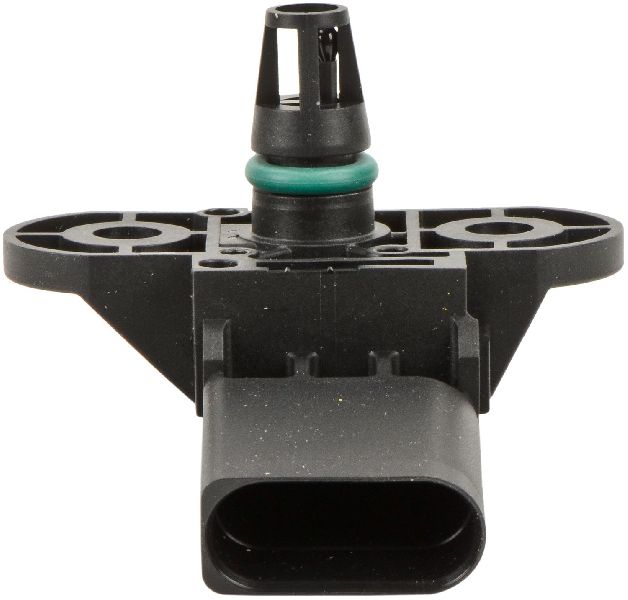
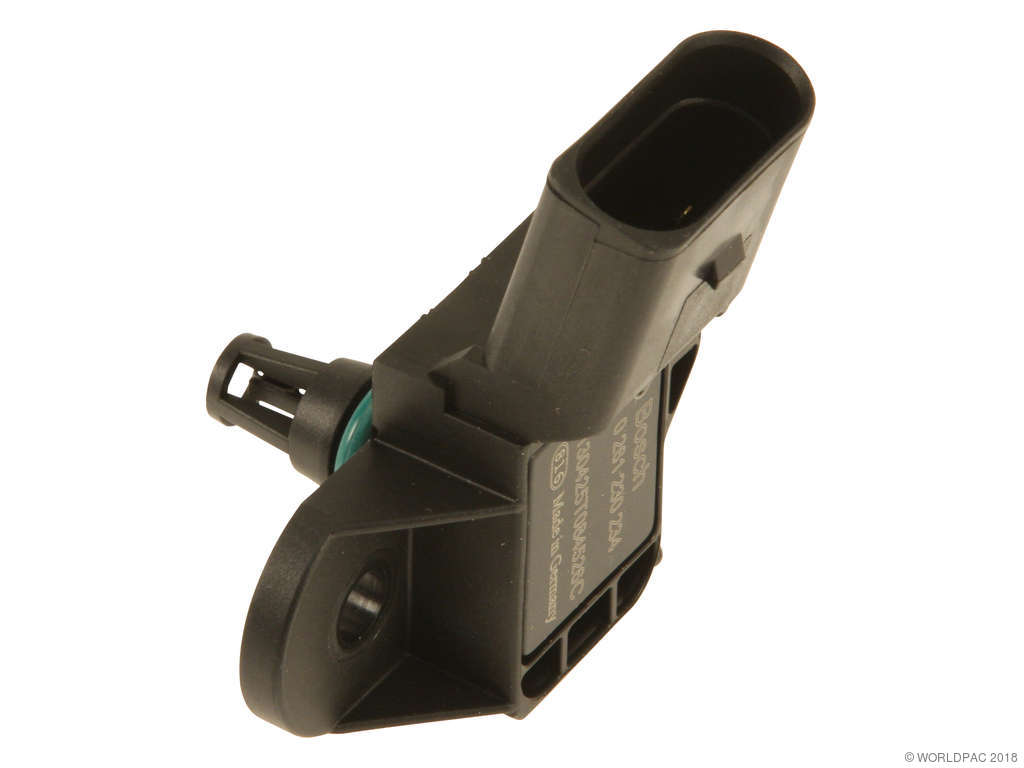
- Using an OEM-quality brand like Bosch (part #0261230281) for the replacement is highly recommended.
- If the issue persists, investigate for vacuum leaks, with the PCV valve being the most likely culprit on this engine.
What's Unique About the 2012-2018 Audi A6
The 3.0L TFSI engine (engine code EA837) in the C7 generation A6 is supercharged, making the MAP sensor's role in measuring both vacuum and boost pressure critical for performance. It's important to distinguish the MAP sensor (G71, located at the rear of the supercharger) from the two charge air pressure sensors (G31 and G447) located on the sides of the supercharger. While the G71 sensor itself is a common failure point, issues with the PCV (crankcase ventilation) system are also prevalent on this engine. A failing PCV valve, located under the supercharger, can create vacuum leaks or abnormal crankcase pressure, which can mimic or contribute to MAP sensor issues.
Symptoms You May Notice
- Check Engine Light is on
- EPC (Electronic Power Control) light may be on
- Rough or unstable idle
- Hesitation or sluggish acceleration, feeling like the supercharger is not engaging
- Noticeable loss of engine power
- Reduced fuel economy
- Engine stalling, especially at stops
- Black smoke from the exhaust in some cases
- Difficulty starting the engine
- Replacing spark plugs or ignition coils without checking MAP sensor data first. While misfires can be a symptom, the P0107 code points specifically to the MAP sensor circuit.
- Confusing the MAP sensor (G71) at the rear of the supercharger with the charge pressure sensors (G31, G447) on the sides of the supercharger.
Most Likely Causes
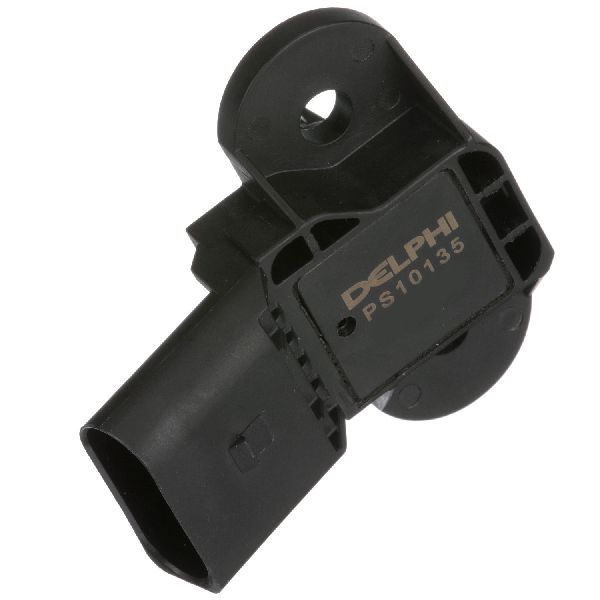
- Faulty Manifold Absolute Pressure (MAP) Sensor 🔴 High Probability → Shop Manifold Absolute Pressure Sensor The sensor (Audi designation G71) is exposed to constant heat cycles and potential oil vapor contamination from the PCV system, leading to electronic failure over time. Bosch is the original equipment manufacturer (OEM).
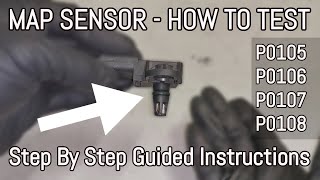
How to confirm: With the key on and engine off, use a scan tool (like VCDS) to check the MAP sensor reading; it should be close to the barometric pressure. With the engine running at idle, the pressure reading should drop significantly. If the reading is stuck low (e.g., below 0.5V) or doesn't change, the sensor is likely faulty. A multimeter test on the signal wire should show voltage changing with engine RPM. 🎬 See this simple DIY guide for testing your MAP sensor
Typical fix: Replace the MAP sensor. It is held by one T20 or T30 Torx screw on the rear of the supercharger assembly, sometimes under a foam sound-deadening block.
Est. part cost: $40-$130 - Wiring or Connector Issue 🟡 Medium Probability Engine bay heat can make wiring insulation brittle over time, and vibrations can cause connections to loosen. The connector is located at the back of the engine, near the firewall, making it somewhat difficult to access and inspect.
How to confirm: Visually inspect the MAP sensor connector and harness for damage, corrosion, or loose pins. With a multimeter, check for a 5-volt reference and a good ground at the connector with the key on. A 'wiggle test' on the harness while monitoring live data can reveal intermittent connections. A short to ground or an open in the signal wire will cause a P0107 code.
Typical fix: Repair the damaged section of the wiring harness or clean/replace the connector.
Est. part cost: $5-$50 - Vacuum Leak ⚪ Low Probability Plastic and rubber vacuum hoses can crack and become brittle with age. A failed PCV valve is a very common source of vacuum leaks on this engine, often producing a distinct whistling or sucking sound.
How to confirm: Listen for hissing or whistling sounds around the intake manifold and supercharger at idle. A smoke test is the most effective way to pinpoint the source of a vacuum leak. A very strong vacuum when trying to remove the oil cap at idle (indicating the crankcase is under high vacuum) is a classic sign of a failed PCV diaphragm.
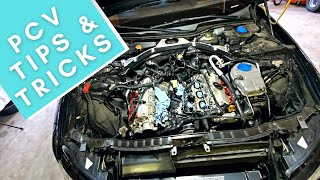
Typical fix: Replace the cracked hose or faulty gasket. If the PCV valve has failed, it must be replaced. This is a labor-intensive job as it sits under the supercharger, requiring its removal. 🎬 Watch: Step-by-step guide to removing the supercharger and PCV valve
Est. part cost: $10-$450
Rare But Worth Checking
- Faulty Engine Control Module (ECM): → Shop Engine Control Module (ECM) This is very uncommon. The ECM should only be considered after all other possibilities, including the sensor, wiring, and vacuum systems, have been thoroughly tested and ruled out.
- Clogged Catalytic Converters: A severely restricted exhaust can alter manifold pressure and potentially trigger a P0107 code, though it is more likely to be accompanied by other codes related to catalyst efficiency or exhaust backpressure.
Diagnosis Steps
- Read the fault codes with an OBD-II scanner (VCDS is preferred for VW/Audi) to confirm P0107 is present and note any other codes.
- Visually inspect the MAP sensor (G71), located on the rear of the supercharger near the firewall, and its electrical connector for any obvious damage, corrosion, or loose connections.
- With the key on, engine off (KOEO), use a scan tool to view live data for the MAP sensor. The pressure reading should be close to the current atmospheric (barometric) pressure. A reading significantly below this points to a problem.
- Start the engine. At idle, the MAP sensor reading should drop to a low pressure/high vacuum value. If the reading is stuck low (below 0.5V) and does not change with engine RPM, the sensor is highly suspect.
- If the sensor signal is suspect, test the circuit. Disconnect the sensor and use a multimeter to verify a 5-volt reference and a good ground are present at the connector with the key on.
- If power and ground are good, the sensor is almost certainly the fault. If power or ground is missing, the wiring harness between the sensor and the ECM needs to be inspected for breaks or shorts.
- If the sensor and wiring test good, perform a smoke test to check for vacuum leaks, paying close attention to the PCV valve and associated hoses.
- Check for a strong vacuum pull at the oil filler cap when the engine is running; excessive suction is a strong indicator of a failed PCV valve diaphragm.
Parts You'll Likely Need
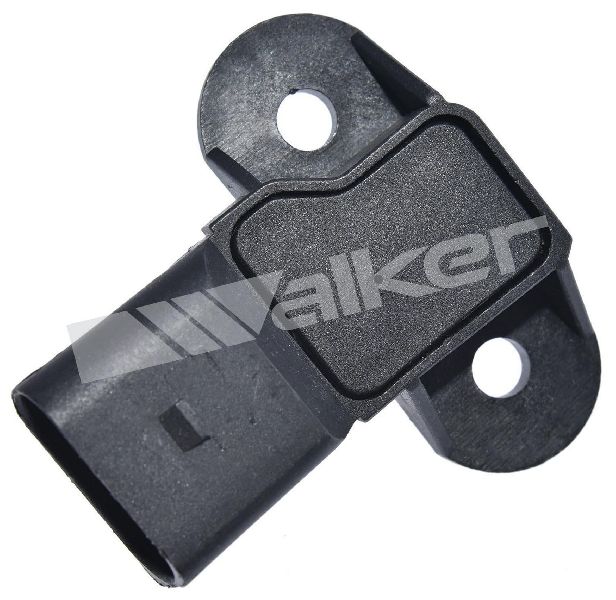
- Manifold Absolute Pressure (MAP) Sensor
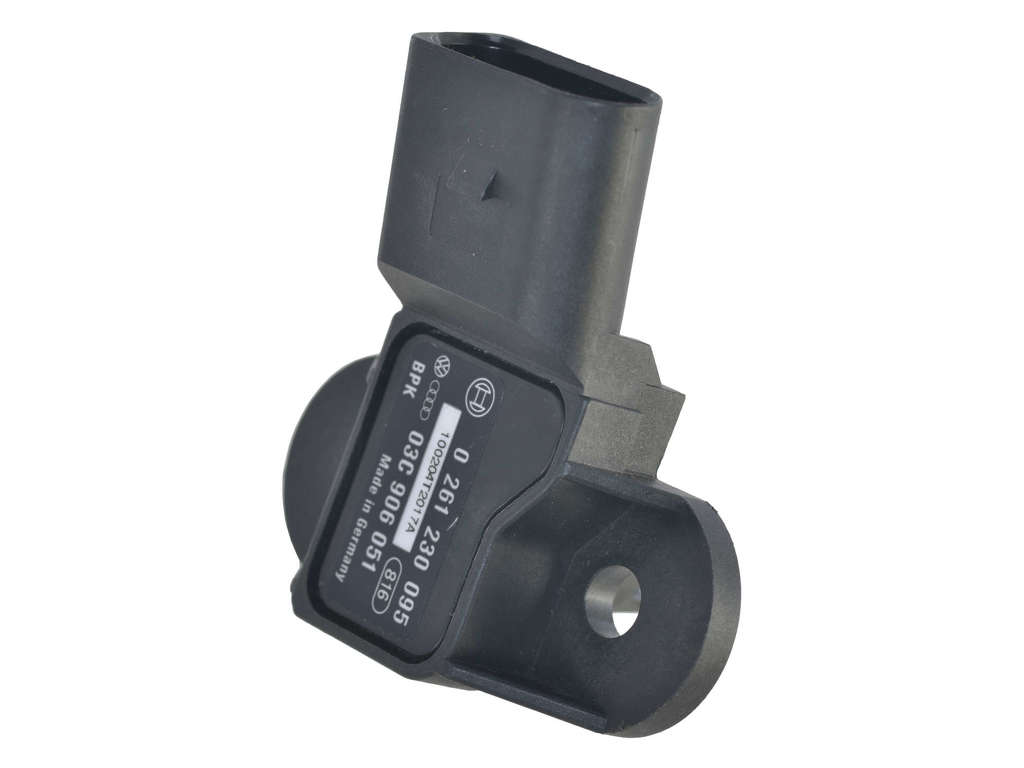
(OEM #03C906051F)— This is the most common cause for a P0107 code. The sensor's internal electronics fail, causing it to send a signal voltage below the minimum specification.
Trusted brands: Bosch (OEM), Hella, Genuine Volkswagen/Audi
OEM price range: $90-$130
Aftermarket price range: $40-$70
Related Codes That Often Appear With This One
- P0106 — This code indicates a MAP sensor range/performance issue. It often appears with P0107 as the sensor begins to fail, sending erratic signals before failing completely low.
- P0108 — This code for 'MAP Circuit High Input' can sometimes appear intermittently along with P0107 if the sensor's internal electronics are failing and sending erratic signals.
- P0068 — This code indicates a correlation issue between the MAP sensor, MAF sensor, and throttle position. A faulty MAP sensor is a primary cause for this code.
Technical Service Bulletins (TSBs) & Recalls
- While no TSB is directly for P0107, TSB 10-22-24 (2059446/5) addresses oil loss from the filler cap due to a faulty PCV membrane, a related issue that can cause crankcase pressure problems.
- A service campaign (24AP) and related TSBs address excessive oil consumption by replacing the PCV valve with an updated part (06E103547H) and updating ECM software.
Platform-Specific Known Issues
- The PCV valve on the 3.0T engine is a known failure item located under the supercharger. Its failure can cause a variety of vacuum and pressure-related codes, including those for the MAP sensor. If other symptoms like high oil consumption or a whistling noise are present, the PCV system should be inspected. An updated PCV valve (part number 06E103547H or later) was released to address some of these issues.
- The distinction between the MAP sensor (G71, rear of supercharger) and the two Charge Pressure Sensors (G31/G447, sides of supercharger) is a common point of confusion for DIYers. P0107 specifically relates to the G71 sensor.
Mechanic-Grade Diagnostic Values
- MAP Sensor (G71) Signal Voltage at Idle — expected: 1.0V - 1.5V. Failure: A reading below 0.5V will trigger P0107. A reading above 4.5V would trigger P0108.
- MAP Sensor (G71) Connector Pin Voltages (Key On, Engine Off) — expected: Pin 1: ~5V (Reference Voltage), Pin 3: ~0V (Ground), Pin 4: ~4.5-4.8V (Signal voltage, should match barometric pressure).. Failure: Missing 5V reference or ground points to a wiring or ECM issue. A signal voltage stuck low (e.g., <0.5V) with KOEO indicates a failed sensor.
- Wiring Harness Continuity (Sensor to ECM) — expected: Maximum 1.5 ohms. Failure: Resistance higher than 1.5 ohms indicates an open or high-resistance in the wiring harness that can cause the P0107 code.
- Fuel Pressure (Low-Side) — expected: 3.0 to 6.0 Bar. Failure: While not a direct cause of P0107, this is a key operating parameter for the engine.
- Fuel Pressure (High-Side) — expected: 30 to 125 Bar. Failure: While not a direct cause of P0107, this is a key operating parameter for the engine.
Scan Tool Commands That Help
- VCDS (VAG-COM): MVB (Measuring Value Blocks) Comparison — With Key On, Engine Off, compare the reading from the Manifold Pressure Sensor (G71) against the ambient/barometric pressure sensor (F96), which is internal to the ECM. The values should be nearly identical. A significant deviation points to a faulty G71 sensor. This is a primary and highly effective diagnostic step for P0106 and related MAP faults.
Wiring & Ground Locations
- MAP Sensor (G71) Connector — At the rear of the supercharger, near the firewall. It is a 4-pin connector on pre-facelift models.. This is the direct connection point for the sensor. Corrosion or loose pins here are a common cause of failure. Pin 1 is 5V reference, Pin 3 is ground, and Pin 4 is the signal wire.
- Ground Point 85 — Described in wiring diagrams as 'Earth connection -1-, in engine compartment wiring harness'. Often located on the chassis near the battery or on the engine block itself.. This is a primary ground for the engine sensor harness. A loose or corroded connection here can cause erratic voltage and floating grounds for multiple sensors, including the MAP, leading to implausible readings and codes like P0107.
- Ground Point near Alternator — On the right side of the engine compartment, near the alternator, there is a chassis ground stud.. While not the primary sensor ground, poor grounding at any major engine bay location can introduce electrical noise and voltage drop issues that affect sensitive sensor circuits.
OEM Part Supersession History
06E103547 (and revisions like F, H, Q)→06E103547AC, 06E103547AH (and other later revisions)— The diaphragm inside the original PCV valve (oil separator) was prone to tearing, causing significant vacuum leaks. Later revisions use more durable materials to improve longevity.
Heads up: Some revisions altered the internal crankcase pressure regulation. Using an incorrect version for your specific engine code and ECU software can lead to oil consumption or other seal issues. It is critical to verify the correct part number with your vehicle's VIN.
Model Year Variations Within This Range
- 2016-2018 (C7.5 Facelift): The facelifted C7.5 models introduced the 'CREC' engine code for the 3.0T. This engine features updates including a new supercharger with an electromagnetic clutch and, on some versions, dual injection. The pressure sensors and their connectors may differ from the earlier C7 models. For example, some owners report 3-pin connectors on the C7.5 versus 4-pin on the C7. It is vital to confirm parts by VIN for these later models.
Diagnostic Flowchart
Other Known Issues on This Vehicle
Issues unrelated to this code that are worth knowing about as an owner of this generation:
- PCV Valve Failure 🔴 High — Very common, often fails between 50k-100k miles. Symptoms include a loud whistle, high oil consumption, and rough idle. (Ref: Multiple TSBs exist, including one for oil consumption that involves replacing the PCV with an updated part (e.g., 06E103547H).)
- Water Pump & Thermostat Failure 🔴 High — Extremely common. The plastic housings for both components are prone to cracking, causing coolant leaks. Failure can occur as early as 30k miles, but is very common around 60k-90k miles. (Ref: No recall, but a known class-action investigation target. Updated parts are available.)
- Engine Mount Failure 🟠 Medium — The fluid-filled electronic engine mounts tend to collapse or leak, typically starting around 60k-80k miles, causing excessive vibration at idle.
- Timing Chain Tensioner Wear 🟠 Medium — Less common than other issues but significant. Can cause a brief chain rattle on cold starts, typically on higher-mileage cars (100k+ miles). If ignored, can lead to catastrophic failure.
- Carbon Buildup on Intake Valves 🟡 Low — A universal issue for all direct-injection engines. Performance degradation becomes noticeable after 60k-80k miles, requiring a manual (walnut blasting) cleaning service.
Used vs. New Parts: Buying Guide for This Vehicle
When a used part is the smart pick: For this repair, using a used part is generally not recommended for the sensors or the PCV valve. The primary failure modes are electronic failure and material degradation (rubber diaphragm), which are age and heat-cycle dependent. A used part offers no guarantee of remaining life and may fail shortly after installation.
Donor-vehicle mileage cap: roughly under 30000 miles for the part to have meaningful remaining life.
What to inspect on the donor part:
- For a MAP sensor, inspect the connector for corrosion and the sensor tip for physical damage or heavy oil contamination.
- For a PCV valve, there are no reliable external cues. The internal diaphragm is the failure point and cannot be inspected without destruction.
OEM-only on this vehicle (don't cheap out):
- PCV Valve / Oil Separator: Due to the high failure rate of original parts and subsequent revisions, only a new, OEM or OEM-supplier (e.g., Genuine Audi) part with the latest part number should be used. Aftermarket PCV valves have a poor reputation in forums for premature failure.
Aftermarket brands forum-validated for this vehicle:
- MAP Sensor: Bosch is the Original Equipment Manufacturer (OEM) and is a reliable choice. Hella is also a reputable German supplier.
Brands owners have reported issues with on this vehicle:
- Unnamed, 'white-box' electronic sensors from online marketplaces should be avoided. They often have poor quality control and may not be calibrated correctly, leading to persistent codes or poor performance.
Real Owner Stories
Aggregated from forums and TSBs cited above. Mileages and costs reflect what owners reported in those sources.
2012-2018 Audi A6 3.0L TFSI V6 — ~75000 miles
Symptoms: Loud whistle, high oil consumption, and rough idle.
What fixed it: Replacement of the PCV valve with the updated part (06E103547H).
Source hint: vehicle_specific_issues and known_issues sections regarding PCV Valve Failure
2012-2018 Audi A6 3.0L TFSI V6
Symptoms: The user was looking for the exact location of the sensor to address boost pressure issues, noting it was separate from the sensors on the sides of the supercharger.
What fixed it: Identifying and inspecting the G71 sensor at the top/center/rear of the motor by the firewall.
Source hint: AudiWorld Forums: "3.0L supercharged v6 turbo boost pressure sensor location"
Related OBD-II Codes
Frequently Asked Questions
Where exactly is the MAP sensor (G71) located on my 3.0T engine?
I see sensors on the sides of my supercharger; are these the cause of P0107?
Does TSB 2059446/5 apply to my P0107 code?
What is the updated PCV valve part number for the Audi A6 3.0T?
Can a whistling sound from the engine be related to P0107?
Is the MAP sensor repair expensive on this vehicle?
Helpful Videos


We Have This Part in Stock

The information in this article is provided for general reference and educational purposes only. Vehicle specifications, procedures, and part compatibility can vary by production date, trim level, and region. Always consult your vehicle's factory service manual and verify part numbers before purchasing or performing repairs. Safety-critical components such as airbags, seat belts, and braking systems should be installed by a qualified professional.
- Audi A6:
- 🧭 Diagnostic Flowchart
- 🎬 Helpful Videos
- 🛍️ Shop This Part
- What's Unique About the 2012-2018 Audi A6
- Symptoms You May Notice
- Most Likely Causes
- Rare But Worth Checking
- Diagnosis Steps
- Parts You'll Likely Need
- Related Codes That Often Appear With This One
- Technical Service Bulletins (TSBs) & Recalls
- Platform-Specific Known Issues
- Mechanic-Grade Diagnostic Values
- Scan Tool Commands That Help
- Wiring & Ground Locations
- OEM Part Supersession History
- Model Year Variations Within This Range
- Other Known Issues on This Vehicle
- Used vs. New Parts: Buying Guide for This Vehicle
- Real Owner Stories
- 2012-2018 Audi A6 3.0L TFSI V6 — ~75000 miles
- 2012-2018 Audi A6 3.0L TFSI V6
- Related OBD-II Codes
- Frequently Asked Questions
- 🎟️ Get 5% Off