

P0107 on 2019-2024 Kia Forte: Manifold Absolute Pressure Sensor Low Input Causes and Fixes
On a 2019-2024 Kia Forte, code P0107 is most often caused by a faulty Manifold Absolute Pressure (MAP) sensor. Replacing the sensor is a simple, 15-minute DIY job with the part costing between $30 and $80. Before replacement, check for a dirty air filter and inspect the sensor's wiring, as these can also trigger the code.
- P0107 on a 2019-2024 Forte almost always points to a problem with the Manifold Absolute Pressure (MAP) sensor circuit.
- The most likely fix is replacing the MAP sensor itself, which is an inexpensive part and very easy to access on the 2.0L engine.
- Before buying a new sensor, always perform a quick visual inspection of the wiring and connector for obvious damage, and check the engine air filter.
- Symptoms like rough idle and hesitation are common, and driving with the code for an extended period is not advised as it can damage the catalytic converter.
- This is a highly DIY-friendly repair, requiring only basic hand tools and about 15 minutes of time.
What's Unique About the 2019-2024 Kia Forte
For the third-generation Kia Forte (BD) with the 2.0L Nu MPI engine, the P0107 code is a straightforward issue. While there are no specific recalls for this code, a Technical Service Bulletin (TSB_FUE047) exists for the related P0106 code on 2019-2020 models, which recommends an ECU software update. While P0107 is a circuit code, not a performance code like P0106, it's worth noting that the ECU logic can be sensitive. The MAP sensor is easily accessible on top of the intake manifold, making diagnosis and replacement simpler than on many other vehicles. The failure pattern is typical for this type of sensor and not indicative of a unique design flaw on this platform.
Symptoms You May Notice
- Check Engine Light is on
- Rough or unstable idle.
- Engine hesitation, surging, or sluggish acceleration.
- Reduced fuel economy.
- Difficulty starting the engine.
- Black smoke from the exhaust in some cases, indicating a rich fuel mixture.
- Replacing spark plugs or ignition coils for a rough idle without first checking the codes. While these can cause similar symptoms, P0107 points specifically to the MAP sensor circuit.
- Replacing the MAP sensor without checking for a dirty air filter or inspecting the wiring first. A simple visual check can save the cost of an unnecessary part.
Most Likely Causes
- Faulty Manifold Absolute Pressure (MAP) Sensor 🔴 High Probability → Shop Manifold Absolute Pressure Sensor The sensor is exposed to heat and vibration in the engine bay, and internal electronics can fail over time, causing the output voltage to drop. It is the most common point of failure for this code.
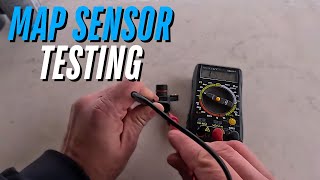
How to confirm: With the engine off and ignition on, use a scan tool to check the MAP sensor reading. It should match the current barometric pressure. You can also test the sensor's signal wire with a multimeter; it should typically read around 4.5-5.0V with the key on/engine off and drop to 1.0-1.5V at idle. A reading below 0.5V will trigger the code. 🎬 See how to test your MAP sensor with a multimeter.
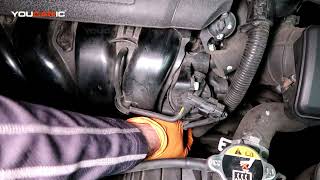
Typical fix: Replace the MAP sensor. It is located on the intake manifold and secured by a single 10mm bolt. 🎬 Watch: Step-by-step guide to replacing the MAP sensor. Ensure the O-ring from the old sensor is removed with it and that the new O-ring is seated properly to prevent vacuum leaks.
Est. part cost: $30-$80 - Wiring Harness or Connector Issue 🟡 Medium Probability Engine vibration and heat can cause wires to fray or insulation to crack. The connector pins can also become corroded or loose, leading to a poor connection or a short to ground. Wires are known to sometimes break inside the insulation near the connector pigtail on GM vehicles with similar issues, a principle that can apply here.
How to confirm: Visually inspect the wiring harness leading to the MAP sensor for any signs of damage, melting, or corrosion. Unplug the connector and check for bent or corroded pins. With the connector unplugged and ignition on, verify there is a 5V reference voltage and a good ground at the connector terminals using a multimeter. Wiggle the wiring while monitoring live data to see if the reading fluctuates, indicating an intermittent connection.
Typical fix: Repair the damaged section of wiring or clean the connector terminals. If the connector itself is damaged, it may need to be replaced.
Est. part cost: $5-$50
Rare But Worth Checking
- Faulty Powertrain Control Module (PCM/ECU): → Shop Engine Control Module (ECM) This is very rare. Before condemning the ECU, all other possibilities, including the sensor and its entire circuit, must be exhaustively tested and ruled out. An ECU software update may be needed, as noted in TSBs for related codes on this platform.
- Significant Vacuum Leak: While a vacuum leak typically sets a P0106 (performance/range) code, a very large leak from a cracked hose or bad intake manifold gasket could theoretically cause erratic pressure readings that might trigger a circuit code.
- Clogged Engine Air Filter: A severely clogged air filter can restrict airflow to the point that it affects manifold pressure readings. One owner of a platform-mate Hyundai Elantra with a MAP sensor code found an extremely dirty air filter to be the cause. Always check simple maintenance items first.
Diagnosis Steps
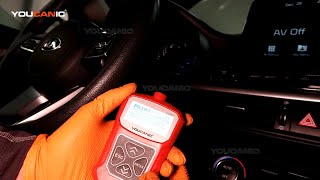
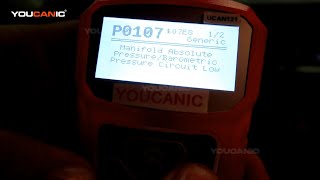
- Connect an OBD-II scanner and confirm P0107 is the active code. Note any other codes present, like P0113 or P0106.
- With the ignition on but the engine off, view the live data for the MAP sensor on the scanner. The reading should be close to the barometric pressure for your altitude (approx. 14.7 PSI or 29.9 inHg at sea level). A very low or zero reading points to a problem.
- Turn the vehicle off. Check the engine air filter for excessive dirt or blockages.
- Locate the MAP sensor on the top right side of the intake manifold.
- Inspect the sensor's electrical connector for looseness, corrosion, or damage. Inspect the visible wiring for any signs of fraying, melting, or breaks.
- If the wiring looks good, disconnect the connector. Turn the ignition on. Use a multimeter to test the terminals on the harness side of the connector. You should find a 5-volt reference signal and a good ground.
- If the voltage and ground are correct, the sensor itself is the most likely culprit. If voltage or ground is missing, the wiring circuit needs to be traced and repaired.
- If the sensor is deemed faulty, replace it. It is held in place by a single 10mm bolt. Ensure the old O-ring is removed.
- After replacement, clear the trouble codes with the scanner and perform a test drive to ensure the code does not return.
Parts You'll Likely Need
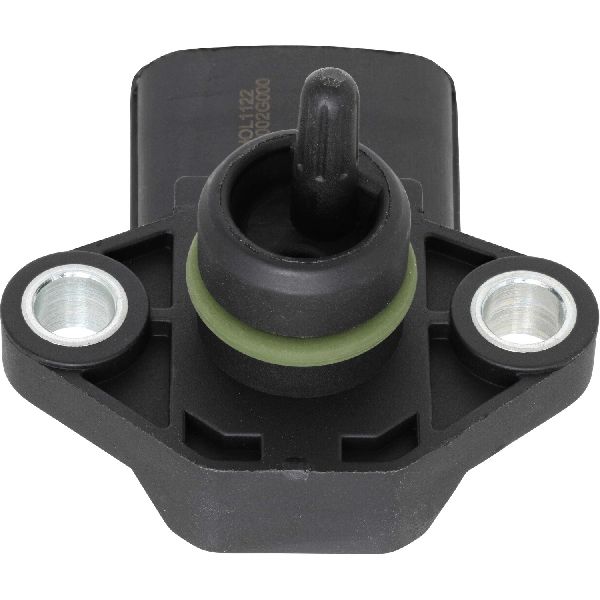
- Manifold Absolute Pressure (MAP) Sensor
(OEM #39300-2E600)— This is the most common failure point for code P0107. The internal electronics of the sensor fail, causing it to send a voltage signal below the minimum specification.
Trusted brands: Kia (Genuine OEM), Delphi, Hella, Standard Motor Products, NGK
OEM price range: $60-$90
Aftermarket price range: $28-$60
Related Codes That Often Appear With This One
- P0113 — Intake Air Temperature (IAT) Sensor 1 Circuit High. On some vehicles, the MAP and IAT sensors are combined into one unit (a T-MAP or MAPT sensor). A failure within the sensor assembly can trigger codes for both functions simultaneously. A YOUCANIC video on a 2019 Forte showed P0107 and P0113 appearing together. 🎬 Watch: Diagnosing combined MAP and IAT sensor circuit codes.
- P0106 — MAP/Barometric Pressure Sensor Range/Performance. This code indicates the sensor's output is irrational, while P0107 indicates the signal is specifically low. They often share the same root causes, and a failing sensor can sometimes throw one code, the other, or both.
Technical Service Bulletins (TSBs) & Recalls
- TSB_FUE047: While not directly for P0107, this TSB for 2019-2020 Forte 2.0L models addresses related code P0106 by recommending an ECM software update. This indicates that ECU logic is a known sensitivity on this platform.
Mechanic-Grade Diagnostic Values
- MAP Sensor 5V Reference Wire (at harness connector) — expected: ~5.0 Volts DC. Failure: Voltage is significantly lower than 5.0V or is 0V, indicating a wiring issue or problem with the PCM.
- MAP Sensor Ground Wire (at harness connector) — expected: Less than 0.10V (100mV). Failure: Higher voltage indicates a poor ground connection.
- MAP Sensor Signal Wire (Key On, Engine Off) — expected: ~4.5 - 5.0 Volts DC (should correlate with Barometric Pressure). Failure: Voltage is significantly lower (e.g., below 0.5V), which triggers P0107.
- MAP Sensor Signal Wire (Engine at warm idle) — expected: 1.0V to 1.5V DC. Failure: Voltage does not drop from the KOEO reading, or is stuck low near 0V.
- P0107 Trigger Threshold — expected: Signal voltage above 0.5V. Failure: The PCM sets code P0107 when the signal voltage is detected to be below 0.5V, and sometimes as low as 0.25V.
Scan Tool Commands That Help
- Kia GDS (Global Diagnostic System): Live Data / Current Data — To monitor the MAP sensor voltage and pressure readings in real-time. The OEM tool provides manufacturer-specific PIDs for the most accurate data. You can graph the sensor's response when snapping the throttle to check for smooth transitions versus glitches or dropouts.
- Kia GDS (Global Diagnostic System): DTC Guide / Diagnosis Procedure — After retrieving code P0107, the GDS software includes a built-in troubleshooting guide for that specific code. It provides expected values, wiring diagrams, and step-by-step checks tailored to the vehicle, which is more precise than generic repair info.
Wiring & Ground Locations
- MAP Sensor Connector — On the top right side of the engine's intake manifold.. This is the primary connection point for the sensor. Corrosion, loose pins, or damage to the connector or its pigtail wiring is a common cause of a low voltage signal.
- Engine Ground — Typically, a primary engine ground point is a strap from the engine block to the chassis or a direct connection to the negative battery terminal. The specific ground point for the MAP sensor circuit is integrated into the main engine harness.. A poor ground connection for the sensor circuit can cause the signal voltage to be skewed, leading to an incorrect low reading and triggering P0107. The ground wire at the sensor connector should have less than 0.10V.
- Harness Chafe Points — Visually inspect the wiring harness where it contacts the engine block, brackets, or the firewall. Points of contact and vibration are common areas for wires to rub through their insulation over time.. If the MAP sensor signal wire chafes and shorts to ground, it will pull the voltage to 0V, directly causing a P0107 code.
Real Owner Repair Stories
- iCarsoft US Repair Database (2018 Hyundai Elantra (platform mate with same 2.0L engine)) — Check Engine Light with code P0107.
❌ Tried (didn't work) Not specified, but the cause was not immediately obvious.
✅ What actually fixed it The MAP sensor was obstructed by oil residue that had been pushed into the intake manifold by a failing PCV valve. Cleaning the sensor port and replacing the faulty PCV valve resolved the issue. - YOUCANIC Mechanic Video (2019 Kia Forte) — Check Engine Light with codes P0107 and P0113.
❌ Tried (didn't work) Initial diagnosis pointed to a sensor issue.
✅ What actually fixed it The MAP sensor was found to have a small amount of oil on it upon removal. The sensor was replaced, which cleared both the P0107 (MAP Low Input) and P0113 (IAT High Input) codes, suggesting an internal failure of the combined sensor unit.
OEM Part Supersession History
39300-2E600→39300-2E600 (no supersession)— The part number remains current for the specified vehicle range.
Heads up: This part number is specific to certain Kia/Hyundai 2.0L engines. A visually similar part, 39300-2B000, is used on other Kia engines and may not have the correct calibration. Always verify fitment with the VIN.
Diagnostic Flowchart
Used vs. New Parts: Buying Guide for This Vehicle
When a used part is the smart pick: A used MAP sensor is generally not recommended. It is an inexpensive electronic part critical for engine management. The risk of getting a part that is already failing or has a short remaining lifespan is high, and the cost savings are minimal compared to a new aftermarket or OEM part.
Donor-vehicle mileage cap: roughly under 40000 miles for the part to have meaningful remaining life.
What to inspect on the donor part:
- Ensure the donor vehicle was not in a front-end collision.
- Inspect the connector pins for any signs of corrosion or damage.
- Check the plastic housing for cracks or signs of extreme heat exposure.
- Ask for the donor vehicle's mileage; lower is always better for electronic components.
Aftermarket brands forum-validated for this vehicle:
- Delphi
- NGK/NTK
- Standard Motor Products (SMP)
- Hella
Brands owners have reported issues with on this vehicle:
- No-name, unbranded parts from online marketplaces should be avoided due to a high likelihood of incorrect calibration, premature failure, and lack of warranty.
Related OBD-II Codes
Frequently Asked Questions
Where is the MAP sensor located on my 2019-2024 Kia Forte?
Is there a known TSB or software update for the P0107 code on my Forte?
What voltage should I see when testing the MAP sensor on my Kia Forte?
How can I confirm the MAP sensor is bad before replacing it?
Can I use a MAP sensor from a Hyundai Elantra or Kia Niro in my Forte?
Should I buy a used MAP sensor to save money?
What are some reliable aftermarket brands for a MAP sensor for my Forte?
Helpful Videos
We Have This Part in Stock

The information in this article is provided for general reference and educational purposes only. Vehicle specifications, procedures, and part compatibility can vary by production date, trim level, and region. Always consult your vehicle's factory service manual and verify part numbers before purchasing or performing repairs. Safety-critical components such as airbags, seat belts, and braking systems should be installed by a qualified professional.
- Kia Forte:
- 🧭 Diagnostic Flowchart
- 🎬 Helpful Videos
- 🛍️ Shop This Part
- What's Unique About the 2019-2024 Kia Forte
- Symptoms You May Notice
- Most Likely Causes
- Rare But Worth Checking
- Diagnosis Steps
- Parts You'll Likely Need
- Related Codes That Often Appear With This One
- Technical Service Bulletins (TSBs) & Recalls
- Mechanic-Grade Diagnostic Values
- Scan Tool Commands That Help
- Wiring & Ground Locations
- Real Owner Repair Stories
- OEM Part Supersession History
- Used vs. New Parts: Buying Guide for This Vehicle
- Related OBD-II Codes
- Frequently Asked Questions
- 🎟️ Get 5% Off