

P0108 on 2003-2008 Honda Pilot: MAP Sensor Circuit High Causes and Fixes
Code P0108 on a 2003-2008 Honda Pilot most often means the Manifold Absolute Pressure (MAP) sensor has failed. It's an easy, 15-minute DIY replacement located on top of the throttle body. Expect to pay $70-$100 for a quality OEM or Denso replacement part. If a new sensor doesn't fix it on a high-mileage engine, the cause is likely tight valve clearances needing adjustment.
- P0108 on a 2003-2008 Pilot is most often fixed by replacing the MAP sensor, which is an easy 15-minute DIY job.
- There are two different MAP sensors for this generation: 37830-PGK-A01 for 2003-2004 models and 37830-PNC-003 for 2005-2008 models. Verify your year before purchasing.
- Before replacing parts, check that the sensor's electrical connector is secure, as it's common to forget to reconnect it after other service.
- On higher mileage engines (over 100,000 miles), if a new sensor doesn't fix the code, have the valve clearances inspected and adjusted.
What's Unique About the 2003-2008 Honda Pilot
For the first-generation Honda Pilot with the J35A V6 engine, a P0108 code is very frequently a straightforward MAP sensor failure. However, a unique and often overlooked cause on higher-mileage (over 100k miles) Honda V6 engines is incorrect valve clearance. Over time, the valve face and seat wear down (a process called valve seat recession), which causes the exhaust valve clearances to become too tight. This prevents the valves from seating perfectly, reducing engine vacuum at idle and causing the MAP sensor to report a higher pressure (lower vacuum) than expected, which can trigger a P0108 code even with a perfectly good MAP sensor. This mechanical possibility makes it crucial to consider engine health before assuming the sensor is the only problem.
Symptoms You May Notice
- Check Engine Light is on
- VTM-4 light may illuminate simultaneously
- Rough or unstable idle
- Hesitation or loss of power during acceleration
- Significantly decreased fuel economy
- Black smoke from the exhaust, indicating a rich fuel condition
- Engine is hard to start or fails to start
- Intermittent stalling, especially when coming to a stop
- Replacing the oxygen sensors. A rich running condition might suggest an O2 sensor issue, but the P0108 code points directly to the MAP circuit as the origin of the problem.
- Replacing the throttle body. The MAP sensor is mounted on the throttle body, but the throttle body itself is rarely the cause of a P0108 code.
Most Likely Causes
- Faulty Manifold Absolute Pressure (MAP) Sensor 🔴 High Probability → Shop Manifold Absolute Pressure Sensor The MAP sensor is a very common failure point on this platform. An internal short or diaphragm failure causes the sensor to send a constant high voltage signal (stuck at ~5V) to the PCM. Owner forums are filled with reports strongly advising the use of genuine Honda or OEM-supplier (Denso) parts, as cheap aftermarket sensors are known to fail quickly or be dead-on-arrival.
How to confirm: With the key on and engine off, check the MAP sensor voltage on a scan tool. It should be stuck near 5.0 volts. With the engine idling, a healthy sensor's voltage should drop to around 1.0-1.8 volts. If the voltage remains high regardless of engine state, the sensor has failed. 🎬 See how to diagnose and fix the P0108 high voltage code.
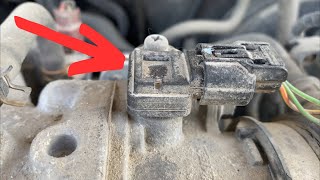
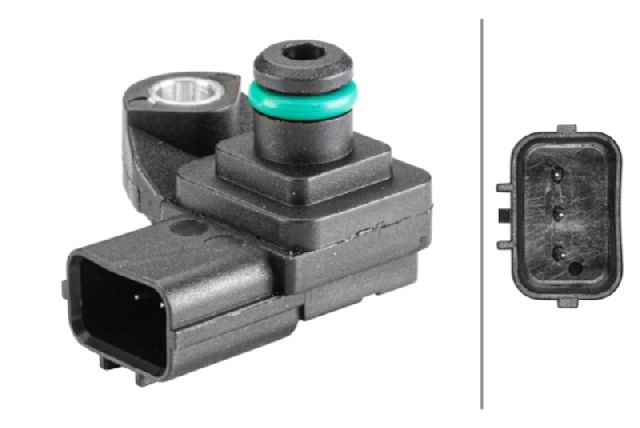
Typical fix: Replace the MAP sensor. It is located on top of the throttle body and held by one Phillips head screw, making for a 15-minute repair. 🎬 Watch: 2003-2008 Honda Pilot MAP sensor location and replacement guide.
Est. part cost: $65-$110 - Wiring or Connector Issue 🟡 Medium Probability The wiring harness in the engine bay is exposed to heat and vibration. Wires can chafe, or the connector pins can become corroded or loose, causing a short to power or a bad connection. On some Honda models, the MAP and Throttle Position Sensor (TPS) connectors are similar and can be accidentally swapped, which will immediately set a P0108 code.
How to confirm: Inspect the MAP sensor connector and wiring for visible damage, corrosion, or loose pins. Use a multimeter to check for a 5V reference, a good ground, and that the signal wire is not shorted to the 5V reference wire at the connector.
Typical fix: Repair the damaged section of the wiring harness or clean/replace the connector.
Est. part cost: $5-$50 - Tight Exhaust Valve Clearance ⚪ Low Probability On higher mileage (100k+ miles) Honda J-series V6 engines, valve seat wear causes exhaust valve clearances to tighten. This prevents the valves from closing fully, creating a slight loss of compression and reducing engine vacuum at idle. This causes the MAP sensor to report a higher (less vacuum) pressure reading to the PCM, which can be misinterpreted as a sensor fault.
How to confirm: This should be suspected after a new, quality MAP sensor does not resolve the code. A valve clearance inspection must be performed with the engine cold. This is a mechanical issue that won't be found with electrical tests.
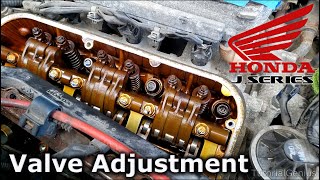
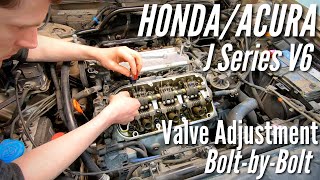
Typical fix: Perform a valve adjustment to bring the intake and exhaust valve clearances back into specification. This is a more involved job that requires removing the valve covers. 🎬 Watch this step-by-step Honda J-series V6 valve adjustment walkthrough.
Est. part cost: $40-$80 for gaskets if doing it yourself.
Rare But Worth Checking
- Clogged Catalytic Converter: A severe exhaust restriction can cause pressure to build up throughout the engine, which can affect the intake manifold pressure reading. This would typically be accompanied by a severe loss of power, especially at higher RPMs, and possibly other exhaust-related codes.
- Faulty Powertrain Control Module (PCM): → Shop Engine Control Module (ECM) This is extremely rare. The PCM's internal circuit for reading the MAP sensor could fail. All other possibilities, especially the sensor, wiring, and mechanical causes, should be exhaustively ruled out before considering PCM replacement.
Diagnosis Steps
- Read the freeze frame data with a scan tool to understand the engine conditions (RPM, speed, load) when the code was set.
- With the Key On, Engine Off (KOEO), observe the MAP sensor voltage on the scan tool. If it reads close to 5.0V, the sensor has likely failed or there is a short in the signal wire. A normal KOEO reading should correspond to barometric pressure, around 4.5V.
- Start the engine and observe the MAP sensor reading at idle. A healthy engine should pull a strong vacuum, and the MAP voltage should drop to 1.0-1.8V. If the voltage remains high (above 2.5V at idle, or stuck near 5V), it confirms a fault in the MAP circuit or a major mechanical issue.
- If the voltage is stuck high, turn the engine off and disconnect the MAP sensor. Use a multimeter to verify 5 volts on the reference wire and a good ground on the ground wire at the connector.
- If power and ground are good, the MAP sensor itself is the most likely culprit. Replace it with a high-quality OEM or Denso part.
- If a new sensor does not fix the issue, re-inspect the wiring harness for intermittent shorts. Wiggle the harness while monitoring the MAP voltage to see if it fluctuates.
- If the sensor and wiring are confirmed good, but the idle MAP reading is still abnormally high (e.g., 2.0-2.5V), investigate mechanical issues. A common culprit on high-mileage (100k+ miles) Pilots is tight valve clearances. Perform a valve clearance inspection and adjustment.
- After any repair, clear the codes and perform a drive cycle, including deceleration from 2,500 RPM, to allow the PCM to verify the fix.
Parts You'll Likely Need
- Manifold Absolute Pressure (MAP) Sensor (2003-2004)
(OEM #37830-PGK-A01)— This is the most common cause of a P0108 code. The sensor fails electronically and sends a constant high voltage signal. This specific part number is for the 2003-2004 models.
Trusted brands: Honda (Genuine), Denso (OEM Supplier)
OEM price range: $90-$130
Aftermarket price range: $40-$80 - Manifold Absolute Pressure (MAP) Sensor (2005-2008)
(OEM #37830-PNC-003)— This is the most common cause of a P0108 code for these model years. The sensor fails electronically. This part is used on many Honda/Acura vehicles from this era.
Trusted brands: Honda (Genuine), Denso (OEM Supplier), NTK
OEM price range: $100-$145
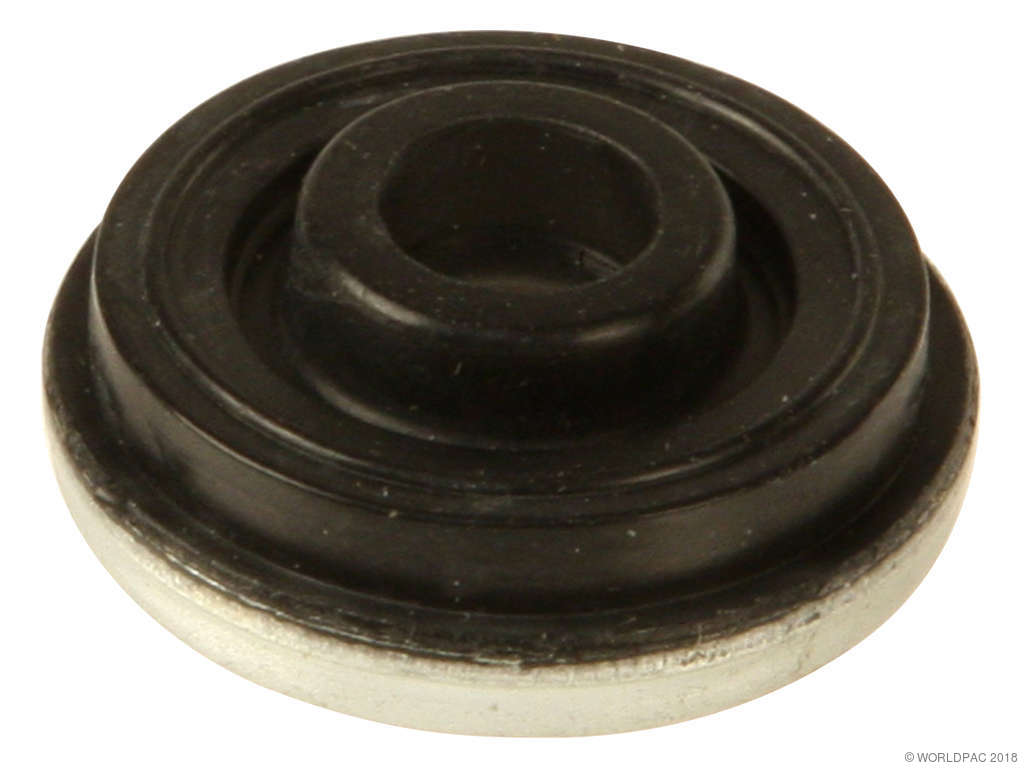
Aftermarket price range: $50-$90 - Valve Cover Gasket Set
(OEM #12030-R70-A00 (Front), 12050-R70-A00 (Rear))— Required if performing a valve adjustment, which is the second most likely cause of P0108 on a high-mileage engine after ruling out the sensor itself.
Trusted brands: Honda (Genuine), Fel-Pro, Mahle
OEM price range: $50-$80
Aftermarket price range: $30-$50
Related Codes That Often Appear With This One
- P0113 — Intake Air Temperature (IAT) Sensor Circuit High. The IAT and MAP sensors may share a common connector or part of the same wiring harness. A wiring issue could affect both circuits simultaneously.
- P0300-P0306 — Cylinder Misfire Codes. The incorrect air-fuel mixture caused by the faulty MAP signal can lead to incomplete combustion, causing misfires in one or more cylinders.
Platform-Specific Known Issues
- The VTM-4 (Variable Torque Management 4-Wheel Drive) light often illuminates alongside the Check Engine Light for any powertrain-related fault. This is a default safety feature in Honda's control logic; the system disables the AWD capabilities as a precaution whenever an engine or transmission fault is detected. The VTM-4 system itself is not faulty; the light will turn off once the root cause of the P0108 code is repaired and the codes are cleared.
Mechanic-Grade Diagnostic Values
- MAP Sensor Signal Voltage (Key On, Engine Off) — expected: ~4.5 - 5.0 Volts (corresponds to atmospheric pressure). Failure: Reading significantly lower than 4.5V suggests a sensor or wiring issue, though P0108 is for high voltage.
- MAP Sensor Signal Voltage (Engine Idling, Warmed Up) — expected: 1.0 - 1.8 Volts. Failure: Voltage remains high (above 2.0V, or stuck near 5V). A reading of 4.4V or higher will set the P0108 code.
- MAP Sensor Connector - Reference Voltage — expected: ~5.0 Volts (on reference wire to ground). Failure: No voltage or significantly lower voltage indicates a PCM or wiring fault.
- MAP Sensor Connector - Ground Circuit — expected: Less than 0.1 Volts (100 millivolts) between ground pin and a known good chassis ground.. Failure: Higher voltage indicates a bad ground connection, which can cause incorrect sensor readings.
- J35A Valve Clearance (Cold Engine) — expected: Intake: 0.20-0.24 mm (0.008-0.009 in), Exhaust: 0.28-0.32 mm (0.011-0.013 in). Failure: Exhaust valve clearance measuring less than 0.28 mm (too tight) can reduce engine vacuum and contribute to a P0108 code.
Scan Tool Commands That Help
- Honda HDS (or advanced generic scanner): MAP Sensor Live Data Graphing — Use this to visually confirm if the sensor voltage is stuck high. When decelerating from a higher RPM (e.g., 2,500 RPM) with the throttle closed, the voltage should drop to its lowest point, indicating maximum vacuum. If the voltage doesn't drop significantly, it points to a sensor, wiring, or mechanical (low vacuum) issue.
- OBD-II Scanner: Clear DTCs / ECU Reset — After a repair, the code must be cleared. If a basic scanner cannot clear a persistent code, a full reset can be achieved by disconnecting the battery for 15 minutes. The vehicle will then need to complete a drive cycle to confirm the fix.
Wiring & Ground Locations
- G101 — Typically located on or near the thermostat housing on the driver's side of the engine.. G101 is a primary engine ground point for the PCM and multiple sensors, including the MAP sensor. A poor connection here due to corrosion or looseness can introduce voltage offsets and cause erratic sensor readings, potentially triggering a P0108 code.
- MAP Sensor Connector Pins — On the MAP sensor itself, located on the throttle body.. The 3-pin connector contains the 5V reference, ground, and signal wires. Knowing the pinout is crucial for testing. For example, on a D16Y8 engine (similar pinout), the wires are for ground, signal, and 5V reference. Testing for 5V reference and good ground at the connector is the first step in diagnosing the circuit.
Real Owner Repair Stories
- BobIsTheOilGuy forum user (2008 Honda Pilot AWD, 179,000 miles) — VTM-4 light came on, no noticeable performance issues initially. Code reader showed P0108.
❌ Tried (didn't work) The owner initially considered cleaning or replacing the MAP sensor.
✅ What actually fixed it Multiple experienced users immediately pointed to tight exhaust valve clearances due to valve seat recession on the high-mileage J35A engine. The recommended fix was a valve clearance adjustment with the engine cold. - BobIsTheOilGuy forum user (2008 Honda Pilot, 166,000 miles) — After cleaning the throttle body, the Check Engine Light, VTM-4, and VSA lights came on with code P0108. The transmission was also shifting hard.
❌ Tried (didn't work) Using a code reader to clear the code was unsuccessful initially.
✅ What actually fixed it The user discovered they had forgotten to reconnect the MAP sensor electrical connector. Reconnecting it fixed the shifting issue and cleared the VTM-4/VSA lights. The Check Engine Light remained on but cleared itself after a few drive cycles, which is normal Honda behavior for verifying a fix. - Honda Owner Report — An owner reported that upon acceleration, the vehicle would not move. After being towed, diagnostic codes P0401 and P0108 were found. The owner cleaned the EGR valve and installed a new MAP sensor to address the issue (NHTSA ODI #11361702).
When the Usual Fixes Don't Work
- While a faulty MAP sensor is the most frequent cause, a significant number of high-mileage (100k+) Honda Pilot owners have fixed a persistent P0108 code only after performing a valve adjustment. In these cases, replacing the MAP sensor (even with a quality OEM part) did not resolve the issue because the root cause was mechanical (low engine vacuum from tight exhaust valves), not electrical. This is a critical counterpoint to the common 'just replace the sensor' advice.
OEM Part Supersession History
37830-PGK-A01→N/A— This part number is specific to 2003-2004 Pilot models and other Hondas of that era (e.g., Accord, CR-V, Odyssey).
Heads up: This sensor is not compatible with 2005-2008 models.37830-PNC-003→N/A— This part number is used for 2005-2008 Pilot models and a wide range of other Honda/Acura vehicles from roughly 2004-2011.
Heads up: This sensor is not compatible with 2003-2004 models.
Model Year Variations Within This Range
- 2003-2004 vs 2005-2008: The MAP sensor part number and design are different. 2003-2004 models use part number 37830-PGK-A01. The refreshed 2005-2008 models use part number 37830-PNC-003. The parts are not interchangeable.
Diagnostic Flowchart
Other Known Issues on This Vehicle
Issues unrelated to this code that are worth knowing about as an owner of this generation:
- Automatic Transmission Failure 🔴 High — Very common, especially on 2003-2004 models, often occurring around 100,000-125,000 miles. Symptoms include slipping, jerking, and complete failure.
- Failing Hydraulic Engine Mounts 🟠 Medium — Common across all years of this generation. The fluid-filled mounts collapse, causing excessive vibration at idle (especially in gear) and clunking noises.
- Transmission Pressure Switch Failure 🟠 Medium — Commonly occurs, causing a flashing 'D' (Drive) light and storing transmission-specific codes. Often a DIY-able fix by replacing the 3rd and 4th gear pressure switches.
- Failing Front Lower Control Arm Compliance Bushings 🟡 Low — Widespread issue. The rubber bushings crack and fail, leading to clunking or popping noises from the front suspension when going over bumps or braking.
- Power Steering Pump Whine/Leak 🟡 Low — A common issue caused by a failing O-ring on the power steering pump inlet, which allows air to enter the system, causing a whining noise, especially when cold.
Used vs. New Parts: Buying Guide for This Vehicle
When a used part is the smart pick: A used MAP sensor from a reputable salvage yard can be a cost-effective option, especially if you can verify the donor vehicle was a low-mileage, later-model-year vehicle that was wrecked due to collision, not engine failure. Given the low cost of a new aftermarket part, however, used is only recommended if on a very tight budget.
Donor-vehicle mileage cap: roughly under 80000 miles for the part to have meaningful remaining life.
What to inspect on the donor part:
- Check for corrosion on the electrical pins.
- Ensure the plastic housing is not cracked or damaged.
- Ask for the VIN of the donor vehicle to verify its year and confirm part number compatibility.
- Prefer parts from vehicles with documented front-end or rear-end damage, as this makes engine-related failure less likely.
OEM-only on this vehicle (don't cheap out):
- Manifold Absolute Pressure (MAP) Sensor
Aftermarket brands forum-validated for this vehicle:
- Denso (OEM supplier)
- NTK / NGK
- Standard Motor Products (SMP)
- Delphi
Brands owners have reported issues with on this vehicle:
- Unnamed, no-brand sensors from online marketplaces (e.g., 'white box' parts) are frequently reported as dead-on-arrival or failing within a few months.
Real Owner Stories
Aggregated from forums and TSBs cited above. Mileages and costs reflect what owners reported in those sources.
2008 Honda Pilot AWD 3.5L V6 — 179000 miles
Symptoms: Intermittent P0108 code.
What fixed it: The issue was identified as tight exhaust valves requiring a valve adjustment, a common requirement for high-mileage Honda V6 engines.
Source hint: BobIsTheOilGuy.com thread titled 'Code P0108 - 08 Honda Pilot AWD 179,000 miles.'
2008 Honda Pilot 3.5L V6
Symptoms: Check Engine Light with code P0108 appeared immediately after engine maintenance.
What fixed it: The owner had accidentally left the MAP sensor disconnected after cleaning the throttle body.
Source hint: BobIsTheOilGuy.com thread titled '08 Pilot, cleaned throttle body, now P0108'
2003-2008 Honda Pilot 3.5L V6
Symptoms: P0108 code triggered immediately after service or parts replacement.
What fixed it: Correcting the sensor connections; the MAP and TPS sensor connectors are similar and were accidentally swapped.
Source hint: Honda-Tech.com thread titled 'CEL Problem: Code P0108 Need HELP ASAP.'
Honda Accord (Cross-Manufacturer Reference)
Symptoms: Vehicle failed to move upon acceleration; diagnostic scan revealed codes P0401 and P0108.
What fixed it: The owner cleaned the EGR valve and replaced the MAP sensor (NHTSA ODI #11361702).
Related OBD-II Codes
Frequently Asked Questions
Why did my VTM-4 light come on at the same time as the P0108 Check Engine Light on my Honda Pilot?
I replaced my MAP sensor with a cheap part from an online marketplace and the P0108 code is still there. What should I do?
My 2005 Pilot has over 150,000 miles and a new MAP sensor didn't fix the P0108 code. What else could it be?
Could I have accidentally caused this code while cleaning my throttle body?
Where is the MAP sensor located on the 3.5L V6 engine?
Helpful Videos

We Have This Part in Stock


The information in this article is provided for general reference and educational purposes only. Vehicle specifications, procedures, and part compatibility can vary by production date, trim level, and region. Always consult your vehicle's factory service manual and verify part numbers before purchasing or performing repairs. Safety-critical components such as airbags, seat belts, and braking systems should be installed by a qualified professional.
- Honda Pilot:
- 🧭 Diagnostic Flowchart
- 🎬 Helpful Videos
- 🛍️ Shop This Part
- What's Unique About the 2003-2008 Honda Pilot
- Symptoms You May Notice
- Most Likely Causes
- Rare But Worth Checking
- Diagnosis Steps
- Parts You'll Likely Need
- Related Codes That Often Appear With This One
- Platform-Specific Known Issues
- Mechanic-Grade Diagnostic Values
- Scan Tool Commands That Help
- Wiring & Ground Locations
- Real Owner Repair Stories
- When the Usual Fixes Don't Work
- OEM Part Supersession History
- Model Year Variations Within This Range
- Other Known Issues on This Vehicle
- Used vs. New Parts: Buying Guide for This Vehicle
- Real Owner Stories
- 2008 Honda Pilot AWD 3.5L V6 — 179000 miles
- 2008 Honda Pilot 3.5L V6
- 2003-2008 Honda Pilot 3.5L V6
- Honda Accord (Cross-Manufacturer Reference)
- Related OBD-II Codes
- Frequently Asked Questions
- 🎟️ Get 5% Off