

P0111 on 2017-2021 Volkswagen Jetta: Intake Air Temp Range/Performance Causes and Fixes
On 2017-2021 Jettas with the 1.4T engine, P0111 is most often caused by 'heat soak' of the charge air temperature sensor. A Volkswagen Technical Service Bulletin (TSB 01-20-05) confirms this and recommends installing an engine hood insulation blanket (Part No. 5GM863831) as the primary fix. Otherwise, the issue may be a faulty or dirty temperature/pressure sensor.
- For a 2017-2021 Jetta, P0111 is most often a simple fix.
- Before buying parts, check if your car has the black insulation blanket under the hood. If not, installing one is the official VW fix for this code in many cases.
- The 2019-2021 Jetta 1.4T does not have a MAF sensor; it uses two separate pressure/temperature sensors. Don't waste time looking for a MAF on these models.
- Cleaning the sensor(s) with a proper electronics cleaner is a cheap first step that can often solve the problem if it's caused by contamination.
- Use a scan tool to compare temperature readings at cold start to easily identify a faulty sensor.
What's Unique About the 2017-2021 Volkswagen JETTA

The 2017-2021 Jetta range, particularly the A7 generation (2019+) with the 1.4T EA211 engine, does not use a traditional Mass Airflow (MAF) sensor. Instead, it relies on two separate pressure/temperature sensors: the Charge Air Pressure Sensor (-GX26-) located pre-throttle body, and the Intake Manifold Sensor (-GX9-) post-throttle body. A critical Volkswagen TSB (01-20-05) specifically addresses code P0111 on these models, noting that radiant heat from the engine hood can 'heat soak' the -GX26- sensor, causing a plausibility fault when compared to the -GX9- sensor at startup on warm days. This makes the diagnosis unique, as the primary fix is often mechanical (installing insulation) rather than replacing a sensor.
Diagnostic Flowchart

Tap your situation to follow the diagnostic path that matches what you're seeing on this vehicle.
Generation note: This range covers the end of the A6 generation (2017-2018) and the beginning of the A7 generation (2019-2021). The A6 models may have the IAT sensor integrated into the MAF sensor. The A7 1.4T (EA211) engine uses two separate Manifold Absolute Pressure (MAP) sensors that also read temperature and does not have a MAF sensor. A key TSB for this code, 01-20-05, applies specifically to the A7 generation's dual-sensor setup and its susceptibility to heat soak.
Symptoms You May Notice
- Check Engine Light is on
- EPC (Electronic Power Control) light may be on
- Start/Stop system may be disabled
- Reduced fuel economy
- Engine hesitation or stumbling during acceleration
- Rough idle
- Hard starting, especially in cold weather
- Replacing the wrong temperature sensor on A7 models. It's important to use a scan tool to identify which of the two sensors (Charge Air or Intake Manifold) is reading incorrectly before replacement.
- Replacing a sensor when the actual problem is the missing hood insulation blanket described in TSB 01-20-05.
Most Likely Causes

- Heat Soak of Charge Air Pressure Sensor 🔴 High Probability A VW Technical Service Bulletin (TSB #01-20-05) identifies this specific issue. The Charge Air Pressure Sensor (-GX26-) is located where it can absorb radiant heat from the engine hood, especially on hot days after the vehicle has been parked. This causes its temperature reading to be significantly higher than the second temperature sensor on the intake manifold (-GX9-) at the next startup, triggering the P0111 plausibility check. Many of these vehicles were sold without a hood insulation blanket, exacerbating the problem.
How to confirm: Check if your vehicle has the engine hood sound absorber/insulation blanket installed. If it is missing, and the code appears mainly on warm days after the car has been sitting ('heat soak'), this is the most likely cause. The TSB applies to 2018+ Jetta and Golf models. An owner on a Reddit forum confirmed this exact scenario and fix on their platform-mate Golf.
Typical fix: Install the official Volkswagen engine hood sound absorber blanket (Part No. 5GM863831). This shields the sensor from excess radiant heat.
Est. part cost: $50-$100 - Faulty Intake Air Temperature Sensor 🟡 Medium Probability → Shop Fuel Injection Air Flow Meter On A7 Jettas, there are two sensors that read intake temperature: the Charge Air Pressure Sensor (pre-throttle body, VW part 04E906051C) and the Intake Manifold Sensor (post-throttle body, VW part 04C906051). On A6 models, the sensor is often part of the MAF assembly. Failure of the thermistor element in any of these sensors will cause incorrect readings.
How to confirm: Use a scan tool to monitor the live data from both intake air temperature sensors. On a cold engine (off for several hours), the IAT readings should be very close to the ambient air temperature and the engine coolant temperature. If one reading is stuck or clearly wrong (e.g., -40°F), that sensor is faulty. A faulty sensor may also read 0 ohms or infinite resistance when tested with a multimeter.
Typical fix: Replace the faulty sensor. For an A7, identify which of the two sensors is providing the incorrect reading. For an A6, the entire MAF sensor assembly may need to be replaced if the IAT is integrated.
Est. part cost: $40-$150 - Dirty Sensor Element 🟡 Medium Probability Oil vapors from the Positive Crankcase Ventilation (PCV) system can accumulate on the sensor element over time, insulating it and causing slow or inaccurate readings. This is a common issue on many modern direct-injection engines.
How to confirm: Visually inspect the sensor tip after removal. If it is covered in a film of oil or grime, it needs cleaning.
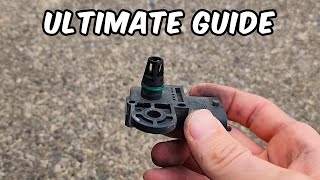
Typical fix: Carefully remove the sensor and clean the tip with a dedicated Mass Airflow or electronics cleaner. Do not touch the sensing element. 🎬 See this guide for testing and fixing IAT sensor codes. Allow it to dry completely before reinstalling.
Est. part cost: $10-$15 for cleaner - Damaged Wiring or Connector ⚪ Low Probability
How to confirm: Visually inspect the wiring harness and connector for each intake air temperature sensor. Look for frayed wires, corrosion on the pins, or a loose connection. Use a multimeter to check for proper voltage (typically a 5V reference) and ground at the connector.
Typical fix: Repair the damaged section of wire or replace the connector pigtail.
Est. part cost: $15-$50
Rare But Worth Checking
- Swapped or Incorrect Part Number Sensors: The TSB for P0111 specifically warns technicians to verify that the Charge Air Pressure Sensor and the Intake Manifold Sensor have not been installed in each other's locations, and that both are the correct part number. This could happen after previous service. A YouTube video on a Golf with the same engine showed this exact issue, where swapping the connectors between the two sensors resolved the problem. 🎬 Watch: Troubleshooting an implausible signal on the 1.4T engine.
- Faulty Engine Control Module (ECM): → Shop Engine Control Module (ECM) This is very rare, but the ECM's internal circuitry for interpreting the sensor's signal can fail. All other possibilities should be exhausted before considering ECM replacement.
Diagnosis Steps
- Connect an OBD-II scanner. On a 'cold' engine (left off for 5+ hours), go to Live Data.
- Compare the 'Intake Air Temperature' and 'Engine Coolant Temperature' readings. They should be within a few degrees of each other and the ambient outside temperature.
- For 2019+ models, identify the two separate temperature readings: 'Charge Air Cooler Temp.' (from sensor -GX26-) and 'Intake Air Temp.' (from sensor -GX9-). Check if one is significantly different from the other at startup. A large difference points to the heat soak issue or a faulty sensor.
- Start the engine and watch the IAT readings. They should change smoothly as the engine warms up. A stuck value indicates a bad sensor.
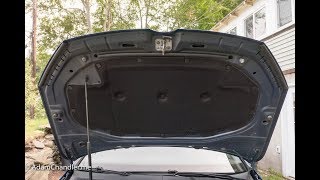
- Pop the hood and check for the presence of a black, fibrous insulation blanket on the underside. If it's missing, this is a strong indicator of the TSB-related 'heat soak' issue.
- Locate the sensors. On the A7 1.4T, the Charge Air Pressure/Temp sensor is on the charge pipe leading to the throttle body. The Intake Manifold Air Pressure/Temp sensor is on the plastic intake manifold itself.
- Inspect the sensors and their electrical connectors for dirt, oil contamination, or physical damage.
- If a sensor is suspected to be faulty or dirty, remove it for cleaning or replacement. Use electronics cleaner only.
- If the issue persists, check the wiring to the sensor for continuity and proper voltage (typically a 5V reference).
Parts You'll Likely Need

- Engine Hood Sound Absorber
(OEM #5GM863831)— This is the official fix recommended by VW in TSB 01-20-05 to prevent sensor heat soak that triggers P0111. Multiple parts vendors confirm this part number for the application.
Trusted brands: Volkswagen (OEM)
OEM price range: $60-$110 - Charge Air Pressure Sensor (T-MAP)
(OEM #04E906051C)— For 2019+ models, this sensor's temperature reading (-GX26-) is often the cause of the P0111 code due to heat soak or internal failure.
Trusted brands: Bosch, Hella, NTK
OEM price range: $70-$120
Aftermarket price range: $40-$80 - Intake Manifold Pressure Sensor (T-MAP)
(OEM #04C906051)— This is the second sensor (-GX9-) that reads intake temperature on 2019+ models. It can also fail or become contaminated.
Trusted brands: Bosch, NTK
OEM price range: $60-$110
Aftermarket price range: $35-$75 - Mass Air Flow (MAF) Sensor — For 2017-2018 models (A6 generation), the IAT sensor is often integrated into the MAF sensor. If the IAT portion fails, the entire assembly must be replaced.
Technical Service Bulletins (TSBs) & Recalls

- 01-20-05 (Alternate numbers: 2061109, V0120052061109_5) — MIL ON, DTC P0111 — This TSB, updated multiple times, addresses P0111 on Jetta and Golf models, identifying sensor heat soak from the engine hood as the primary cause. The fix is to check for correct sensor placement and part numbers, and if correct, to install an engine hood insulation blanket.
- 01-21-01 (Alternate number: 2060925) — Update Programming Engine/Motor Control Module -J623-, Various Fault Codes Stored — For 2019 Jettas, VW released a software update (SVM Code 01A153) that addresses a wide range of DTCs, including P0111. If the heat soak issue is not resolved with the hood blanket, checking for this available ECM update is a valid next step.
Platform-Specific Known Issues
- A Technical Service Bulletin (TSB #01-20-05, also listed as 2061109) was issued for P0111 on 2018 Jettas (and other models). It states that the Charge Air Pressure Sensor can get too warm from the engine hood, causing a discrepancy at startup compared to the Intake Manifold Sensor. The prescribed fix is to install an engine hood sound absorber blanket.
Mechanic-Grade Diagnostic Values
- IAT Sensor Resistance vs. Temperature — expected: At 20°C (68°F), resistance should be 2250-3000 Ω. At 40°C (104°F), it should be 900-1400 Ω. At 80°C (176°F), it should be 275-375 Ω.. Failure: A reading of 0 Ω (short) or infinite/open loop resistance indicates a failed sensor. Readings that do not change with temperature or are far outside the expected range also indicate failure.
- Sensor Connector Voltage (Key On, Engine Off) — expected: One pin should show a 5V reference from the ECM, and another should be ground (near 0V). The signal pin will show a voltage that varies with temperature (typically 1.5V to 3.5V).. Failure: Absence of the 5V reference voltage or ground points to a wiring or ECM issue, not a sensor failure.
Scan Tool Commands That Help
- VCDS (VAG-COM) or equivalent VW-specific scanner: Live Data / Measuring Value Blocks (MVB) — This is the primary method to diagnose P0111 on the A7 Jetta. The technician must monitor the values for both the 'Charge Air Cooler Temp.' (G42/GX26) and 'Intake Air Temp.' (G72/GX9) simultaneously. On a cold start, they should be nearly identical. After parking on a hot day, a large discrepancy (e.g., G42 is 20°C higher than G72) confirms the heat soak issue described in the TSB.
Wiring & Ground Locations
- Sensor Pinout (G42/GX26 and G72/GX9) — On the 4-pin connector for both the Charge Air and Intake Manifold pressure/temperature sensors.. Testing requires knowing the pin functions. Typically for these Bosch T-MAP sensors: Pin 1 = Sensor Ground, Pin 2 = Temp Signal (to ECM), Pin 3 = 5V Reference, Pin 4 = Pressure Signal (to ECM). The P0111 code relates specifically to the circuit involving Pin 1, Pin 2, and the 5V reference on Pin 3.
- Engine Harness Ground Point — On the left side of the engine compartment, on the chassis frame rail below or near the battery tray.. A poor ground connection at this point can cause floating or incorrect readings for multiple engine sensors, including the IAT sensors. Verifying this ground is clean and tight is a crucial step if sensor and wiring tests are inconclusive.
Real Owner Repair Stories
- Reddit user on r/VWMK7 (2019 VW Golf 1.4T (platform mate with identical engine and issue)) — Recurring P0111 Check Engine Light, especially on warmer days.
❌ Tried (didn't work) Replaced the IAT sensor twice (once with aftermarket, once with OEM), replaced the coolant temperature sensor, and had a dealer perform a software update.
✅ What actually fixed it The user eventually installed the hood insulation blanket, which was the final fix that resolved the code, confirming the TSB's heat soak diagnosis. - YouTube Repair Channel (generic example) (VW Golf with 1.4T engine) — P0111 code immediately after service work was performed on the intake system.
❌ Tried (didn't work) Clearing the code, checking for wiring damage.
✅ What actually fixed it The electrical connectors for the pre-throttle body sensor (-GX26-) and the intake manifold sensor (-GX9-) had been accidentally swapped. Since the sensors may have different calibration despite looking similar, this caused a plausibility fault. Swapping the connectors back to their correct locations fixed the issue instantly. This confirms the warning in TSB 01-20-05.
Model Year Variations Within This Range
- 2017-2018 (A6 Generation): These models typically use an IAT sensor integrated into the Mass Airflow (MAF) sensor housing, located in the intake tube after the air filter box. Diagnosis is simpler as there is only one IAT sensor to test.
- 2019-2021 (A7 Generation): These models use a Speed Density system with two separate Temperature/Manifold Absolute Pressure (T-MAP) sensors and no MAF. This dual-sensor setup is what makes the 'heat soak' plausibility check and the P0111 code so common on this specific platform.
Helpful Videos

We Have This Part in Stock


The information in this article is provided for general reference and educational purposes only. Vehicle specifications, procedures, and part compatibility can vary by production date, trim level, and region. Always consult your vehicle's factory service manual and verify part numbers before purchasing or performing repairs. Safety-critical components such as airbags, seat belts, and braking systems should be installed by a qualified professional.
- Volkswagen JETTA:
- 🧭 Diagnostic Flowchart
- 🎬 Helpful Videos
- 🛍️ Shop This Part
- What's Unique About the 2017-2021 Volkswagen JETTA
- Symptoms You May Notice
- Most Likely Causes
- Rare But Worth Checking
- Diagnosis Steps
- Parts You'll Likely Need
- Technical Service Bulletins (TSBs) & Recalls
- Platform-Specific Known Issues
- Mechanic-Grade Diagnostic Values
- Scan Tool Commands That Help
- Wiring & Ground Locations
- Real Owner Repair Stories
- Model Year Variations Within This Range
- 🎟️ Get 5% Off