

P0113 on 2010-2015 Hyundai Tucson: Intake Air Temperature Sensor Causes and Fixes
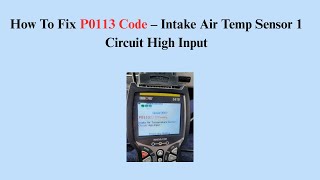
P0113 on a 2010-2015 Tucson means the Intake Air Temperature (IAT) sensor circuit is reading high. For 2010-2013 models with MPI engines, this usually requires replacing the entire Mass Airflow (MAF) sensor assembly. For 2014-2015 GDI models, it's typically a failed standalone IAT sensor on the intake manifold. The fix is usually a new sensor, costing $25-$150.
- P0113 on a 2010-2015 Tucson points to a failure in the Intake Air Temperature sensor circuit.
- First, determine if your engine is MPI (likely 2010-2013) or GDI (likely 2014-2015), as this changes which part you need.
- MPI engines require replacing the entire Mass Airflow (MAF) sensor, while GDI engines need a small, separate IAT sensor.
- The most common symptoms are a Check Engine Light and potential hard starting in cold weather.
- This is a very simple DIY repair that usually takes less than 15 minutes with basic hand tools.
What's Unique About the 2010-2015 Hyundai Tucson
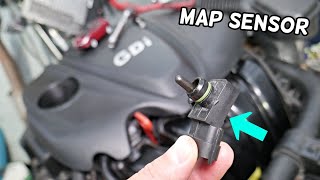
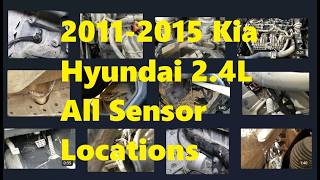
The key challenge for the 2010-2015 Tucson is identifying the correct sensor configuration, as it changed mid-generation. Earlier models (roughly 2010-2013) with Multi-Port Injection (MPI) engines (2.0L or 2.4L Theta II) typically use an IAT sensor that is integrated into the Mass Airflow (MAF) sensor housing. Later models (roughly 2014-2015) with Gasoline Direct Injection (GDI) engines (2.4L Theta II) do not use a MAF sensor; instead, they use a separate, standalone IAT sensor mounted on the intake manifold. Correctly identifying your engine type 🎬 Watch: Locate every sensor on your 2.4L GDI engine is the first step to buying the right part.
Symptoms You May Notice
- Check Engine Light is on
- Difficulty starting the engine, especially when cold
- Reduced fuel economy
- Rough or unstable idle
- Engine hesitation or stumbling during acceleration
- Traction control light may also illuminate.
- Replacing the oxygen sensors. While fuel trim issues can occur, the P0113 code points specifically to the IAT circuit, not the exhaust sensors.
- Replacing the Engine Coolant Temperature (ECT) sensor. While its data is compared with the IAT, a P0113 code is specific to the IAT circuit.
Most Likely Causes
- Failed IAT Sensor (or integrated MAF/MAP sensor) 🔴 High Probability Sensors are common wear-and-tear items that fail over time due to heat cycles and environmental exposure. The internal thermistor fails, creating an open circuit.
How to confirm: With the engine cold, use a scan tool to view live data. The IAT reading should be close to the ambient air and engine coolant temperature. A reading of -40°F or -40°C strongly indicates a failed sensor or open circuit. You can also test the sensor's resistance with a multimeter; an open or infinite reading means it's bad.
Typical fix: Replace the faulty sensor. If the IAT is integrated into the MAF sensor, the entire MAF assembly must be replaced.
Est. part cost: $25-$150 - Damaged Wiring or Electrical Connector 🟡 Medium Probability Wires can become brittle and break near the connector from engine vibration and heat over many years. A forum user with a platform-mate Kia Sportage reported a damaged wiring harness to the ECU as the root cause after replacing the sensor did not fix the issue.
How to confirm: Visually inspect the wiring harness leading to the IAT/MAF sensor for any breaks, corrosion, or loose pins in the connector. Wiggle the connector with the engine running (if it's safe to do so) to see if the idle changes or the live data reading fluctuates.
Typical fix: Repair the broken wire or replace the connector pigtail. Pigtail connectors like the Duralast 2025 or Standard Ignition S2813 may be compatible.
Est. part cost: $10-$30
Rare But Worth Checking
- Faulty Powertrain Control Module (PCM): → Shop Engine Control Module (ECM) This is extremely rare. The PCM should only be considered after all other possibilities, including the sensor and wiring, have been definitively ruled out by a professional.
- Dirty Air Filter: A severely clogged air filter can sometimes contribute to IAT sensor issues, though it's less likely to cause a 'Circuit High' code.
Diagnosis Steps
- Identify Your Engine Type: Pop the hood and look at the plastic engine cover. It should say "GDI" for Gasoline Direct Injection (typically 2014-2015 models) or just "MPI"/nothing for Multi-Port Injection (typically 2010-2013 models).
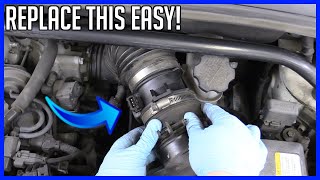
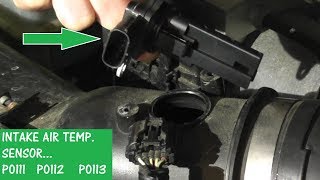
- Locate the Sensor: - For MPI engines: Find the Mass Airflow (MAF) sensor. It's a rectangular plastic block located in the large air intake tube between the air filter box and the engine. The IAT sensor is inside this unit. - For GDI engines: These models use a Manifold Absolute Pressure (MAP) sensor and a separate IAT sensor. The IAT sensor is typically a small, two-wire plastic sensor screwed into the intake manifold.
- Check Live Data: Connect an OBD-II scanner. With the engine cold (off for several hours), turn the key to the 'ON' position without starting the engine. View the live data for the IAT sensor. It should read close to the outside air temperature. If it reads -40°F or -40°C, you have confirmed the circuit high fault. 🎬 Watch: A mechanic's walkthrough for fixing the P0113 code
- Inspect the Connector and Wiring: Disconnect the electrical connector from the sensor you located in step 2. Look for any green or white corrosion on the pins, bent pins, or broken/frayed wires right at the back of the connector. Ensure it clicks securely back into place.
- Test the Circuit (Optional): If you have a multimeter, you can test for the 5-volt reference signal on one wire of the harness connector and a good ground on the other with the key on.
- Replace the Component: If the wiring looks good and the live data reads -40°, the sensor itself has failed. Replace the MAF sensor assembly (for MPI engines) or the standalone IAT sensor (for GDI engines).
Parts You'll Likely Need
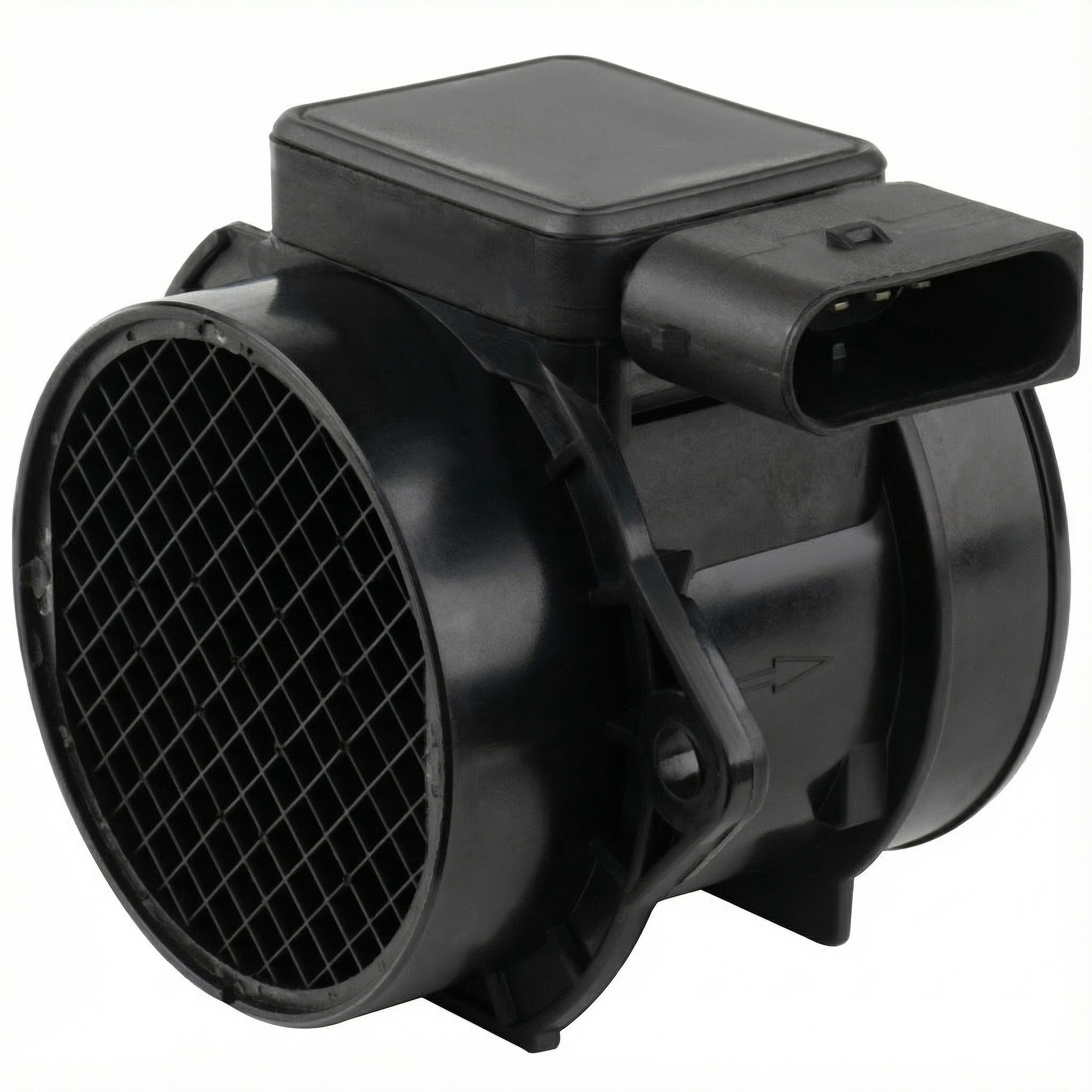
- Mass Airflow (MAF) Sensor Assembly
(OEM #28164-23700)— For 2010-2013 MPI engines (specifically the 2.0L), the IAT sensor is integrated into the MAF. A P0113 code almost always means the entire assembly needs to be replaced. Part number 28164-23700 is listed for the 2.0L MPI Tucson. Note that some parts databases show this part fitting up to 2009, so confirming fitment by VIN is critical. The 2.4L MPI may use a different part number.
Trusted brands: Bosch, Delphi, Walker Products, Cardone (Remanufactured, e.g., 74-10114)
OEM price range: $150-$250
Aftermarket price range: $50-$120 - Intake Air Temperature (IAT) Sensor
(OEM #39220-38030)— For 2014-2015 GDI engines that use a separate sensor, this is the direct cause of the P0113 code. It's a simple two-wire sensor that screws into the intake manifold. While pass 1 suggested 96183228, that part is more commonly associated with older GM/Daewoo vehicles and may not be correct. Part number 39220-38030 is listed as a water temperature sensor but is often cross-referenced for the IAT application on these engines. Always verify by VIN.
Trusted brands: Standard Motor Products, Delphi
OEM price range: $30-$50
Aftermarket price range: $15-$35
Related Codes That Often Appear With This One
- P0102 — If your Tucson has a MAF sensor, a P0102 (Mass Air Flow Circuit Low) can appear with P0113 if the entire sensor assembly or its connector fails, as they share a housing and power/ground connections.
- P0107 — On GDI models without a MAF sensor, a P0107 (Manifold Absolute Pressure Circuit Low) might accompany P0113 if the MAP/IAT sensor assembly (if combined in your specific model) or its wiring fails.
- P0101 — A P0101 (Mass Air Flow Circuit Range/Performance) code can appear alongside P0113 on models with an integrated MAF/IAT sensor, indicating a general failure of the unit.
Platform-Specific Known Issues
- A user on a diagnostic forum with a platform-mate Kia Sportage 1.7 CRDI experienced recurring P0113 and P0101 codes even after replacing the MAF sensor. The ultimate cause was found to be a damaged engine wiring harness, which required extensive repair. This highlights the importance of checking the wiring thoroughly if a new sensor doesn't solve the problem.
Mechanic-Grade Diagnostic Values
- IAT Sensor Resistance (for standalone sensor on GDI models) — expected: Approx. 2.3 ~ 2.5 kΩ at 20°C (68°F), or approx. 0.3 kΩ at 80°C (176°F).. Failure: Infinite resistance (open circuit) or a value significantly outside the expected range for a given temperature.
- IAT Sensor Signal Voltage (Key On, Engine Off) — expected: Should be below 4.9V and vary with temperature. A typical reading on a 68°F day might be around 3.0-3.5V.. Failure: A reading of ~5.0V indicates an open in the signal or ground circuit, which triggers P0113.
Scan Tool Commands That Help
- Hyundai GDS (or equivalent professional scanner): Component Change Routine / Reset Adaptive Values — After replacing a Mass Airflow (MAF) sensor on MPI models, this function should be performed. It resets the PCM's learned values, and failure to do so may result in continued performance problems or other fault codes even with a new part.
Wiring & Ground Locations
- IAT Sensor Circuit (2.4L MPI) — At the 5-pin MAF sensor connector. The IAT signal is on pin 18 of the ECM connector.. A break in the wire between the MAF connector and ECM pin 18 will cause a P0113. The wire color is typically Yellow.
- IAT Sensor Circuit (2.0L/2.4L GDI) — At the standalone IAT sensor, which is often integrated into the MAP sensor on the intake manifold. For a 2.0L GDI, the IAT signal wire goes to pin 4 of the PCM connector C200-AK.. This is the signal wire that carries the temperature reading to the PCM. An open circuit on this wire is a direct cause of P0113.
- Sensor Ground — The sensor ground for the IAT is provided by the PCM. For the 2.4L MPI engine, this is pin 9 (Sensor Ground) at the ECM connector.. A break in the ground wire will also cause an open circuit and trigger a P0113 code, as the PCM will see the full 5V reference voltage.
OEM Part Supersession History
39220-38020→39220-38030— Standard part update/revision.
Heads up: Part 39220-38030 is officially listed as an Engine Coolant Temperature (ECT) sensor but is widely cross-referenced and used for the standalone IAT sensor on GDI models. They share the same thermistor properties. Verifying the connector shape is crucial.
Model Year Variations Within This Range
- 2010-2013 (approx.): These years typically use Multi-Port Injection (MPI) engines (2.0L or 2.4L) which have the IAT sensor integrated into the Mass Airflow (MAF) sensor assembly in the intake tube.
- 2014-2015 (approx.): These years use Gasoline Direct Injection (GDI) engines (2.0L or 2.4L) which do not use a MAF sensor. They use a standalone IAT sensor, often combined with the MAP sensor, located directly on the intake manifold.
Diagnostic Flowchart
Other Known Issues on This Vehicle
Issues unrelated to this code that are worth knowing about as an owner of this generation:
- Theta II Engine Failure (Rod Bearing Wear) 🔴 High — Widespread across 2.0L and 2.4L GDI engines, particularly in 2014-2015 models. Can lead to engine seizure and fire. (Ref: Subject of multiple recalls and a major class-action lawsuit (e.g., In re: Hyundai and Kia Engine Litigation, No. 8:17-cv-00838).)
- Excessive Oil Consumption 🟠 Medium — Frequently reported on both MPI and GDI engines, often starting after 70,000 miles. May be related to piston ring or valve stem seal issues. (Ref: Part of broader engine-related class action lawsuits. Hyundai's official stance has often been that a certain level of consumption is 'normal'.)
- Hesitation and Stalling 🟠 Medium — Common complaint, sometimes related to the major engine defects, but also attributed to issues with the electronic throttle body or fuel system.
- Steering Column Flexible Coupler Wear 🟡 Low — A clicking or clunking noise when turning the steering wheel is common. Caused by the degradation of a small rubber coupler in the steering column. (Ref: A common wear item across many Hyundai/Kia models of this era.)
Used vs. New Parts: Buying Guide for This Vehicle
When a used part is the smart pick: For the standalone IAT sensor on GDI models, a used OEM part from a low-mileage donor vehicle is a reasonable choice, as they are simple thermistors and relatively robust. For the integrated MAF/IAT assembly on MPI models, buying used is NOT recommended.
Donor-vehicle mileage cap: roughly under 75000 miles for the part to have meaningful remaining life.
What to inspect on the donor part:
- For a standalone IAT sensor, ensure the plastic connector is not brittle or cracked.
- Check the pins for any signs of corrosion (green or white powder).
- Ask for the donor vehicle's mileage if possible.
- Avoid any MAF sensor assembly that looks like it has been exposed to oil or excessive dirt.
OEM-only on this vehicle (don't cheap out):
- Mass Airflow (MAF) Sensor Assembly: Many forum and mechanic reports indicate that aftermarket MAF sensors for Hyundai vehicles have a high failure rate or cause performance issues. It is strongly recommended to use a genuine OEM part if the MAF assembly needs replacement.
Aftermarket brands forum-validated for this vehicle:
- For the standalone IAT sensor (GDI models), brands like Delphi, Standard Motor Products (SMP), and NTK are generally considered reliable alternatives to OEM.
Brands owners have reported issues with on this vehicle:
- Unbranded, no-name MAF sensors from online marketplaces are frequently cited as being poorly calibrated and failing quickly.
Real Owner Stories
Aggregated from forums and TSBs cited above. Mileages and costs reflect what owners reported in those sources.
Kia Sportage 1.7 CRDI (Platform Mate)
Symptoms: Recurring P0113 and P0101 codes even after the MAF sensor was replaced.
What fixed it: Extensive repair of a damaged engine wiring harness.
Source hint: elektroda.pl: 'Error P0101 and P0113 in Kia Sportage 1.7 CRDI - Diagnostic Problems'
Related OBD-II Codes
Frequently Asked Questions
Where is the IAT sensor located on my 2012 Hyundai Tucson with the MPI engine?
My 2015 Tucson GDI has a P0113 code; do I need to replace the whole MAF sensor?
I replaced the sensor on my Tucson but the P0113 code is still there. What else could it be?
Can I use an aftermarket MAF sensor to fix this code on my Hyundai?
Why does my scan tool show -40°F for the intake air temperature?
Are there any specific connector parts I should look for if my wiring is damaged?
Helpful Videos
Used OEM Parts in Stock
New Aftermarket Parts Available


The information in this article is provided for general reference and educational purposes only. Vehicle specifications, procedures, and part compatibility can vary by production date, trim level, and region. Always consult your vehicle's factory service manual and verify part numbers before purchasing or performing repairs. Safety-critical components such as airbags, seat belts, and braking systems should be installed by a qualified professional.
- Hyundai Tucson:
- 🧭 Diagnostic Flowchart
- 🎬 Helpful Videos
- 🛍️ Shop This Part
- What's Unique About the 2010-2015 Hyundai Tucson
- Symptoms You May Notice
- Most Likely Causes
- Rare But Worth Checking
- Diagnosis Steps
- Parts You'll Likely Need
- Related Codes That Often Appear With This One
- Platform-Specific Known Issues
- Mechanic-Grade Diagnostic Values
- Scan Tool Commands That Help
- Wiring & Ground Locations
- OEM Part Supersession History
- Model Year Variations Within This Range
- Other Known Issues on This Vehicle
- Used vs. New Parts: Buying Guide for This Vehicle
- Real Owner Stories
- Kia Sportage 1.7 CRDI (Platform Mate)
- Related OBD-II Codes
- Frequently Asked Questions
- 🎟️ Get 5% Off