

P0113 on 2003-2009 Toyota 4Runner: IAT Sensor Circuit High Causes and Fixes
On the 4.0L V6 4Runner, code P0113 is almost always caused by a failed Intake Air Temperature (IAT) sensor, which is integrated into the Mass Airflow (MAF) sensor. The fix is to replace the entire MAF sensor assembly, which is a simple 10-minute DIY job. Expect to pay around $100-$180 for a quality Denso replacement part (OEM Part # 22204-22010, Denso Part # 197-6020).
- P0113 means the computer is getting a 'circuit high' signal from the Intake Air Temperature sensor, which it reads as an impossibly cold temperature (like -40°F).
- On your 4.0L V6 4Runner, the IAT sensor is built into the Mass Airflow (MAF) sensor. You must replace the whole MAF assembly.
- The most likely fix is replacing the MAF sensor with a new Denso unit (part # 197-6020) which corresponds to Toyota OEM part # 22204-22010.
- This is a very easy DIY repair that takes less than 15 minutes and only requires a screwdriver or a 10mm socket.
- Before buying parts, check the sensor's electrical connector for damage or corrosion, as this can also cause the code.
What's Unique About the 2003-2009 Toyota 4Runner
For the 1GR-FE engine in the 4th Generation 4Runner, the Intake Air Temperature (IAT) sensor is not a separate, standalone part. It is integrated directly into the Mass Airflow (MAF) sensor housing, a common design for many Toyota vehicles. As a result, you cannot replace just the IAT sensor; the entire MAF sensor assembly must be replaced to fix an internal IAT sensor fault. This is a key detail that prevents owners from searching for a part that doesn't exist on its own.
Symptoms You May Notice
- Check Engine Light is on
- Reduced fuel economy
- Rough or unstable idle
- Difficulty starting the engine, especially when cold
- Hesitation or poor acceleration
- Engine runs rich and may smell of fuel
- Excess black smoke on startup
- Replacing the Oxygen Sensor. Some drivers may experience poor fuel economy and mistakenly blame an O2 sensor, but P0113 points directly to the IAT circuit. 🎬 Watch: Quick DIY methods to fix code P0113
- Searching for a separate IAT sensor. On the 1GR-FE, the IAT is part of the MAF sensor assembly, so mechanics unfamiliar with this platform might waste time looking for a standalone part.
- Replacing the sensor when the wiring is the actual problem. A careful inspection of the connector and harness is crucial before spending money on parts.
Most Likely Causes
- Failed Mass Airflow (MAF) / IAT Sensor Assembly 🔴 High Probability → Shop Fuel Injection Air Flow Meter The IAT sensor is a thermistor that can fail internally over time, creating an open circuit. Since it's integrated with the MAF on this engine, the whole unit must be replaced. This is the most common failure point for a P0113 code.
How to confirm: With a scan tool, observe the IAT reading. If it shows a fixed, extremely low value (e.g., -40°F) regardless of the actual ambient temperature, the sensor has failed. You can also test resistance across the IAT pins on the sensor; an open circuit (infinite resistance) confirms failure.
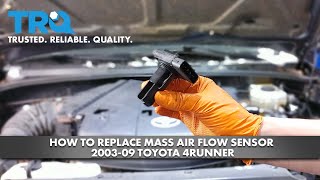
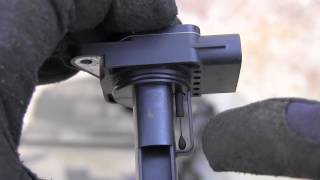
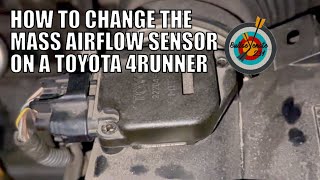
Typical fix: Replace the entire Mass Airflow (MAF) sensor assembly. This is a very simple repair involving unplugging the connector and removing two screws. 🎬 Watch: How to replace the MAF sensor assembly Always use a high-quality Denso or OEM part to avoid immediate failure of cheap aftermarket units.
Est. part cost: $100-$180 - Damaged Wiring or Connector 🟡 Medium Probability The wiring harness leading to the MAF sensor can become brittle or damaged from engine heat and vibration over many years. The connector pins can also corrode.
How to confirm: Visually inspect the wiring and connector for any signs of breaks, corrosion, or loose pins. With the key on and connector unplugged, use a multimeter to check for a 5V reference signal from the PCM and a good ground at the connector. Wiggling the harness while watching live data can also reveal an intermittent connection.
Typical fix: Repair the damaged section of wire or replace the pigtail connector. The pigtail for the MAF sensor is available as a separate part (e.g., Standard Motor Products S-1712).
Est. part cost: $15-$65 - Dirty MAF/IAT Sensor ⚪ Low Probability While a dirty MAF can cause other performance issues (like P0101 or P0102), it's less likely to cause a P0113 'circuit high' code, which usually indicates an electrical open. However, heavy contamination from a neglected air filter could potentially interfere with the IAT thermistor.
How to confirm: Remove the MAF sensor and inspect the IAT thermistor (a small bulb-like component inside the housing) and the MAF hot wires for dirt, oil, or debris.
Typical fix: Clean the sensor using only dedicated MAF sensor cleaner spray. Do not touch the internal components. Let it dry completely before reinstalling. 🎬 See this step-by-step MAF sensor cleaning guide
Est. part cost: $10-$15
Rare But Worth Checking
- Faulty Engine Control Module (ECM): → Shop Engine Control Module (ECM) This is extremely rare. The ECM should only be considered a potential cause after all other possibilities (sensor, wiring, connectors) have been exhaustively tested and ruled out. A faulty ECM will typically present with multiple, unrelated error codes.
Diagnosis Steps
- Connect an OBD-II scanner and confirm the presence of the P0113 code. Check for any other codes like P0101, P0102, or P0103 that point to the MAF assembly.
- View the live data stream for the Intake Air Temperature (IAT). If it reads a fixed, extremely low value (like -40°F/-40°C), this strongly indicates an open circuit.
- Turn the ignition off and locate the Mass Airflow (MAF) sensor on the air intake tube, right after the air filter box.
- Inspect the electrical connector and wiring harness going to the MAF sensor. Look for any obvious damage, corrosion, or loose connections. Ensure the connector is fully seated.
- If the wiring looks good, unplug the sensor. With the key on, engine off, use a multimeter to verify the 5-volt reference and ground signals are present at the connector.
- To confirm the sensor is the issue, you can use a multimeter to check the resistance between the IAT pins on the sensor itself. At room temperature (~68°F/20°C), it should be around 2.0-3.0 kΩ. If you read infinite resistance (an open circuit), the sensor is bad.
- If the sensor and wiring appear okay, consider cleaning the MAF sensor with dedicated MAF cleaner spray as a first, inexpensive step. Let it dry completely before reinstalling.
- If cleaning does not resolve the issue and the sensor tested bad or the wiring is confirmed to be good, replace the entire MAF sensor assembly with a quality OEM or Denso part.
Parts You'll Likely Need
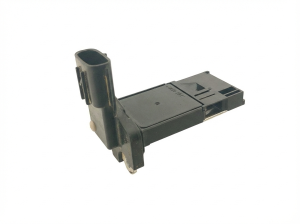
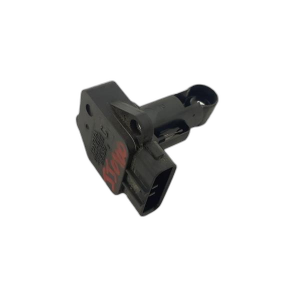
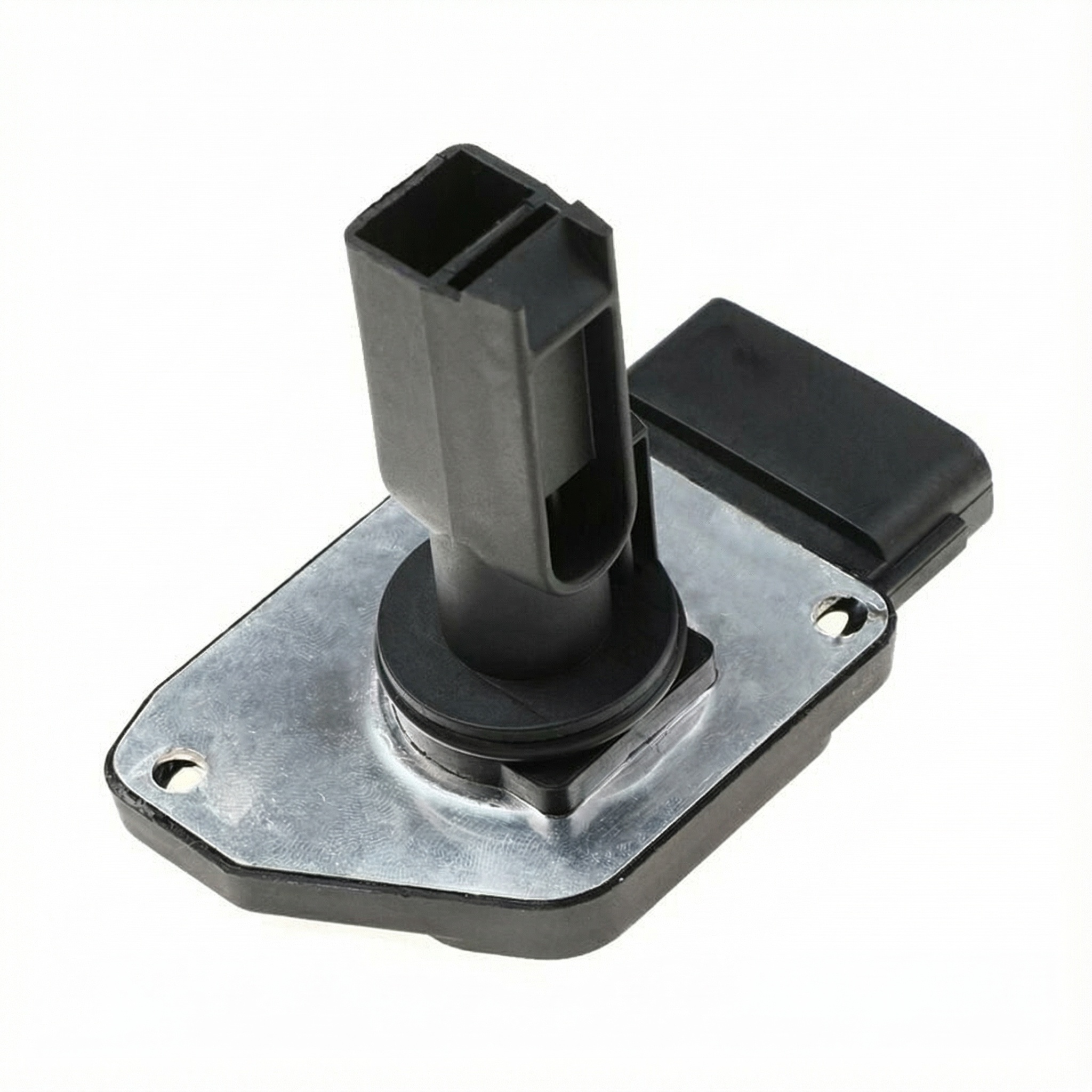
- Mass Air Flow (MAF) Sensor
(OEM #22204-22010)— This assembly contains the integrated IAT sensor, which is the most common point of failure for a P0113 code on this vehicle.
Trusted brands: Denso (Part # 197-6020), Toyota (OEM)
OEM price range: $150-$200
Aftermarket price range: $80-$140
Related Codes That Often Appear With This One
- P0102 — Mass Air Flow (MAF) Circuit Low Input. Since the IAT and MAF sensors are in the same housing and share a connector, a single component failure or connection issue can trigger both codes. Seeing them together strongly suggests a problem with the MAF assembly or its connector.
- P0101 — Mass Air Flow (MAF) Circuit Range/Performance. Similar to P0102, this points to a problem with the MAF sensor assembly or its wiring.
- P0103 — Mass Air Flow (MAF) Circuit High Input. This is another code pointing to the MAF assembly, often seen with P0113 when there is a major electrical fault or disconnection.
Mechanic-Grade Diagnostic Values
- IAT Sensor Resistance — expected: Approx. 13.6 kΩ at -4°F (-20°C), 2.45 kΩ at 68°F (20°C), 0.32 kΩ at 176°F (80°C).. Failure: Infinite resistance (Open Loop) indicates a failed sensor, which is the direct cause of P0113.
- MAF Connector Voltage (Key On, Engine Off, Connector Unplugged) — expected: Pin 1 (+B) to Ground: Battery Voltage (12V). Pin 2 (E2G) to Ground: Near 0V (Ground). Pin 3 (THA) to Ground: Approx. 5V (ECU Reference Voltage).. Failure: No voltage at Pin 1 suggests a blown EFI fuse. No voltage at Pin 3 suggests a wiring issue or faulty ECM. No ground at Pin 2 indicates a bad ground connection.
- IAT Live Data on Scan Tool — expected: Should display a temperature close to the ambient air temperature when the engine is cold.. Failure: A fixed reading of -40°C or -40°F indicates the ECM has detected the open circuit and logged P0113.
Hidden / Shadow Codes Worth Checking
- Mode 6 Data: While not a hidden code, professional scan tools like Toyota's Techstream can access Mode 6 data. For P0113, this would show the raw voltage reading from the IAT circuit (Test ID $81, Component ID $01). A value exceeding the maximum threshold (e.g., >4.9V) confirms the failure condition before the DTC is even set as 'confirmed'. (see via A professional scan tool with Mode 6 capabilities, such as Toyota's Techstream software.)
Scan Tool Commands That Help
- Toyota Techstream: Data List -> Primary -> Coolant Temp / Intake Air Temp — This is the primary function used to observe the live data from the IAT sensor. It's the first step in confirming the symptom, where you'll see the illogical -40° reading if the P0113 fault is active.
- Toyota Techstream: Utility -> All Readiness — After a repair (like replacing the MAF sensor), you can use this function to check the status of the IAT sensor's self-test monitor without having to complete a full drive cycle. You can input the DTC (P0113) and the tool will show if the monitor has run and passed, confirming the fix.
Wiring & Ground Locations
- MAF/IAT Connector (B1) — On the air intake tube, immediately after the air filter housing.. This 5-pin connector houses all connections for the MAF and IAT sensors. Pin 3 is the IAT signal (THA), Pin 4 is the MAF signal (VG), and Pin 2 is the sensor ground (E2G). A bad connection or corrosion on any of these pins can cause P0113.
- Ground Point EB — On the front left fender, near the battery.. This is a primary engine bay ground point. While the IAT sensor ground (E2G) wires directly back to the ECM, a poor main ground at EB can cause floating voltages and erratic sensor behavior across the engine, potentially contributing to sensor circuit codes.
- Ground Point EF — On the rear side of the left bank cylinder block.. This is a critical engine block ground point. A loose or corroded connection here can directly impact the ECM's ability to get stable readings from various sensors, including the MAF/IAT assembly.
Real Owner Repair Stories
- YouTube user comment on 'BundysGarage' (Toyota Tacoma with 4.0L 1GR-FE engine (same MAF sensor as 4Runner)) — Truck died at an intersection, would crank but not stay running. Codes P0031 and P0035 were present (codes can vary).
❌ Tried (didn't work) Replacing O2 sensors from AutoZone., Replacing the MAF sensor with an aftermarket part from AutoZone, which resulted in even more codes for all O2 sensors.
✅ What actually fixed it Installing a genuine Denso MAF sensor resolved all the codes and running issues. The story highlights the common problem of cheap aftermarket sensors being faulty out of the box and causing more diagnostic confusion.
OEM Part Supersession History
22204-0C020, 22204-0D030→22204-22010— Part consolidation and minor revisions by Toyota.
Heads up: The current OEM part number 22204-22010 is the correct and backward-compatible replacement for earlier numbers like 22204-0C020 and 22204-0D030 for this vehicle.Denso 197-6020→Denso 197-6030— Denso updated their aftermarket part number.
Heads up: While both part numbers are often listed, Denso 197-6030 is the most current and widely confirmed correct aftermarket equivalent for the OEM part 22204-22010 on the 4th Gen 4Runner.
Diagnostic Flowchart
Other Known Issues on This Vehicle
Issues unrelated to this code that are worth knowing about as an owner of this generation:
- Premature Frame Rust 🔴 High — Very common, especially in the Rust Belt. A class-action lawsuit was filed regarding this issue for 2003-2009 models. Can lead to structural failure. (Ref: No official recall was issued for the 4Runner, unlike the Tacoma/Tundra, but Toyota settled a class-action lawsuit.)
- Head Gasket Failure 🟠 Medium — More common on early 2003-2005 models. Often presents as a misfire on cold starts that smooths out. Failure typically occurs near cylinder 6.
- Cracked Exhaust Manifolds (V8 Only) 🟠 Medium — A common issue on the 2UZ-FE V8 engine, causing a ticking noise that is loudest when cold and may go away as the engine warms up.
- Seized Front Brake Calipers 🟠 Medium — The front brake caliper pistons have a tendency to seize, leading to uneven pad wear, pulling to one side during braking, and excessive heat.
- Water Pump Failure 🟡 Low — The water pump can fail, sometimes as early as 40-50k miles, though many last much longer. It's a known weak point to monitor for coolant leaks.
Used vs. New Parts: Buying Guide for This Vehicle
When a used part is the smart pick: A used OEM Denso MAF sensor from a reputable auto recycler can be a cost-effective option if the budget is tight. Since the failure mode is typically an internal electronic fault rather than wear, a working used part is likely to have significant life remaining.
Donor-vehicle mileage cap: roughly under 150000 miles for the part to have meaningful remaining life.
What to inspect on the donor part:
- Ask for the mileage of the donor vehicle if possible.
- Inspect the connector pins for any signs of corrosion or damage.
- Ensure the delicate thermistor bulb and MAF wires inside the sensor housing are physically intact and not caked with debris.
- Buy from a seller with a return policy in case the part is DOA.
OEM-only on this vehicle (don't cheap out):
- Mass Airflow Sensor
Aftermarket brands forum-validated for this vehicle:
- Denso (OEM supplier)
Brands owners have reported issues with on this vehicle:
- Unbranded or generic 'white-box' sensors from online marketplaces and some local auto parts stores. Forum and mechanic consensus is strong that these parts are unreliable and often cause more problems than they solve.
Real Owner Stories
Aggregated from forums and TSBs cited above. Mileages and costs reflect what owners reported in those sources.
2004 Toyota 4Runner SR5 with the 1GR-FE V6 engine
Symptoms: Crank no start, multiple dash lights (MIL, battery, oil, VSC, TRAC), and the engine cranking at 150rpm. Threw codes P0102, P0121, P0123, P2135, and P0113.
What fixed it: The diagnostic thread suggested checking grounds and sensor pigtails after a timing chain service, though a complex case involving multiple codes like this was also linked to a broken ECU pin in another instance.
Source hint: r/MechanicAdvice report via article context owner_reports
2003-2009 Toyota 4Runner
Symptoms: User replaced a MAF sensor to address a P0102 code, which then immediately resulted in a P0113 code.
What fixed it: The discussion highlights the potential for faulty new parts and the close electrical connection between the MAF and IAT circuits within the same housing.
Source hint: bobistheoilguy.com forum thread 'From code P0102 to P0113'
Documented NHTSA Reports
Toyota Vehicle Diagnostic Report
Symptoms: An owner reported that error codes P0113 and P0102, along with warning messages for the check engine light and ICS malfunction, appeared when starting the vehicle in a garage.
Source hint: NHTSA ODI #11296751
Toyota Engine Stall Incident
Symptoms: A driver experienced the vehicle stalling while driving. Diagnostic troubleshooting revealed several DTCs, including P0113, P0013, P1603, and P1605.
Source hint: NHTSA ODI #11139909
Related OBD-II Codes
Frequently Asked Questions
Can I just clean the sensor on my 4.0L V6 4Runner to fix a P0113 code?
Is there a specific brand of MAF sensor I should use for my 2003-2009 4Runner?
Where is the IAT sensor located on the 1GR-FE engine?
My 4Runner shows -40°F for the intake temperature on my scanner. What does that mean?
Can I replace just the IAT sensor, or do I need the whole MAF unit?
Is the P0113 code related to the cracked exhaust manifold issue on 4Runners?
Helpful Videos
![How to Fix TOYOTA P0113 Engine Code in 3 Minutes [2 DIY Methods / Only $7.76]](https://img.youtube.com/vi/SuUPiPKf8FA/mqdefault.jpg)
Used OEM Parts in Stock
New Aftermarket Parts Available


The information in this article is provided for general reference and educational purposes only. Vehicle specifications, procedures, and part compatibility can vary by production date, trim level, and region. Always consult your vehicle's factory service manual and verify part numbers before purchasing or performing repairs. Safety-critical components such as airbags, seat belts, and braking systems should be installed by a qualified professional.
- Toyota 4Runner:
- 🧭 Diagnostic Flowchart
- 🎬 Helpful Videos
- 🛍️ Shop This Part
- What's Unique About the 2003-2009 Toyota 4Runner
- Symptoms You May Notice
- Most Likely Causes
- Rare But Worth Checking
- Diagnosis Steps
- Parts You'll Likely Need
- Related Codes That Often Appear With This One
- Mechanic-Grade Diagnostic Values
- Hidden / Shadow Codes Worth Checking
- Scan Tool Commands That Help
- Wiring & Ground Locations
- Real Owner Repair Stories
- OEM Part Supersession History
- Other Known Issues on This Vehicle
- Used vs. New Parts: Buying Guide for This Vehicle
- Real Owner Stories
- 2004 Toyota 4Runner SR5 with the 1GR-FE V6 engine
- 2003-2009 Toyota 4Runner
- Documented NHTSA Reports
- Toyota Vehicle Diagnostic Report
- Toyota Engine Stall Incident
- Related OBD-II Codes
- Frequently Asked Questions
- 🎟️ Get 5% Off