

P0116 on 2017-2024 Chrysler Pacifica 3.6L: Engine Coolant Temperature Sensor Fixes
On a 2017-2024 Pacifica, code P0116 is most often caused by a faulty engine coolant temperature (ECT) sensor or a stuck-open thermostat. Replacing the ECT sensor is an easy DIY fix costing around $20-$70. If the engine warms up very slowly, the thermostat is the likely culprit. Before replacing parts, always check the coolant level first, as low fluid can cause erratic readings.
- P0116 means the engine temperature reading is illogical, not just that the circuit is broken.
- The first diagnostic step is to check the coolant level and then use a scan tool to compare ECT and IAT readings on a completely cold engine.
- If the engine warms up too slowly, the problem is almost certainly a stuck-open thermostat.
- If the temperature gauge is erratic or reads hot when the engine is cold, the ECT sensor is the most likely failure.
- On 2019 and newer models, the ECT sensor is conveniently located in the thermostat housing at the front of the engine.
What's Unique About the 2017-2024 Chrysler Pacifica
While some Chrysler vehicles with the 3.6L Pentastar engine are known to set a false P0116 due to sensitive software, on the Pacifica it more frequently points to a hardware problem like the sensor or thermostat. A key change occurred around 2019; on earlier models, the ECT sensor was often in the cylinder head, but on 2019 and newer Pacificas, the primary ECT sensor is integrated directly into the thermostat housing, making it easier to access. Also, the 3.6L Pentastar engine is known for potential coolant leaks from the oil filter/cooler housing assembly, which sits in the valley of the engine. 🎬 See how to replace a leaking oil cooler housing. A leak in this location can introduce air into the cooling system, causing erratic sensor readings and triggering this code.
Symptoms You May Notice
- Check Engine Light is on
- Temperature gauge on the dashboard is erratic, stuck on cold, or jumps around.
- Cooling fans run constantly at high speed, even when the engine is cold
- Engine takes longer than usual to warm up.
- Reduced fuel economy.
- Engine may hesitate or run rough when cold.
- Heater may not blow warm air.
- Replacing the ECT sensor when the thermostat is actually the faulty component. If the engine is slow to warm up, the thermostat should be the primary suspect.
- Replacing the thermostat with a cheap aftermarket part that fails quickly. Owners often report that using a genuine Mopar part is critical for a lasting repair.
- Assuming the thermostat is bad when the root cause is an air pocket in the system from an undiscovered coolant leak, such as from the oil filter housing.
Most Likely Causes
- Faulty Engine Coolant Temperature (ECT) Sensor 🔴 High Probability → Shop Engine Coolant Temperature Sensor The sensor is a thermistor that can degrade over time, causing its resistance readings to become inaccurate or erratic. This is a common point of failure across many vehicles.
How to confirm: With the engine cold for several hours, use a scan tool to compare the ECT and Intake Air Temperature (IAT) readings. They should be within 5°F (about 3°C) of each other. If the ECT reading is illogical (e.g., reads 200°F on a cold engine), the sensor is bad. If you disconnect the sensor connector, the scan tool should read approximately -40°F (-40°C), and if you jumper the two pins in the connector, it should read a very high temperature (e.g., 302°F/150°C); this confirms the wiring to the PCM is intact. You can also test the sensor with a multimeter; at 68°F (20°C), its resistance should be between 2,000 and 3,000 ohms.
Typical fix: Replace the ECT sensor. 🎬 Watch: How to locate and swap the coolant temperature sensor. On 2019+ models, it is located in the thermostat housing at the front of the engine. On earlier models, it may be in the cylinder head.
Est. part cost: $20-$70 - Stuck-Open Thermostat 🔴 High Probability → Shop Integrated Thermostat Housing Assembly This is a very common failure on the 3.6L Pentastar engine across multiple Chrysler, Dodge, and Jeep models. The thermostat fails in the open position, allowing coolant to circulate constantly and preventing the engine from warming up at the rate the PCM expects.
How to confirm: Monitor the live ECT data on a scan tool while driving. If the engine struggles to reach and maintain its normal operating temperature (around 195-203°F or 90-95°C), the thermostat is likely stuck open. The upper radiator hose may also feel warm much earlier than it should.
Typical fix: Replace the thermostat and its housing as an assembly. Ensure the new thermostat's 'jiggle valve' is positioned at the top (12 o'clock position) during installation to help bleed air from the system.
Est. part cost: $50-$150 - Low Engine Coolant or Air in the System ⚪ Low Probability → Shop Engine Coolant / Antifreeze The 3.6L Pentastar can develop leaks from the plastic oil filter/cooler housing in the engine valley, as well as from hoses or the radiator. A coolant leak allows air to enter the system, which can cause air pockets around the ECT sensor, leading to false readings.
How to confirm: Visually inspect the coolant reservoir to see if the level is low. Check for signs of coolant leaks around the engine, particularly in the valley under the intake manifold (oil cooler housing). A pressure test of the cooling system can help locate hard-to-find leaks.
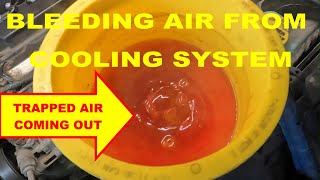
Typical fix: Find and repair the source of the leak. Top off the system with the correct Mopar OAT (Organic Additive Technology) coolant and properly bleed the air out of the cooling system.
Est. part cost: $20-$40 for coolant, plus cost of leak repair - Wiring or Connector Issue ⚪ Low Probability
How to confirm: Visually inspect the ECT sensor's electrical connector and wiring for any signs of corrosion, damage, or loose pins. Wiggle the connector while monitoring live data on a scan tool to see if the reading jumps. Check for 5-volt reference and ground at the connector using a multimeter. With the key on and connector unplugged, one pin should have ~5.0V and the other should be ground.
Typical fix: Clean the connector terminals or repair the damaged section of the wiring harness. Ensure the connector is securely fastened and consider applying dielectric grease to prevent future corrosion.
Est. part cost: $5-$50
Rare But Worth Checking
- Powertrain Control Module (PCM) Issue: While some Chrysler products require a software update (TSB) to fix a false P0116, this is less common for the Pacifica compared to older models like the Town & Country. It should only be considered after all hardware (sensor, thermostat, wiring) has been confirmed to be working correctly. Use of a block heater in very cold weather has also been known to cause a false P0116 on Pentastar engines due to the PCM's sensitive logic.
Diagnosis Steps
- Check the engine coolant level in the reservoir. If it is low, top it off with the correct type of Mopar OAT coolant and check for leaks.
- Visually inspect the ECT sensor and its electrical connector for any obvious damage, corrosion, or loose connections.
- With the engine cold (off for at least 5 hours), connect an OBD-II scan tool and view live data. Compare the Engine Coolant Temperature (ECT) and Intake Air Temperature (IAT) values. They should be within a few degrees of each other.
- If the cold ECT reading is highly inaccurate (e.g., reading hot when the engine is cold), the sensor is faulty and should be replaced.
- If the cold readings are plausible, start the engine and monitor the ECT value as it warms up. It should rise steadily.
- If the temperature rises very slowly or fails to reach the normal operating range (approx. 195°F / 90.5°C), the thermostat is likely stuck open and needs to be replaced.
- If the temperature reading is erratic or jumps around while warming up, the ECT sensor or its wiring is the most likely cause.
- If the sensor and thermostat appear to be working, carefully check the wiring harness between the ECT sensor and the PCM for continuity and shorts to ground.
Parts You'll Likely Need
- Engine Coolant Temperature (ECT) Sensor
(OEM #5149077AB)— This is the most common fix when the temperature gauge is erratic or gives illogical readings from a cold start.
Trusted brands: Mopar, NTK, Bosch
OEM price range: $40-$70
Aftermarket price range: $20-$50 - Thermostat Housing Assembly
(OEM #68253514AF)— This is the most common fix when the engine is slow to warm up. The thermostat is integrated into the housing and they are replaced as a single unit. 🎬 Watch: Step-by-step thermostat housing replacement for the 3.6L engine. This is a very common failure on the 3.6L Pentastar.
Trusted brands: Mopar, Dorman, Motorad
OEM price range: $80-$150
Aftermarket price range: $50-$100
Related Codes That Often Appear With This One
- P0128 — P0128 (Coolant Temperature Below Thermostat Regulating Temperature) is often triggered along with P0116 because a stuck-open thermostat is a root cause for both codes.
Technical Service Bulletins (TSBs) & Recalls
- While no TSBs are specifically for P0116 on the Pacifica, related TSBs for the 3.6L Pentastar in other vehicles (like TSB 18-085-16 for the Town & Country) indicate that Chrysler is aware of sensitive PCM logic that can cause false codes, sometimes fixed with a software update.
- TSB Bulletin #18-044-26 specifically lists P0116-00 (Engine Coolant Temperature Sensor 1 Performance) as a code that may be found in active or stored status, often alongside other performance codes like P05BD-00 or P062B-00.
Platform-Specific Known Issues
- Real Owner Experience: Stuck Thermostat: → Shop Integrated Thermostat Housing Assembly A user on PacificaForums.com with a 2018 Pacifica Touring L Plus at around 60,000 miles reported a P0116 code. Their key symptom was the temperature gauge reading low and the engine taking a very long time to warm up. They correctly diagnosed a stuck-open thermostat based on the slow warm-up symptom and replacing the thermostat assembly resolved the issue.
- Forum Discussion on Misdiagnosis: A Reddit user in the r/AskMechanics subreddit posted about getting P0116 and P0128 codes just three months after a mechanic replaced the thermostat housing to fix a cool
Mechanic-Grade Diagnostic Values
- ECT Sensor Resistance — expected: -40°C (-40°F): ~100,000Ω 0°C (32°F): ~9,000Ω 20°C (68°F): ~2,500Ω 80°C (176°F): ~325Ω 100°C (212°F): ~180Ω. Failure: A reading that is infinite (open circuit), near zero (short circuit), or significantly deviates from the expected value at a known temperature.
- ECT Sensor Connector Voltage (Key On, Engine Off) — expected: Approximately 5.0V on the reference wire and 0V (ground) on the ground wire when measured against the battery negative terminal.. Failure: No voltage on the reference wire points to a PCM or wiring issue. Voltage significantly lower than 5V could indicate a short or corrosion.
- ECT Sensor Signal Voltage (Live Data) — expected: Cold start (~20°C/68°F): 3.0V - 3.5V. Normal operating temp (~95°C/203°F): ~1.0V. Overheating: ~0.5V.. Failure: Voltage that is stuck high (near 5V) or low, or does not decrease smoothly as the engine warms up.
Scan Tool Commands That Help
- wiTECH (Chrysler Dealer Tool): ECT vs IAT Rationality Check — This is the automated test the PCM runs at cold start. A technician can view the stored freeze-frame data for the P0116 code, which will show the exact ECT and IAT readings at the moment the fault was triggered. This is crucial for confirming if the fault happened during a cold soak, which points towards a sensor issue.
Wiring & Ground Locations
- ECT Sensor Connector — On 2017-2018 models, it's often on the rear of the driver's side cylinder head. On 2019-2024 models, it is located directly on the thermostat housing at the front of the engine. It is a 2-pin connector.. This is the primary point of failure for wiring issues. Corrosion on the pins or a damaged wire here will directly cause an incorrect signal to the PCM.
- G103 — Located at the left front of the engine compartment, often on a stud near the integrated power module (fuse box).. While the ECT sensor has a dedicated ground return to the PCM, a poor main engine or chassis ground can introduce electrical noise and cause erratic behavior in multiple systems, including the PCM's sensor readings. Verifying this ground is clean and tight is a good practice when diagnosing any electrical fault.
Real Owner Repair Stories
- PacificaForums.com user (2018 Chrysler Pacifica Touring L Plus, ~60,000 miles) — Check Engine Light with code P0116, temperature gauge reading low, engine taking a very long time to warm up.
❌ Tried (didn't work) Initially suspected the ECT sensor due to the code definition.
✅ What actually fixed it Correctly diagnosed a stuck-open thermostat based on the slow warm-up symptom. Replacing the thermostat assembly resolved the code and symptoms. - YouTube video comment/demonstration (2019+ Chrysler/Dodge/Jeep with 3.6L Pentastar) — P0116 code after replacing ECT sensor.
❌ Tried (didn't work) Replacing the ECT sensor.
✅ What actually fixed it The technician pointed out that on 2019+ models, the connector for the ECT sensor and a nearby solenoid are physically interchangeable. Accidentally swapping them will send incorrect voltage to the new ECT sensor and can damage it, causing the code to persist or return immediately. The fix is to ensure the correct harness connector is plugged into the sensor.
OEM Part Supersession History
5149096AB→5149077AB— Standard part revision, likely for improved reliability or manufacturing process.
Heads up: The parts are interchangeable. When ordering, use the latest part number (5149077AB) to ensure you receive the most current revision.
Model Year Variations Within This Range
- 2017-2018 vs 2019-2024: The location of the Engine Coolant Temperature (ECT) sensor. On 2017-2018 models, the sensor is often located in the cylinder head, making it more difficult to access. On 2019 and newer models, the sensor was moved to the thermostat housing at the front of the engine, making replacement much easier.
Diagnostic Flowchart
Other Known Issues on This Vehicle
Issues unrelated to this code that are worth knowing about as an owner of this generation:
- Leaking Oil Filter / Cooler Housing 🔴 High — Very common, often occurs between 25,000 and 70,000 miles. The plastic housing can crack from heat cycles or over-tightening the filter cap.
- Harsh Shifting / Transmission Faults (9-Speed Auto) 🔴 High — Common on 2017-2021 models. Symptoms include jerking, slipping, and sudden clunks. Often related to software logic but can be mechanical. (Ref: Multiple TSBs exist for software updates, such as TSB 21-006-21.)
- Engine Start-Stop (ESS) System Failure 🟠 Medium — Widespread issue, typically caused by the premature failure of the small, secondary auxiliary battery. This can lead to a dead main battery.
- Uconnect Infotainment System Glitches 🟡 Low — Frequently reported issue where the screen may lock up, go black, or become unresponsive. Sometimes fixed with a software update, but may require unit replacement.
- Pentastar 'Tick' / Rocker Arm Failure 🔴 High — A known issue on some 3.6L Pentastar engines, though less reported on the Pacifica specifically. A ticking noise from the top of the engine can indicate failing rocker arms or lifters, potentially leading to camshaft damage.
- Variable Valve Lift (VVL) Solenoid Failure 🟠 Medium — The VVL system is sensitive to oil level and condition. A failure of a VVL solenoid (e.g., code P1072) can cause rough idle and poor performance. Often triggered by low or dirty oil.
Used vs. New Parts: Buying Guide for This Vehicle
When a used part is the smart pick: For this repair, buying used parts is generally not recommended. The primary failure items are a low-cost sensor and a high-failure-rate thermostat. A used thermostat carries a high risk of premature failure, and the cost savings are minimal compared to the labor of replacing it again. A used wiring connector pigtail from a junkyard is a viable option if only the connector is damaged.
Donor-vehicle mileage cap: roughly under 40000 miles for the part to have meaningful remaining life.
What to inspect on the donor part:
- For a wiring pigtail, ensure the plastic is not brittle and the locking tab is intact.
- Check the connector terminals for any signs of green or white corrosion.
- Ensure at least 6 inches of wire is attached to the pigtail for easier splicing.
OEM-only on this vehicle (don't cheap out):
- Thermostat Housing Assembly: Many owners and technicians strongly report that aftermarket thermostats for the 3.6L Pentastar have a high failure rate, often failing within months. Using a genuine Mopar thermostat is highly recommended for a lasting repair.
Aftermarket brands forum-validated for this vehicle:
- ECT Sensor: NTK, Bosch, Denso
Brands owners have reported issues with on this vehicle:
- Unbranded or 'white-box' thermostat assemblies from online marketplaces are frequently reported to fail quickly.
Real Owner Stories
Aggregated from forums and TSBs cited above. Mileages and costs reflect what owners reported in those sources.
2018 Pacifica Touring L Plus 3.6L — 60000 miles
Symptoms: The temperature gauge was reading low and the engine took a very long time to warm up.
What fixed it: Replacing the thermostat assembly.
Source hint: PacificaForums.com: User with 2018 Pacifica Touring L Plus
2017-2024 Chrysler Pacifica 3.6L
Symptoms: Received P0116 and P0128 codes just three months after having the thermostat housing replaced.
What fixed it: The source suggests potential issues with aftermarket part quality or incorrect installation after the initial repair failed.
Source hint: Reddit r/AskMechanics: P0128 and P0116 after new thermostat
Related OBD-II Codes
Frequently Asked Questions
Where is the ECT sensor located on my 2019 Chrysler Pacifica 3.6L?
Is there a TSB for the P0116 code on my Pacifica?
Why are my cooling fans running at high speed when the engine is cold?
Can I use any coolant to top off my Pacifica's system?
What should the resistance of the ECT sensor be if I test it with a multimeter?
How can I tell if my thermostat is stuck open without removing it?
Helpful Videos

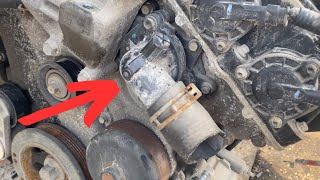
![2017 Chrysler Pacifica Oil Cooler Replacement. [3.6L]](https://img.youtube.com/vi/z1rrYCyqCN0/mqdefault.jpg)
We Have This Part in Stock


The information in this article is provided for general reference and educational purposes only. Vehicle specifications, procedures, and part compatibility can vary by production date, trim level, and region. Always consult your vehicle's factory service manual and verify part numbers before purchasing or performing repairs. Safety-critical components such as airbags, seat belts, and braking systems should be installed by a qualified professional.
- Chrysler Pacifica:
- 🧭 Diagnostic Flowchart
- 🎬 Helpful Videos
- 🛍️ Shop This Part
- What's Unique About the 2017-2024 Chrysler Pacifica
- Symptoms You May Notice
- Most Likely Causes
- Rare But Worth Checking
- Diagnosis Steps
- Parts You'll Likely Need
- Related Codes That Often Appear With This One
- Technical Service Bulletins (TSBs) & Recalls
- Platform-Specific Known Issues
- Mechanic-Grade Diagnostic Values
- Scan Tool Commands That Help
- Wiring & Ground Locations
- Real Owner Repair Stories
- OEM Part Supersession History
- Model Year Variations Within This Range
- Other Known Issues on This Vehicle
- Used vs. New Parts: Buying Guide for This Vehicle
- Real Owner Stories
- 2018 Pacifica Touring L Plus 3.6L — 60000 miles
- 2017-2024 Chrysler Pacifica 3.6L
- Related OBD-II Codes
- Frequently Asked Questions
- 🎟️ Get 5% Off