

P0117 on 2013-2016 Audi A4 1.8 TFSI: Engine Coolant Temperature Circuit Low Causes and Fixes
On a 2013-2016 Audi A4 with the 1.8T engine, code P0117 is almost always caused by a failed Engine Coolant Temperature (ECT) sensor (G62) or a short in its circuit. This causes the temperature gauge to max out and cooling fans to run constantly. Before replacing the sensor, inspect the thermostat housing for coolant leaks, as a leak is a common root cause. Expect to pay $30-$60 for an OEM sensor; DIY replacement is possible but difficult due to tight access behind the engine.
- P0117 on your A4 means the computer thinks the engine is extremely hot, even when it's cold.
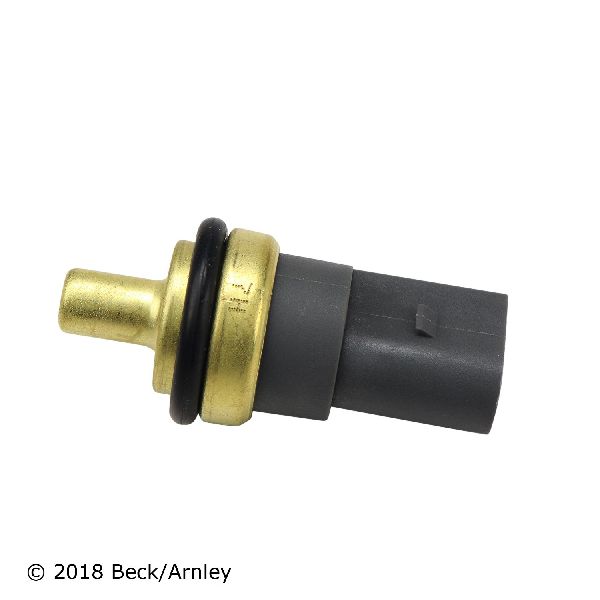
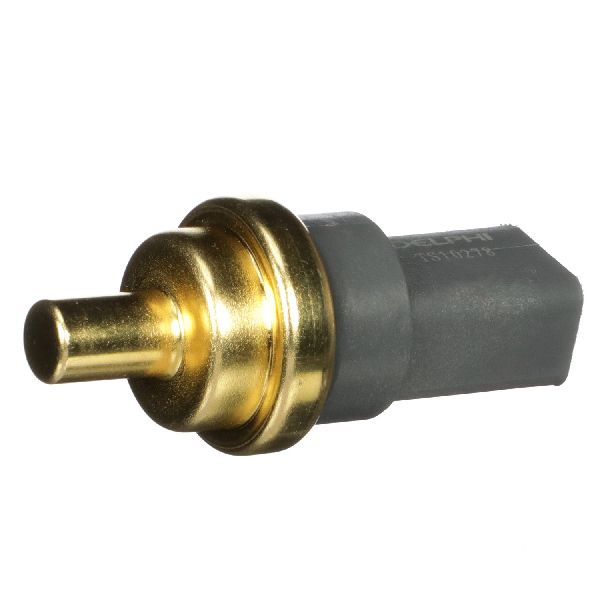
- The most likely cause is a bad Engine Coolant Temperature (ECT) sensor, known as the G62.
- CRITICAL: Before replacing the sensor, check for a coolant leak from the plastic thermostat housing, as this is a very common root cause on this engine.
- Symptoms include a maxed-out temperature gauge and cooling fans that won't turn off.
- The correct replacement sensor is likely OEM number 079919523J.
- While the sensor part is inexpensive, replacing it yourself is challenging due to its very tight location on the back of the engine.
What's Unique About the 2013-2016 Audi A4
The 2013-2016 A4 uses the Gen3 EA888 engine. On this platform, there are two coolant temperature sensors: the G62 (main engine sensor) and the G83 (radiator outlet sensor). Code P0117 specifically points to a fault in the G62 circuit. The location of the G62 sensor on the CJE engine is notoriously difficult to access, tucked away on the back of the cylinder head near the firewall. Critically, the EA888 Gen3 engine features a plastic water pump and thermostat housing that is a well-documented failure point. It frequently develops cracks, causing coolant leaks that can saturate the G62 sensor or its wiring, creating the short circuit that triggers P0117.
Symptoms You May Notice
- Check Engine Light is illuminated
- Temperature gauge reads maximum (hot) immediately after starting, even when the engine is cold
- Engine cooling fans run constantly at high speed 🎬 See how a faulty sensor causes fans to run continuously on an A4.
- Hard starting or prolonged cranking
- Rough or erratic idle
- Reduced fuel economy
- Engine may run rich (too much fuel) or lean (too little)
- Noticeable smell of coolant or visible pink/crusty residue in the engine bay if a leak is the cause.
- Replacing the thermostat. A faulty thermostat typically causes a P0128 code (Thermostat Rationality) or actual engine overheating/underheating, not a P0117 circuit code.
- Replacing the wrong temperature sensor. These engines have a second sensor at the radiator outlet (G83). P0117 specifically relates to the main engine sensor (G62). A user on AudiWorld made this exact mistake on their 2014 A4 1.8T before realizing the G62 was the cause.
Most Likely Causes
- Faulty Engine Coolant Temperature Sensor (G62) 🔴 High Probability → Shop Engine Coolant Temperature Sensor The ECT sensor is a common failure point on many VW/Audi vehicles. The plastic sensor housing can develop micro-cracks from heat cycles, allowing coolant to seep inside, contaminating the electronics and causing a short.
How to confirm: Check live data with an OBD-II scanner. If the ECT reading is at maximum (e.g., 140°C / 284°F) on a cold engine, the sensor circuit is faulted. This strongly suggests the sensor itself has failed, assuming no visible wiring damage.
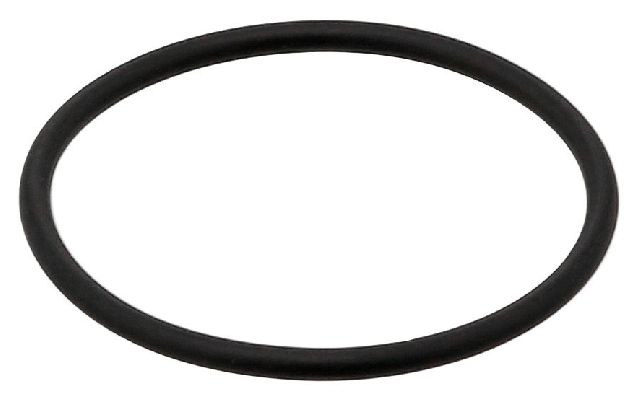
Typical fix: Replace the G62 Engine Coolant Temperature sensor and its O-ring. 🎬 Watch this walkthrough for replacing the coolant temperature sensor and O-ring.
Est. part cost: $30-$60 - Leaking Thermostat / Water Pump Housing Medium-high Probability → Shop Integrated Thermostat Housing Assembly The EA888 Gen3 engine's integrated plastic thermostat and water pump housing is a notorious failure point. It commonly develops cracks from thermal stress, leaking coolant. This leaking coolant (G12/G13) can drip onto the G62 sensor's electrical connector and wiring harness, causing a short to ground and triggering P0117.
How to confirm: With a flashlight, carefully inspect the area around and below the thermostat housing (located on the front of the engine, under the intake manifold) for signs of pink, white, or purplish crusty residue, which indicates a dried coolant leak.
Typical fix: Replace the entire thermostat and water pump housing assembly. 🎬 Watch this step-by-step guide to replacing the EA888 Gen 3 water pump. The G62 sensor should also be replaced as it may have been damaged by the coolant.
Est. part cost: $150-$300 - Wiring or Connector Damage 🟡 Medium Probability The engine bay is a harsh environment. Wires can become brittle and crack, or the connector pins can corrode, creating a short to ground. Rodent damage is also a known issue, where animals chew through the soy-based wire insulation.
How to confirm: Visually inspect the wiring harness leading to the G62 sensor for any signs of damage, fraying, melting, or rodent chew marks. Unplug the connector and check for corrosion or coolant intrusion on the pins.
Typical fix: Repair the damaged section of the wiring harness or replace the connector pigtail. A dealer repair for chewed wires can be costly, potentially around $1000.
Est. part cost: $15-$40 for a pigtail, significantly more for harness repair.
Rare But Worth Checking
- Faulty Engine Control Module (ECM): → Shop Engine Control Module (ECM) This is very rare. Before suspecting the ECM, all other possibilities, especially the sensor, its wiring, and potential coolant leaks, must be exhaustively ruled out. An ECM fault is a last resort diagnosis.
Diagnosis Steps
- Connect an OBD-II scanner and confirm P0117 is the primary code. Note any other codes.
- View the live data stream for 'Engine Coolant Temperature'. If the engine is cold but the scanner shows a value of 140°C (284°F) or higher, the fault is active.
- CRITICAL STEP: Turn off the engine. With a bright flashlight, thoroughly inspect the plastic thermostat/water pump housing on the front of the engine for any signs of pink/crusty coolant residue. A leak here is a very common root cause of P0117 on this engine.
- Locate the G62 sensor on the passenger side of the engine, on the back of the cylinder head near the firewall. Access is very tight.
- To improve access, you may need to remove the battery and battery tray. Some owners also remove the nearby charge air pipe.
- Inspect the sensor's electrical connector for damage, corrosion, or any signs of coolant contamination.
- Inspect the wiring leading to the connector for any visible damage, such as chafing, breaks, or chew marks from rodents.
- If a coolant leak from the thermostat housing is found, the housing must be replaced. It is highly recommended to replace the G62 sensor at the same time.
- If no leaks or wiring damage are found, the most probable cause is the sensor itself. Replace the G62 sensor and the corresponding O-ring.
- After replacement, clear the code with the scanner and start the engine. Verify that the temperature gauge reads correctly and that the cooling fans are not running constantly.
- If the code returns, perform advanced electrical diagnostics on the wiring harness to check for a short to ground between the ECM and the sensor connector.
Parts You'll Likely Need
- Engine Coolant Temperature Sensor (G62)
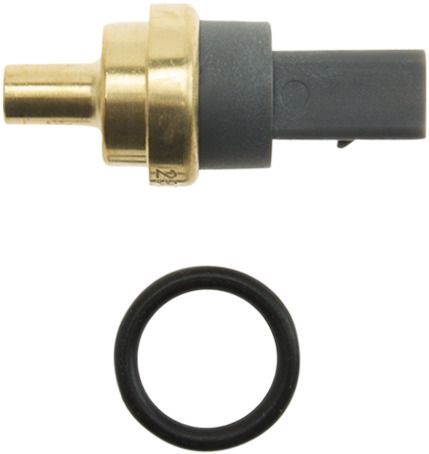
(OEM #079919523J)— This sensor is the most common failure point for the P0117 code. It directly measures the coolant temperature for the ECM.
Trusted brands: Genuine VW/Audi, Bosch, Febi Bilstein
OEM price range: $40-$60
Aftermarket price range: $20-$40 - Thermostat & Water Pump Housing Assembly
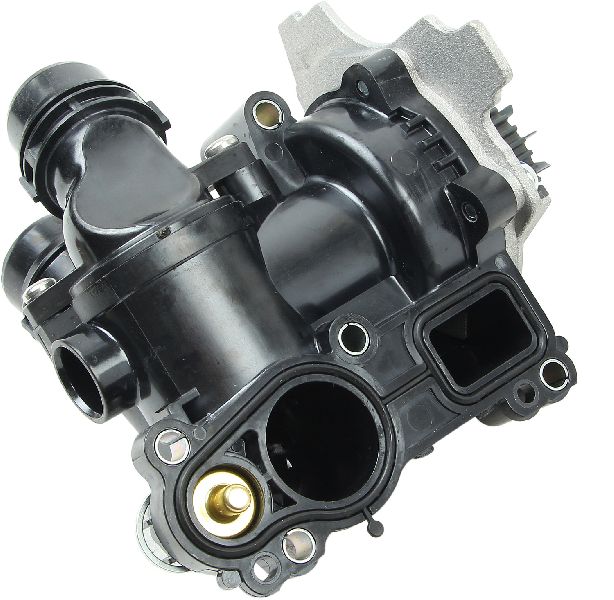
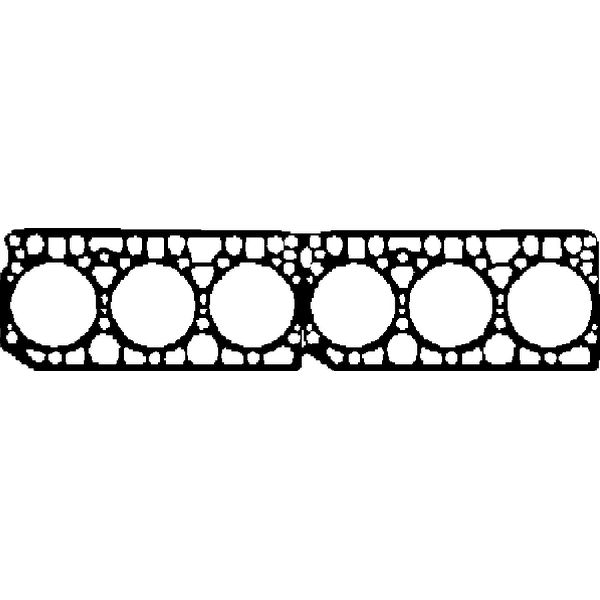
(OEM #06L121111P (or supersessions like 06L121111H/K/M))— A very common failure on the EA888 Gen3 engine. The plastic housing cracks, leaking coolant which can cause a P0117 code by shorting the G62 sensor wiring. Part number should be verified by VIN.
Trusted brands: Genuine VW/Audi, Mahle, INA
OEM price range: $250-$350
Aftermarket price range: $150-$250
Related Codes That Often Appear With This One
- P0128 (Coolant Thermostat Rationality) if the thermostat is also failing mechanically.
- P0118 (Engine Coolant Temperature Sensor 1 Circuit High) can sometimes appear alongside or be related to intermittent wiring issues.
Technical Service Bulletins (TSBs) & Recalls
- While no TSB is specific to P0117, several exist for the leaking thermostat housing on EA888 engines (e.g., Audi TSB 19-19-99 / 2052657/3), which is a known root cause of this code.
Platform-Specific Known Issues
- The plastic thermostat and water pump housing on the EA888 Gen 3 engine is a known weak point. Heat cycles can cause it to crack and leak coolant. This leak can drip down onto the G62 sensor or its wiring, causing the short circuit that triggers P0117. It is critical to inspect for this leak before assuming the sensor itself is the sole point of failure.
Mechanic-Grade Diagnostic Values
- G62 Sensor Resistance (disconnected from harness) — expected: Approx. 2000-3000 Ohms at 20°C (68°F); Approx. 275-375 Ohms at 80°C (176°F).. Failure: A reading of infinite resistance (open) or near-zero resistance (short). Values far outside the expected range for a given temperature indicate a faulty sensor.
- G62 Sensor Signal Voltage (at connector, key on, engine off) — expected: The ECM provides a 5V reference. The return signal voltage should be between 0.5V and 4.5V depending on temperature. A cold engine might show around 2.5V-3.5V.. Failure: A reading below 0.2V indicates a short to ground in the wiring or a failed sensor.
- Live Data Coolant Temperature (via VCDS/OBD-II Scanner, cold engine) — expected: Should be very close to the Intake Air Temperature (IAT) and ambient air temperature.. Failure: A reading of 140°C or higher on a cold engine confirms a 'low input' fault condition.
Hidden / Shadow Codes Worth Checking
- 16501: This is the VAG-specific (Volkswagen/Audi Group) Diagnostic Trouble Code that corresponds directly to the generic OBD-II code P0117. It specifies 'Engine Coolant Temperature Sensor (G62): Signal too Low'. (see via This code will be displayed by VAG-specific diagnostic tools like VCDS (VAG-COM) or ODIS (dealership software).)
Scan Tool Commands That Help
- VCDS (VAG-COM): Read Measuring Value Block (MVB) - Group 004 — To simultaneously view the coolant temperature from the G62 sensor (field 3) and the G83 radiator outlet sensor. This allows a technician to compare the readings in real-time to diagnose if one sensor is providing implausible data compared to the other and the actual engine state.
- VCDS (VAG-COM): Output Tests - Cooling Fan Activation — If the cooling fans are running constantly due to the P0117 failsafe, this command can be used after the repair to manually test the fan control module and ensure it responds correctly to ECM commands, ruling out a separate fan controller fault.
Wiring & Ground Locations
- G62 Sensor Connector — On the back of the cylinder head, passenger side, near the firewall. It is a 2-pin connector.. This is the primary connection point to test for voltage, ground, and to inspect for coolant contamination or physical damage that could cause a short circuit.
- Engine Block Ground Point — A primary engine-to-chassis ground strap is typically located on the left (driver's) side of the engine compartment. For the B8 platform, a key ground point is designated as 'G18 (left rear of engine) (2.0l)'.. A corroded or loose main engine ground can cause floating voltages and erratic sensor readings across the engine, including the G62 sensor. Verifying this connection is a crucial step if direct sensor and wiring checks are inconclusive.
Real Owner Repair Stories
- AudiWorld Forums user '142 guy' (2014 Audi A4 1.8 TFSI (CJE motor)) — Cooling fans came on and stayed on, heat gauge not moving, CEL on.
❌ Tried (didn't work) Replaced the temperature sensor at the bottom of the radiator (this is the G83, not the G62)., Replaced the complete thermostat housing assembly., Replaced the coolant reservoir bottle.
✅ What actually fixed it The user was advised by other forum members that they had replaced the wrong sensor (G83) and that the P0117 code points specifically to the G62 sensor on the back of the cylinder head. The final fix was to replace the correct G62 sensor, which resolved the issue.
OEM Part Supersession History
06L121111F, 06L121111G, 06L121111H, 06L121111J, 06L121111K, 06L121111L, 06L121111M→06L121111P— The thermostat housing assembly for the EA888 Gen3 engine is a known high-failure part due to the plastic cracking from thermal stress. Audi has released numerous revisions to improve durability and material composition.
Heads up: All previous versions should be replaced with the latest available part number (currently 'P' or newer) to ensure the most durable repair. Using an older revision, even if new-old-stock, is not recommended.
Diagnostic Flowchart
Used vs. New Parts: Buying Guide for This Vehicle
When a used part is the smart pick: For this repair, using used parts is generally not recommended for the primary failure components. However, a used wiring harness pigtail from a salvage yard can be a cost-effective and reliable solution if only the connector is damaged.
Donor-vehicle mileage cap: roughly under 50000 miles for the part to have meaningful remaining life.
What to inspect on the donor part:
- For a pigtail: Ensure the locking tab is intact, there is no visible corrosion on the pins, and there is at least 6 inches of flexible, uncracked wire.
- For any other part: Check for a recent manufacturing date stamp. Avoid parts showing signs of coolant residue, heavy corrosion, or heat damage.
OEM-only on this vehicle (don't cheap out):
- Thermostat & Water Pump Housing Assembly: Due to the high failure rate and multiple revisions, only a new, Genuine VW/Audi part with the latest part number (06L121111P or newer) should be used to ensure a lasting repair.
- Engine Coolant Temperature Sensor (G62): While some aftermarket brands are reliable, the cost difference is minimal, and an OEM sensor eliminates any risk of incompatibility or premature failure. Given the difficult access for replacement, using an OEM part is a smart investment.
Aftermarket brands forum-validated for this vehicle:
- Bosch (for G62 Sensor)
- Mahle (for Thermostat/Water Pump Assembly)
- INA (for Thermostat/Water Pump Assembly)
Brands owners have reported issues with on this vehicle:
- Unnamed, 'white-box' sensors from online marketplaces. These often have poor accuracy and a high failure rate.
Real Owner Stories
Aggregated from forums and TSBs cited above. Mileages and costs reflect what owners reported in those sources.
2014 Audi A4 1.8 TFSI CJE
Symptoms: The Check Engine Light was on with code P0117, and the cooling fans were running non-stop.
What fixed it: The owner discovered they had mistakenly replaced the G83 radiator outlet sensor instead of the correct G62 engine coolant temperature sensor located on the cylinder head.
Source hint: AudiWorld Forums - 'Code P0117 not clearing and fans running non stop'
Audi A4 (model year not specified)
Symptoms: A fault with the coolant temperature sensor was traced back to a wire that had been chewed by a rodent.
What fixed it: The required fix was to repair the damaged section of the wiring harness.
Cost: $950-$1050 (dealer quote)
Source hint: Reddit r/Audi
Related OBD-II Codes
Frequently Asked Questions
My temperature gauge instantly goes to max and the cooling fans run constantly on my A4. Is it overheating?
I have code P0117. Should I just replace the G62 coolant temperature sensor?
Where is the G62 Engine Coolant Temperature sensor located on the 1.8 TFSI engine?
Is there an official Audi TSB for the P0117 code?
My mechanic found chewed wires near the coolant sensor. Is this a common issue?
If I need to replace the thermostat and water pump housing, can I use an aftermarket part?
Helpful Videos

We Have This Part in Stock

The information in this article is provided for general reference and educational purposes only. Vehicle specifications, procedures, and part compatibility can vary by production date, trim level, and region. Always consult your vehicle's factory service manual and verify part numbers before purchasing or performing repairs. Safety-critical components such as airbags, seat belts, and braking systems should be installed by a qualified professional.
- Audi A4:
- 🧭 Diagnostic Flowchart
- 🎬 Helpful Videos
- 🛍️ Shop This Part
- What's Unique About the 2013-2016 Audi A4
- Symptoms You May Notice
- Most Likely Causes
- Rare But Worth Checking
- Diagnosis Steps
- Parts You'll Likely Need
- Related Codes That Often Appear With This One
- Technical Service Bulletins (TSBs) & Recalls
- Platform-Specific Known Issues
- Mechanic-Grade Diagnostic Values
- Hidden / Shadow Codes Worth Checking
- Scan Tool Commands That Help
- Wiring & Ground Locations
- Real Owner Repair Stories
- OEM Part Supersession History
- Used vs. New Parts: Buying Guide for This Vehicle
- Real Owner Stories
- 2014 Audi A4 1.8 TFSI CJE
- Audi A4 (model year not specified)
- Related OBD-II Codes
- Frequently Asked Questions
- 🎟️ Get 5% Off