

P0117 on 2007-2010 Audi Q7 4.2L V8: Engine Coolant Temperature Sensor Circuit Low Causes and Fixes
On a 2007-2010 Audi Q7 with the 4.2L V8, code P0117 is most often caused by a failed Engine Coolant Temperature (ECT) sensor, also known as the G62 sensor. This failure causes the ECU to think the engine is overheating, forcing the cooling fans to run constantly. Replacement is DIY-possible for experienced mechanics but challenging due to the sensor's location at the rear of the engine.
- P0117 on this Q7 points directly to an electrical fault in the G62 Engine Coolant Temperature sensor circuit, which the computer interprets as extreme heat.
- The most common symptoms are a Check Engine Light and cooling fans that run constantly.
- The number one cause is a failed G62 sensor itself. The second most common cause is damaged wiring leading to the sensor.
- This guide only applies to the 4.2L V8 engine found in 2007-2010 Q7 models.
- Due to the sensor's location at the rear of the engine, replacement is more difficult and labor-intensive than on many other vehicles.
What's Unique About the 2007-2010 Audi Q7
The 4.2L V8 (BAR) engine in the first-generation Q7 is a complex, tightly packaged unit. The primary ECT sensor (G62) that triggers P0117 is notoriously difficult to access, located at the rear of the engine block near the firewall. Unlike some simpler four-cylinder engines where this is a quick fix, on this V8, the job requires significant time and patience. It's also important to distinguish the G62 sensor (for the ECU) from the G83 sensor (at the radiator outlet), as they serve different functions and replacing the wrong one will not solve this code.
Symptoms You May Notice
🎬 Watch: 8 symptoms of a bad coolant temperature sensor- Check Engine Light is illuminated
- Engine cooling fans run constantly at high speed, even when the engine is cold
- Temperature gauge on the dashboard may show an abnormally high or maxed-out reading
- Noticeable decrease in fuel economy
- Black smoke from the exhaust on a cold start due to an overly rich fuel mixture
- Hard starting when the engine is cold
- Engine may run rough and hesitate until it warms up
- Replacing the thermostat. A faulty thermostat typically causes a P2181 code ('Cooling System Performance') by sticking open or closed, but it does not cause an electrical circuit fault code like P0117 unless its housing leaks onto the sensor wiring.
- Replacing the G83 radiator outlet temperature sensor. The Q7 has multiple temperature sensors. P0117 specifically points to a fault in the circuit for the G62 sensor that provides data to the ECU, not the sensor for the dashboard gauge or radiator fan control.
- Assuming the sensor is bad when there is air in the system. After any service that opens the cooling system, air can become trapped near the sensor, causing it to send incorrect signals. A proper vacuum bleed is essential.
Most Likely Causes
- Failed Engine Coolant Temperature (ECT) Sensor (G62) 🔴 High Probability → Shop Engine Coolant Temperature Sensor The sensor operates in a high-heat environment and can fail electronically over time. It is the most cited cause for this specific fault code across VAG platforms.
How to confirm: Using a diagnostic scan tool (like VCDS), observe the live data for Engine Coolant Temperature (G62). If it reads an implausibly high value (e.g., 140°C or higher) immediately after a cold start, the sensor or its circuit is faulty. You can also test the sensor's internal resistance with a multimeter when removed; the resistance should change predictably with temperature.
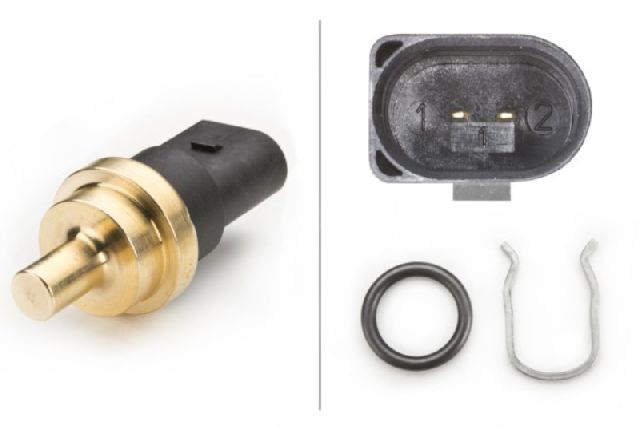
Typical fix: Replace the G62 coolant temperature sensor, its O-ring, and the retaining clip. The sensor is located at the rear of the engine, making access difficult.
Est. part cost: $20-$80 - Damaged Wiring or Connector 🟡 Medium Probability The engine wiring harness is exposed to extreme heat cycles at the back of the engine, which can make wires and connectors brittle and prone to failure over time, leading to a short to ground.
How to confirm: Visually inspect the wiring harness leading to the G62 sensor for any signs of cracking, melting, or chafing. With the sensor unplugged, use a multimeter to check for a short to ground on the signal wire. There should be no continuity between the signal wire pin at the connector and the engine block or chassis ground. If the short is intermittent, you may need to wiggle the harness while testing.
Typical fix: Repair the damaged section of the wiring harness. If the connector itself is damaged, it will need to be replaced with a new pigtail connector.
Est. part cost: $15-$50 - Low Engine Coolant Level / Air in System ⚪ Low Probability → Shop Engine Coolant / Antifreeze While this typically causes overheating or erratic readings (P0116), a severe leak could allow coolant to contaminate the sensor's electrical connector, causing a short circuit. More commonly, failing to properly vacuum-bleed the system after a coolant service can leave air pockets around the sensor, causing false readings.
How to confirm: Check the coolant level in the expansion tank when the engine is cold. Inspect for leaks. If the issue appeared immediately after a cooling system repair, suspect air in the system.
Typical fix: Repair the source of the coolant leak and top off the system. If the sensor connector is contaminated with coolant, clean it with electrical contact cleaner and ensure it's dry before reconnecting. Properly bleed the cooling system using a vacuum tool to remove any air pockets.
Est. part cost: $10-$500+ (depending on the source of the leak)
Rare But Worth Checking
- Faulty Engine Control Module (ECM): → Shop Engine Control Module (ECM) This is extremely rare. The ECM should only be considered after all other possibilities, including the sensor and its entire wiring circuit, have been exhaustively tested and proven to be good.
Diagnosis Steps
- Connect an OBD-II scanner and confirm the P0117 code is present. Note any other codes.
- View live data from the Engine Coolant Temperature sensor (G62). If the engine is cold but the scanner shows a temperature of 140°C (284°F) or higher, this confirms a fault in the sensor circuit.
- Turn the ignition off and allow the engine to cool completely.
- Visually inspect the coolant level in the expansion tank to rule out a major leak.
- Locate the G62 sensor at the rear of the 4.2L V8 engine. Inspect its electrical connector and nearby wiring for any visible damage, corrosion, or coolant contamination.
- Disconnect the sensor. With the ignition on (engine off), measure the voltage at the signal wire in the harness connector. You should see a reference voltage (typically 5V).
- Check for a short to ground. With the connector still unplugged, use a multimeter to check for continuity between the signal wire and a good chassis ground. There should be no continuity (infinite resistance). If there is, a short exists in the harness.
- If the wiring and reference voltage are good, the sensor itself is the most likely culprit.
- Replace the G62 sensor, its O-ring, and retaining clip. Clear the fault codes and re-check the live data to ensure it now shows a plausible temperature. Ensure the system is properly bled of air.
Parts You'll Likely Need
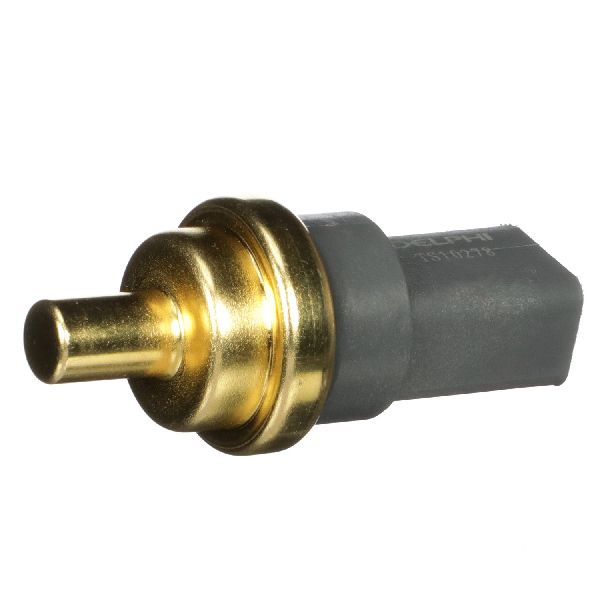
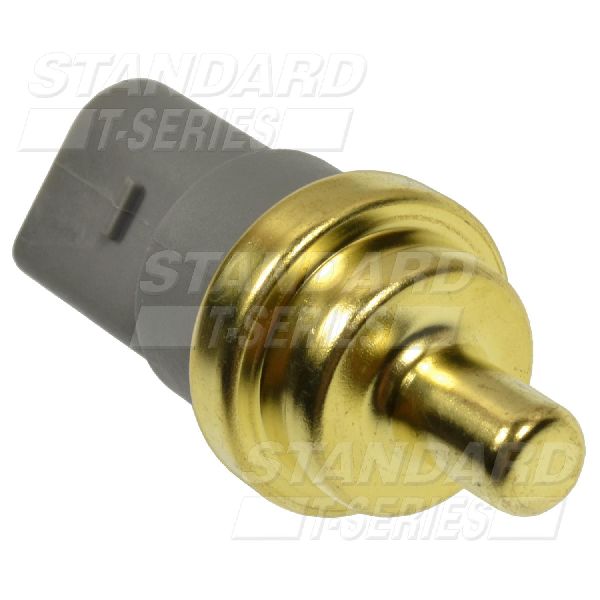
- Engine Coolant Temperature Sensor (G62)
(OEM #06A919501A)— This 2-pin sensor is the primary cause of the P0117 fault code. It provides the main temperature reading to the engine computer. Do not confuse with the 4-pin sensor 059919501A used on other VAG engines.
Trusted brands: Bosch, Hella, Delphi, Genuine Audi
OEM price range: $45-$90
Aftermarket price range: $15-$50 - Sensor O-Ring
(OEM #N90316802)— This rubber seal should always be replaced with the sensor to prevent coolant leaks. It is often sold separately.
Trusted brands: Genuine Audi, Victor Reinz
OEM price range: $3-$5
Aftermarket price range: $1-$3 - Sensor Retaining Clip
(OEM #032121142)— This plastic clip holds the sensor in place. It is notoriously brittle and often breaks during removal, so having a replacement on hand is highly recommended.
Trusted brands: Genuine Audi, Meyle
OEM price range: $2-$5
Aftermarket price range: $1-$3
Related Codes That Often Appear With This One
- P0118 — This code means 'ECT Circuit High Input'. It can appear intermittently along with P0117 if the wiring fault is erratic, causing the signal to swing between an open circuit (high input) and a short circuit (low input).
Platform-Specific Known Issues
- Real-world failure confirmation: A user on the Ross-Tech forums with a 2007 Audi Q7 4.2L experienced the P0117 code at 262,734 km. The VCDS scan log confirmed the fault as '000279 - Engine Coolant Temp. Sensor (G62) P0117 - 001 - Signal too Low - MIL ON', validating this exact issue on a high-mileage example.
Mechanic-Grade Diagnostic Values
- G62 Sensor Resistance vs. Temperature — expected: The sensor is an NTC thermistor; resistance decreases as temperature increases. Common values are: ~2,200-3,000Ω at 20°C (68°F), ~275-375Ω at 80°C (176°F), and ~180-250Ω at 100°C (212°F).. Failure: A reading of near-zero ohms indicates a short circuit (consistent with P0117). An infinite reading (open circuit) would cause a P0118. Readings that do not change smoothly with temperature indicate a faulty sensor.
- G62 Sensor Signal Voltage (at ECM) — expected: Typically between 0.5V (very hot) and 4.5V (very cold). The voltage should decrease smoothly as the engine warms up.. Failure: A voltage signal below the minimum threshold, typically ~0.14V, will trigger P0117. This indicates a short to ground in the sensor or its wiring.
Scan Tool Commands That Help
- VCDS (VAG-COM): 01-Engine -> Measuring Value Blocks (MVB) -> Group 004 — Use this to view the live coolant temperature reading from the G62 sensor as seen by the Engine Control Module. Field shows the G62 temperature. On a cold engine, this value should be close to ambient temperature. If it immediately shows a very high value (e.g., 140°C), the circuit is faulty.
- VCDS (VAG-COM): 01-Engine -> Measuring Value Blocks (MVB) -> Groups 130-136 — For some V8 ECUs, cooling system data, including engine outlet vs. radiator outlet temperatures, may be found in this range. This can help differentiate between the G62 and G83 sensor readings to ensure you are diagnosing the correct circuit.
Wiring & Ground Locations
- G62 Sensor Connector — At the rear of the engine, near the firewall, plugged into a coolant pipe. It is a 2-pin connector.. This is the primary connection point to test. The pins and wiring here are exposed to extreme heat and can become brittle or corroded, causing a short circuit.
- J623 (Engine Control Module) — Located in the water plenum chamber (e-box) at the rear of the engine bay, under the plastic cowl cover near the windshield.. This is the termination point for the G62 sensor wiring. If the sensor and connector are good, a continuity test must be performed on the wires between the G62 connector and the J623 connector (likely a 60-pin connector, T60) to find a short.
- 220 - Sensor Ground Connection — This is an internal ground connection point within the main engine wiring harness, not a physical bolt on the chassis or block.. The G62 sensor's ground wire does not go directly to the chassis. It joins a common sensor ground wire inside the harness that then runs to the ECM. A fault at this internal splice point could affect multiple sensors, but damage to the G62's ground wire before the splice will cause a P0117. You cannot simply test continuity to the chassis; you must test it back to the corresponding ground pin at the ECM connector.
Real Owner Repair Stories
- AudiWorld Forums (2014 Audi A4 1.8T (different engine, same code behavior)) — P0117 code would not clear, fans running constantly, temperature gauge not moving.
❌ Tried (didn't work) Replacing the coolant temperature sensor, Replacing the coolant expansion tank, Replacing the complete thermostat housing
✅ What actually fixed it The user was advised the next steps were to investigate for wiring damage or a failed fan control module. A key observation from the scan data was a low system voltage of 10.2V with the engine running, indicating a charging system problem that would make all electronic diagnostics unreliable until fixed. - Ross-Tech Forums (2005 VW Passat TDI) — No start / hard start, no CEL initially.
❌ Tried (didn't work) Blindly troubleshooting without data.
✅ What actually fixed it Using VCDS, the owner observed an improbable coolant temperature reading (50°C on an engine that was cold for 3 weeks). This pointed directly to a faulty G62 sensor. Replacing the sensor, despite being difficult to access, resolved the starting issues. This confirms the value of checking live data even without a fault code.
OEM Part Supersession History
06A919501A→05C919501 (and others, but 06A919501A is the most commonly cited for this era)— Part consolidation and minor revisions over time.
Heads up: Always verify part fitment with the vehicle's VIN. While the sensor may physically fit, different part numbers can have different resistance curves. Using the wrong sensor can lead to incorrect fueling and temperature readings even if it clears the circuit fault code.
Diagnostic Flowchart
Other Known Issues on This Vehicle
Issues unrelated to this code that are worth knowing about as an owner of this generation:
- Intake Valve Carbon Buildup 🔴 High — Becomes a significant issue causing misfires (P030x codes) typically between 60,000 and 80,000 miles. This is a universal problem for the FSI direct injection engine. (Ref: TSB 2019948 / 01-23-41 (also referenced as 2014753/12) addresses misfires from carbon deposits and recommends manual cleaning.)
- Timing Chain Guide Wear 🔴 High — The plastic timing chain guides can become brittle and fail, often between 90,000-120,000 miles. A rattling noise on cold startup is the primary warning sign. This is an engine-out service and is extremely expensive to repair.
- Adaptive Air Suspension Failure 🟠 Medium — The air compressor, relay, or air struts are common failure points. A blown 40A fuse for the compressor is a frequent symptom of a seized compressor motor. Issues can appear at any mileage but become more common with age.
- Oil Leaks from Oil Filter Housing 🟠 Medium — The gaskets for the oil filter housing, located in the valley of the engine, degrade and cause significant oil leaks that drip down the front and back of the engine. This is a common issue on higher-mileage examples.
- Inlet Manifold Flap/Actuator Failure 🟡 Low — The intake manifold runner flaps or their actuator motors can fail, leading to specific fault codes like P3135 or P2008 and a lit Check Engine Light.
Used vs. New Parts: Buying Guide for This Vehicle
When a used part is the smart pick: Never. The G62 sensor is a low-cost electronic wear item. The labor to access it at the rear of the 4.2L V8 engine is significant. The risk of a used sensor failing shortly after installation far outweighs the small cost savings. Always install a new sensor, o-ring, and retaining clip.
What to inspect on the donor part:
- Not applicable. Do not use a salvaged sensor for this repair.
OEM-only on this vehicle (don't cheap out):
- While not strictly 'OEM-only', using a sensor from the Original Equipment Manufacturer (OEM) or a reputable OEM supplier is critical. Avoid unbranded, 'white-box' parts for this component.
Aftermarket brands forum-validated for this vehicle:
- Bosch
- Hella
- Delphi
Brands owners have reported issues with on this vehicle:
- Unbranded or generic parts store brands with poor reviews. Forum users consistently report issues with cheap aftermarket sensors having incorrect temperature scaling, leading to persistent running problems even if they don't set a P0117 code.
Real Owner Stories
Aggregated from forums and TSBs cited above. Mileages and costs reflect what owners reported in those sources.
2007 Audi Q7 4.2L V8 — 163256 miles
Symptoms: The VCDS scan log showed '000279 - Engine Coolant Temp. Sensor (G62) P0117 - 001 - Signal too Low - MIL ON' with a freeze frame temperature reading of 143.0°C.
What fixed it: Replacement of the Engine Coolant Temp. Sensor (G62).
Source hint: Ross-Tech Forums (dsapern, Jul 23, 2022): A complete VCDS scan log from a 2007 Q7 4.2L with 262k km is posted
Related OBD-II Codes
Frequently Asked Questions
Where is the G62 Engine Coolant Temperature sensor located on my 4.2L V8 Q7?
My Q7 is misfiring; could this be related to TSB 2019948?
Why are my cooling fans running at high speed even when the engine is cold?
Is there more than one coolant sensor on the Audi V8 engine?
Could a coolant leak cause the P0117 electrical code?
What should I replace along with the G62 sensor?
Helpful Videos
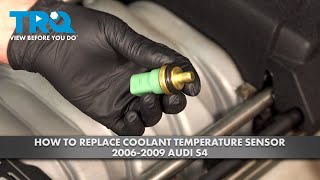
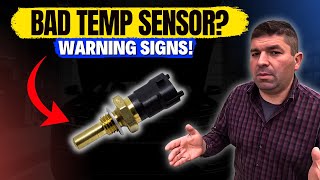
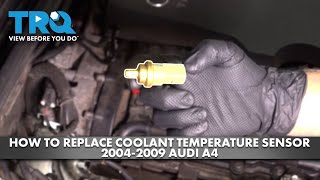
We Have This Part in Stock

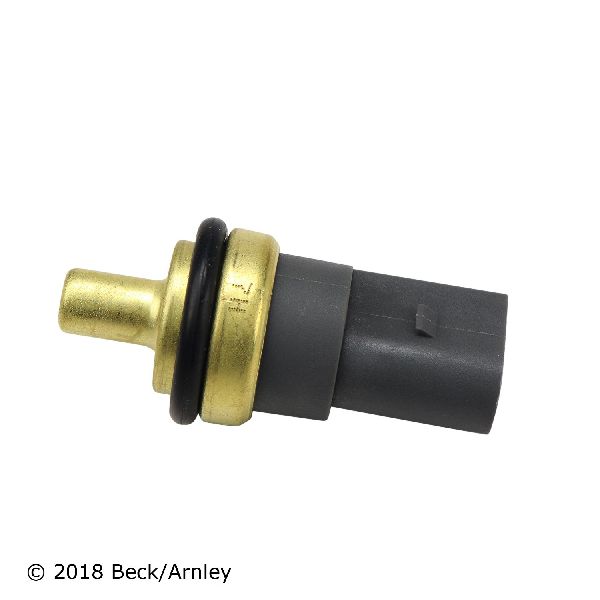

The information in this article is provided for general reference and educational purposes only. Vehicle specifications, procedures, and part compatibility can vary by production date, trim level, and region. Always consult your vehicle's factory service manual and verify part numbers before purchasing or performing repairs. Safety-critical components such as airbags, seat belts, and braking systems should be installed by a qualified professional.
- Audi Q7:
- 🧭 Diagnostic Flowchart
- 🎬 Helpful Videos
- 🛍️ Shop This Part
- What's Unique About the 2007-2010 Audi Q7
- Symptoms You May Notice
- Most Likely Causes
- Rare But Worth Checking
- Diagnosis Steps
- Parts You'll Likely Need
- Related Codes That Often Appear With This One
- Platform-Specific Known Issues
- Mechanic-Grade Diagnostic Values
- Scan Tool Commands That Help
- Wiring & Ground Locations
- Real Owner Repair Stories
- OEM Part Supersession History
- Other Known Issues on This Vehicle
- Used vs. New Parts: Buying Guide for This Vehicle
- Real Owner Stories
- 2007 Audi Q7 4.2L V8 — 163256 miles
- Related OBD-II Codes
- Frequently Asked Questions
- 🎟️ Get 5% Off