

P0117 on 2015-2018 Ford Edge 2.0L EcoBoost: Causes, Fixes, and Sensor Guide
P0117 on a 2015-2018 Ford Edge 2.0L means the Engine Coolant Temperature (ECT) sensor circuit has a short. This usually results from a failed sensor or damaged wiring, causing the temp gauge to max out and cooling fans to run constantly. The most likely fix is replacing the ECT sensor itself, which is a relatively accessible and affordable DIY job. This code indicates an electrical fault, not the more serious mechanical coolant intrusion issue also known to affect this engine.
- P0117 on this Ford Edge almost always points to a bad Engine Coolant Temperature (ECT) sensor or its wiring.
- A key symptom is the temperature gauge reading full hot instantly on a cold start, which confirms an electrical fault, not a real overheating problem.
- The most probable fix is to replace the ECT sensor, which is located on the driver's side of the cylinder head and is relatively easy to access.
- Before replacing the sensor, always inspect the connector for corrosion or coolant that may have leaked through the old sensor.
- The correct OEM part number is 7M5Z-12A648-A, which corresponds to Motorcraft part DY1187.
What's Unique About the 2015-2018 Ford Edge
For the 2015-2018 Ford Edge, the P0117 code is a straightforward electrical fault. It's crucial to distinguish this from the more severe, well-documented "coolant intrusion" issue affecting some 2.0L EcoBoost engines of this era, which causes actual overheating and may trigger different codes like P0217, P0300-P0304, or P1299. A key sign of P0117 is the temperature gauge reading full hot *immediately* upon a cold start, which points to an electrical sensor failure, not a mechanical overheating problem. While some TSBs for this platform mention ECT sensor connector issues, they are primarily directed at the 2.7L V6 engine, not the 2.0L.
Symptoms You May Notice
- Check Engine Light is on
- Temperature gauge reads maximum hot, often immediately after starting the engine cold
- Engine cooling fans run constantly at high speed
- Engine may have a hard start or run rough until it warms up
- Reduced fuel economy
- Vehicle may enter a failsafe or "limp mode"
- Black smoke from exhaust due to a rich fuel mixture, as the PCM may add extra fuel thinking the engine is cold.
- Replacing the thermostat. A thermostat issue would typically cause a slow-to-warm-up condition (P0128) or actual overheating, not an instantaneous electrical fault code like P0117.
- Assuming the engine is actually overheating. While the gauge reads hot, P0117 is an electrical circuit code. Actual overheating would involve other symptoms like steam, boiling coolant, or codes like P0217 or P1299.
Most Likely Causes
- Faulty Engine Coolant Temperature (ECT) Sensor 🔴 High Probability → Shop Engine Coolant Temperature Sensor Sensors are a common failure item. A frequent failure mode is an internal short circuit. Another is for coolant to leak through the sensor body into the electrical connector, causing a short.
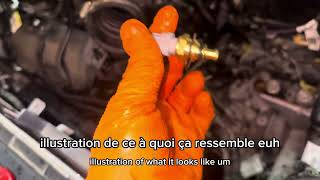
How to confirm: With a cold engine, turn the key to 'On'. If the temperature gauge immediately goes to Hot, the sensor is likely shorted. Disconnect the sensor; the gauge should drop to Cold (or a scan tool will read -40°F). If it does, the sensor is bad. You can also test the sensor's resistance with a multimeter; a healthy sensor should read around 2,000-3,000 Ohms at room temperature (approx. 68°F/20°C) and decrease as it warms up. A reading near zero ohms indicates a shorted sensor. 🎬 Watch: How to test and replace a faulty ECT sensor.
Typical fix: Replace the Engine Coolant Temperature (ECT) sensor and the small amount of coolant lost during the swap.
Est. part cost: $25-$70 - Damaged Wiring or Connector 🟡 Medium Probability The engine bay is a harsh environment. Wires can become brittle, chafed, or corroded over time, leading to a short to ground. The connector pins can also become corroded or contaminated with fluid.
How to confirm: Visually inspect the wiring harness and connector for the ECT sensor. Look for any signs of physical damage, melting, corrosion, or coolant contamination inside the connector. If disconnecting the sensor does NOT cause the temperature reading to drop to Cold, there is likely a short to ground in the wiring between the sensor and the PCM. You can test the circuit integrity by using a paperclip to bridge the terminals on the connector harness; a scan tool should show a maximum temperature reading, confirming the wiring to the PCM is intact. 🎬 Check out this quick guide on fixing the P0117 code.
Typical fix: Repair the damaged section of the wiring harness or replace the connector pigtail.
Est. part cost: $10-$30
Rare But Worth Checking
- Faulty Powertrain Control Module (PCM): → Shop Engine Control Module (ECM) This is extremely rare. The PCM should only be considered after definitively ruling out the sensor and wiring as the cause. A PCM failure would typically present with multiple other unrelated codes.
- Air Pockets in the Cooling System: While less common for a 'low input' code, a significant air pocket trapped at the ECT sensor can cause erratic readings. This is more likely to occur after a recent coolant service.
Diagnosis Steps
- Verify the code with an OBD-II scanner.
- With the engine completely cold, turn the ignition to the 'On' position without starting the engine. Observe the temperature gauge. If it immediately sweeps to full hot, this strongly indicates a P0117 fault.
- Locate the ECT sensor. On the 2.0L EcoBoost, it is typically threaded into the driver's side of the cylinder head, near the thermostat housing. 🎬 See this walkthrough for replacing the sensor on a 2.0L engine.
- Inspect the sensor's electrical connector and wiring harness for any visible damage, corrosion, chafing, or signs of coolant contamination.
- Disconnect the ECT sensor's electrical connector. With the sensor unplugged, the temperature gauge should now read full cold, and a scan tool should show a default low temperature like -40°F/C.
- If the gauge drops to cold after disconnecting the sensor, the wiring and PCM are likely good. The ECT sensor itself has an internal short and should be replaced.
- If the gauge remains at hot even with the sensor disconnected, there is a short to ground in the wiring harness between the sensor connector and the PCM. The harness will need to be inspected and repaired.
- Optional: Test the old sensor with a multimeter. At room temperature (~68°F), resistance between the pins should be 2,000-3,000 ohms. A reading near zero confirms it is shorted.
Parts You'll Likely Need
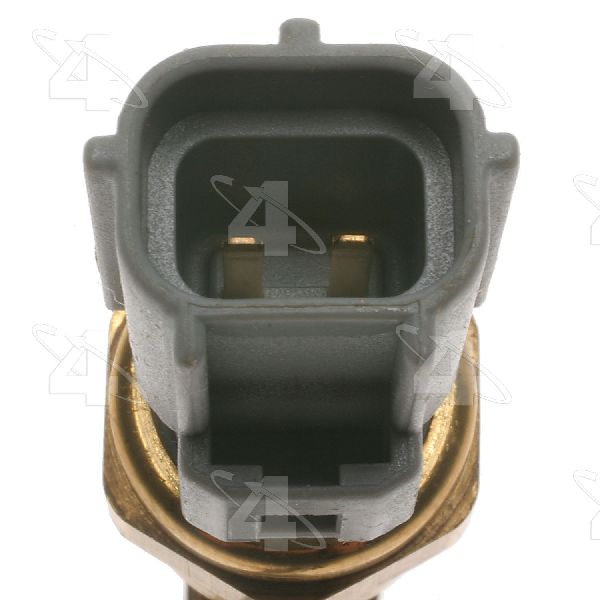
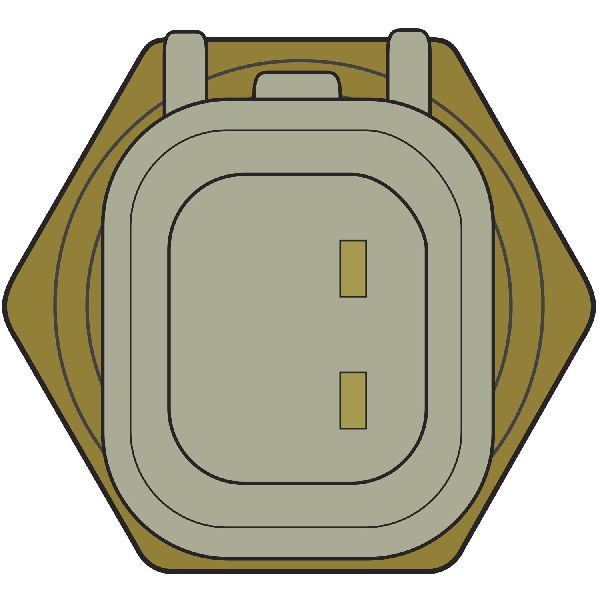
- Engine Coolant Temperature Sensor
(OEM #7M5Z-12A648-A)— This sensor is the most common failure point for a P0117 code, as it can develop an internal short circuit.
Trusted brands: Motorcraft, Bosch, NTK, Standard Motor Products
OEM price range: $40-$70
Aftermarket price range: $25-$50
Technical Service Bulletins (TSBs) & Recalls
- SSM 47791: While primarily for the 2.7L engine, this TSB for 2015-2018 Edge models mentions that ECT sensor codes like P0117 can be caused by connector or wiring issues, advising against replacing the sensor if wiring damage is found.
- Class Action Lawsuit Documentation: A class-action lawsuit regarding EcoBoost engine defects mentions a Ford document that links P0117 with other codes to a faulty ECT sensor (12A648) or its associated knock sensor harness (12A699) on some models.
Platform-Specific Known Issues
- While P0117 is an electrical fault, be aware that the 2.0L EcoBoost engine in this year range has a known TSB (19-2346, later superseded by 22-2133) for coolant intrusion into the cylinders, which is a very serious mechanical issue causing actual overheating and misfires. P0117 is NOT a direct indicator of this problem, but owners should be aware of the distinction. The coolant intrusion issue typically presents with codes like P0301-P0304 (misfires) and P0217 (overheat condition).
Mechanic-Grade Diagnostic Values
- ECT Sensor Resistance vs. Temperature — expected: Approx. 38,000Ω at 0°C (32°F), 16,000Ω at 40°C (104°F), 3,800Ω at 80°C (176°F). A common range at room temperature (20°C / 68°F) is 2,000-3,000Ω.. Failure: A resistance reading near zero ohms indicates a shorted sensor, causing P0117. An infinitely high (open) reading would cause P0118.
- ECT Sensor Signal Voltage (at PCM) — expected: Typically supplied with a 5V reference. Voltage should be high when cold (e.g., 2-3V) and decrease as the engine warms up (e.g., ~0.5V at operating temp).. Failure: A voltage signal below the specified threshold, often <0.14V, indicates a short to ground and will trigger P0117.
- Scan Tool Live Data (ECT PID) — expected: With a cold engine, the ECT reading should closely match the Intake Air Temperature (IAT) and Ambient Air Temperature (AAT) readings.. Failure: An immediate reading of 280°F+ (140°C+) on a cold engine indicates a short circuit (P0117).
Scan Tool Commands That Help
- Ford IDS (Integrated Diagnostic System) or FORScan: Datalogger - ECT_V PID — To monitor the live ECT sensor voltage. Wiggling the harness while watching this data can help identify intermittent shorts or opens in the wiring.
- Ford IDS (Integrated Diagnostic System) or FORScan: Reset KAM (Keep Alive Memory) — After replacing the sensor or repairing the wiring, this function clears the PCM's learned adaptive values, forcing it to re-learn based on the new, correct sensor input.
Wiring & Ground Locations
- ECT Sensor Connector (C1064) — On the 2.0L EcoBoost, the sensor is on the coolant outlet housing on the back (firewall side) of the engine, requiring removal of the air cleaner outlet duct for access. C1064 is the connector that plugs into the sensor.. This is the primary connector to inspect for corrosion, damage, or pushed-out pins. A fault here is a direct cause for ECT circuit codes.
- G105 / G107 — Main engine compartment ground points. G105 is on the left front of the engine compartment, and G107 is on the right front. Another key ground is a stud on the firewall on the driver's side, to the right of the battery.. The ECT sensor circuit relies on a clean ground path back to the PCM. A corroded or loose engine ground can cause a floating ground, leading to erratic sensor readings, although this would typically cause multiple issues, not just P0117.
- PCM Connector (e.g., C175B) — The Powertrain Control Module (PCM) is located on the right side of the engine compartment.. The ECT signal and ground wires terminate at the PCM. In rare cases of persistent faults where the sensor and wiring check out, inspecting for pin fitment issues or corrosion at the PCM connector is a necessary final step.
Real Owner Repair Stories
- Ford Edge Forum User (2016 Ford Edge Sport 2.7L EcoBoost, 29,000 miles) — Got an "ENGINE COOLANT OVER TEMP" warning on the dash just 5 minutes into a cold start drive. Towed to a mechanic.
❌ Tried (didn't work) Replacing the Engine Coolant Temperature (ECT) sensor. The problem persisted immediately after replacement.
✅ What actually fixed it The user was provided with wiring diagrams and connector location information (C1016, the ECT connector) pointing towards a wiring or connector fault, which is a known issue on the 2.7L engine per TSBs. The implication is the fault was in the wiring/connector, not the sensor itself.
OEM Part Supersession History
7M51-12A648-BA→7M5Z-12A648-A / Motorcraft DY1187— Part number consolidation and potential minor revisions for reliability.
Heads up: The OEM part number 7M5Z-12A648-A is the service part that corresponds to the Motorcraft DY1187. There are no known incompatibilities within the specified vehicle range.
Diagnostic Flowchart
Other Known Issues on This Vehicle
Issues unrelated to this code that are worth knowing about as an owner of this generation:
- Coolant Intrusion into Cylinders 🔴 High → Shop Engine Coolant / Antifreeze — A widely documented design flaw in 2015-2018 2.0L EcoBoost engines. Can occur at various mileages, often outside of the powertrain warranty. (Ref: TSB 19-2346 (superseded by TSB 22-2133))
- Cracked Engine Flexplate 🟠 Medium — Can cause a rattling noise from the transmission bellhousing area. Affects 2015-2018 models with the 2.0L EcoBoost. (Ref: SSM 47522)
- Failing Torque Converter 🟠 Medium — Affects 2017 models with the 6-speed automatic transmission, causing shuddering or loss of motive power. (Ref: Recall 17S16)
- Rupturing Brake Hoses 🔴 High — Affects 2015-2018 models. Both front and rear brake hoses are subject to recalls for rupturing, which can lead to a loss of braking fluid and increased stopping distance. (Ref: Recall 23S12 (Front), Recall 20V-469 / PE24027 (Rear))
- Spontaneously Shattering Rear Window 🟡 Low — Numerous owner reports across multiple model years describe the rear liftgate glass shattering without impact, sometimes related to defrost grid use.
Used vs. New Parts: Buying Guide for This Vehicle
When a used part is the smart pick: For this repair, a used part is almost never a smart choice for the sensor itself. However, sourcing a used wiring connector pigtail from a junkyard vehicle is an excellent, cost-effective option if the original connector is damaged.
Donor-vehicle mileage cap: roughly under 100000 miles for the part to have meaningful remaining life.
What to inspect on the donor part:
- For a pigtail: Check that the locking tab is intact and clicks firmly.
- Inspect the wire insulation for at least 6 inches back from the connector; it should be flexible, not brittle or cracked.
- Look inside the connector for clean, bright metal pins. Avoid any with signs of green or white corrosion.
- Ensure the weather seal is present and pliable.
OEM-only on this vehicle (don't cheap out):
- Powertrain Control Module (PCM). While not a common cause, if the PCM is diagnosed as faulty, using a used one is complex due to programming requirements. A new or properly remanufactured and programmed unit is essential.
Aftermarket brands forum-validated for this vehicle:
- Motorcraft (OEM)
- NTK
- Bosch
- Standard Motor Products (SMP)
Brands owners have reported issues with on this vehicle:
- Unnamed, no-brand 'white box' parts from online marketplaces should be avoided. Failure rates are high, and while cheap, they often do not perform to OE specifications, leading to repeat repairs.
Real Owner Stories
Aggregated from forums and TSBs cited above. Mileages and costs reflect what owners reported in those sources.
2015-2018 Ford Edge 2.0L EcoBoost
Symptoms: The engine experienced a hard start and ran rough until it warmed up; the temperature gauge read maximum hot immediately after a cold start.
What fixed it: Replacement of the Engine Coolant Temperature (ECT) sensor due to an internal short circuit.
Source hint: Article Context: Symptoms and Common Causes sections
2015-2018 Ford Edge 2.0L EcoBoost
Symptoms: The check engine light was on and the cooling fans were running constantly at high speed.
What fixed it: Repair of the wiring harness/connector pigtail after finding a short to ground in the wiring between the sensor and the PCM.
Source hint: Article Context: Common Causes and Diagnosis Steps
2015-2018 Ford Edge 2.0L EcoBoost
Symptoms: Owner reported the vehicle entering a failsafe or 'limp mode' with reduced fuel economy and black smoke from the exhaust.
What fixed it: Replacement of the ECT sensor which was causing a rich fuel mixture because the PCM thought the engine was cold.
Source hint: Article Context: Symptoms
Related OBD-II Codes
Frequently Asked Questions
Does TSB 19-2346 mean my P0117 code is caused by coolant entering the cylinders?
I have a 2015 Ford Edge with P0117; should I just replace the sensor (12A648)?
Why does my temperature gauge immediately go to 'Hot' on a cold start?
Is there a specific wiring issue I should look for on my 2017 Edge?
Can I use a used connector to fix the P0117 wiring fault?
Helpful Videos
We Have This Part in Stock


The information in this article is provided for general reference and educational purposes only. Vehicle specifications, procedures, and part compatibility can vary by production date, trim level, and region. Always consult your vehicle's factory service manual and verify part numbers before purchasing or performing repairs. Safety-critical components such as airbags, seat belts, and braking systems should be installed by a qualified professional.
- Ford Edge:
- 🧭 Diagnostic Flowchart
- 🎬 Helpful Videos
- 🛍️ Shop This Part
- What's Unique About the 2015-2018 Ford Edge
- Symptoms You May Notice
- Most Likely Causes
- Rare But Worth Checking
- Diagnosis Steps
- Parts You'll Likely Need
- Technical Service Bulletins (TSBs) & Recalls
- Platform-Specific Known Issues
- Mechanic-Grade Diagnostic Values
- Scan Tool Commands That Help
- Wiring & Ground Locations
- Real Owner Repair Stories
- OEM Part Supersession History
- Other Known Issues on This Vehicle
- Used vs. New Parts: Buying Guide for This Vehicle
- Real Owner Stories
- 2015-2018 Ford Edge 2.0L EcoBoost
- 2015-2018 Ford Edge 2.0L EcoBoost
- 2015-2018 Ford Edge 2.0L EcoBoost
- Related OBD-II Codes
- Frequently Asked Questions
- 🎟️ Get 5% Off