

P0117 on 2015-2020 Ford F-150: ECT Sensor Circuit Low Causes and Fixes
On 2015-2020 F-150s, especially with the 2.7L EcoBoost, P0117 is often caused by a poorly seated or faulty Engine Coolant Temperature (ECT) sensor connector. Inspecting the connector and replacing the ECT sensor are the most common fixes. For 2.7L engines, a TSB relocation kit is the official fix for a hard-to-reach sensor. A DIY fix can cost around $25-$75.
- P0117 means the computer thinks the engine is overheating due to a low voltage signal from the ECT sensor.
- For 2.7L EcoBoost F-150s, the most likely cause is a loose electrical connector on the ECT sensor, as documented in Ford TSBs.
- The second most likely cause is a failed ECT sensor itself, which is an affordable and relatively easy part to replace.
- Always check the simple things first: ensure the connector is secure and the coolant level is correct before replacing parts.
- Do not confuse the Engine Coolant Temperature (ECT) sensor with the Cylinder Head Temperature (CHT) sensor.
What's Unique About the 2015-2020 Ford F-150
For the 13th generation F-150, particularly those with the 2.7L EcoBoost engine, this code is frequently linked to specific hardware issues documented by Ford. Multiple Technical Service Bulletins (TSBs) point directly to problems with the ECT sensor's electrical connector not being fully seated, or issues with the sensor and its associated wiring harness. [TSB 21-2168, SSM 47791, SSM 46906] The original sensor on the 2.7L is also notoriously difficult to access, located under the intake manifold, leading Ford to issue a relocation kit as part of TSB 21-2168.
Diagnostic Flowchart
Tap your situation to follow the diagnostic path that matches what you're seeing on this vehicle.
Symptoms You May Notice
- Check Engine Light is on
- Engine temperature gauge reads excessively high or is maxed out
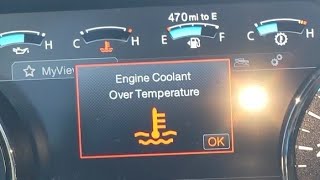
- "Engine Coolant Over Temperature" warning on the dashboard [TSB 21-2168, SSM 47791]
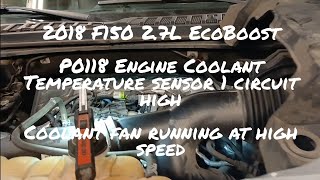
- Engine cooling fans run constantly at high speed, even when the engine is cold
- Poor fuel economy
- Rough or erratic idle
- Difficulty starting the engine, especially when cold
- Engine may enter a limited power "limp mode"
- Rumble noise or sensation, as the PCM may disable cylinders to protect the engine from the perceived high heat
- Replacing the thermostat. A faulty thermostat typically causes a P0128 code (coolant temperature below regulating temperature) or actual overheating, not a P0117 circuit code.
- Replacing the Cylinder Head Temperature (CHT) sensor. Some Ford engines, like many 5.0L V8s, use a CHT sensor instead of an ECT. The CHT is threaded into the cylinder head metal and does not directly touch coolant. P0117 specifically refers to the Engine Coolant Temperature sensor circuit. Ensure you are diagnosing the correct sensor for your specific engine. 🎬 Watch: How to fix a Cylinder Head Temp sensor issue.
Most Likely Causes
- Poorly Seated ECT Sensor Connector 🔴 High Probability → Shop Engine Coolant Temperature Sensor This is a widely documented issue on 2.7L EcoBoost engines, as cited in Ford TSBs SSM 47791 and SSM 46906. The connector's location exposes it to vibration and heat, causing it to work itself loose and create a poor connection.
How to confirm: Visually inspect the ECT sensor connector. Ensure it is clean, free of corrosion, and firmly clicked into place. Wiggle the connector with the engine running (if safe) while monitoring live data to see if the temperature reading fluctuates wildly.
Typical fix: Firmly reseat the connector until it clicks. If the locking tab is broken or the connection remains loose, the connector pigtail should be replaced.
Est. part cost: $0 - $45 - Faulty Engine Coolant Temperature (ECT) Sensor 🔴 High Probability → Shop Engine Coolant Temperature Sensor Sensors are wear items and can fail by shorting internally, which results in the low voltage signal that triggers P0117. TSB 21-2168 for 2018-2020 2.7L models acknowledges this by providing a kit to replace and relocate the sensor to a less harsh environment.
How to confirm: Use a scan tool to monitor live ECT data. If it shows an extremely high temperature (e.g., 250°F+) when the engine is cold, the sensor is likely bad. You can also test the sensor's resistance with a multimeter; at ~68°F (20°C), it should be between 2,000 and 3,000 ohms.
Typical fix: Replace the ECT sensor. On the 2.7L EcoBoost, the original sensor is under the intake manifold 🎬 See the difficult location of the original 2.7L sensor. (an 8+ hour job), so the recommended fix is installing the TSB 21-2168 relocation kit. On 3.5L and 5.0L engines, the sensor is more accessible near the thermostat housing.
Est. part cost: $25 - $100 - Damaged Wiring Harness 🟡 Medium Probability The wiring to the ECT sensor can be damaged by engine heat, vibration, or chafing. A short to ground on the signal wire will cause a P0117 code. TSB SSM 48991 specifically mentions replacing the entire ECT and knock sensor harness on some 2.7L engines to resolve this and other codes, indicating it's a known failure point.
How to confirm: Visually inspect the wiring harness leading to the ECT sensor for any signs of melting, chafing, or breaks. Perform a continuity test and check for a short to ground using a multimeter between the signal wire and a known good ground.
Typical fix: Repair the damaged section of the wire or replace the connector pigtail. In cases per TSB SSM 48991, the entire sensor sub-harness (Part #12A699) may need replacement.
Est. part cost: $20 - $150
Rare But Worth Checking
- Low Engine Coolant Level / Air in System: → Shop Engine Coolant / Antifreeze While this more commonly causes overheating or a P0128 code, if the sensor is exposed to a steam pocket instead of liquid coolant, it can lead to erratic readings that may trigger a circuit fault code like P0117. Always check the coolant level first as a basic step.
- Faulty Powertrain Control Module (PCM): → Shop Engine Control Module (ECM) This is the least likely cause. The PCM itself can fail, but all other possibilities, especially wiring and sensor faults, should be exhaustively ruled out before considering PCM replacement, as it is expensive and requires programming.
Diagnosis Steps
- Connect an OBD-II scanner and confirm P0117 is the primary code. Note any other codes present, especially P0116, P0118, or P1299.
- View live data on the scanner. Check the ECT sensor reading with the engine cold (after sitting overnight). If it reads an impossibly high temperature (e.g., >250°F), it confirms the low voltage input problem.
- Turn the ignition off. Locate the ECT sensor. For 2.7L engines, it is notoriously located under the intake manifold, but the connector may be accessible. For 3.5L EcoBoost and 5.0L V8s, it's typically near the thermostat housing.
- Carefully inspect the ECT sensor connector. Per TSBs SSM 47791 and SSM 46906, check if it is fully seated. Disconnect it and check for corrosion, moisture, or damaged pins.
- Reconnect the connector, ensuring it clicks into place. Clear the codes and see if the problem returns. If it does, proceed to the next step.
- With the connector unplugged and ignition on, the scan tool reading should now show an extremely low temperature (e.g., -40°F), which would trigger a P0118 code. This confirms the wiring from the PCM to the connector is likely intact and points towards a faulty sensor.
- If the sensor is the suspected cause, replace it. For 2.7L engines (2018-2020), the official fix is installing the TSB 21-2168 relocation kit (Part #ML3Z-14A411-H), which moves the sensor to an upper heater hose. 🎬 Watch: How to install the TSB 21-2168 relocation kit.
- If the problem persists after sensor/connector checks, inspect the wiring harness for shorts to ground between the sensor and the PCM. TSB SSM 48991 points to the ECT/knock sensor harness as a potential failure point.
- Ensure the cooling system is full and properly bled of air, as air pockets can cause erratic readings.
Parts You'll Likely Need
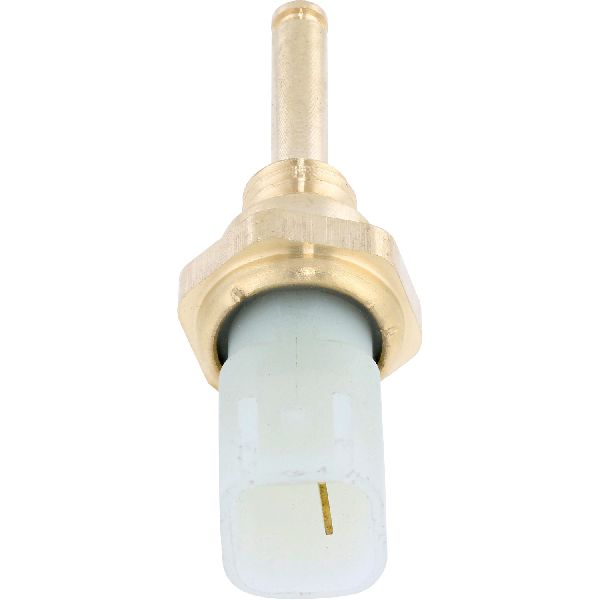
- Engine Coolant Temperature Sensor
(OEM #DY-1144 (Motorcraft))— This sensor is the most common part to fail, causing the P0117 code by shorting internally. Note: DY-1144 fits many Ford vehicles but always verify with your VIN.
Trusted brands: Motorcraft
OEM price range: $25-$40
Aftermarket price range: $15-$30 - ECT Sensor Connector Pigtail
(OEM #WPT-1469 (Motorcraft))— If the connector's locking tab is broken or the terminals are corroded/damaged, replacing the pigtail is necessary for a secure connection.
Trusted brands: Motorcraft, Standard Motor Products, Dorman
OEM price range: $25-$45
Aftermarket price range: $15-$30 - ECT Relocation Kit (2.7L EcoBoost)
(OEM #ML3Z-14A411-H)— For 2018-2020 F-150s with the 2.7L engine, this kit is the official Ford fix per TSB 21-2168. It includes a new heater hose with a built-in sensor and a jumper harness, relocating the sensor to an easier-to-access and more reliable location.
Trusted brands: Ford
OEM price range: $75-$120
Aftermarket price range: N/A
Related Codes That Often Appear With This One
- P0116 — Indicates an ECT sensor performance/range issue, often set alongside circuit-specific codes like P0117. It is listed in all major TSBs for this issue. [TSB 21-2168, SSM 47791, SSM 46906]
- P0118 — The opposite of P0117, indicating a high circuit input (open circuit). It can appear if you disconnect the sensor for testing or if the wiring damage is intermittent.
- P1299 — Indicates a cylinder head over-temperature condition was detected. The PCM may trigger this as a protective measure based on the false high-temp reading from the faulty P0117 circuit. It is frequently cited in the relevant TSBs. [TSB 21-2168, SSM 47791, SSM 46906]
Technical Service Bulletins (TSBs) & Recalls
- TSB 21-2168: For 2018-2020 2.7L EcoBoost engines, addresses P0117 and other codes by replacing a heater hose and installing a jumper harness to relocate the ECT sensor.
- SSM 47791: Points to an unseated ECT sensor connector or damaged wiring on 2.7L engines as a cause for P0117 across various Ford/Lincoln models, including the F-150.
- SSM 46906: Similar to SSM 47791, identifies a poorly seated ECT connector on 2.7L engines as a primary cause of P0117.
- SSM 48991: Recommends replacing the ECT sensor and knock sensor harness (12A699) on 2.7L engines for persistent P0117 and related codes.
Platform-Specific Known Issues
- On 2.7L EcoBoost engines, Ford issued TSBs SSM 47791 and SSM 46906 regarding the ECT sensor connector not being fully seated, causing P0117 and other related codes.
- TSB 21-2168 (for 2018-2020 2.7L models) provides a complete kit to relocate the ECT sensor from its original, failure-prone location under the intake manifold to an upper heater hose. This is the definitive fix for recurring issues on these engines.
- TSB SSM 48991 suggests that for persistent issues on 2.7L engines, the entire ECT and knock sensor wiring harness (Part #12A699) may need to be replaced to resolve the condition.
- Many 5.0L V8 F-150s use a Cylinder Head Temperature (CHT) sensor instead of an ECT sensor. While it serves a similar purpose, it is a different part in a different location and does not trigger P0117. This can be a source of misdiagnosis.
Mechanic-Grade Diagnostic Values
- ECT Sensor Resistance — expected: 2000-3000 Ω at 68°F (20°C); 200-300 Ω at 194°F (90°C).. Failure: A reading far outside the expected range for a given temperature indicates a faulty sensor.
- ECT Sensor Signal Voltage (Key On, Engine Off, Cold Engine) — expected: ~2.0V to 3.0V, depending on ambient temperature.. Failure: A voltage reading below 0.2V, and especially below 0.14V, indicates a short in the circuit or sensor, triggering P0117.
- ECT Sensor Signal Voltage (Key On, Engine Off, Warm Engine) — expected: ~0.5V. Failure: A voltage that does not decrease as the engine warms, or remains stuck at a very low value, points to a sensor or circuit fault.
- Scan Tool Live Data (Cold Engine) — expected: ECT reading should be within a few degrees of the Intake Air Temperature (IAT) and ambient outside temperature.. Failure: An ECT reading of 250°F (121°C) or higher on a cold engine confirms the condition for P0117.
Wiring & Ground Locations
- PCM Ground — On the firewall, there may be one or two ground studs for the PCM depending on the model year and engine.. The ECT sensor circuit relies on a stable ground reference provided by the PCM. A corroded or loose PCM ground can cause erratic sensor readings and trigger various codes, including P0117.
- Main Battery Ground — On the chassis, just in front of the washer fluid reservoir.. This is a primary ground for the entire vehicle. While less likely to cause an isolated P0117, a poor connection here can lead to widespread electrical issues that could affect sensor readings.
- Body to Frame Ground — Underneath the truck, a braided cable connects the body to the frame, often near the passenger side door area.. These grounds are known to corrode, especially in salt-belt regions. A poor body ground can create voltage differentials and unstable sensor references throughout the vehicle's electrical system.
Real Owner Repair Stories
- Ford F150 Forum (2019 F-150 2.7L EcoBoost) — Rumble noise, Check Engine Light, and an "Engine Coolant Over Temperature" warning, causing the engine to enter limp mode.
❌ Tried (didn't work) The issue initially resolved itself after sitting overnight, but the user was concerned about recurrence.
✅ What actually fixed it The dealership performed the repair outlined in TSB 21-2168, which involves relocating the ECT sensor. The user confirmed this fixed the issue and shared the TSB document in the forum thread.
OEM Part Supersession History
N/A (Original under-manifold ECT sensor)→ML3Z-14A411-H (Relocation Kit)— The original sensor location on 2.7L EcoBoost engines was prone to heat/vibration-related failures of the sensor and wiring. TSB 21-2168 introduced this kit to move the sensor to a more reliable location on an upper heater hose.
Heads up: This kit is the official service procedure for 2018-2020 2.7L F-150s experiencing this issue. Simply replacing the original sensor is not the recommended long-term fix.
Model Year Variations Within This Range
- 2018-2020: For F-150s with the 2.7L EcoBoost engine, Ford issued TSB 21-2168 to address a high failure rate of the ECT sensor circuit. The official repair is not to replace the sensor in its original, hard-to-reach location, but to install a relocation kit (ML3Z-14A411-H) that moves the sensor to a heater hose. While the P0117 code can occur on earlier 2.7L models (2015-2017), the TSB specifically covers the 2018-2020 model years.
Helpful Videos

We Have This Part in Stock


The information in this article is provided for general reference and educational purposes only. Vehicle specifications, procedures, and part compatibility can vary by production date, trim level, and region. Always consult your vehicle's factory service manual and verify part numbers before purchasing or performing repairs. Safety-critical components such as airbags, seat belts, and braking systems should be installed by a qualified professional.
- Ford F-150:
- 🧭 Diagnostic Flowchart
- 🎬 Helpful Videos
- 🛍️ Shop This Part
- What's Unique About the 2015-2020 Ford F-150
- Symptoms You May Notice
- Most Likely Causes
- Rare But Worth Checking
- Diagnosis Steps
- Parts You'll Likely Need
- Related Codes That Often Appear With This One
- Technical Service Bulletins (TSBs) & Recalls
- Platform-Specific Known Issues
- Mechanic-Grade Diagnostic Values
- Wiring & Ground Locations
- Real Owner Repair Stories
- OEM Part Supersession History
- Model Year Variations Within This Range
- 🎟️ Get 5% Off