

P0117 on 2005-2012 Porsche 911: Engine Coolant Temp Sensor Fixes
For a 2005-2008 Porsche 911 (997.1), code P0117 is almost always a failed Engine Coolant Temperature (ECT) sensor. This causes hard starting and cooling fans to run constantly. Expect to pay $20-$40 for an OEM sensor, but labor is intensive due to its location behind the alternator, requiring several hours of work.
- P0117 on a 997.1 (2005-2008) 911 almost always means the ECT sensor has failed.
- Key symptoms are a Check Engine Light, cooling fans running constantly, and difficulty starting the engine when it's cold.
- The sensor part is cheap, but
What's Unique About the 2005-2012 Porsche 911
On the M96/M97 engines used in the 997.1 Carrera, the ECT sensor is notoriously difficult to access, tucked behind the alternator at the top rear of the engine. While the sensor itself is an inexpensive part, replacing it is a labor-intensive job that many owners either send to a shop or set aside a weekend for. Forum discussions frequently center on the frustration of accessing the sensor, which requires removing the airbox and alternator, making a simple part replacement a moderate-to-high difficulty DIY task. The job requires specific tools like E-Torx sockets for the alternator bolts and a 22mm socket that is not too deep but tall enough to clear the sensor's plastic body.
Generation note: The 2005-2012 range covers the entire 997 generation, but two distinct engine families. This guide focuses on the 2005-2008 (997.1) models with the M96/M97 engine. The 2009-2012 (997.2) models use the newer 9A1 engine, which has a different ECT sensor location and replacement procedure. While the code's meaning is identical, the repair steps are not transferable between the 997.1 and 997.2.
Symptoms You May Notice
- Check Engine Light is on
- Cooling fans (both front radiator and engine compartment) run at full speed immediately or shortly after starting, even with a cold engine.
- Hard starting or extended cranking, especially when the engine is cold.
- Temperature gauge on the dashboard is erratic, reads zero (with a blinking warning light), or shoots to maximum. 🎬 Watch: Troubleshooting a flashing temperature sensor warning light
- Reduced fuel economy due to incorrect fuel mixture.
- Rough or hesitant running, particularly before the engine warms up.
- In some cases, a P0117 can be triggered by a sensor that has become physically loose in its housing, potentially causing a small coolant leak.
- Replacing the thermostat. While a faulty thermostat can cause cooling issues, it will not cause a 'Circuit Low' electrical fault code like P0117.
- Replacing the cooling fans or fan resistors. The fans are running because the DME is commanding them to do so based on the faulty sensor reading. The fans themselves are likely operating as designed.
Most Likely Causes
- Failed Engine Coolant Temperature (ECT) Sensor 🔴 High Probability → Shop Engine Coolant Temperature Sensor The sensor is a common failure point across many vehicle brands, and the M96/M97 is no exception. The sensor is a thermistor that can fail internally, creating a short circuit that sends the low voltage signal to the DME.
How to confirm: Using a scan tool, observe the live data for engine coolant temperature with the engine cold. If it shows an impossibly high value (e.g., 250°F+ or 120°C+) or an impossibly low value (e.g., -40°F), the sensor is almost certainly shorted or failed. Another test is to disconnect the sensor; if the scan tool reading changes from extremely high to a default extremely low value (or vice-versa), the sensor is bad. A multimeter test on the sensor itself should show resistance between 2,000 and 3,000 ohms at room temperature (around 68°F/20°C).
Typical fix: Replace the Engine Coolant Temperature sensor. This requires removing the airbox, serpentine belt, and alternator for access.
Est. part cost: $20-$40 - Wiring Harness or Connector Damage 🟡 Medium Probability The engine bay is compact and subject to high heat, which can make wiring brittle over time. A short-to-ground in the signal wire between the sensor and the DME will cause a P0117 code. The wiring is routed under a plastic tray near the sensor, which can be a point of chafing.
How to confirm: Visually inspect the wiring leading to the ECT sensor for any signs of melting, chafing, or breaks. Check the connector for corrosion, moisture, or pushed-out pins. With the sensor unplugged and key on, use a multimeter to check for a 5V reference signal on one pin and a good ground on another. Then, check for continuity to ground on the signal wire; there should be none.
Typical fix: Repair the damaged section of the wiring harness or replace the connector pigtail.
Est. part cost: $10-$30
Rare But Worth Checking
- Faulty DME (Engine Computer): This is extremely rare. Before condemning the expensive DME, all other possibilities, including the sensor and the entire wiring circuit, must be exhaustively tested and ruled out.
Diagnosis Steps
- Connect an OBD-II scanner and confirm P0117 is the active code.
- View live data on the scanner. With the engine cold, check the Engine Coolant Temperature reading. If it reads a very high temperature (e.g., 250°F / 120°C or higher) or a default low like -40°F, this strongly suggests a shorted sensor or circuit.
- Turn the engine off and disconnect the battery. Locate the ECT sensor. On the 997.1, this requires removing the airbox, releasing tension on the serpentine belt, and removing the alternator.
- Inspect the sensor's wiring and connector for any visible damage, corrosion, or loose pins. The sensor is located under a plastic harness raceway behind where the alternator sits.
- Disconnect the sensor. Turn the ignition to the 'On' position (engine off). The temperature reading on the scan tool should now drop to a very low default value (e.g., -40°F). If it does, this confirms the wiring is likely intact and the sensor itself has failed.
- If the reading does not change or remains high after unplugging the sensor, there is likely a short-to-ground in the wiring harness between the sensor and the DME.
- To test the wiring, use a multimeter to check for a 5-volt reference at the connector (with key on). Then, check the signal wire for a short to ground.
- If the sensor is confirmed as the fault, replace it using a 22mm socket. Be prepared for a small amount of coolant to spill. If the wiring is at fault, repair the short.
- Reassemble all components, top off coolant if necessary, reconnect the battery, and clear the fault codes.
Parts You'll Likely Need
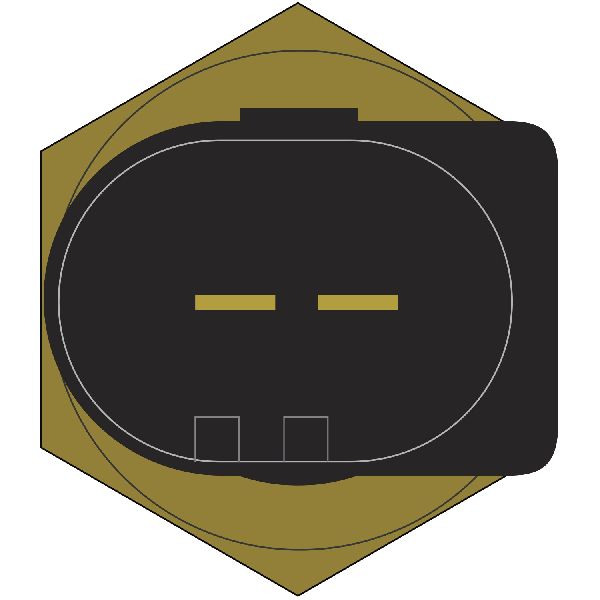
- Engine Coolant Temperature Sensor
(OEM #997-606-420-00)— This sensor is the most common point of failure for a P0117 code, as it can short internally. Note: Some earlier M96 engines used a different part number (e.g., 996-606-405-01), so always verify with your VIN.
Trusted brands: Porsche (Genuine), Bosch, VEMO, Uro Parts
OEM price range: $25-$40
Aftermarket price range: $15-$30
Platform-Specific Known Issues
- DIY Repair Experience: A detailed DIY walkthrough on 6speedonline shows the full process of removing the airbox, alternator (requiring E-Torx sockets), and accessing the sensor. The author notes the trickiest part is finding a 22mm socket with the right height to remove the sensor due to clearance issues with a nearby threaded boss and the intake plenum.
Mechanic-Grade Diagnostic Values
- ECT Sensor Resistance (NTC Type) — expected: Approx. 2,000-3,000 Ω at 20°C (68°F); Approx. 250-350 Ω at 80°C (176°F).. Failure: A reading of near-zero ohms indicates a short circuit (consistent with P0117). An open circuit (infinite resistance) would typically cause a P0118 code. 🎬 Watch: Porsche 997 coolant temperature sensor replacement walkthrough
- ECT Sensor Signal Voltage at DME — expected: High voltage when cold (e.g., 3.0 - 3.5V at 20°C), dropping as the engine warms up (e.g., ~1.0V at 80°C).. Failure: A voltage below the specified minimum, often under 0.14V, indicates a short to ground and will trigger P0117.
- ECT Sensor Connector Voltage (Key On, Engine Off, Sensor Unplugged) — expected: One pin should have a ~5V reference from the DME, and the other should be a sensor ground (near 0V).. Failure: Absence of the 5V reference points to a wiring or DME issue. If the signal wire shows voltage but it doesn't change when the sensor is plugged in, the sensor is likely faulty.
Wiring & Ground Locations
- Main Engine Ground Strap — A short, braided strap connecting the engine to the chassis. On the 997.1, this is typically located on the driver's side (left side for LHD cars), connecting the engine block near cylinder #3 to the frame.. A poor engine ground can cause a voltage potential difference between the engine block (where the sensor is grounded) and the chassis (where the DME is grounded). This can create erratic and incorrect readings for multiple sensors, including the ECT, potentially leading to a P0117 or other codes.
- DME Sensor Ground — The ECT sensor receives its ground reference through the wiring harness from the DME, not directly from the engine block. A Porsche diagnostic document mentions an open circuit in the ground supply to the sensor as a possible fault cause.. If the dedicated sensor ground wire is broken or has high resistance, the sensor's reading will be skewed, potentially causing a P0117 or P0118 fault. This confirms the ground side of the circuit is just as important to test as the signal wire.
Real Owner Repair Stories
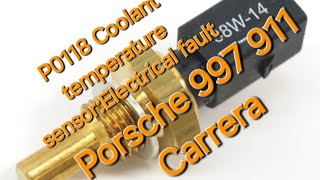
- AKI'S GARAGE LTD on YouTube (Porsche 911 997 Carrera (year not specified, but 997.1 body style)) — Temperature gauge going up and down, Check Engine Light with fault code P0118 (Circuit High). While this is the opposite code, the diagnostic process and failed part are identical.
❌ Tried (didn't work) The technician immediately suspected the sensor based on the code and symptoms.
✅ What actually fixed it Replacing the engine coolant temperature sensor with a genuine Porsche part (PN 997-606-420-00) resolved the issue. The video shows the location behind the alternator and the process of replacement, confirming it as the fix.
OEM Part Supersession History
997-606-420-00→997-606-420-01— Standard part revision or change in manufacturer.
Heads up: The new part number is a direct replacement for the old one and is fully compatible.
Diagnostic Flowchart
Other Known Issues on This Vehicle
Issues unrelated to this code that are worth knowing about as an owner of this generation:
- Intermediate Shaft (IMS) Bearing Failure 🔴 High — Affects all 1997-2008 M96/M97 engines. Failure rate is debated (estimated 5-10%), but failure is catastrophic, often requiring a full engine replacement. 2006-2008 models have a more robust but non-serviceable (without engine disassembly) bearing with a lower failure rate.
- Cylinder Bore Scoring 🔴 High — A significant concern for M96/M97 engines, particularly the larger 3.6L and 3.8L variants. It involves scraping of the cylinder walls, leading to oil consumption, a ticking noise, and eventually engine failure. Risk is mitigated by frequent oil changes, proper warm-up, and using quality fuel.
- Air-Oil Separator (AOS) Failure 🟠 Medium — A common failure item on M96/M97 engines. The diaphragm inside the AOS can tear, causing large amounts of white/blue smoke from the exhaust (especially on startup), increased oil consumption, and a rough idle. If it fails completely, it can lead to engine hydro-lock.
- Rear Main Seal (RMS) Leaks 🟡 Low — A very common issue on early M96 engines, though less so on later M97s. It causes an oil leak from the area between the engine and transmission. While often just a cosmetic drip, it can be mistaken for a more serious IMS bearing-related leak.
Used vs. New Parts: Buying Guide for This Vehicle
When a used part is the smart pick: For this specific repair, a used part is almost never a smart choice. The ECT sensor is an inexpensive wear item with a known failure rate. The labor to access it is significant, so installing a used sensor with unknown remaining life is a major risk that could lead to repeating the entire job.
Donor-vehicle mileage cap: roughly under 10000 miles for the part to have meaningful remaining life.
What to inspect on the donor part:
- Not applicable. Do not buy this part used.
OEM-only on this vehicle (don't cheap out):
- While not strictly 'OEM-only', using a Genuine Porsche or OEM-supplier (Bosch) sensor is highly recommended. The cost difference is minimal compared to the labor involved, and it ensures correct resistance curves and longevity.
Aftermarket brands forum-validated for this vehicle:
- Bosch (often the original OEM supplier)
- VEMO (a well-regarded German aftermarket supplier)
Brands owners have reported issues with on this vehicle:
- Uro Parts: While Uro makes many useful parts, forum discussions often advise against using their electronic components, like sensors, due to inconsistent quality and higher failure rates compared to OEM or OEM-supplier brands.
Real Owner Stories
Aggregated from forums and TSBs cited above. Mileages and costs reflect what owners reported in those sources.
2005-2008 Porsche 911 (997.1)
Symptoms: The owner noted the trickiest part of the repair was finding a 22mm socket with the right height to remove the sensor because of clearance issues with a nearby threaded boss and the intake plenum.
What fixed it: Replacement of the Engine Coolant Temperature sensor after removing the airbox, serpentine belt, and alternator.
Source hint: 6speedonline.com: 'Faulty Coolant Sensor, DIY'
2005-2012 Porsche 911
Symptoms: Radiator and engine compartment fans coming on and staying on at full blast, even when the engine is cold.
What fixed it: Replacement of the Engine Coolant Temperature (ECT) sensor.
Source hint: Rennlist.com: 'Radiator and engine compartment fans coming on and staying on, when cold'
Porsche Boxster (986/987)
Symptoms: The temperature gauge was acting up and the car threw a P0117 fault code, indicating a short to ground.
What fixed it: Identified as a shorted coolant temperature sensor or circuit issue.
Source hint: 986forum.com: 'Temp gauge and a p0117 fault code'
Related OBD-II Codes
Frequently Asked Questions
Why are my 911's radiator and engine compartment fans running at full speed even when I just started the car cold?
My 997.1 dashboard temperature gauge is blinking and reading zero; is this related to P0117?
Is the Engine Coolant Temperature sensor in the same place on a 997.2 as it is on my 2006 911?
Can I replace the ECT sensor on my M97 engine without removing the alternator?
What specific tools do I need for this repair on a 997.1?
Should I buy a used sensor from a donor Porsche to save money?
Helpful Videos
![How to Fix P0117 Engine Code in 3 Minutes [2 DIY Methods / Only $7.43]](https://img.youtube.com/vi/0PE930ETa4Y/mqdefault.jpg)
We Have This Part in Stock


The information in this article is provided for general reference and educational purposes only. Vehicle specifications, procedures, and part compatibility can vary by production date, trim level, and region. Always consult your vehicle's factory service manual and verify part numbers before purchasing or performing repairs. Safety-critical components such as airbags, seat belts, and braking systems should be installed by a qualified professional.
- Porsche 911:
- 🧭 Diagnostic Flowchart
- 🎬 Helpful Videos
- 🛍️ Shop This Part
- What's Unique About the 2005-2012 Porsche 911
- Symptoms You May Notice
- Most Likely Causes
- Rare But Worth Checking
- Diagnosis Steps
- Parts You'll Likely Need
- Platform-Specific Known Issues
- Mechanic-Grade Diagnostic Values
- Wiring & Ground Locations
- Real Owner Repair Stories
- OEM Part Supersession History
- Other Known Issues on This Vehicle
- Used vs. New Parts: Buying Guide for This Vehicle
- Real Owner Stories
- 2005-2008 Porsche 911 (997.1)
- 2005-2012 Porsche 911
- Porsche Boxster (986/987)
- Related OBD-II Codes
- Frequently Asked Questions
- 🎟️ Get 5% Off