

P0117 on 2011-2018 Volvo S60 3.2L/3.0L: Engine Coolant Temp Circuit Low Causes and Fixes
On this Volvo S60, P0117 is almost always a failed Engine Coolant Temperature (ECT) sensor. The sensor is integrated into the thermostat housing, so the entire assembly is typically replaced. Expect to pay $100-$200 for the part, with a DIY difficulty of 4/5 due to the intake manifold needing removal for access.
- P0117 on your S60 means the computer thinks the engine is overheating due to a faulty sensor circuit.
- The most common cause is a failed Engine Coolant Temperature (ECT) sensor.
- On these specific engines, the sensor is part of the thermostat housing assembly, and the whole unit is typically replaced.
- This is not a simple repair; DIY requires removing the intake manifold and will take several hours.
- Do not ignore this code, as it causes poor engine performance, bad fuel economy, and constant stress on your cooling fans.
What's Unique About the 2011-2018 Volvo S60
On the Volvo SI6 (Short Inline 6) 3.2L and 3.0L T6 engines, the ECT sensor is not a simple, standalone part. It is integrated directly into the plastic thermostat housing assembly. This design choice was part of the engineering solution to fit a long inline-six engine transversely into the engine bay. Because of this integration, a failed sensor requires replacing the entire thermostat housing, which includes the thermostat itself. This repair is more involved than on many other vehicles, as it requires removing the intake manifold to gain access to the housing, which is mounted on the side of the engine block.
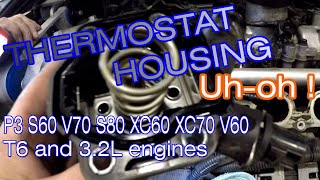
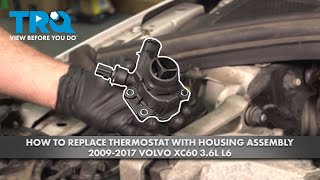
🎬 Watch this video overview of the T6 thermostat housing replacement.Symptoms You May Notice
- Check Engine Light is on
- Engine temperature gauge reads unusually high or is maxed out immediately on startup
- Cooling fans run continuously at high speed, even when the engine is cold or after the car is shut off
- Difficulty starting the engine, especially when cold
- Reduced fuel economy
- Engine may run rough or hesitate, as the ECM commands a fuel mixture based on false temperature readings.
- Replacing only the thermostat. The thermostat failing stuck-open typically causes a P0128 code (running too cool), while a stuck-closed failure causes actual overheating. P0117 points specifically to an electrical circuit fault, which on this car is most often the sensor integrated into the same housing.
Most Likely Causes
- Failed Engine Coolant Temperature (ECT) Sensor 🔴 High Probability → Shop Engine Coolant Temperature Sensor The ECT sensor is integrated into the thermostat housing, a plastic component subjected to constant, extreme heat cycles. Over time, the plastic can become brittle and the sensor's internal electronics can fail, creating a short circuit.
How to confirm: Use an OBD-II scanner to monitor live data. If the coolant temperature reads an abnormally high value (e.g., 280°F or higher) immediately upon starting a cold engine, the sensor has failed internally. A healthy sensor should read ambient temperature on a cold engine. You can also test the disconnected sensor with a multimeter; resistance at ~68°F (20°C) should be around 2.0k-3.0k ohms. A reading near zero ohms indicates a short.
Typical fix: Replace the entire thermostat housing assembly (Part No. 31355151), which includes a new thermostat and ECT sensor. This is the standard, recommended repair.
Est. part cost: $100-$200 - Damaged Wiring or Connector 🟡 Medium Probability The wiring harness is routed in a tight engine bay. While not a systemic issue, wires can become damaged from heat, abrasion, or improper servicing.
How to confirm: Visually inspect the wiring harness and connector leading to the thermostat housing for any signs of chafing, breaks, corrosion, or pinched wires that could short to ground. Unplug the sensor and check for resistance between the signal wire pin at the ECU connector and chassis ground; it should be an open circuit.
Typical fix: Repair the damaged section of the wiring harness or clean/replace the electrical connector.
Est. part cost: $5-$50
Rare But Worth Checking
- Faulty Engine Control Module (ECM): → Shop Engine Control Module (ECM) This is extremely rare. The ECM's sensor input may have failed, but all other possibilities, especially the sensor and wiring, must be exhaustively ruled out before considering ECM replacement.
Diagnosis Steps
- Connect an OBD-II scanner and confirm P0117 is the active code.
- View the live data stream for the Engine Coolant Temperature (ECT). If it shows a maximum, unrealistic temperature (e.g., 284°F) on a cold engine, it strongly indicates a shorted sensor or wiring.
- Turn the vehicle off. Locate the thermostat housing on the driver's side of the engine, below the intake manifold.
- Carefully inspect the electrical connector and wiring harness going to the ECT sensor on the housing. Look for any visible damage, corrosion, or loose connections.
- To perform a definitive electrical test, disconnect the sensor. With a multimeter, measure the resistance across the two pins of the sensor itself. At room temperature (~68°F/20°C), it should be approximately 2.0k-3.0k Ohms. A reading near zero confirms the sensor has shorted internally. 🎬 See how to diagnose a P0117 coolant temperature circuit fault.
- If wiring looks good and the sensor tests as shorted, the cause is confirmed. The most common repair is to proceed with replacing the thermostat housing assembly.
- After replacement, clear the code using the OBD-II scanner, top off and bleed the coolant system, and perform a test drive to ensure the temperature reads correctly and the code does not return.
Parts You'll Likely Need
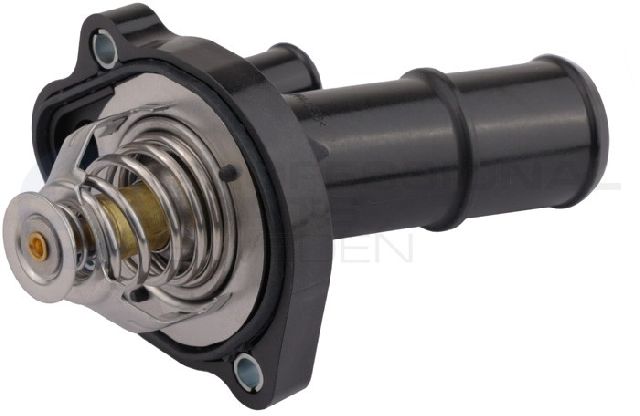
- Thermostat Housing Assembly
(OEM #31355151)— This is the primary fix because the most common cause, the ECT sensor, is integrated into this assembly along with the thermostat. Replacing the unit addresses the sensor and preemptively replaces the thermostat.
Trusted brands: Genuine Volvo, Mahle, Calorstat by Vernet
OEM price range: $150-$220
Aftermarket price range: $80-$150 - Engine Coolant Temperature Sensor
(OEM #30750926)— While available separately, replacing only the sensor is not the standard repair. The labor to access it is identical to replacing the whole housing, and the plastic housing itself can become brittle. Most owners and shops opt to replace the complete assembly for reliability.
Trusted brands: Genuine Volvo, Bosch, Facet
OEM price range: $40-$70
Aftermarket price range: $20-$40 - Intake Manifold Gasket Set
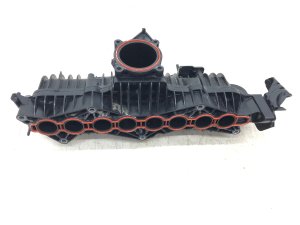
(OEM #30777222)— The intake manifold must be removed to access the thermostat housing. The gaskets are one-time use and must be replaced to prevent vacuum leaks.
Trusted brands: Genuine Volvo, Elring
OEM price range: $30-$50
Aftermarket price range: $15-$30
Related Codes That Often Appear With This One
- P0118 — P0118 is 'ECT Circuit High Input' (open circuit). If there is an intermittent fault or damage to the wiring, you might see both codes logged at different times as the connection shorts and opens.
Technical Service Bulletins (TSBs) & Recalls
- TJ30021: This Technical Journal addresses a potential oil consumption issue on 2011-2016 models with the T6 engine, which is a separate but important issue for owners of this platform to be aware of.
Platform-Specific Known Issues
- Owner Experience: Immediate Failure Symptoms: An owner of a 2010 XC60 with the T6 engine (a platform mate) reported on YouTube that their first symptoms of failure were the cooling fan staying on long after shutdown and poor gas mileage. Upon scanning, they found codes related to the thermostat and high voltage on the sensor, confirming the P0117 fault pattern. The repair involved replacing the entire thermostat housing.
- Aftermarket Aluminum Housing Option: For platforms that use a similar plastic housing design, some aftermarket companies have developed full aluminum replacement housings. These are designed to be a permanent solution to the problem of cracking plastic. While not specifically confirmed for the SI6 engine's exact housing, it's a known upgrade path in the Volvo community for similar issues.
Mechanic-Grade Diagnostic Values
- ECT sensor resistance (disconnected) — expected: ~2.0k to 3.0k Ω at 68°F (20°C); ~200 to 300 Ω at 194°F (90°C).. Failure: A resistance reading near 0 Ω indicates an internal short, which causes P0117.
- ECT sensor signal voltage (Key On, Engine Off) — expected: Typically ~0.5V to 4.5V depending on temperature. A low voltage indicates high temperature.. Failure: A signal voltage below 0.5V, and especially below 0.2V, indicates a short in the sensor or wiring, triggering P0117.
- Scan tool live data check (wiring integrity test) — expected: With sensor unplugged, scan tool reads approx. -40°F/-40°C. With connector pins jumpered, scan tool reads approx. 285°F/140°C.. Failure: If these readings are not seen, the fault lies in the wiring to the ECM or the ECM itself, not the sensor.
Hidden / Shadow Codes Worth Checking
- ECM-P011712 (Example): Volvo's VIDA diagnostic tool provides more detail than generic OBD-II. The base P0117 code may be accompanied by a two-digit suffix. For example, '11' often indicates a circuit shorted to ground, while '12' can indicate a circuit shorted to voltage, and other numbers can represent signal plausibility errors. Seeing this detailed code on a professional scan tool can more quickly pinpoint an electrical fault over a component failure. (see via Volvo VIDA/DICE diagnostic software.)
Scan Tool Commands That Help
- Volvo VIDA: Activations -> Cooling Fan — Since P0117 forces the cooling fan to run constantly as a fail-safe, it's impossible to know if the fan control system is working correctly. After replacing the ECT sensor/housing and clearing the code, use this VIDA function to command the fan to run at various speeds (e.g., 33%, 66%, 100%) to verify the fan, its wiring, and its control module are all functioning properly.
Wiring & Ground Locations
- G2 / 31/2 — On the left side of the engine compartment, on the inner fender/MacPherson strut tower.. This is a primary ground point for the cooling fan control module. While a bad ground here is more likely to cause the fan to fail completely (an open circuit) rather than a P0117 (a short), ensuring clean and tight grounds is a critical step in diagnosing any electrical fault in the cooling system.
- ECT Sensor Connector — On the thermostat housing, below the intake manifold on the driver's side of the engine.. This 2-pin connector is the interface between the sensor and the engine harness. A short circuit is triggered if the signal wire (which leads back to the ECM) makes contact with chassis ground. This can happen due to a damaged wire or, most commonly, an internal failure within the sensor itself.
Real Owner Repair Stories
- IPD (Volvo Specialists) on YouTube (Volvo P3 Chassis with T6 engine (same as S60)) — Engine running rich codes, cooling fan running constantly.
❌ Tried (didn't work) The technician considered replacing only the sensor, but decided against it due to the high labor involved just to access it.
✅ What actually fixed it Replaced the entire thermostat housing assembly (P/N 31355151). Upon removal, the old plastic housing was found to be physically broken. The technician emphasized that if you are going to the trouble of removing the intake manifold, you should replace the entire assembly for reliability and also replace the one-time-use intake manifold gaskets.
OEM Part Supersession History
30774489→31355151— Standard part revision and improvement by Volvo.
Heads up: None. The new part number is a direct replacement for the old one.
Model Year Variations Within This Range
- 2011-2018: This article specifically applies to the 3.2L and 3.0L T6 inline-six engines. Be aware that during this same period, especially in later years (post-2014), Volvo introduced its 4-cylinder 'Drive-E' engine family. Those engines have a completely different cooling system design, and this guide does not apply to them.
Diagnostic Flowchart
Other Known Issues on This Vehicle
Issues unrelated to this code that are worth knowing about as an owner of this generation:
- PCV System Failure 🟠 Medium — Commonly fails between 80,000-100,000 miles. Failure can be accelerated by frequent short trips.
- Aisin TF-80SC Automatic Transmission Issues 🟠 Medium — Can develop harsh shifting or 'flaring' between gears, often related to the valve body or old fluid. Fluid changes are critical despite 'sealed for life' claims.
- Excessive Oil Consumption (T6 Engine) 🔴 High — A known issue on some 2011-2016 T6 engines related to piston rings. Volvo has addressed this with service bulletins and extended warranties in some cases. (Ref: TJ30021)
- Brake Vacuum Pump Leak 🟡 Low — A very common oil leak that develops around 100,000 miles. The pump is located on the driver's side of the engine and will coat the transmission and subframe in oil. A simple re-seal kit is available.
- Weak Front Strut Mounts 🟡 Low — Common to all P3 platform Volvos, causing groaning or creaking noises from the front suspension during low-speed turns.
Used vs. New Parts: Buying Guide for This Vehicle
When a used part is the smart pick: Almost never. The primary failure mode of the thermostat housing is the plastic becoming brittle from heat cycles and the integrated electronics failing. A used part from a salvage yard has an unknown number of heat cycles and is likely close to failure itself. The significant labor required to access this part makes installing a used one an extremely poor value proposition.
Donor-vehicle mileage cap: roughly under 20000 miles for the part to have meaningful remaining life.
What to inspect on the donor part:
- Not recommended. If absolutely necessary, look for a part from a very low-mileage, front-end collision vehicle where the engine was not running at the time of the accident.
- Inspect for any hairline cracks, especially around the sensor and hose connections.
- Ensure the electrical connector pins are clean and not corroded.
OEM-only on this vehicle (don't cheap out):
- While not strictly 'OEM-only', using a Genuine Volvo part or a part from a known OEM supplier is highly recommended due to the high labor cost of replacement. A cheap part failing prematurely would be very costly.
Aftermarket brands forum-validated for this vehicle:
- Mahle (often the original OEM supplier)
- Gates
- Calorstat by Vernet
Brands owners have reported issues with on this vehicle:
- Unbranded 'white-box' parts from online marketplaces.
- URO Parts has a mixed reputation in the Volvo community for plastic and rubber components and may not be worth the risk for this labor-intensive job.
Real Owner Stories
Aggregated from forums and TSBs cited above. Mileages and costs reflect what owners reported in those sources.
2010 Volvo XC60 T6
Symptoms: Cooling fan staying on long after shutdown and poor gas mileage; scanning revealed high voltage on the sensor.
What fixed it: Replacing the entire thermostat housing.
Source hint: IPD (YouTube) video 'Volvo Thermostat Housing Replacement Overview T6 and 3.2 engines'
2008 Volvo S80 3.2L
Symptoms: Received a P0117 code along with a 'high engine temp' warning, despite the engine not actually being hot.
What fixed it: Replacing the integrated ECT sensor/thermostat housing assembly.
Source hint: Reddit r/Volvo
2011-2018 Volvo S60 (P3 Platform)
Symptoms: Check engine light with P0117; consensus that the integrated ECT sensor failed due to the plastic housing becoming brittle.
What fixed it: Replacing the entire thermostat housing assembly (PN 31355151) and intake manifold gaskets.
Source hint: Swedespeed Forums
Related OBD-II Codes
Frequently Asked Questions
Does Technical Journal TJ30021 apply to my 2011-2016 Volvo S60 T6 when I have a P0117 code?
Can I just replace the sensor itself on my 3.2L S60 to fix the P0117 code?
Why are my cooling fans running at high speed even when my S60 is cold?
Is there a more durable alternative to the plastic thermostat housing that causes P0117?
Do I need any other parts when fixing the P0117 code on my T6 engine?
Is the P0117 code related to the transmission 'flaring' I'm experiencing in my S60?
Helpful Videos

Used OEM Parts in Stock
New Aftermarket Parts Available


The information in this article is provided for general reference and educational purposes only. Vehicle specifications, procedures, and part compatibility can vary by production date, trim level, and region. Always consult your vehicle's factory service manual and verify part numbers before purchasing or performing repairs. Safety-critical components such as airbags, seat belts, and braking systems should be installed by a qualified professional.
- Volvo S60:
- 🧭 Diagnostic Flowchart
- 🎬 Helpful Videos
- 🛍️ Shop This Part
- What's Unique About the 2011-2018 Volvo S60
- Symptoms You May Notice
- Most Likely Causes
- Rare But Worth Checking
- Diagnosis Steps
- Parts You'll Likely Need
- Related Codes That Often Appear With This One
- Technical Service Bulletins (TSBs) & Recalls
- Platform-Specific Known Issues
- Mechanic-Grade Diagnostic Values
- Hidden / Shadow Codes Worth Checking
- Scan Tool Commands That Help
- Wiring & Ground Locations
- Real Owner Repair Stories
- OEM Part Supersession History
- Model Year Variations Within This Range
- Other Known Issues on This Vehicle
- Used vs. New Parts: Buying Guide for This Vehicle
- Real Owner Stories
- 2010 Volvo XC60 T6
- 2008 Volvo S80 3.2L
- 2011-2018 Volvo S60 (P3 Platform)
- Related OBD-II Codes
- Frequently Asked Questions
- 🎟️ Get 5% Off