

P0118 on 2013-2017 Honda Accord: Engine Coolant Temperature Sensor Causes and Fixes
For a 2013-2017 Honda Accord, code P0118 almost always means the main Engine Coolant Temperature (ECT 1) sensor has failed. It's a simple and affordable DIY fix, with an OEM replacement part costing around $45-$65. The failure causes the PCM to see an impossibly cold temperature, leading to a rich fuel mixture, hard starts, and incorrect cooling fan operation.
- P0118 on a 2013-2017 Accord is almost certainly a bad Engine Coolant Temperature Sensor (ECT 1).
- Symptoms include hard starting, poor MPG, and incorrect cooling fan operation.
- Confirm the failure by checking for a -40°F reading on a scan tool.
- The correct OEM part number is 37870-RTA-005. Using an OEM (Denso) part is recommended for reliability.
- This is a very DIY-friendly repair that can be done in under 30 minutes with basic tools.
What's Unique About the 2013-2017 Honda Accord
The 9th generation Honda Accord, like many Honda models, uses two coolant temperature sensors: ECT 1 on the engine and ECT 2 on the radiator. Code P0118 specifically points to a problem with ECT Sensor 1, which is the primary sensor used by the engine computer for fuel and timing calculations. The failure of this sensor is a common and well-documented issue, but it is not typically indicative of a larger, systemic problem with the cooling system itself. Misdiagnosing and replacing ECT 2 will not solve the problem.
Symptoms You May Notice
- Check Engine Light is on
- Engine is hard to start, stalls, and runs rough, especially when cold
- Rough idling or stalling
- Noticeably reduced fuel economy due to a rich fuel mixture
- Black smoke from the exhaust pipe
- Engine temperature gauge on the dashboard is inaccurate, often staying on 'Cold'
- Cooling fans run continuously even when the engine is cold, or do not turn on when the engine is hot
- Replacing the thermostat. While a faulty thermostat can cause cooling issues, it will not cause a 'Circuit High' electrical fault code like P0118.
- Replacing ECT Sensor 2. This vehicle has a second sensor on the radiator. P0118 specifically refers to ECT Sensor 1 on the engine block, so replacing the wrong sensor will not fix the issue.
Most Likely Causes
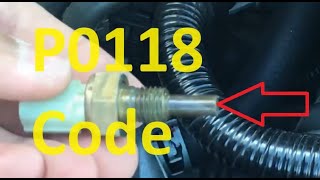
- Failed Engine Coolant Temperature (ECT) Sensor 1 🔴 High Probability → Shop Engine Coolant Temperature Sensor This is a standard electronic component (a thermistor) that fails over time due to constant heat cycles and age. 🎬 Watch: Learn the causes and fixes for code P0118 It is a very common failure point on many Honda and Acura vehicles.
How to confirm: Use a scan tool to view live data. If the ECT sensor reads -40°F on a cold (but not frozen) engine, the sensor is bad. Alternatively, unplug the sensor and use a paperclip to jump the two pins in the electrical connector; the scan tool temperature should jump to 250°F or higher. If it does, the wiring is good and the sensor is confirmed bad. You can also test the sensor's resistance with a multimeter; at 68°F (20°C), it should be between 2,000-3,000 ohms.
Typical fix: Replace the ECT Sensor 1 located on the engine's cylinder head. It is a straightforward replacement using a 17mm or 19mm deep socket. A small amount of coolant will leak out, so have the new sensor ready to swap in quickly.
Est. part cost: $20-$65 - Damaged Wiring or Connector 🟡 Medium Probability The wiring harness and connector can become brittle, corroded, or damaged over time, leading to an open circuit, which causes the 'Circuit High' fault. The plastic locking tab on the connector can also break, leading to a poor connection.
How to confirm: Visually inspect the wiring and connector for any signs of breaks, corrosion, or loose pins. If jumping the connector pins (as described above) does not result in a high temperature reading on the scan tool, the problem is in the wiring or the PCM. Wiggle the connector and wiring while observing live data to see if the reading changes, indicating an intermittent connection.
Typical fix: Repair the broken wire or replace the pigtail connector. The pigtail for the 37870-RTA-005 sensor is widely available.
Est. part cost: $10-$30
Rare But Worth Checking
- Faulty Powertrain Control Module (PCM): This is extremely rare. Before condemning the PCM, all other possibilities, especially the sensor and its wiring, must be exhaustively tested and ruled out.
- Low Engine Coolant Level: In some cases, if the coolant level is so low that the sensor is exposed to air instead of coolant, it can cause erratic readings and potentially trigger a P0118 code. This would usually be accompanied by actual overheating symptoms.
Diagnosis Steps
- Connect an OBD-II scanner and confirm P0118 is the active code. Note any other codes present.
- View live data on the scanner. Check the reading for 'Engine Coolant Temperature'. If it shows an illogical, extremely low value (like -40°F or -40°C), the sensor or circuit is faulty.
- Turn the engine off and let it cool completely.
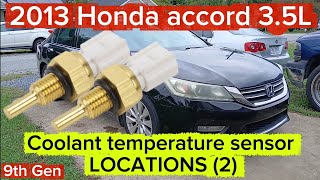
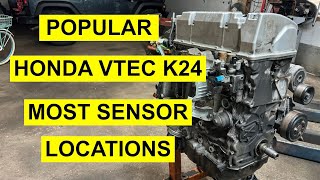
- Locate ECT Sensor 1. On the 2.4L 4-cylinder (K24W1), it's on the driver's side of the cylinder head, below the air intake tube. On the 3.5L V6 (J35Y), it's on the front cylinder head (near the radiator), below the intake manifold runner.
- Inspect the sensor's electrical connector and nearby wiring for any visible damage, corrosion, or loose connections.
- Disconnect the electrical connector. The reading on the scan tool should remain at -40°F.
- Use a small paperclip or jumper wire to connect the two terminals inside the harness-side connector.
- Turn the ignition to the 'ON' position (engine off) and check the live data again. The temperature reading should now be maxed out (250°F or higher).
- If the temperature reading maxes out, the wiring and PCM are good. The ECT sensor is faulty and must be replaced.
- If the temperature reading does not change, there is an open circuit in the wiring between the connector and the PCM, or a fault in the PCM itself (which is rare).
- When replacing the sensor, have the new part ready to install immediately after removing the old one to minimize coolant loss. Top off the coolant as needed after the repair.
Parts You'll Likely Need
- Engine Coolant Temperature Sensor (ECT 1)
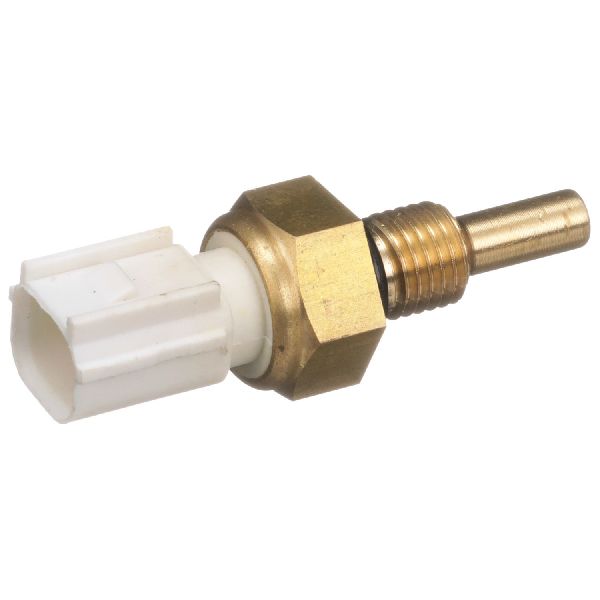
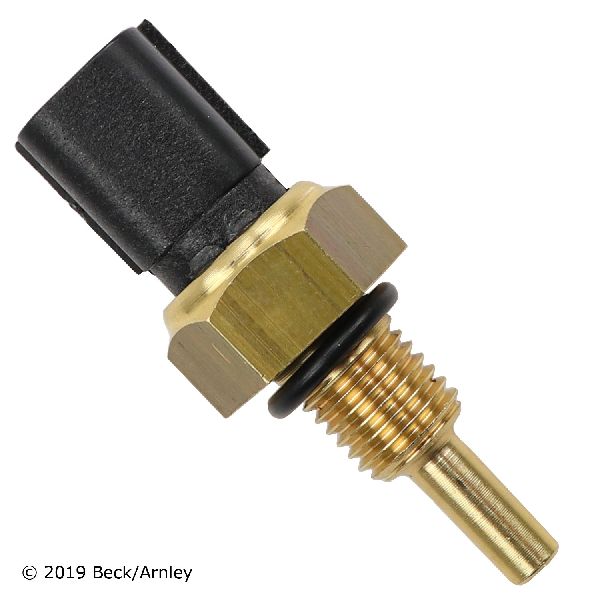
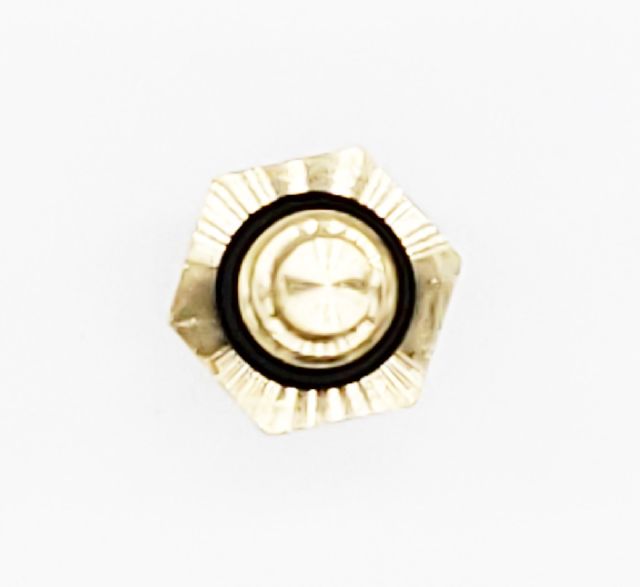
(OEM #37870-RTA-005)— This is the most common failure point for code P0118. It is a critical sensor that directly reports engine temperature to the PCM.
Trusted brands: Honda (Denso), NTK, Standard Motor Products, Walker Products
OEM price range: $45-$65
Aftermarket price range: $20-$40 - Engine Coolant Temperature Sensor Connector Pigtail
(OEM #04321-TP6-305)— If the connector or its wiring is damaged, replacing the pigtail is the standard repair.
Trusted brands: Honda, Dorman, Standard Motor Products
OEM price range: $25-$40
Aftermarket price range: $10-$20
Platform-Specific Known Issues
- Owner Experience on AcuraZine Forum: A user with an Acura TL (which shares engine architecture) reported a P0118 code accompanied by a stall on the first start, followed by a very rough run. A restart cleared the immediate running issue, but the code was logged, pointing to the classic symptoms of an intermittent ECT sensor failure.
- Reddit User Discussion: In a Reddit thread, a user with a 2013 Civic experienced a P0118 code after discovering a rat's nest in the engine bay, highlighting that wiring damage from rodents is a plausible cause for this circuit-related fault code.
Mechanic-Grade Diagnostic Values
- ECT Sensor Resistance vs. Temperature — expected: Approx. 2,000-3,000 Ω at 68°F (20°C), dropping to approx. 250-350 Ω at 176°F (80°C).. Failure: Infinite resistance (open circuit) or a reading that doesn't change with temperature.
- ECT Sensor Signal Voltage at PCM (Key On, Engine Off) — expected: Should correlate with temperature: ~3.5-4.5V on a very cold engine, dropping to ~1.0-1.3V at normal operating temperature.. Failure: A sustained voltage of 4.91V or higher, which the PCM interprets as an open circuit or a temperature of -40°F.
- PCM Reference Voltage at ECT Connector — expected: Approximately 5.0V on one of the two pins (the other is sensor ground).. Failure: Significantly less than 5.0V, indicating a problem with the PCM or the 5V reference circuit.
Hidden / Shadow Codes Worth Checking
- Permanent DTC (P-DTC): While not a 'hidden' code, P0118 may be stored as a Permanent DTC. This type of code cannot be cleared by a generic scan tool or by disconnecting the battery. It is only cleared by the vehicle's computer after it has run its internal self-tests and confirmed the fault is no longer present over several drive cycles. (see via Most modern OBD-II scan tools can display Permanent DTCs in a separate menu from current or pending codes.)
Scan Tool Commands That Help
- Honda Diagnostic System (HDS) or equivalent professional scanner: SCS Short Mode Activation — To diagnose the wiring harness independently of the sensor. A technician can command the system into a specific diagnostic mode to test circuit integrity back to the PCM.
- Honda Diagnostic System (HDS) or equivalent professional scanner: PCM Reset — After replacing the sensor or repairing wiring, a full PCM reset using the HDS is the factory-specified method to clear all learned values and ensure the new sensor data is used correctly.
- Honda Diagnostic System (HDS) or equivalent professional scanner: Idle Learn Procedure — Required after a PCM reset. The engine needs to relearn its idle characteristics, which are heavily influenced by the ECT sensor reading.
Wiring & Ground Locations
- G101 — A primary engine ground point located on the engine itself, typically on the right front of the engine (for the 2.4L) or near the cylinder head/thermostat area.. The ECT sensor's ground signal path relies on the PCM being properly grounded to the engine and chassis. A corroded or loose G101 ground can create a voltage offset, causing the PCM to see a higher-than-actual voltage from the sensor, potentially triggering a P0118.
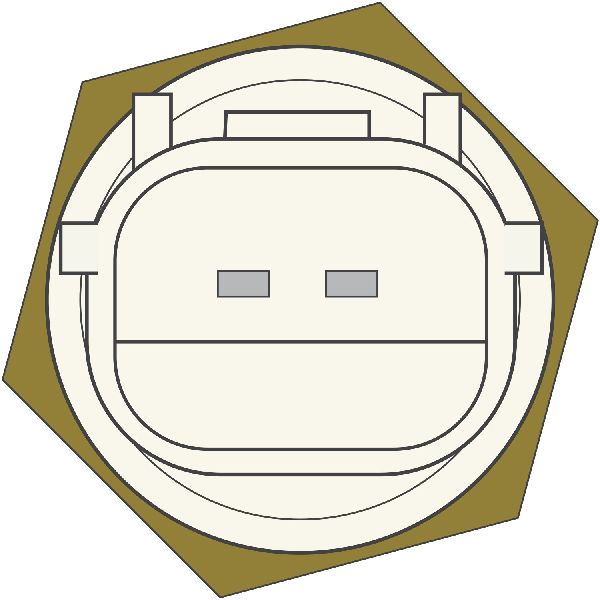
- ECT Sensor 1 Connector (2-Pin) — On the cylinder head. Wires are typically Pink (signal) and Gray (sensor ground).. This is where all voltage and resistance tests are performed. The Pink wire is the signal wire that goes to PCM Connector B, Pin 50. The Gray wire is the sensor ground that goes to PCM Connector C, Pin 31.
- PCM Connectors B and C — The PCM is located in the engine compartment. Connector B and C are 51-pin connectors.. For advanced diagnosis, a technician would test for continuity from the sensor connector directly to pin B50 (Pink wire) and pin C31 (Gray wire) to definitively rule out a wiring break.
Real Owner Repair Stories
- YouTube channel 'suleman car doctor' (2013 Honda Accord) — Check Engine Light with a high voltage code for a coolant temperature sensor. The scan tool showed a negative temperature reading, identical to the P0118 fault condition.
❌ Tried (didn't work) The technician immediately suspected a wiring issue rather than a sensor failure due to the 'Circuit High' nature of the code.
✅ What actually fixed it A visual inspection revealed a wire had broken off right at the sensor's electrical connector. The final fix was to repair the broken wire by splicing in a new terminal pin, which restored the connection and cleared the fault.
OEM Part Supersession History
37870-RTA-005→No supersession found. This part number remains current.— N/A
Heads up: This part is used across a very wide range of Honda and Acura models from 2006 to present, indicating a stable and cross-compatible design.
Model Year Variations Within This Range
- 2013-2017: No significant variations related to the P0118 code, ECT Sensor 1, or its wiring exist within the 9th generation Accord, including the 2016 model year facelift. The same part number (37870-RTA-005) and diagnostic procedures apply to all years and both the 2.4L and 3.5L engines.
Diagnostic Flowchart
Other Known Issues on This Vehicle
Issues unrelated to this code that are worth knowing about as an owner of this generation:
- Grinding or Failing Starter Motor 🔴 High — Very common, especially on 4-cylinder models and 2013-2016 V6 models, often failing around 50,000-100,000 miles. (Ref: TSB 16-002 for V6 models describes replacing the starter and rotating the torque converter ring gear to fix a clearance issue.)
- VTC Actuator Rattle on Cold Start 🟠 Medium — Common on the 2.4L (K24W1) 4-cylinder engine. A loud rattle for ~2 seconds upon cold startup indicates a failing VTC actuator. (Ref: TSB 09-010 addresses this issue for prior model years with the same engine family, and the problem persists in this generation. The fix is to replace the VTC actuator.)
- Failing LED Daytime Running Light (DRL) Strip 🟡 Low — Common on 2016-2017 models. The LED light pipe in the headlight assembly fails, requiring a full headlight replacement. (Ref: Honda issued a warranty extension (TSB 19-042) covering the DRLs for 10 years with unlimited mileage. Aftermarket repair boards are also available.)
- Prematurely Failing Battery 🟠 Medium — The 4-cylinder models in particular use a small, undersized battery that is known to fail earlier than expected. (Ref: A recall was issued for a faulty 12-volt battery sensor on some models which could contribute to the issue.)
- Infotainment System Glitches 🟡 Low — Owners report issues like non-responsive touchscreens, malfunctioning backup cameras, and audio problems across the 2013-2017 model years.
Used vs. New Parts: Buying Guide for This Vehicle
When a used part is the smart pick: A used part is generally NOT recommended for the sensor itself due to its low cost and high importance. However, sourcing a used connector pigtail from a salvage yard is an excellent, cost-effective choice if your original connector is broken or its wires are damaged.
Donor-vehicle mileage cap: roughly under 150000 miles for the part to have meaningful remaining life.
What to inspect on the donor part:
- For a pigtail: Inspect for a non-brittle plastic locking tab.
- Check that the wire insulation is still flexible and not cracked.
- Ensure there are at least 4-6 inches of wire attached for easier splicing.
- Look for clean, corrosion-free metal pins inside the connector.
OEM-only on this vehicle (don't cheap out):
- While not strictly required, using an OEM (Denso) or OEM-supplier (NTK) sensor is strongly advised. The price difference is minimal, and their reliability is critical for proper engine function.
Aftermarket brands forum-validated for this vehicle:
- Denso (OEM)
- NTK
Brands owners have reported issues with on this vehicle:
- Unbranded 'white-box' sensors from online marketplaces often have poor quality control and can fail prematurely or provide inaccurate readings, leading to a recurrence of the problem.
Real Owner Stories
Aggregated from forums and TSBs cited above. Mileages and costs reflect what owners reported in those sources.
2014 Accord V6
Symptoms: Check Engine Light was on with codes P0116 and P0118.
What fixed it: Replacing the Engine Coolant Temperature (ECT) sensor, specifically part number 37870-RWC-A01.
Source hint: Go-Parts owner report
2013 Acura TL (J-Series V6)
Symptoms: P0118 code accompanied by a stall on the first start, followed by a very rough run. A restart cleared the immediate running issue, but the code remained.
What fixed it: Replacement of the ECT sensor to resolve intermittent circuit failure.
Source hint: AcuraZine Forum
2013 Honda Civic
Symptoms: P0118 code triggered after a rat's nest was discovered in the engine bay.
What fixed it: Repairing damaged wiring caused by rodents.
Source hint: Reddit User Discussion
Related OBD-II Codes
Frequently Asked Questions
What is the specific part number for the ECT sensor on my 2013-2017 Honda Accord?
My 2014 Accord V6 has a P0118 and a P0116 code; are these related?
Where is the ECT Sensor 1 located on the 2.4L 4-cylinder (K24W1) engine?
Where is the ECT Sensor 1 located on the 3.5L V6 (J35Y) engine?
Could a rodent nest in my engine bay cause the P0118 code?
Is there a TSB for the starter grinding issue on my 2013-2017 Accord?
My daytime running lights are flickering; is there a warranty extension for this?
Helpful Videos
We Have This Part in Stock


The information in this article is provided for general reference and educational purposes only. Vehicle specifications, procedures, and part compatibility can vary by production date, trim level, and region. Always consult your vehicle's factory service manual and verify part numbers before purchasing or performing repairs. Safety-critical components such as airbags, seat belts, and braking systems should be installed by a qualified professional.
- Honda Accord:
- 🧭 Diagnostic Flowchart
- 🎬 Helpful Videos
- 🛍️ Shop This Part
- What's Unique About the 2013-2017 Honda Accord
- Symptoms You May Notice
- Most Likely Causes
- Rare But Worth Checking
- Diagnosis Steps
- Parts You'll Likely Need
- Platform-Specific Known Issues
- Mechanic-Grade Diagnostic Values
- Hidden / Shadow Codes Worth Checking
- Scan Tool Commands That Help
- Wiring & Ground Locations
- Real Owner Repair Stories
- OEM Part Supersession History
- Model Year Variations Within This Range
- Other Known Issues on This Vehicle
- Used vs. New Parts: Buying Guide for This Vehicle
- Real Owner Stories
- 2014 Accord V6
- 2013 Acura TL (J-Series V6)
- 2013 Honda Civic
- Related OBD-II Codes
- Frequently Asked Questions
- 🎟️ Get 5% Off