

P0121 on 2009-2012 Audi Q5 3.2L: Throttle Body Causes and Fixes
On the Audi Q5 3.2L, P0121 is almost always caused by carbon buildup inside the throttle body. A thorough cleaning and a throttle body adaptation (reset) is the most likely fix. If that fails, the entire throttle body assembly needs to be replaced. A known wiring issue at the connector is also a possible, though less common, cause.
- Code P0121 on your Q5 3.2L almost certainly points to a problem with the throttle body on the engine.
- The most common cause is carbon buildup; start by thoroughly cleaning the throttle body and performing a reset (Adaptation).
- If cleaning doesn't work, the next most likely culprit is the throttle body assembly itself, followed by a less common but known wiring issue at the connector.
- A Throttle Body Adaptation with a proper scan tool is mandatory after any cleaning or replacement.
What's Unique About the 2009-2012 Audi Q5
The Audi 3.2L V6 FSI (CALB) engine is a direct injection engine known for accumulating carbon deposits on intake components. For the P0121 code, this is significant because the fault is often mechanical rather than electrical. Heavy carbon buildup around the throttle plate can physically restrict its movement, causing the integrated sensors to report a position that doesn't match the ECM's command, triggering the code. Therefore, the first diagnostic step is almost always cleaning, not immediate part replacement.
Symptoms You May Notice
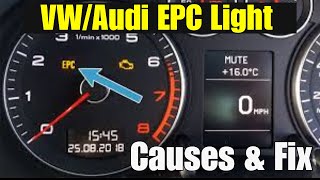
- EPC (Electronic Power Control) light illuminated on the dashboard
- Check Engine Light is on
- Vehicle enters 'limp mode' with severely reduced engine power
- Hesitation, stumbling, or surging on acceleration
- Rough, unstable, or high idle
- Poor or delayed throttle response
- Stalling or near-stalling at idle
- Replacing the accelerator pedal position sensor. P0121 on this platform almost always relates to the throttle body on the engine, not the sensor at the gas pedal.
Most Likely Causes
- Dirty Throttle Body 🔴 High Probability → Shop Fuel Injection Throttle Body The 3.2L direct injection engine's PCV (Positive Crankcase Ventilation) system routes oil vapors and blow-by gases into the intake, which bake onto the hot throttle body over time, forming thick carbon deposits.
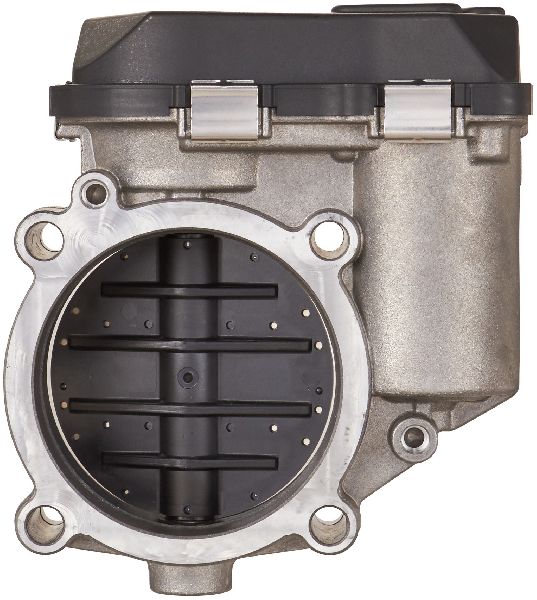
How to confirm: Remove the intake hose from the throttle body and visually inspect the throttle plate and bore for a thick, black, tar-like buildup. The plate should be mostly clean metal.
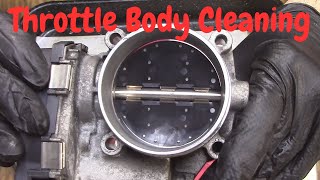
Typical fix: Remove the throttle body from the vehicle for a thorough bench cleaning using a dedicated throttle body cleaner and a soft brush. The butterfly plate itself is plastic, so avoid harsh scraping. 🎬 Watch: How to properly clean carbon from the throttle body. After reinstallation, a Throttle Body Adaptation (TBA) must be performed with an Audi-specific scan tool.
Est. part cost: $15-$30 - Failed Throttle Body Assembly 🟡 Medium Probability → Shop Fuel Injection Throttle Body If cleaning does not resolve the issue, the internal electronic sensors (G69) or the actuator motor within the sealed throttle body unit may have failed. Heat cycles and vibration can lead to internal electronic failure over time.
How to confirm: If the P0121 code returns immediately or soon after a thorough cleaning and successful adaptation, and the wiring is confirmed to be good, the throttle body itself is condemned.
Typical fix: Replace the entire throttle body assembly with a new or remanufactured unit. A new gasket should be used, and a Throttle Body Adaptation is mandatory after replacement.
Est. part cost: $150-$450 - Wiring or Connector Issue ⚪ Low Probability Engine vibration and heat can cause the wiring in the harness leading to the throttle body to fray or the connector pins to lose tension, causing intermittent high resistance. This is a known issue on many VAG vehicles of this era.
How to confirm: With the key on, wiggle the connector and wiring harness at the throttle body. If this causes the engine idle to change or triggers the fault, a wiring issue is likely. Visually inspect the connector pins for corrosion or damage. Check for continuity and resistance on the wires between the ECM and the throttle body connector. Look for yellow repair wires from a previous fix.
Typical fix: Repair the damaged section of the wiring harness. Audi TSB 2018260 (also listed as 97-08-25) explicitly addresses this, advising to repair the harness using specific wire repair kits (e.g., part number 000979025E) rather than soldering. If the connector housing is damaged, it should be replaced.
Est. part cost: $20-$80
Rare But Worth Checking
- Faulty Engine Control Module (ECM): This is extremely rare. The ECM should only be considered after all other possibilities (throttle body, wiring) have been exhaustively tested and ruled out. ECM replacement is expensive and requires programming.
Diagnosis Steps
- Connect an OBD-II scanner and confirm P0121 is the primary code. Note any other codes.
- Turn the vehicle off and remove the plastic engine covers and intake air ducting to access the throttle body.
- Visually inspect the throttle body bore and plate for heavy carbon buildup.
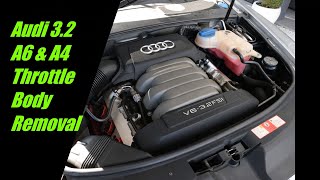
- If significant carbon is present, remove the four T30 Torx bolts and the electrical connector to detach the throttle body. 🎬 See this walkthrough for removing the 3.2L throttle body.
- Thoroughly clean the throttle body using a dedicated throttle body cleaner, a non-abrasive brush, and clean rags. Do not spray cleaner directly into the electronic components.
- Reinstall the throttle body with a new gasket.
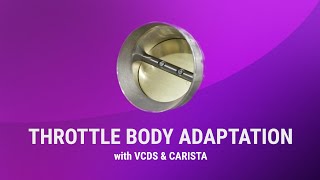
- Connect a VAG-compatible scan tool (like VCDS/VAG-COM). Navigate to Engine, then Basic Settings, and select Group 060. Click 'Go!' and then toggle the setting 'ON' to initiate the adaptation. The status will show 'ADP RUN' and then 'ADP OK' when complete.
- Clear all fault codes and start the engine. Let it idle and then perform a test drive.
- If the code returns, inspect the wiring harness and connector for damage, corrosion, or loose pins. Per TSB 2018260, check for contact resistance issues.
- If the wiring is confirmed to be good and the code persists, replace the entire throttle body assembly and perform the TBA again.
Parts You'll Likely Need
- Throttle Body Assembly
(OEM #06E133062C (superseded by 06E133062G, then 06E-133-062-H))— This is the most common fix if cleaning the original unit fails. The internal sensors are not serviceable, requiring replacement of the whole assembly.
Trusted brands: Bosch, VDO (Continental), Hitachi
OEM price range: $400-$660
Aftermarket price range: $150-$300 - Throttle Body Gasket
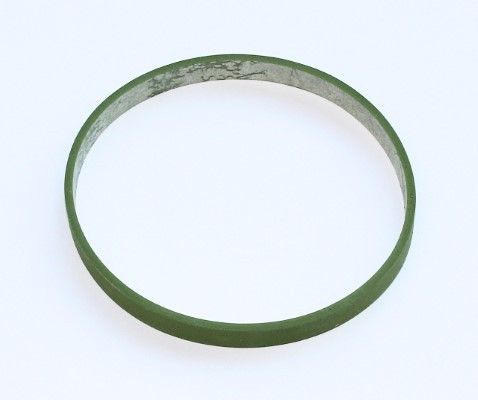
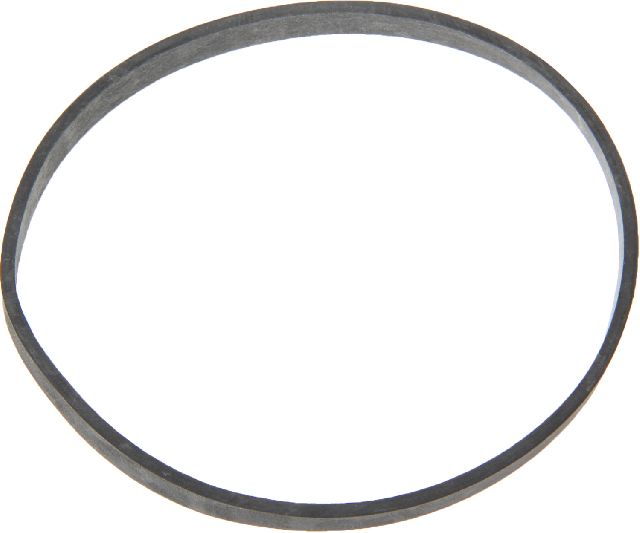
(OEM #06E133073A)— This gasket provides the seal between the throttle body and the intake manifold. It should always be replaced whenever the throttle body is removed to prevent vacuum leaks.
Trusted brands: Victor Reinz, Elring, Mahle
OEM price range: $15-$25
Aftermarket price range: $5-$15 - Throttle Body Connector Repair Wire
(OEM #000979025E (or similar from repair kit))— If a wiring fault is found at the connector, Audi TSB 2018260 specifies repairing the harness with these pre-terminated wires rather than soldering to ensure a durable, low-resistance connection.
Trusted brands: Genuine Audi/VW
OEM price range: $10-$20 per wire
Aftermarket price range: N/A
Technical Service Bulletins (TSBs) & Recalls
- Audi TSB 2018260 / 97-08-25: Applies to 2005-2009 Audi models with FSI engines and addresses P0121 by recommending a specific wiring repair at the throttle body connector, confirming this is a known failure pattern. It advises against soldering and for the use of specific repair wires.
Platform-Specific Known Issues
- The 3.2L FSI engine is known for significant carbon buildup issues, which can affect not only the throttle body but also the intake ports and valves, potentially causing other performance problems over time.
Mechanic-Grade Diagnostic Values
- VCDS Live Data: Measuring Block 062, Field 1 (Throttle Sensor G187) — expected: At idle (Key On, Engine Off), value should be low, approx. 5-16%. Should increase smoothly toward ~90% as accelerator is pressed.. Failure: Value is frozen, jumps erratically, or does not correspond to pedal movement.
- VCDS Live Data: Measuring Block 062, Field 2 (Throttle Sensor G188) — expected: At idle (Key On, Engine Off), value should be high, approx. 84-95%. Should decrease smoothly toward ~10% as accelerator is pressed. This value moves opposite to Sensor 1.. Failure: Value is frozen, jumps erratically, or does not correspond to pedal movement. The sum of Sensor 1 and Sensor 2 percentages should always be ~100%; a deviation indicates a fault.
- Throttle Body Connector (T6f) Pin 5 to Ground - Signal Voltage G187 — expected: Key On, Engine Off. Voltage should sweep smoothly from ~0.5-0.7V at closed throttle to ~4.5V at wide-open throttle.. Failure: Voltage is stuck, jumps, or does not change smoothly with throttle plate movement.
- Throttle Body Connector (T6f) Pin 1 to Ground - Signal Voltage G188 — expected: Key On, Engine Off. Voltage should sweep smoothly from ~4.5V at closed throttle down to ~0.5V at wide-open throttle (inverse of G187).. Failure: Voltage is stuck, jumps, or does not change smoothly with throttle plate movement.
- Throttle Body Connector (T6f) Pin 2 to Ground - Sensor Ground — expected: Less than 0.1V. Should show good continuity to chassis ground (less than 1.0 ohm).. Failure: Voltage is present, or high resistance to ground, indicating a bad ground connection for the sensors.
- Throttle Body Connector (T6f) Pin 6 - 5V Reference Voltage — expected: 4.8V - 5.2V with Key On, Engine Off.. Failure: Voltage is below 4.8V or above 5.2V, indicating a problem with the ECM's reference voltage supply.
Scan Tool Commands That Help
- VCDS (VAG-COM): Engine -> Measuring Blocks -> Group 062 — This is the primary diagnostic function to view the live percentage output from both internal throttle position sensors (G187 and G188) simultaneously. Use this with the key on, engine off, while manually pressing the accelerator to see if both sensors track smoothly and inversely to each other. This can definitively identify a failing sensor within the throttle body.
- VCDS (VAG-COM): Engine -> Basic Settings -> Group 060 — This command initiates the Throttle Body Adaptation (TBA). It is mandatory after cleaning or replacing the throttle body to allow the ECM to relearn the sensor's closed, open, and partial positions.
Wiring & Ground Locations
- J338 / T6f Connector — The 6-pin electrical connector on the throttle body assembly itself.. This is the primary connection point for all power, ground, and signal wires for the throttle body. Per TSB 2018260, this connector and its wiring are a known point of failure causing P0121. Pinout is as follows: Pin 1: G188 Signal (Sensor 2); Pin 2: Sensor Ground; Pin 3: G186 Motor (-); Pin 4: G186 Motor (+); Pin 5: G187 Signal (Sensor 1); Pin 6: 5V Reference Voltage.
- Ground Point 12 — In the engine compartment on the left side, between the shock absorber strut and the water drainage box (plenum chamber).. This is a major chassis ground point in the engine bay. The ECM and its related sensors rely on a clean ground path. A corroded or loose connection here can cause floating grounds and erratic sensor readings, potentially triggering a P0121 code.
- Main Engine Ground Strap — Connects from the engine block (often near the starter or engine mount) to the chassis frame rail.. This is the primary ground path for the entire engine. If this strap is corroded, loose, or broken, the electrical system will seek alternative ground paths, leading to a host of electrical issues, including sensor performance codes like P0121.
- ECM Location — Located in the plenum chamber, under the windshield wiper cowl.. Knowing the ECM's location is critical for advanced diagnostics, such as checking for continuity on the throttle body wires all the way back to the control module or inspecting the ECM connector pins for corrosion or damage.
Real Owner Repair Stories
- AudiWorld Forums user 'Arty29' (Audi RS5 V8 (similar VAG electronic throttle control system)) — Persistent throttle body fault code (P2131, bank 2), EPC light, and limp mode, even after replacing the throttle body.
❌ Tried (didn't work) Replacing the throttle body assembly., Swapping throttle bodies between engine banks (fault stayed on bank 2)., Running a new, separate wiring harness from the throttle body directly to the ECU.
✅ What actually fixed it The Audi dealership found and repaired a fault in the wiring loom related to pin 47 at the ECU connector. This indicates the fault was not at the throttle body connector but further up the harness at the ECU connection. - AliExpress Wiki User Experience (2006 Audi A4 B7 (platform sharing similar throttle body design)) — Erratic idle, sudden stalling, recurring P0121/P0222 codes even after cleaning.
❌ Tried (didn't work) Cleaning the throttle body multiple times., Initially installing a generic aftermarket throttle body from a local supplier.
✅ What actually fixed it The generic aftermarket throttle body failed to calibrate correctly with the ECU. The problem was permanently resolved by replacing it with a proper OEM-branded (Bosch/VAG) throttle body (part number family 078133062) which had the correct internal electronic calibration.
OEM Part Supersession History
06E133062C→06E133062G, then 06E133062H— Likely internal improvements to sensor durability or electronics to address common failure modes.
Heads up: No known incompatibilities. The latest part number (06E-133-062-H) is the correct service replacement for all previous versions.
Diagnostic Flowchart
Other Known Issues on This Vehicle
Issues unrelated to this code that are worth knowing about as an owner of this generation:
- Timing Chain Tensioner & Guide Failure 🔴 High — A known issue for the 3.2L FSI. Can occur with little warning, often signaled by a brief rattle on cold starts. Failure is catastrophic, requiring engine removal for repair.
- Intake Valve Carbon Buildup 🟠 Medium — Very common on all FSI direct injection engines. Typically requires manual cleaning (e.g., walnut blasting) every 60k-80k miles to resolve misfires, hesitation, and poor performance. (Ref: Audi TSB 2020223/10 covers deposit-related issues.)
- Oil Filter Housing Gasket Leak 🟠 Medium — Extremely common leak point. Oil drips down the back of the engine and onto the bellhousing, often being misdiagnosed as a more severe rear main seal leak.
- Water Pump Failure 🟠 Medium — The water pump, often with a plastic impeller, is a common failure item leading to coolant leaks and potential overheating.
Used vs. New Parts: Buying Guide for This Vehicle
When a used part is the smart pick: A used throttle body is a high-risk, low-confidence option. It may be considered for a very low-cost temporary diagnostic swap to confirm if the throttle body is the fault, but it is not recommended as a permanent repair due to the high likelihood of having the same internal electronic wear as the failed part.
Donor-vehicle mileage cap: roughly under 80000 miles for the part to have meaningful remaining life.
What to inspect on the donor part:
- Visually inspect the electrical connector pins for any signs of corrosion, moisture, or damage.
- Ask the seller for the mileage of the donor vehicle.
- Confirm with the seller that the donor vehicle did not have any EPC lights or throttle-related fault codes prior to being dismantled.
- Avoid parts that show extreme external corrosion or physical damage.
OEM-only on this vehicle (don't cheap out):
- Throttle Body Assembly: Due to the sensitive internal electronics and specific calibration required by the Audi ECU, only OEM (Genuine Audi) or OES (Bosch, VDO/Continental) parts are recommended. Generic aftermarket units are known to cause calibration and performance issues.
- Wiring Harness Repair Wires: If following the TSB for a wiring repair, use the specified Genuine Audi/VW repair wires (e.g., 000979025E) to ensure proper pin tension and a durable, low-resistance connection.
Aftermarket brands forum-validated for this vehicle:
- Bosch (Often the Original Equipment Manufacturer)
- VDO (Continental)
Brands owners have reported issues with on this vehicle:
- Unbranded, 'white-box' parts from online marketplaces like eBay or Amazon, as they often lack the precise electronic calibration required for VAG vehicles and can fail to adapt or perform correctly.
Real Owner Stories
Aggregated from forums and TSBs cited above. Mileages and costs reflect what owners reported in those sources.
2012 Audi Q5 3.2L
Symptoms: The owner reported getting the P0121 Throttle Position Sensor code. After clearing the codes, the car drove well for 300 miles before the EPC, CEL, and Traction Control lights came on with flashing.
What fixed it: The owner ordered a new TPS/gas pedal assembly but had not yet installed it to confirm if it was the fix.
Source hint: AudiWorld Forums - A thread with a 2012 Q5 3.2L owner documents receiving the P0121 code along with other issues
Related OBD-II Codes
Frequently Asked Questions
Does Audi TSB 2018260 apply to my 2009-2012 Q5 3.2L regarding the P0121 code?
Can I just clean the throttle body on my CALB engine to fix P0121, or do I need to replace it?
Is there a specific part I should use for wiring repairs on the throttle body connector?
Do I need any special tools to fix P0121 on my Audi Q5?
Why is my 3.2L V6 engine prone to throttle body carbon buildup?
What is the 'limp mode' associated with P0121 on the Q5?
Helpful Videos
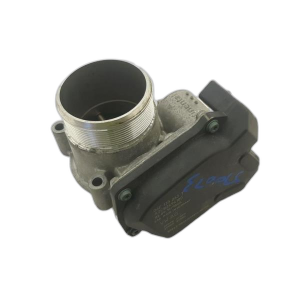
Used OEM Parts in Stock
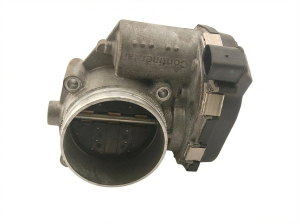
New Aftermarket Parts Available



The information in this article is provided for general reference and educational purposes only. Vehicle specifications, procedures, and part compatibility can vary by production date, trim level, and region. Always consult your vehicle's factory service manual and verify part numbers before purchasing or performing repairs. Safety-critical components such as airbags, seat belts, and braking systems should be installed by a qualified professional.
- Audi Q5:
- 🧭 Diagnostic Flowchart
- 🎬 Helpful Videos
- 🛍️ Shop This Part
- What's Unique About the 2009-2012 Audi Q5
- Symptoms You May Notice
- Most Likely Causes
- Rare But Worth Checking
- Diagnosis Steps
- Parts You'll Likely Need
- Technical Service Bulletins (TSBs) & Recalls
- Platform-Specific Known Issues
- Mechanic-Grade Diagnostic Values
- Scan Tool Commands That Help
- Wiring & Ground Locations
- Real Owner Repair Stories
- OEM Part Supersession History
- Other Known Issues on This Vehicle
- Used vs. New Parts: Buying Guide for This Vehicle
- Real Owner Stories
- 2012 Audi Q5 3.2L
- Related OBD-II Codes
- Frequently Asked Questions
- 🎟️ Get 5% Off