

P0121 on 2002-2007 Dodge Ram 1500: Throttle Position Sensor Causes and Fixes
On 3.7L, 4.7L, and 5.9L engines, P0121 is almost always a faulty Throttle Position Sensor (TPS), a ~$30-$60 part that's easy to replace. On 5.7L Hemi engines (2004+), the sensor is part of the throttle body, requiring a full assembly replacement (~$150-$300+). The key symptom for Hemi owners is often the 'red lightning bolt' on the dash, indicating an Electronic Throttle Control (ETC) fault.
- First, identify your engine. The fix for a 5.7L Hemi is completely different (and more expensive) than for the other engines.
- For non-Hemi engines, the most likely fix is replacing the standalone Throttle Position Sensor (TPS).
- For 5.7L Hemi engines (2004+), you must replace the entire throttle body assembly.
- Before replacing parts, always inspect the wiring for damage and consider cleaning the throttle body, as both are low-cost diagnostic steps.
- Symptoms like stalling and surging make driving unsafe; address this code promptly.
What's Unique About the 2002-2007 Dodge Ram 1500
The key difference on this generation of Ram 1500 depends entirely on the engine. For the 3.7L V6, 4.7L V8, and 5.9L V8, the Throttle Position Sensor (TPS) is a small, separate, and easily replaceable sensor bolted to the side of the throttle body. However, for the 5.7L Hemi engine (introduced in 2003, becoming common from 2004 onward), Dodge integrated the TPS into the electronic throttle body assembly. This means Hemi owners cannot replace just the sensor; the entire throttle body must be replaced to fix a failed TPS. The 2003 Ram with the 5.7L Hemi is a unique case, as some early models reportedly used a separate, replaceable TPS before the full integration, though this is debated in owner forums.
Symptoms You May Notice
- Check Engine Light is on
- Red 'lightning bolt' Electronic Throttle Control (ETC) light is on (primarily 5.7L Hemi)
- Engine hesitates or stumbles on acceleration
- Poor or sluggish acceleration
- Vehicle enters 'limp mode' with reduced power
- Engine stalls at idle or when coming to a stop
- Rough or erratic idle
- Harsh or unpredictable automatic transmission shifting
- Bucking or jerking during steady driving
- Replacing the Accelerator Pedal Position Sensor (APPS) when the fault is at the throttle body. While both are part of the throttle control system, P0121 specifically points to the sensor on the throttle body ('A' circuit).
- Replacing spark plugs or ignition coils to fix hesitation, when the root cause is the TPS providing incorrect data for fuel and timing calculations.
- Replacing the TPS multiple times with aftermarket parts. Some owners report that these trucks can be sensitive to aftermarket sensors, and only an OEM Mopar part resolves the issue.
Most Likely Causes
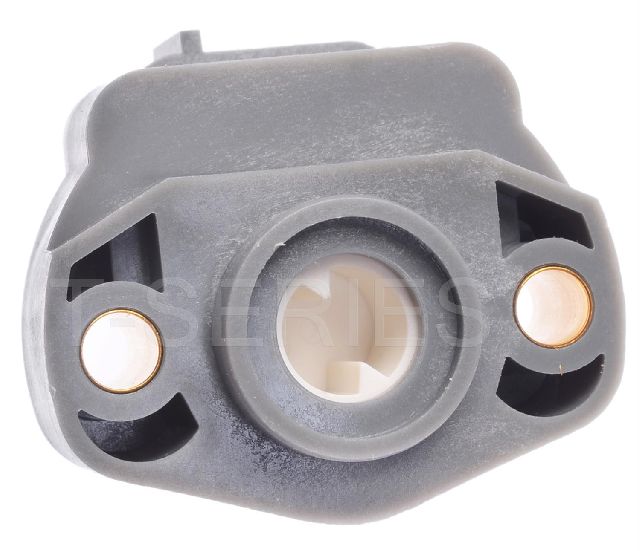
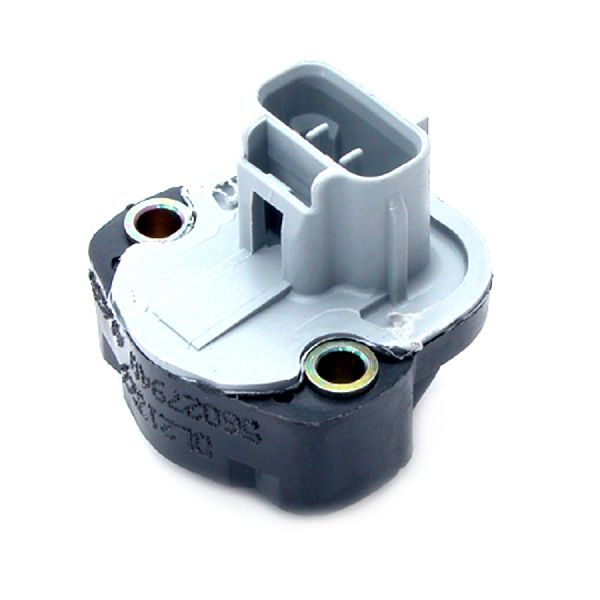
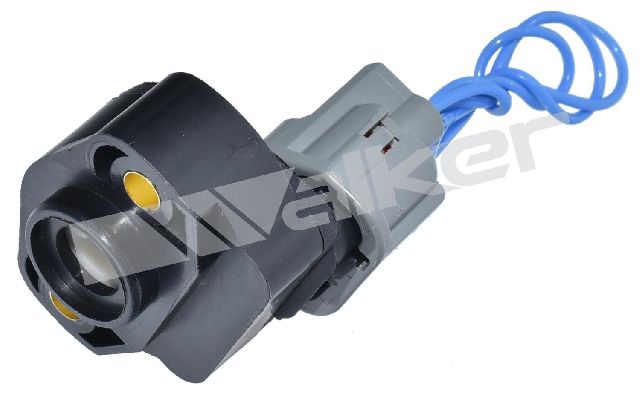
- Faulty Throttle Position Sensor (TPS) 🔴 High Probability → Shop Fuel Injection Throttle Body This applies to 3.7L, 4.7L, and 5.9L engines. The sensor is a high-use electronic part with an internal carbon track that wears out over time, leading to erratic voltage signals, dead spots, or incorrect readings.
How to confirm: Use a scan tool to graph the TPS voltage. It should increase smoothly from ~0.5V at idle to ~4.5V at wide-open throttle. Any jumps, dropouts, or dead spots indicate a bad sensor. You can also test this with a multimeter by back-probing the signal wire.
Typical fix: Replace the Throttle Position Sensor. This often requires Torx-head screws to remove.
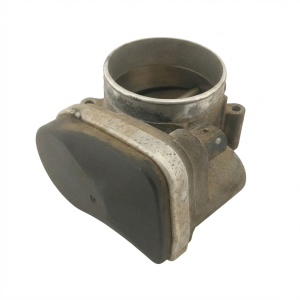
Est. part cost: $30-$80 - Faulty Throttle Body Assembly 🔴 High Probability → Shop Fuel Injection Throttle Body This is the primary cause for 5.7L Hemi engines (2004+), as the TPS is integrated and not sold separately. Failure of the internal electronics (sensor or motor) requires replacing the whole unit. This is a very common failure point on the 5.7L Hemi.
How to confirm: Diagnosis is the same as for a standalone TPS. If the voltage readings are erratic and you have a 5.7L Hemi, the throttle body is the point of failure. Often accompanied by the red ETC lightning bolt light.
Typical fix: Replace the entire throttle body assembly.
Est. part cost: $150-$400 - Dirty or Carbon-Fouled Throttle Body 🟡 Medium Probability → Shop Fuel Injection Throttle Body Over time, carbon and oil vapor from the PCV system can build up inside the throttle body, restricting the movement of the throttle plate. This can cause the plate to stick, leading to a mismatch between its actual position and what the TPS reports, triggering a performance code.
How to confirm: Visually inspect the throttle bore and plate for heavy black carbon buildup. The engine may also have a sticky or slow-to-return gas pedal feel.
Typical fix: Clean the throttle body bore and plate thoroughly with a dedicated throttle body cleaner and a soft brush or rag. Be careful not to damage the plate or bore. 🎬 Watch: Step-by-step guide to cleaning your Ram's throttle body
Est. part cost: $5-$15 for cleaner - Wiring Harness or Connector Damage ⚪ Low Probability The engine bay environment involves extreme heat cycles and vibration, which can cause wires to become brittle and fray or connectors to become loose or corroded over time. Getting the connector wet, for example during pressure washing, can also cause a short.
How to confirm: Visually inspect the TPS wiring harness for any signs of chafing, melting, or cracking, especially where it might rub against the engine. Unplug the connector and check for corrosion or moisture on the pins. Wiggle the harness with the engine running to see if it affects idle.
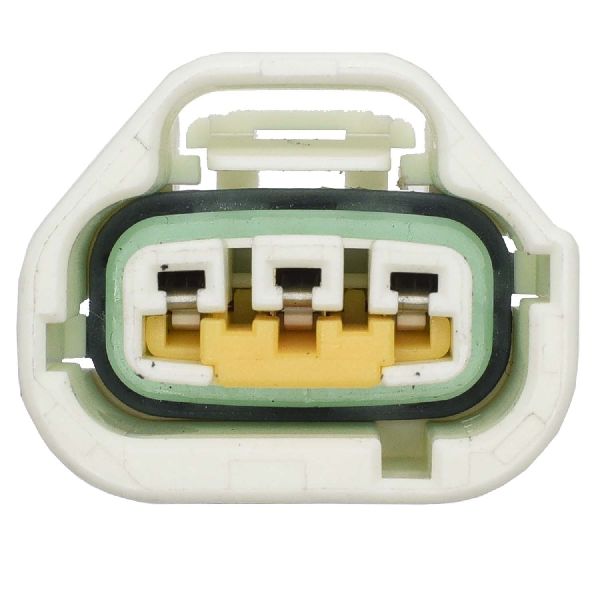
Typical fix: Repair the damaged section of wiring or replace the connector pigtail.
Est. part cost: $10-$30 for a pigtail
Rare But Worth Checking
- Faulty Powertrain Control Module (PCM): This is extremely rare. Before condemning the PCM, all other possibilities, including the sensor, throttle body, and wiring (including the 5V reference and ground circuits), must be exhaustively tested and ruled out.
Diagnosis Steps
- Scan for Codes: Check for any other codes besides P0121 that could provide more clues (e.g., P0122, P0123, P2135, MAP sensor codes).
- Live Data Analysis: Use a scan tool to monitor the TPS voltage as a percentage or direct voltage reading. Slowly press and release the accelerator pedal with the key on, engine off. The reading should be smooth, with no sudden jumps or drops. The range should be approximately 0.5V to 4.5V.
- Visual Inspection: Inspect the TPS electrical connector for looseness, corrosion, or damage. Follow the wiring harness as far as possible, looking for chafing, melting, or breaks. Pay attention to areas where the harness may rub against brackets or the engine block.
- Check 5V Reference and Ground: Using a multimeter, verify that the sensor is receiving a steady 5-volt reference from the PCM and has a good ground connection at the connector. A problem with either will cause incorrect signal voltage.
- Clean the Throttle Body: Before replacing parts, remove the air intake tube and inspect the throttle body. If significant carbon is present, clean it thoroughly, as a sticking plate can cause this code.
- Test the Sensor (Non-Hemi): If the issue persists, test the sensor directly. Backprobe the signal wire with a multimeter. The voltage should sweep smoothly from about 0.5V to 4.5V as you manually open the throttle. A user on DodgeForum.com reported replacing the TPS twice, but still only getting 2V at wide open throttle, indicating a wiring or PCM issue.
- Confirm the Part: If the sensor or throttle body is confirmed bad, identify your engine. If it's a 3.7L, 4.7L, or 5.9L, replace the sensor. If it's a 5.7L Hemi (2004+), you must replace the entire throttle body assembly.
- Perform Relearn Procedure: After replacing the part, a throttle relearn is necessary. A common method is to disconnect the negative battery terminal for 15-30 minutes. Reconnect it, turn the ignition to 'ON' (without starting) for 10 seconds, then turn it off for 10 seconds. Then, start the engine and let it idle for a few minutes to allow the PCM to relearn the new throttle parameters.
Parts You'll Likely Need
- Throttle Position Sensor (TPS)
(OEM #Mopar 5017479AA (for 3.7L/4.7L, verify by VIN))— This is the direct fix for 3.7L, 4.7L, and 5.9L engines. It is the component that fails and generates the code.
Trusted brands: Mopar, Standard Motor Products, Delphi, NGK/NTK
OEM price range: $60-$100
Aftermarket price range: $30-$60 - Throttle Body Assembly
(OEM #Mopar 53032801AC (supersedes 53032801AA, 53032801AB, for 5.7L, verify by VIN))— This is the required fix for 5.7L Hemi engines from 2004 onward, as the TPS is integrated and cannot be replaced separately.
Trusted brands: Mopar, Standard Motor Products, Cardone (remanufactured)
OEM price range: $300-$500
Aftermarket price range: $150-$300
Related Codes That Often Appear With This One
- P0122 — Indicates TPS 'A' Circuit Low Input, often appears when the sensor has an internal short or a wiring issue causing a low voltage reading.
- P0123 — Indicates TPS 'A' Circuit High Input, often appears when the sensor has an internal open or a wiring short to power, causing a high voltage reading.
- P2135 — Indicates a correlation error between TPS circuits 'A' and 'B'. This is common on systems with dual sensors (like the 5.7L Hemi throttle body) and often points directly to a failing throttle body assembly.
Technical Service Bulletins (TSBs) & Recalls
- TSB 18-004-04: While this TSB is frequently mentioned in forums regarding idle issues, its actual purpose is to reprogram the ECM on 2004 Cummins Diesel models to enable a high-idle feature for better cab heating in cold weather. It does not apply to the gasoline engines or the P0121 code directly, but highlights that ECM reprogramming is a dealer-level capability for addressing engine performance parameters.
Platform-Specific Known Issues
- The most significant issue is the non-serviceable TPS on 5.7L Hemi engines (2004+), which turns a simple sensor replacement into a more expensive throttle body replacement.
Mechanic-Grade Diagnostic Values
- TPS Signal Voltage (Key On, Engine Off) — expected: Approximately 0.5V - 1.0V at closed throttle, sweeping smoothly up to approximately 4.5V at wide-open throttle.. Failure: Voltage that is jumpy, has dropouts, or does not reach the full 4.5V at wide-open throttle.
- TPS 5V Reference Voltage — expected: 4.8V to 5.2V with the key on, engine off.. Failure: Voltage significantly below or above this range indicates a PCM or wiring issue, not a sensor fault.
- Wiring Harness Resistance — expected: Less than 3.0 Ohms on the signal, 5V supply, and ground return circuits between the PCM and throttle body connectors.. Failure: Resistance higher than 3.0 Ohms indicates corrosion or a break in the wire that needs to be repaired.
Scan Tool Commands That Help
- Dealer Scan Tool (DRB III, WiTECH) or advanced aftermarket (e.g., Autel): ETC Throttle Follower Test — This function allows the technician to command the throttle plate while monitoring TPS 1 and TPS 2 voltage to confirm smooth operation and correct voltage ranges without running the engine.
- Dealer Scan Tool (DRB III, WiTECH) or advanced aftermarket (e.g., Autel): Throttle Control Learn / ETC Relearn — This is the most reliable method to reset throttle adaptations after replacing the throttle body or sensor. It forces the PCM to learn the new closed and wide-open throttle positions.
Wiring & Ground Locations
- TPS Connector (Non-Hemi) — Bolted to the side of the throttle body.. This connector is the primary point for testing voltage and ground. It typically has three wires: 5V reference, ground, and the signal wire. Verifying power and ground here is the first step in diagnosing a wiring issue.
- PCM C2 Connector — This is one of the main connectors on the Powertrain Control Module, located in the engine bay, typically on the firewall.. For advanced diagnostics, technicians may need to check for resistance or shorts between the TPS connector and the PCM C2 connector to isolate a wiring fault from a PCM fault.
Real Owner Repair Stories
- DodgeForum.com user 'Mikes3rdGenRam' (2003 Dodge Ram 4.7L) — P0121 code, engine running very rough, stalls easily, seems to be in limp mode.
❌ Tried (didn't work) Replaced the TPS twice with different brands.
✅ What actually fixed it The user's diagnosis revealed the core issue: the new TPS would only read up to 2V at wide-open throttle when installed, even though it tested fine (up to 5V) when manipulated by hand off the throttle body. This indicated the problem was not the sensor itself but likely a wiring issue preventing the full voltage range from being reported or a mechanical stop on the throttle body preventing full travel. The final resolution was not posted, but the diagnosis correctly moved beyond simply replacing the sensor.
OEM Part Supersession History
53032801AA, 53032801AB→53032801AC, 68060353AA— Standard part revision and improvement by the manufacturer over the vehicle's lifecycle.
Heads up: While the parts are meant to be interchangeable, always verify fitment with a VIN, as minor calibration or connector differences can exist between production years.4882219→5017479AA— Part number update for the standalone TPS used on 3.7L/4.7L engines.
Heads up: This is the correct sensor for non-Hemi engines; it is not compatible with the 5.7L Hemi integrated throttle body.
Model Year Variations Within This Range
- 2003: The 2003 model year was a transition year. While most 5.7L Hemi engines have an integrated TPS, some very early 2003 models may have had a separate, replaceable TPS. Parts catalogs list a separate sensor for the 2003-2004 5.7L, but forum discussions suggest this is often incorrect and that most are integrated. Owners of 2003 Hemi models must visually inspect their throttle body to confirm which type they have before ordering parts.
- 2002-2003: Chrysler transitioned from the JTEC (Jeep/Truck Engine Controller) to the NGC (Next Generation Controller) PCM around this time. This can affect diagnostic procedures and sensor compatibility. A JTEC-era sensor may not work correctly with an NGC-equipped truck, and vice-versa. It is critical to buy parts specified for the correct model year and engine controller.
Diagnostic Flowchart
Used vs. New Parts: Buying Guide for This Vehicle
When a used part is the smart pick: For the expensive 5.7L Hemi throttle body assembly, a used part from a low-mileage donor vehicle can be a cost-effective option, potentially saving hundreds of dollars over a new OEM unit.
Donor-vehicle mileage cap: roughly under 80000 miles for the part to have meaningful remaining life.
What to inspect on the donor part:
- Check for a clean throttle plate and bore with minimal carbon buildup.
- Ensure the electrical connector is free of corrosion, cracks, or bent pins.
- Verify the throttle plate moves smoothly by hand (if possible) without binding or sticking.
- Ask for the donor vehicle's VIN to check for any service bulletins or recalls related to the throttle body.
OEM-only on this vehicle (don't cheap out):
- For the standalone TPS (3.7L/4.7L/5.9L), many forum users strongly recommend using an OEM Mopar sensor. Aftermarket sensors are frequently reported to fail prematurely or provide incorrect voltage ranges, causing the P0121 code to return.
Aftermarket brands forum-validated for this vehicle:
- Standard Motor Products (SMP)
- Delphi
- NGK/NTK
Brands owners have reported issues with on this vehicle:
- Unbranded, 'white-box' parts from online marketplaces are frequently cited as unreliable for this specific application.
Real Owner Stories
Aggregated from forums and TSBs cited above. Mileages and costs reflect what owners reported in those sources.
2003 Dodge Ram 1500 4.7L
Symptoms: The P0121 code persisted even after replacing the Throttle Position Sensor (TPS) twice.
What fixed it: The owner discovered through testing with a multimeter that the signal wire was the problem; it only produced 2V at wide-open throttle instead of the expected 4-5V, indicating a wiring harness or PCM issue rather than a faulty sensor.
Source hint: DodgeForum.com - 'Please help p0121 tps' (11-07-2020)
Dodge Ram 1500 (2002-2007)
Symptoms: Immediately after pressure washing the engine bay, the truck triggered a P0121 code and experienced severe drivability issues.
What fixed it: The issue was caused by moisture shorting out the TPS connector. The fix involves drying the connector and repairing any resulting corrosion or wire damage.
Source hint: DodgeForum.com
Related OBD-II Codes
Frequently Asked Questions
I have a 5.7L Hemi Ram and got a P0121 code. Can I just replace the sensor?
My truck has the red 'lightning bolt' light on the dash. Is this related to P0121?
I replaced the TPS on my 4.7L Ram, but the code came back. What else could it be?
After replacing my throttle body or TPS, do I need to do anything special?
I pressure washed my engine and now my truck is in limp mode with a P0121. What happened?
Does TSB 18-004-04 apply to my gas engine Ram for this P0121 code?
Helpful Videos

Used OEM Parts in Stock
New Aftermarket Parts Available


The information in this article is provided for general reference and educational purposes only. Vehicle specifications, procedures, and part compatibility can vary by production date, trim level, and region. Always consult your vehicle's factory service manual and verify part numbers before purchasing or performing repairs. Safety-critical components such as airbags, seat belts, and braking systems should be installed by a qualified professional.
- Dodge Ram 1500:
- 🧭 Diagnostic Flowchart
- 🎬 Helpful Videos
- 🛍️ Shop This Part
- What's Unique About the 2002-2007 Dodge Ram 1500
- Symptoms You May Notice
- Most Likely Causes
- Rare But Worth Checking
- Diagnosis Steps
- Parts You'll Likely Need
- Related Codes That Often Appear With This One
- Technical Service Bulletins (TSBs) & Recalls
- Platform-Specific Known Issues
- Mechanic-Grade Diagnostic Values
- Scan Tool Commands That Help
- Wiring & Ground Locations
- Real Owner Repair Stories
- OEM Part Supersession History
- Model Year Variations Within This Range
- Used vs. New Parts: Buying Guide for This Vehicle
- Real Owner Stories
- 2003 Dodge Ram 1500 4.7L
- Dodge Ram 1500 (2002-2007)
- Related OBD-II Codes
- Frequently Asked Questions
- 🎟️ Get 5% Off