

P0121 on 2001-2011 Ford Ranger 4.0L V6: Causes, Symptoms, and Fixes
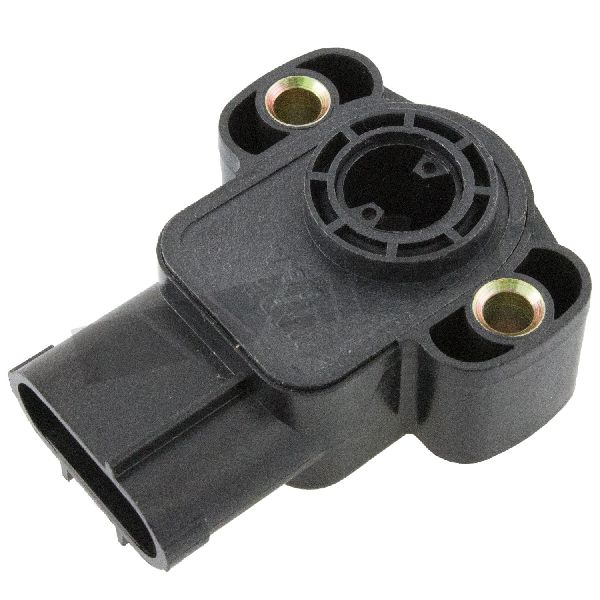
On a 2001-2011 Ford Ranger with the 4.0L V6, code P0121 is almost always caused by a failing Throttle Position Sensor (TPS). Symptoms include hesitation, erratic automatic transmission shifting, stalling, and a surging idle. Replacing the TPS with a quality Motorcraft part (DY-968) is the most common fix, costing between $25 and $75 for the part.
- P0121 on a 4.0L Ranger almost always points to a bad Throttle Position Sensor (TPS).
- Symptoms often include engine hesitation and severe, erratic automatic transmission shifting that can be mistaken for a transmission failure.
- Before replacing parts, check the TPS signal with a multimeter or scan tool for smooth, linear operation from ~0.9V to ~4.5V.
- Always inspect the wiring and connector to the TPS for damage or corrosion, as this is a known weak point.
- Use a genuine Motorcraft (part #DY-968) replacement sensor, as aftermarket versions are known to fail prematurely on this platform.
What's Unique About the 2001-2011 Ford Ranger
For the 2001-2011 Ford Ranger with the 4.0L SOHC V6, this is a straightforward and extremely common issue. Unlike newer vehicles where the TPS is integrated into a costly electronic throttle body, the Ranger of this era uses a separate, affordable, and easily replaceable sensor mounted to the side of the throttle body. This makes diagnosis and repair a common DIY job for Ranger owners. The most frequent failure is the sensor's internal potentiometer wearing out, leading to an erratic signal with 'dead spots' that confuses the engine computer and, critically, the transmission control module, leading to severe shifting problems.
Generation note: The 2001-2011 model years cover the later part of the third-generation Ford Ranger in North America. For the 4.0L SOHC V6 engine within this range, the causes and fixes for P0121 are consistent and primarily point to the same components. This issue is also shared with its platform mates, the Ford Explorer/Sport Trac and Mazda B4000 equipped with the same engine.
Symptoms You May Notice
- Check Engine Light is on
- Hesitation or stumbling during acceleration
- Rough, high, or surging idle
- Harsh, erratic, or delayed automatic transmission shifts
- Poor fuel economy
- Engine may stall, especially when letting off the gas
- Bucking or jerking while driving
- Unpredictable throttle response or sudden loss of power
- Replacing the Mass Airflow (MAF) sensor when the issue is the TPS.
- Assuming a major internal transmission problem due to harsh and erratic shifting, when the root cause is an incorrect TPS signal affecting shift calculations. This is a very common misdiagnosis for this platform.
Most Likely Causes
- Faulty Throttle Position Sensor (TPS) 🔴 High Probability → Shop Fuel Injection Throttle Body The TPS is a potentiometer with a moving wiper arm that wears out over time, creating dead spots or erratic signals. This is a very common failure item on the 4.0L SOHC engine, and using non-Motorcraft parts often leads to premature failure.
How to confirm: With the key on and engine off, use a multimeter to back-probe the TPS signal wire (center wire). Voltage should sweep smoothly from about 0.7-0.99V at closed throttle to around 4.5-4.8V at wide-open throttle. Any jumps, dropouts, or a failure to reach the correct WOT voltage confirms a bad sensor. The reference wire should have ~5V.
Typical fix: Replace the Throttle Position Sensor. It is highly recommended to use a genuine Motorcraft part (DY-968) to avoid repeat issues. After replacement, disconnecting the battery for 15-20 minutes to reset the PCM is advised.
Est. part cost: $25-$75 - Damaged Wiring or Connector 🟡 Medium Probability The wiring harness near the top of the engine is exposed to heat and vibration, which can cause wires to chafe or the connector pins to become corroded or loose over time.
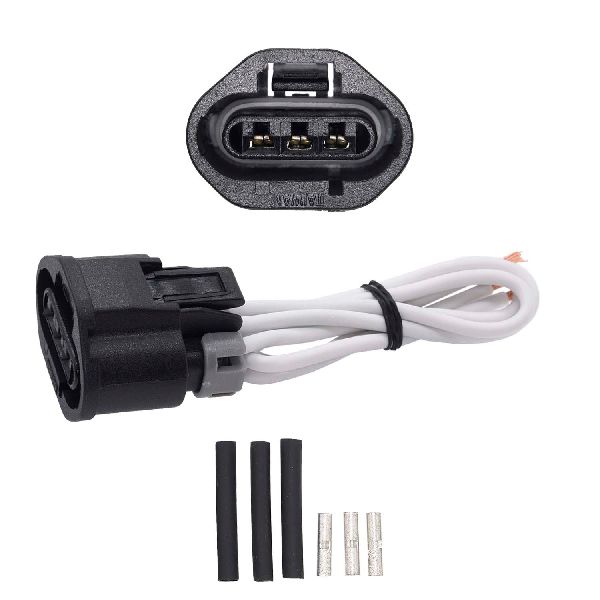
How to confirm: Visually inspect the wiring and the 3-pin connector for the TPS. Look for chafed insulation, green corrosion on the pins, or backed-out pins. Perform a 'wiggle test' on the harness with the engine running while monitoring the TPS data on a scan tool; if the signal jumps, a wiring issue is present.
Typical fix: Repair the damaged wire section or replace the connector pigtail. Ensure connections are clean and secure.
Est. part cost: $15-$30 - Dirty or Binding Throttle Body ⚪ Low Probability → Shop Fuel Injection Throttle Body Carbon and gunk can build up in the throttle body bore, preventing the throttle plate from closing smoothly or returning to the same idle position consistently. This can cause the TPS reading at idle to be higher or more erratic than expected, creating a mismatch that triggers the code.
How to confirm: Remove the intake tube from the throttle body and visually inspect for carbon buildup around the throttle plate and bore. Check if the plate moves smoothly by hand without sticking.
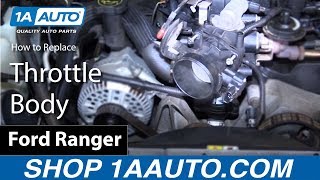
Typical fix: Clean the throttle body thoroughly with a dedicated throttle body cleaner and a soft brush. Do not spray cleaner directly into an attached sensor. 🎬 Watch: How to replace the throttle body
Est. part cost: $5-$15
Rare But Worth Checking
- Faulty Powertrain Control Module (PCM): This is extremely rare. It should only be considered after a quality Motorcraft TPS has been installed and the wiring has been confirmed to be in perfect condition. In some forum cases, a persistent P0122 (low voltage) or P0121 after a new Motorcraft sensor was installed was ultimately traced to a faulty PCM.
Diagnosis Steps
- Connect an OBD-II scanner and confirm that P0121 is the primary code. Check for any other related throttle codes like P0122, P0123, or P1121.
- View live data on the scanner. Observe the Throttle Position Percentage or Voltage (TP V) as you slowly press and release the accelerator pedal with the key on, engine off. The reading should be smooth and linear, without any sudden jumps or drop-offs.
- Visually inspect the TPS connector and wiring harness for any signs of damage, corrosion, or loose connections.
- Perform a 'wiggle test' on the harness near the TPS connector while watching the live data to see if the signal becomes erratic.
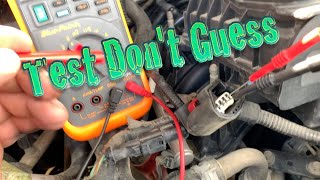
- If a multimeter is available, back-probe the sensor 🎬 See this step-by-step TPS diagnostic walkthrough connector with the key on, engine off. Check for ~5V reference voltage, a good ground (<0.1V), and a signal wire that sweeps smoothly from ~0.9V to ~4.5V.
- If the signal is jumpy or has dead spots, the TPS is the most likely culprit. If the wiring looks good, proceed with replacing the TPS, preferably with a Motorcraft part.
- If the TPS and wiring are good, inspect the throttle body for heavy carbon buildup that could be causing the throttle plate to stick.
- After any repair, clear the codes, disconnect the battery for at least 15 minutes to reset the PCM's learned values, and then perform a test drive to ensure the problem is resolved.
Parts You'll Likely Need
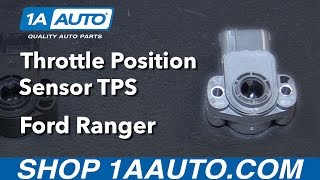
- Throttle Position Sensor (TPS)
(OEM #DY-968 (Motorcraft))— This is the most common failure point for code P0121 on this vehicle due to internal wear over time. Owner and technician consensus strongly recommends using the OEM Motorcraft part to prevent premature failure.
Trusted brands: Motorcraft (Highly Recommended), Bosch, Standard Motor Products (SMP)
OEM price range: $50-$90
Aftermarket price range: $25-$50
Related Codes That Often Appear With This One
- P0122 — Indicates TPS 'A' Circuit Low Input, which can be caused by the same failing sensor or wiring issue, often representing a 'dead spot' in the sensor's range.
- P0123 — Indicates TPS 'A' Circuit High Input, often pointing to a short in the wiring or an internal failure in the sensor.
- P1121 — A Ford-specific code for 'Throttle Position Sensor Inconsistent with MAF Sensor.' This is often triggered alongside P0121/P0123 because the PCM sees a conflict between what the TPS reports (e.g., wide open) and what the MAF sensor reports (e.g., low airflow at idle).
Technical Service Bulletins (TSBs) & Recalls
- TSB 00-3-5: While this TSB addresses a high idle, it mentions issues with the TPS wiring and connector, which is relevant to diagnosing P0121. It points to the connector as a known trouble spot.
- TSB 05-14-4: Although primarily for F-150s and vehicles with electronic throttle bodies, this TSB addresses P0121 and advises replacing the TPS with an updated part and reprogramming the PCM. This highlights Ford's recognition of TPS issues in this era.
Platform-Specific Known Issues
- The wiring harness connector for the TPS is a known weak point and can develop corrosion or loose pins, leading to intermittent signals.
- Aftermarket TPS units are notorious for failing quickly or being dead-on-arrival for this application. Sticking with the Motorcraft OEM part is a common recommendation in owner forums to ensure a lasting repair.
Mechanic-Grade Diagnostic Values
- TPS Signal Voltage (Key On, Engine Off) — expected: Approx. 0.5V - 1.0V at closed throttle, sweeping smoothly to ~4.5V at wide-open throttle.. Failure: Voltage is erratic, has 'dead spots' or jumps, does not sweep smoothly, or is stuck at a specific value.
- TPS 5V Reference Voltage (VREF) at Connector — expected: Approximately 5.0 Volts with key on, engine off.. Failure: Voltage is significantly below 5.0V or is 0V, indicating a wiring issue or a fault in the PCM.
- TPS Ground Circuit Resistance — expected: Near 0V or less than 1 ohm of resistance to the battery negative terminal.. Failure: High resistance on the ground wire, indicating a poor ground connection which can cause erratic sensor readings.
- TPS Total Resistance (Sensor Unplugged) — expected: For some older Ford TPS models, the total resistance across the VREF and Ground pins is specified as >3k Ohms.. Failure: A reading significantly outside this range or an open circuit (infinite resistance) suggests an internal sensor failure.
Scan Tool Commands That Help
- Any Scan Tool or Manual Disconnect: Keep Alive Memory (KAM) Reset — After replacing the TPS or cleaning the throttle body, a KAM reset should be performed. This clears the PCM's learned fuel trims and adaptive strategies, forcing it to relearn values with the new/clean component. This is most easily done by disconnecting the battery's negative terminal for at least 15 minutes.
Wiring & Ground Locations
- TPS Connector Pinout — On the throttle position sensor itself, mounted to the side of the throttle body.. Knowing the wire functions is critical for testing. Pin 1: Brown/White (VREF, ~5V), Pin 2: Gray/White (Signal, 0.5-4.5V), Pin 3: Gray/Red (Signal Return/Ground). Colors can vary by year, but function by pin position is generally consistent.
- G100 — Located at the LH (driver's side) front of the engine compartment, typically below the battery.. This is a primary chassis and engine ground. A corroded or loose connection at G100 can cause widespread electrical issues, including unstable reference voltages and poor sensor grounds for multiple engine components, potentially leading to a P0121 code.
- G101 — Located on the LH (driver's side) of the upper radiator support.. This is another critical engine bay ground point. A poor connection here can affect sensor performance and trigger various fault codes. It should be checked for corrosion and tightness when diagnosing any electrical fault.
- PCM Pin 47 (on 60-pin EEC-IV) — At the main Powertrain Control Module connector, often found on the firewall.. This is the specific pin where the TPS signal wire (typically Gray/White) terminates. Testing for voltage here can determine if the signal from the TPS is reaching the computer correctly, helping to rule out a wiring break between the sensor and the PCM.
Real Owner Repair Stories
- Ford Truck Enthusiasts Forum (2006 Lincoln Navigator (Shares similar PCM logic)) — Engine fail-safe mode, rough idle, hesitation, scan tool showing TPS stuck at 99.6%.
❌ Tried (didn't work) Diagnosing other codes (P0330, P0059, P2197) first.
✅ What actually fixed it The initial codes were resolved by fixing bent pins on the PCM connector. However, this led to new TPS codes (P0121, P0122, P2106). The underlying lesson was that the PCM has a diagnostic sequence, and fixing one problem can allow it to then report a secondary, previously hidden issue with the TPS circuit. The final diagnosis pointed towards a faulty TPS or its circuit, which was masked by the initial PCM pin problem. - Ranger-Forums (2000 Ford Ranger 4.0L OHV) — Intermittent bucking and jerking, rough idle, but no change in RPM on the tachometer. No check engine light initially.
❌ Tried (didn't work) Cleaning MAF sensor, Cleaning throttle body, Replacing PCV valve, Checking for vacuum leaks, Testing IAC valve
✅ What actually fixed it The user had not yet resolved the issue but the diagnostic advice from a senior forum member pointed directly to testing the TPS with a live data scanner, suggesting it was the most likely cause of intermittent bucking that doesn't always set a code immediately. This highlights a common real-world scenario where TPS failure begins intermittently before setting a hard fault.
OEM Part Supersession History
F5RZ-9B989-B, F5RZ-9B989-BA→DY-968 (Motorcraft Service Part Number)— Standard part lifecycle update and consolidation.
Heads up: The Motorcraft DY-968 is the direct replacement. Many aftermarket equivalents exist (e.g., Standard Motor Products TH198), but forum consensus strongly indicates a high failure rate with non-OEM parts for this specific application.
Model Year Variations Within This Range
- 2001-2003 vs 2004-2011: While the fundamental cause (TPS sensor) is the same, there were minor changes to the PCM and wiring harness pinouts/colors over the production run. For example, the 2001-2003 models used a different PCM than the 2004+ models, which can lead to slight variations in diagnostic procedures at the PCM connector. However, the sensor-level testing procedure remains identical.
Diagnostic Flowchart
Other Known Issues on This Vehicle
Issues unrelated to this code that are worth knowing about as an owner of this generation:
- Timing Chain Cassette Failure 🔴 High — Very common, especially on 2001-2004 models. Often manifests as a rattling noise ('death rattle') from the engine, particularly at startup or around 2000-3000 RPM. Can lead to catastrophic engine failure if not addressed. (Ref: Multiple TSBs exist, but no recall was issued. It's a well-documented failure in owner forums.)
- Cracked Plastic Thermostat Housing 🟠 Medium — Extremely common failure point across all years of the 4.0L SOHC. The original plastic housing becomes brittle and cracks, causing coolant leaks and potential overheating. (Ref: No recall, but it's a widely known issue. The standard fix is to upgrade to a more durable cast aluminum aftermarket housing.)
- Intake Manifold Gasket Leaks 🟠 Medium — The O-ring gaskets for the upper and lower intake manifolds can become brittle and fail, causing vacuum leaks. This often results in lean codes (P0171, P0174), rough idle, and poor performance.
Used vs. New Parts: Buying Guide for This Vehicle
When a used part is the smart pick: For this repair, a used TPS is generally not recommended. The part fails from internal wear over time, so a used sensor from a junkyard has unknown remaining life and is very likely to fail soon, if it doesn't arrive already faulty. The low cost of a new, quality aftermarket or OEM part makes buying used a poor value proposition.
Donor-vehicle mileage cap: roughly under 50000 miles for the part to have meaningful remaining life.
What to inspect on the donor part:
- If buying used is unavoidable, look for a sensor from a low-mileage, collision-damaged vehicle.
- Inspect the connector pins for any signs of corrosion (green or white powder).
- Avoid sensors that show signs of physical damage or have been exposed to the elements.
OEM-only on this vehicle (don't cheap out):
- Throttle Position Sensor (TPS)
Aftermarket brands forum-validated for this vehicle:
- Bosch
- Standard Motor Products (SMP)
Brands owners have reported issues with on this vehicle:
- Ultra-cheap, unbranded sensors from online marketplaces are frequently reported as being dead-on-arrival or failing within a few months.
Documented NHTSA Reports
NHTSA records for related Ford platforms highlight the severity of throttle circuit failures. NHTSA ODI #10255038 describes a scenario where a vehicle was diagnosed with codes P2104, P0121, and P2112, ultimately identifying an electronic throttle body physically sticking closed. Similarly, NHTSA ODI #10286213 reports that a technician performed a PCM reflash and retest after receiving codes P0121, P2104, and P2112. In another instance, NHTSA ODI #10257081 lists P0121-FF among a wide array of electrical and communication codes found during a service inspection. Finally, NHTSA ODI #11014092 notes a recurring issue where a vehicle scan repeatedly produced codes P0100-20 and P0121-20.
Real Owner Stories
Aggregated from forums and TSBs cited above. Mileages and costs reflect what owners reported in those sources.
Ford Ranger 4.0L V6
Symptoms: The owner performed a TPS test and was looking for specific voltage specifications to confirm a failure.
What fixed it: Diagnosis based on voltage specifications: ~5V reference, closed throttle around 0.98V, and wide-open throttle around 4.5V to ensure a smooth sweep.
Source hint: Ranger-Forums.com: 'Did the TPS Test...'
2001-2011 Ford Ranger 4.0L V6
Symptoms: Intermittent signals caused by a known weak point in the wiring harness connector.
What fixed it: Repairing the damaged wire section or replacing the connector pigtail due to corrosion or loose pins.
Source hint: vehicle_specific_issues
Ford Ranger 4.0L V6 SOHC
Symptoms: User had a P0122 code (low voltage) and continued to have issues even after replacing the sensor.
What fixed it: Checking the signal return wire for a bad ground connection back to the PCM.
Source hint: Ranger-Forums.com: 'low voltage to tps sensor'
Related OBD-II Codes
Frequently Asked Questions
Which specific replacement part should I use for my 4.0L V6 Ranger to ensure the P0121 code doesn't come back?
Does TSB 05-14-4 apply to my Ford Ranger's P0121 issue?
I'm seeing a high idle on my 4.0L Ranger; could this be related to the TPS wiring mentioned in TSB 00-3-5?
What voltage readings should I see when testing the TPS on my 4.0L SOHC engine?
Should I clean my throttle body before replacing the sensor on my Ranger?
Is there a specific procedure to follow after I replace the TPS?
Helpful Videos


We Have This Part in Stock


The information in this article is provided for general reference and educational purposes only. Vehicle specifications, procedures, and part compatibility can vary by production date, trim level, and region. Always consult your vehicle's factory service manual and verify part numbers before purchasing or performing repairs. Safety-critical components such as airbags, seat belts, and braking systems should be installed by a qualified professional.
- Ford Ranger:
- 🧭 Diagnostic Flowchart
- 🎬 Helpful Videos
- 🛍️ Shop This Part
- What's Unique About the 2001-2011 Ford Ranger
- Symptoms You May Notice
- Most Likely Causes
- Rare But Worth Checking
- Diagnosis Steps
- Parts You'll Likely Need
- Related Codes That Often Appear With This One
- Technical Service Bulletins (TSBs) & Recalls
- Platform-Specific Known Issues
- Mechanic-Grade Diagnostic Values
- Scan Tool Commands That Help
- Wiring & Ground Locations
- Real Owner Repair Stories
- OEM Part Supersession History
- Model Year Variations Within This Range
- Other Known Issues on This Vehicle
- Used vs. New Parts: Buying Guide for This Vehicle
- Documented NHTSA Reports
- Real Owner Stories
- Ford Ranger 4.0L V6
- 2001-2011 Ford Ranger 4.0L V6
- Ford Ranger 4.0L V6 SOHC
- Related OBD-II Codes
- Frequently Asked Questions
- 🎟️ Get 5% Off